Comparison
Ergonomic chair vs gaming chair.
A gaming chair is built around the look of a Recaro racing seat — bucket sides, deep contoured seat, PU leather. An ergonomic chair is built around how the spine wants to move across 8-12 hours of focused work. They are not the same product, and the difference matters most to the people most likely to buy the wrong one.
- daily sit-time test
- 8+ hrs
- armrest gold standard
- 4D
- SA price spectrum
- R3k-R45k
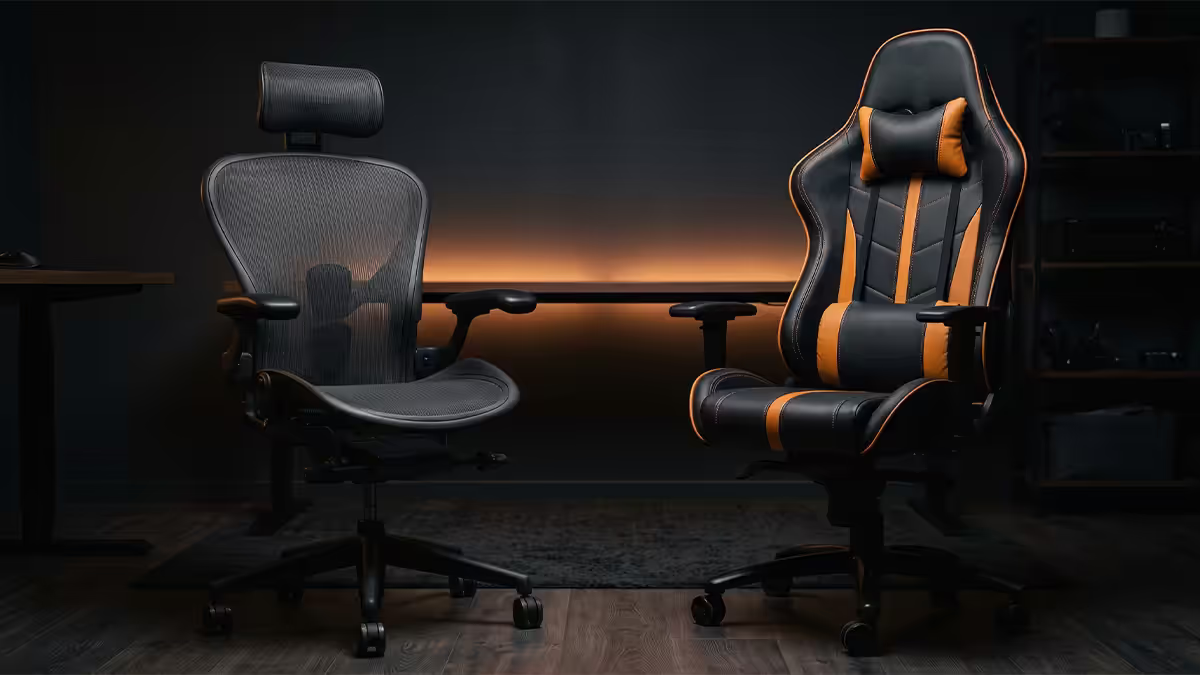
These are not the same product
Gaming chairs and ergonomic office chairs both have wheels, height adjustment and a backrest. There the resemblance ends. They're designed by different teams, around different priorities, for different durations of use, sold to different customers. The biggest mistake people make when buying a "good chair" is treating these categories as interchangeable.
Gaming chairs are built around the visual language of a Recaro racing seat — high side bolsters, deep contoured "bucket" seat, PU leather upholstery, head and lumbar pillows, branding. The target customer is someone who wants their workspace to look like an esports stage. Comfort over 2-4 hour sessions is genuinely fine. The category leader is Secretlab; respectable alternatives include Noblechairs, AndaSeat and DXRacer.
Ergonomic office chairs are built around how a human spine wants to move during 8-12 hour work sessions — synchronised recline, forward tilt, fully adjustable lumbar, breathable mesh back, micro-movement support. The target customer is anyone who sits for a living: software engineers, designers, accountants, executives, anyone working from home full-time. The category benchmarks are Herman Miller (Aeron, Embody) and Steelcase (Gesture, Leap).
The question to answer first isn't "what looks good" or "what does my favourite streamer use" — it's how many hours per day will I sit in this chair. Above 6 hours daily, the design priorities of ergonomic chairs start materially mattering. Below 4 hours, gaming chair compromises are largely invisible.
The race-seat shape is wrong for long sitting
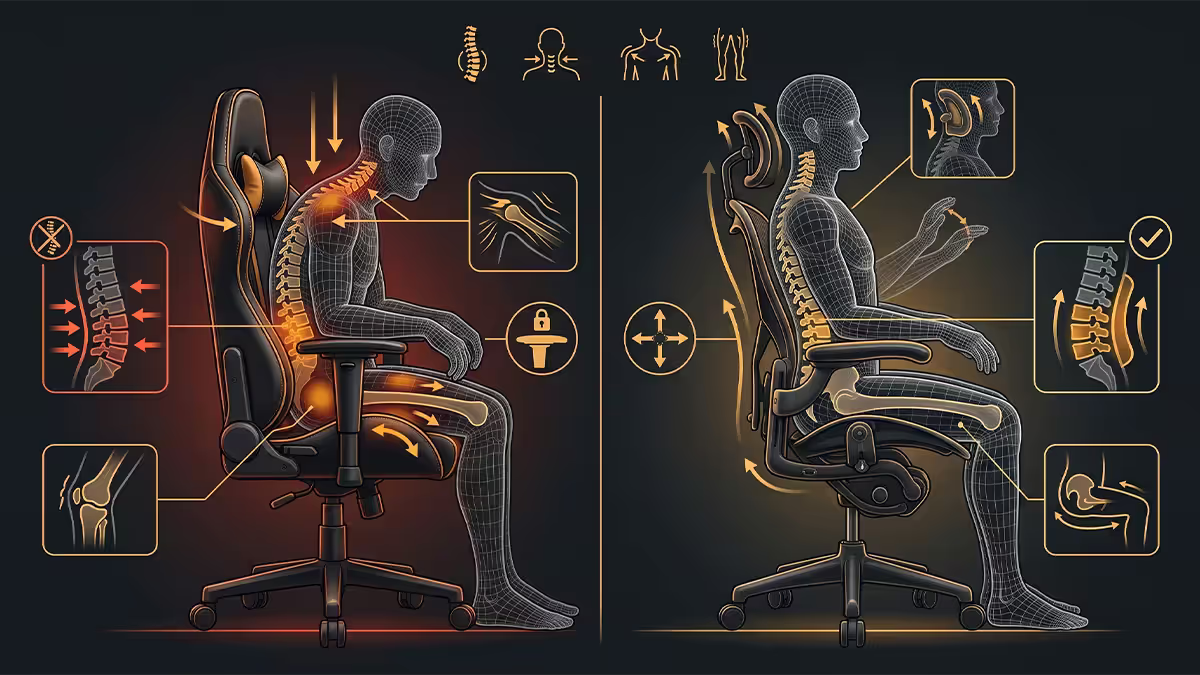
This is the uncomfortable truth the gaming chair industry doesn't advertise. A real racing seat is designed to hold a driver's body rigidly in place under high lateral G-forces during cornering — that's why the side bolsters are high and the seat is deep and contoured. Your office is not a race car. There are no cornering forces. The deep-bolster geometry that holds an F1 driver in place during a corner just locks your hips and pelvis in a fixed position for 8 hours.
Modern biomechanics research is clear on one point: your spine benefits from frequent micro-adjustments across the day. Shifting weight from one hip to the other, slight twists, leaning forward and back, varying seat height between sit-stand work. The race-seat shape actively prevents this. The high side bolsters that look so race-inspired also make it almost impossible to sit cross-legged briefly, or to lean into one armrest while reading. Your body wants to move; the chair won't let it.
Ergonomic chairs are designed for the opposite outcome. Mesh backs flex with movement. Synchronised recline lets you tilt backward without leaving the supported posture zone. Forward seat tilt encourages active "perch" sitting during focus. The whole product is built around the assumption that you'll move constantly while seated — because that's what the spine actually wants.
Mesh vs PU leather — the SA summer test
SA's climate makes upholstery choice less optional than in cooler markets. Joburg summer days routinely hit 30°C in a home office that doesn't have aircon running constantly. Cape Town's southerly afternoons are humid. Durban is humid year-round. In every one of those conditions, sitting against PU leather for 4+ hours becomes physically uncomfortable in a way that's hard to grasp until you've done it.
PU leather (polyurethane synthetic leather) is what 95% of gaming chairs use. It looks premium, wipes clean, comes in colours that match the rest of your "gamer aesthetic". It also traps heat and moisture against your skin. Within 30-60 minutes in summer, you're sweating where the chair touches your back and thighs. You start fidgeting, standing up frequently, adjusting position constantly — not for ergonomic reasons but because your skin is uncomfortable. Long-term, PU leather cracks and peels after 3-5 years regardless of how carefully you treat it. The synthetic material simply ages.
Mesh (typically the woven elastomeric kind used on the Aeron, Sihoo M57 and similar) allows continuous airflow between your back and the chair. Your body heat dissipates instead of accumulating. Sweat evaporates instead of pooling. The chair stays subjectively at the same temperature as the room air for the entire day. Mesh also doesn't degrade visibly over 10+ years of use — the Aeron Classic models from 1995-2010 are still selling on second-hand markets in original condition.
Fabric upholstery (Steelcase Leap, Branch Ergonomic Chair, Sihoo M59) is a middle ground — better breathability than PU, more "office-formal" appearance than mesh. Reasonable choice if you find the industrial look of mesh too utilitarian. Quality fabric also wears longer than PU.
The four adjustments that actually matter
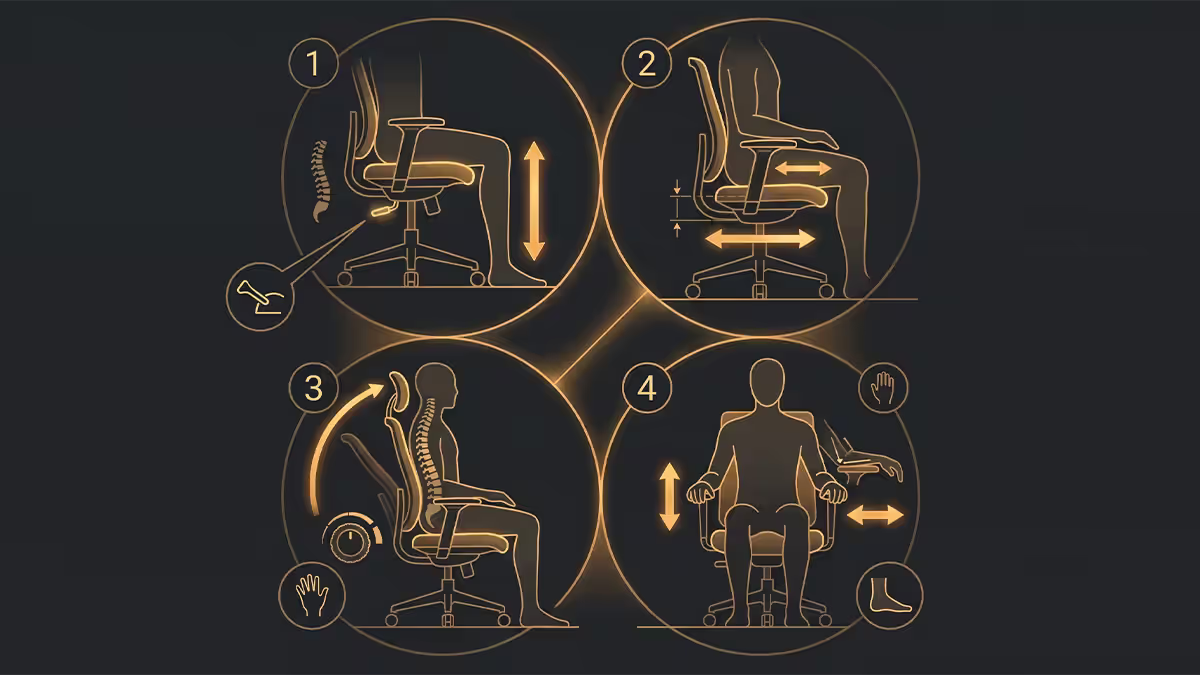
Chairs are sold on long feature lists. Most of those features don't change comfort. These four do:
1. Seat height. Cheapest and most important. Your feet should rest flat on the floor, knees at 90-100 degrees, thighs roughly parallel to the floor. Every chair worth buying gets this right. Test by sitting at your normal desk and adjusting.
2. Armrest 4D adjustment. Height, width, depth, angle. Your forearms should rest level at the same height as the desk. Fixed-height armrests force shoulders into hunched or completely unsupported positions for 8 hours, which is the most common cause of "my new chair hurts my neck." The Sihoo M57 and Hartleys Pro Ergo include 4D armrests under R5,000 in SA — a remarkable price point that didn't exist five years ago.
3. Adjustable lumbar. The curve in your lower back varies by person. The chair's lumbar support must match your specific curve, not the average. Look for either height-adjustable lumbar (Aeron PostureFit SL, Steelcase Leap LiveBack) or depth-adjustable (Secretlab Ergochair). Avoid chairs with fixed lumbar pillows that don't move — Velcro lumbar cushions on gaming chairs are crude approximations of this.
4. Seat depth (slide). Lets you adjust the seat to fit your femur length. There should be a 2-3 finger gap between the front edge of the seat and the back of your knees. People with longer or shorter legs need this adjustment to avoid cutting off circulation behind the knees. Most R3,000+ ergonomic chairs include this; almost no gaming chairs do.
The R3,000-R5,500 budget tier
Below R3,000, you're buying a "look ergonomic" chair that will fail within 18 months. Components, hydraulics, mesh quality and armrest adjustability all suffer at that price point. The mesh sags within months, the hydraulic cylinder loses pressure, the armrests stick. Skip everything in this category, however appealing the photo on Takealot looks.
Between R3,000 and R5,500, real ergonomic chairs become available in SA. The standouts:
- Sihoo M57 (R3,800-R4,500 in SA). Mesh back, height-adjustable lumbar, 4D armrests, 5-year warranty. The most chair you can buy at the price. Available at Takealot, Yuppiechef and Sihoo SA directly.
- Hartleys Pro Ergo Mesh (R4,000-R5,200 in SA). Local brand, mesh back, adjustable lumbar, 3D armrests, decent gas cylinder. Slightly behind the Sihoo on adjustment range but better local support and warranty handling.
- Sihoo Doro C300 (R5,200-R5,800 in SA). Step up from the M57. Better mesh density, improved 4D armrests, slightly better build feel. The most chair you can buy under R6,000.
The R8,000-R15,000 bridge tier
Above R8,000, the components become genuinely premium and the chair is good for 8-10 years of daily use. This is the tier most full-time remote workers in SA should target — the marginal improvement to flagship chairs above R30,000 is small enough that for most users this is "the chair." Standouts:
- Secretlab Ergochair (R9,500-R11,500 in SA). Secretlab's actual ergonomic chair (separate from their Titan gaming line). Mesh back, magnetic adjustable lumbar, 4D armrests, generous adjustability. The best mass-market ergonomic chair under R12,000 by a wide margin.
- Sihoo Doro S300 (R11,500-R14,500 in SA). Sihoo's flagship — auto-tracking lumbar that follows your spine through recline, premium mesh, 4D armrests with deep adjustment. Real 12-year warranty.
- Hag Capisco (R12,500-R14,500 in SA). Norwegian saddle-influenced design, encourages active sitting and frequent position changes. Polarising aesthetics but ergonomically distinctive — excellent for sit-stand desk users.
- Secretlab Titan EVO (R10,500-R13,500 in SA). The reigning king of gaming chairs. PU leather (so SA summer caveats apply), magnetic lumbar pillow, 4D armrests. Buy this only if you specifically want the gaming aesthetic and sit fewer than 5-6 hours daily.
The R30,000+ flagship tier
Above R30,000 you reach the genuine top-of-market ergonomic chairs — Herman Miller and Steelcase. They're not magic. The R10,000 Secretlab Ergochair gets you 80-90% of the experience. But for that final 10-20%, plus 12-year warranties that are honoured locally, and chairs that genuinely outlast their owners:
- Herman Miller Aeron (R34,000-R45,000 in SA). The benchmark. Three sizes (A/B/C — choose by your height and weight), pellicle mesh, PostureFit SL lumbar, 4D armrests, 12-year warranty. The "good chair" that other chairs are measured against. Imported via authorised SA dealers; physical test sit highly recommended given the spend.
- Herman Miller Embody (R42,000-R55,000 in SA). Pressure-distribution-focused alternative to the Aeron. The "pixel" back surface contours to your spine across the day. Polarising aesthetic but ergonomically remarkable.
- Steelcase Leap V2 (R30,000-R40,000 in SA). The Aeron's main competitor. Live Back system flexes with you. More "office-formal" appearance than the Aeron's industrial look. Slightly better for people who lean forward at the desk frequently.
- Steelcase Gesture (R35,000-R45,000 in SA). Designed around tablet and phone use poses — the way modern knowledge workers actually sit. Best armrests in the industry.
Who each chair type actually suits
Buy a gaming chair if: you game 2-4 hours an evening, work somewhere else during the day, want the visual aesthetic, value the bolster shape for relaxed back-leaning while streaming or watching films, accept that PU leather is part of the trade-off. The Secretlab Titan EVO is the right pick. AndaSeat Kaiser 3 is the value-tier alternative.
Buy a bridge ergonomic chair if: you work from home 30-40 hours a week, want mesh breathability, want most-of-the-Aeron without the Aeron price, plan to keep the chair 8-10 years. Sihoo Doro S300 or Secretlab Ergochair.
Buy a flagship ergonomic chair if: you sit for a living, your back is your livelihood, you've already had back pain from a previous chair, you want a single purchase that genuinely outlasts most marriages. Herman Miller Aeron or Steelcase Leap V2.
Buy a budget Sihoo M57 if: the alternatives above are out of budget. The M57 is the only chair under R5,000 we'd put on a desk we sit at for a living. Better than every gaming chair under R8,000 for 8-hour use.
Key takeaways
- Hours of daily use is the deciding question. Above 6 hours, ergonomic. Below 4 hours, gaming chairs are fine.
- The race-seat shape was designed for cornering G-force, not office sitting. It locks the pelvis for 8 hours.
- In SA summer, mesh beats PU leather for comfort, breathability and long-term durability.
- The four adjustments that matter: seat height, 4D armrests, adjustable lumbar, seat depth slide.
- SA tier picks: Sihoo M57 (R3.8k), Secretlab Ergochair (R10k), Herman Miller Aeron (R36k).
Frequently asked questions
Are gaming chairs actually bad for your back?
Compromised for long sitting, not actively bad. The bucket shape locks the pelvis and prevents the micro-movements your spine needs across 8 hours. Fine for under 4 hours daily, suboptimal above 8.What is the best chair for 8-hour daily computer use?
An ergonomic mesh chair with adjustable lumbar, 4D armrests and forward tilt. Aeron and Leap at the top, Secretlab Ergochair and Sihoo Doro S300 in the bridge tier, Sihoo M57 under R5,000.Is the Herman Miller Aeron worth the price?
Yes if you sit for a living and value the 12-year warranty. Works out to under R30 per workday over the warranty period — cheaper per use than most coffee subscriptions.What is the cheapest ergonomic chair worth buying in SA?
Sihoo M57 (R3,800-R4,500) or Hartleys Pro Ergo Mesh (R4,000-R5,200). Below R3,000 you sacrifice armrest adjustability and longevity.Why do mesh chairs feel better in summer?
Mesh allows airflow, dissipating body heat and moisture. PU leather traps both. For SA summer 30°C+ days, mesh is the difference between focus and constant fidgeting.What is the difference between Secretlab and Herman Miller chairs?
Secretlab Titan EVO is a premium gaming chair (bucket shape, PU leather). Herman Miller Aeron is a pure ergonomic office chair designed by ergonomists for 8-12 hour sessions. Different products for different priorities.Do I need a chair with adjustable armrests?
Yes — the single most important adjustment after seat height. Forearms should rest level at desk height so shoulders relax. 4D is gold standard; minimum 3D for full-time work.Should I get a kneeling chair or saddle stool instead?
For most people, no. They work as secondary chairs to rotate with a proper ergonomic chair, but lack back support and put pressure on shins or perineum over long sessions.
Get the Evetech app
Exclusive app-only prices, daily flash sales, and free delivery on orders over R4,000 — download the app and start saving.