Gaming Chair Buying Guide
How to choose a gaming chair. — Lumbar support is the whole game.
A great chair vanishes under you for eight hours. A bad chair owns your lower back for the next decade. Everything else — racing-stripe aesthetics, RGB illumination, brand collaborations — matters less than how your spine feels at 11 PM.
- critical spec
- Lumbar
- armrest target
- 3D/4D
- SA range
- R3k-R12k
Lumbar support — the only spec that really matters
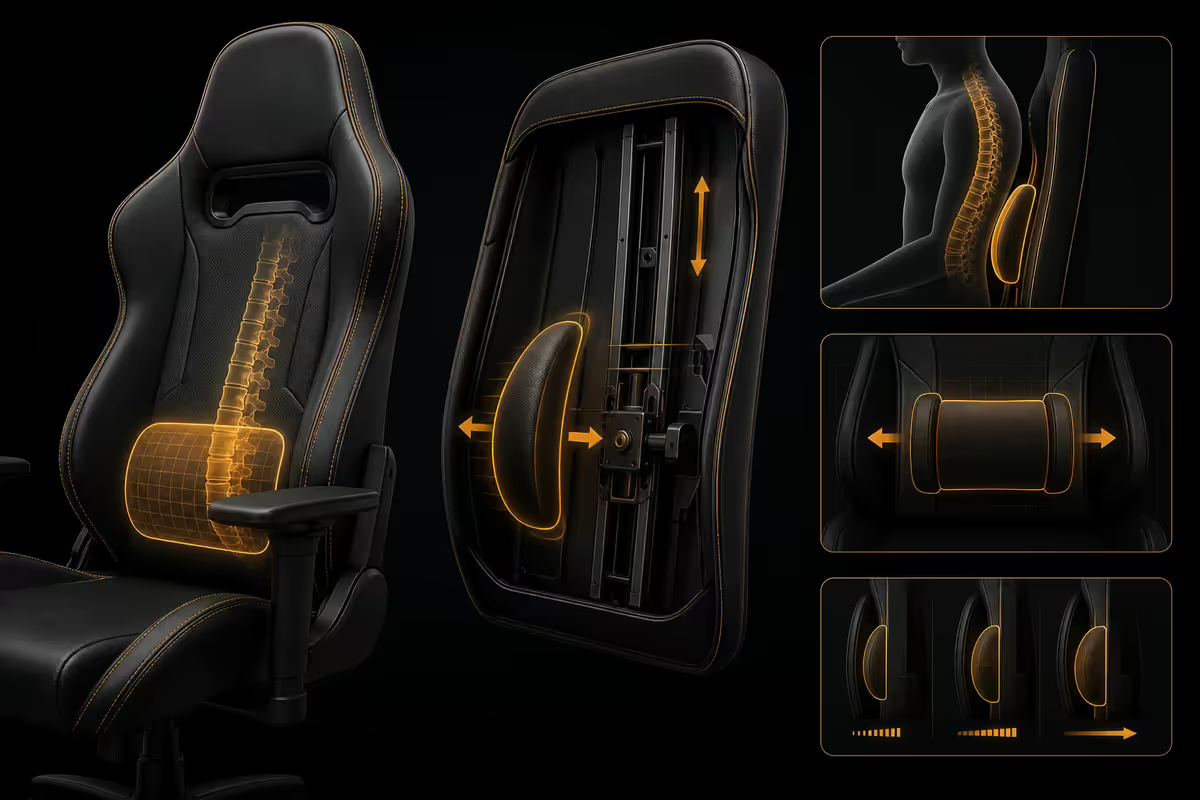
If you remember one thing from this guide: lumbar support is the difference between a chair that lets you game for eight hours and a chair that gives you chronic lower back pain. Everything else is a refinement.
Your lower spine curves inward naturally — a shape called lumbar lordosis. When you sit, that curve flattens unless the chair physically supports it. A chair without lumbar support lets your pelvis tilt backward, which slumps your shoulders forward and puts sustained pressure on the lower vertebrae and discs. Over months of 8-hour sessions, that becomes the back pain you'll be doing physio for in your 30s.
Three types of lumbar support, in ascending order of quality:
- External lumbar pillow (most budget gaming chairs) — a separate strap-on cushion. Works if you bother to position it correctly and it stays put. Most chairs ship with these and most people don't use them properly.
- Built-in fixed lumbar curve (DXRacer Master, AKRacing Core) — the backrest itself is shaped with a lumbar bulge. Better than external because it can't slip out of position, but isn't adjustable for different body shapes.
- Built-in adjustable lumbar (Secretlab Titan Evo, Razer Iskur V2, Herman Miller, Ergohuman) — a knob or lever changes the lumbar prominence and sometimes its vertical position. The gold standard. Match your specific spine, not a generic average.
For SA buyers especially, demand at least built-in lumbar shape (option 2). Loose lumbar pillows fall off, get crushed, get lost. After three months you'll be sitting on a chair with no functional lumbar support.
Adjustment ranges — measure twice, buy once
Every body is shaped slightly differently. A chair that's perfect at a 1.78 m showroom employee may be wrong for a 1.65 m or 1.92 m user. Adjustment ranges are how chairs accommodate that variety.
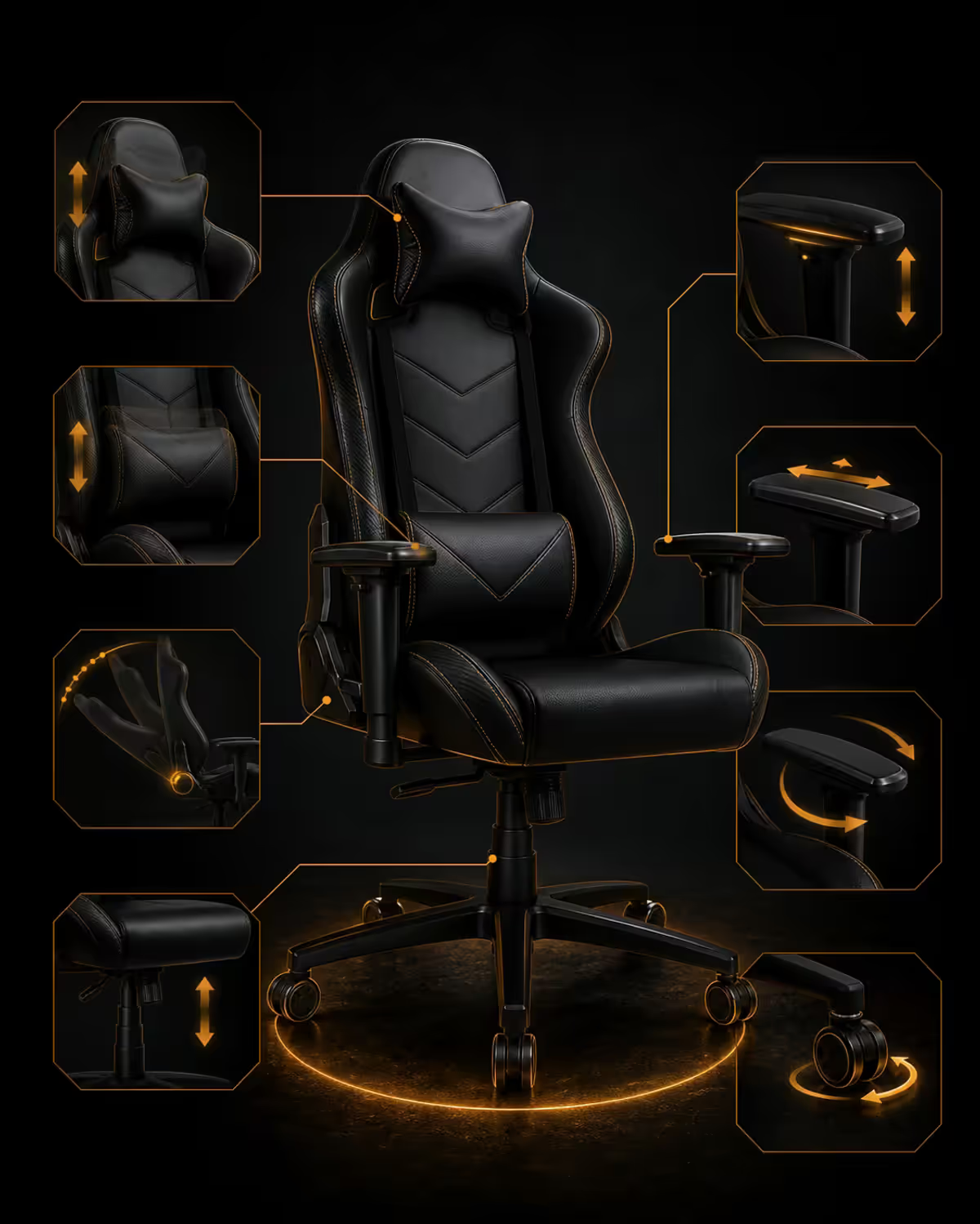
Armrests — 4D is the standard, 3D the sweet spot
Armrest adjustability is measured in "dimensions":
| Type | What adjusts | Verdict |
|---|---|---|
| Fixed (0D) | Nothing | Avoid above R1,500 |
| 1D | Height only | Acceptable on budget chairs |
| 2D | Height + width | Minimum for R2,000+ |
| 3D | Height + width + depth (slide forward/back) | Sweet spot — most builds |
| 4D | Height + width + depth + tilt rotation | Gold standard, premium chairs |
The reason armrest dimensions matter: your forearms should rest parallel to the keyboard, elbows at ~90°, shoulders relaxed. If the armrest can't reach that position for your specific torso length, you'll either tense your shoulders (neck pain) or float your arms (forearm pain). 3D minimum gets you there for most builds.
Seat height — gas piston class matters
All chairs use pneumatic gas pistons for height adjustment. The piston has a BIFMA weight class rating that predicts both maximum load capacity and resistance to the dreaded "slow sink" failure where the chair gently lowers itself over hours.
| Class | Max load | Common in |
|---|---|---|
| Class 1 | 60 kg | Childrens / very budget — avoid |
| Class 2 | 75 kg | Budget gaming chairs — slow-sink risk |
| Class 3 | 100 kg | Acceptable on R2k-R4k chairs |
| Class 4 | 110 kg | Standard on premium chairs |
| Class 5 | 150 kg | Heavy-duty & XL chairs |
Match the class to your weight plus 15-20 kg headroom. A 95 kg user on a Class 3 piston is right at the rated limit — expect slow-sink within 18 months. The same user on Class 4 will get 5-7 years of reliable height retention.
Seat geometry — depth and width matter
Beyond adjustments, the physical dimensions of the seat itself must match your body. Two measurements dominate.
Seat depth — measured from the front of the seat to the backrest. Too shallow, your thighs hang off the front and you slump. Too deep, the front edge presses into the backs of your knees and cuts off circulation. The right depth lets you sit with your back fully against the lumbar support while two or three fingers fit between the front of the seat and the back of your knees.
Most chairs have fixed seat depth. Premium chairs (Secretlab Titan Evo XL, Herman Miller Embody, Steelcase Leap) offer adjustable seat-pan slide of 3-7 cm — match it precisely to your body. For fixed-depth chairs, check the specs against your thigh length (knee-to-hip in sitting position) before ordering.
Seat width matters too — too narrow, your hips are pinched by the side bolsters; too wide, you sit cocked to one side. Gaming chair side bolsters (the racing-bucket-style raised edges) are aesthetic for slim users but actively uncomfortable for wider builds. If you're a wider build (or just don't fit a "racing seat" silhouette), look at chairs without aggressive side bolsters — Secretlab Titan, AKRacing Onyx, or office chairs entirely.
Recline angle and tilt mechanism
Recline matters less for gaming and more for breaks — leaning back during cutscenes, taking calls, the occasional power nap.
Recline angle: the maximum tilt from vertical. Most gaming chairs offer 90° (upright) to 135-180° (lying flat). 135° is the comfort standard; 160-180° lets you actually nap. Office chairs typically recline less aggressively (90-130°) because they're designed for working, not lying down.
Tilt mechanism: separate from full recline, tilt is the small forward/back movement of the whole seat-and-back assembly. Two types matter:
- Synchro-tilt (premium office chairs) — backrest reclines faster than the seat tilts, mimicking your body's natural sit-to-recline motion. Maintains lumbar contact throughout the range. The ergonomic gold standard.
- Knee-tilt (most gaming chairs) — pivots from a point near your knees, lifting the front of the seat as the back reclines. Less ergonomically refined but cheaper to engineer.
Tilt tension knob: controls how much resistance the chair offers when you lean back. Set it to match your weight so that small posture changes are easy but you don't fall backward unexpectedly. Quality chairs let you set tilt lock to fix the chair at any angle.
Material — SA climate is the deciding factor
Material choice on a gaming chair has different stakes in Johannesburg, Pretoria or Durban than in Reykjavik. SA summers are hot. Chair surface needs to breathe.
| Material | Pros | Cons in SA climate |
|---|---|---|
| PU leather | Premium look, water-resistant, easy wipe-clean | Hot, sweaty after 1 hour in summer |
| Fabric (cloth) | Breathable, comfortable, varied colours | Slightly harder to clean spills |
| Mesh (back only) | Maximum airflow, no heat retention | Limited to office-style chairs (Ergohuman, Aeron) |
| Real leather | Premium, durable | Least breathable, very expensive on chairs |
| Hybrid (fabric + PU panels) | Aesthetic compromise | Depends on which surface your body actually contacts |
Recommendation for SA buyers: fabric for most users, mesh for those who run hot or live in coastal high-humidity (Durban especially), PU leather only if you genuinely prioritise the premium look over comfort and you spend most of your gaming in air-conditioned rooms.
Secretlab's SoftWeave Plus fabric is the gold standard in fabric gaming chair surfaces — breathable, soft, holds up to years of use without pilling. AKRacing's PU leather is among the best in its class but still hot in summer.
Build quality, warranty and the long view
A chair is a multi-year purchase. Reasonable expectation for a R5,000+ chair is 5-7 years of daily use. The build details that determine whether you'll hit that:
- Frame material — steel frame inside the foam padding. Plastic frames warp and crack after 18-36 months. Verify the spec sheet says "metal frame" or "steel frame".
- Base — five-pointed star, usually nylon, aluminium or steel. Nylon is fine and standard; aluminium is premium and lasts longer.
- Casters — 60-65 mm PU-coated wheels are the sweet spot. Hard plastic casters on tile floors will mark; soft PU rolls smoothly on every floor type.
- Stitching — examine the seams in product photos. Premium chairs have tight, even stitching; cheap chairs have loose threads visible. Stitching is also where leather chairs fail first.
- Foam density — cold-cure moulded foam (Secretlab, AKRacing premium) retains shape for years; cheap injection-moulded foam crushes within 12-18 months, leaving you sitting on a flat seat over the base panel.
- Warranty — 5 years parts is the modern premium standard (Secretlab 5-year extended); 3 years is acceptable mid-tier; 1-2 years is a red flag for confidence in the build.
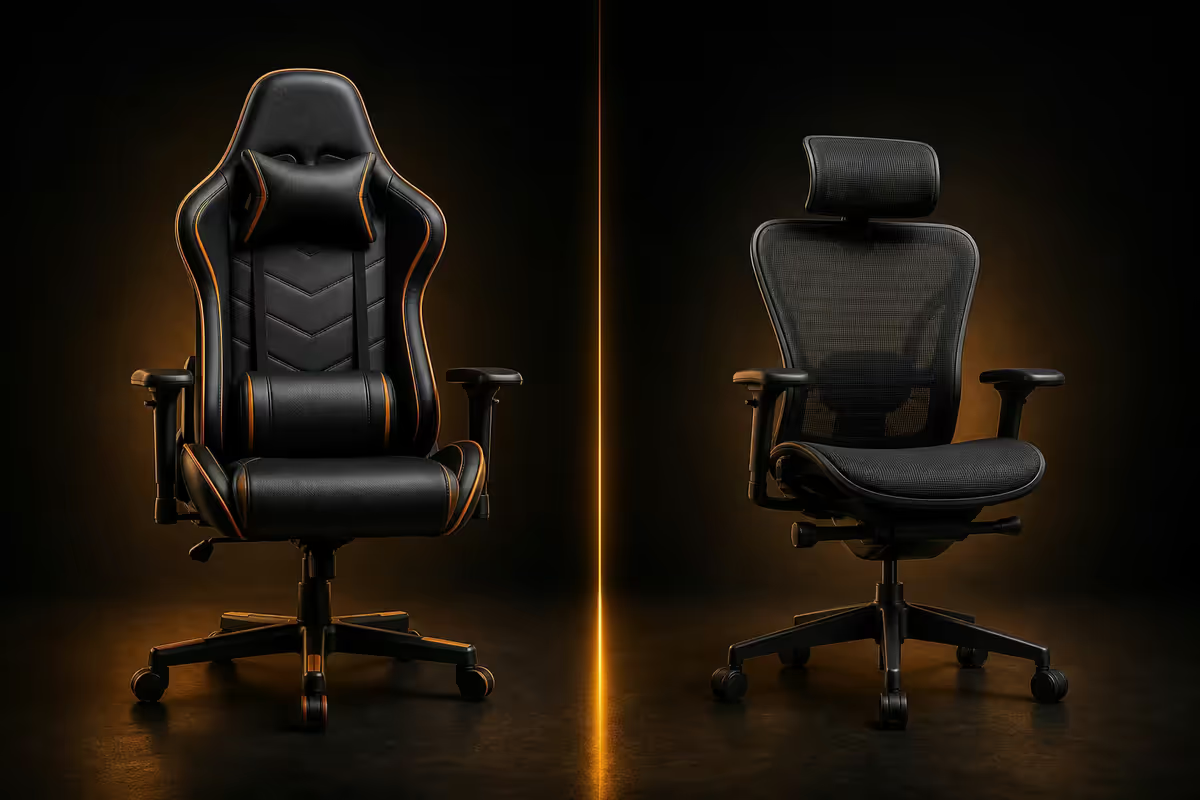
Gaming chair vs office chair — the honest comparison
Here's the controversial take SA gaming media rarely tells you: for most gamers spending 8+ hours a day in a chair, a proper ergonomic office chair beats a gaming chair at every price point above R4,000.
Office chair brands (Steelcase, Herman Miller, Hag, Ergohuman, Humanscale) have spent decades engineering chairs for office workers sitting 40+ hours a week. Their adjustability ranges are more sophisticated, their lumbar systems more precisely calibrated, their long-term comfort better validated. Gaming chairs prioritise aesthetics, brand collaborations, and the racing-bucket silhouette that looks good on stream.
What office chairs do better:
- Lumbar adjustability — true height-and-prominence adjustment, not just shape
- Breathable mesh backs (Ergohuman, Aeron) for SA summers
- Synchro-tilt mechanisms that maintain lumbar contact throughout recline
- Forward-tilt seat options for working at a desk (gaming chairs rarely have this)
- Better warranty terms (Herman Miller 12-year warranty; Steelcase 10-year; Hag 10-year)
What gaming chairs do better:
- Racing aesthetic and stream-friendly appearance
- Higher recline angles for napping or extreme leaning back
- Better neck/head pillows by default
- Often deeper foam padding (subjective comfort win for some)
- Brand collaborations (Razer Iskur, Logitech x Herman Miller Embody)
The honest verdict: if you don't care about the racing-bucket look and the chair lives in your home office, an Ergohuman Plus (R5,500 SA), Steelcase Series 1 (R8,500), or Hag Capisco (R12,000) is a better long-term comfort buy than a same-priced gaming chair. If the chair is part of your streaming setup and aesthetics matter, top-tier gaming chairs (Secretlab Titan Evo, Razer Iskur V2, Herman Miller x Logitech Embody) close the comfort gap to within 10%.
SA brand picks by tier
| Tier | Gaming chair picks | SA price |
|---|---|---|
| Budget gaming | GTRacing Pro, Redragon Coeus, Cougar Fusion | R2,000-R4,000 |
| Mid gaming | Cooler Master Caliber X2C, DXRacer Air, AKRacing Core | R4,500-R7,000 |
| Premium gaming | Secretlab Titan Evo, Razer Iskur V2, AKRacing Master | R8,000-R12,000 |
| Flagship gaming | Herman Miller x Logitech Embody, Secretlab Titan XL Magnus | R30,000-R50,000+ |
| Office alternative — entry | Ergohuman V1, Mercury XS | R4,500-R6,500 |
| Office alternative — mid | Ergohuman Plus, Steelcase Series 1, Hag Capisco | R7,500-R12,000 |
| Office alternative — flagship | Herman Miller Aeron, Steelcase Leap V2, Herman Miller Sayl | R18,000-R45,000 |
Common gaming chair mistakes
Buying for looks, not lumbar. The racing-bucket aesthetic photographs beautifully and ergonomically punishes you after month two. Always prioritise lumbar adjustability and seat geometry over how the chair looks on stream.
Skipping the test sit. Chairs are profoundly personal — what fits a 1.78 m, 75 kg reviewer may be entirely wrong for you. Whenever possible, sit in a chair for 15+ minutes before buying. Some SA retailers (Wootware in Cape Town, Rebel Tech) have chair display areas, and office furniture retailers almost always do. Evetech is online-only, so check the return policy before you order.
Buying R1,500 chairs expecting R5,000 chair durability. Budget chairs at R1,500-R2,500 are made to a cost, with low-class gas pistons, plastic frames, and inadequate lumbar systems. Expect 1-2 years of use before something goes wrong. If you can stretch to R3,500+, you'll get 5+ years.
Ignoring weight rating. Manufacturers publish weight ratings for a reason — exceeding them voids warranty and accelerates piston failure. If you're 110 kg+, look at XL variants (Secretlab Titan XL, DXRacer Tank, AKRacing ProX) with higher rated capacities and proportionally larger frames.
Underestimating armrest impact. Many buyers focus on backrest and seat, then discover too late that fixed or 1D armrests force unnatural arm positions. 3D minimum for any chair you'll use for serious typing or gaming.
Buying based on YouTube reviews of a different body type. A 1.75 m reviewer raving about a chair tells you nothing about how that chair fits a 1.65 m or 1.90 m frame. Read reviews from multiple body types or visit the showroom yourself.
Key takeaways
- Lumbar support is the whole game — adjustable built-in lumbar > fixed lumbar curve > loose pillow.
- 3D armrests minimum, 4D ideal. Class 4 gas piston minimum. Fabric or mesh material for SA's climate.
- Match weight rating to your body plus 15-20 kg headroom. Verify seat dimensions before ordering.
- Office chairs (Ergohuman, Steelcase, Hag) often beat gaming chairs at the same price for serious long-session use.
- Premium picks worth the spend: Secretlab Titan Evo, Razer Iskur V2 for gaming look; Ergohuman Plus / Steelcase Series 1 for pure ergonomics.
Frequently asked questions
What should I look for in a gaming chair?
Adjustable lumbar support first, then 3D/4D armrests, Class 4 gas piston, 135°+ recline, fabric or mesh material, weight rating with headroom.Are gaming chairs better than office chairs?
For 8+ hour sessions, a proper office chair (Ergohuman, Steelcase, Herman Miller) often wins on ergonomics at the same price. Gaming chairs win on aesthetics.How important is lumbar support?
The single most important feature. Adjustable built-in lumbar is the gold standard, fixed lumbar curve acceptable, loose pillow is a last resort.What armrest type should I look for?
4D ideal (height, width, depth, tilt), 3D sweet spot, 2D acceptable on budget chairs. Fixed armrests unacceptable above R2,000.PU leather, fabric or mesh — which for SA?
Fabric for most SA buyers, mesh for hot climate / coastal, PU leather only if aesthetics matter more than summer comfort.What gas piston class do I need?
Class 4 minimum (110 kg rated), Class 3 acceptable on budget chairs. Lower classes start slow-sinking within 18 months.Which gaming chair brands are best in SA?
Premium: Secretlab Titan Evo, Razer Iskur V2, AKRacing Master. Office alternatives: Ergohuman, Steelcase Series 1, Hag Capisco.What's the right chair for 1.85m+ or 110kg+?
Secretlab Titan XL, DXRacer Tank, AKRacing ProX, or office chair alternatives sized for larger frames like Ergohuman Plus or Steelcase Leap.
Get the Evetech app
Exclusive app-only prices, daily flash sales, and free delivery on orders over R4,000 — download the app and start saving.