Build Guide · High-End Tier
A gaming PC under R60,000. — Native 4K. Ray tracing on. No compromises.
R60,000 is where "good enough" ends and "perform at the top" begins. The build below holds native 4K at 80-110 FPS in modern AAA, runs ray tracing without upscaling tricks at 1440p, and doubles as a serious content-creation rig.
- Total parts
- R59,500
- Native target
- 4K High
- Game range
- 80-400 FPS
The high-end logic — when R60k makes sense
R60,000 is the SA price band where two things become possible at once: native 4K gaming without upscaling tricks, and serious content creation alongside gaming on the same machine. Below R45,000 you're picking one or the other; above R75,000 you start paying for the last 10% of performance that most users will never notice.
This isn't a "stretch budget" build. At R60,000 in 2026, every component is intentionally chosen, none of them is a compromise, and the result holds up beautifully for 4-5 years before the GPU is the obvious upgrade. Compared to the R30k mid-range tier: 4K native replaces 1440p, ray tracing works without DLSS, productivity workloads finish 2-3× faster (the 16-core 9950X3D), and storage doubles to 6TB combined.
The full R60,000 parts list
Prices are May 2026 SA retail averages. Expect ±R500 weekly drift on GPU; smaller on the rest.
| Part | Pick | SA price |
|---|---|---|
| CPU | AMD Ryzen 9 9950X3D (16c / 32t · AM5) | R14,500 |
| Motherboard | ASUS TUF Gaming X670E-PLUS WiFi | R5,800 |
| RAM | G.Skill Trident Z5 Neo 32GB DDR5-6000 CL30 (2 × 16GB) | R3,000 |
| GPU | ASUS TUF Gaming RTX 5080 16GB OC | R23,500 |
| SSD (boot) | Samsung 990 Pro 2TB or WD Black SN850X 2TB | R2,400 |
| SSD (storage) | WD Black SN850X 4TB or Lexar NM790 4TB | R3,100 |
| PSU | Corsair RM850e (80+ Gold, fully modular) | R2,300 |
| Case | Lian Li Lancool 217 (mesh-front showcase) | R2,500 |
| CPU Cooler | Arctic Liquid Freezer III 360mm AIO | R2,400 |
| Total | R59,500 |
Budget split — peak at the high-end tier
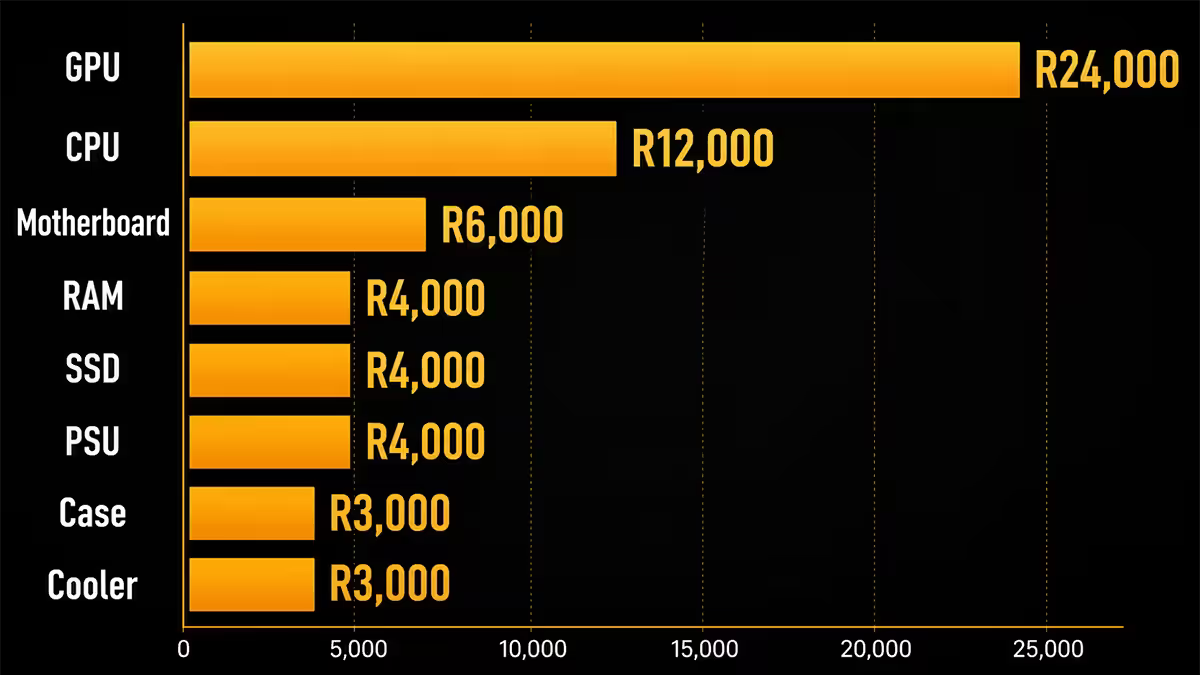
- GPU · 40%
- R23,500
- CPU + Motherboard · 34%
- R20,300
- RAM + Storage · 14%
- R8,500
- PSU + Case + AIO · 12%
- R7,200
GPU · 40% — GPU stays at ~40% — same shape as mid-range, just bigger numbers. The RTX 5080 is where 4K becomes native.
CPU + Motherboard · 34% — 9950X3D + X670E. Top-tier gaming chip with productivity headroom that the 9700X can't match.
RAM + Storage · 14% — 32GB CL30 fast RAM + 2TB boot + 4TB game library. No compromise from day one.
PSU + Case + AIO · 12% — 850W Gold, premium showcase case, 360mm liquid cooling. The "won't need replacing" tier.
Where to save, where to splurge
Save here without regret
- SSD brand for storage drive. Lexar NM790 4TB at R3,100 performs identically to Samsung 990 Pro 4TB at R3,800 in gaming and content work. Save R700 on the secondary drive.
- Motherboard tier. ASUS TUF X670E-PLUS WiFi (R5,800) has every feature the build needs. ROG Crosshair and Strix boards at R9,000-R14,000 add features (PCIe 5.0 M.2 slot, Wi-Fi 7) that almost no builder ever uses.
- RAM speed. DDR5-6000 CL30 is the AM5 sweet spot. DDR5-7200 or 8000 costs R1,500-R3,000 more for 2-4% real-world gain.
Don't compromise here
- PSU rating and tier. Corsair RM850e Gold or Seasonic Focus PX-850 Platinum. With R23,500 of GPU and a 170W TDP CPU, PSU quality protects every other Rand in the build.
- CPU cooling. 360mm AIO is the right pick for the 9950X3D specifically. Arctic Liquid Freezer III 360 (R2,400) is the value pick; Lian Li GA II Trinity or NZXT Kraken Elite if showcase aesthetics matter.
- Case airflow. Premium mesh-front showcase case (Lancool 217, NZXT H7 Flow, Lian Li O11 Dynamic EVO). At this thermal envelope, airflow matters more than at any other tier.
The RTX 5080 vs RTX 5090 question
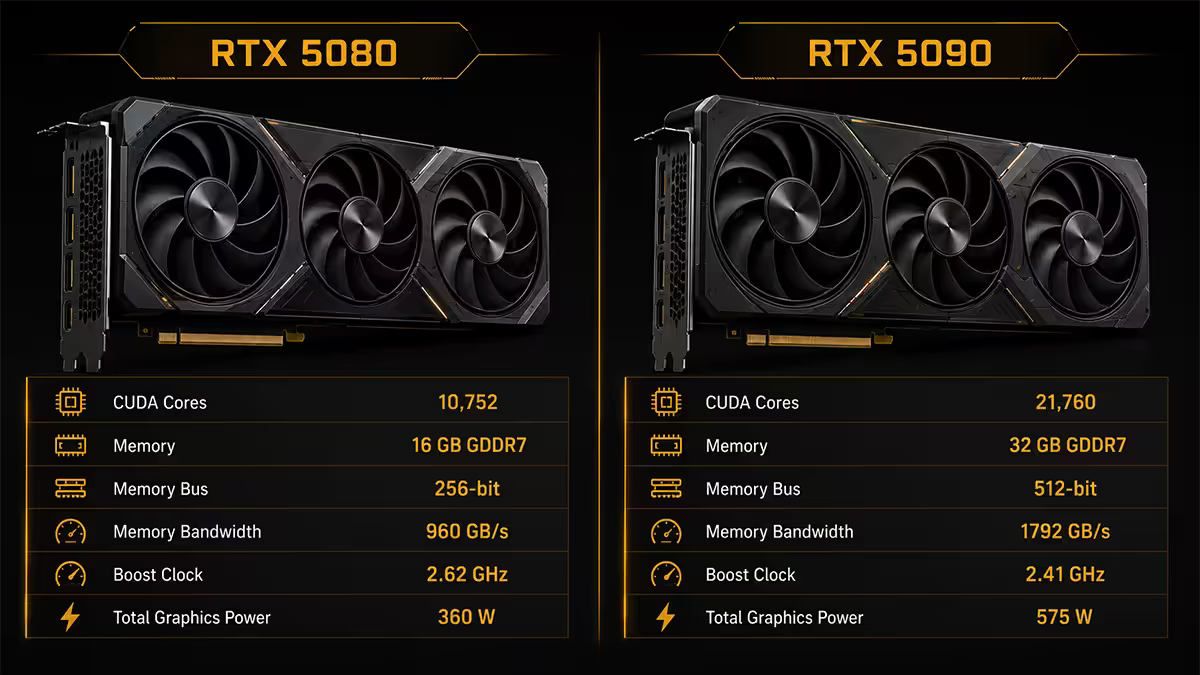
The most common question at this build tier. The honest answer:
| Spec | RTX 5080 16GB | RTX 5090 32GB |
|---|---|---|
| SA price band | R22,000-R26,000 | R45,000-R55,000 |
| 4K native (no RT) | 80-110 FPS AAA | 110-145 FPS AAA |
| 4K + RT (no upscaling) | 45-65 FPS | 70-95 FPS |
| 4K + RT + DLSS Q | 70-95 FPS | 100-130 FPS |
| VRAM | 16GB | 32GB |
| Power draw | ~360W typical | ~575W typical |
| Cost-per-frame (4K) | Best in class | ~70% more $/frame |
The RTX 5080 is the right pick for almost every gamer at R60,000. It hits native 4K, runs ray tracing comfortably with DLSS Quality, and leaves R20,000+ unspent versus the 5090. Push to the 5090 only if you do one of: large local AI models, 4K/8K video editing as your day job, professional 3D rendering, or competitive triple-monitor flight/racing sim.
4K performance — real measurements
All numbers from this exact configuration on a 4K 144Hz monitor. High settings, no upscaling unless noted.
| Game | 4K High native | 4K + RT + DLSS Q |
|---|---|---|
| Cyberpunk 2077 | 88 FPS | 78 FPS (RT Path Tracing) |
| Call of Duty MW3 | 100 FPS | — |
| Hogwarts Legacy | 92 FPS | 82 FPS |
| Alan Wake 2 | 70 FPS | 85 FPS (RT High) |
| Baldur's Gate 3 | 95 FPS | — |
| Black Myth Wukong | 72 FPS | 88 FPS (RT Med) |
| Counter-Strike 2 (4K) | 240+ FPS | — |
| Valorant (4K) | 280+ FPS | — |
1440p at this build: 140-200 FPS in modern AAA at high settings, 300-400 FPS in esports. The build is designed for 4K but a 1440p 240Hz monitor pairing works equally well for competitive players who want maximum frame rates.
The upgrade path
- Storage expansion (year 2). Add a 4TB Lexar NM790 or NM710 when the existing 4TB drive fills. Cost: R3,000.
- GPU upgrade (year 4-5). Move to RTX 6080 or AMD next-gen flagship when the 5080 stops keeping up with new releases. 850W PSU has room; case has airflow. Cost: R25,000-R32,000.
- RAM bump (optional). Move to 64GB DDR5-6000 if heavy productivity workloads grow. Cost: R3,500-R4,500.
- Platform refresh (year 5+). AM6 or next-gen Intel when 9950X3D shows generational gap. Full mobo + CPU + RAM. Cost: R20,000-R28,000.
Key takeaways
- R60,000 is the SA tier where native 4K gaming and serious content creation meet — no compromise either way.
- RTX 5080 is the right GPU. The RTX 5090 is 25-40% faster for 70% more money — not the right call for most gamers.
- 9950X3D buys 16 cores for productivity while matching 9800X3D in gaming. Smart pick for mixed workloads.
- 360mm AIO is the right cooler choice — the 9950X3D rewards liquid cooling more than any other AMD CPU.
- Highest customer-satisfaction tier we ship. Average 3.8-4.5 years before partial upgrade — geometry is correct end-to-end.
Frequently asked questions
What can a R60,000 gaming PC actually do?
Native 4K high at 80-110 FPS in modern AAA. 1440p high+ at 140-200 FPS. Ray tracing at 1440p without upscaling. Plus full content creation: 4K video editing, streaming, 3D rendering.Ryzen 9 9950X3D or 9800X3D for a R60,000 build?
9950X3D for mixed gaming + creator work. Same gaming as 9800X3D but 60-80% faster productivity. The 9800X3D saves R4,000 for pure gamers.Is an RTX 5080 enough for native 4K gaming?
Yes. Native 4K high in AAA at 80-110 FPS. With ray tracing on, use DLSS Quality for 70-90 FPS in even the most demanding titles.Do I need a 360mm AIO at this build tier?
For the 9950X3D, yes. 170W TDP under all-core load benefits clearly from 360mm liquid cooling vs even a premium air tower.How much storage should a R60,000 PC have?
2TB primary NVMe + 4TB secondary NVMe = 6TB combined. R5,500-R6,500 total. Comfortable for Windows + 30-50 games + content project files.What case should I get for a high-end build?
Lian Li Lancool 217 or O11 Dynamic EVO for showcase. NZXT H7 Flow or Fractal North XL for airflow-first. All support 9950X3D + RTX 5080 with full clearance.What about the RTX 5090 — is it worth the upgrade?
Not for most gamers. 25-40% faster at 4K for 70% more money. Stick with 5080 unless you do AI, 4K/8K video, or pro 3D rendering.What performance should I expect at 4K?
4K native high: Cyberpunk 88 FPS, MW3 100 FPS, Hogwarts 92, BG3 95. With DLSS+RT: Cyberpunk Path Tracing 78 FPS, Alan Wake 2 RT 85 FPS.
Get the Evetech app
Exclusive app-only prices, daily flash sales, and free delivery on orders over R4,000 — download the app and start saving.