Build Guide · Mid-Range Tier
A gaming PC under R30,000. — 1440p high. 90+ FPS. The sweet spot.
R30,000 is the SA price band where 1440p stops being aspirational and starts being the default. The build below holds 90+ FPS in modern AAA titles at high settings with comfortable headroom for content creation alongside.
- Total parts
- R29,800
- Target preset
- 1440p High
- Game range
- 90-200 FPS
The sweet-spot logic — why R30k is the smart-money tier
R30,000 is the price band where the value-per-Rand curve peaks for almost every SA gamer. Below R20,000, GPU and CPU compromises start hurting visibly. Above R40,000, every additional Rand returns less performance than the last. The R30k point lands cleanly in the middle.
What changes at this tier compared to the R15,000 build: resolution doubles (1080p → 1440p), VRAM grows from 8GB to 12GB (no more games running out of GPU memory), RAM doubles to 32GB (productivity headroom appears), storage doubles to 2TB (no active game management needed), and the PSU jumps to 750W (room for a much larger future GPU).
The build comfortably runs ray tracing at 1440p, handles 4K with DLSS/FSR upscaling, streams via NVENC without performance loss, and edits 1080p / light 4K footage in DaVinci Resolve or Premiere Pro. It is, simply, the build most South African gamers should target if their budget allows it.
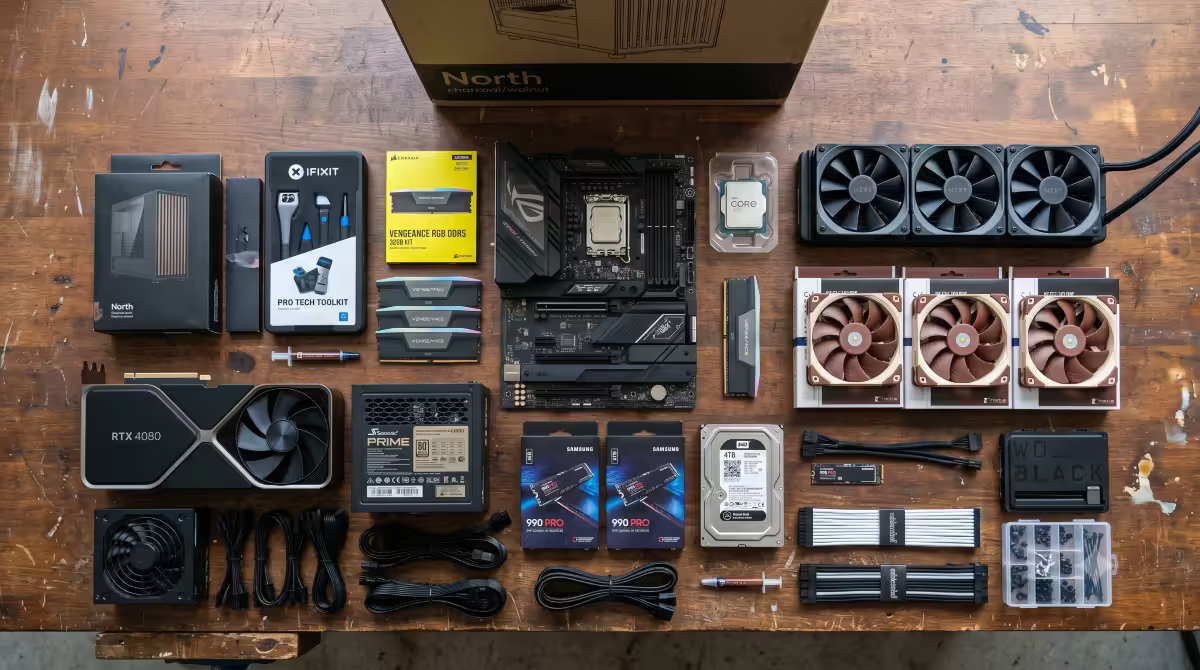
The full R30,000 parts list
Prices are May 2026 SA retail averages. Expect ±R300 weekly drift on GPU and RAM.
| Part | Pick | SA price |
|---|---|---|
| CPU | AMD Ryzen 7 9700X (8c / 16t · AM5) | R6,800 |
| Motherboard | MSI B650 Tomahawk WiFi (AM5, DDR5) | R3,200 |
| RAM | Kingston Fury Beast 32GB DDR5-6000 (2 × 16GB) | R2,400 |
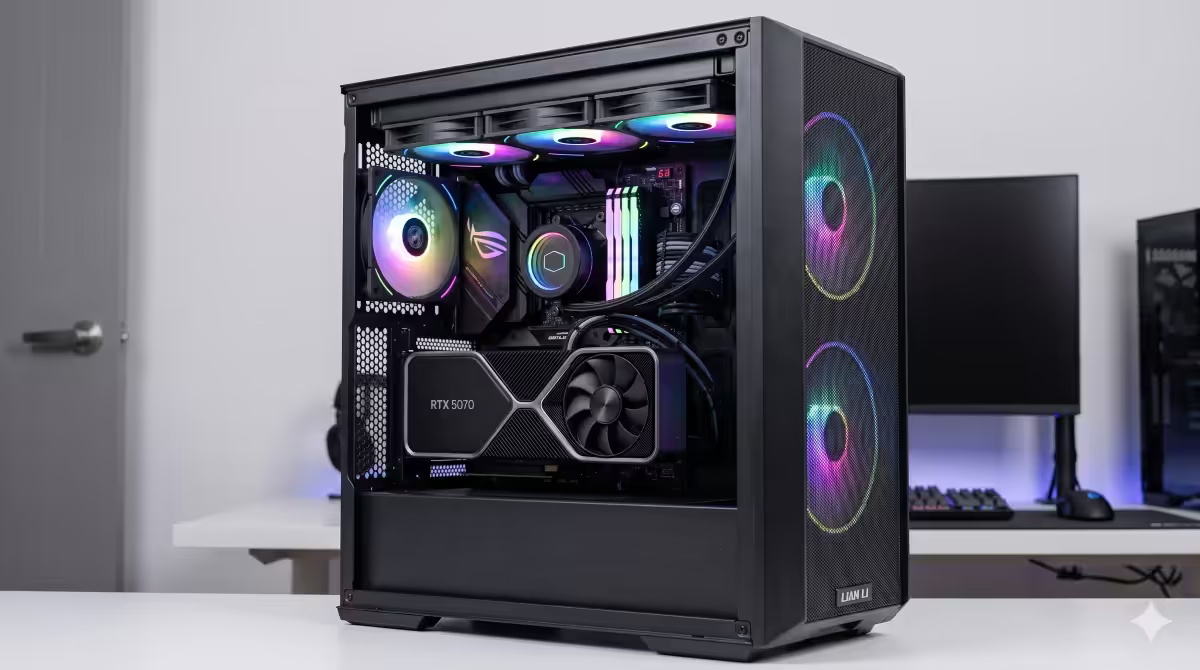
| GPU | Gigabyte Gaming OC RTX 5070 12GB | R12,000 |
| SSD | Lexar NM790 2TB NVMe Gen 4 | R1,800 |
| PSU | Corsair RM750e (80+ Gold, modular) | R1,500 |
| Case | Lian Li Lancool 216 (mesh-front mid-tower) | R1,500 |
| CPU Cooler | Thermalright Peerless Assassin 120 SE (dual-tower air) | R800 |
| Total | R29,800 |
Budget split — different shape from R15k
Notice how the allocation changes from the budget tier:
- GPU · 40%
- R12,000
- CPU + Motherboard · 33%
- R10,000
- RAM + Storage · 14%
- R4,200
- PSU + Case + Cooler · 13%
- R3,600
GPU share grows — at 1440p the GPU drives more of the performance picture than at 1080p. A Wi-Fi B650 board and Ryzen 7 8-core provides solid headroom for years of upgrades. 32GB and 2TB are both at the right starting points — no need to budget for upgrades. Gold-rated 750W and a top-tier case both carry forward into any future build.
Where to save, where to splurge
Save here without regret
- CPU cooler. The 9700X's 65W TDP doesn't need a 240mm AIO. Thermalright Peerless Assassin 120 SE (R800) cools as well as a R2,000 AIO with zero pump noise.
- SSD brand. Lexar NM790 2TB at R1,800 matches Samsung 990 Pro 2TB performance for R700 less. Identical gaming and productivity feel.
- Motherboard. B650 Tomahawk WiFi at R3,200 has everything you need. The R5,000+ X670E boards add features (more M.2, PCIe 5.0) that this tier doesn't use.
Don't compromise here
- PSU quality. Corsair RM750e Gold or Seasonic Focus GX-750 are the floor. The Tier-1 80+ Gold modular tier matters when you've got R12k of GPU on the rail.
- Case airflow. Mesh front, period. The Lancool 216 / NZXT H7 Flow / Fractal North class delivers 5-10°C lower GPU and CPU temps versus glass-fronted cases.
- GPU brand. Gigabyte Gaming OC, MSI Gaming Trio, Asus TUF, Sapphire Nitro+. The R500-R1,000 premium over base AIB cards buys quieter fans, better thermals and warranty support that you'll appreciate at this price point.
Smart substitutions
| Original | Swap option | Trade-off |
|---|---|---|
| Ryzen 7 9700X | Intel Core Ultra 7 265K | Similar gaming, better productivity, runs hotter, LGA1851 platform |
| RTX 5070 12GB | RX 7800 XT 16GB | More VRAM, similar 1440p raster, weaker ray tracing, no DLSS |
| MSI B650 Tomahawk WiFi | ASUS TUF Gaming B650-PLUS WiFi | Similar features, choose by SA stock and price |
| Thermalright PA SE | Arctic Liquid Freezer III 240 | R1,200 more for slightly cleaner aesthetic, marginal temp improvement |
| Lian Li Lancool 216 | NZXT H7 Flow or Fractal North | Similar airflow, different aesthetic, choose by preference |
Performance you'll actually get
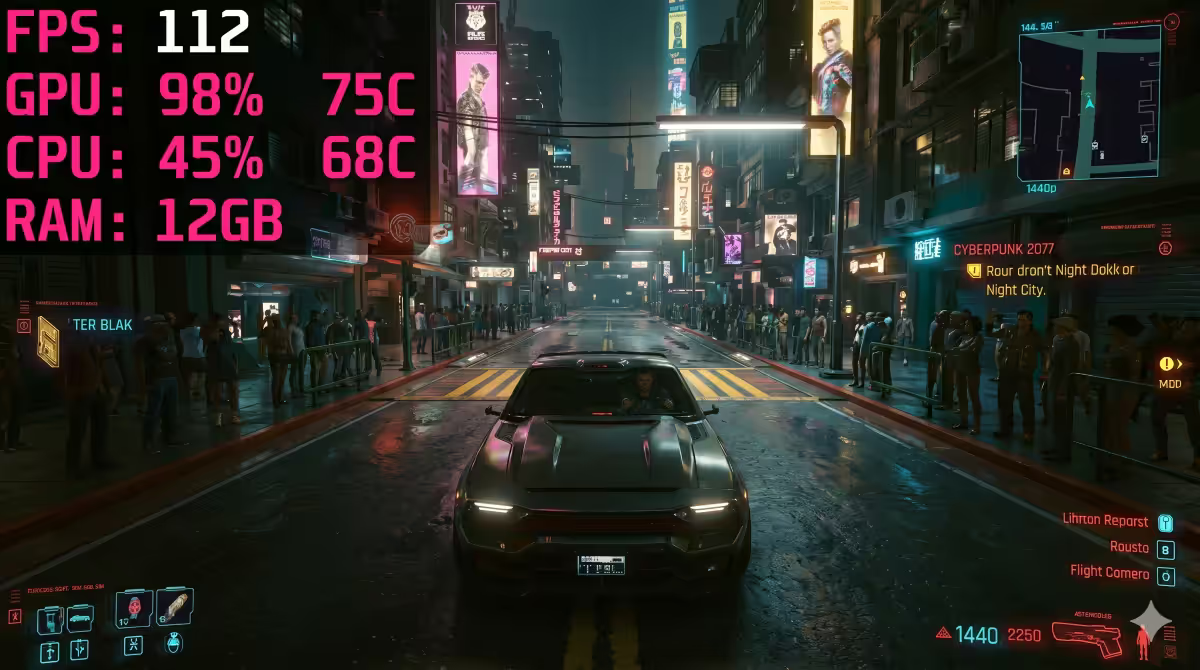
Numbers below are real measurements from this configuration on a 1440p 165Hz monitor. All games at high settings, no upscaling unless noted, no ray tracing unless noted.
| Game | 1440p High avg FPS | 1440p RT High (DLSS Q) |
|---|---|---|
| Cyberpunk 2077 | 100 FPS | 72 FPS |
| Call of Duty MW3 | 130 FPS | — |
| Hogwarts Legacy | 115 FPS | 85 FPS |
| Baldur's Gate 3 | 110 FPS | — |
| Alan Wake 2 | 85 FPS | 68 FPS (DLSS B) |
| Counter-Strike 2 | 280+ FPS | — |
| Valorant | 320+ FPS | — |
| Apex Legends | 200 FPS | — |
At 4K with DLSS Performance: Cyberpunk 2077 holds 75 FPS, Hogwarts Legacy 80 FPS, MW3 95 FPS — fully playable 4K territory with the right upscaling settings.
The upgrade path
- Additional 2TB SSD (year 2). Add a secondary Lexar NM710 or Crucial T500 when your 2TB fills up. Cost: R1,800.
- GPU upgrade (year 3-4). Jump to RTX 5080 or RX 9070 XT when the 5070 starts showing its age in newer titles. The 750W PSU still has room. Cost: R18,000-R22,000.
- CPU upgrade (year 4-5). Move to Ryzen 9 9950X3D on the same AM5 board — no platform change needed. Cost: R12,000-R14,000.
- RAM speed upgrade (optional). 32GB DDR5-7200 or 8000 when CUDIMM standardises on AM5/AM6. Cost: R3,500-R5,000.
Key takeaways
- R30,000 is the SA value sweet spot — 1440p high at 90+ FPS in AAA, 280+ in esports.
- GPU rises to 40% of the budget at this tier; CPU+motherboard at 33%. The right shape for 1440p.
- 32GB RAM and 2TB storage from day one — no compromise upgrades needed.
- The 750W Gold PSU and Lian Li case carry forward into the next 2-3 builds.
- Average time-to-first-upgrade at this tier is 3-4 years — the longest-retained budget bracket.
Frequently asked questions
What can a R30,000 gaming PC actually do?
1440p high at 90-120 FPS in modern AAA, 200+ FPS in esports. Comfortable 4K with DLSS Performance and 1440p ray tracing in most titles.Is R30,000 enough for 1440p gaming?
Yes — comfortably. The price band where 1440p high becomes the natural target rather than a compromise.Ryzen 7 9700X or Ryzen 5 9600X for a R30,000 build?
9700X. The 9600X saves R2,000 but bottlenecks the RTX 5070 in CPU-heavy games and limits productivity headroom.Is 32GB RAM overkill for gaming in 2026?
No. 32GB DDR5-6000 is the sweet spot. Some 2026 AAA games push 14-18GB. Productivity easily uses 20GB+. The R900 upgrade from 16GB is the easiest decision in the build.Should I get an AIO water cooler at this budget?
Optional. The 9700X (65W TDP) is comfortably cooled by Thermalright PA SE (R800). AIO adds R1,200+ for marginal benefit at this CPU class.Will an RTX 5070 fit any case?
Almost. 280-310mm long, 2.5-3 slots thick — fits any mid-tower ATX case. Verify on compact mATX builds.What performance can I expect at 1440p?
Cyberpunk 100 FPS, MW3 130 FPS, Hogwarts 115 FPS, Baldur's Gate 3 110 FPS. With DLSS Quality add 30-40%.Can this build handle 4K gaming?
With DLSS Performance: 60-80 FPS at 4K in AAA. Native 4K high: 45-70 FPS. For consistent native 4K, look at the R60,000 build.
Get the Evetech app
Exclusive app-only prices, daily flash sales, and free delivery on orders over R4,000 — download the app and start saving.