MacBook Air Comparison
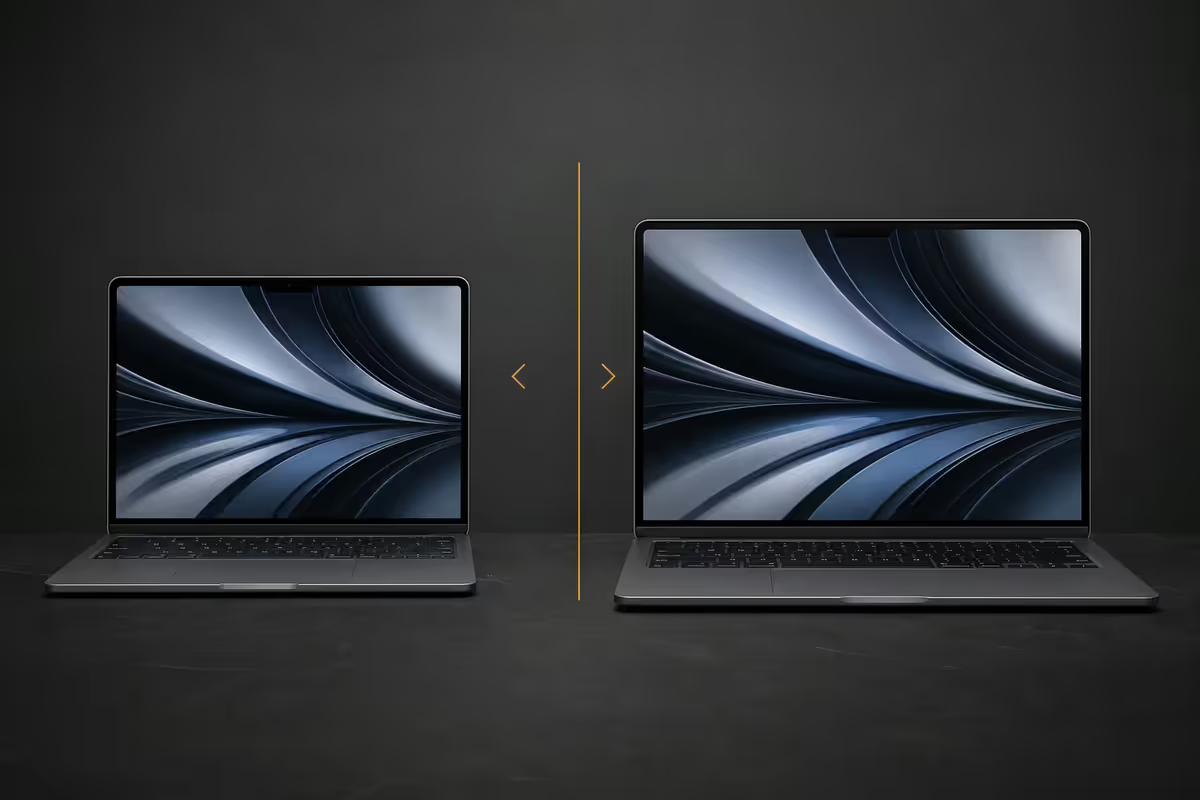
MacBook Air 13 or 15? — 270g and R5,000 of difference.
Same chip. Same battery hours. Same fanless silence. The honest comparison comes down to four things: weight, screen, speakers and price.
- weight delta
- 270 g
- battery (both)
- 18 hrs
- SA price gap
- ~R5,000
Weight and portability — 270g in your bag
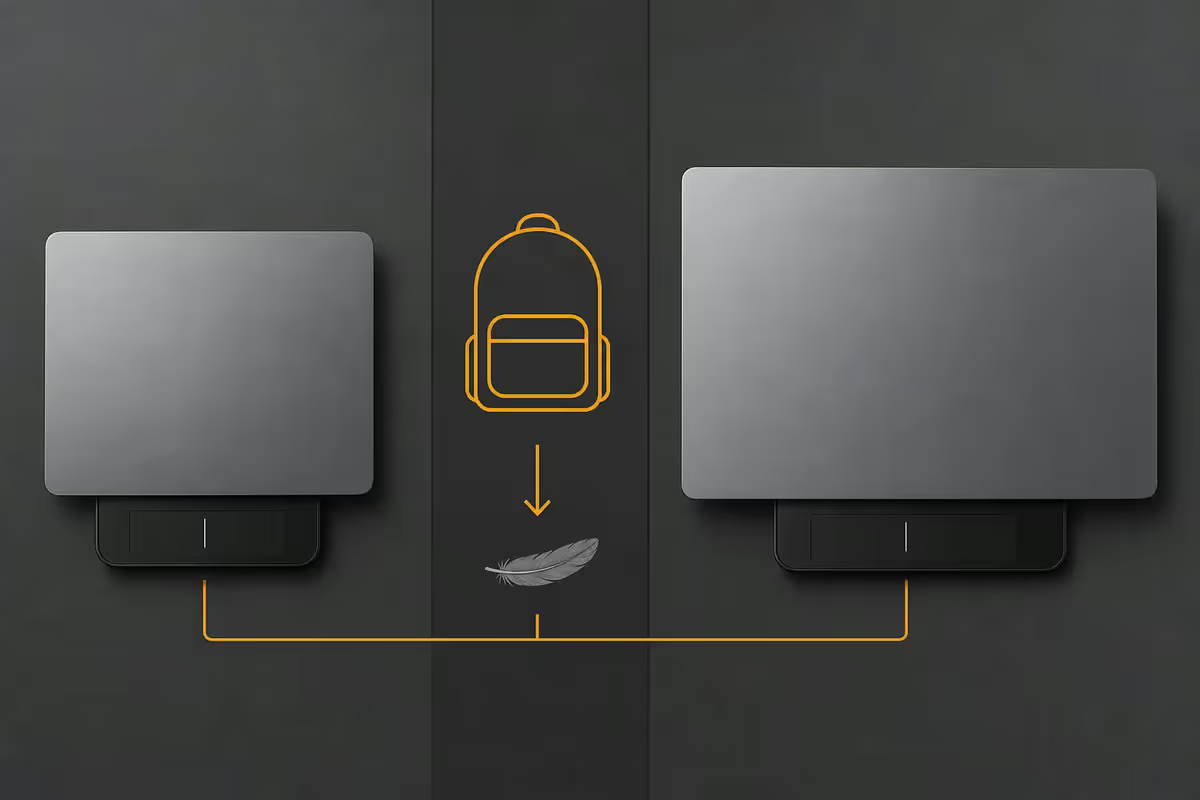
The 13-inch MacBook Air weighs 1.24kg. The 15-inch weighs 1.51kg. That's a difference of 270 grams — about the weight of a paperback novel.
On paper it sounds insignificant. In daily life, it isn't. The 13-inch is the lightest mainstream laptop Apple sells, and you genuinely don't notice it in a backpack. The 15-inch is heavier than every recent MacBook Air predecessor, and you do feel it on a long walk to campus, on a flight with hand luggage near the limit, or in a soft shoulder bag for a full day of meetings.
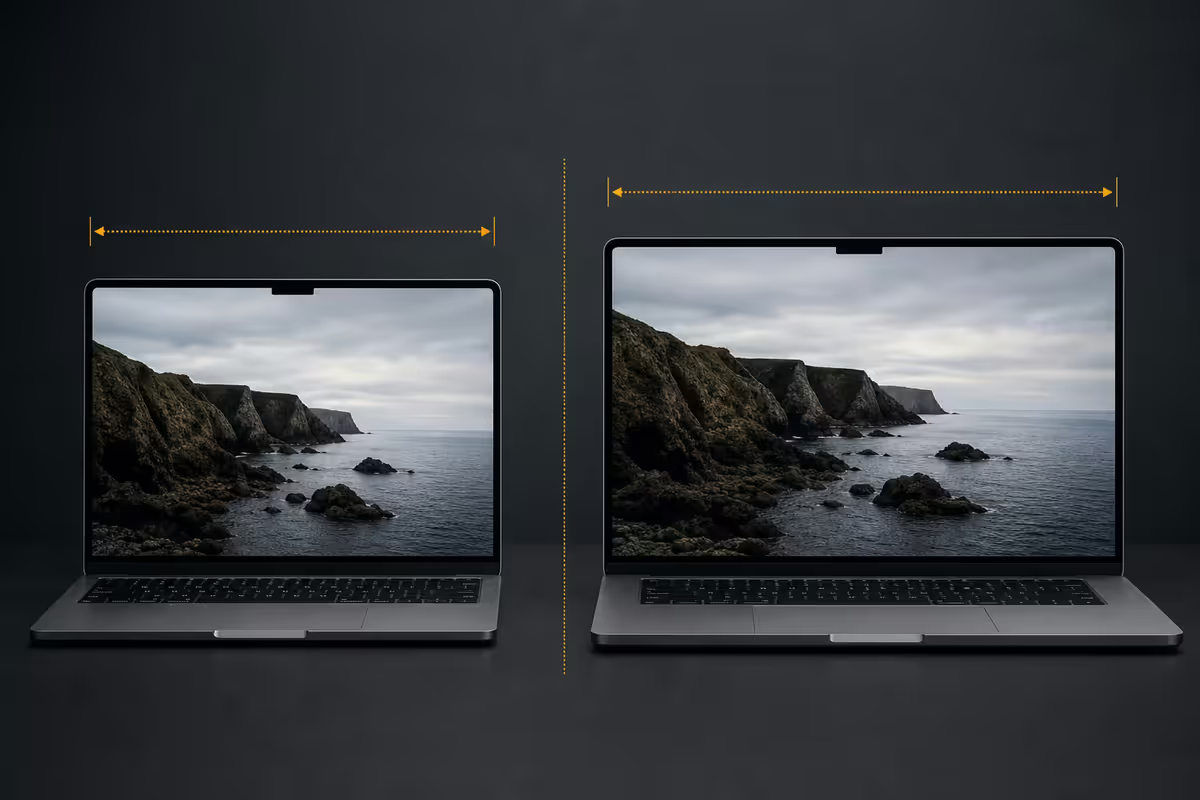
The width difference matters too. The 15-inch is 340mm wide and 237mm deep. Many 14-inch sleeves and slim laptop bags don't fit it. The 13-inch (304mm × 215mm) fits in practically every laptop sleeve made in the last decade. If you carry the laptop in something specifically sized for a 13/14-inch machine, the 15-inch may simply not fit.
If you set the laptop down at the same desk every day and rarely move it, none of this matters. If you move it daily — student to lecture, freelancer to cafe, business traveller through airports — the 13-inch is a genuinely nicer machine to live with.
Display — the 15 inch gives you real room
The 13-inch Air has a 13.6-inch Liquid Retina display at 2560 × 1664. The 15-inch has a 15.3-inch Liquid Retina at 2880 × 1864. Both run at 60Hz, both hit 500 nits typical / 600 nits peak HDR, both use the same P3 wide colour gamut.
The numerical difference is 1.7 inches diagonal and roughly 30% more screen area. The practical difference is dramatic: two windows side-by-side actually work on the 15-inch in a way they don't on the 13-inch. On the 13-inch, side-by-side split view forces apps into a narrow column that hides toolbars and breaks formatting. On the 15-inch, two browser windows, or Slack + IDE, or Pages + Safari, all sit at usable widths.
For users who connect to an external monitor on the desk, this matters less. Plug a 13-inch into a 27-inch monitor and you have 27 inches of screen at the desk regardless. But for users who often work without external monitors — coffee shops, hot desks, trains — the 15-inch is genuinely more productive.
Neither has ProMotion. Both run at 60Hz. If you've been spoiled by 120Hz on an iPhone or iPad Pro, you'll notice scrolling feels less buttery than the MacBook Pro. This is the single biggest reason to consider stepping up to MacBook Pro 14 instead of Air 15.
Speakers — the 15-inch wins big
This is the most underrated reason to buy the 15-inch.
The 13-inch Air has a four-speaker sound system with force-cancelling woofers. It's good, particularly for a laptop this thin. The 15-inch has a six-speaker system, also with force-cancelling woofers, and the additional drivers fundamentally change the experience.
In practical terms:
- Movies and YouTube sound dramatically fuller. Bass is actually present rather than hinted at. Dialogue is clearer because more of the audio band is reproduced.
- Music playback from Spotify or Apple Music is genuinely enjoyable on the 15-inch — most laptops you'd rather grab a Bluetooth speaker, but the 15 holds its own in a quiet room.
- Video calls are clearer. Zoom, Teams and FaceTime all benefit from the wider speaker range, particularly when listening to multiple participants at once.
- Spatial Audio with head tracking actually works convincingly on the 15-inch in a way it doesn't on the 13-inch. The wider stereo separation gives the effect more to work with.
If you regularly watch media on the laptop without headphones, or take frequent video calls in a quiet room, this single upgrade may justify the R5,000 price gap on its own. The 13-inch isn't bad — but the 15-inch is the best laptop audio in this price range from any manufacturer.
Battery and performance — effectively identical
Apple rates both the 13-inch and 15-inch MacBook Air at 18 hours of Apple TV video playback, 15 hours of wireless web. In real-world mixed use — browser, email, Slack, Office, occasional video — both deliver 11-14 hours comfortably.
The 15-inch has a slightly larger battery (66.5 Wh vs 53.8 Wh) but also has a bigger, brighter display that uses more power. The two effects roughly cancel out. For practical purposes, treat battery life as identical when choosing between the two.
Performance is also effectively identical when configured with the same chip. The M3 or M4 (depending on model year) runs the same in either chassis because both are fanless. Both throttle eventually under sustained heavy load — extended video exports, long Xcode builds, AI workloads — because there's no active cooling to remove heat.
The 15-inch has slightly more thermal mass (larger aluminium chassis to absorb heat) so it may sustain peak performance marginally longer under heavy load, but the difference is in the order of seconds-to-minutes, not minutes-to-hours. Anyone whose workflow is sustained compute should look at MacBook Pro 14 for active cooling, not at the larger Air.
SA pricing in 2026
The MacBook Air price difference in SA is consistent: roughly R5,000 between equivalent 13-inch and 15-inch configurations.
| Configuration | 13-inch | 15-inch |
|---|---|---|
| M4 · 16GB · 256GB | R23,999 | R28,999 |
| M4 · 16GB · 512GB | R26,999 | R31,999 |
| M4 · 24GB · 512GB | R31,999 | R36,999 |
| M4 · 24GB · 1TB | R35,999 | R40,999 |
These are Apple list prices. Real-world SA retail (iStore, Digicape, Evetech, Wootware, Takealot) tends to run R1,000-R2,000 below list during promotional periods — particularly around back-to-school (January-February), Black Friday (November) and Apple's late-October refresh cycle.
The sweet spec to buy in 2026: M4, 16GB unified memory, 512GB SSD. Don't buy 8GB any more — modern macOS and apps push 8GB harder than they used to, and SSD swap writes accelerate cell wear. Don't buy 256GB unless you live entirely in iCloud — 50GB of macOS plus a few apps and you're juggling cloud storage from week one.
Who each size suits — honest profiles
Get the 13-inch if you are...
- A student carrying the laptop to and from campus daily. Lighter bag, longer back, easier on the body.
- A freelancer or remote worker who works from cafes, libraries and coworking spaces. The smaller footprint fits on every cafe table; the lower weight saves your shoulder.
- A traveller who carries the laptop in hand luggage frequently. Lighter, smaller bag fit, easier to use on a plane tray.
- Budget-sensitive. The R5,000 saving buys you a 24-inch external monitor for the home desk, where you'll get screen real estate when you actually need it.
- Replacing an older 13-inch. Familiar size, familiar bag fit, no adjustment.
Get the 15-inch if you are...
- A creator who works in Final Cut, Logic, Photoshop or Figma without an external monitor. The bigger canvas earns its keep.
- Working long stretches in two side-by-side windows — research / writing, Slack / IDE, design / brief, journal / source.
- Mostly using the laptop at the same desk. The portability cost is theoretical if it lives on the desk.
- Watching media or taking calls without headphones often. The six-speaker system is genuinely better.
- Upgrading from a 15-inch or 16-inch and wanting to keep that screen size.
MacBook Air vs MacBook Pro — the anchor question
The MacBook Pro 14 starts at R32,999 in SA — roughly equivalent to a well-specced 15-inch Air. Some buyers face the genuine choice between Air 15 and Pro 14.
Choose Pro 14 if:
- Your work involves sustained compute (video export, 3D render, long compiles, AI workloads). Active cooling prevents thermal throttling.
- You'd notice ProMotion 120Hz — the Pro's display refreshes adaptively up to 120Hz, scrolling and animation feel buttery.
- You miss HDMI, SD card and MagSafe ports. The Air has Thunderbolt-only (2 or 3 ports depending on model).
- Your work pays the rent. Tools that earn money justify the higher tier.
Choose Air 15 if:
- You want the lightest large-screen MacBook (1.51kg Air vs 1.55kg Pro 14).
- Your workload is browsing, writing, productivity, light creative.
- Silence matters — the Air is fanless, the Pro spins fans under load.
- You prefer the Air's straight-edged industrial design and full white-keyboard finish.
Key takeaways
- 13-inch weighs 1.24kg, 15-inch 1.51kg. That 270g matters in daily carry, doesn't matter on a fixed desk.
- 15-inch wins decisively on screen real-estate for side-by-side windows and on speakers (6 vs 4).
- Battery life and performance are effectively identical — both fanless, both 18-hour rated.
- Sweet spec is M4 / 16GB / 512GB. 13-inch R26,999. 15-inch R31,999. Don't undersize.
- If your work pays the rent with sustained compute, skip both and look at MacBook Pro 14.
Frequently asked questions
Is the MacBook Air 15-inch worth the extra money?
Only if you benefit from the bigger screen daily or you don't carry the laptop often. The 13-inch's 1.24kg vs 15-inch's 1.51kg is a real daily-life difference. R5,000 SA premium.How much heavier is the MacBook Air 15 vs 13?
270g — 1.51kg vs 1.24kg. About the weight of a paperback novel. Noticeable in a thin shoulder bag carried all day; barely registered in a backpack.Are the speakers on the MacBook Air 15-inch better than 13?
Yes, significantly. 6-speaker system with force-cancelling woofers vs 4-speaker on 13-inch. Real-world: noticeably fuller bass, clearer dialogue, more convincing Spatial Audio.Is the battery life different between 13 and 15-inch MacBook Air?
Effectively identical. Both rated 18 hours video. Real-world 11-14 hours mixed productivity. The 15-inch's bigger battery is offset by the bigger display.Should I get the MacBook Air 15 or MacBook Pro 14 instead?
Pro 14 (R32,999+) is similar price to a well-specced Air 15 but adds ProMotion 120Hz, mini-LED, active cooling, HDMI/SD/MagSafe. If your work involves sustained compute, get the Pro. Otherwise Air is lighter and quieter.Is the 13-inch MacBook Air too small for productivity work?
Not for single-app work. Tight for two side-by-side windows. If you connect to an external monitor at your desk, the 13-inch is plenty. If you work without external monitors often, 15-inch is genuinely more productive.Can I run Final Cut Pro or Logic on a MacBook Air 13-inch?
Yes, both run well on M3/M4 Air. Caveats: long-form 4K and big plugin-heavy Logic sessions stress fanless cooling. For part-time creators the Air handles it. For income-earning sustained creative work, Pro 14 is better.Which MacBook Air spec should I buy in 2026 SA?
M4 / 16GB / 512GB. 13-inch R26,999 list, 15-inch R31,999 list. Skip 8GB and 256GB — modern macOS pushes 8GB hard, 256GB has you juggling cloud from week one.
Get the Evetech app
Exclusive app-only prices, daily flash sales, and free delivery on orders over R4,000 — download the app and start saving.