Ring Light Buying Guide
How to choose a ring light.
The most-googled streaming purchase, and the one creators most often regret. Every ring light looks identical in the listing photos — the differences only emerge under your face on camera.
- desktop sweet spot
- 18-inch
- honest skin tone
- CRI 95+
- SA price range
- R300-R4500
Ring-light diameter — pick the right size first
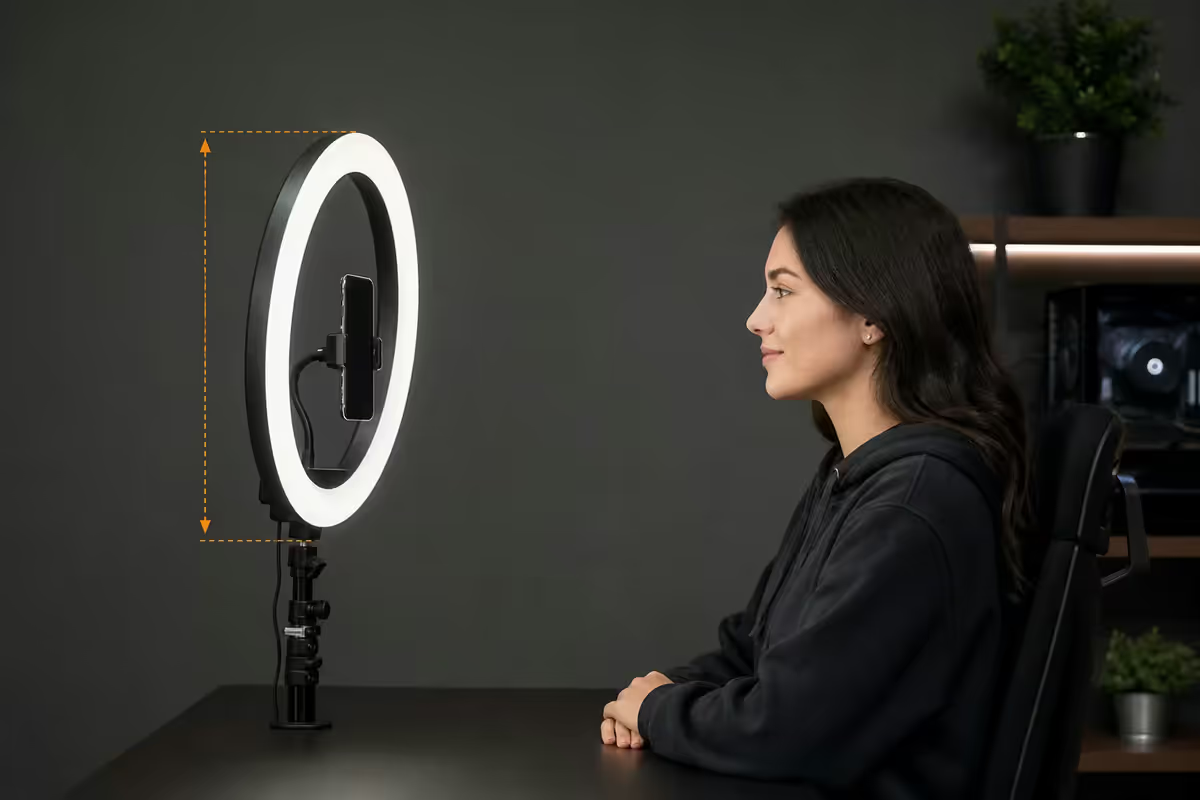
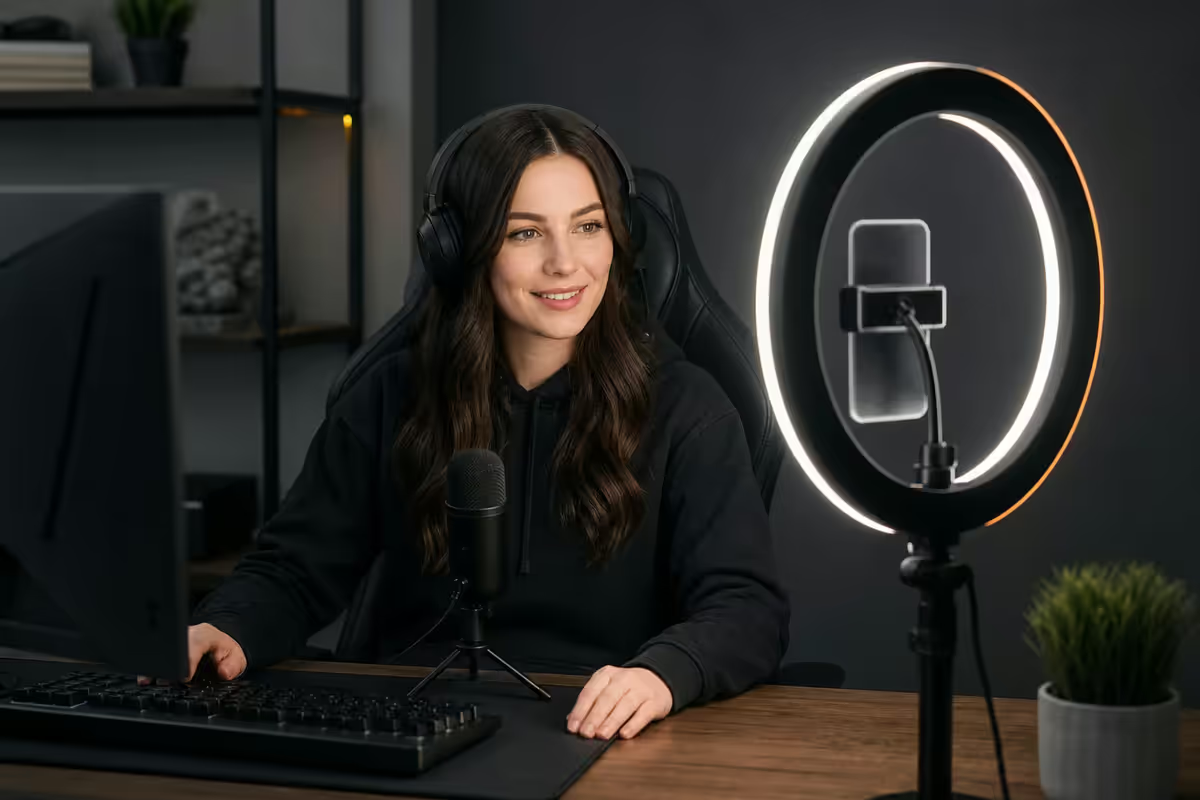
The diameter of the ring is the single most consequential decision you'll make. Too small and the light becomes a directional point source that does nothing flattering. Too big and you're juggling a piece of furniture every time you sit down.
| Diameter | Best for | Reality check |
|---|---|---|
| 6-8 inch | Phone selfie clip-on | Too small for face lighting — looks like a torch |
| 10-12 inch | Tight desk, phone creators | Workable for laptop streaming if space is tight |
| 14 inch | Mid-range desktop streaming | Solid balance of coverage and footprint |
| 18 inch | Desktop streaming sweet spot | The classic creator catchlight, wraps the face evenly |
| 20-22 inch | Studio / full-body shoots | Overkill for streaming, fantastic for product video |
For most streamers sitting 50-80cm from a webcam or mirrorless, the 18-inch ring is the right call. It produces the iconic donut catchlight in the eyes, wraps light evenly across both sides of the face, and softens shadows under the chin without making you look flat.
If your desk is shallow or you're working from a laptop on a small table, drop to 14-inch. The output and CRI are usually identical to 18-inch models — you're just losing a little wrap.
Colour temperature & CRI — skin tone is everything
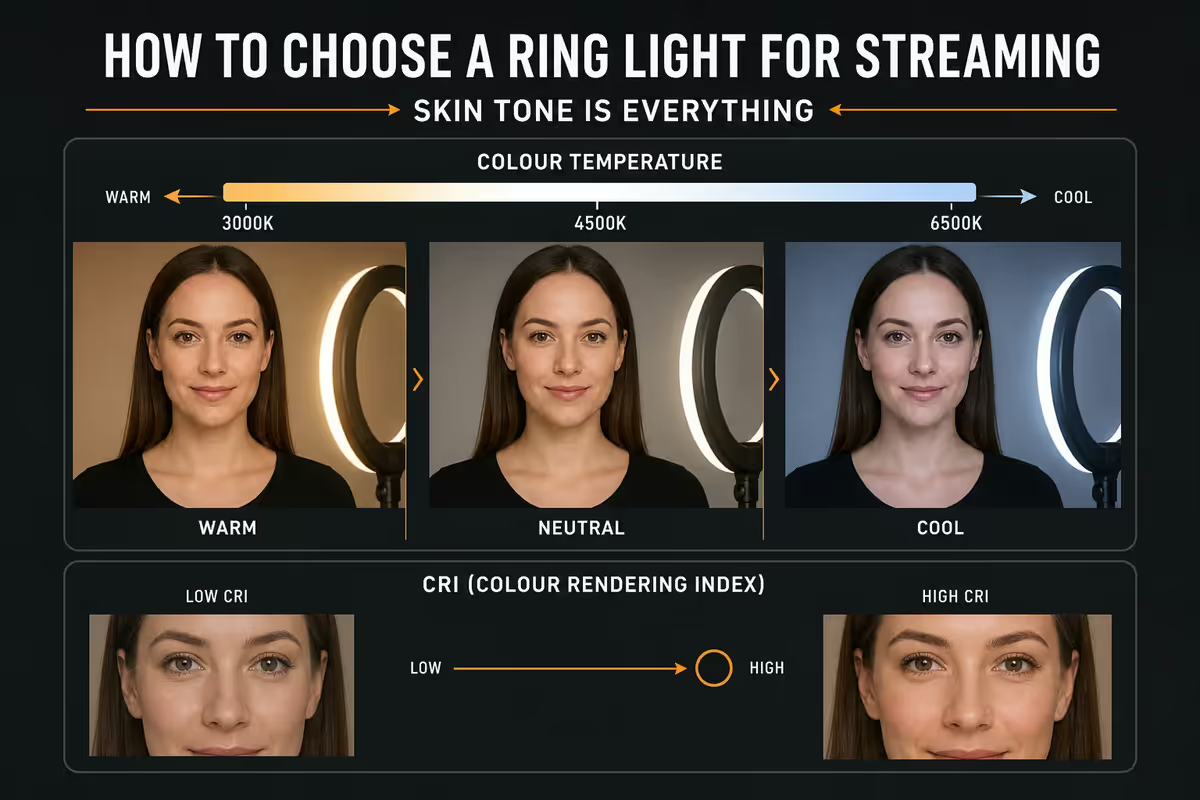
Two specifications most retail listings bury at the bottom: colour temperature range and CRI. Get these wrong and no amount of post-production fixes the result.
Bicolour 2700K-6500K beats single-tone
Bicolour ring lights let you dial anywhere between 2700K warm tungsten (matches indoor incandescent bulbs at night) and 6500K cool daylight (matches midday outdoor light). Why this matters: your room's ambient light shifts colour throughout the day, and your ring light needs to match it or your skin will look unnaturally orange or blue on camera.
Single-tone ring lights typically lock at 5500K — the daylight standard. Fine if your entire room is daylight balanced, terrible if you're streaming in a yellow-lamp evening setup. The R200-R400 premium for bicolour is the easiest spec upgrade to justify.
CRI 95+ is the line, not a luxury
The Colour Rendering Index measures how accurately a light source renders all colours compared to natural sunlight, on a scale of 0-100. Cheap ring lights run CRI 80-85, which produces a subtle green or yellow cast on skin tones and washed-out colour on clothing and props. CRI 95+ renders skin tones honestly. CRI 97+ is professional video standard.
Dimmer, remote & mounting hardware
The hardware around the ring matters as much as the LEDs themselves. A great ring light with a bad mount is a daily frustration.
Dimmer. Every quality ring light has a smooth 0-100% dimmer. Cheap models step in 10% chunks and exhibit visible flicker at lower brightness. You'll usually run a ring light at 40-70%, not full blast — full output looks bleached and washes skin out.
Remote control. A wired or wireless remote (or Bluetooth phone control) means you can adjust brightness and colour temperature without standing up and reaching past your camera. Cheap rings include a pendant dial on the cable; better ones (Elgato Key Light, Logitech Litra Beam) integrate with desktop software, Elgato Stream Deck and even Home Assistant.
Mounting hardware. Three patterns to look for:
- Phone clamp at the centre of the ring — for phone-only streaming or vlogging.
- Hot-shoe mount or 1/4-inch tripod screw at the centre — for compact mirrorless or DSLR mounting inside the ring.
- Off-ring mounting (Elgato Key Light Air, Litra Beam) — the light isn't a ring at all but a panel on a desk-clamp arm, aimed at the creator. No centre mount needed; you use your own webcam.
Power: USB-C vs mains
USB-powered ring lights cap at roughly 10-15W of output. That's plenty for clip-on phone vlogging in well-lit rooms, but underpowered for a proper streaming setup where you're fighting ambient room light at distance.
Mains-powered ring lights typically push 30-100W+. The Elgato Key Light hits 80W, the Neewer 18-inch around 55W, the Logitech Litra Beam 30W. At those levels you have headroom to dim down — which, paradoxically, is what makes them better. A 50W ring run at 50% will outperform a 12W USB ring at 100% in colour quality, dimming smoothness and lack of flicker.
Ring light vs 3-point lighting — the honest comparison
A ring light is the streamer-starter's default, but it's not always the right answer. A proper 3-point lighting setup (key + fill + back/hair light) produces objectively better video — at the cost of complexity, cable management and desk real estate.
| Ring light | 3-point lighting | |
|---|---|---|
| Setup time | 5 minutes | 30-60 minutes initial |
| Footprint | One tripod or clamp | 2-3 stands or arms |
| Visual signature | Circular catchlight | Natural, dimensional |
| Glasses-friendly | No (circular reflection) | Yes (off-angle key) |
| Multi-person streams | No | Yes |
| Entry cost (SA) | R1500 | R4500-R8000 |
| Skill ceiling | Plug and play | Much higher |
Start with a ring light if: you stream solo, don't wear glasses, want it set up in five minutes, and are working with a single-camera face-cam framing. The Neewer 18-inch gets you 80% of the way to professional video for R1500.
Step up to 3-point if: you wear glasses, stream multi-person content, do product reviews, want a more cinematic look, or have outgrown the ring catchlight aesthetic. A softbox key (Neewer 60cm) + fill panel (Godox SL60W) + small rim light is the SA-friendly entry kit.
Recommended ring lights & key lights
| Use case | Pick | SA price |
|---|---|---|
| Best value (most streamers) | Neewer 18" Bicolour Ring Kit | R1400-R1800 |
| Budget desktop | Ulanzi 12" Bicolour | R900-R1200 |
| Phone clip-on entry | Generic 10" USB ring | R300-R500 |
| Premium streamer key light | Elgato Key Light Air | R3500-R4200 |
| Portable panel key light | Logitech Litra Beam | R2800-R3500 |
| Compact desk panel | Lume Cube Edge Light | R2500-R3000 |
| Studio-grade ring | Godox LR180 or LR240 | R3000-R4500 |
| 3-point starter kit (alt) | Neewer 2x softbox + LED kit | R3500-R5000 |
The honest take: ring lights and glasses
If you wear glasses, the elephant in the room is the perfect circular reflection of a ring light burning across both of your lenses on every frame. Most ring-light reviews skip this entirely. Here's the truth: you have three options, none of them perfect.
Option 1 — angle it down. Raise the ring above eye level and tilt it down 30-45°. The reflection moves below the bottom of your lens. Workable but reduces the wrap-around quality of the light and casts shadows under your eyes.
Option 2 — switch to a panel or softbox. A flat panel like the Logitech Litra Beam or Elgato Key Light placed at 45° to one side eliminates the circular reflection problem entirely. You lose the catchlight aesthetic, but you gain a more natural cinematic look.
Option 3 — anti-reflective lenses. AR-coated glasses cut reflections by 60-80%. Combined with a slight ring angle, this can produce acceptable results. Worth speccing in your next prescription update if you stream often.
Our recommendation for glasses wearers: skip the ring entirely. The Logitech Litra Beam at R3000 or the Elgato Key Light Air at R4000 will produce dramatically better footage with zero reflection drama. Use the saved hassle to invest in the rest of your setup.
Common ring-light mistakes
Buying the smallest ring you can find. Most regretted purchase in the category. A 6-inch or 8-inch ring is a fashion-photographer's selfie tool, not a streaming key light. Start at 14-inch minimum.
Running the ring at 100% brightness. Full output is for product photography, not face cam. You'll look bleached and shadowless. Run between 40-70% and use the dimmer headroom — it's why you bought a mains light.
Single-tone "daylight only" rings. Locked at 5500K means you can't match a warm evening room or a cool morning office. The bicolour premium is small; pay it.
Ignoring CRI on the spec sheet. If CRI isn't published, assume it's bad. CRI 95+ is the floor for credible streaming footage, not the ceiling.
Sticking with the ring after you start wearing glasses. The circular reflection in lenses is the giveaway sign of "I bought a ring light first". Switch to a panel — you'll thank yourself.
Buying a ring without a remote or app control. Reaching past your camera to twist a dial mid-stream is a recipe for accidentally bumping framing. Remote or app control is worth R200-R400 extra.
Key takeaways
- 18-inch is the desktop streaming sweet spot — drops to 14-inch for tight desks. Avoid sub-10-inch for face lighting.
- CRI 95+ and bicolour 2700K-6500K are non-negotiable specs. Single-tone and CRI 80-85 produce visibly wrong skin tones.
- Mains-powered beats USB-powered for desktop streaming — more wattage, smoother dimming, no flicker, cleaner colour.
- If you wear glasses, skip the ring entirely and pick the Logitech Litra Beam or Elgato Key Light at 45°.
- Neewer 18-inch kit (R1500) covers most streamers. Elgato Key Light Air (R4000) is the premium step. 3-point softbox kit (R5000+) is the eventual graduation.
Frequently asked questions
What size ring light should I buy for streaming?
18-inch is the desktop streaming sweet spot. 14-inch is workable for tight desks. 10-12 inch only for phone-only setups. Avoid 6-8 inch for face lighting — they're too directional.What does CRI 95+ actually mean for streamers?
CRI measures how accurately a light renders colours vs natural sunlight on a 0-100 scale. CRI 95+ means honest skin tones and accurate clothing colours. Below 90, skin shifts green or yellow on camera.USB-powered or mains-powered — which ring light should I pick?
Mains for serious desktop streaming — 30-100W+ output, smooth dimming, no flicker. USB caps at 10-15W and is only adequate for clip-on phone vlogging.How do I stop my ring light reflecting in my glasses?
Three options: raise the ring and tilt down 30-45°, switch to a softbox or panel at 45° off-axis, or use anti-reflective coated lenses. Honestly, glasses wearers are better off skipping rings entirely.Is a bicolour ring light worth the extra money?
Yes. Bicolour 2700K-6500K lets you match warm evening ambient or cool morning daylight. The R200-R400 premium is the easiest spec upgrade to justify.Ring light vs softbox — which is better for streaming?
Ring lights are simpler, cheaper and produce the signature catchlight. Softboxes are more flattering, glasses-friendly and multi-person capable. Most streamers start with a ring and graduate to 3-point softbox.What's the best ring light under R2000 in South Africa?
The Neewer 18-inch bicolour kit (R1400-R1800) — includes ring, tripod, phone clamp, remote and bag. CRI 95+, bicolour, smooth dimmer. The closest competitor is the Ulanzi 12-inch at R900-R1200.Can I mount my camera inside the ring light?
Yes — 14-inch and larger rings include hot-shoe, 1/4" tripod screws or a phone clamp at the centre. Larger DSLRs and mirrorless need a sturdy ball-head. Elgato Key Light and Litra Beam don't use a centre mount at all.
Get the Evetech app
Exclusive app-only prices, daily flash sales, and free delivery on orders over R4,000 — download the app and start saving.