Build Guide · Small Form Factor
A Mini ITX gaming PC. — Console-sized. Desktop-powered.
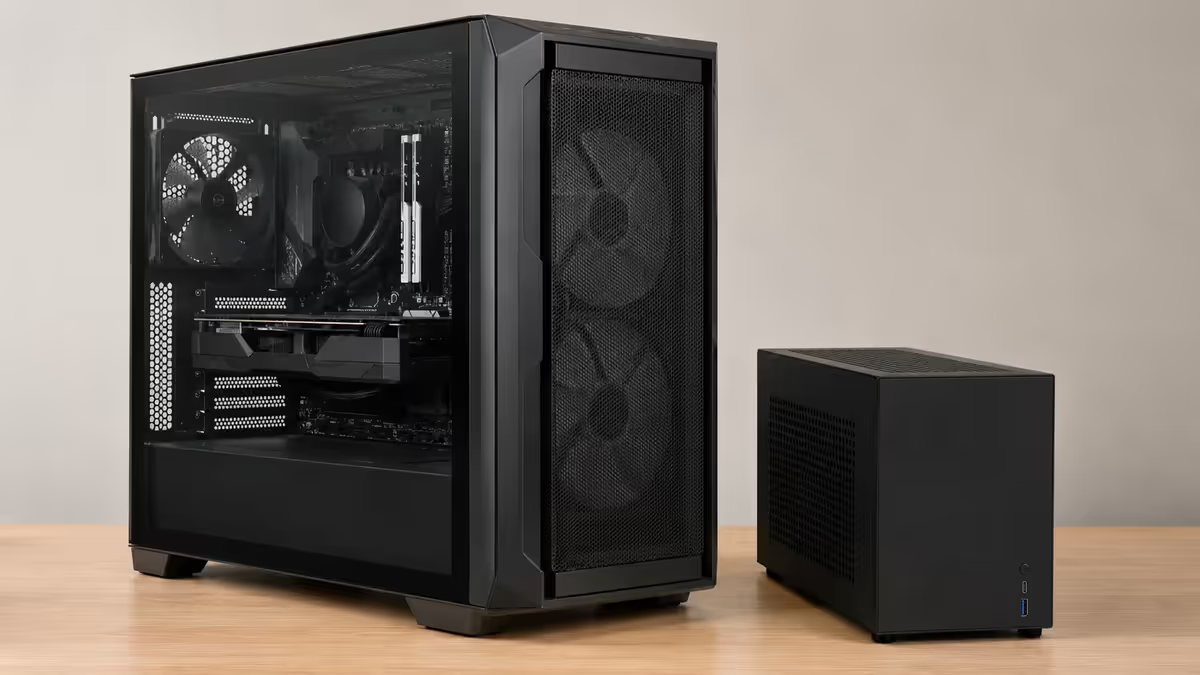
The build that turns 50 litres of mid-tower into 11 litres of cube — and asks you to plan every clearance, every cable, every order of operations. Worth it when size matters; punishing when it doesn't.
- case volume
- 11 L
- PSU mandatory
- SFX
- cost vs ATX
- +25%
When ITX actually makes sense
ITX is a real-tradeoff build. You're paying more, working harder, and accepting compromises on cooling and upgrade headroom. The right reasons to do it:
- Living room / TV PC. An ITX cube slides into an entertainment centre next to the consoles. Mid-towers can't.
- Genuine desk space constraints. Tiny desk, monitor arm setup, shared family space — physical footprint matters.
- Frequent transport. LAN parties, gaming setups at multiple locations, travel between offices.
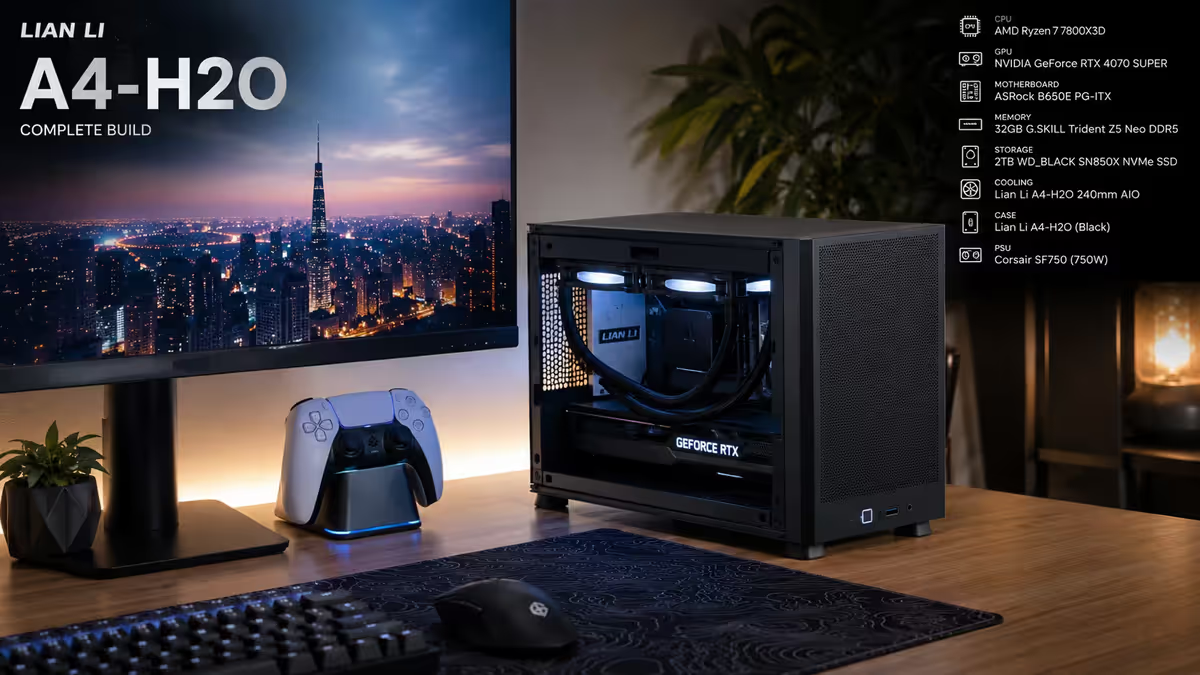
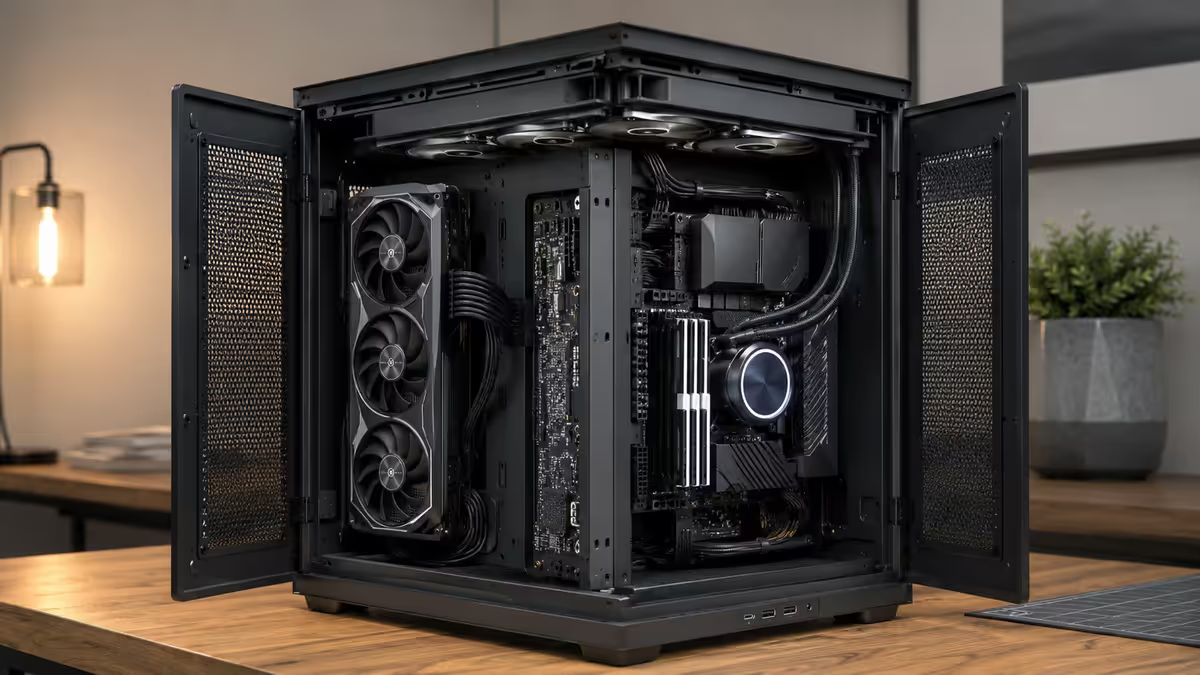
- Aesthetic / showcase pieces. Some ITX cases (Lian Li A4-H2O, Fractal Terra) are objectively beautiful in a way mid-towers can't match.
Wrong reasons to go ITX: "Smaller is cooler", "I want to feel like an enthusiast", "ATX seems too big". If you have desk space and don't need portability, a mid-tower ATX delivers more performance per Rand, runs cooler, and is dramatically easier to build.
The full ITX parts list
Prices are May 2026 SA retail averages. Expect ±R500 weekly drift on GPU and RAM.
| Part | Pick | SA price |
|---|---|---|
| CPU | AMD Ryzen 7 9700X (65W TDP — ITX-friendly) | R6,800 |
| Motherboard | ASUS ROG Strix B650-I WiFi (ITX) | R5,200 |
| RAM | G.Skill Trident Z5 32GB DDR5-6000 CL30 (2 × 16GB) | R3,000 |
| GPU | ASUS Dual RTX 5070 12GB (compact 280mm) | R12,000 |
| SSD | Lexar NM790 2TB Gen 4 | R1,800 |
| PSU | Corsair SF850L (SFX-L, 80+ Gold) | R3,200 |
| Case | Lian Li A4-H2O ITX (11L) | R3,500 |
| Cooler | Arctic Liquid Freezer III 240mm AIO | R2,000 |
| Total | R37,500 |
For comparison, the equivalent R30,000 mid-range ATX build uses the same CPU/RAM/GPU but ships in a ~50L mid-tower with a 750W ATX PSU and air cooler — saving R7,500 (25%) but taking 4× the physical volume.
Best ITX cases for 2026 SA builders
| Case | Volume | Max GPU | AIO support | SA price |
|---|---|---|---|---|
| Lian Li A4-H2O | 11L | 320mm | 240mm | R3,500 |
| Fractal Design Terra | 10.4L | 322mm | None (air only) | R3,800 |
| Cooler Master NR200P MAX | 18L | 336mm | 280mm + 850W PSU + AIO included | R4,500 |
| NZXT H1 V2 | 17.5L | 305mm | 140mm included + 750W PSU included | R5,200 |
| SSUPD Meshlicious | 14.8L | 336mm | 240mm | R3,200 |
| Phanteks Evolv Shift 2 | 22L | 335mm | 280mm | R2,800 |
| Velka 5 (extreme SFF) | 4.6L | 266mm | None (low-profile air only) | R4,200 (import) |
Cooling constraints — the ITX reality
Small cases have less air volume to absorb heat. CPU and GPU thermal loads concentrate quickly. Three practical implications:
- CPU TDP ceiling: ~150W sustained. Ryzen 7 9700X (65W) is ideal. Ryzen 9 9950X3D (170W) needs a 240mm AIO and still runs warmer than in ATX.
- GPU temps run 5-10°C hotter than the same card in a mid-tower. Front-intake GPU cases (A4-H2O sandwich layout) help by giving the GPU dedicated airflow.
- Fan noise can be a problem — small cases need higher RPM fans to move equivalent air. Use Noctua Chromax or Phanteks T30 for premium quiet operation.
Air cooler options for ITX: Noctua NH-L12S (70mm), Thermalright AXP90-X53 (53mm low-profile), Be Quiet Shadow Rock LP (76mm). Suitable for CPUs up to 150W TDP in well-ventilated cases.
AIO is usually the right answer for any CPU above 95W TDP in ITX — a 240mm AIO in a sandwich-layout case (A4-H2O) keeps the 9700X under 75°C even in summer Gauteng heat.
SFX PSUs — the small box with all the power
Standard ATX PSUs (150mm long) don't fit in ITX cases under 18L. SFX form factor (125mm × 100mm × 63.5mm) is the smaller standard. SFX-L (130mm long) sits in between — enough length for higher wattage at 850W+.
| PSU model | Wattage | Form factor | SA price |
|---|---|---|---|
| Corsair SF750 | 750W 80+ Platinum | SFX | R2,800 |
| Corsair SF850L | 850W 80+ Gold | SFX-L | R3,200 |
| Corsair SF1000L | 1000W 80+ Gold | SFX-L | R4,200 |
| Cooler Master V SFX Gold 850 | 850W 80+ Gold | SFX | R2,600 |
| FSP Dagger Pro 850W | 850W 80+ Gold | SFX | R2,400 |
SFX premium vs ATX equivalent: ~R400-R800 more for the same wattage class. The cost is real but predictable.
The 25% premium — where it comes from
ITX cost premiums over ATX
- ITX motherboard
- +R1,500-R3,500
- SFX PSU
- +R400-R800
- Premium ITX case
- +R1,500-R3,500
- Compact GPU variant
- +R200-R800
Total premium: R3,600-R8,600 over equivalent ATX — most commonly R6,000-R7,500 for typical mid-range builds. That's the price of console-sized form factor.
Why ITX is harder to build than ATX
Six specific reasons:
- Specific assembly order required. Some ITX cases (A4-H2O, Terra) need partial assembly of CPU + cooler + RAM + PSU before final case mounting. Reading the case manual carefully matters.
- Cable routing has no room for error. Mid-tower cases have 20-30mm behind the motherboard for cables; ITX often has 5-10mm. Plan cable paths before fully closing.
- Tight clearance for hands and tools. Reach into the case to connect front panel or fans is awkward — a long-shaft magnetic screwdriver is essential.
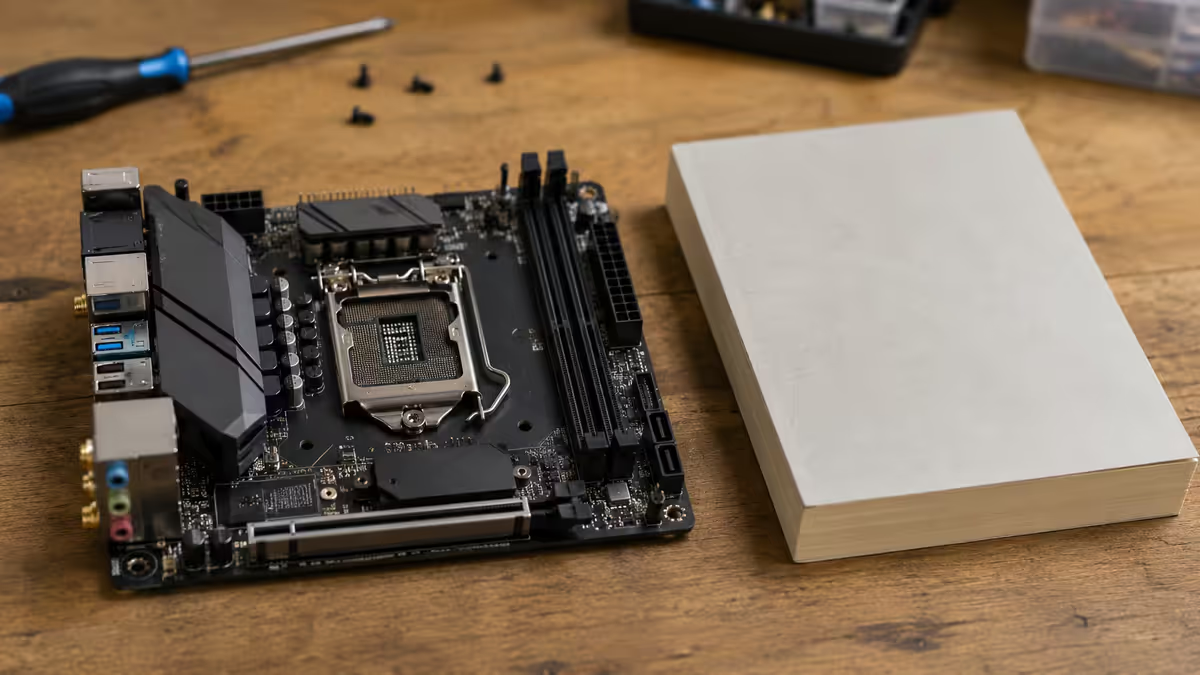
- Cooler vs RAM vs motherboard clearance. Tall RAM, oversized cooler heatsinks, and connectors near the socket all compete for space. Verify clearances before ordering.
- GPU power cable bend radius. 12VHPWR cables need 35mm bend radius. Many ITX cases don't have that, requiring 90° adapter cables.
- Less forgiving troubleshooting. Component reseating in ITX often means partial disassembly of other components. Plan well; check twice before powering on.
If you've never built a PC before, don't start with ITX. Build one or two ATX systems first to get comfortable with the components, cable management and troubleshooting. ITX punishes inexperience.
Key takeaways
- ITX = real tradeoff. Pay 15-30% more for 4× smaller volume. Choose for living room, portability, or genuine desk constraints.
- 11L cases (A4-H2O, Terra) are the sweet spot. Below 10L gets significantly harder to build and limits cooling.
- Ryzen 7 9700X (65W) is the ITX-friendly CPU. Ryzen 9 chips need 240mm AIO + accept higher temps.
- SFX PSU is essentially mandatory under 18L cases. ~R400-R800 premium over equivalent ATX wattage.
- Don't make ITX your first PC build. The constraints punish inexperience.
Frequently asked questions
What does Mini ITX mean?
Smallest standard PC motherboard form factor at 170×170mm. Used in 10-25L cases — console-sized PCs with full desktop performance.Is a Mini ITX PC worth the extra cost?
Only if size genuinely matters — living room, portability, desk space. Wrong reason: "small is cool". 15-30% premium and harder to build.Will an RTX 5080 fit in an ITX case?
Yes in larger ITX cases (A4-H2O, Fractal Terra, NR200P MAX) supporting 320-336mm GPUs. Smaller cases under 12L only fit ~280mm cards.What's the smallest ITX case that fits a full gaming build?
Lian Li A4-H2O at 11L. Fits 320mm GPU, 240mm AIO, SFX PSU. Smaller cases require shorter GPUs and lose AIO support.Do I need an SFX PSU for an ITX build?
Almost always under 18L cases. Standard ATX PSUs are too long. SFX/SFX-L brands: Corsair SF, Cooler Master V SFX. R400-R800 premium.Can I use an air cooler in an ITX build?
Yes up to ~150W TDP CPUs. Use low-profile (Noctua NH-L12S, Thermalright AXP90-X53). For Ryzen 9 chips, 240mm AIO required.How much more does an ITX build cost vs ATX?
15-30% more. Premium drivers: ITX motherboards, SFX PSU, premium small case, sometimes compact GPU variant. R30k ATX → R36-39k ITX.Is an ITX build harder to build than ATX?
Significantly harder. Specific assembly order, tight cable routing, awkward tool access. Not for first-time builders — start with ATX.
Get the Evetech app
Exclusive app-only prices, daily flash sales, and free delivery on orders over R4,000 — download the app and start saving.