Cooling Buying Guide
How to choose cooling. — Match the cooler to your CPU's TDP.
Cooling is where most builders overspend or underspec. The right answer almost always sits in a narrow middle band — and depends entirely on how hot your specific CPU runs.
- air-cooler ceiling
- 200W
- AIO mm range
- 240-360
- sweet spot
- R600-R3,500
Air cooler vs AIO — how they actually differ
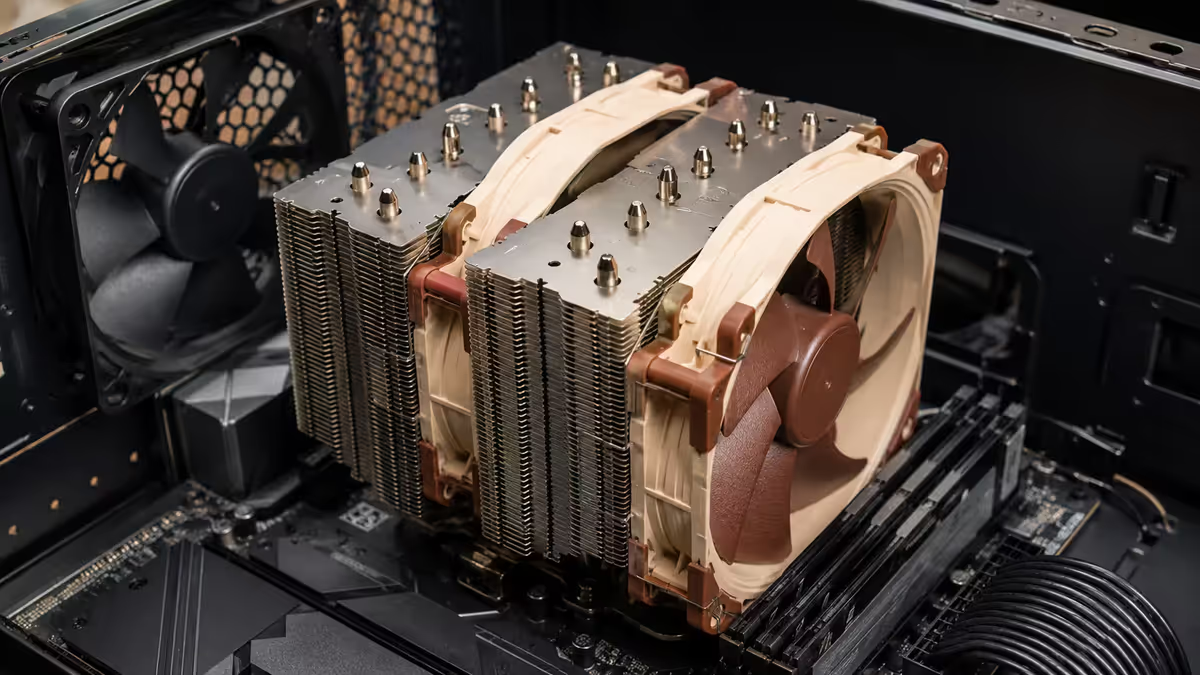
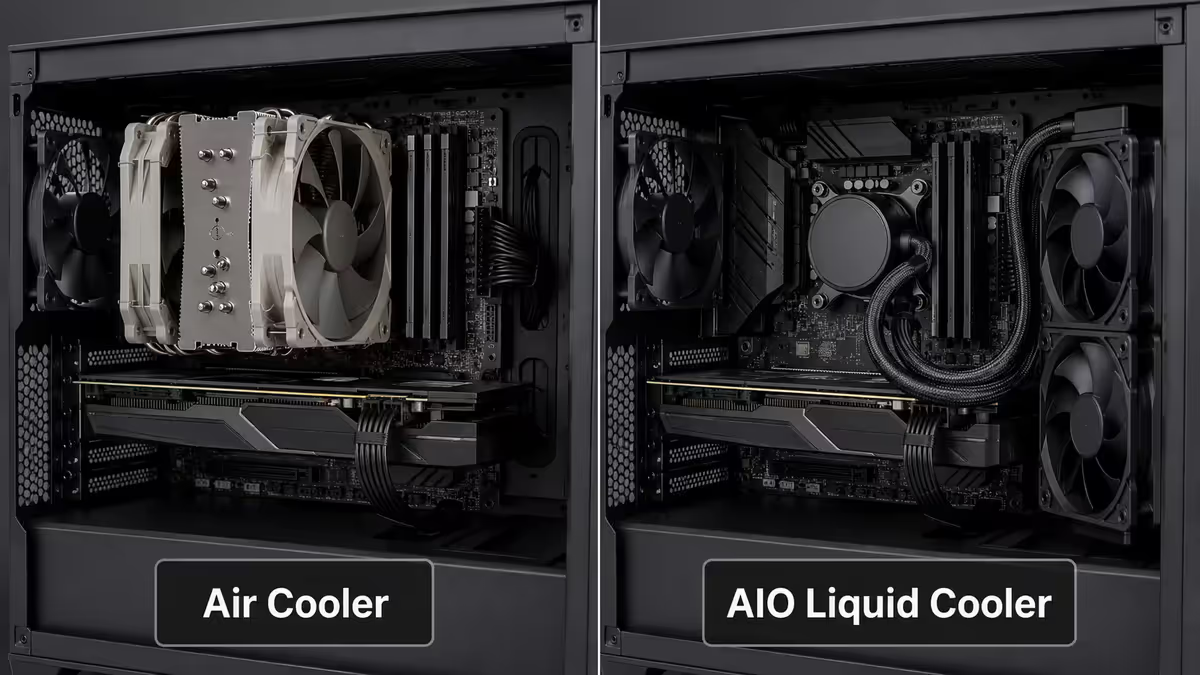
A tower air cooler is a heavy block of fins with heat pipes that bolt directly to your CPU. One or two fans push air through the fins to carry heat away. The whole unit is mechanically simple, has one moving part (the fan), and lasts a decade.
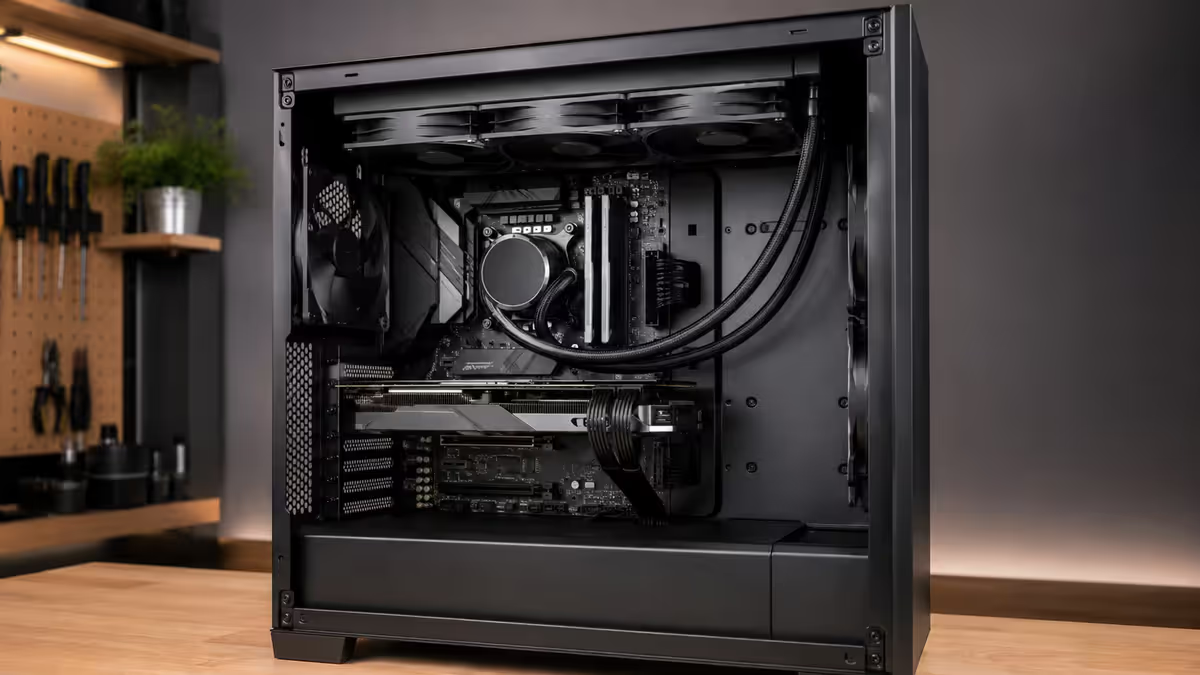
An AIO (All-In-One) liquid cooler uses a small pump on the CPU to circulate coolant through tubes to a radiator (240mm, 280mm or 360mm long) where fans dissipate heat. More moving parts, more cost, and slightly better cooling at the high end.
The honest truth most marketing skips: for the majority of mid-range CPUs, a quality air cooler matches a 240mm AIO at 30-50% lower cost. AIOs win clearly only above ~230W TDP, or when case geometry prevents a tall air tower from fitting.
Match the cooler to your CPU's TDP
TDP (Thermal Design Power) is the wattage of heat your CPU produces under sustained load. Match the cooler's capability to this number and ignore everything else.
| CPU TDP range | Cooler recommendation | Example CPUs |
|---|---|---|
| ≤95W | Budget air tower (single fan) | Ryzen 5 9600X, Core Ultra 5 245 |
| 95-150W | Twin-fan air tower or 240mm AIO | Ryzen 7 9700X, Core Ultra 5 265K |
| 150-200W | Premium twin-tower air or 280mm AIO | Ryzen 7 9800X3D, Core Ultra 7 265K |
| 200-250W | 280mm or 360mm AIO | Ryzen 9 9900X, Core Ultra 7 285K |
| 250W+ | 360mm AIO (mandatory) | Ryzen 9 9950X3D, Core Ultra 9 285K |
AIO radiator sizing — 240, 280 or 360mm
If you've decided on AIO, the next question is radiator length. Larger means more surface area, which means lower temperatures at quieter fan speeds. Three sizes dominate the market:
- 240mm — Up to ~180W TDP. Two 120mm fans. Fits any mid-tower. Good for Ryzen 7 / Core Ultra 7.
- 240mm
- 280mm — Up to ~230W TDP. Two 140mm fans. Quieter than 240mm. Not all cases support — check case spec.
- 280mm
- 360mm — Up to ~300W TDP. Three 120mm fans. The standard for high-end builds. Supported by most mid-tower ATX cases.
- 360mm
420mm AIOs exist but they fit only in full-tower cases and the cooling delta over a quality 360mm is minimal. Stick with 360mm unless your case demands otherwise.
Noise, reliability and the 5-year question
Noise: top-tier air coolers (Noctua NH-D15 G2, Be Quiet Dark Rock Pro 5, Thermalright Phantom Spirit 120 EVO) idle at 18-22 dBA and load at 28-34 dBA — quieter than nearly every AIO because there's no pump whine. AIOs add 20-25 dBA of pump noise that air can't be quieter than.
Reliability: a quality air cooler has one wear point (the fan) and lasts 10+ years. AIO pumps are the failure point — coolant in sealed AIOs doesn't evaporate meaningfully, but pumps wear out at 5-7 years. Pick a brand with a strong warranty (Arctic offers 6 years, Corsair and NZXT typically 5).
Long-term cost: air coolers are essentially "buy once, forget" components. AIOs need replacement once a decade. Factor this into the build decision if you're planning to keep the machine 7+ years.
Case clearance — measure twice
The most common cooling mistake: ordering the cooler before checking case dimensions. Three measurements matter:
- CPU cooler height (air coolers): most full-size air towers are 158-170mm tall. Slim mid-towers sometimes only allow 155mm — blocking the Noctua NH-D15 (165mm) and similar.
- Radiator length (AIOs): 240mm, 280mm or 360mm. Check the case's max supported radiator length at each mount point.
- Radiator thickness (AIOs): most cases handle 27mm rad + 25mm fan = 52mm total. Some thick "extreme" AIOs are 30mm+ rad — verify clearance.
- RAM clearance (top-mount AIO): tall RAM with heatsinks can collide with a top-mounted AIO. Mid-profile RAM is safer.
Recommended coolers by use case
| Use case | Pick | SA price |
|---|---|---|
| Budget air, <120W TDP | ID-Cooling SE-214-XT or Deepcool AK400 | R450-R650 |
| Sweet-spot air (twin-fan) | Thermalright Peerless Assassin 120 SE | R700-R850 |
| Premium silent air | Noctua NH-D15 G2 or Be Quiet Dark Rock Pro 5 | R1,600-R2,000 |
| Budget 240mm AIO | Deepcool LE520 or Arctic Liquid Freezer III 240 | R1,400-R1,800 |
| Sweet-spot 360mm AIO | Arctic Liquid Freezer III 360 or Deepcool LT720 | R1,900-R2,400 |
| Premium 360mm AIO (LCD) | NZXT Kraken Elite 360 or Lian Li GA II Trinity | R2,800-R3,500 |
| SFF / low-profile | Noctua NH-L12S or Thermalright AXP90-X53 | R900-R1,400 |
Common cooling mistakes
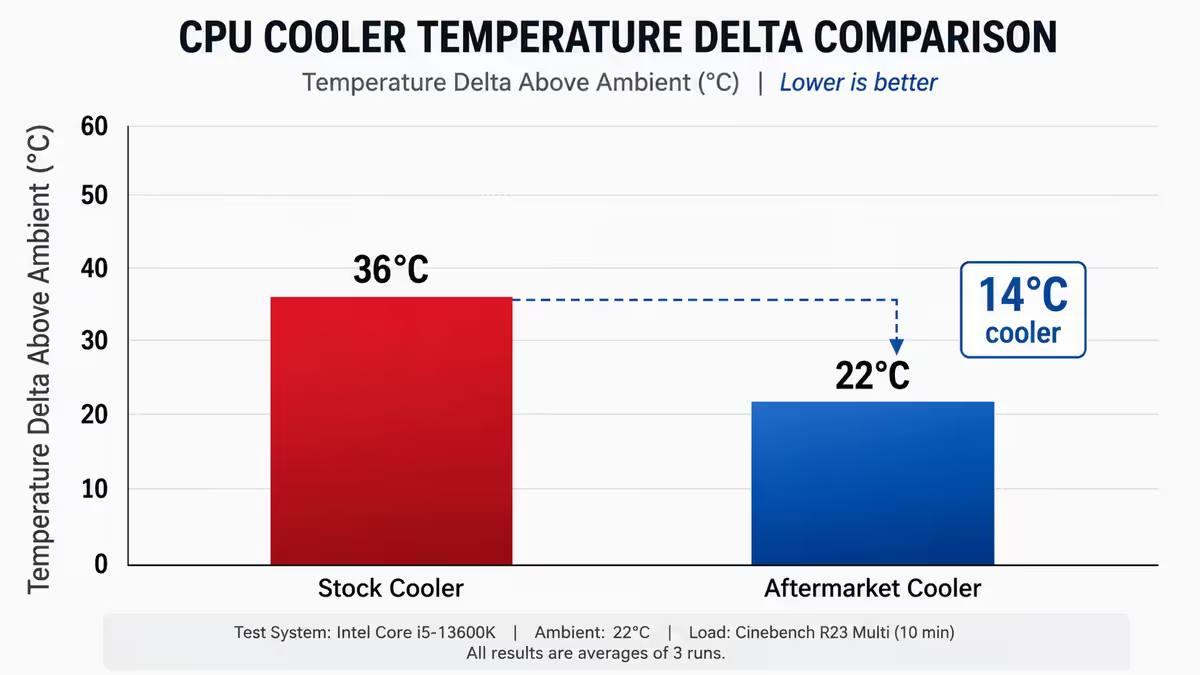
Keeping the stock cooler. Intel and AMD include barely-adequate coolers in the box. Every mid-range CPU benefits from even a cheap R600 air tower upgrade.
Overspending on cooling for a low-TDP chip. A 360mm AIO on a Ryzen 5 9600X is theatre, not engineering. The CPU never produces enough heat to need it.
Mounting AIO tubes at the top. Air bubbles in the loop migrate to the highest point. If that's the pump (tubes-at-top, radiator at the bottom), you'll hear gurgling and the pump will fail early. Tubes-down, radiator-up.
Ignoring the second fan socket. Most "twin-tower" air coolers ship with one fan — adding a second matched fan (push-pull) drops temps 2-3°C and is often only R200 extra.
Buying a beautiful LCD AIO without checking thermals. Many flashy LCD AIOs underperform plain Arctic/Deepcool AIOs at twice the cost. Looks first, performance later is the wrong order.
Key takeaways
- Match cooler to CPU TDP first — ignore marketing and aesthetics until that's settled.
- Air tower up to ~200W TDP. AIO 280-360mm above that or in compact cases.
- Mount AIO with tubes at the bottom of the radiator — keeps bubbles out of the pump.
- Premium air coolers are quieter than AIOs of similar capability — no pump whine.
- Add 6-10°C headroom to international reviewer numbers — SA ambient is hotter than 22°C labs.
Frequently asked questions
Air cooler or AIO liquid cooler — which should I buy?
Up to ~200W TDP, a quality tower air cooler matches a 240mm AIO at half the price. For higher-TDP CPUs (Ryzen 9, Core Ultra 9) or compact cases, go 280-360mm AIO.What size AIO radiator do I need — 240, 280 or 360mm?
240mm up to ~180W. 280mm up to ~230W. 360mm for 250W+ Ryzen 9 / Core Ultra 9 builds. Verify case support for your chosen size.Do I really need a CPU cooler upgrade?
Yes. Stock coolers are barely adequate for the lowest-TDP chips and thermal-throttle anything mid-range. Even a R600 aftermarket air tower drops temps 15-20°C.How long does an AIO liquid cooler last?
5-7 years for tier-1 brands. The pump is the wear point. Air coolers have no liquid system and routinely run 10+ years.Will my CPU cooler fit in my case?
For air: check max CPU cooler height — most towers need 158-170mm. For AIO: check radiator length, thickness, and RAM clearance.Air vs AIO — which is quieter?
Top-tier air. AIOs add pump noise (20-25 dBA) that premium air coolers like Noctua and be quiet! don't have.Does AIO orientation matter?
Yes. Always mount with tubes at the bottom of the radiator — keeps air bubbles in the rad (harmless) instead of the pump (noisy, accelerates wear).Are custom water loops worth it for gaming?
Almost never. R8,000-R20,000+ cost, 12-24 month maintenance cycle, only 5-10°C better than a quality 360mm AIO. A hobby pursuit, not a practical upgrade.
Get the Evetech app
Exclusive app-only prices, daily flash sales, and free delivery on orders over R4,000 — download the app and start saving.