Peripheral Guide
Palm. Claw. Fingertip.
The way your hand naturally rests on a mouse is set by hand shape, mouse shape and the games you play. Mismatch any one of those three and you'll feel it in the tendons within a week. Get them aligned and aim improves, fatigue drops, sessions extend.
- grip styles
- 3
- FPS pros use claw
- ~60%
- typical hand range
- 17-21cm
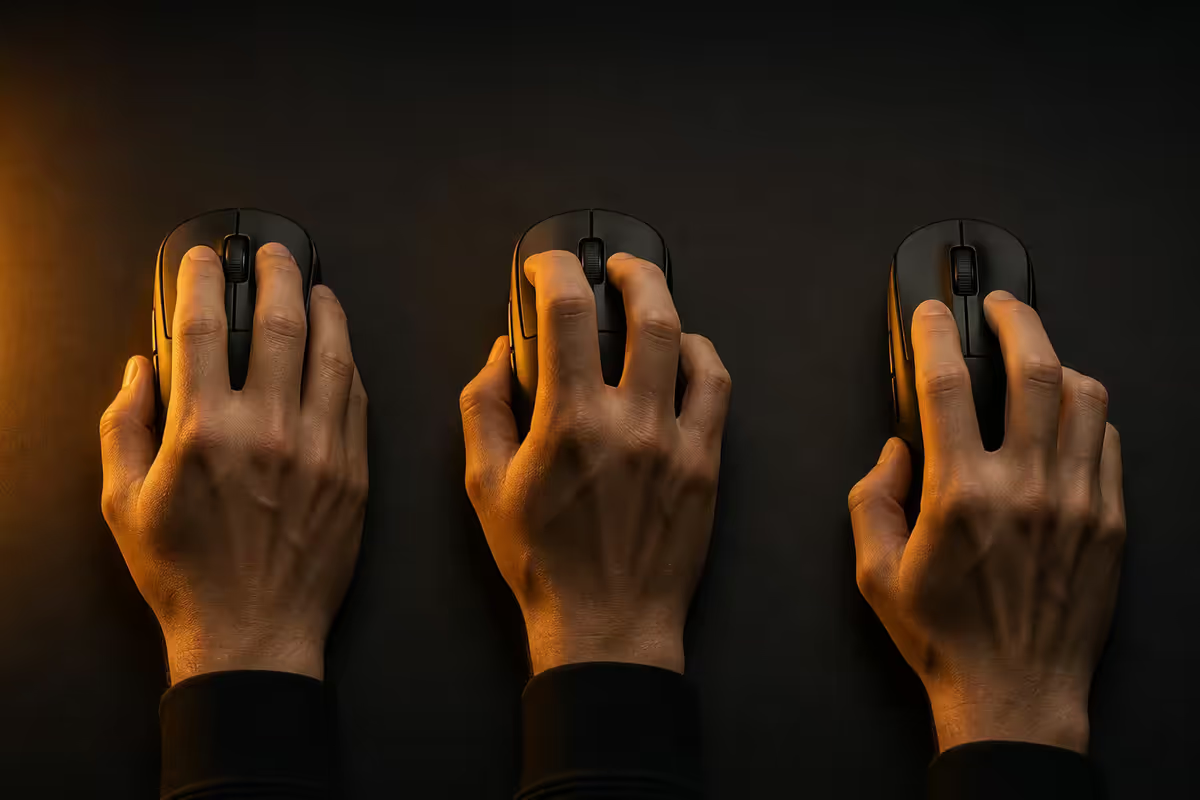
Palm grip — the workhorse
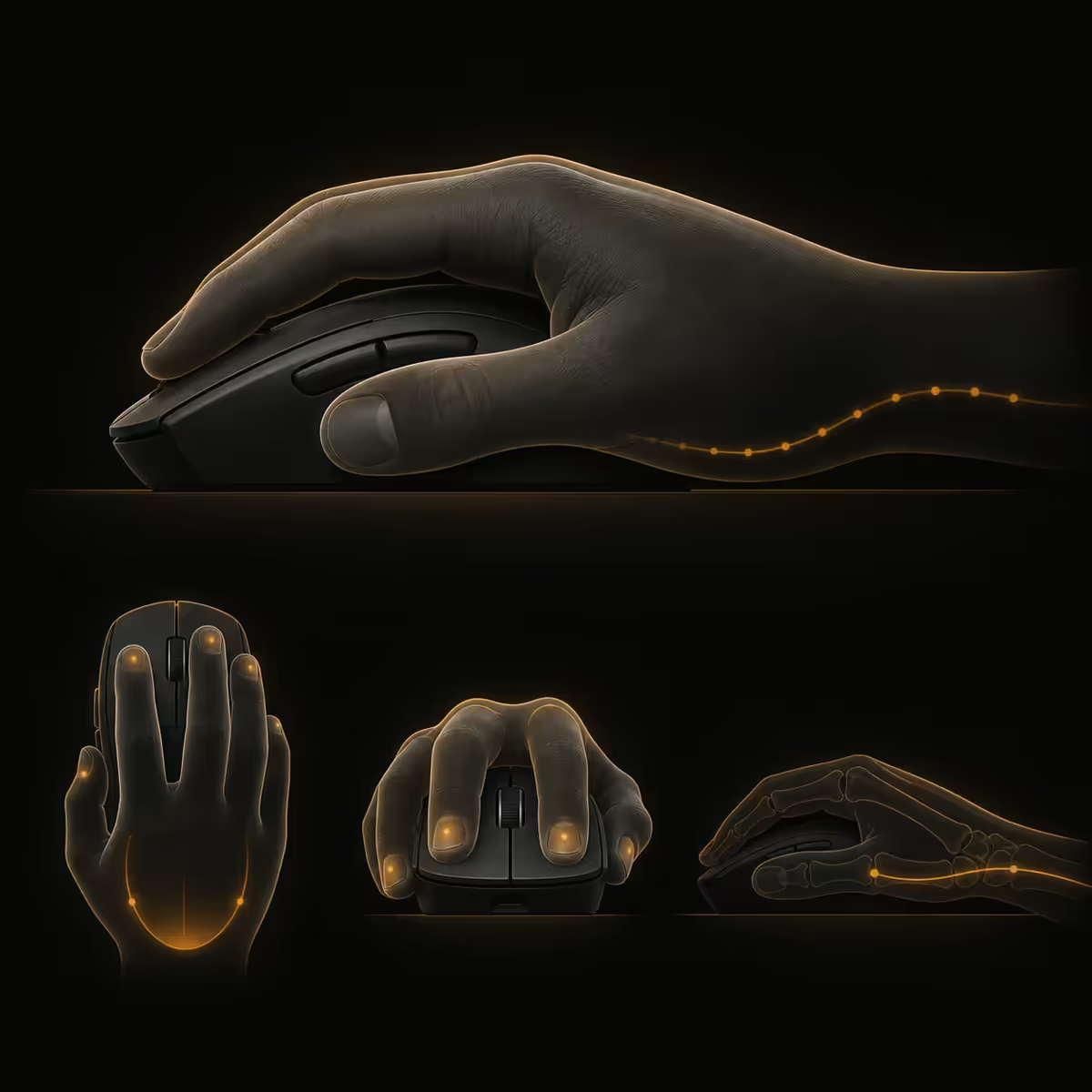
Palm grip is what most newcomers naturally adopt. The whole hand rests on the mouse — palm contacting the rear hump, fingers laid flat along the buttons, thumb gently against the side. The contact patch is large and the workload is distributed across the entire hand and forearm.
It's the most fatigue-resistant grip for long sessions. If you play 4-8 hour stretches of WoW, FFXIV, Diablo IV, Path of Exile or work in Photoshop/Premiere daily, palm grip is the most ergonomic option. The downside: the large contact patch makes micro-adjustments slower. Palm is excellent for tracking aim (smooth wide arcs) and weak for flick aim (sudden snap to target).
Palm grip works best with:
- Larger ergonomic mice that fill the hand (Logitech G502 X, Razer DeathAdder V3, Endgame Gear OP1 8K).
- Medium-to-large hands (18-21cm wrist-to-fingertip).
- Game genres where session length matters more than reaction speed.
- Players using arm aim rather than wrist aim.
Claw grip — the hybrid champion
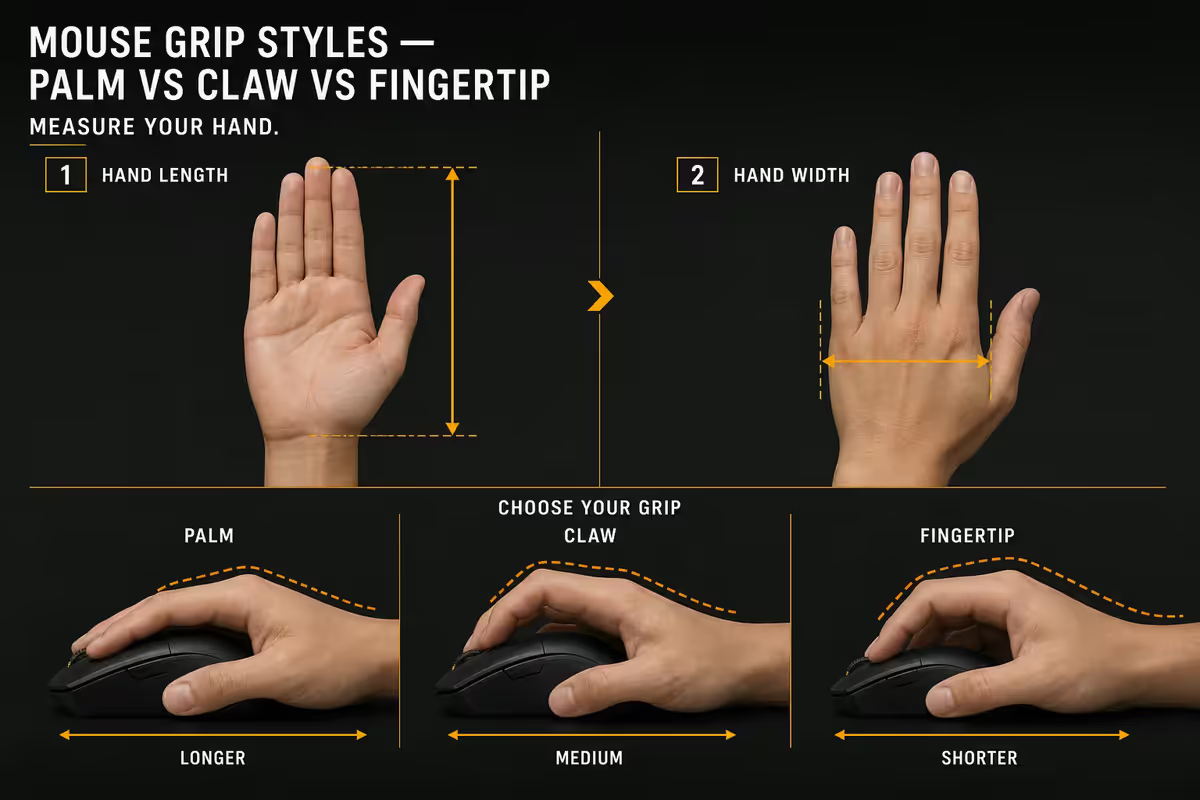
Claw grip is the modern competitive favourite. The palm contacts only the rear of the mouse, fingers arch up and curl back down onto the buttons in a claw shape. The middle of the mouse body sits in air. It gives you the rear-anchor stability of palm with the agile fingertips of fingertip grip.
Claw is the dominant grip in current pro FPS — about 55-65% of CS2 and Valorant pros use claw or modified-claw variants. The reason: the arched fingers click faster than flat ones (less travel) and the lifted middle reduces friction during quick micro-adjustments. It's also more wrist-friendly for medium-sized mice because the hand isn't forced into an unnaturally flat position.
Claw grip works best with:
- Medium-length safe-shape mice (Logitech G Pro X Superlight 2, Razer Viper V3 Pro, Pulsar X2H, Lamzu Atlantis Mini Pro).
- Most hand sizes (15-21cm wrist-to-fingertip).
- Competitive FPS, MOBA and any genre needing fast micro-correction.
- Players combining wrist aim with arm aim.
Fingertip grip — the precision specialist
Fingertip grip is the most aggressive and the most demanding. The palm lifts entirely off the mouse — only the fingertips and thumb touch. The mouse is steered almost like a marionette with all five contact points. It allows the fastest, smallest micro-adjustments possible: the limb between your wrist and your aim is reduced to just the finger flexors.
Fingertip excels at flick aim in FPS — the snap to a head-shot target. It's why a smaller subset of CS2 / Valorant pros (~25-30%) lean fingertip. The trade-off is fatigue: holding the palm off the mouse for hours loads the small intrinsic muscles of the hand and the long flexor tendons in the forearm. Fingertip grippers typically have shorter session limits before fatigue sets in.
Fingertip works best with:
- Small, lightweight mice under 60g (Pulsar X2 Mini, Lamzu Maya, Endgame Gear OP1 Mini, ZOWIE U2, VAXEE OUTSET AX).
- Smaller-to-medium hands (15-19cm wrist-to-fingertip).
- Pure FPS / flick-heavy games (CS2, Valorant, Apex, Counter-Strike inspired games).
- Players who naturally make small wrist-only micro-adjustments.
Knowing your hand size
Hand size determines which grip styles are even available to you. The measurement: from the base of your wrist (where it meets your palm) to the tip of your middle finger. Add hand width across the knuckles as the secondary number.
| Hand size | Length | Best-fit grips |
|---|---|---|
| Small | Under 17cm | Fingertip, claw (small mice) |
| Medium | 17-19cm | Claw, fingertip, palm (small ergo) |
| Large | 19-21cm | Palm, claw (medium-large mice) |
| Extra Large | Over 21cm | Palm only (large ergo mice) |
Small-handed players forced into palm grip with a medium mouse will struggle — fingers don't naturally reach the buttons and the palm doesn't fill the hump. Large-handed players forced into fingertip on a small mouse cramp the fingers and risk tendinitis. Always match.
Mouse shape recommendations
The 2026 mouse market has split clearly into shapes optimised for each grip style. Here's the working short list:
| Grip | Recommended shapes | Why |
|---|---|---|
| Palm | Logitech G502 X Plus, Razer DeathAdder V3, Endgame Gear OP1 8K, Glorious Model D2 Pro | Asymmetric ergonomic, fills the hand |
| Claw | Logitech G Pro X Superlight 2, Razer Viper V3 Pro, Pulsar X2H, Lamzu Atlantis Mini Pro, ZOWIE EC2-CW | Safe shape, medium length, rear anchor |
| Fingertip | Pulsar X2 Mini, Lamzu Maya, Endgame Gear OP1 Mini, ZOWIE U2, VAXEE OUTSET AX | Smaller, lighter, easier to lift the palm off |
| MMO / utility | Logitech G600, Razer Naga V2 Pro, Corsair Scimitar Elite | Side-button thumb cluster, palm-friendly |
DPI and eDPI tuning per grip
DPI alone is meaningless — what matters is eDPI (DPI multiplied by in-game sensitivity). It's the total cm of mouse movement needed for a 360-degree turn. Grip style doesn't dictate eDPI directly, but it influences which eDPI feels natural.
Palm grip players typically use lower eDPI (around 800-1600). The wider arm/wrist motions make large sweeps comfortable, so the in-game sensitivity is lower for a longer cm-per-turn. Pros range around 30-40cm per 360.
Claw grip sits in the middle. eDPI typically 1000-2000. Hybrid arm/wrist aim means moderate sensitivity is the sweet spot. Most CS2/Valorant pros land in 25-35cm per 360.
Fingertip grip can go either direction — many fingertip players use moderate-high eDPI (1500-2500) to make small micro-corrections feel responsive without arm motion. Pros range 20-30cm per 360.
What esports pros actually use
Pro grip distribution has shifted noticeably over the last five years as mice dropped below 60g and shapes converged on "safe shape" symmetric or near-symmetric profiles. Current breakdown across CS2 and Valorant:
- Claw / modified claw: 55-65% — the dominant style
- Fingertip / fingertip-claw hybrid: 25-30% — growing as mice get lighter
- Pure palm: under 10% — rare in modern competitive FPS
Notable pros and their setups (2026 verified loadouts):
- ZywOo (CS2) — modified claw on Razer Viper V3 Pro, 400 DPI, low sens
- s1mple (CS2) — claw on Logitech G Pro X Superlight 2, 400 DPI
- demon1 (Valorant) — claw on Pulsar X2H, low-medium sens
- TenZ (Valorant) — claw/fingertip hybrid on Razer Viper V3 Pro
- aspas (Valorant) — claw on Razer Viper V3 Pro, ultra-low sens
The common thread: lightweight (under 60g) safe-shape mouse, low DPI (400-800), and grip style adapted to hand size rather than picked by aesthetic.
What wrist pain might mean
Wrist or hand pain that develops or worsens during gaming sessions is almost always a setup issue, not an injury you need to ignore. The most common patterns:
Pain in the tendons of the index/middle finger (top of the forearm). Usually means claw grip on a too-large mouse — the arch is over-extended, loading the long extensor tendons. Switch to a smaller mouse or relax the arch.
Pain on the side of the wrist (ulnar side). Often palm grip on a mouse that's too small — the hand isn't fully supported and the wrist twists to compensate. Move to a larger ergonomic shape.
Cramping in the palm or thumb base. Fingertip grip held with too much tension for too long. Reduce session length, take 5-minute breaks every hour, consider switching to claw for non-competitive play.
General forearm fatigue. Chair too low — your elbow should be at 90 degrees when typing/mousing. Raise the chair or lower the desk. A footrest may be needed.
Key takeaways
- 01
Palm
Whole hand contact, fatigue-resistant, best for MMO/RPG/creative long sessions. - 02
Claw
Rear anchor + arched fingertips, the FPS workhorse, works across widest hand range. - 03
Fingertip
Palm lifted, fastest flick aim, demands lightweight small mice. - 04
Measure hand size first
Wrist-to-fingertip determines mouse length compatibility. - 05
Pro grip trend
55-65% of FPS pros use claw on lightweight safe-shape mice. Trend has shifted away from palm. - 06
Persistent wrist pain
Grip-mouse mismatch. Change shape first; if no relief in 2 weeks see a physio.
Frequently asked questions
What's the difference between palm, claw and fingertip grip?
Palm grip: the whole hand rests flat on the mouse, all fingers laid along the buttons. Claw grip: palm anchors at the rear of the mouse, fingers arched into a claw shape over the buttons. Fingertip grip: only the fingertips touch the mouse with the palm lifted entirely off — used for the lightest, fastest micro-adjustments. Each suits different hand sizes, mouse shapes and game genres.Which mouse grip is best for FPS games?
Fingertip and claw dominate competitive FPS at the highest level. Fingertip enables the fastest micro-adjustments needed for flick aim in CS2, Valorant and Apex. Claw is the popular hybrid offering most of fingertip's agility with palm's stability. Pure palm grip is rarer in pro FPS — it's smoother for tracking but slower to flick. Most current pros use claw or fingertip variants.What mouse grip is best for MMOs and slower games?
Palm grip is the workhorse for MMOs, RPGs, RTS and creative work where sessions run 4-8 hours and absolute speed matters less than fatigue resistance. Palm spreads the workload across the whole hand and forearm rather than loading the fingertips. If you play WoW, FFXIV, Diablo or work in Photoshop daily, palm is generally the most ergonomic long-session grip.How do I know my hand size for mouse selection?
Measure from the base of your wrist (where it meets the palm) to the tip of your middle finger. Under 17cm: small. 17-19cm: medium. 19-21cm: large. Over 21cm: extra large. Hand width across the knuckles is the secondary measurement. Pair this with grip style — fingertip and claw work across more hand sizes than palm, which is fussy about matching mouse length to hand length.What mouse shape suits each grip style?
Palm grip: ergonomic asymmetric shapes (Logitech G502 X, Razer DeathAdder V3, Endgame Gear OP1 8K, Glorious Model D2 Pro) that fill the hand. Claw grip: medium-length safe-shape mice (Logitech G Pro X Superlight 2, Razer Viper V3 Pro, Pulsar X2H, Lamzu Atlantis Mini Pro) that anchor at the rear. Fingertip: smaller and lighter is better (Pulsar X2 Mini, Lamzu Maya, Endgame Gear OP1 Mini, ZOWIE U2).What's the DPI range for each grip style?
Counterintuitively, grip style doesn't directly determine DPI — your eDPI (sensitivity multiplied by in-game sens) does. Palm grippers tend to use slightly lower DPI (400-800) because larger arm motions are natural. Fingertip players often use higher DPI (800-1600) for micro-adjustments without arm movement. Claw is the middle ground (400-1600). Find your eDPI by matching how far you can sweep your mouse comfortably on your pad.My wrist hurts after long gaming sessions — what does that mean?
Wrist pain often signals a grip-mouse mismatch. Claw grip on a too-large mouse strains the tendons of the index and middle finger. Palm grip on a too-small mouse forces unnatural finger extension. Fingertip with high tension for hours fatigues the small intrinsic muscles. Swap to a different mouse shape or change your grip, raise your chair so the elbow is at 90 degrees, and ensure you have proper desk depth so the wrist isn't bent. If pain persists more than two weeks, see a hand physio — repetitive strain is real.What grip do esports pros use?
In CS2 and Valorant pro scenes, claw and modified-claw dominate at roughly 55-65% of pros, fingertip variants 25-30%, pure palm under 10%. The trend has shifted toward smaller mice and claw/fingertip variants over the last five years as mouse weights dropped below 60g. ZywOo, s1mple, demon1, TenZ all use claw-leaning grips on lightweight safe-shape mice like the Razer Viper V3 Pro or Logitech G Pro X Superlight 2.
Get the Evetech app
Exclusive app-only prices, daily flash sales, and free delivery on orders over R4,000 — download the app and start saving.