Head-to-Head · Gaming Audio
Wired vs wireless headset. — In 2026 the latency argument is over. The real questions are weight, battery and mic.
Modern 2.4GHz wireless lands at 20-30 ms — basically inaudible. The wired-headset purists used to win on lag; now they win on weight, charging-free operation and a slight mic-quality edge. Both choices are now genuinely good — here's how to pick.
- 2.4GHz latency
- 20-30 ms
- premium battery
- 40-80 hr
- SA range
- R2K-R12K
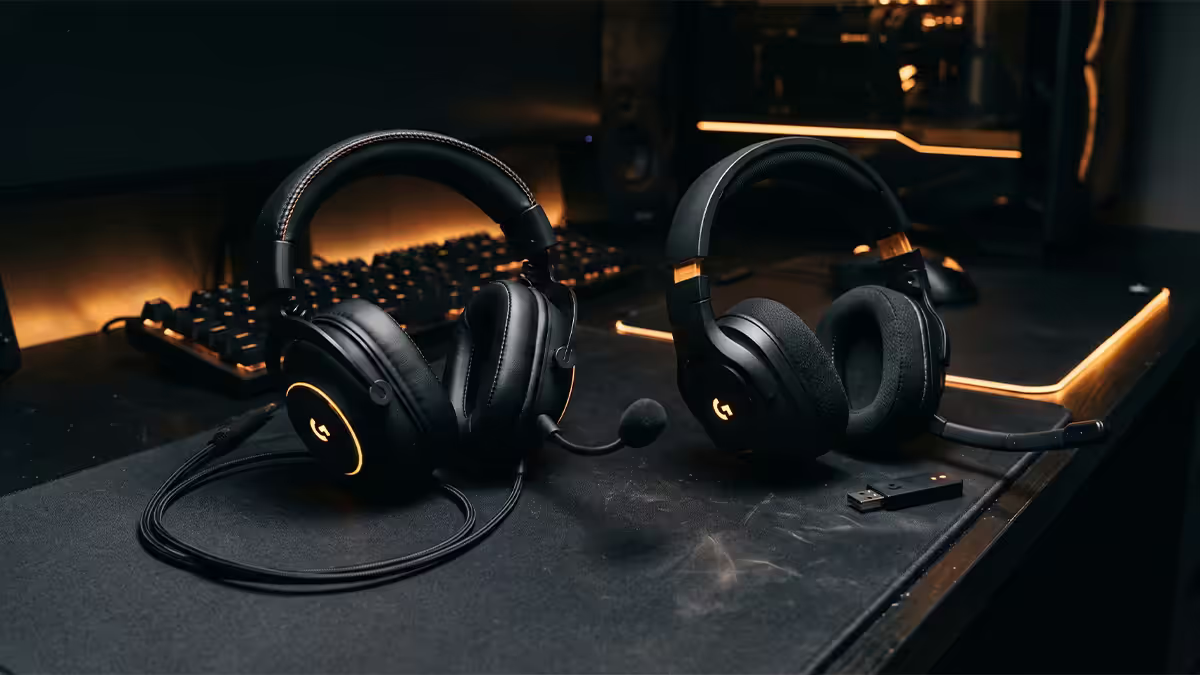
The 2026 latency reality
The wired-versus-wireless headset debate used to be a latency argument. In 2018 wireless gaming headsets ran at 50-80 ms — annoying for competitive FPS, occasionally noticeable for rhythm games, and a real concern for pros. That world is gone.
Premium 2.4GHz USB dongle wireless headsets in 2026 — SteelSeries Arctis Nova Pro Wireless, Logitech G PRO X 2 Lightspeed, Razer BlackShark V3 Pro, Audeze Maxwell, Sony INZONE H9 II — measure 20-30 ms end-to-end. That's below the threshold of audible delay for nearly all humans. Pro Valorant, CS2 and Apex players use 2.4GHz wireless headsets without competitive penalty.
The latency objection is now functionally obsolete for premium gear. It survives because (a) cheap "wireless gaming" headsets at R1,000-R1,500 still use Bluetooth or laggy proprietary radio, and (b) the audiophile community has lingering prejudice from earlier generations. Neither applies to current 2.4GHz USB dongle products.
| Connection | Typical latency | Verdict |
|---|---|---|
| Wired analogue (3.5mm) | ~5 ms | Best |
| Wired USB DAC | 8-15 ms | Excellent |
| 2.4GHz USB dongle (premium) | 20-30 ms | Inaudible |
| Bluetooth 5.3 LE Audio | 40-60 ms | Casual only |
| Bluetooth (standard) | 80-200 ms | Avoid for gaming |
Bluetooth vs 2.4GHz USB vs wired — what changes
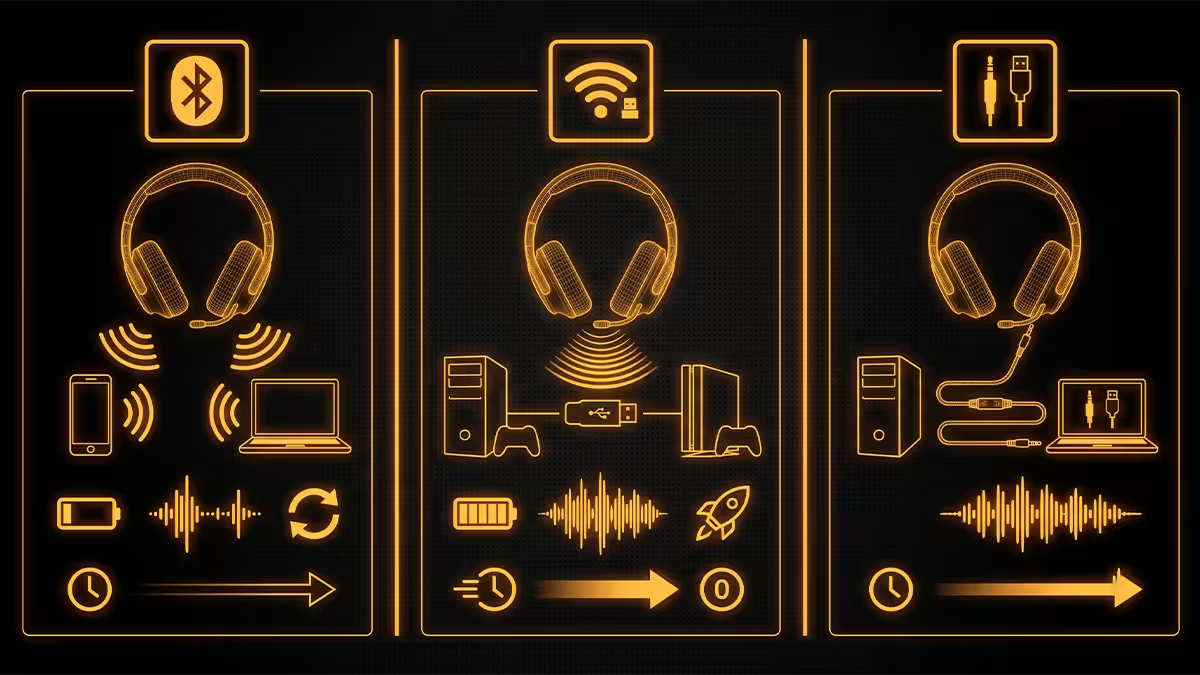
There are three connection types and they're not interchangeable. Buying the wrong one for your use case is the most common gaming-headset purchase mistake.
Wired (3.5mm or USB). Direct analogue signal or a USB DAC converts audio inside the headset. Zero latency variability, zero battery, zero radio interference. Trade-off: a cable, sometimes one that catches on chair arms or drags on the desk.
2.4GHz USB dongle. A small USB plug that creates a dedicated low-latency radio link to the headset. Doesn't share airspace with phones or Bluetooth devices the way standard Bluetooth does. This is what every premium "wireless gaming" headset uses, and it's what delivers the 20-30 ms latency that makes wireless competitive.
Bluetooth. Designed for phone calls and music streaming, not for gaming. Latency varies wildly with codec (SBC, AAC, aptX Low Latency, LC3) and is generally too high for competitive FPS. Premium gaming headsets include Bluetooth as a second channel — typically the dongle handles game audio while Bluetooth carries phone calls or Discord — but Bluetooth alone shouldn't be your main game-audio path.
Battery life — and the dual-cell solution
Battery anxiety used to kill wireless headsets. Modern cells have made it largely irrelevant. Premium 2026 wireless gaming headsets deliver 40-80 hours per charge, enough for a normal week of gaming between top-ups.
SteelSeries Arctis Nova Pro Wireless remains the standout — two swappable batteries with a base-station charging dock. One battery sits in the base recharging while you wear the headset; when you're running low, swap and continue. Effectively infinite uptime, which converts almost every "wireless skeptic" we've spoken to.
Logitech G PRO X 2 Lightspeed runs 50+ hours per charge with USB-C fast charging — 15 minutes plug-in delivers about 3 hours of gaming.
Sony INZONE H9 II hits 40 hours and adds PS5-friendly PlayStation Link compatibility for console gamers.
If your headset is more than three years old and battery has dropped from 40+ hours to below 20, the lithium cell has degraded. Most premium models (Arctis, INZONE) ship with user-replaceable batteries. Logitech and Razer typically require workshop service for a replacement.
Mic quality — wired vs wireless
Mic quality is one of the last remaining wired advantages, but the gap has narrowed.
Premium 2.4GHz wireless headsets transmit mic audio at 32-48 kHz sample rates with modern codecs (typically Opus or proprietary low-latency codecs). For Discord, in-game comms and casual streaming, the result is genuinely excellent — most listeners can't reliably tell a wireless gaming mic from a wired equivalent in blind tests.
Top wired gaming mics (Audeze Maxwell, HyperX QuadCast-integrated headsets, Sennheiser PC8 series) still have a slight edge in clarity, low-end body and noise rejection. The headroom they offer is meaningful for professional voice work — podcast recording, paid VO, broadcast-grade streaming.
If broadcast-grade voice matters, use a dedicated USB microphone — a Shure MV7, Elgato Wave 3 or Rode NT-USB Mini — regardless of headset choice. Even the best headset mic underperforms a R2,500 dedicated mic positioned correctly.
Weight and convenience
Wireless headsets carry a battery and a radio module. They're typically 40-90 grams heavier than equivalent wired models. On a SteelSeries Arctis Nova Pro Wireless (340g) vs Wired (310g) the difference is 30g — perceptible during long sessions but not exhausting.
For extreme weight-conscious buyers (long competitive sessions, neck/jaw sensitivity), the lightest serious gaming headsets are wired: HyperX Cloud III at 280g, Audio-Technica ATH-G1 at 295g, Drop + EPOS PC38X at 310g.
Convenience cuts the other way. No cable means no chair-arm snags, no desk drag and no "the cable just yanked the headset off my head when I stood up". For streamers, content creators or anyone who moves between the desk and the kitchen for coffee mid-session, the wireless lifestyle wins.
Top picks by price tier (SA market)
| Tier | Pick | SA price |
|---|---|---|
| Budget wired | HyperX Cloud III (wired) | R1,800-R2,300 |
| Budget wireless | Razer BlackShark V3 X HyperSpeed | R2,400-R2,900 |
| Mid-range wired | SteelSeries Arctis Nova 7 Wired | R2,900-R3,600 |
| Mid-range wireless | SteelSeries Arctis Nova 7 Wireless | R4,200-R5,400 |
| High-end wired | Audeze Maxwell (wired mode) or HyperX Cloud Alpha Wireless | R5,500-R7,200 |
| High-end wireless | Logitech G PRO X 2 Lightspeed | R5,500-R6,800 |
| Premium wireless | SteelSeries Arctis Nova Pro Wireless | R8,500-R10,500 |
| PS5-focused wireless | Sony INZONE H9 II | R6,500-R8,000 |
| Audiophile-leaning | Audeze Maxwell Wireless | R8,500-R11,000 |
Audiophile cans vs gaming headsets
A genuine question we get often: "Should I just buy an audiophile open-back like the Sennheiser HD 600 series and a USB mic?" The honest answer: maybe — but probably not.
Why audiophile cans win: sound stage, imaging and detail retrieval on a Sennheiser HD 660S, HiFiMan Sundara or Beyerdynamic DT 1990 Pro is meaningfully better than any current gaming headset. The dynamics, transient response and tonal accuracy are noticeably superior.
Why gaming headsets often win in practice: integrated mic without a separate stand, built-in 2.4GHz wireless connectivity, virtual surround sound tuned for spatial awareness (footstep direction), volume mixing dials on the cup, and a one-cable lifestyle.
For pure music listening, audiophile cans + USB DAC + USB mic wins. For gaming-primary use with some music, premium gaming headsets like the Audeze Maxwell genuinely close the gap — the Maxwell's planar drivers are excellent music drivers that also handle gaming brilliantly.
Decision framework — three questions
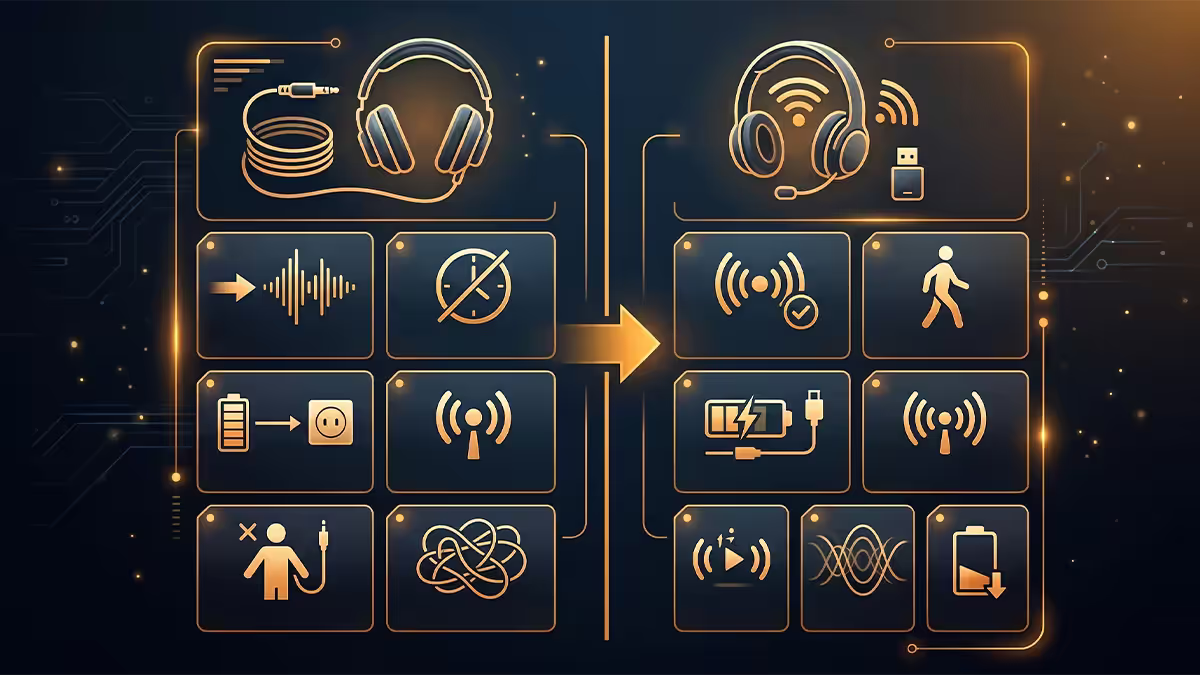
If you're stuck between wired and wireless, answer these three honestly:
- 1
Does cable management actually bother you?
If you've never thought about your headset cable, save R1,500-R2,500 and buy wired equivalent of the same model. - 2
Do you take phone calls or watch Netflix from the same chair?
If yes, dual-connection wireless (2.4GHz + Bluetooth) is worth the premium for the seamless switching. - 3
Are long competitive sessions your main use?
Lightweight wired is usually the better answer for 4+ hour sessions. Battery anxiety + weight start to matter.
If you answer yes to question 2 and don't mind the weight, wireless premium (Arctis Nova Pro Wireless, Logitech G PRO X 2 Lightspeed) is the right call. If you answer yes to question 3, lightweight wired (HyperX Cloud III, SteelSeries Arctis Nova 7 Wired) is the better all-rounder.
Key takeaways
- 2.4GHz wireless latency is 20-30 ms — inaudible and fine for competitive FPS.
- Bluetooth-only "gaming" headsets at R1,000-R1,500 are phone accessories, not gaming gear.
- Wired wins on weight (30-90g lighter) and slight mic-quality edge.
- Premium wireless batteries last 40-80 hours; Arctis Nova Pro's swappable dual-cell is effectively infinite.
- For broadcast-grade voice, use a dedicated USB mic regardless of headset choice.
Frequently asked questions
Is wireless gaming headset latency still an issue in 2026?
For modern 2.4GHz USB dongle wireless headsets (SteelSeries Arctis Nova Pro Wireless, Logitech G PRO X 2 Lightspeed, Razer BlackShark V3 Pro), latency is typically 20-30 ms — basically inaudible to humans and not a competitive disadvantage. Bluetooth headsets remain 80-200 ms and are unsuitable for competitive gaming. The latency objection to wireless is outdated for premium 2.4GHz models.What's the difference between Bluetooth and 2.4GHz USB wireless headsets?
2.4GHz USB dongle wireless uses a dedicated low-latency radio protocol — typically 20-30 ms end to end. Bluetooth uses a higher-latency shared 2.4GHz protocol designed for phone audio — 80-200 ms with audio codec negotiation. Most premium gaming headsets support both: 2.4GHz for the PC, Bluetooth for phone calls or Switch handheld mode.How long does a wireless gaming headset battery last?
Premium wireless headsets in 2026 typically last 40-80 hours per charge. SteelSeries Arctis Nova Pro Wireless uses dual swappable batteries (one charging in the base while you use the other) for effectively infinite uptime. Logitech G PRO X 2 Lightspeed delivers 50+ hours. Battery life dropped below 30 hours suggests the cell is degraded and worth replacement.Is wired headset mic quality better than wireless?
Marginally and only on top-tier wired. Premium 2.4GHz wireless headsets transmit mic audio at 32-48 kHz which is excellent for Discord, comms and streaming. Audeze, Sennheiser and HyperX top wired gaming mics still have a slight edge but the gap is small enough that most streamers don't notice. If broadcast-grade voice quality matters, use a dedicated USB mic regardless of headset choice.Which is better for competitive esports — wired or wireless?
Both work at the top level. Modern wireless 2.4GHz headsets are used by pro Valorant, CS2 and Apex players without competitive penalty. Choose wired if you value zero charging concerns and slightly lighter weight; choose wireless if you value cable freedom and easy game/phone switching. Both deliver inaudible latency for FPS gaming.Are gaming headsets good for music?
Premium gaming headsets in 2026 sound very good for music — the Audeze Maxwell, SteelSeries Arctis Nova Pro Wireless and Sony INZONE H9 II would have been considered audiophile-grade five years ago. They aren't as analytical as dedicated audiophile cans (Sennheiser HD800S, Focal Clear) but the gap has narrowed dramatically. For mixed gaming and music use, premium wireless gaming is the right pick.What's a good wireless gaming headset under R3,000?
At R2,000-R3,000 we recommend the Razer BlackShark V3 X HyperSpeed (wireless), Corsair HS80 RGB Wireless or HyperX Cloud III Wireless. All deliver real 2.4GHz low-latency wireless, 30+ hour battery and acceptable mic quality. Avoid sub-R1,500 "wireless gaming" headsets — they're almost all Bluetooth-only or have laggy proprietary radio.Does a wireless headset work with PlayStation 5 or Xbox?
Depends on the model and the dongle protocol. SteelSeries Arctis Nova Pro Wireless has separate PS5 and PC dongle versions; Sony INZONE H9 II works natively with PS5 via Sony's PlayStation Link protocol. Xbox is trickier — only headsets with official Xbox Wireless support (e.g., Razer Kaira Pro, SteelSeries Arctis 9X) connect directly; others need a 3.5mm cable to the controller.
Get the Evetech app
Exclusive app-only prices, daily flash sales, and free delivery on orders over R4,000 — download the app and start saving.