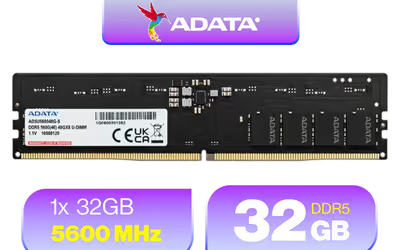
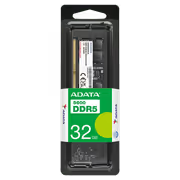
ADATA Premier 32GB 5600MHz DDR5 Memory
ADATA Premier 32GB (32GB x 1) 5600MHz DDR5 Desktop Memory / Higher Capacities / Improved Stability / Energy-Efficient / AD5U560032G-B / AD5U560032G-B + FREE DELIVERY !
Limited Lifetime Warranty
Model No : ADATA AD5U560032G-B
Price Inc. Vat
R 8,199
Save R 800
ListR 8,999
8199Free Delivery
Qty:
In Stock with Evetech
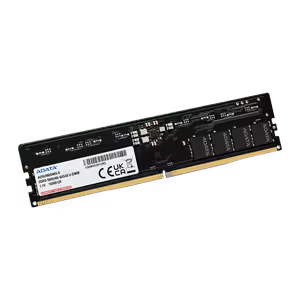
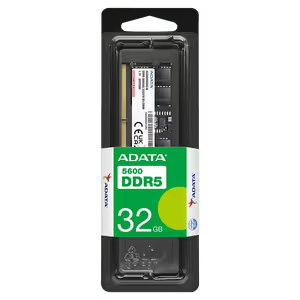
ADATA Premier AD5U560032G-B 32GB 5600MHz DDR5 Desktop Memory
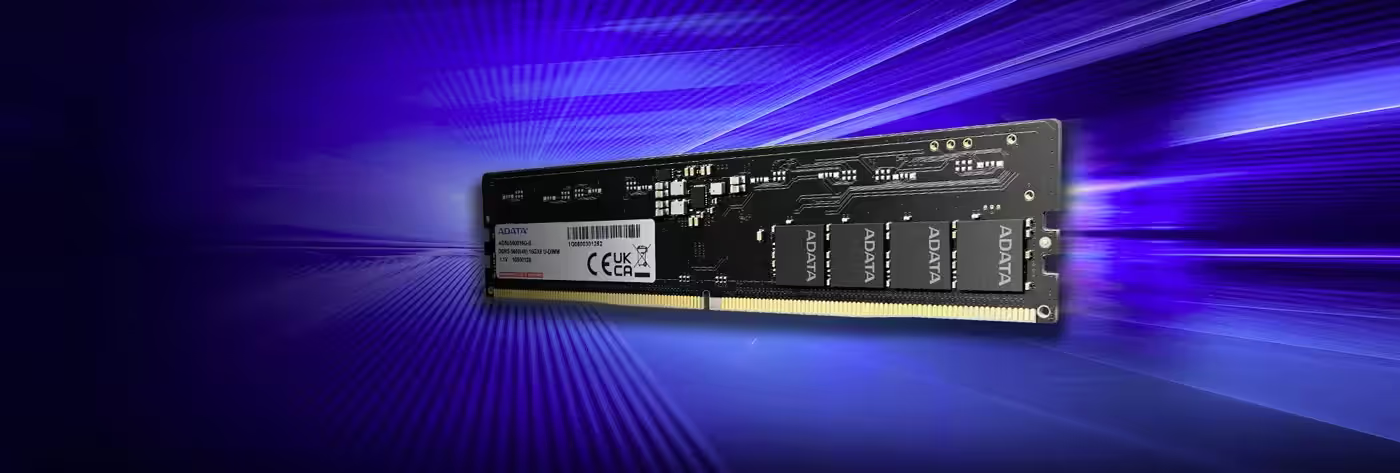
32GB DDR5 Desktop Module At 5600MHz
ADATA Premier 32GB DDR5 RAM is a single high-capacity module running at a 5600MHz memory frequency, built for multitasking and demanding workloads while drawing less power than the generation before it. It steadies system response in gaming, video editing and heavy multitasking, and an on-board Power Management IC handles voltage regulation on the module itself for reliable stability in a modern desktop.
32GB DDR5 Desktop Module At 5600MHz
ADATA Premier 32GB DDR5 RAM is a single high-capacity module running at a 5600MHz memory frequency, built for multitasking and demanding workloads while drawing less power than the generation before it. It steadies system response in gaming, video editing and heavy multitasking, and an on-board Power Management IC handles voltage regulation on the module itself for reliable stability in a modern desktop.
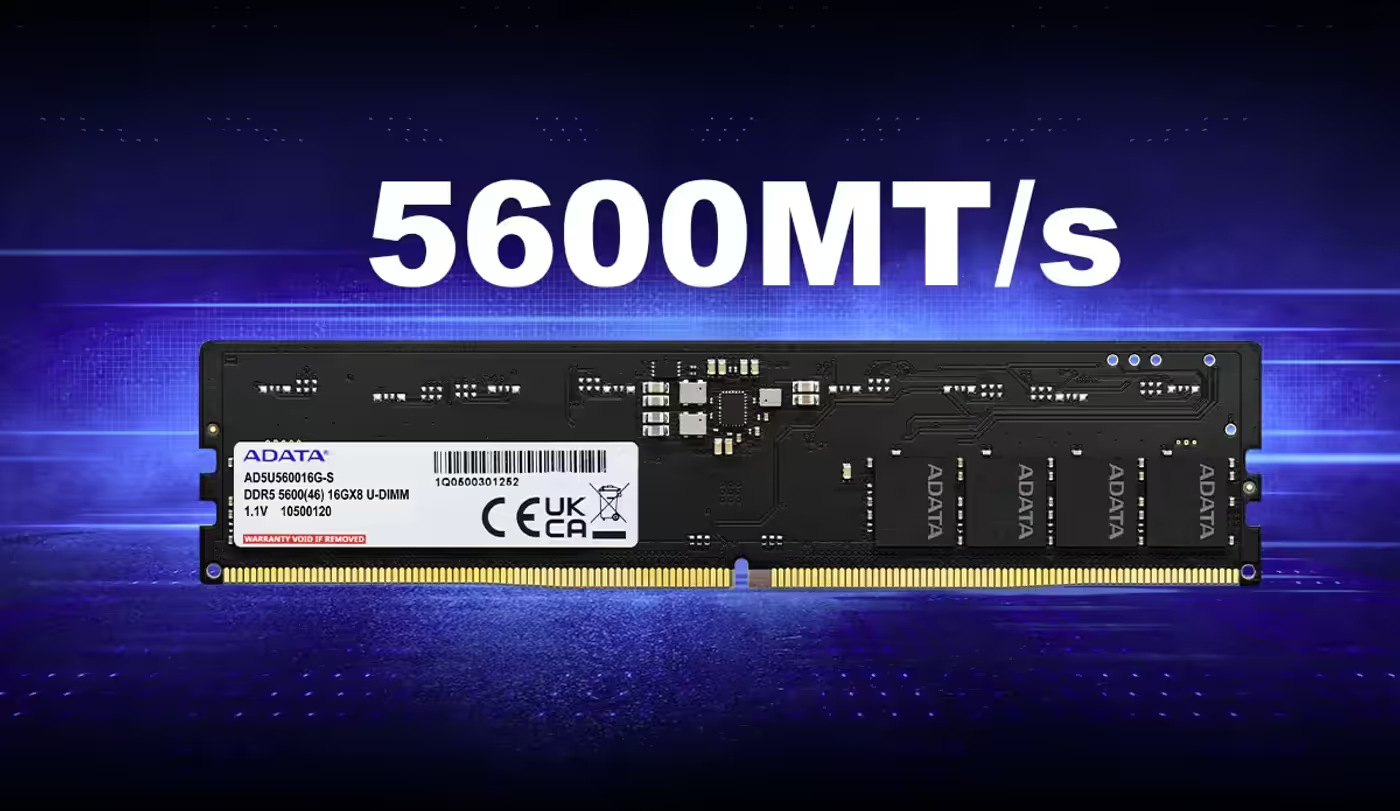
DDR5-5600 U-DIMM Transfer Speeds
This is a DDR5-5600 U-DIMM module, so data transfer runs at up to 5600MHz in a standard desktop DIMM slot. Against DDR4 that is a substantial step up in system speed and response times, and it is the specification that carries gaming, content creation and professional multitasking on a current platform.
DDR5-5600 U-DIMM Transfer Speeds
This is a DDR5-5600 U-DIMM module, so data transfer runs at up to 5600MHz in a standard desktop DIMM slot. Against DDR4 that is a substantial step up in system speed and response times, and it is the specification that carries gaming, content creation and professional multitasking on a current platform.
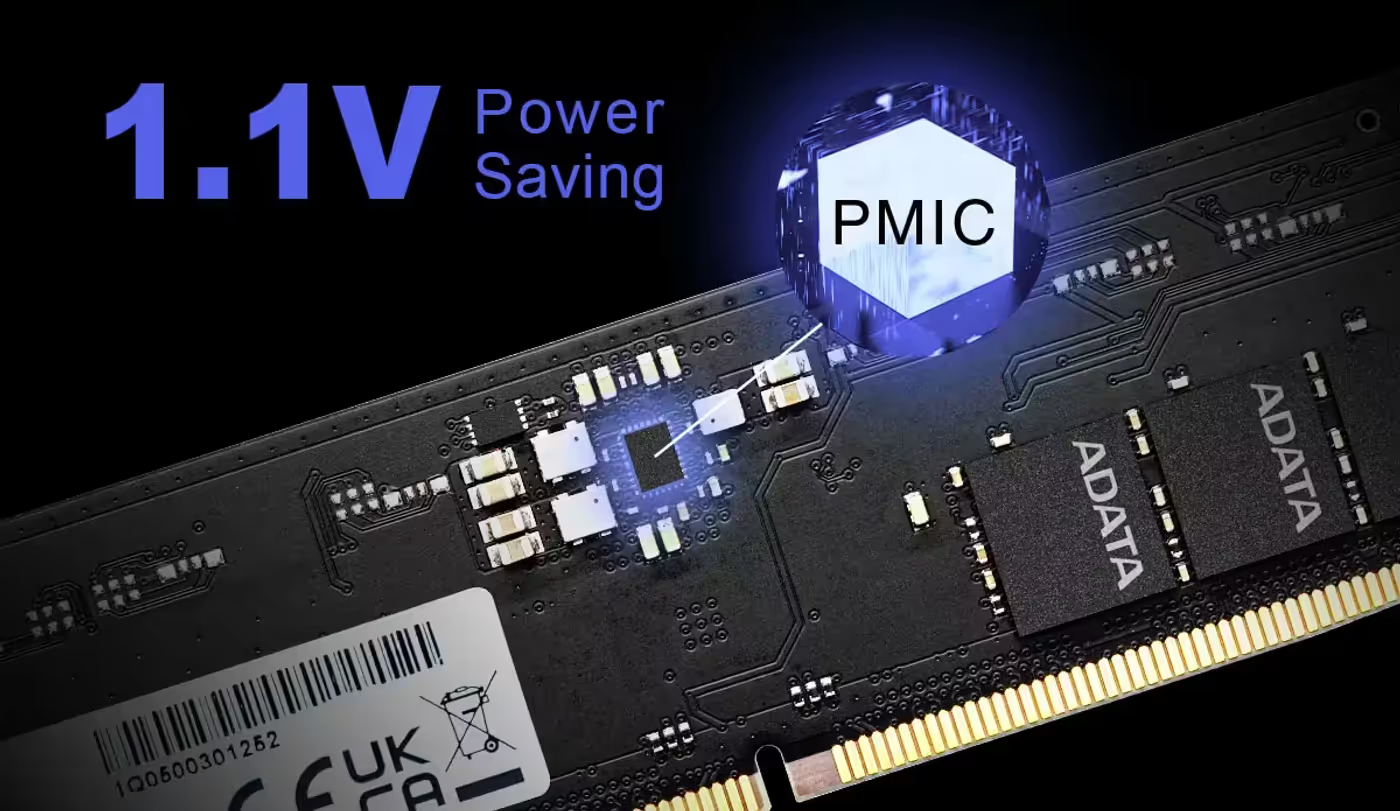
Runs At 1.1V With On-Board PMIC
The module operates at only 1.1V, making it 8% more power-efficient than DDR4 modules at the same job. A built-in Power Management IC moves voltage regulation onto the DIMM rather than leaving it to the motherboard, which is what keeps the power supply to the memory stable under high-demand applications.
Runs At 1.1V With On-Board PMIC
The module operates at only 1.1V, making it 8% more power-efficient than DDR4 modules at the same job. A built-in Power Management IC moves voltage regulation onto the DIMM rather than leaving it to the motherboard, which is what keeps the power supply to the memory stable under high-demand applications.
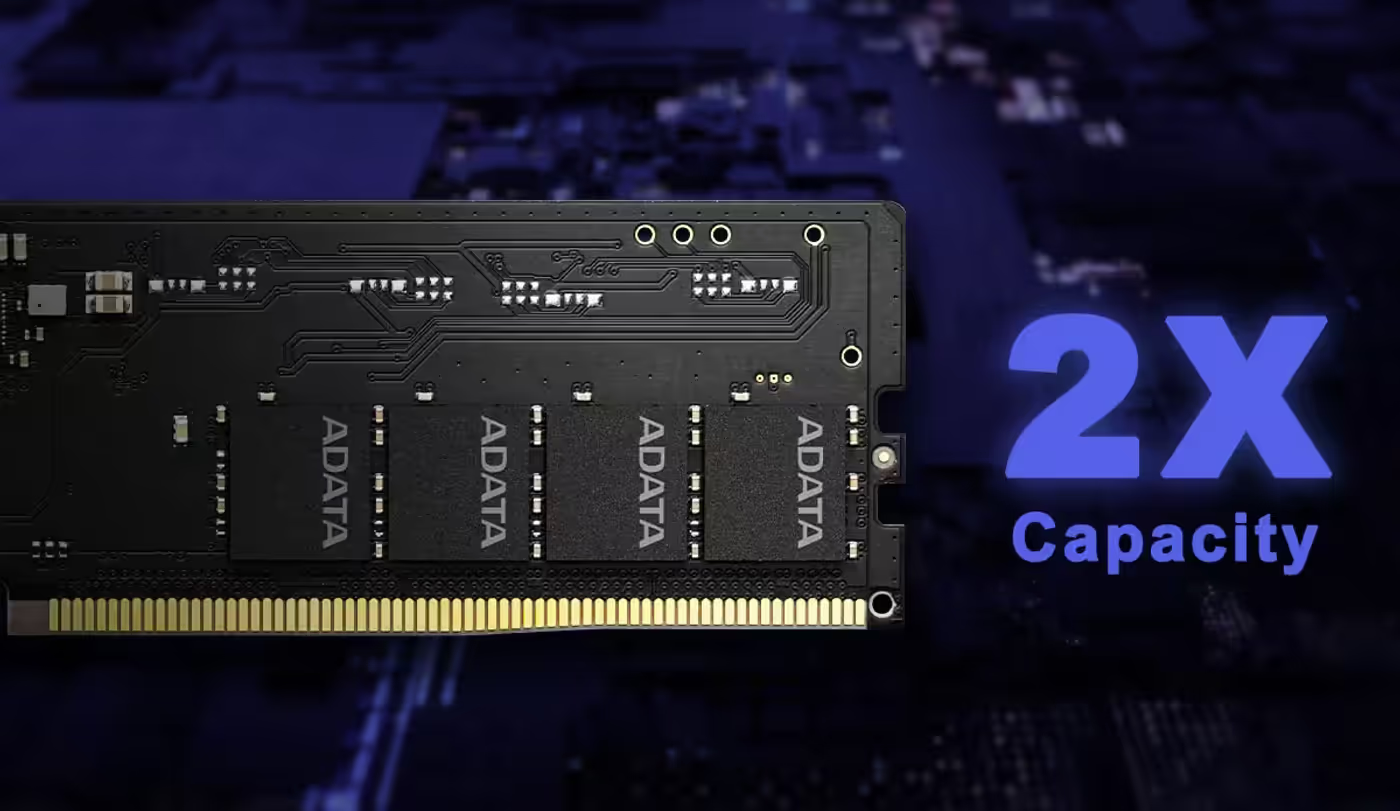
More Bank Groups Double The Capacity
DDR5's architecture adds bank groups and banks, and that structural change is what effectively doubles per-module capacity compared with DDR4. Higher capacity per slot means larger datasets stay in memory instead of spilling to storage, which is where the performance gain in heavy applications actually shows up.
More Bank Groups Double The Capacity
DDR5's architecture adds bank groups and banks, and that structural change is what effectively doubles per-module capacity compared with DDR4. Higher capacity per slot means larger datasets stay in memory instead of spilling to storage, which is where the performance gain in heavy applications actually shows up.
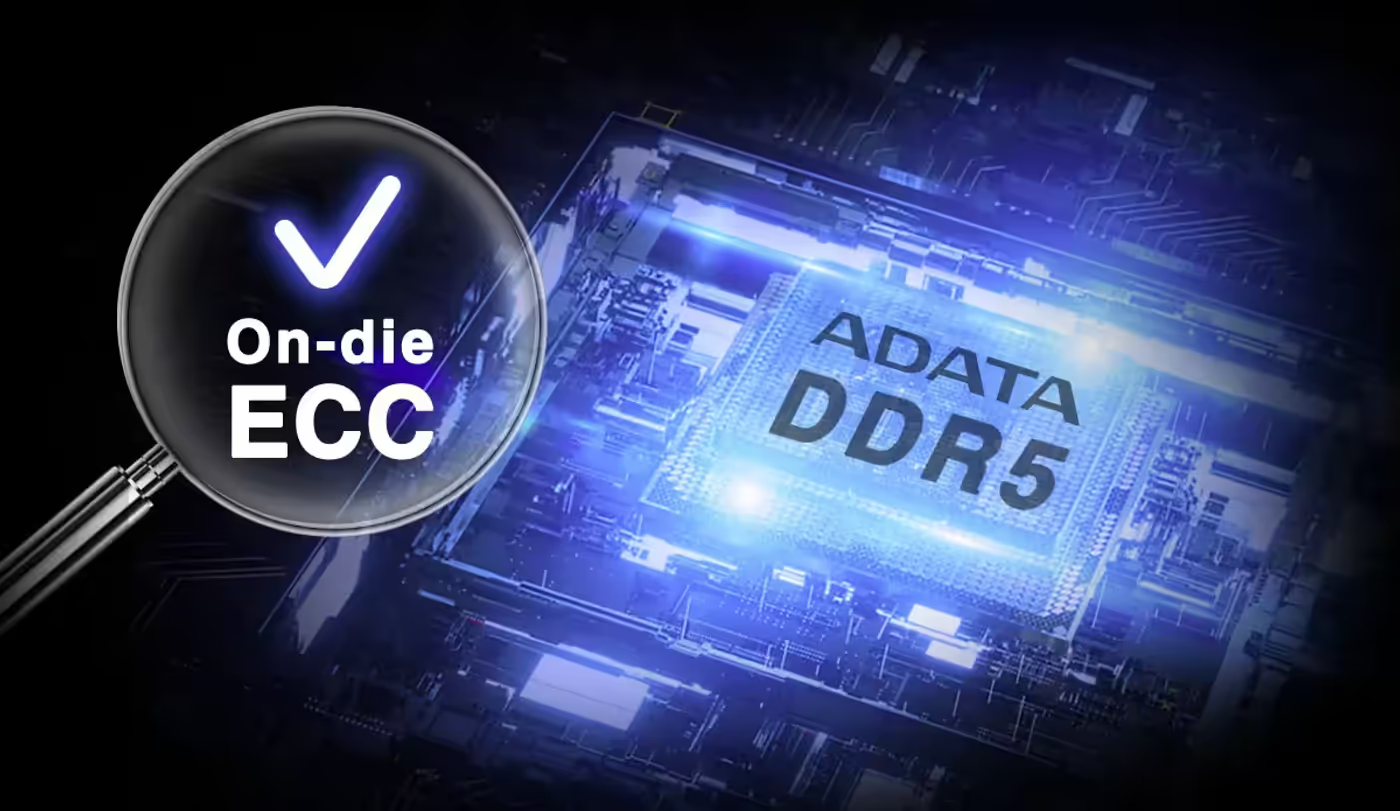
Error Correcting Code Catches Memory Errors
The module carries error correcting code, so memory errors are detected and corrected in real time rather than propagating into a crash. That lifts system stability and reduces the CPU workload spent handling faults, which is why ECC matters for enterprise servers and high-performance desktops where uptime and data integrity are the priority.
Error Correcting Code Catches Memory Errors
The module carries error correcting code, so memory errors are detected and corrected in real time rather than propagating into a crash. That lifts system stability and reduces the CPU workload spent handling faults, which is why ECC matters for enterprise servers and high-performance desktops where uptime and data integrity are the priority.
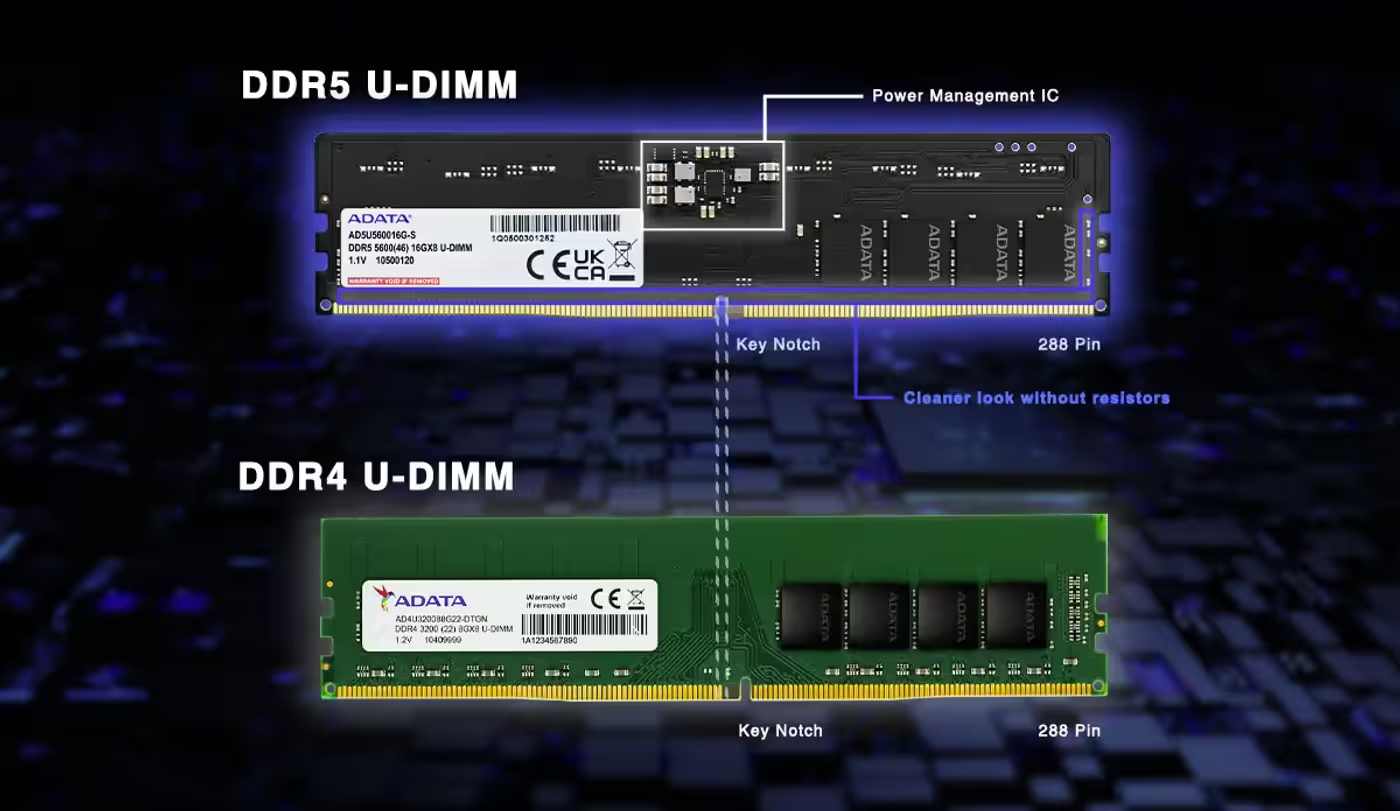
How A DDR5 Module Differs From DDR4
DDR5 and DDR4 share the same footprint and pin count, so the physical differences are easy to miss. The notch sits in a different position on a DDR5 module, and the Power Management IC is visible in the centre of the board, giving DDR5 a more streamlined appearance than its predecessor.
How A DDR5 Module Differs From DDR4
DDR5 and DDR4 share the same footprint and pin count, so the physical differences are easy to miss. The notch sits in a different position on a DDR5 module, and the Power Management IC is visible in the centre of the board, giving DDR5 a more streamlined appearance than its predecessor.
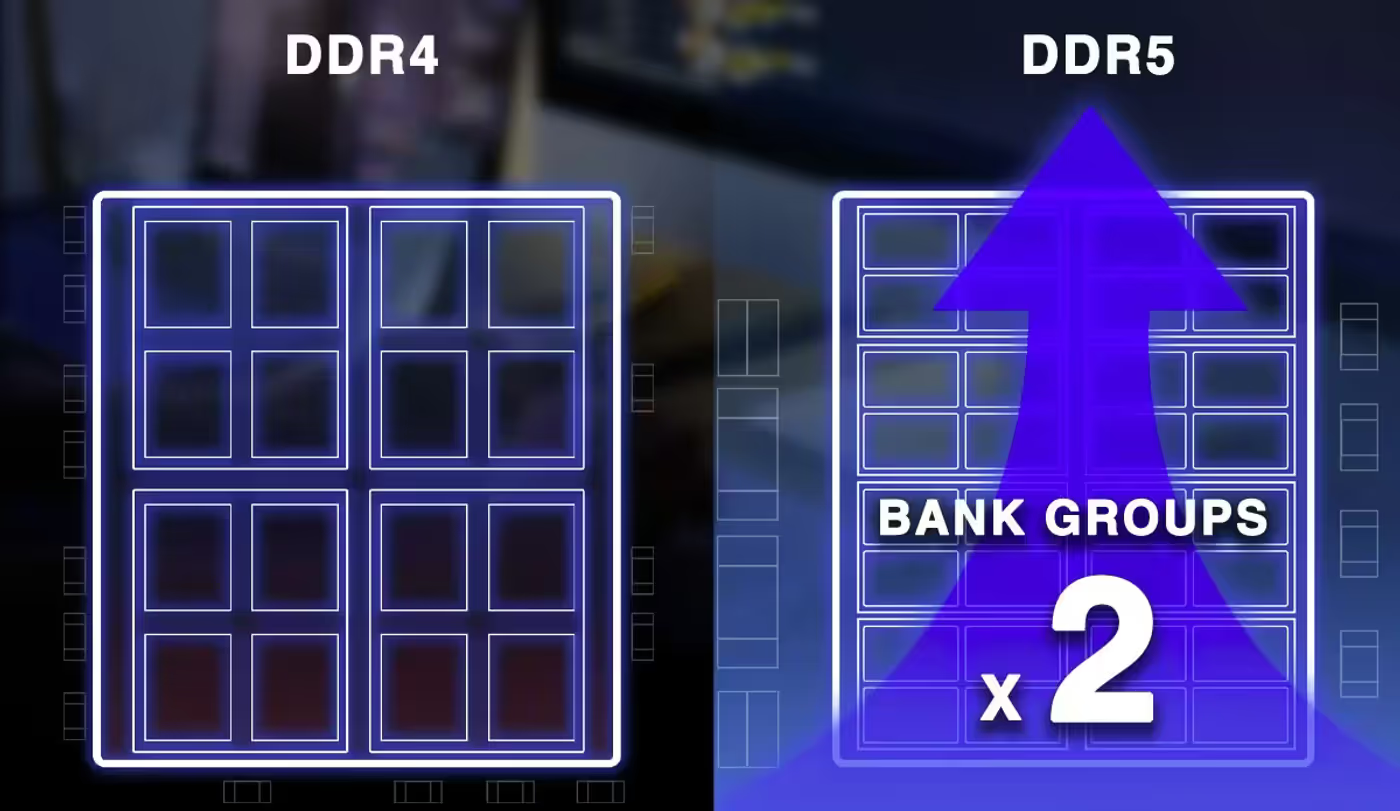
Chip Architecture: Prefetch Buffers And Burst Length
Inside the package, DDR5 doubles DDR4 capacity by adding banks and bank groups, and improves data transfer efficiency through enhanced prefetch buffers and longer burst lengths. Combined with ECC handling data integrity, that architecture is what makes DDR5 the choice for performance-driven and enterprise applications rather than a simple clock speed increase.
Chip Architecture: Prefetch Buffers And Burst Length
Inside the package, DDR5 doubles DDR4 capacity by adding banks and bank groups, and improves data transfer efficiency through enhanced prefetch buffers and longer burst lengths. Combined with ECC handling data integrity, that architecture is what makes DDR5 the choice for performance-driven and enterprise applications rather than a simple clock speed increase.
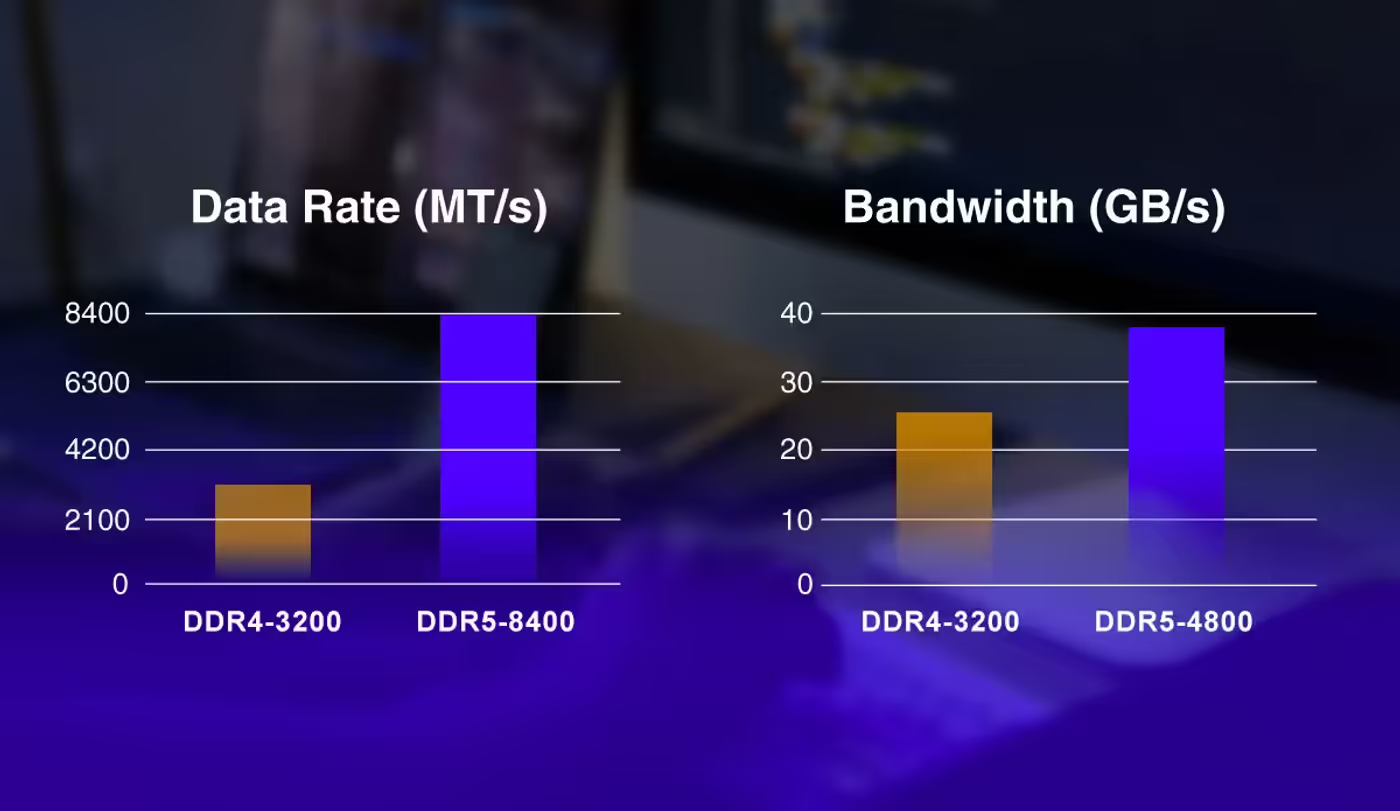
DDR5 Bandwidth Reaches 38.4GB/s
In ADATA's generational comparison, DDR5 modules reach frequencies up to 4800MHz with bandwidth of 38.4GB/s, roughly 50% faster than DDR4-3200. That bandwidth headroom is what feeds a modern CPU during gaming, content creation and server workloads, where the memory subsystem is often the limit rather than the cores.
DDR5 Bandwidth Reaches 38.4GB/s
In ADATA's generational comparison, DDR5 modules reach frequencies up to 4800MHz with bandwidth of 38.4GB/s, roughly 50% faster than DDR4-3200. That bandwidth headroom is what feeds a modern CPU during gaming, content creation and server workloads, where the memory subsystem is often the limit rather than the cores.
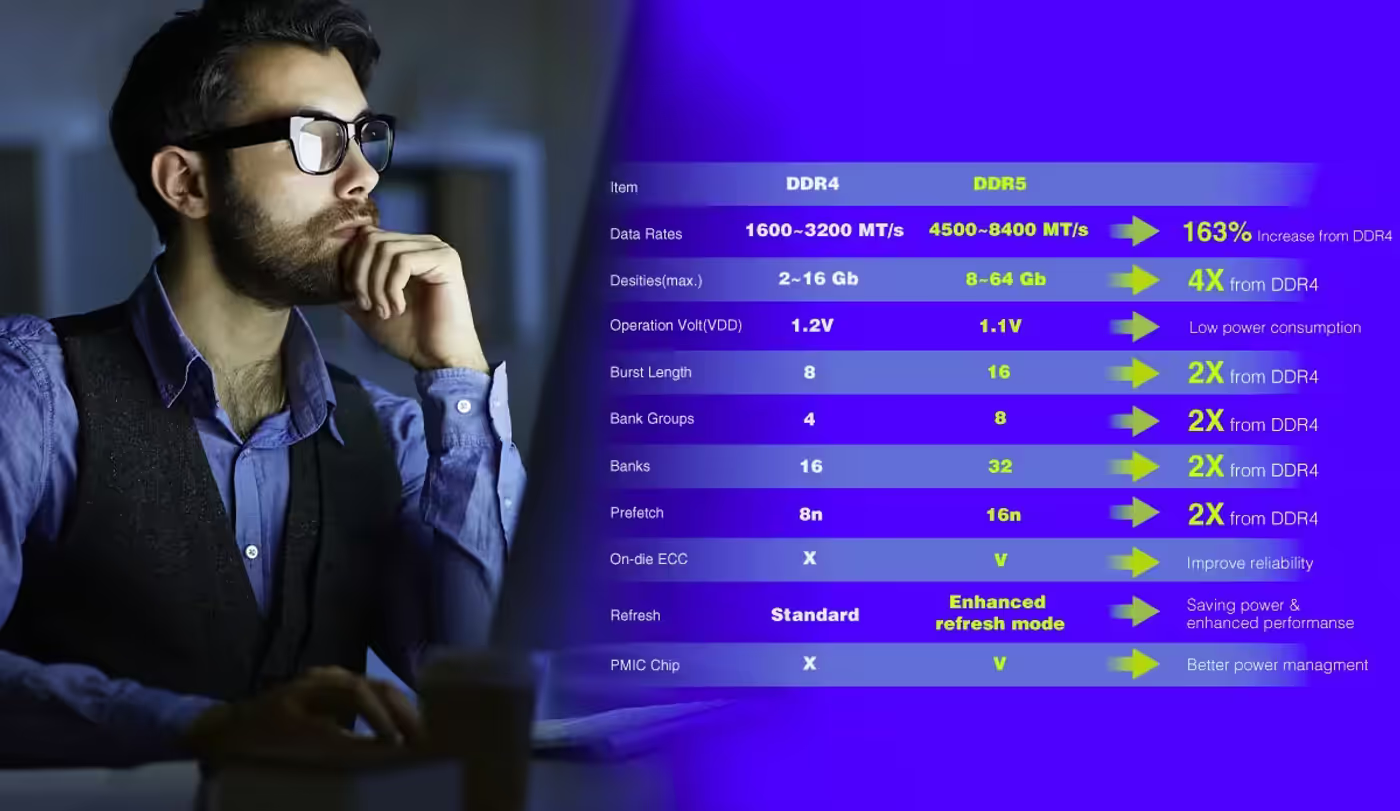
DDR5 Versus DDR4 Specifications Compared
Set side by side, the DDR5 advantages come down to three things: larger capacities per module, faster speeds and improved data integrity. Together they make DDR5 the memory standard for modern high-performance systems and enterprise use, and they explain why a platform change is usually worth pairing with a memory change.
DDR5 Versus DDR4 Specifications Compared
Set side by side, the DDR5 advantages come down to three things: larger capacities per module, faster speeds and improved data integrity. Together they make DDR5 the memory standard for modern high-performance systems and enterprise use, and they explain why a platform change is usually worth pairing with a memory change.
FAQ
Frequently Asked Questions
Everything you need to know about this product
It is a 32GB DDR5 module supplied as a single stick.
It operates at a 5600MHz memory frequency as a DDR5-5600 U-DIMM.
It runs at only 1.1V, making it 8% more power-efficient than DDR4 modules.
It is a built-in Power Management IC that ensures a stable power supply to the module.
Yes. Error correcting code detects and corrects memory errors in real time.
DDR5 effectively doubles the capacity of DDR4 by using more banks and bank groups.
No. Although they share the same footprint and pin count, the notch position differs between the two.
ADATA quotes DDR5 as approximately 50% faster, with bandwidths reaching 38.4GB/s.
Yes. It is aimed at gaming, video editing and heavy multitasking on modern desktop systems.
It is a U-DIMM, the unbuffered module format used in desktop systems.
This ADATA Premier 32GB DDR5 module is listed as AD5U560032G-B.

AI-Generated Content:These FAQs are generated by an automated AI system and may contain inaccuracies or omissions. Evetech makes no warranties, express or implied, regarding their completeness or reliability. For definitive information, please refer to the manufacturer's official specifications.
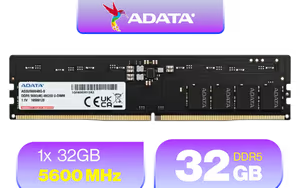
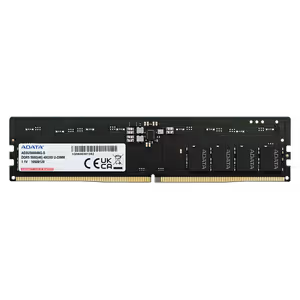
Please Note: Product images are for illustrative purposes only and may differ from the actual product.
Choose your
own PC
Hand-pick every part with live stock, compatibility, and instant pricing.
Try the new builderPrice Inc. Vat
R 8,199
Save R 800
ListR 8,999
8199Free Delivery
Qty:
In Stock with Evetech
Choose your
own PC
Hand-pick every part with live stock, compatibility, and instant pricing.
Try the new builderADATA Premier 32GB 5600MHz DDR5 Memory