Gaming Headset Buying Guide
How to choose a gaming headset.
— Comfort first. Mic second. Spec sheet last.
- latency parity
- 2.4GHz = wired
- return rate truth
- Comfort > specs
- what matters
- Mic > driver size
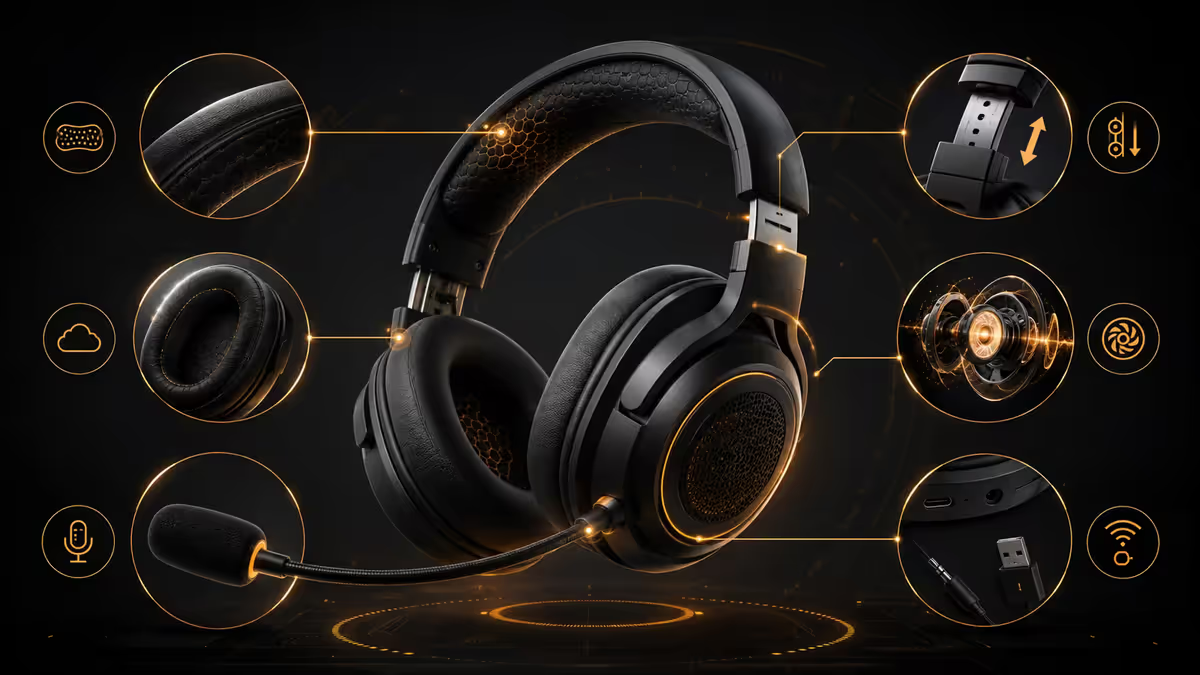
Connection types compared
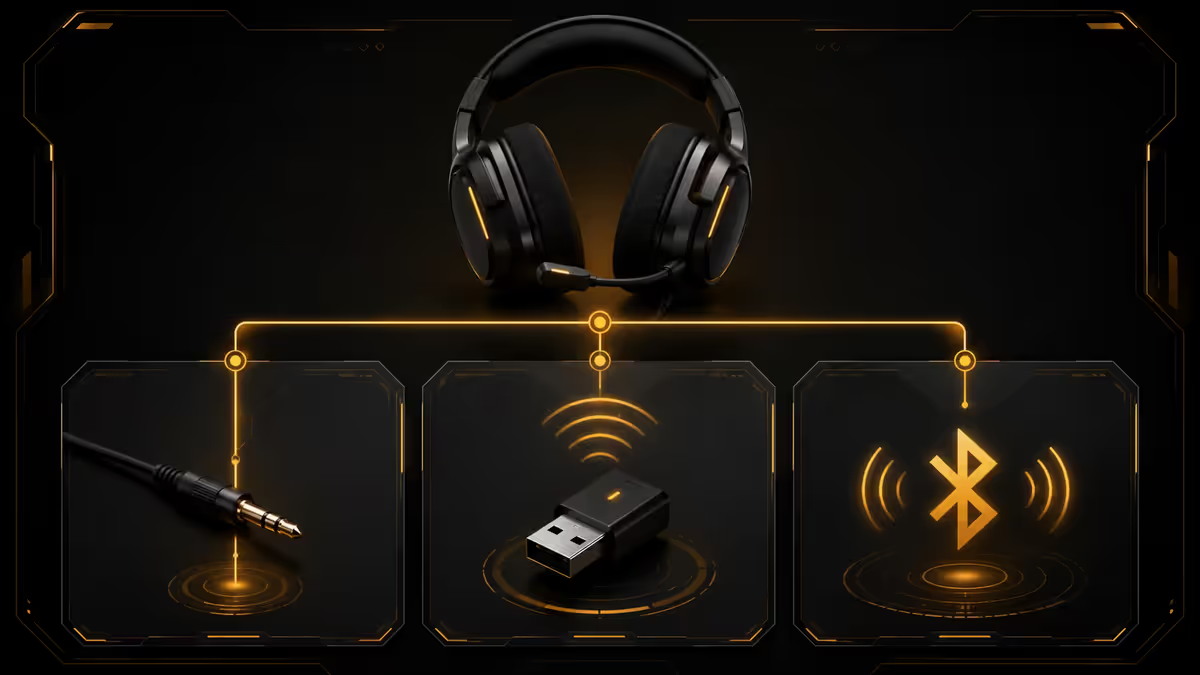
Four connection options dominate in 2026, and the differences matter more for some workflows than others. Get this decision right first — the right connection type narrows the entire shortlist.
| Connection | Latency | Best for |
|---|---|---|
| 3.5mm wired | ~0ms | Budget, console, simplicity |
| USB wired | ~1-2ms | Built-in DAC, software EQ |
| 2.4GHz wireless | 1-3ms | Gaming wireless without compromise |
| Bluetooth 5.3 | 80-200ms | Phone use, casual listening only |
3.5mm wired is still the most reliable, cheapest per quality tier, and the only option for console-only setups (PS5, Xbox Series, Switch). No driver software, no batteries, no firmware. Three-metre cable, plug into the controller or front-panel jack, done.
USB wired adds a built-in DAC and amplifier, which usually delivers cleaner audio than a motherboard's onboard sound. Useful for software EQ profiles and per-game audio presets via Razer Synapse, SteelSeries GG or Logitech G HUB.
2.4GHz wireless via a dedicated USB dongle is the breakthrough story of 2024-2026. SteelSeries, Logitech, Razer and Corsair have all pushed proprietary dongles to within 1-3ms of wired latency. Imperceptible for humans. The convenience of wireless without the latency penalty of Bluetooth.
Bluetooth is still not suitable for competitive gaming due to inherent codec latency (80-200ms depending on aptX LL or LC3). Premium 2026 headsets often include both 2.4GHz dongle AND Bluetooth — use 2.4GHz for gaming, Bluetooth as a fallback for phone use.
Drivers — size and type
Driver size on the box has become a marketing weapon. "60mm titanium drivers!" sounds impressive — but driver size beyond about 50mm delivers diminishing returns, and oversized drivers often have bass-heavy tuning that hurts game positional audio.
The sweet spot for gaming is 40-50mm dynamic drivers. This range gives you adequate bass for explosions, clean midrange for voice chat, and treble extension for footstep cues. Above 50mm: bass dominates, footsteps muddy. Below 40mm: explosions feel weak, music suffers.
Driver types
| Driver type | Strengths | Headsets using this |
|---|---|---|
| Dynamic (most) | Punchy bass, easy to drive, cheap | HyperX, SteelSeries, Razer, Logitech |
| Planar magnetic | Detail, speed, low distortion | Audeze Maxwell, Audeze MM-100 |
| Dual-driver | Wider frequency response | Sennheiser Game One legacy |
| Bone conduction (rare) | Awareness gaming, hearing impaired | Aftershokz / Shokz models |
Dynamic drivers dominate the gaming headset world. They're cheap to manufacture, easy to power from a USB DAC or onboard sound, and a well-tuned dynamic driver beats most planar magnetics in the things gaming needs (clean bass, clear voice chat).
Planar magnetic drivers (Audeze Maxwell, MM-100) deliver audiophile-grade detail and speed at gaming-headset prices for the first time. The trade-off: heavier (Maxwell is 490g — most gaming headsets are 280-340g), pricier (R8,500+ in SA), and the detail advantage only really shows up in non-gaming music listening.
Open-back vs closed-back
The single biggest acoustic decision after driver tuning. Most gamers should buy closed-back; competitive FPS players sometimes choose open-back. Here's why.
Closed-back (most common)
- Sealed ear cups that isolate external noise.
- Sound stays inside the cup — others don't hear your game audio.
- Punchier bass response due to sealed acoustics.
- Better for shared rooms, gaming cafés, household environments.
- Microphone won't pick up game audio leakage.
Open-back (specialist)
- Perforated or grilled ear cups for free airflow.
- Wider soundstage — feels more like speakers than headphones.
- Superior positional imaging for FPS footsteps and gunshots.
- Leaks sound — anyone within 2m hears your game audio.
- Zero noise isolation — outside sounds bleed in.
- Examples: Sennheiser HD 660S2, Beyerdynamic DT 900 Pro X.
When to pick open-back: you have a private quiet room, you play CS2 or Valorant competitively, and positional audio matters more than convenience. Pair with a separate desktop mic (HyperX QuadCast, Shure MV7) — most audiophile open-backs don't include microphones.
When to pick closed-back: almost every other scenario. Open-plan workspace, shared room, partner-doesn't-want-to-hear-your-shooter, you stream and need a clean mic feed without game-audio bleed.
Microphone quality matters more than driver size
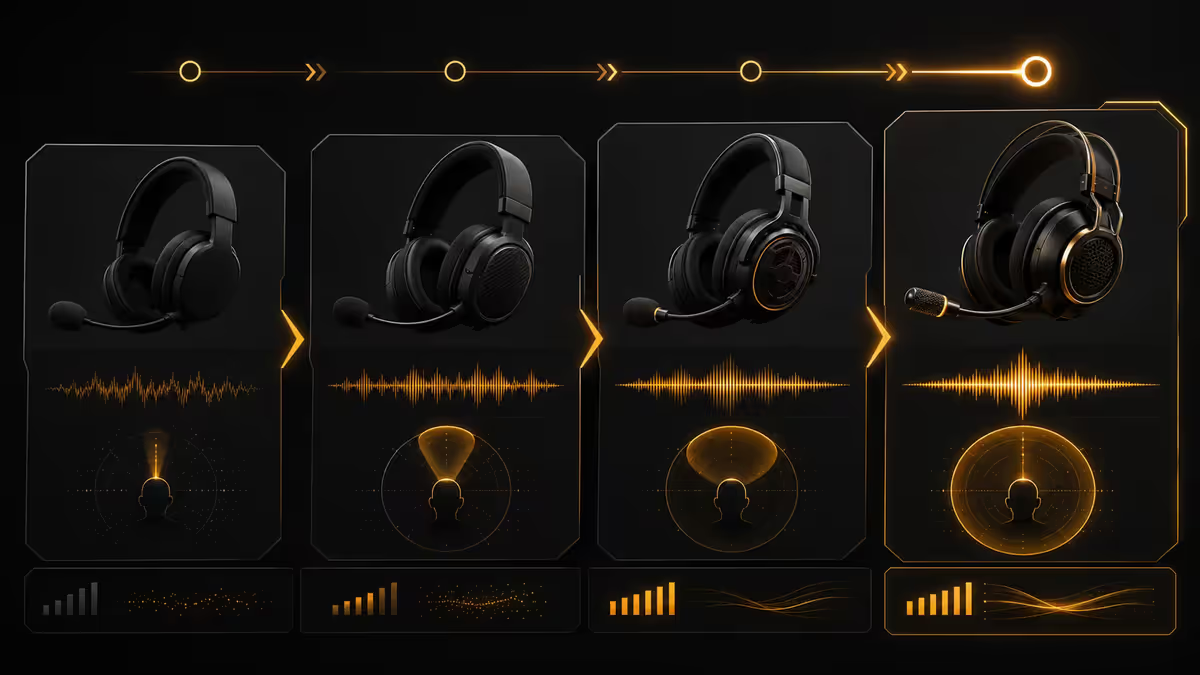
If your gaming includes voice chat — and for most multiplayer gamers, it does — the microphone is the single thing your teammates judge you on. They never hear how good your headset sounds; they only hear you.
Mic type hierarchy
| Mic style | Sound quality | Example headsets |
|---|---|---|
| Detachable boom mic | Best (broadcast-grade) | HyperX Cloud III, SteelSeries Arctis |
| Retractable / flip boom | Very good | Razer BlackShark V2 Pro, Astro A50 |
| Fixed boom (not removable) | Good but worse for travel | Older HyperX Cloud Stinger |
| In-cup mic (hidden) | Acceptable for casual chat | Some Sony/Logitech budget models |
| None (audiophile) | N/A — use desktop mic | Sennheiser HD 660S2, Audeze MM-100 |
Detachable boom mics are the gold standard — they sit close to your mouth (low ambient noise pickup) and unplug for travel or when you don't need them. HyperX, SteelSeries and Logitech G Pro X all use detachable boom designs.
In-cup or hidden mics are inferior because they sit further from your mouth and pick up more ambient noise. Acceptable for casual Discord chat; noticeable downgrade for streaming or competitive comms.
For streaming or YouTube content creation, the headset mic is the wrong choice regardless of headset price. Spend R1,500-R2,500 on a dedicated USB desk mic (HyperX SoloCast or QuadCast S) and use open-back audiophile headphones — you'll sound dramatically better than any all-in-one headset.
Comfort beats specs every time
This is the section most reviews skip and most customers regret. We see it in our return data: comfort is by far the #1 reason customers return gaming headsets, not audio quality, not microphone quality.
The three comfort variables that matter
Weight. Below 320g feels light enough for 6+ hour sessions. Above 400g you'll feel pressure on the crown of your head within 90 minutes. Audeze Maxwell at 490g is the heaviest mainstream gaming headset and the comfort trade-off is real.
Clamping force. Measured in newtons of inward pressure. Strong clamp keeps the headset stable during head movement but causes jaw fatigue and headache after extended sessions. SteelSeries Arctis series consistently rate lowest clamp; Beyerdynamic DT models notoriously high.
Ear cup material. Memory foam with breathable fabric (velour) is the most comfortable for long sessions but absorbs sweat and gets dirty. Leatherette (synthetic leather) seals better acoustically and wipes clean but traps heat — sweaty ears within 90 minutes in SA summer.
The truth about surround sound
7.1 surround sound on the headset box is a marketing weapon. There is no such thing as true 7.1 surround sound in a stereo headset — only DSP that simulates it.
Virtual surround (Razer THX Spatial, Dolby Atmos for Headphones, SteelSeries Sonar Spatial Audio, Windows Sonic) uses head-related transfer functions to convince your brain that audio is coming from outside your head. It works imperfectly. Sometimes it helps positional accuracy in supported games; sometimes it introduces phase issues that make sounds feel diffuse and unlocatable.
Hardware 7.1 surround (multiple physical drivers per ear, popular briefly in 2008-2014) is functionally extinct. Razer Tiamat was the last commercial example. The math doesn't work in such a small physical space — multiple drivers within 3cm interfere with each other.
What actually matters for positional audio: driver imaging quality (how accurately a stereo signal projects left, right, front, back, up, down). This is a function of driver tuning, cup acoustics, and recording engineering — not virtual surround DSP. A high-quality stereo headset (Sennheiser HD 660S2, Audeze MM-100) beats most virtual 7.1 systems for FPS positional cues.
Battery life realities & software
If you go wireless, battery life and the software ecosystem become part of the headset experience — for better or worse.
Battery life expectations (2026)
| Headset | Rated | Real-world (RGB on) |
|---|---|---|
| SteelSeries Arctis Nova 7 | 38 hours | 32-35 hours |
| Logitech G Pro X 2 Lightspeed | 50 hours | 40-45 hours |
| Razer BlackShark V2 Pro (2024) | 70 hours | 60-65 hours |
| Audeze Maxwell | 80 hours | 75 hours (no RGB to worry about) |
| Sony INZONE H9 | 32 hours | 26-28 hours |
| SteelSeries Arctis Nova Pro Wireless | 22 hours (per battery, 2 included) | 20 hours, hot-swap to second |
20-30 hours minimum is what to look for in 2026. Anything less means daily charging interruptions. RGB lighting cuts battery 25-35%; disable it for marathon sessions.
Software ecosystems
SteelSeries GG (Sonar): the best-regarded gaming audio software with per-game EQ profiles, parametric EQ, voice chat enhancement, microphone clarity processing. Free, polished UI.
Logitech G HUB: functional but lacks the polish of SteelSeries GG. Per-game profiles work; EQ is basic.
Razer Synapse: capable but heavy on system resources and bundles RGB orchestration for the rest of your Razer kit. THX Spatial Audio is included.
Open-source alternatives: Equalizer APO + Peace GUI gives professional-grade EQ on any USB headset for free. The audiophile crowd swears by it.
SA brand picks by tier
Budget tier (R1,200-R2,000)
| Headset | Connection | SA price |
|---|---|---|
| HyperX Cloud Stinger 2 | 3.5mm wired | R1,200-R1,500 |
| Razer Kraken X | 3.5mm wired | R1,200-R1,500 |
| Logitech G432 | USB / 3.5mm | R1,500-R1,800 |
| HyperX Cloud Core | 3.5mm wired | R1,800-R2,000 |
Mid-tier sweet spot (R2,500-R4,500)
| Headset | Connection | SA price |
|---|---|---|
| HyperX Cloud III (best value) | 3.5mm / USB | R2,500-R2,800 |
| SteelSeries Arctis Nova 5 | 3.5mm / USB | R2,800-R3,200 |
| Logitech G Pro X (wired) | 3.5mm / USB | R2,700-R3,100 |
| HyperX Cloud II Wireless | 2.4GHz wireless | R3,500-R4,200 |
| Razer BlackShark V2 X | 3.5mm wired | R2,400-R2,800 |
| SteelSeries Arctis Nova 7 (wireless) | 2.4GHz + BT | R4,200-R5,000 |
Premium tier (R5,500-R12,000)
| Headset | Connection | SA price |
|---|---|---|
| Logitech G Pro X 2 Lightspeed | 2.4GHz / BT | R6,200-R7,000 |
| Razer BlackShark V2 Pro (2024) | 2.4GHz / BT | R5,800-R6,800 |
| SteelSeries Arctis Nova Pro Wireless | 2.4GHz / BT | R8,500-R10,500 |
| Astro A50 Gen 5 | 2.4GHz wireless | R9,500-R11,500 |
| Audeze Maxwell (planar) | 2.4GHz / BT | R8,800-R10,500 |
| Sennheiser HD 660S2 + desk mic | Wired audiophile | R10,500-R12,500 |
Common gaming headset mistakes
Buying on driver size alone. "60mm drivers" sells boxes but a well-tuned 40mm headset beats a poorly-tuned 60mm headset every time. Read reviews about tuning, not spec sheets.
Going Bluetooth-only for gaming. Bluetooth's 80-200ms latency is fatal for any competitive game. If you want wireless gaming, you need a 2.4GHz dongle, not Bluetooth. Premium headsets give you both.
Trusting "7.1 surround" labels. Virtual surround is DSP, not multiple drivers. Sometimes it helps, sometimes it hurts. A great-imaging stereo headset is usually more accurate for positional audio than virtual 7.1.
Ignoring weight. Specs pages bury weight in millimetre-thick details. A 490g Audeze Maxwell feels great on day one and brutal on day three of long sessions. Check the gram count before buying.
Buying gaming-branded for content creation. If you stream or record YouTube content, a gaming headset mic is the wrong choice. Use a dedicated USB desk mic and audiophile headphones. The combo costs about the same as a premium gaming headset and sounds twice as good.
Skipping software profile setup. Most premium headsets need software (SteelSeries GG, Logitech G HUB, Razer Synapse) to unlock per-game EQ, mic clarity processing, and surround toggles. Out-of-the-box is rarely optimal.
Key takeaways
- 2.4GHz wireless via USB dongle = wired latency in 2026 — no compromise for gaming.
- 40-50mm dynamic drivers is the sweet spot — bigger isn't better, tuning matters more.
- Closed-back for most. Open-back only for quiet rooms and competitive FPS players.
- Comfort > specs — 62% of headset returns are comfort issues, not audio quality.
- Virtual 7.1 surround is DSP, not magic. A good stereo headset usually beats it.
Frequently asked questions
Is wired or wireless better for gaming headsets in 2026?
For competitive gaming, the gap has effectively closed. A modern 2.4GHz wireless dongle (SteelSeries Nova Pro, Logitech G Pro X 2 Lightspeed, Razer BlackShark V2 Pro) has latency within 1-3ms of wired — imperceptible. Bluetooth still has 80-200ms latency.What driver size should I look for?
40-50mm dynamic drivers are the sweet spot for gaming. Above 50mm you get diminishing returns and often bass-heavy tuning that masks game positional audio. Tuning matters more than size.Should I buy open-back or closed-back?
Closed-back for most gamers. It isolates noise, prevents mic bleed-through, and works in shared rooms. Open-back has wider soundstage and better imaging for competitive FPS but leaks sound badly.How important is the microphone?
Critical if you play with friends or stream. Detachable boom mics are best (HyperX Cloud III, SteelSeries Arctis, Logitech G Pro X). In-cup mics sit further from your mouth and pick up more ambient noise.What is the difference between virtual surround and true surround?
Virtual surround (Razer THX, Dolby Atmos, SteelSeries Sonar) uses DSP to simulate 5.1/7.1 channels on stereo drivers. True hardware surround needs multiple physical drivers per ear and is essentially extinct. A great stereo headset often beats virtual surround.How long should a wireless gaming headset battery last?
20-40 hours real-world use. SteelSeries Arctis Nova 7 hits 38h; Logitech G Pro X 2 Lightspeed 50h; Razer BlackShark V2 Pro 70h; Audeze Maxwell 80h+. Avoid sub-15-hour headsets.Are gaming headsets worth the premium over regular headphones?
Sometimes. The gaming premium pays for a mic, wireless dongle, and game-tuned drivers. If you don't need a mic or own a desk mic, audiophile headphones (Sennheiser HD 660S2, Audeze MM-100) sound far better at the same price.What's the best gaming headset under R3,000 in SA?
HyperX Cloud III — R2,500-R2,800 in SA, excellent comfort, detachable boom mic, 53mm drivers. Alternatives at the same tier: SteelSeries Arctis Nova 5 (R2,800-R3,200), Logitech G Pro X wired (R2,700-R3,100).
Get the Evetech app
Exclusive app-only prices, daily flash sales, and free delivery on orders over R4,000 — download the app and start saving.