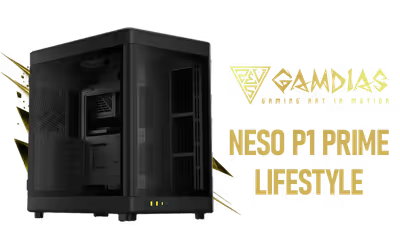
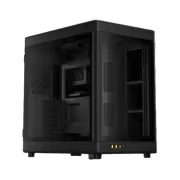
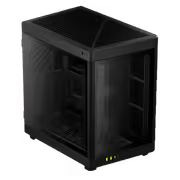
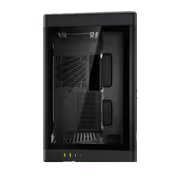
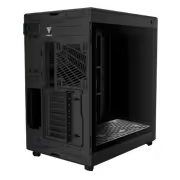
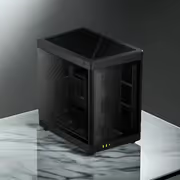
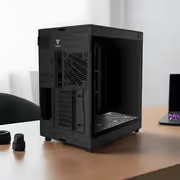
Gamdias Neso P1 Gaming Case Black
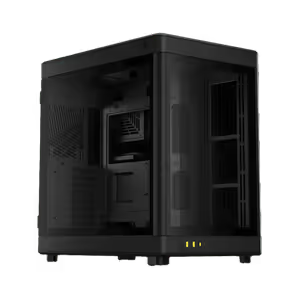
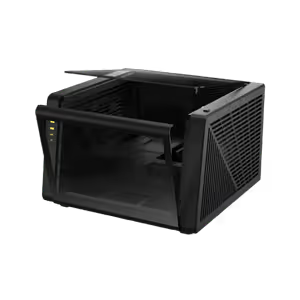
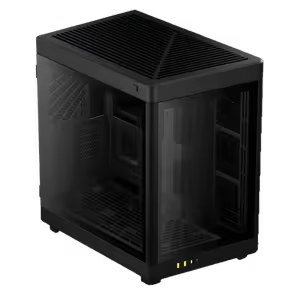
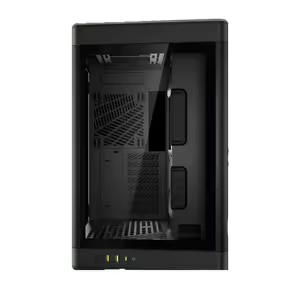
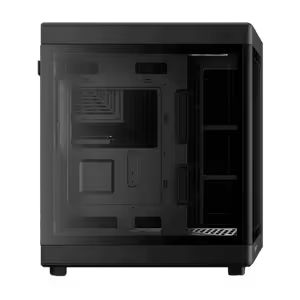
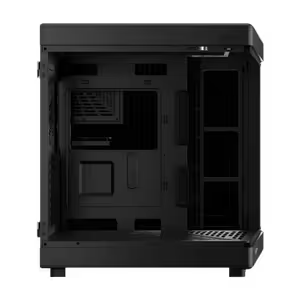
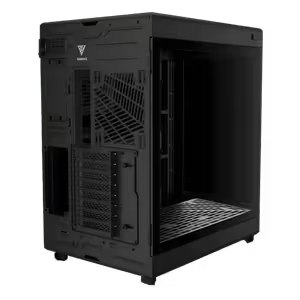
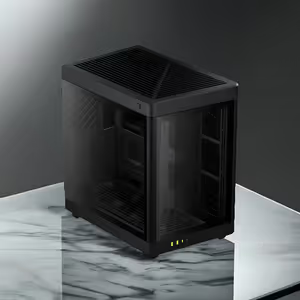
Gamdias Neso P1 Prime Lifestyle E-ATX Gaming Case - Black / Modular Orientation / Full Panoramic Display / Supports Motherboards up to E-ATX / Trapezoid Shaped for Horizontal Desktop and Vertical Tower Setup / No Fans Included / NESO-P1-B + FREE DELIVERY !
1 Year Local Warranty
Model No : GAMDIAS NESO-P1-B
Price Inc. Vat
R 2,299
Save R 1,700
ListR 3,999
2299Free Delivery
Qty:
In Stock with Evetech
Gamdias NESO-P1-B E-ATX Gaming Case — Panoramic Display
Gamdias Neso P1 Black E-ATX Full-Tower Case
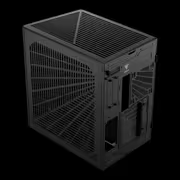
The video walks around the Gamdias Neso P1 in black, showing the trapezoidal dual-chamber body set up first as an upright tower and then flat as a horizontal desktop. Panoramic tempered glass, the one-touch panel release and the modular pedestals all feature. Board support runs to E-ATX, fan capacity to 10, and no fans are supplied in the box.
Gamdias Neso P1 Black E-ATX Full-Tower Case
The video walks around the Gamdias Neso P1 in black, showing the trapezoidal dual-chamber body set up first as an upright tower and then flat as a horizontal desktop. Panoramic tempered glass, the one-touch panel release and the modular pedestals all feature. Board support runs to E-ATX, fan capacity to 10, and no fans are supplied in the box.
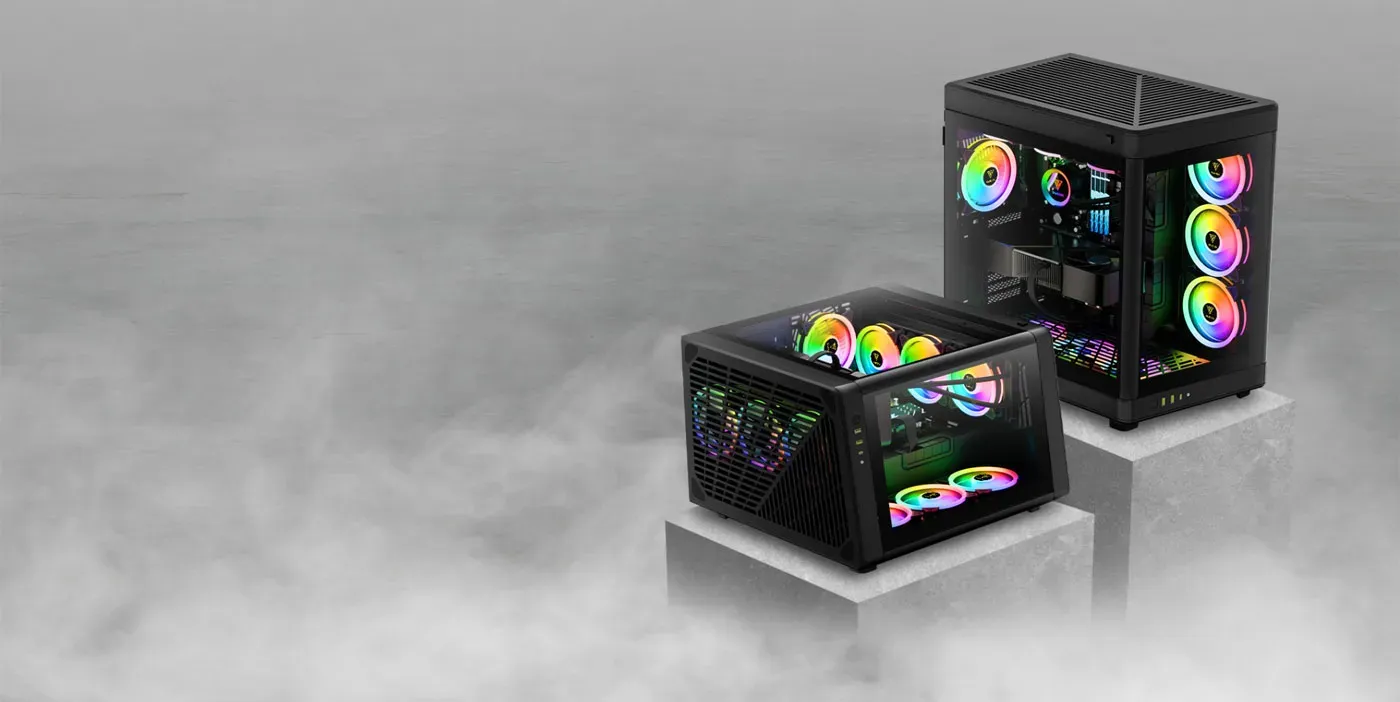
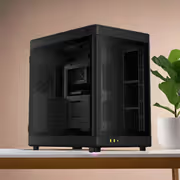
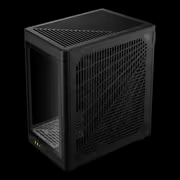
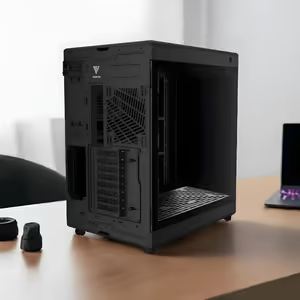
Premium Full-Tower Chassis In Sleek Black
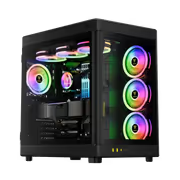
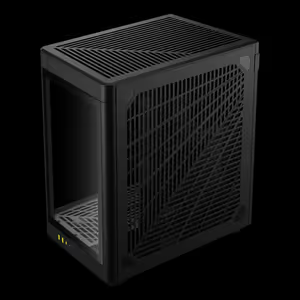
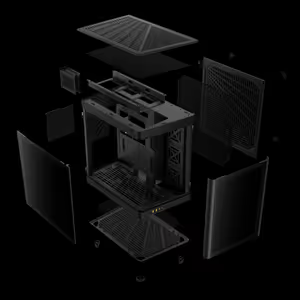
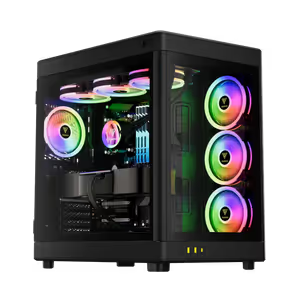
A dual-chamber structure inside a trapezoidal full-tower shell defines the Neso P1, and the black finish keeps attention on whatever is lit inside. Hardware displays cleanly in either the horizontal or the vertical position, and the one-touch mechanism pulls the glass panels off quickly when an upgrade or a clean-out is due.
Premium Full-Tower Chassis In Sleek Black
A dual-chamber structure inside a trapezoidal full-tower shell defines the Neso P1, and the black finish keeps attention on whatever is lit inside. Hardware displays cleanly in either the horizontal or the vertical position, and the one-touch mechanism pulls the glass panels off quickly when an upgrade or a clean-out is due.
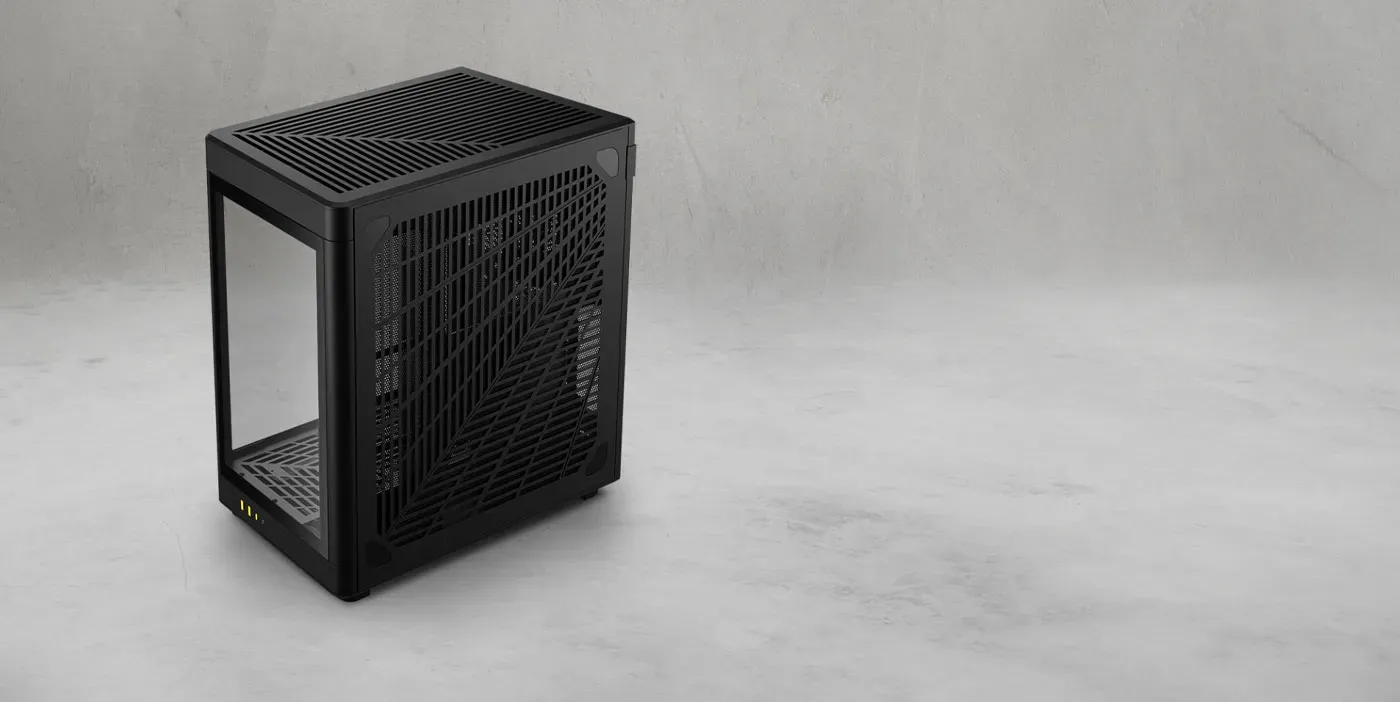
Trapezoidal Design With Grid Interior Finish
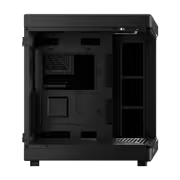
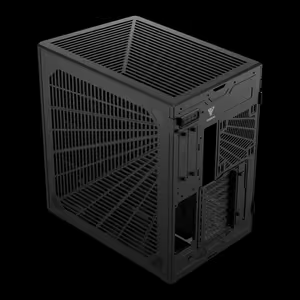
Two design elements carry the Neso P1: the trapezoidal outer shape and the grid-patterned interior behind the glass. The grid gives the inside of the case a finished texture instead of bare metal, so the parts that are visible but not components still look intentional. It is a lifestyle case in the literal sense.
Trapezoidal Design With Grid Interior Finish
Two design elements carry the Neso P1: the trapezoidal outer shape and the grid-patterned interior behind the glass. The grid gives the inside of the case a finished texture instead of bare metal, so the parts that are visible but not components still look intentional. It is a lifestyle case in the literal sense.
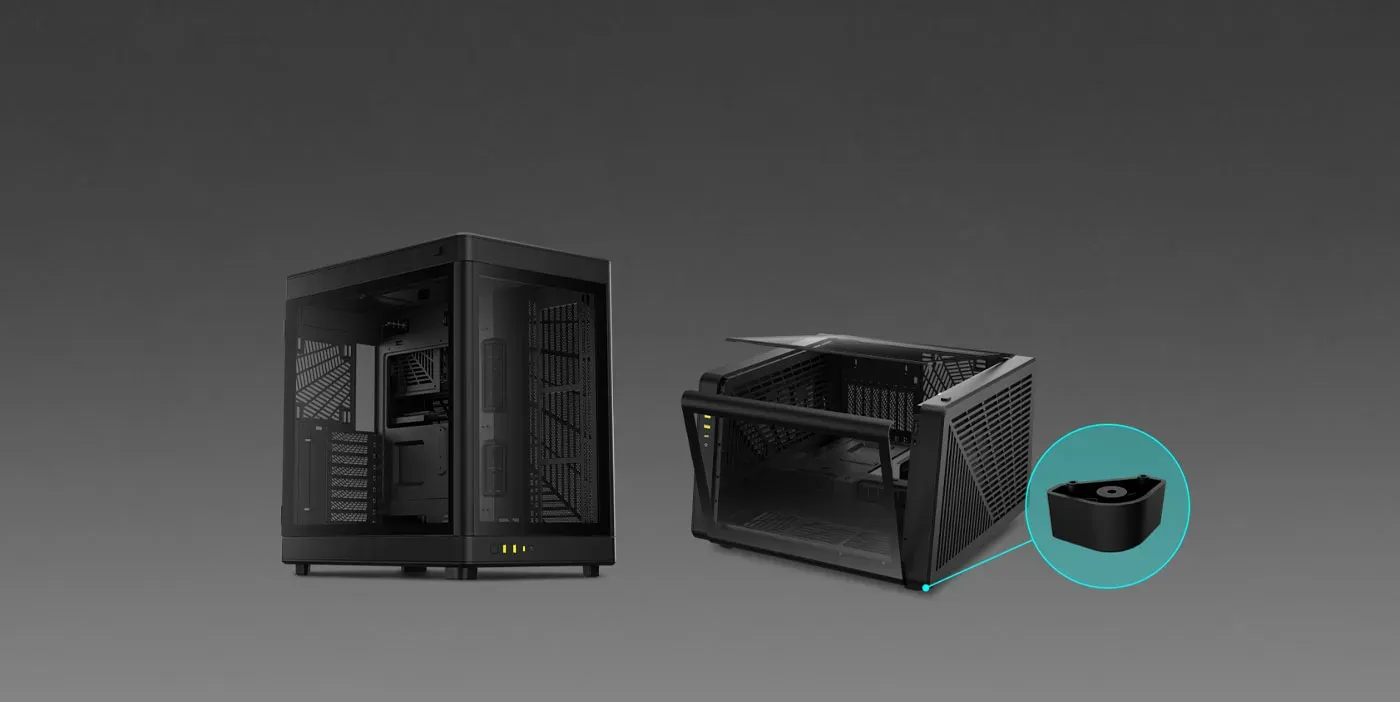
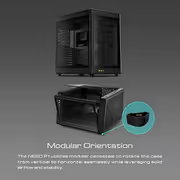
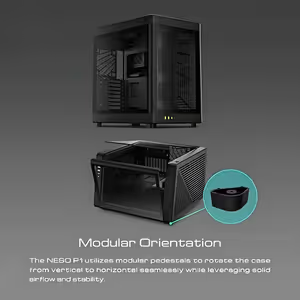
Rotate Between Vertical And Horizontal Orientations
Modular pedestals carry the Neso P1 in either orientation, rotating a vertical tower into a horizontal desktop layout while airflow and stability hold up in both. It is a genuine repositioning rather than laying a tower on its side, which is why the case keeps its intended intake and exhaust paths whichever way it stands.
Rotate Between Vertical And Horizontal Orientations
Modular pedestals carry the Neso P1 in either orientation, rotating a vertical tower into a horizontal desktop layout while airflow and stability hold up in both. It is a genuine repositioning rather than laying a tower on its side, which is why the case keeps its intended intake and exhaust paths whichever way it stands.
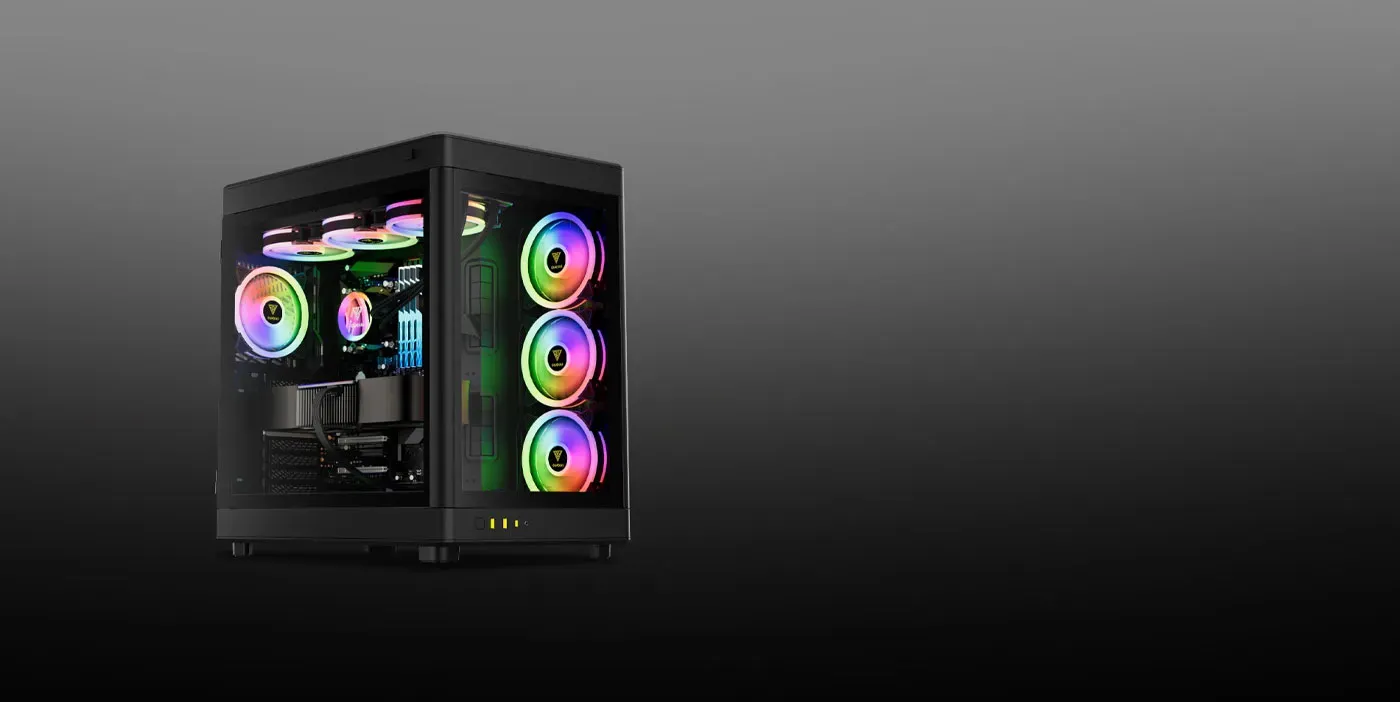
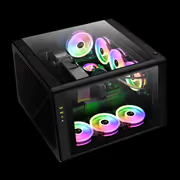
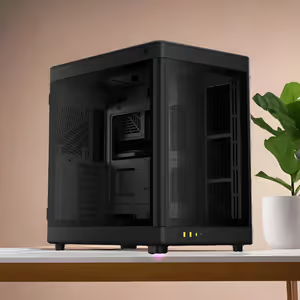
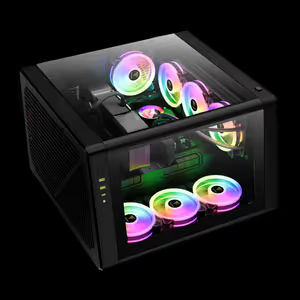
Expansive Panoramic View Of Your Hardware
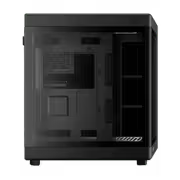
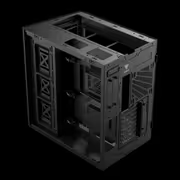
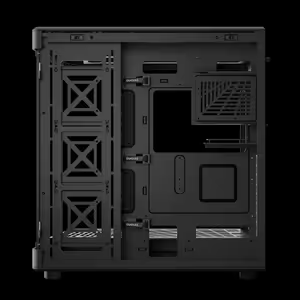
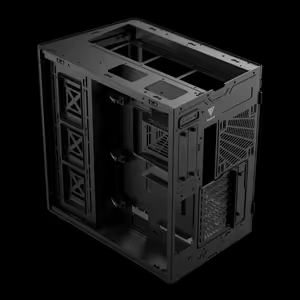
An open dual-chamber design gives the Neso P1 its panoramic view, putting the motherboard, cooling and graphics card on show while cables and untidy components sit in the chamber behind. The split is structural rather than cosmetic, so a clean-looking build does not depend on hours spent hiding wires by hand.
Expansive Panoramic View Of Your Hardware
An open dual-chamber design gives the Neso P1 its panoramic view, putting the motherboard, cooling and graphics card on show while cables and untidy components sit in the chamber behind. The split is structural rather than cosmetic, so a clean-looking build does not depend on hours spent hiding wires by hand.
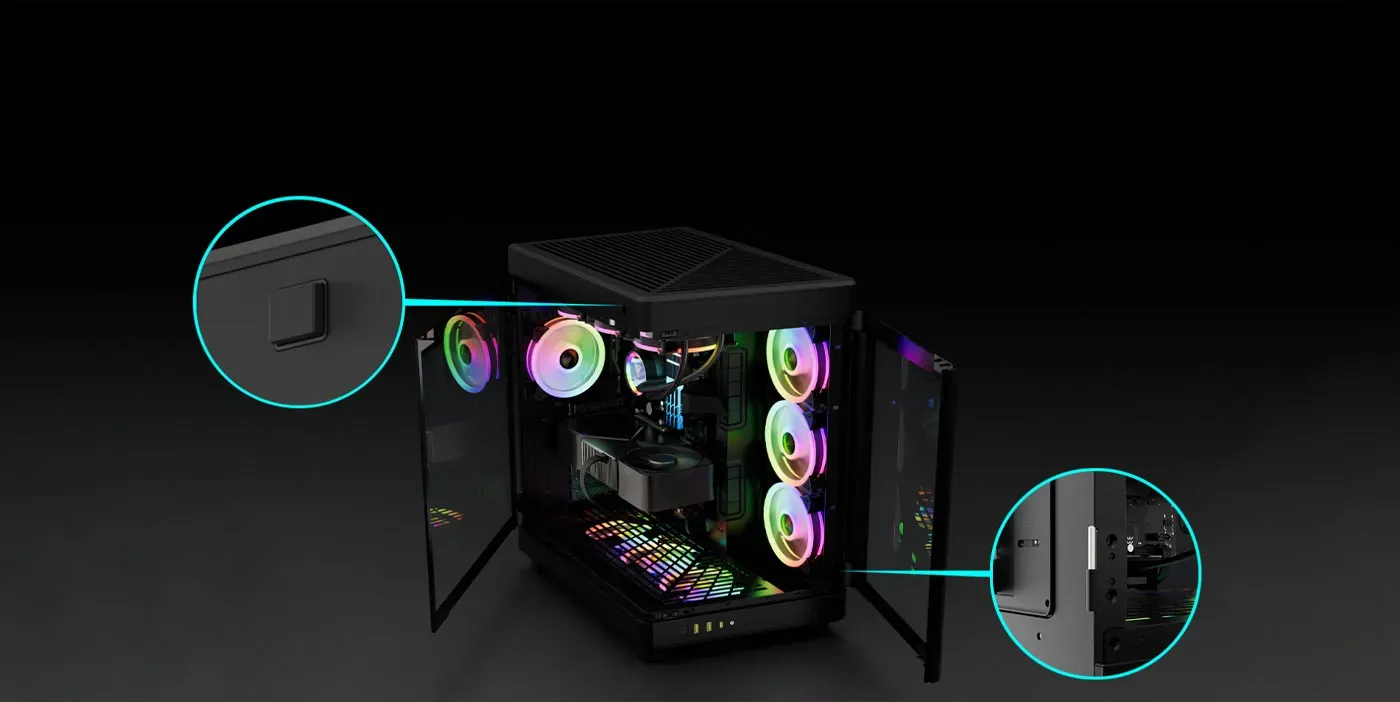
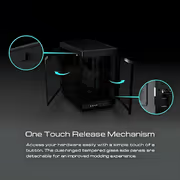
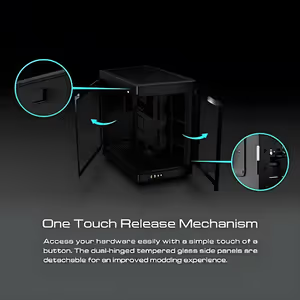
Single Button Detaches The Glass Panels
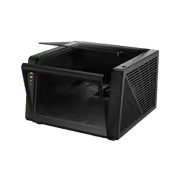
One button press releases the tempered glass side panels, which are dual-hinged and made to detach completely rather than hang open. Removing them fully is what makes modding practical, since both hands and both sides of the interior become available at once. Reattaching is the same operation in reverse, with no fasteners to keep track of.
Single Button Detaches The Glass Panels
One button press releases the tempered glass side panels, which are dual-hinged and made to detach completely rather than hang open. Removing them fully is what makes modding practical, since both hands and both sides of the interior become available at once. Reattaching is the same operation in reverse, with no fasteners to keep track of.
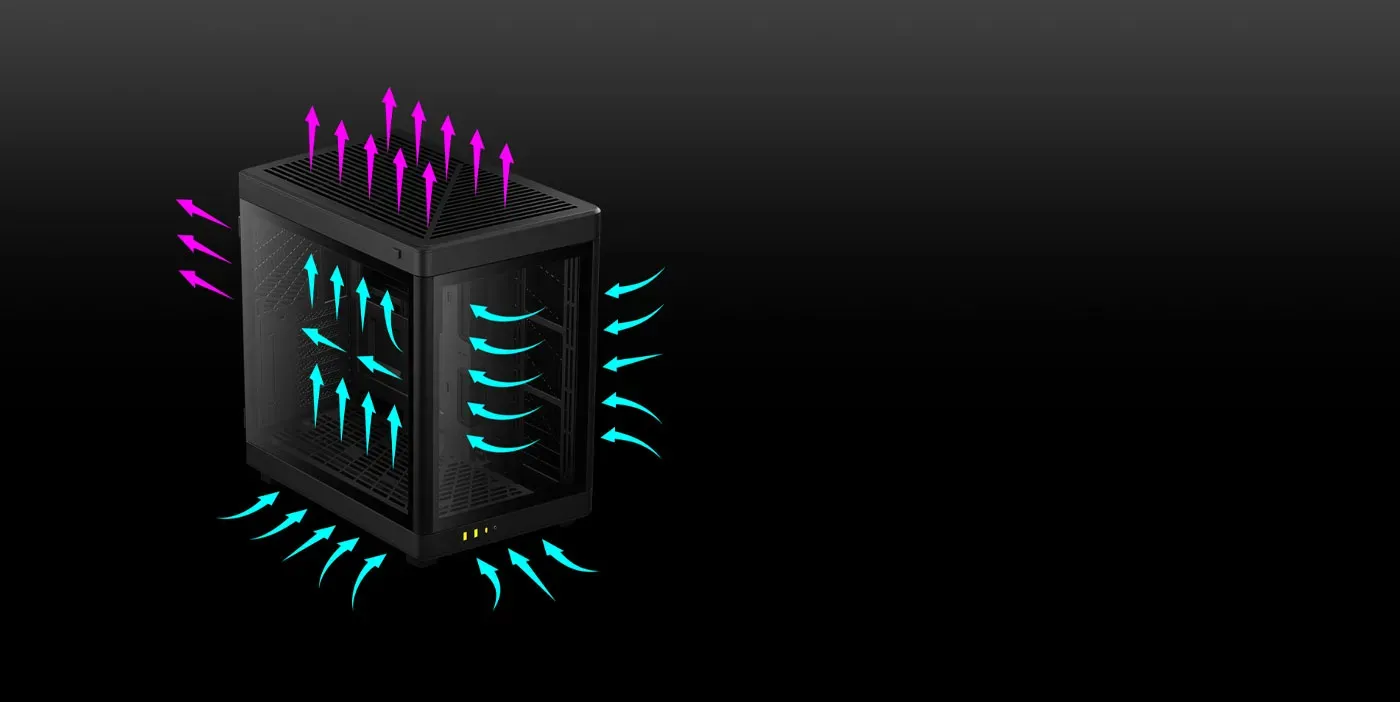
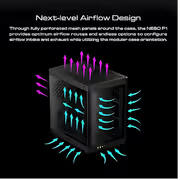
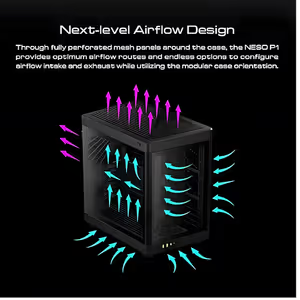
Perforated Mesh Panels Shape Airflow Paths
Every panel on the Neso P1 is fully perforated mesh, which leaves intake and exhaust configuration open rather than fixed. Paired with the modular orientation, the same chassis can be set to pull air from the base in tower form or from the side when laid flat, so the cooling plan follows the way the case is actually standing.
Perforated Mesh Panels Shape Airflow Paths
Every panel on the Neso P1 is fully perforated mesh, which leaves intake and exhaust configuration open rather than fixed. Paired with the modular orientation, the same chassis can be set to pull air from the base in tower form or from the side when laid flat, so the cooling plan follows the way the case is actually standing.
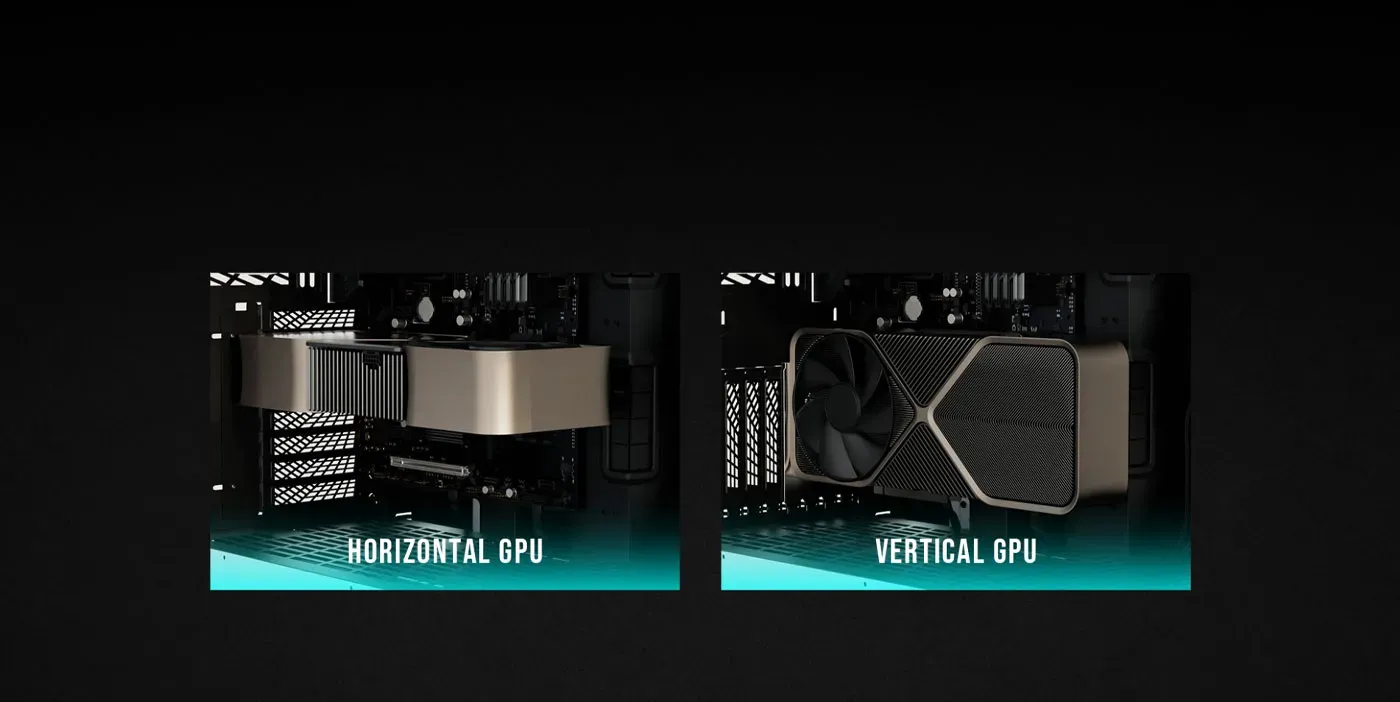
8x8 Rotatable PCIe Slots And 426mm Clearance
The Neso P1 carries 8x8 rotatable PCIe slots, allowing a graphics card to be fitted flat or turned to face the glass. Interior space reaches 426mm, so RTX 40-series cards fit at full length in either position. Vertical mounting without a separate riser bracket kit is the practical advantage of rotating the slots themselves.
8x8 Rotatable PCIe Slots And 426mm Clearance
The Neso P1 carries 8x8 rotatable PCIe slots, allowing a graphics card to be fitted flat or turned to face the glass. Interior space reaches 426mm, so RTX 40-series cards fit at full length in either position. Vertical mounting without a separate riser bracket kit is the practical advantage of rotating the slots themselves.
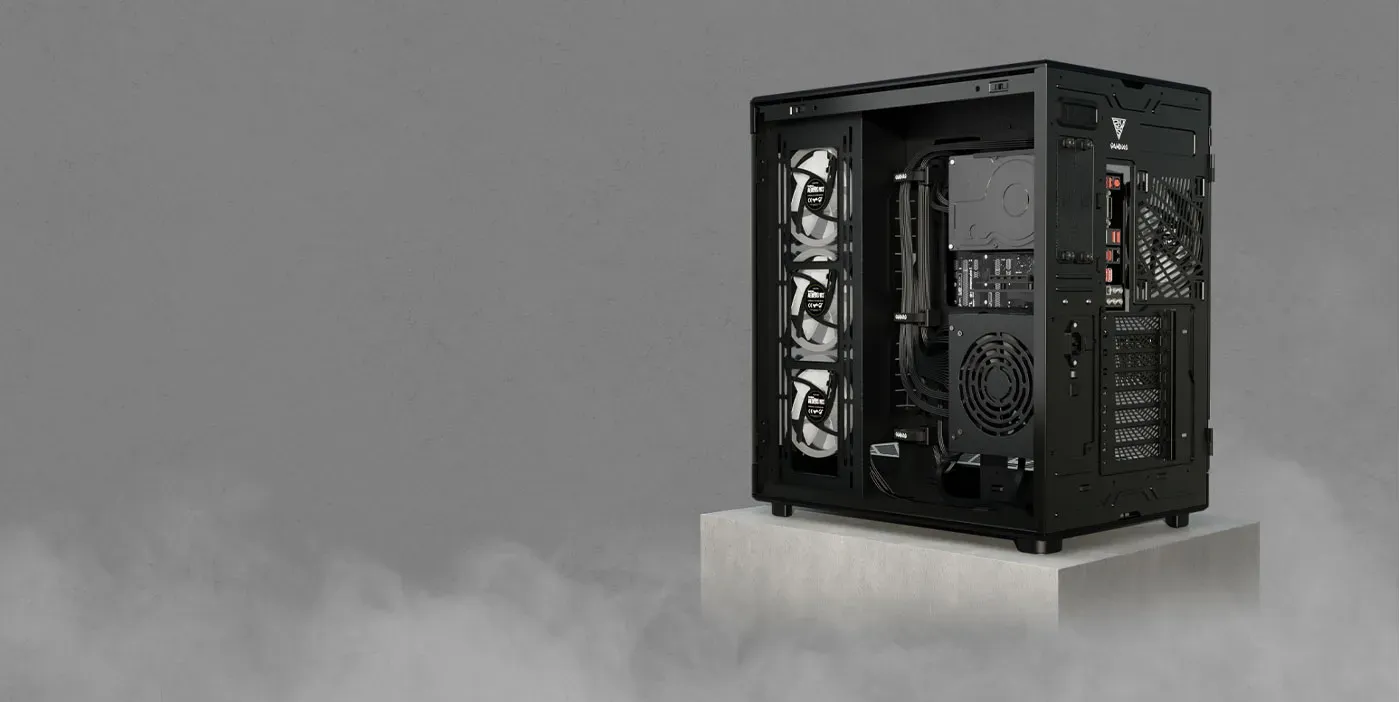
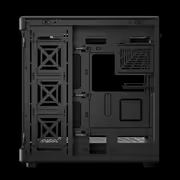
Velcro Straps In A 90mm Deep Compartment
Cable management runs through a hidden compartment 90mm deep, with a planned routing system and velcro straps included. That depth gives stiff 24-pin and PCIe cables room to curve rather than being crushed flat against the panel, and the straps hold the finished loom in place so it does not sag back into view over time.
Velcro Straps In A 90mm Deep Compartment
Cable management runs through a hidden compartment 90mm deep, with a planned routing system and velcro straps included. That depth gives stiff 24-pin and PCIe cables room to curve rather than being crushed flat against the panel, and the straps hold the finished loom in place so it does not sag back into view over time.
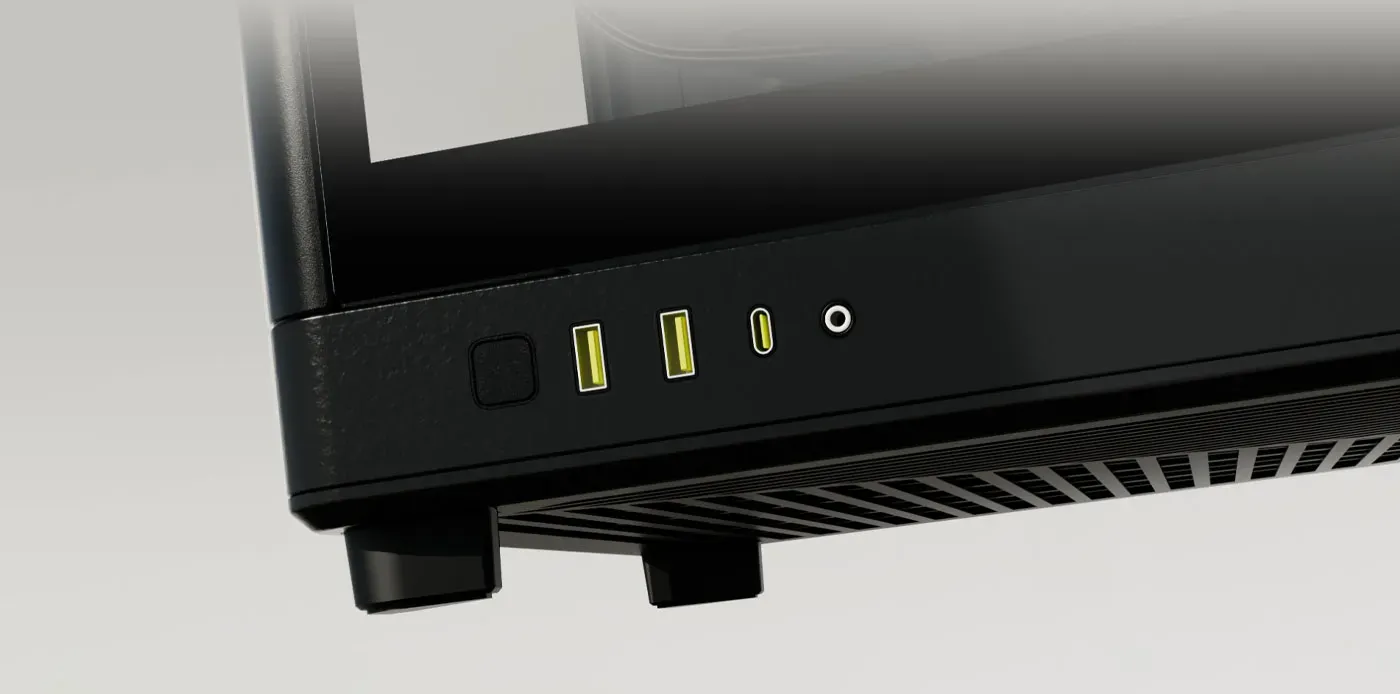
Front I/O With Type-C And Dual USB 3.0
The front I/O panel carries a USB 3.2 Gen 2 Type-C port, two USB 3.0 ports and an integrated audio jack. Three data ports plus audio at the front cover a headset, a controller and a fast external drive at the same time, without anything needing to reach around to the rear of the case.
Front I/O With Type-C And Dual USB 3.0
The front I/O panel carries a USB 3.2 Gen 2 Type-C port, two USB 3.0 ports and an integrated audio jack. Three data ports plus audio at the front cover a headset, a controller and a fast external drive at the same time, without anything needing to reach around to the rear of the case.
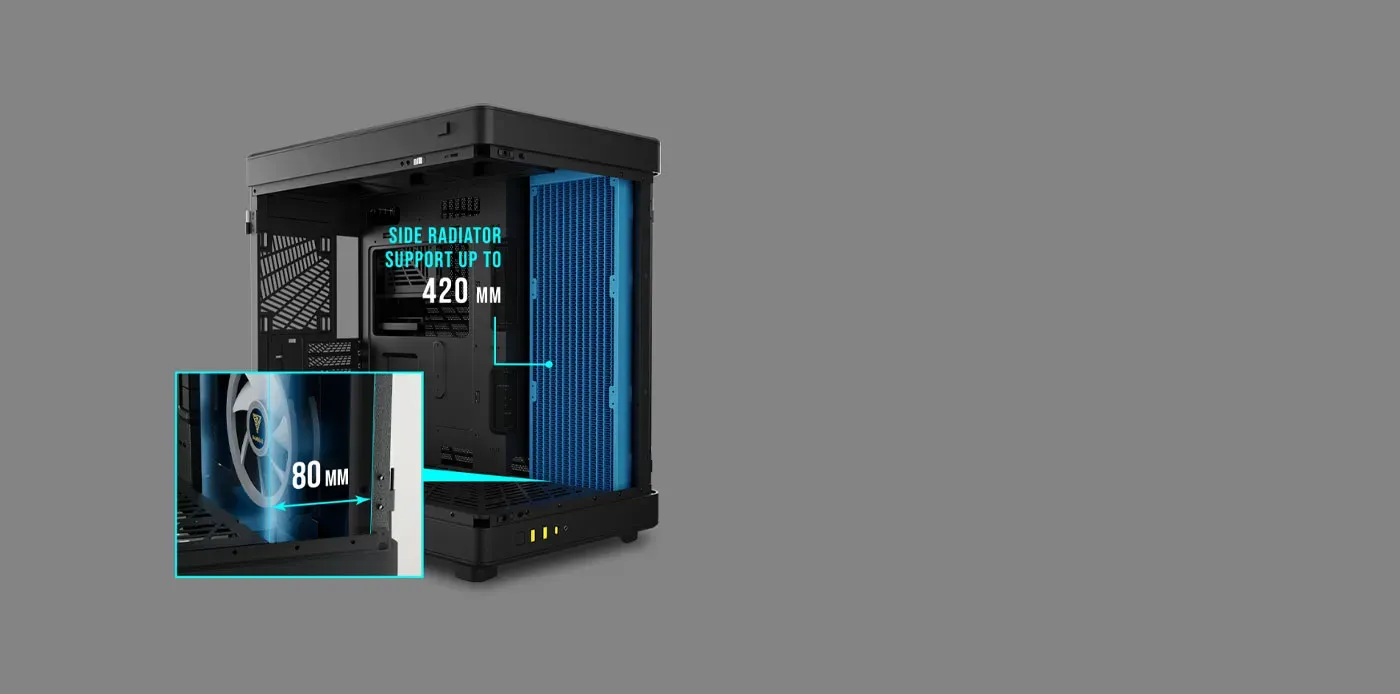
Side Mount Takes 420mm Radiators
Radiators up to 420mm mount on the side of the Neso P1, and an expanded 80mm of depth is allowed there for ultra-thick radiators. Thickness is usually where clearance runs out in a case that quotes a large radiator size, so the extra depth is the figure that makes a 420mm side mount realistic rather than theoretical.
Side Mount Takes 420mm Radiators
Radiators up to 420mm mount on the side of the Neso P1, and an expanded 80mm of depth is allowed there for ultra-thick radiators. Thickness is usually where clearance runs out in a case that quotes a large radiator size, so the extra depth is the figure that makes a 420mm side mount realistic rather than theoretical.
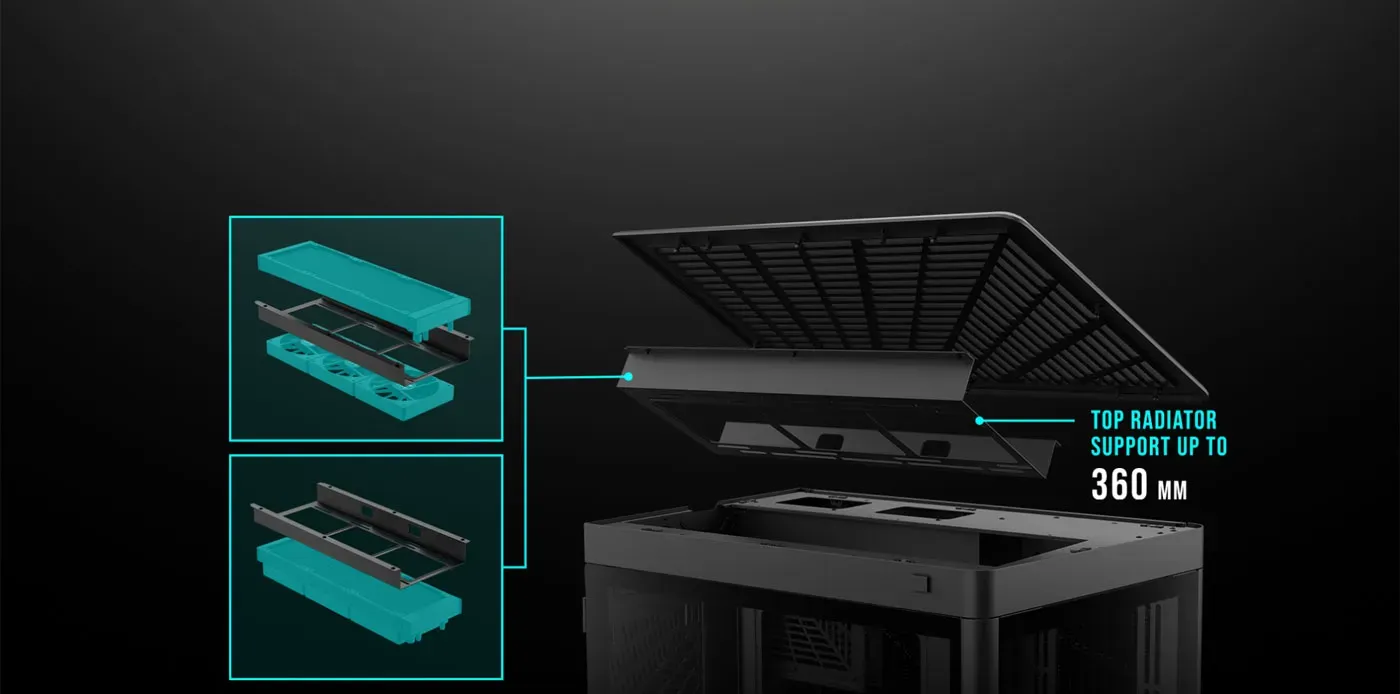
Detachable Top Bracket Simplifies Radiator Installation
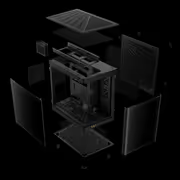
A detachable top cooling bracket lifts out of the chassis so a 280mm or 360mm radiator can be assembled onto it outside the case. Working on a bench instead of leaning into a tower means fewer dropped screws and no cross-threading, and the whole assembly then drops back into place in a single movement.
Detachable Top Bracket Simplifies Radiator Installation
A detachable top cooling bracket lifts out of the chassis so a 280mm or 360mm radiator can be assembled onto it outside the case. Working on a bench instead of leaning into a tower means fewer dropped screws and no cross-threading, and the whole assembly then drops back into place in a single movement.
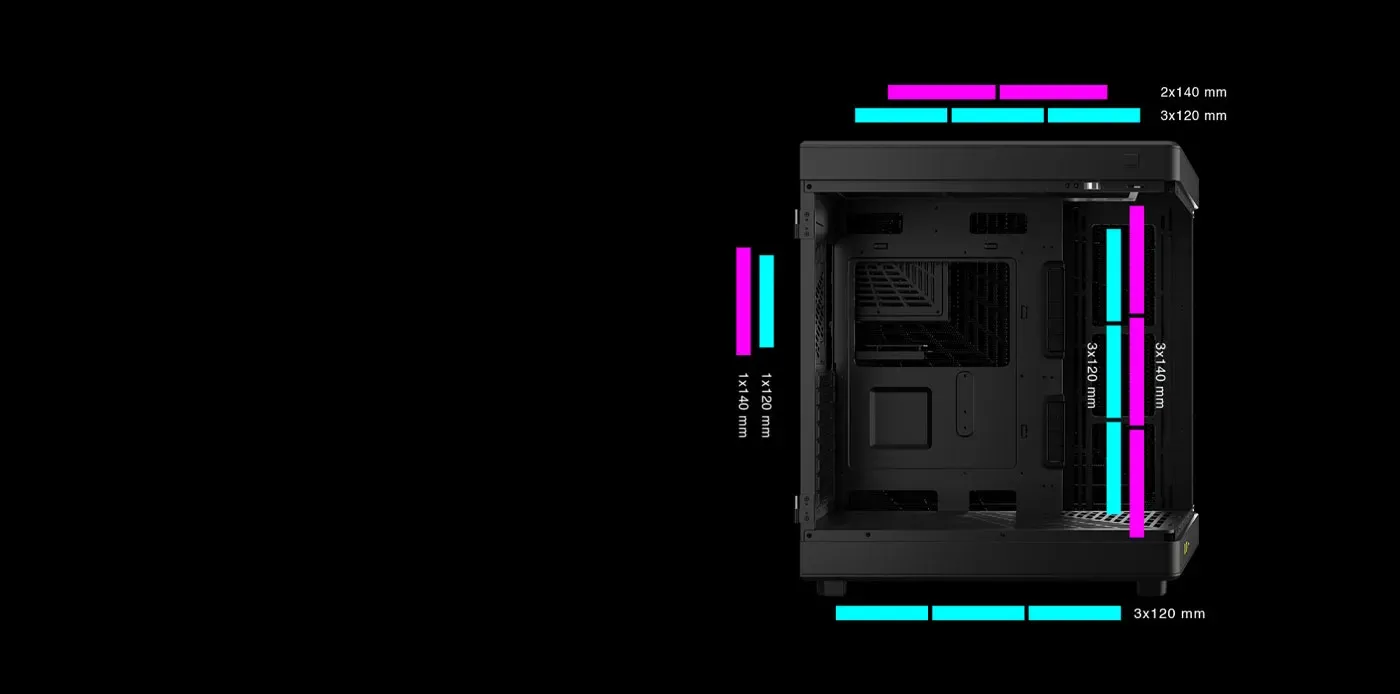
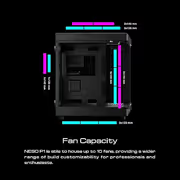
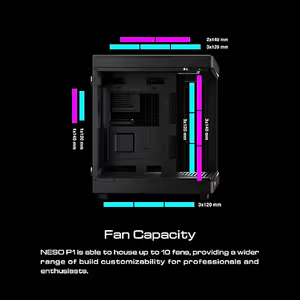
Fan Capacity Reaches Ten Positions
The Neso P1 accommodates up to 10 fans across its available mounting positions, which leaves room to tune between quiet running and maximum airflow. No fans are included with the case, so the count, size and lighting are chosen at build time rather than inherited from a factory set you might want to replace anyway.
Fan Capacity Reaches Ten Positions
The Neso P1 accommodates up to 10 fans across its available mounting positions, which leaves room to tune between quiet running and maximum airflow. No fans are included with the case, so the count, size and lighting are chosen at build time rather than inherited from a factory set you might want to replace anyway.
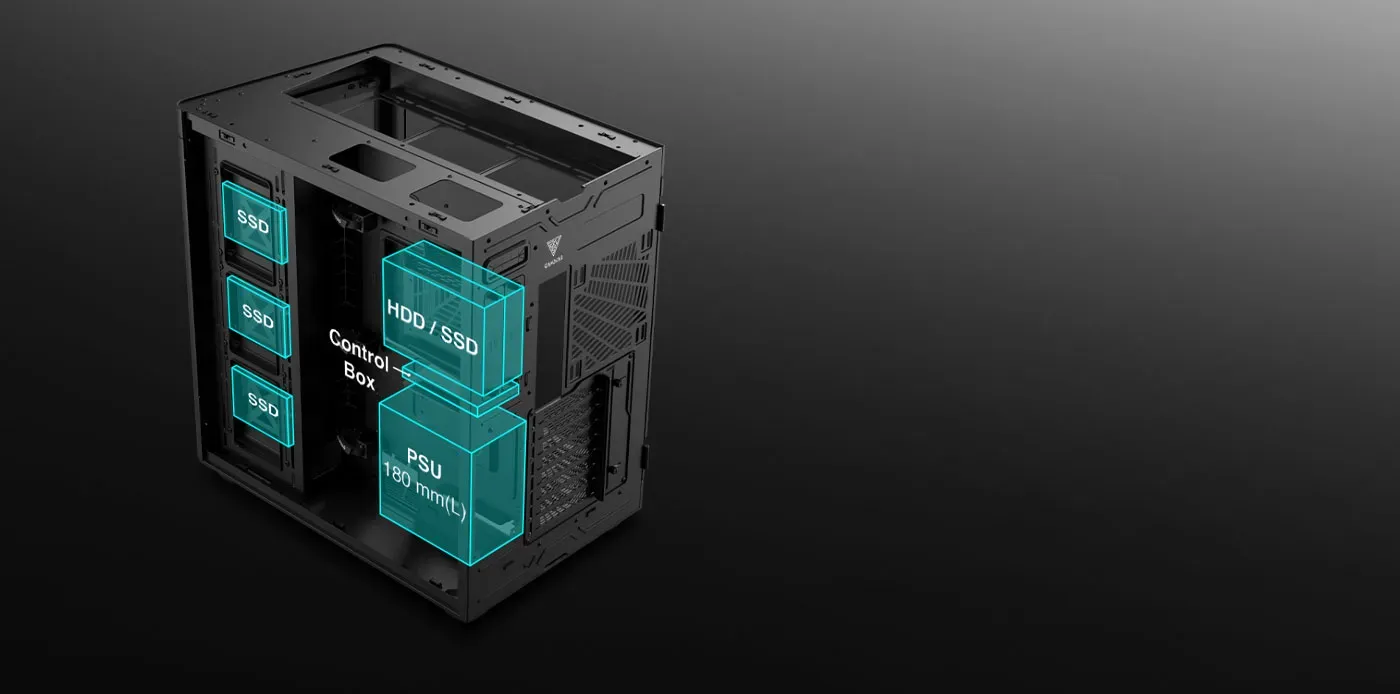
180mm PSU Clearance Plus Extra SSD Bracket
Power supplies up to 180mm long fit in the hidden compartment, and an extra SSD bracket is included on top of the standard mounts. Storage support runs to five 2.5-inch SSDs or two 3.5-inch hard drives, so a large media library and a fast boot drive can both live in the rear chamber out of sight.
180mm PSU Clearance Plus Extra SSD Bracket
Power supplies up to 180mm long fit in the hidden compartment, and an extra SSD bracket is included on top of the standard mounts. Storage support runs to five 2.5-inch SSDs or two 3.5-inch hard drives, so a large media library and a fast boot drive can both live in the rear chamber out of sight.
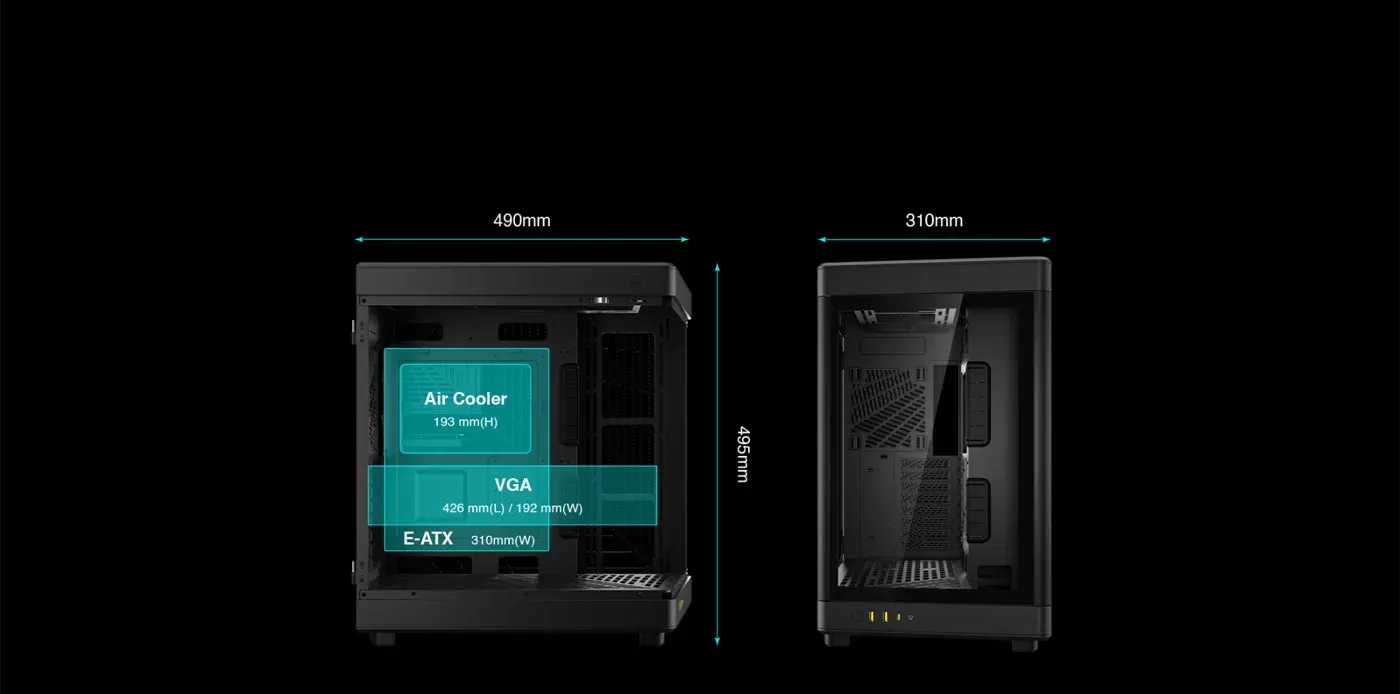
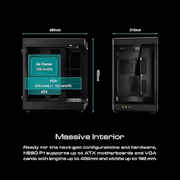
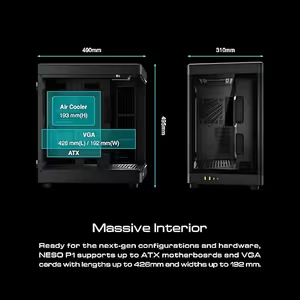
E-ATX Support With 310mm Board Width
Motherboards up to E-ATX fit, with a maximum board width of 310mm, and graphics cards are supported to 426mm in length and 192mm in width. Checking those three numbers against a parts list is the fastest way to confirm a next-generation build will physically fit before anything is ordered.
E-ATX Support With 310mm Board Width
Motherboards up to E-ATX fit, with a maximum board width of 310mm, and graphics cards are supported to 426mm in length and 192mm in width. Checking those three numbers against a parts list is the fastest way to confirm a next-generation build will physically fit before anything is ordered.
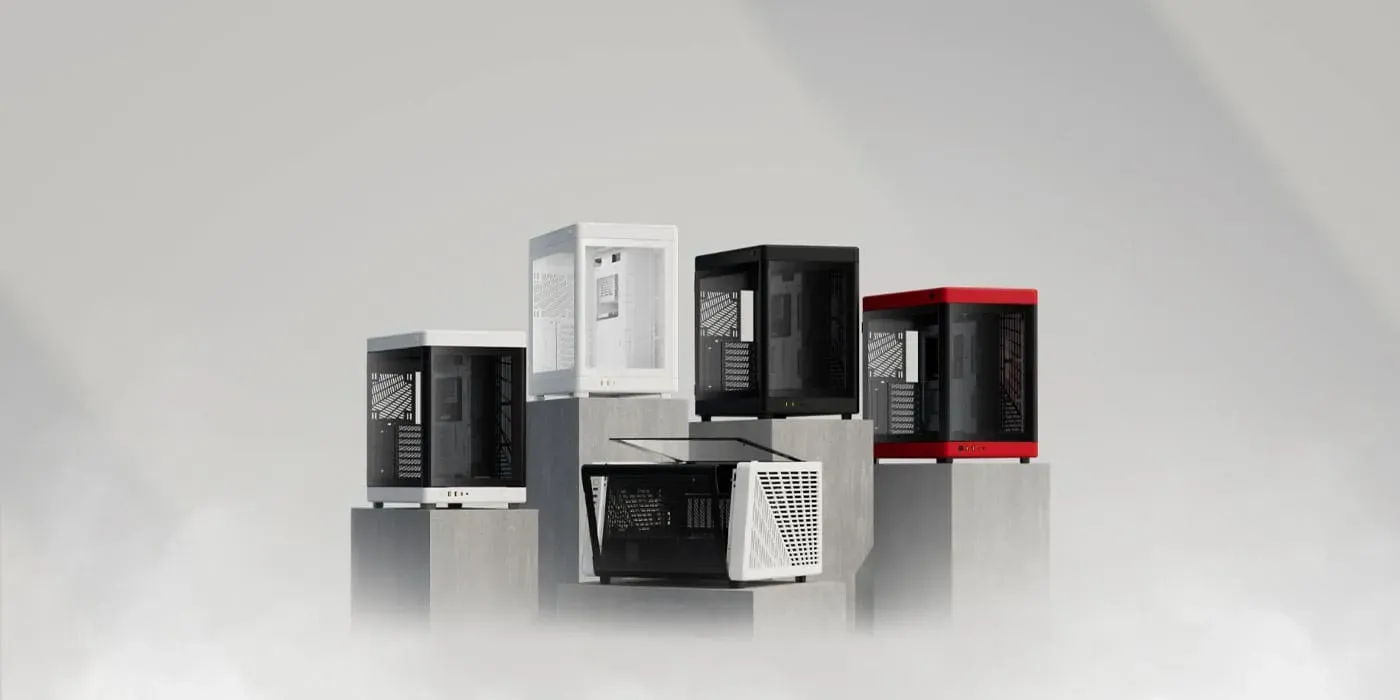
Available In Five Colour Variations
Five colours make up the Neso P1 range: black, black and white, white, red and pure white. This listing covers the black version. With the panoramic glass putting every component on show, the shell colour is effectively the backdrop for the whole build, so it is worth choosing alongside the parts rather than after them.
Available In Five Colour Variations
Five colours make up the Neso P1 range: black, black and white, white, red and pure white. This listing covers the black version. With the panoramic glass putting every component on show, the shell colour is effectively the backdrop for the whole build, so it is worth choosing alongside the parts rather than after them.
FAQ
Frequently Asked Questions
Everything you need to know about this product
It takes motherboards up to E-ATX, with board widths up to 310mm.
Graphics cards up to 426mm long and 192mm wide are supported, including RTX 40-series models.
No fans are included. The case has mounting positions for up to 10 fans of your choosing.
The side supports radiators up to 420mm, with an expanded 80mm depth for ultra-thick radiators.
The detachable top cooling bracket handles top-mounted radiators up to 280mm or 360mm.
Yes. Its modular pedestals rotate it between vertical tower and horizontal desktop setups.
A USB 3.2 Gen 2 Type-C port, two USB 3.0 ports and an integrated audio jack.
Yes. The 8x8 rotatable PCIe slots allow horizontal or vertical graphics card installation.
The hidden compartment accommodates power supplies up to 180mm in length.
An extra SSD bracket allows up to five 2.5-inch SSDs or up to two 3.5-inch hard drives.
The hidden compartment is 90mm deep and includes a routing system with velcro straps.
Black, black and white, white, red and pure white. This listing is the black model.

AI-Generated Content:These FAQs are generated by an automated AI system and may contain inaccuracies or omissions. Evetech makes no warranties, express or implied, regarding their completeness or reliability. For definitive information, please refer to the manufacturer's official specifications.
Please Note: Product images are for illustrative purposes only and may differ from the actual product.
Choose your
own PC
Hand-pick every part with live stock, compatibility, and instant pricing.
Try the new builderPrice Inc. Vat
R 2,299
Save R 1,700
ListR 3,999
2299Free Delivery
Qty:
In Stock with Evetech
Choose your
own PC
Hand-pick every part with live stock, compatibility, and instant pricing.
Try the new builderGamdias Neso P1 Gaming Case Black