msi-geforce-rtx-5060-ti-8g-ventus-2x-oc-plus-gddr7
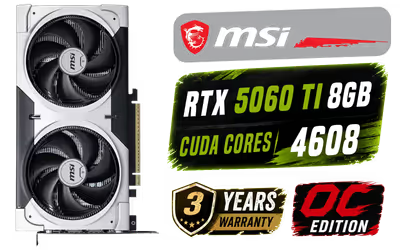
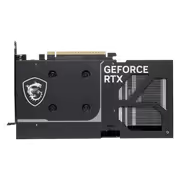
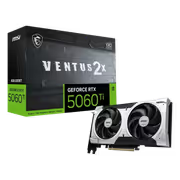
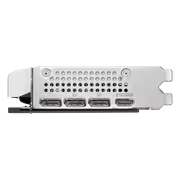
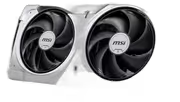
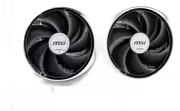
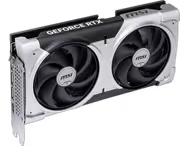
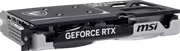
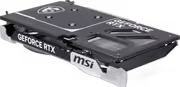
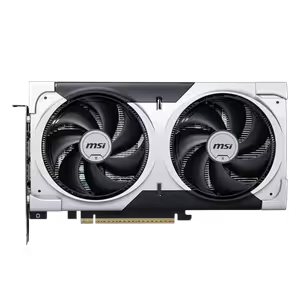
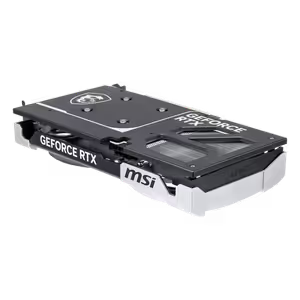
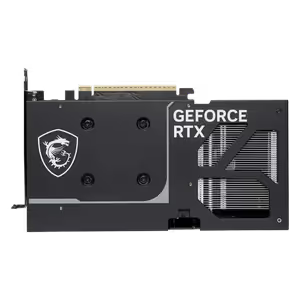
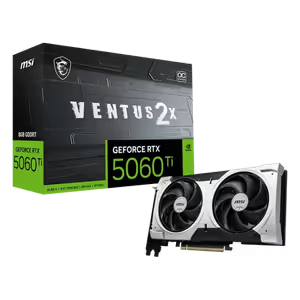
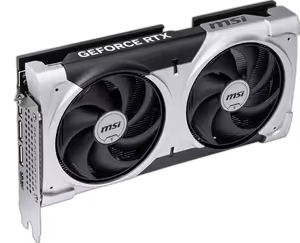
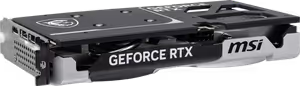
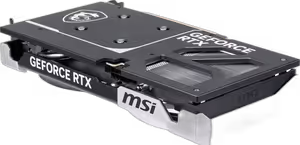
MSI GeForce RTX 5060 Ti 8G VENTUS 2X OC Plus Graphics Card / 4608 Cuda Cores / 8GB GDDR7 / 128-Bit Memory Bus / 2602MHz Boost Core Clocks / 912-V536-024 / 912-V536-024
3 Years Local Warranty
Model No : MSI 912-V536-024
Price Inc. Vat
R 9,499
Save R 1,500
ListR 10,999
9499Out of Stock
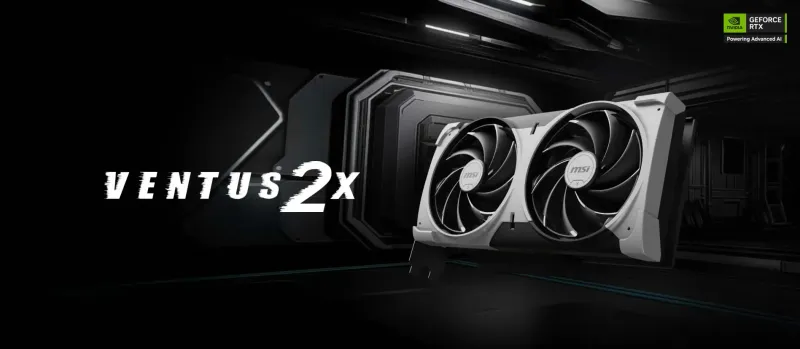
MSI GeForce RTX 5060 Ti 8G VENTUS 2X OC Plus Graphics Card
4608 CUDA Cores And 8GB GDDR7
The MSI GeForce RTX 5060 Ti 8G VENTUS 2X OC Plus runs 4608 CUDA cores with a boost clock reaching 2602MHz, backed by 8GB of ultra-fast GDDR7 memory on a 128-bit bus. That combination moves texture and geometry data quickly enough for detailed game environments at high refresh rates, and handles intricate scene detail without the frame pacing breaking down.
4608 CUDA Cores And 8GB GDDR7
The MSI GeForce RTX 5060 Ti 8G VENTUS 2X OC Plus runs 4608 CUDA cores with a boost clock reaching 2602MHz, backed by 8GB of ultra-fast GDDR7 memory on a 128-bit bus. That combination moves texture and geometry data quickly enough for detailed game environments at high refresh rates, and handles intricate scene detail without the frame pacing breaking down.
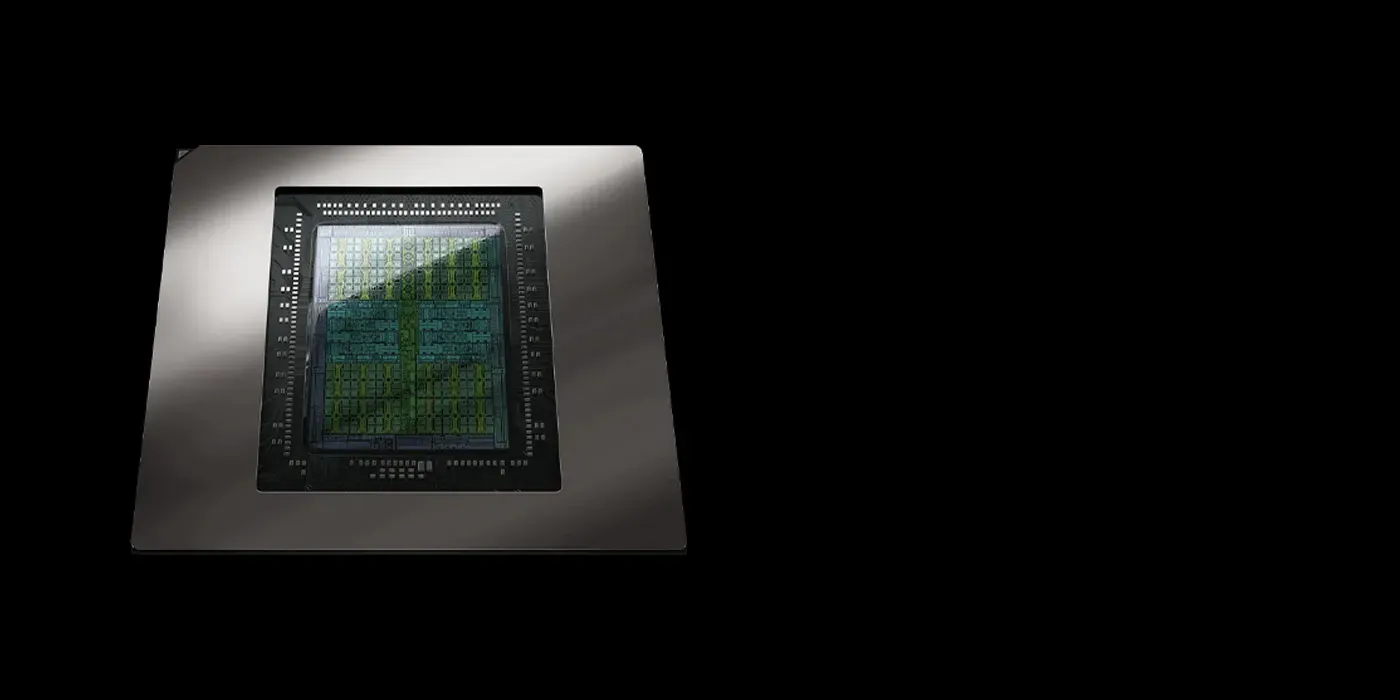
Blackwell Architecture With Fifth-Generation Tensor Cores
NVIDIA Blackwell underpins the RTX 5060 Ti with fifth-generation Tensor Cores at FP4 precision, streaming multiprocessors optimised for neural shading, and fourth-generation ray tracing cores built for Mega Geometry rendering. The design point is AI-assisted rendering, where part of the image is generated and reconstructed rather than drawn pixel by pixel through the traditional pipeline.
Blackwell Architecture With Fifth-Generation Tensor Cores
NVIDIA Blackwell underpins the RTX 5060 Ti with fifth-generation Tensor Cores at FP4 precision, streaming multiprocessors optimised for neural shading, and fourth-generation ray tracing cores built for Mega Geometry rendering. The design point is AI-assisted rendering, where part of the image is generated and reconstructed rather than drawn pixel by pixel through the traditional pipeline.

VENTUS 2X OC Plus Cooling Design
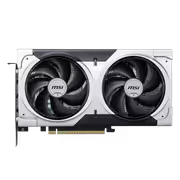
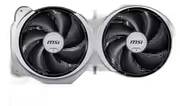
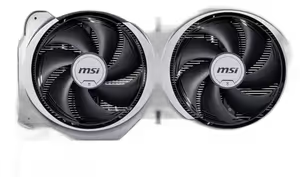
The VENTUS 2X OC Plus cooling design maintains optimal temperatures while keeping operation quiet, which is what protects the factory boost clock over a long session rather than letting it fall back as heat accumulates. Two fans over a broad heatsink hold the same temperature at lower rotation speeds than a single fan working alone.
VENTUS 2X OC Plus Cooling Design
The VENTUS 2X OC Plus cooling design maintains optimal temperatures while keeping operation quiet, which is what protects the factory boost clock over a long session rather than letting it fall back as heat accumulates. Two fans over a broad heatsink hold the same temperature at lower rotation speeds than a single fan working alone.

DLSS 4 With Multi Frame Generation
NVIDIA DLSS 4 with Multi Frame Generation lifts frame rates by producing additional frames on the Tensor Cores instead of rendering every one traditionally. On an 8GB card that translates directly into smooth, immersive visuals in supported titles at settings that raw shader throughput alone would struggle to sustain at the same frame rate.
DLSS 4 With Multi Frame Generation
NVIDIA DLSS 4 with Multi Frame Generation lifts frame rates by producing additional frames on the Tensor Cores instead of rendering every one traditionally. On an 8GB card that translates directly into smooth, immersive visuals in supported titles at settings that raw shader throughput alone would struggle to sustain at the same frame rate.

NVIDIA Reflex 2 And Frame Warp
NVIDIA Reflex 2 with Frame Warp reduces input lag and increases reaction speed, which is the responsiveness competitive players actually feel in an engagement. It is built for esports precision gaming, where frame rates are already high and the remaining advantage comes from shortening the render queue rather than piling on more frames.
NVIDIA Reflex 2 And Frame Warp
NVIDIA Reflex 2 with Frame Warp reduces input lag and increases reaction speed, which is the responsiveness competitive players actually feel in an engagement. It is built for esports precision gaming, where frame rates are already high and the remaining advantage comes from shortening the render queue rather than piling on more frames.

Full Ray Tracing With Neural Rendering
Full ray tracing enhanced by neural rendering technology produces hyper-realistic lighting, shadows and reflections by tracing light through the scene instead of approximating it. The difference shows up first on reflective and translucent surfaces and in indirect light, which is exactly where older rasterised lighting has always looked least convincing.
Full Ray Tracing With Neural Rendering
Full ray tracing enhanced by neural rendering technology produces hyper-realistic lighting, shadows and reflections by tracing light through the scene instead of approximating it. The difference shows up first on reflective and translucent surfaces and in indirect light, which is exactly where older rasterised lighting has always looked least convincing.

NVIDIA ACE AI-Driven Digital Assistants
NVIDIA ACE technology powers next-generation digital interactions, running AI-driven assistants and digital humans on the graphics card rather than sending everything to a remote service. Because the workload sits on the same Tensor Cores that handle DLSS, it uses hardware the RTX 5060 Ti already carries instead of requiring anything additional.
NVIDIA ACE AI-Driven Digital Assistants
NVIDIA ACE technology powers next-generation digital interactions, running AI-driven assistants and digital humans on the graphics card rather than sending everything to a remote service. Because the workload sits on the same Tensor Cores that handle DLSS, it uses hardware the RTX 5060 Ti already carries instead of requiring anything additional.

NVIDIA Studio For Video, 3D And Design
NVIDIA Studio provides an advanced software suite for accelerated workflows in video editing, 3D and design work, backed by drivers built for those applications. Export times, timeline playback and effect previews are the stages that shift from processor-bound to GPU-accelerated, and those are where the hours actually go on a project.
NVIDIA Studio For Video, 3D And Design
NVIDIA Studio provides an advanced software suite for accelerated workflows in video editing, 3D and design work, backed by drivers built for those applications. Export times, timeline playback and effect previews are the stages that shift from processor-bound to GPU-accelerated, and those are where the hours actually go on a project.

NVIDIA Broadcast And Latest Encoder
NVIDIA Broadcast improves streaming clarity and quality, working alongside the latest NVIDIA Encoder innovations built into the card. Because compression runs on dedicated encoder silicon rather than the CPU or the shader cores, streaming and playing on one machine costs far less game performance than a software encoder would take.
NVIDIA Broadcast And Latest Encoder
NVIDIA Broadcast improves streaming clarity and quality, working alongside the latest NVIDIA Encoder innovations built into the card. Because compression runs on dedicated encoder silicon rather than the CPU or the shader cores, streaming and playing on one machine costs far less game performance than a software encoder would take.
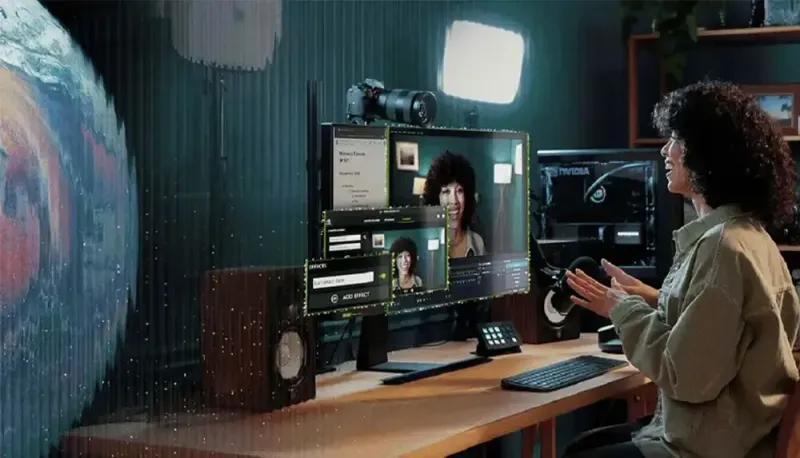
Game Ready And Studio Driver Support
The RTX 5060 Ti benefits from NVIDIA Game Ready and Studio drivers, giving reliable performance and compatibility across both gaming and creative software. Regular driver work is what keeps a card improving after purchase, and it is where problems with new engines get fixed rather than being left to individual game developers.
Game Ready And Studio Driver Support
The RTX 5060 Ti benefits from NVIDIA Game Ready and Studio drivers, giving reliable performance and compatibility across both gaming and creative software. Regular driver work is what keeps a card improving after purchase, and it is where problems with new engines get fixed rather than being left to individual game developers.
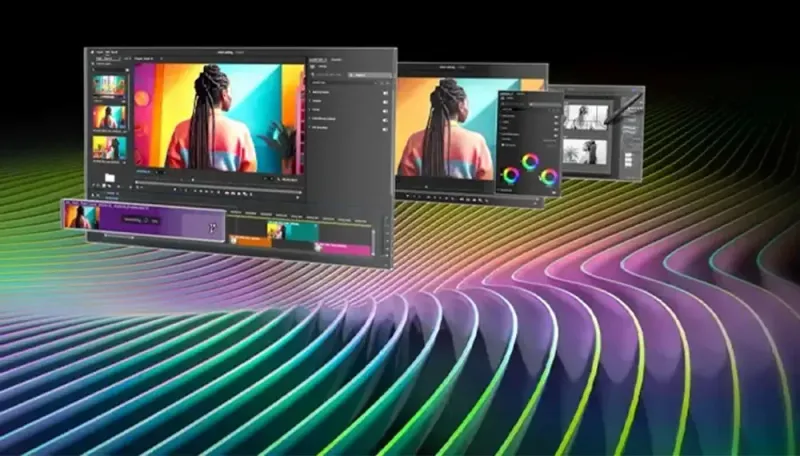
G-SYNC Adaptive Sync Removes Tearing
NVIDIA G-SYNC adaptive sync technology matches the display refresh rate to the frame rate the card is producing, giving tear-free, fluid gameplay. Adaptive sync counts for most in the frame rate range this card lives in, where output moves scene to scene and a fixed-refresh panel shows that variance as visible judder.
G-SYNC Adaptive Sync Removes Tearing
NVIDIA G-SYNC adaptive sync technology matches the display refresh rate to the frame rate the card is producing, giving tear-free, fluid gameplay. Adaptive sync counts for most in the frame rate range this card lives in, where output moves scene to scene and a fixed-refresh panel shows that variance as visible judder.
RTX AI Acceleration Optimised For Windows
GeForce RTX GPUs carry state-of-the-art AI acceleration optimised for Windows PCs, covering gaming, content creation and productivity from the same hardware. Local AI processing removes the wait for a remote service and keeps data on your own machine, which matters increasingly as everyday applications add AI features as standard.
RTX AI Acceleration Optimised For Windows
GeForce RTX GPUs carry state-of-the-art AI acceleration optimised for Windows PCs, covering gaming, content creation and productivity from the same hardware. Local AI processing removes the wait for a remote service and keeps data on your own machine, which matters increasingly as everyday applications add AI features as standard.
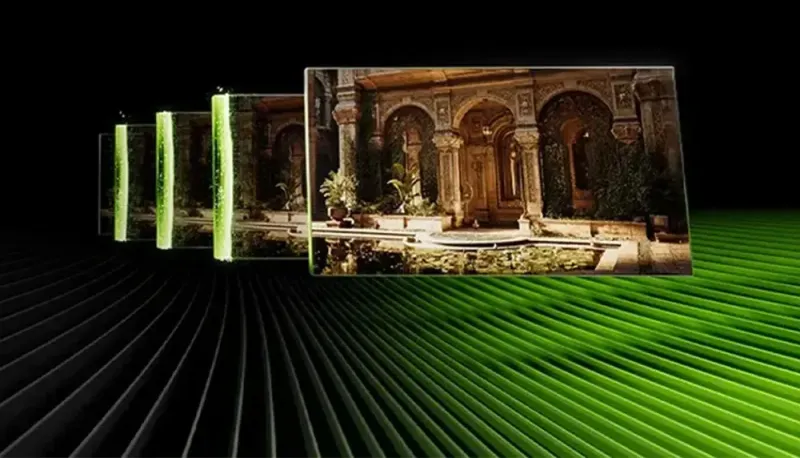
Studio Drivers On The RTX 50 Series
NVIDIA Studio delivers performance for video editing, 3D modeling and graphics production using GeForce RTX 50 Series hardware with reliable Studio drivers behind it. The Studio branch updates less frequently than Game Ready and is validated harder against professional applications, which is the trade you want on a machine used for paid work.
Studio Drivers On The RTX 50 Series
NVIDIA Studio delivers performance for video editing, 3D modeling and graphics production using GeForce RTX 50 Series hardware with reliable Studio drivers behind it. The Studio branch updates less frequently than Game Ready and is validated harder against professional applications, which is the trade you want on a machine used for paid work.
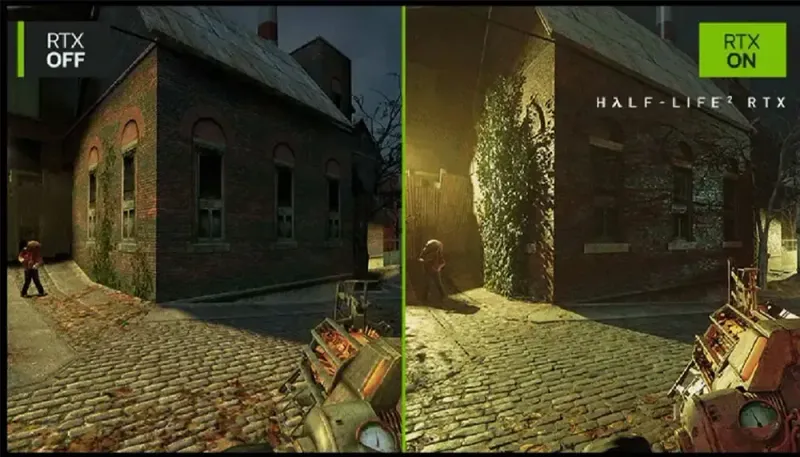
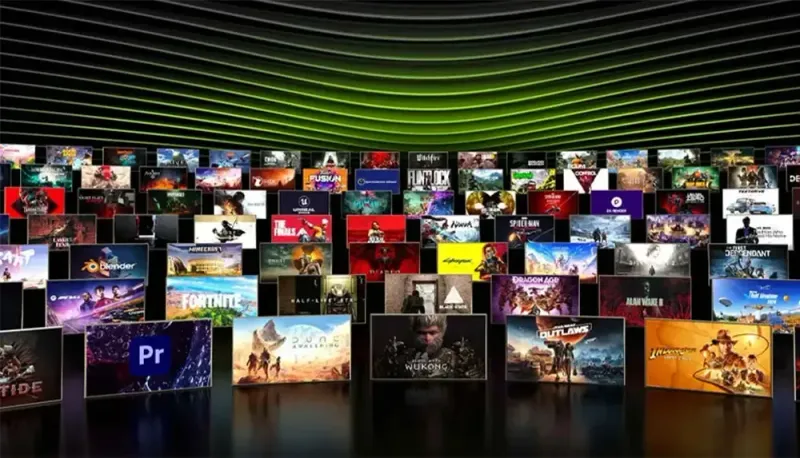
Over 700 RTX-Enabled Titles Supported
RTX transforms gaming and creative applications through advanced ray tracing and neural rendering, and support extends across more than 700 RTX-enabled titles with DLSS Multi Frame Generation. That library size is what turns a specification sheet into daily benefit, because it decides whether the features reach the games already installed on your machine.
Over 700 RTX-Enabled Titles Supported
RTX transforms gaming and creative applications through advanced ray tracing and neural rendering, and support extends across more than 700 RTX-enabled titles with DLSS Multi Frame Generation. That library size is what turns a specification sheet into daily benefit, because it decides whether the features reach the games already installed on your machine.
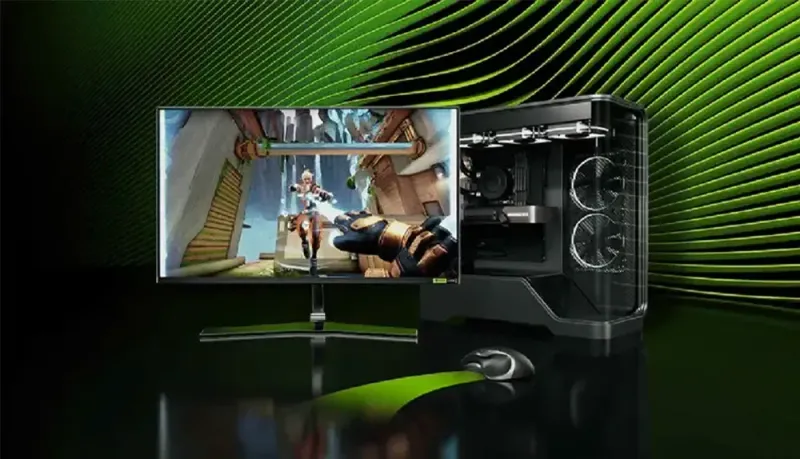
DLSS 4 Super Resolution And Ray Reconstruction
DLSS 4 uses multi-frame generation, enhanced ray reconstruction and fifth-generation Tensor Cores to boost FPS, reduce latency and deliver high-resolution visuals on the GeForce RTX 50 Series. Rendering internally at a lower resolution and reconstructing the frame is what buys the headroom, and Ray Reconstruction cleans up ray-traced lighting in the same pass.
DLSS 4 Super Resolution And Ray Reconstruction
DLSS 4 uses multi-frame generation, enhanced ray reconstruction and fifth-generation Tensor Cores to boost FPS, reduce latency and deliver high-resolution visuals on the GeForce RTX 50 Series. Rendering internally at a lower resolution and reconstructing the frame is what buys the headroom, and Ray Reconstruction cleans up ray-traced lighting in the same pass.
FAQ
Frequently Asked Questions
Everything you need to know about this product
It has 8GB of ultra-fast GDDR7 memory running on a 128-bit memory bus.
The card is equipped with 4608 CUDA cores.
Its boost core clock reaches 2602MHz.
Yes. The OC Plus variant ships with a raised boost clock of 2602MHz out of the box.
The VENTUS 2X OC Plus design uses a two-fan cooler for low temperatures and quiet operation.
It is built on NVIDIA Blackwell architecture with fifth-generation Tensor Cores.
Yes. DLSS 4 uses Multi Frame Generation and Ray Reconstruction to boost FPS and image quality.
Yes. Fourth-generation ray tracing cores handle Mega Geometry rendering and photorealistic lighting.
Yes. NVIDIA Reflex 2 with Frame Warp lowers input lag for faster reaction times in esports.
Yes. NVIDIA Studio accelerates video editing, 3D modeling and design workflows with Studio drivers.
Yes. NVIDIA G-SYNC adaptive sync provides tear-free, fluid gameplay on compatible monitors.
The MSI part number is 912-V536-024.

AI-Generated Content:These FAQs are generated by an automated AI system and may contain inaccuracies or omissions. Evetech makes no warranties, express or implied, regarding their completeness or reliability. For definitive information, please refer to the manufacturer's official specifications.
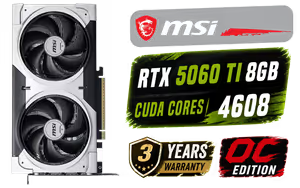
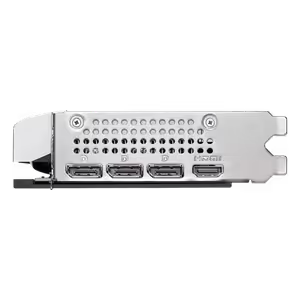

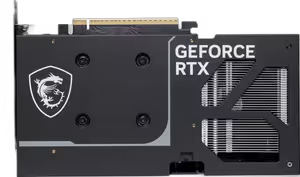
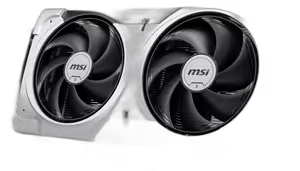
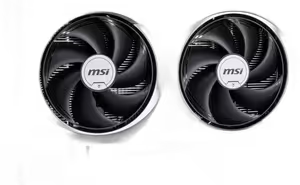
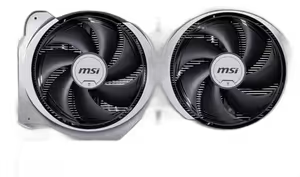
Please Note: Product images are for illustrative purposes only and may differ from the actual product.
Choose your
own PC
Hand-pick every part with live stock, compatibility, and instant pricing.
Try the new builderPrice Inc. Vat
R 9,499
Save R 1,500
ListR 10,999
9499Out of Stock
Choose your
own PC
Hand-pick every part with live stock, compatibility, and instant pricing.
Try the new builderMSI GeForce RTX 5060 Ti 8G VENTUS 2X OC Plus Graphics Card