msi-geforce-rtx-5070-12g-inspire-3x-oc-gddr7
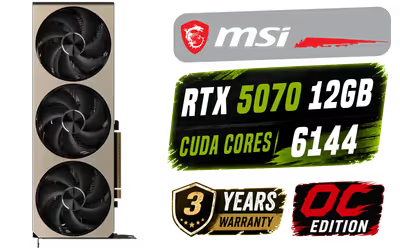
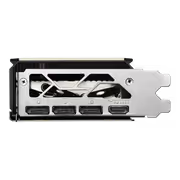
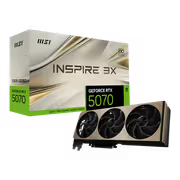
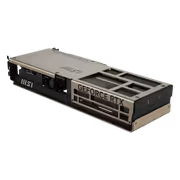
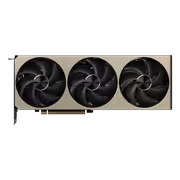
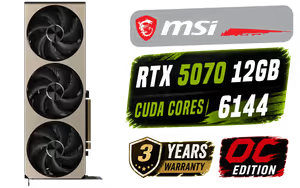
MSI GeForce RTX 5070 12G Inspire 3X OC Graphics Card / 12GB GDDR7 / 6144 Cuda Cores / 192-bit Memory Interface / Boost Clock : 2542 MHz / NVIDIA Blackwell & DLSS 4 / 28Gbps Memory Speed / PCI Express Gen 5 / 912-V532-017 / 912-V532-017 / [+] Get CONTROL Resonant with select GeForce RTX 50 Series + FREE DELIVERY !
3 Years Local Warranty
Model No : MSI 912-V532-017
Price Inc. Vat
R 15,999
Save R 4,000
ListR 19,999
15999Free Delivery
Qty:
In Stock with Evetech
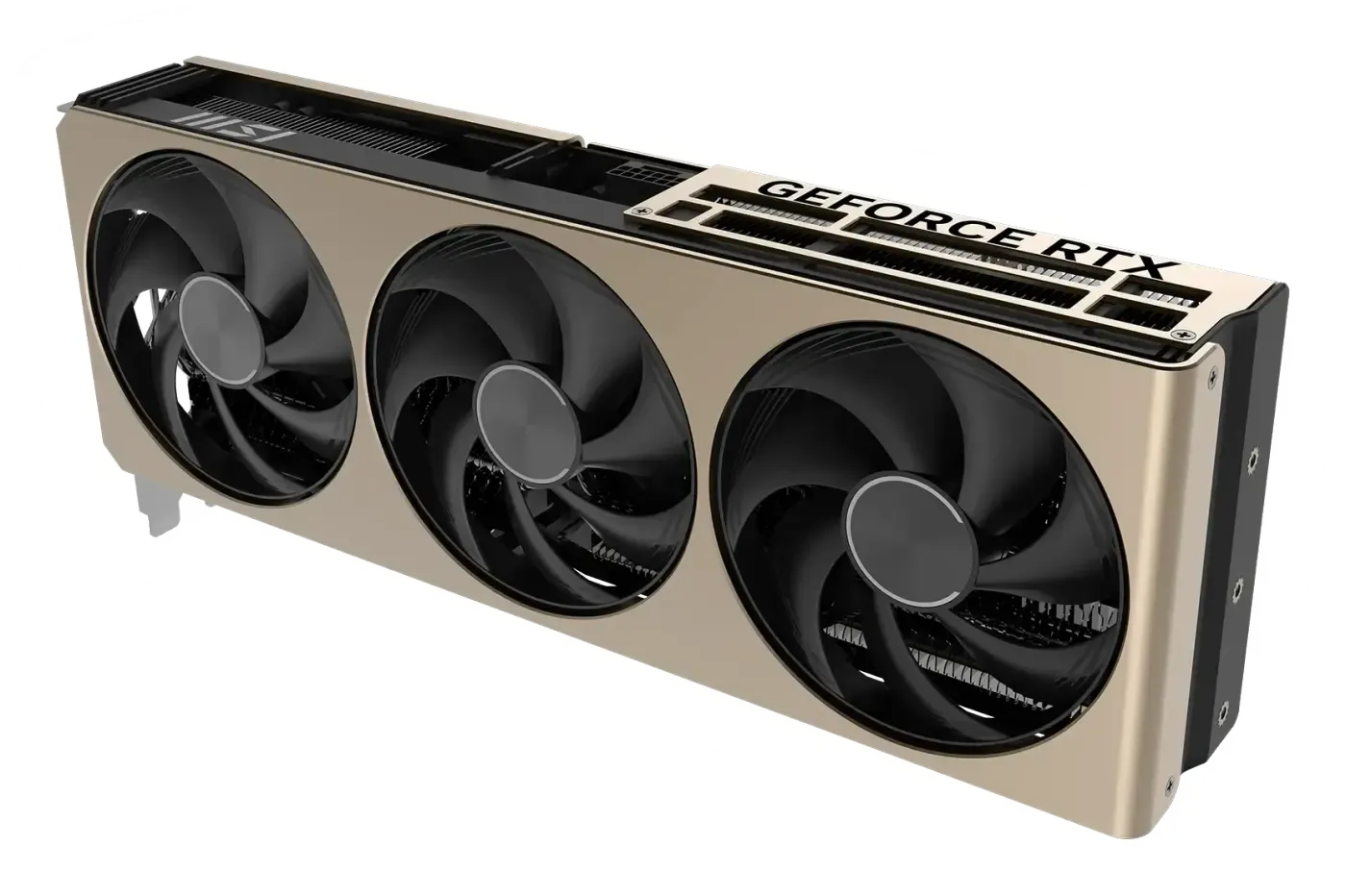
MSI GeForce RTX 5070 12G Inspire 3X OC - 12GB GDDR7
12GB GDDR7 And 6144 CUDA Cores
The MSI GeForce RTX 5070 12G Inspire 3X OC carries 12GB of GDDR7 memory and 6144 CUDA cores, with a maximum boost clock listed as 2557 MHz in the description and 2542 MHz in the product title. It is built on NVIDIA Blackwell architecture with DLSS 4 support, so it is specified with upcoming titles in mind rather than only current ones.
12GB GDDR7 And 6144 CUDA Cores
The MSI GeForce RTX 5070 12G Inspire 3X OC carries 12GB of GDDR7 memory and 6144 CUDA cores, with a maximum boost clock listed as 2557 MHz in the description and 2542 MHz in the product title. It is built on NVIDIA Blackwell architecture with DLSS 4 support, so it is specified with upcoming titles in mind rather than only current ones.
INSPIRE Series Fits Compact Creative Builds
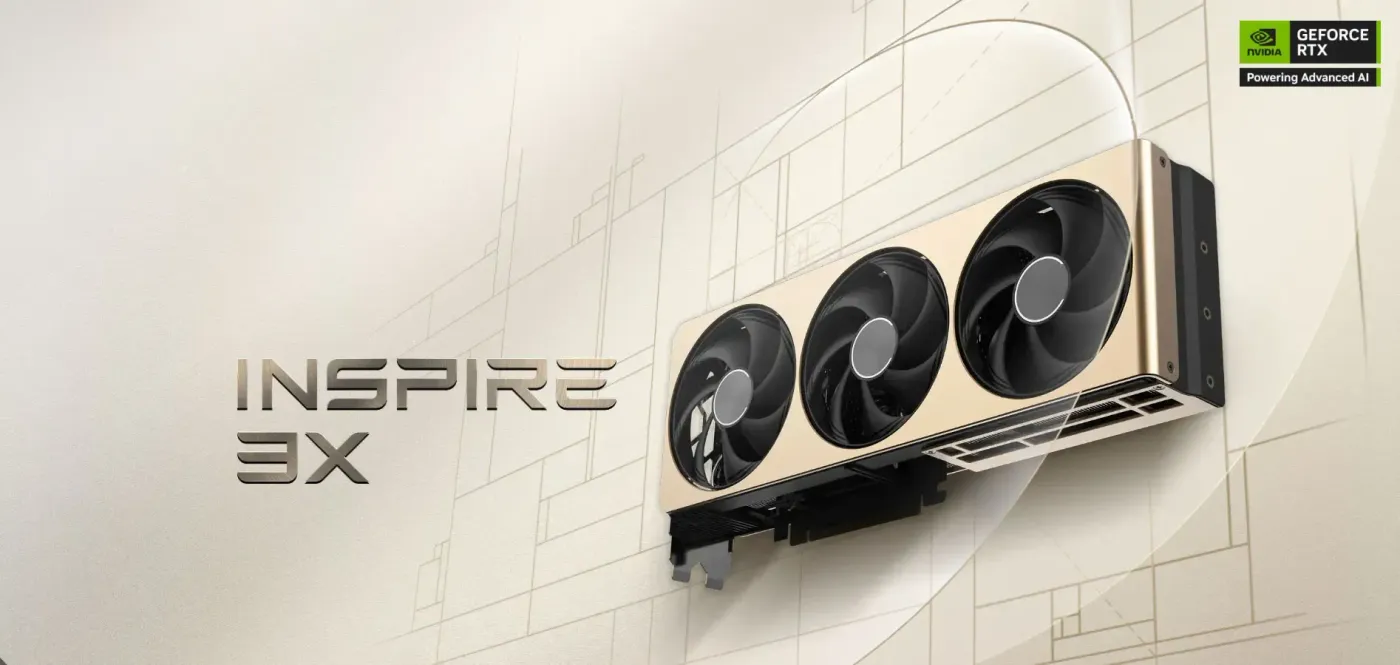
The INSPIRE series merges a compact design with current-generation performance, which keeps it compatible with creative and professional builds where internal clearance is limited. Rather than assuming a full-tower chassis, the card is dimensioned to drop into smaller cases while carrying the same RTX 5070 silicon, so a tight enclosure does not force a step down in GPU class.
INSPIRE Series Fits Compact Creative Builds
The INSPIRE series merges a compact design with current-generation performance, which keeps it compatible with creative and professional builds where internal clearance is limited. Rather than assuming a full-tower chassis, the card is dimensioned to drop into smaller cases while carrying the same RTX 5070 silicon, so a tight enclosure does not force a step down in GPU class.
Mondrian Grid Design On The Shroud
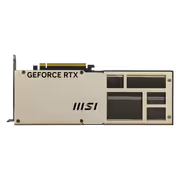
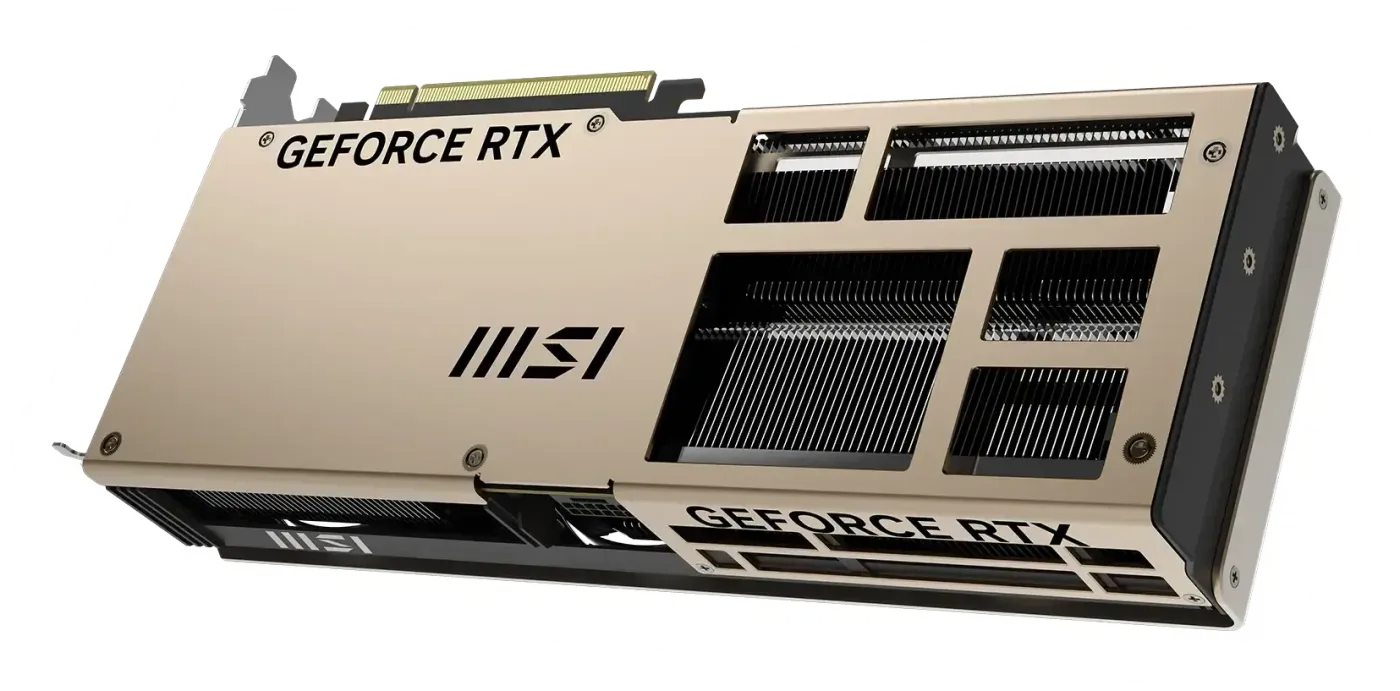
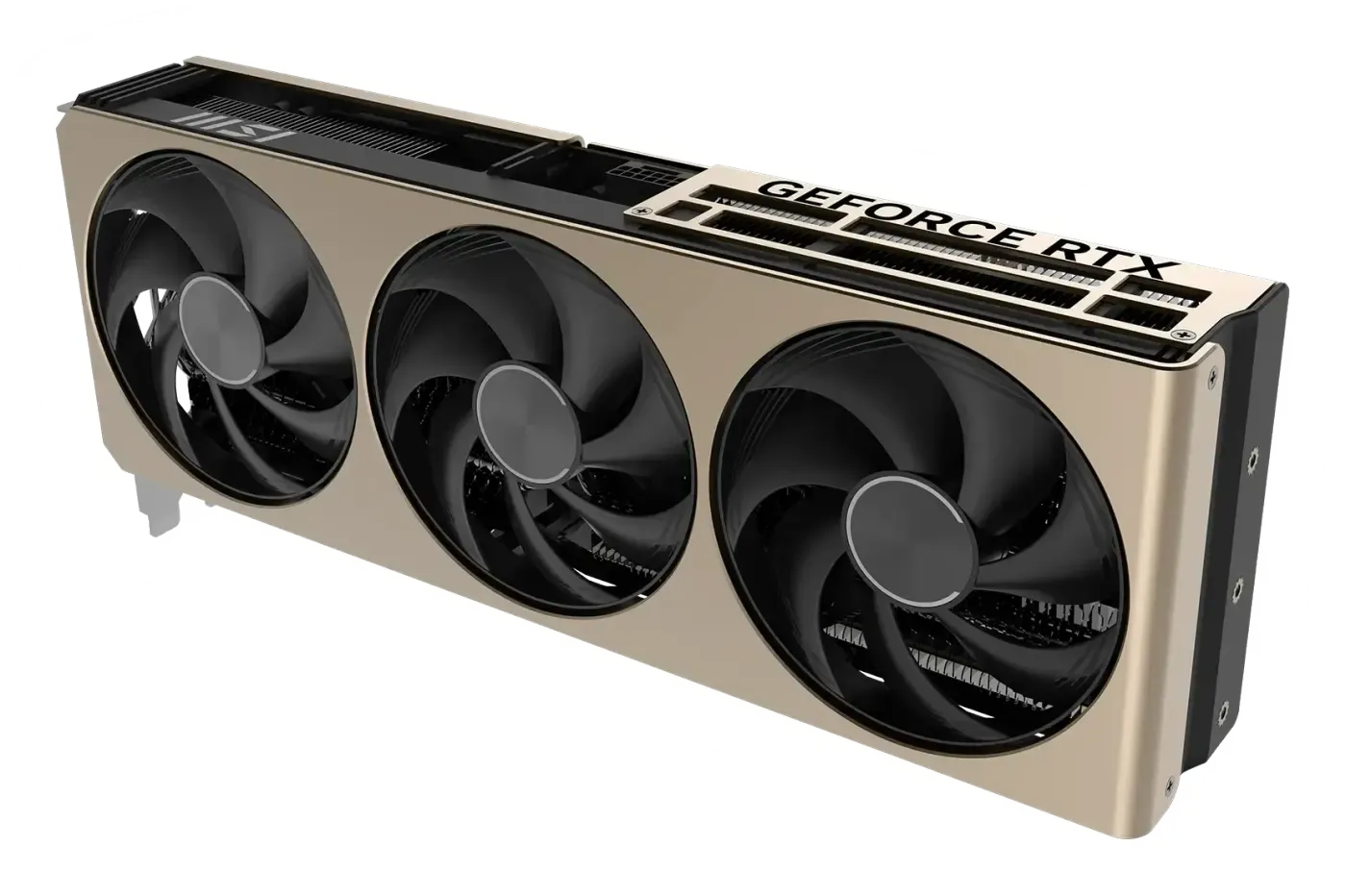
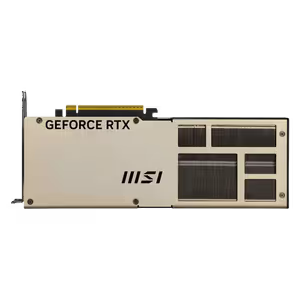
The INSPIRE shroud carries a unique Mondrian grid design, a deliberate fusion of contemporary art and current technology rather than the usual angular gamer styling. Blocked panels and clean dividing lines mean the card reads as a design object through a glass side panel, which suits a workstation or studio build sitting on a desk in plain view.
Mondrian Grid Design On The Shroud
The INSPIRE shroud carries a unique Mondrian grid design, a deliberate fusion of contemporary art and current technology rather than the usual angular gamer styling. Blocked panels and clean dividing lines mean the card reads as a design object through a glass side panel, which suits a workstation or studio build sitting on a desk in plain view.
Fifth-Generation Tensor Cores Drive DLSS 4
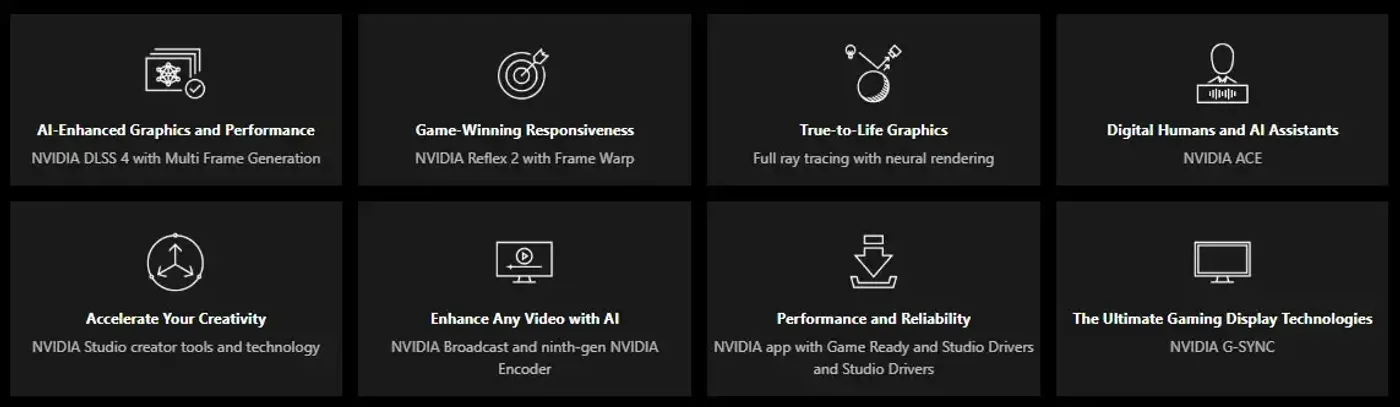
NVIDIA Blackwell brings fifth-generation Tensor Cores with FP4 precision to power DLSS 4, next-generation streaming multiprocessors enhanced for neural shaders, and fourth-generation ray tracing cores crafted for Mega Geometry. Together those three blocks handle AI upscaling, shader efficiency and ultra-realistic lighting and reflections during gameplay, which is where most of the generational gain sits.
Fifth-Generation Tensor Cores Drive DLSS 4
NVIDIA Blackwell brings fifth-generation Tensor Cores with FP4 precision to power DLSS 4, next-generation streaming multiprocessors enhanced for neural shaders, and fourth-generation ray tracing cores crafted for Mega Geometry. Together those three blocks handle AI upscaling, shader efficiency and ultra-realistic lighting and reflections during gameplay, which is where most of the generational gain sits.
192-Bit Interface With 28Gbps Memory Speed
Memory runs across a 192-bit interface at 28Gbps, the bandwidth that keeps 12GB of GDDR7 fed during high-resolution gameplay. Bandwidth counts most when textures and frame buffers grow, so this is what keeps the card composed as you raise resolution or switch on higher-quality texture settings, instead of forcing the frame rate down to compensate.
192-Bit Interface With 28Gbps Memory Speed
Memory runs across a 192-bit interface at 28Gbps, the bandwidth that keeps 12GB of GDDR7 fed during high-resolution gameplay. Bandwidth counts most when textures and frame buffers grow, so this is what keeps the card composed as you raise resolution or switch on higher-quality texture settings, instead of forcing the frame rate down to compensate.
Compact Form Factor For Creative Professionals
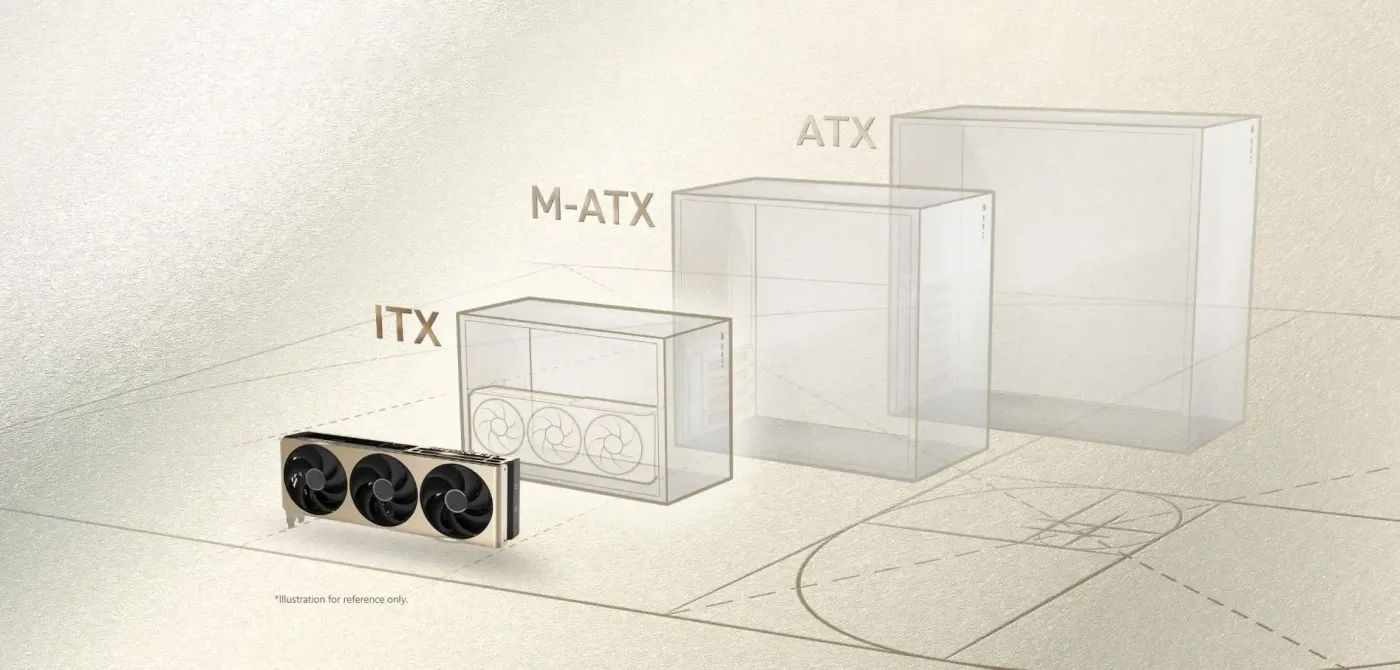
The INSPIRE model targets creative professionals looking for maximum efficiency from a smaller card, merging a compact form factor with enhanced performance. In a rendering or editing workstation that frees internal space for extra drives, additional cooling or a cleaner cable run, without giving up the GPU acceleration the software depends on.
Compact Form Factor For Creative Professionals
The INSPIRE model targets creative professionals looking for maximum efficiency from a smaller card, merging a compact form factor with enhanced performance. In a rendering or editing workstation that frees internal space for extra drives, additional cooling or a cleaner cable run, without giving up the GPU acceleration the software depends on.
PCI Express Gen 5 Connection
The Inspire 3X OC connects over PCI Express Gen 5, so the link between system memory and the GPU is not the component holding performance back. That headroom counts most when a game or a creative application streams assets continuously, since the interface is in constant use rather than being exercised only when a project first loads.
PCI Express Gen 5 Connection
The Inspire 3X OC connects over PCI Express Gen 5, so the link between system memory and the GPU is not the component holding performance back. That headroom counts most when a game or a creative application streams assets continuously, since the interface is in constant use rather than being exercised only when a project first loads.
Support Stand Holds The Card Level
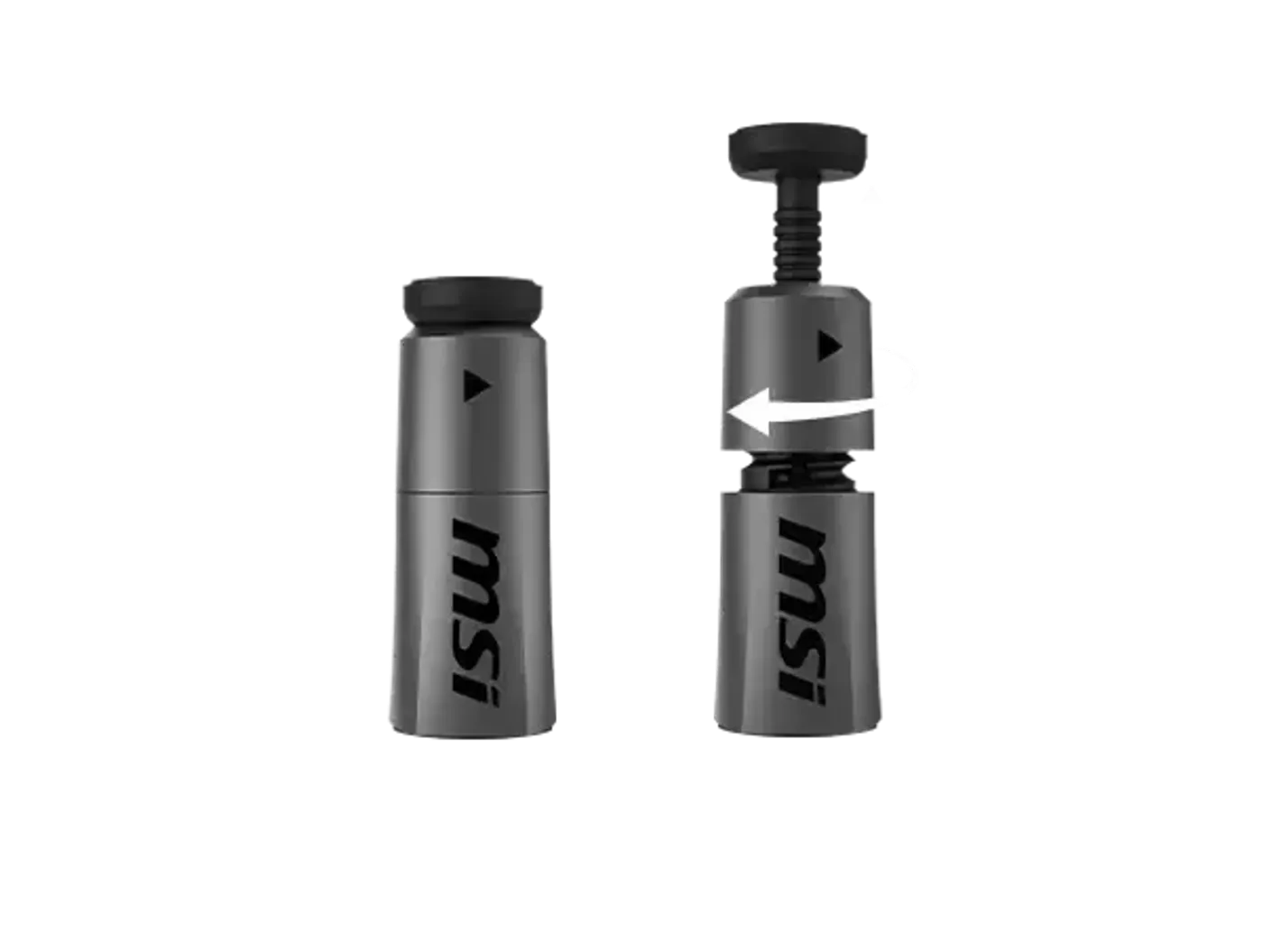
A specially designed support stand attaches to the PC case to hold the graphics card securely in place, taking the weight off the PCIe slot. Card sag is what eventually stresses the connector and the PCB on a heavy triple-fan design, so a purpose-made brace supplied with the card removes a problem you would otherwise solve later.
Support Stand Holds The Card Level
A specially designed support stand attaches to the PC case to hold the graphics card securely in place, taking the weight off the PCIe slot. Card sag is what eventually stresses the connector and the PCB on a heavy triple-fan design, so a purpose-made brace supplied with the card removes a problem you would otherwise solve later.
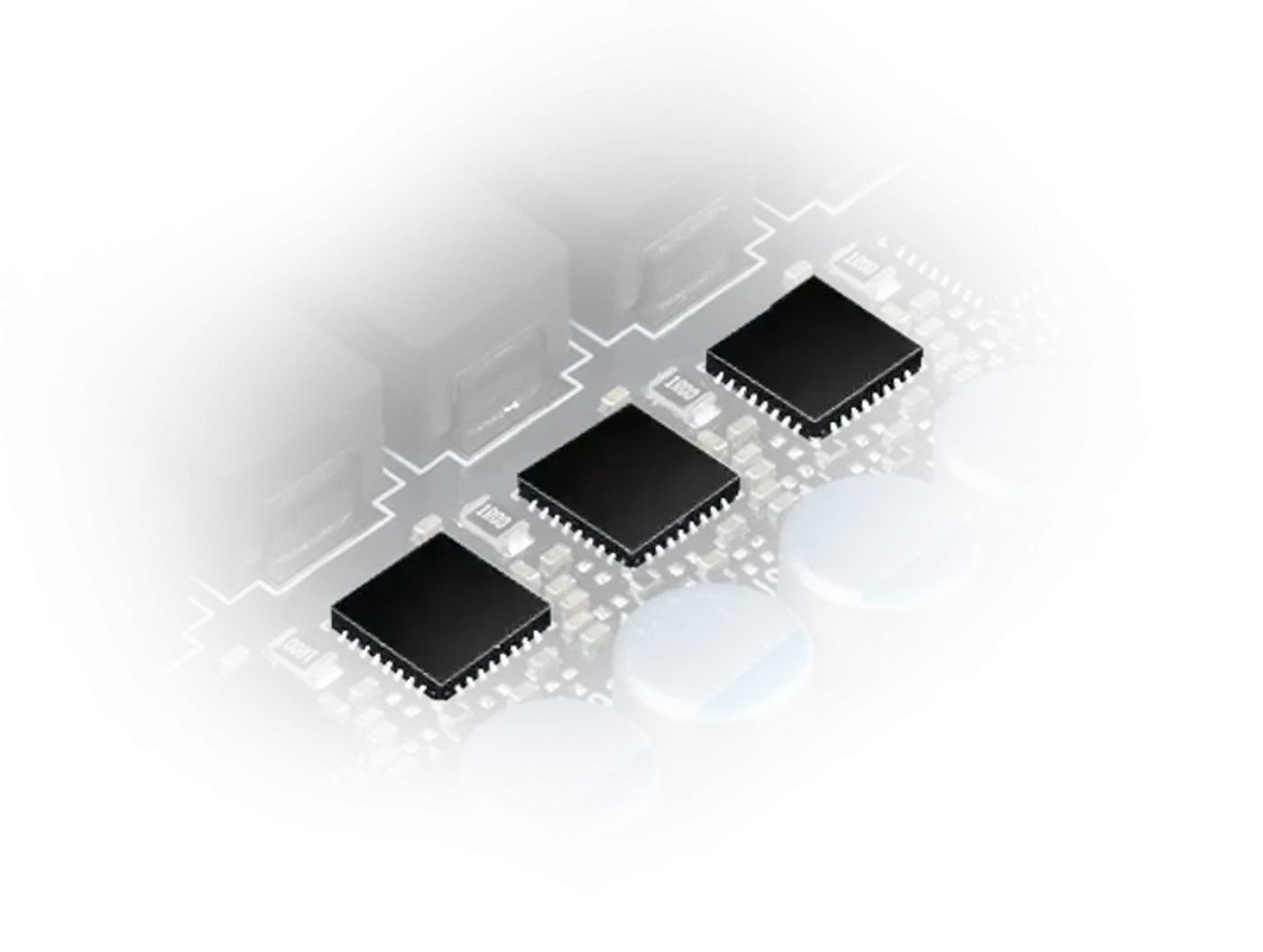
DrMOS Power Stages Improve Voltage Control
DrMOS power stage solutions deliver exceptional efficiency with minimal power loss and improved voltage control. Tighter regulation keeps the supply steady as load swings between scenes, which is what allows a boost clock to hold rather than dipping every time the GPU is asked for a sudden burst of work in a demanding sequence.
DrMOS Power Stages Improve Voltage Control
DrMOS power stage solutions deliver exceptional efficiency with minimal power loss and improved voltage control. Tighter regulation keeps the supply steady as load swings between scenes, which is what allows a boost clock to hold rather than dipping every time the GPU is asked for a sudden burst of work in a demanding sequence.
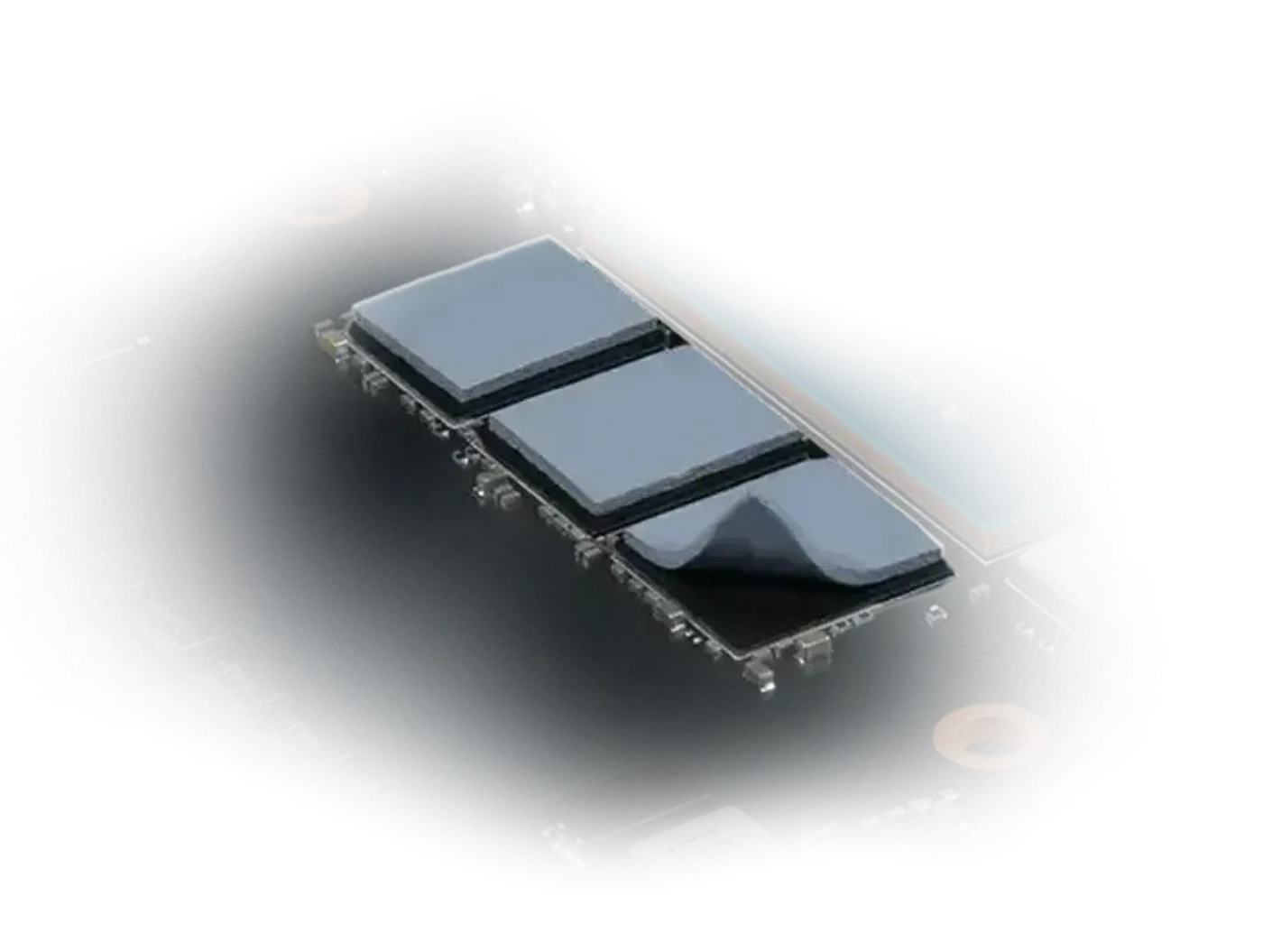
Premium Thermal Pads For Critical Components
Premium quality thermal pads provide enhanced heat dissipation for the critical components on the graphics card, not only the GPU die itself. Memory modules and power stages run hot under sustained load, and moving their heat into the same cooler is what keeps the whole card performing instead of leaving hotspots to throttle it.
Premium Thermal Pads For Critical Components
Premium quality thermal pads provide enhanced heat dissipation for the critical components on the graphics card, not only the GPU die itself. Memory modules and power stages run hot under sustained load, and moving their heat into the same cooler is what keeps the whole card performing instead of leaving hotspots to throttle it.
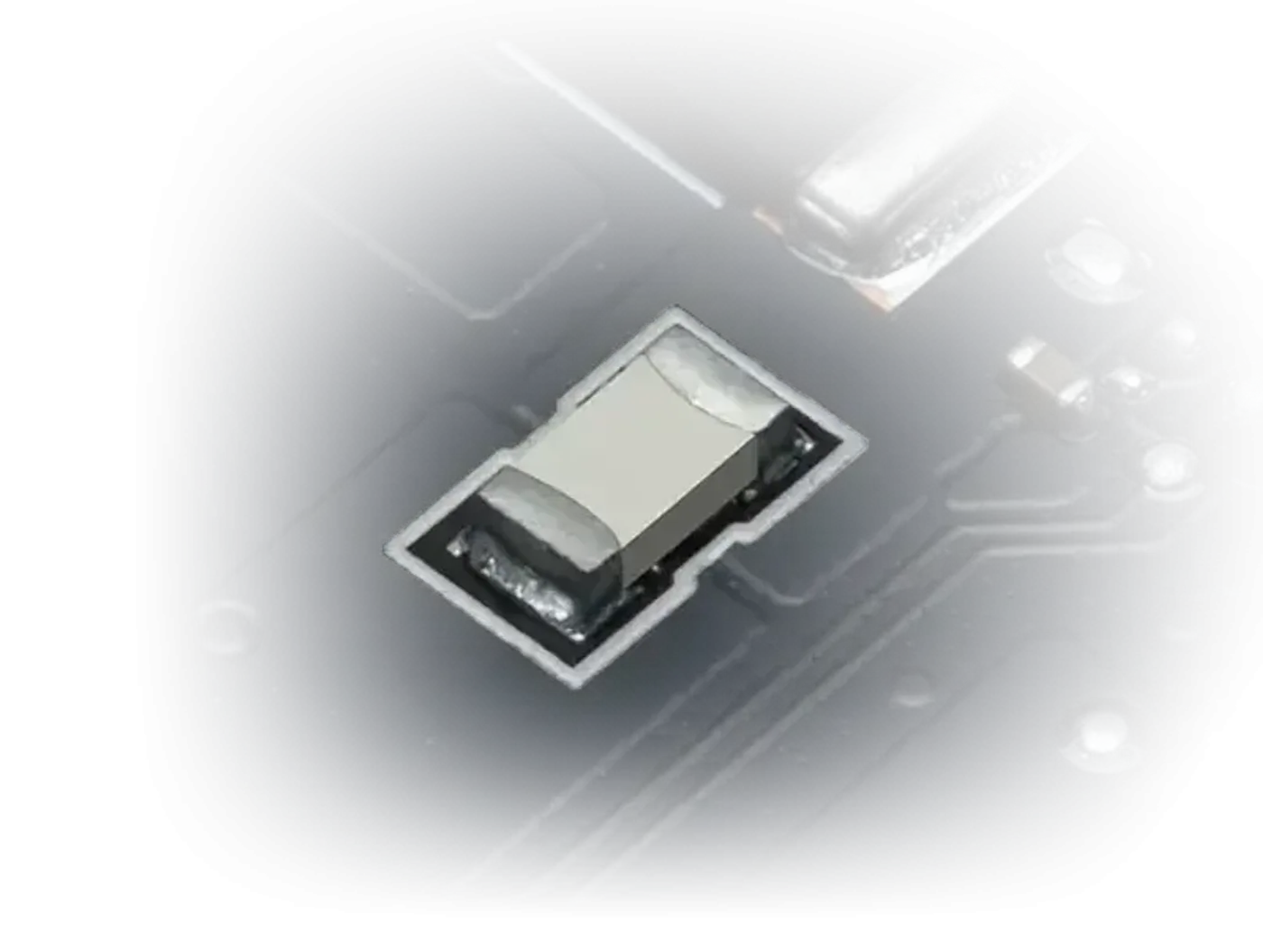
Added Fuses Protect Against Electrical Hazards
Added fuses integrated into the custom PCB offer enhanced protection against electrical hazards. It is protection you never notice until something goes wrong upstream in the system, at which point a fuse is the difference between an isolated fault and a graphics card that has taken damage it cannot recover from.
Added Fuses Protect Against Electrical Hazards
Added fuses integrated into the custom PCB offer enhanced protection against electrical hazards. It is protection you never notice until something goes wrong upstream in the system, at which point a fuse is the difference between an isolated fault and a graphics card that has taken damage it cannot recover from.
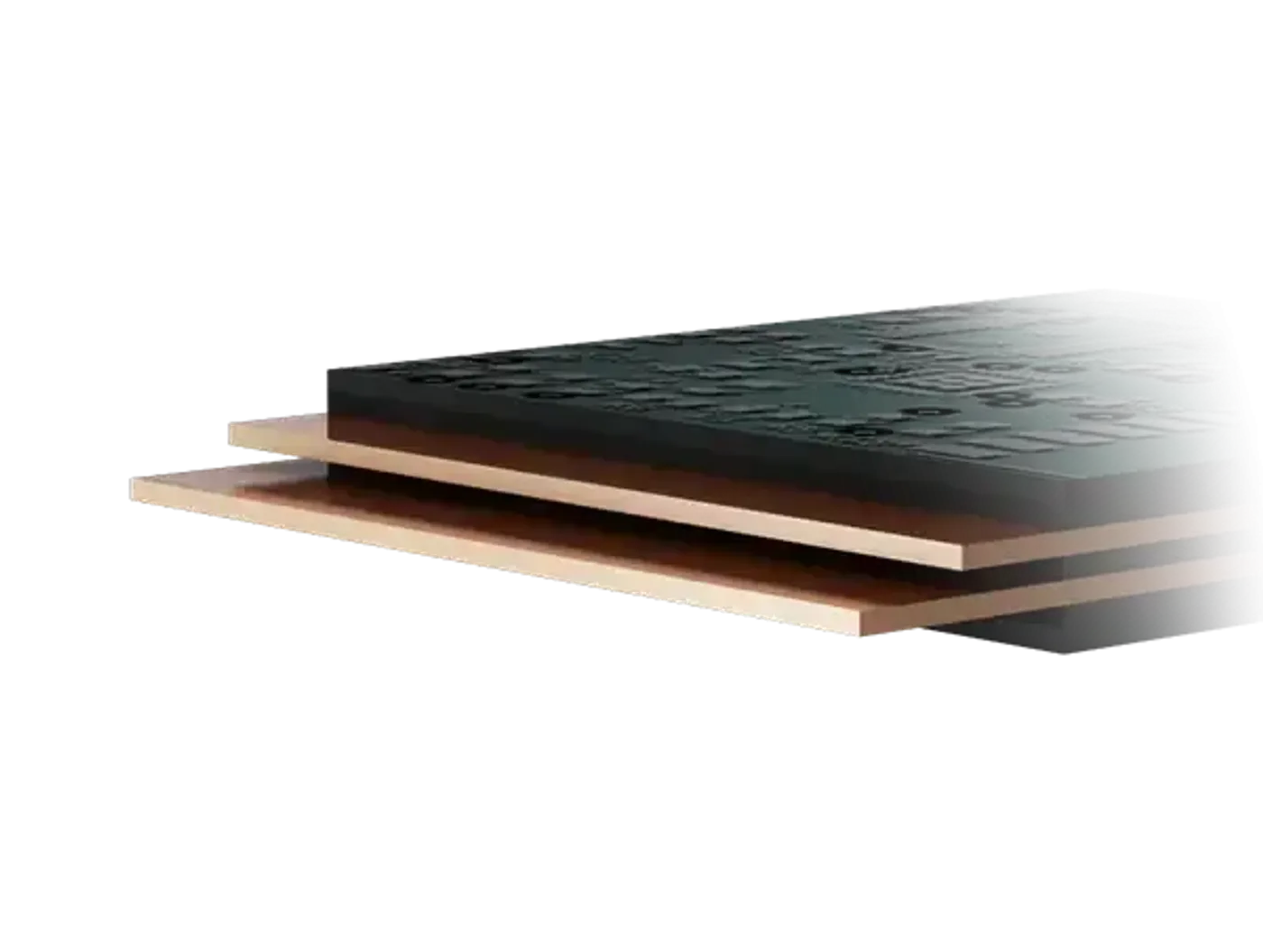
2 Oz Copper Layer Improves Conductivity
An enhanced 2 oz copper layer within the PCB improves conductivity, which promotes better heat dissipation and overall reliability. Thicker copper carries current with less resistance and spreads heat through the board rather than concentrating it under the power stages, so the benefit is both electrical and thermal at the same time.
2 Oz Copper Layer Improves Conductivity
An enhanced 2 oz copper layer within the PCB improves conductivity, which promotes better heat dissipation and overall reliability. Thicker copper carries current with less resistance and spreads heat through the board rather than concentrating it under the power stages, so the benefit is both electrical and thermal at the same time.

MSI Center With AI Tuning
The exclusive MSI Center software lets you monitor, customise and optimise your setup from one interface, and its AI Tuning feature adjusts performance to meet AI-driven requirements. Having monitoring and tuning in a single application avoids the usual situation where fan curves, lighting and clocks each live in a different utility.
MSI Center With AI Tuning
The exclusive MSI Center software lets you monitor, customise and optimise your setup from one interface, and its AI Tuning feature adjusts performance to meet AI-driven requirements. Having monitoring and tuning in a single application avoids the usual situation where fan curves, lighting and clocks each live in a different utility.

MSI Afterburner For Overclocking Control
MSI Afterburner offers complete overclocking control with real-time monitoring of system functionality, and it works with most GPUs rather than only MSI hardware. It is the tool most enthusiasts already use for fan curves and clock adjustment, so the card slots into a workflow you may well be running on your current system.
MSI Afterburner For Overclocking Control
MSI Afterburner offers complete overclocking control with real-time monitoring of system functionality, and it works with most GPUs rather than only MSI hardware. It is the tool most enthusiasts already use for fan curves and clock adjustment, so the card slots into a workflow you may well be running on your current system.
MSI APP Player Bridges Mobile Games
MSI APP Player, developed in collaboration with BlueStacks, bridges mobile games and PC gaming so both libraries run on the same machine. That turns a gaming PC into the place where a phone game can be played on a full monitor with a keyboard and mouse, instead of requiring a second device beside it.
MSI APP Player Bridges Mobile Games
MSI APP Player, developed in collaboration with BlueStacks, bridges mobile games and PC gaming so both libraries run on the same machine. That turns a gaming PC into the place where a phone game can be played on a full monitor with a keyboard and mouse, instead of requiring a second device beside it.
FAQ
Frequently Asked Questions
Everything you need to know about this product
It has 12GB of GDDR7 memory running on a 192-bit memory interface.
The RTX 5070 Inspire 3X OC has 6144 CUDA cores.
The description lists a maximum boost clock of 2557 MHz, while the product title quotes 2542 MHz.
Memory speed is 28Gbps across the 192-bit interface.
It uses NVIDIA Blackwell architecture with fifth-generation Tensor Cores and fourth-generation ray tracing cores.
Yes. Fifth-generation Tensor Cores with FP4 precision drive next-generation DLSS 4 technology.
It is the INSPIRE series shroud styling, combining contemporary art blocks with the card's cooling hardware.
The INSPIRE series uses a compact form factor intended for creative and professional builds with limited clearance.
Yes. A specially designed support stand attaches to the PC case to hold the card securely in place.
Added fuses in the custom PCB guard against electrical hazards, with DrMOS power stages controlling voltage.
Yes. MSI Afterburner gives overclocking control and real-time monitoring, and MSI Center adds AI Tuning.
The MSI part number is 912-V532-017.

AI-Generated Content:These FAQs are generated by an automated AI system and may contain inaccuracies or omissions. Evetech makes no warranties, express or implied, regarding their completeness or reliability. For definitive information, please refer to the manufacturer's official specifications.
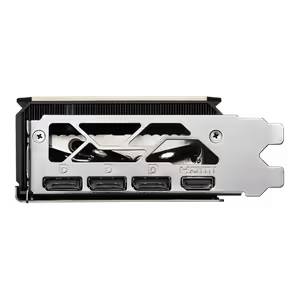
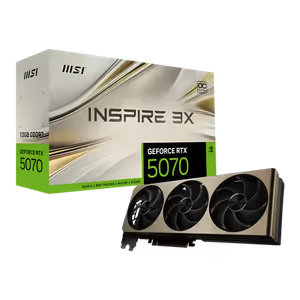
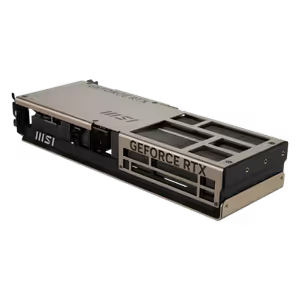
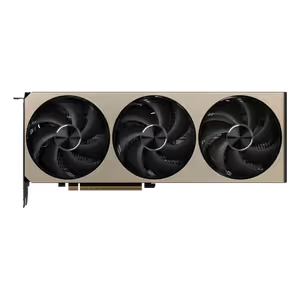
Please Note: Product images are for illustrative purposes only and may differ from the actual product.
Choose your
own PC
Hand-pick every part with live stock, compatibility, and instant pricing.
Try the new builderPrice Inc. Vat
R 15,999
Save R 4,000
ListR 19,999
15999Free Delivery
Qty:
In Stock with Evetech
Choose your
own PC
Hand-pick every part with live stock, compatibility, and instant pricing.
Try the new builderMSI GeForce RTX 5070 12G Inspire 3X OC Graphics Card