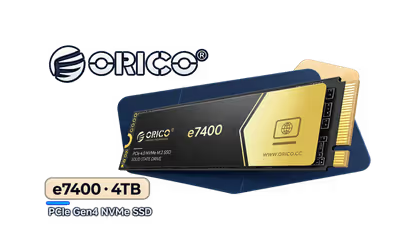
ORICO e7400 M2 NVMe SSD 4TB
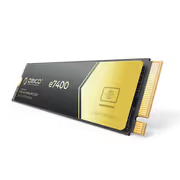
ORICO e7400 M.2 NVMe SSD - 4TB / PS5 Compatible / PCIe Gen4.0 x4 / Up to 7,400MB/s Read and 6,600MB/s Write Speeds / ORICO-e7400-4TB-GD-BP + FREE DELIVERY !
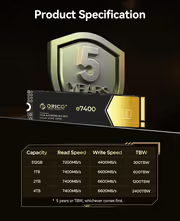
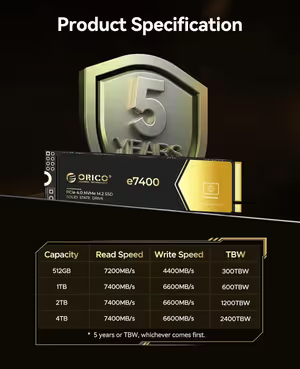
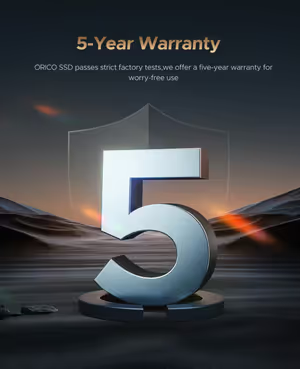
5 Years Local Warranty
Model No : Orico ORICO-e7400-4TB-GD-BP
Price Inc. Vat
R 10,799
Save R 700
ListR 11,499
10799Free Delivery
Qty:
In Stock with Evetech
ORICO e7400 4TB M.2 NVMe SSD — PCIe Gen4, PS5 Ready
4TB PCIe Gen4 x4 NVMe SSD, PS5 Compatible
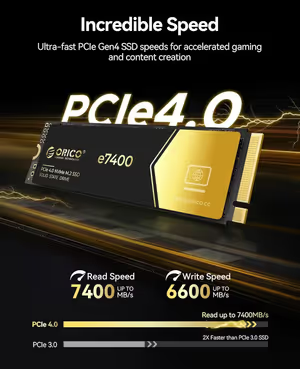
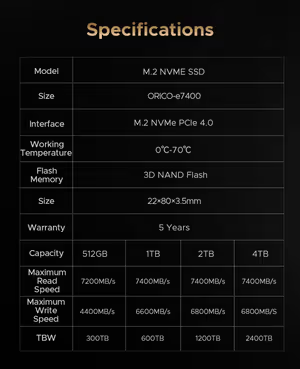
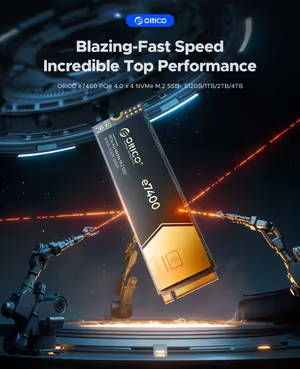
The ORICO e7400 4TB M.2 NVMe SSD uses a PCIe Gen 4 x4 interface and is PS5 compatible, so games and applications open quickly on either a PC or a console. Read speeds run up to 7,400MB/s and writes up to 6,600MB/s, which keeps boots short, levels loading quickly and multitasking smooth across a 4TB library.
4TB PCIe Gen4 x4 NVMe SSD, PS5 Compatible
The ORICO e7400 4TB M.2 NVMe SSD uses a PCIe Gen 4 x4 interface and is PS5 compatible, so games and applications open quickly on either a PC or a console. Read speeds run up to 7,400MB/s and writes up to 6,600MB/s, which keeps boots short, levels loading quickly and multitasking smooth across a 4TB library.
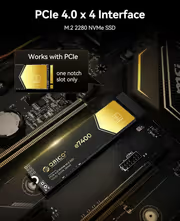
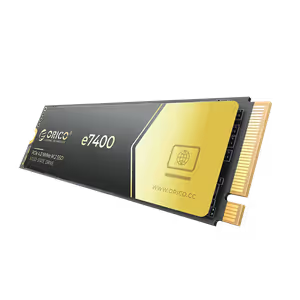
M.2 NVMe Module On A PCIe 4.0 x4 Link
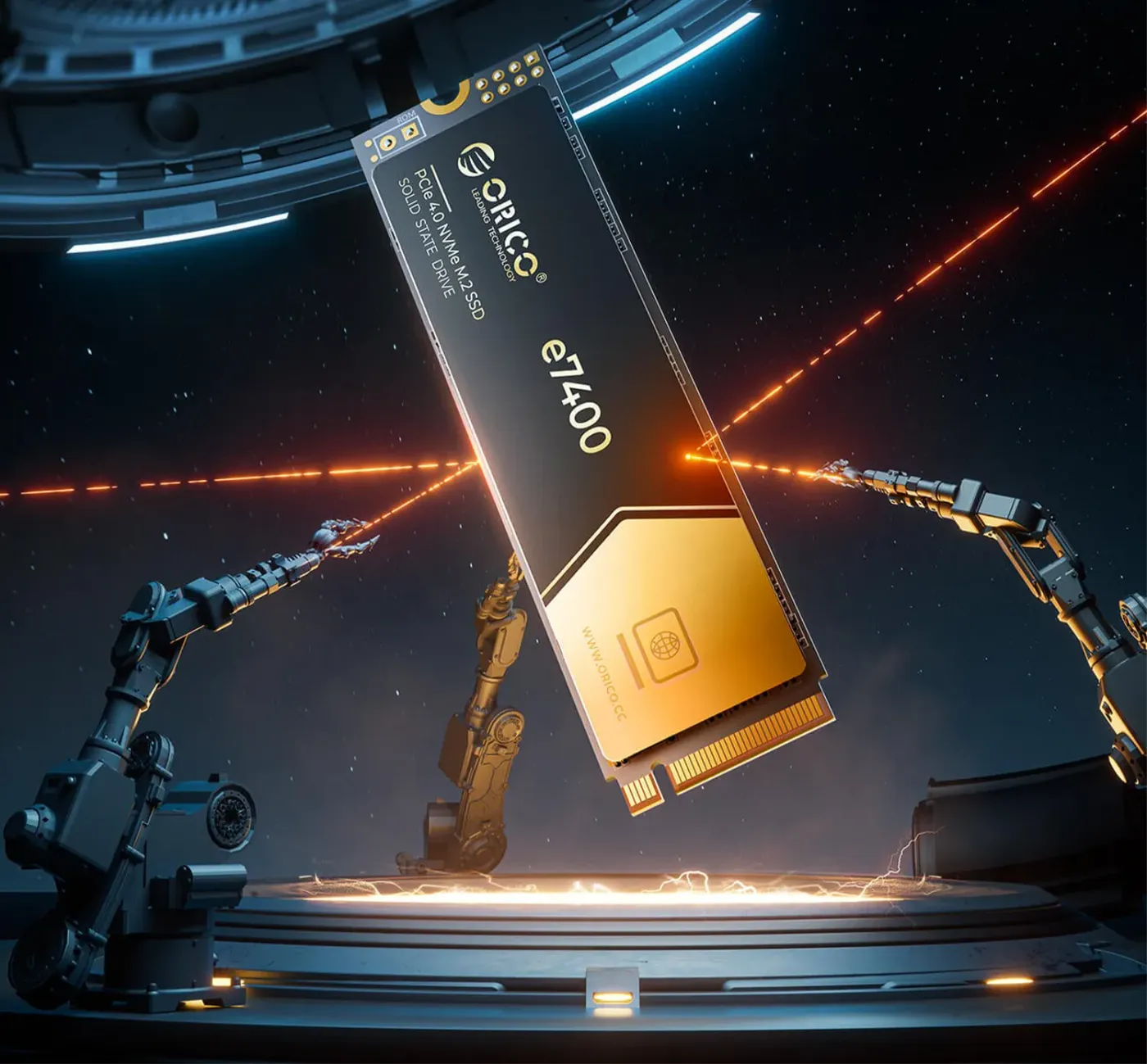
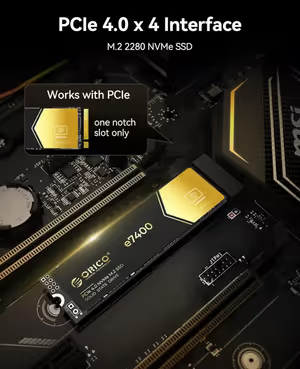
The e7400 is an M.2 NVMe solid-state drive on a PCIe 4.0 x4 link, using the full-width Gen4 path rather than a narrower connection. This 4TB unit is the largest of four capacities ORICO builds in the range, so it is the same drive design taken to its top capacity point.
M.2 NVMe Module On A PCIe 4.0 x4 Link
The e7400 is an M.2 NVMe solid-state drive on a PCIe 4.0 x4 link, using the full-width Gen4 path rather than a narrower connection. This 4TB unit is the largest of four capacities ORICO builds in the range, so it is the same drive design taken to its top capacity point.
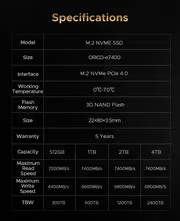
Sequential Reads Up To 7,400MB/s
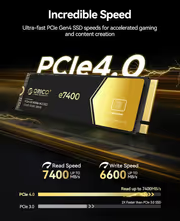
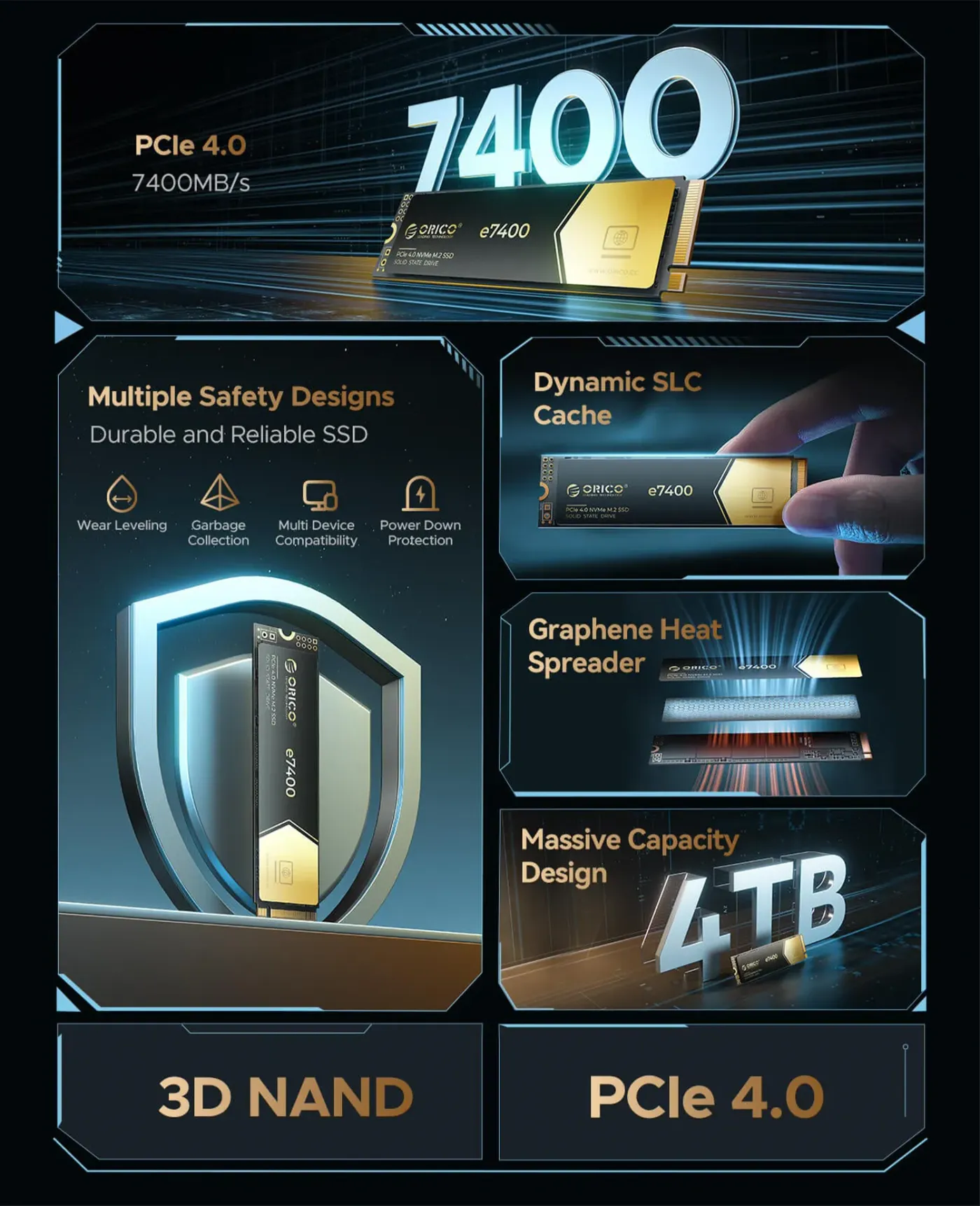
Sequential reads reach up to 7,400MB/s on PCIe 4.0, the figure that decides how quickly large game assets and project files are pulled off the drive. That is what produces a stutter-free workflow across gaming, content creation and everyday tasks instead of stalls while data is fetched.
Sequential Reads Up To 7,400MB/s
Sequential reads reach up to 7,400MB/s on PCIe 4.0, the figure that decides how quickly large game assets and project files are pulled off the drive. That is what produces a stutter-free workflow across gaming, content creation and everyday tasks instead of stalls while data is fetched.
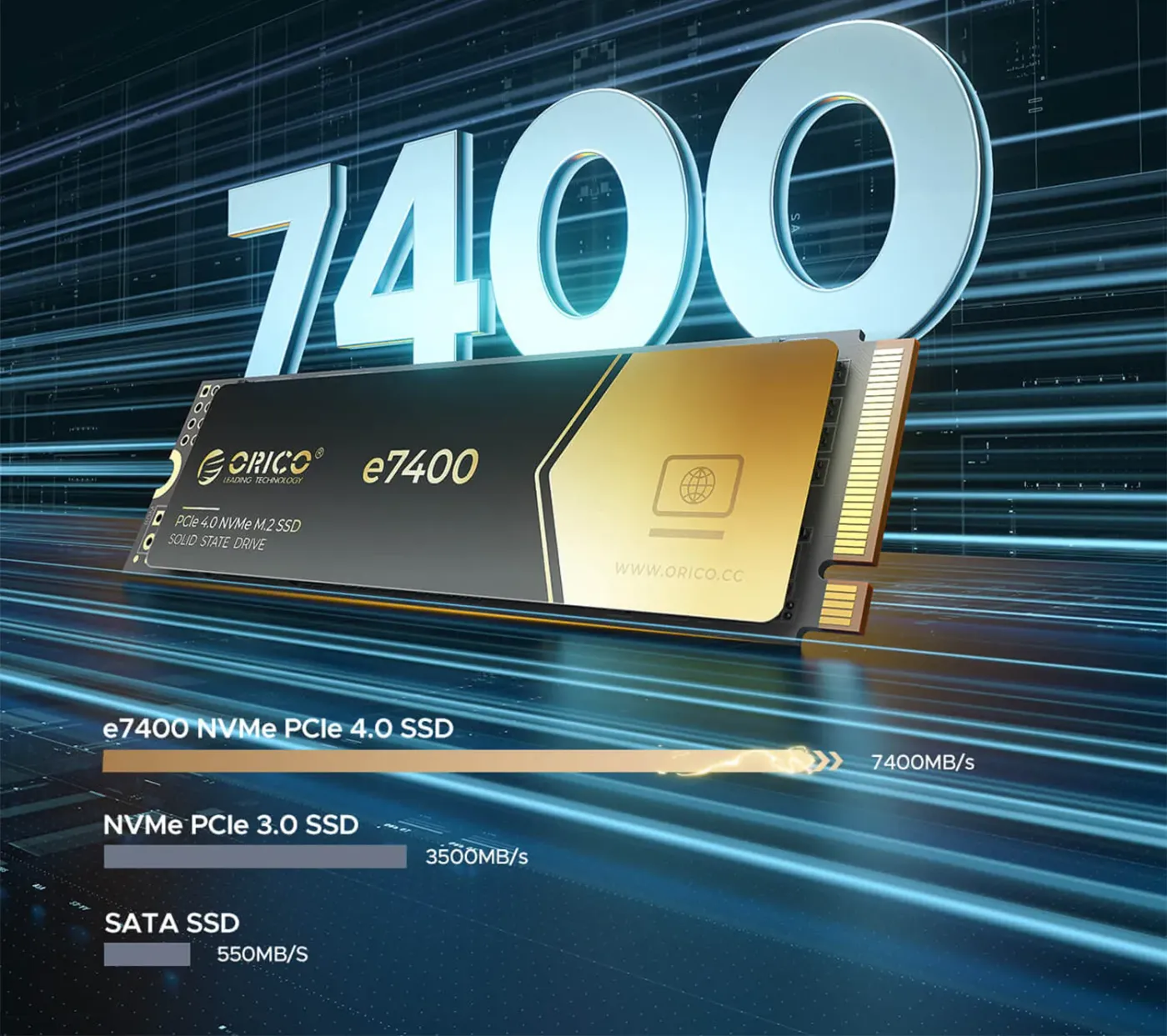
How The Rated Speeds Were Measured
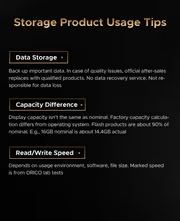
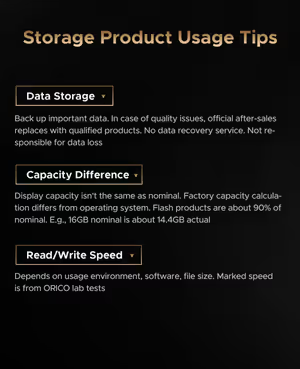
The labelled performance figures are based on ORICO laboratory tests under specific conditions. Actual speeds vary with the hardware in the system, the software moving the data and the file sizes involved, so a folder of small files behaves differently from one large sequential transfer.
How The Rated Speeds Were Measured
The labelled performance figures are based on ORICO laboratory tests under specific conditions. Actual speeds vary with the hardware in the system, the software moving the data and the file sizes involved, so a folder of small files behaves differently from one large sequential transfer.
Why Formatted Capacity Reads Under 4TB
Displayed capacity differs from the nominal value because the factory counts in decimal and the operating system counts in binary. Flash storage typically shows about 90% of its nominal figure, so a 16GB nominal drive reports roughly 14.4GB usable. Keeping backups of important files is still worth doing on any drive.
Why Formatted Capacity Reads Under 4TB
Displayed capacity differs from the nominal value because the factory counts in decimal and the operating system counts in binary. Flash storage typically shows about 90% of its nominal figure, so a 16GB nominal drive reports roughly 14.4GB usable. Keeping backups of important files is still worth doing on any drive.
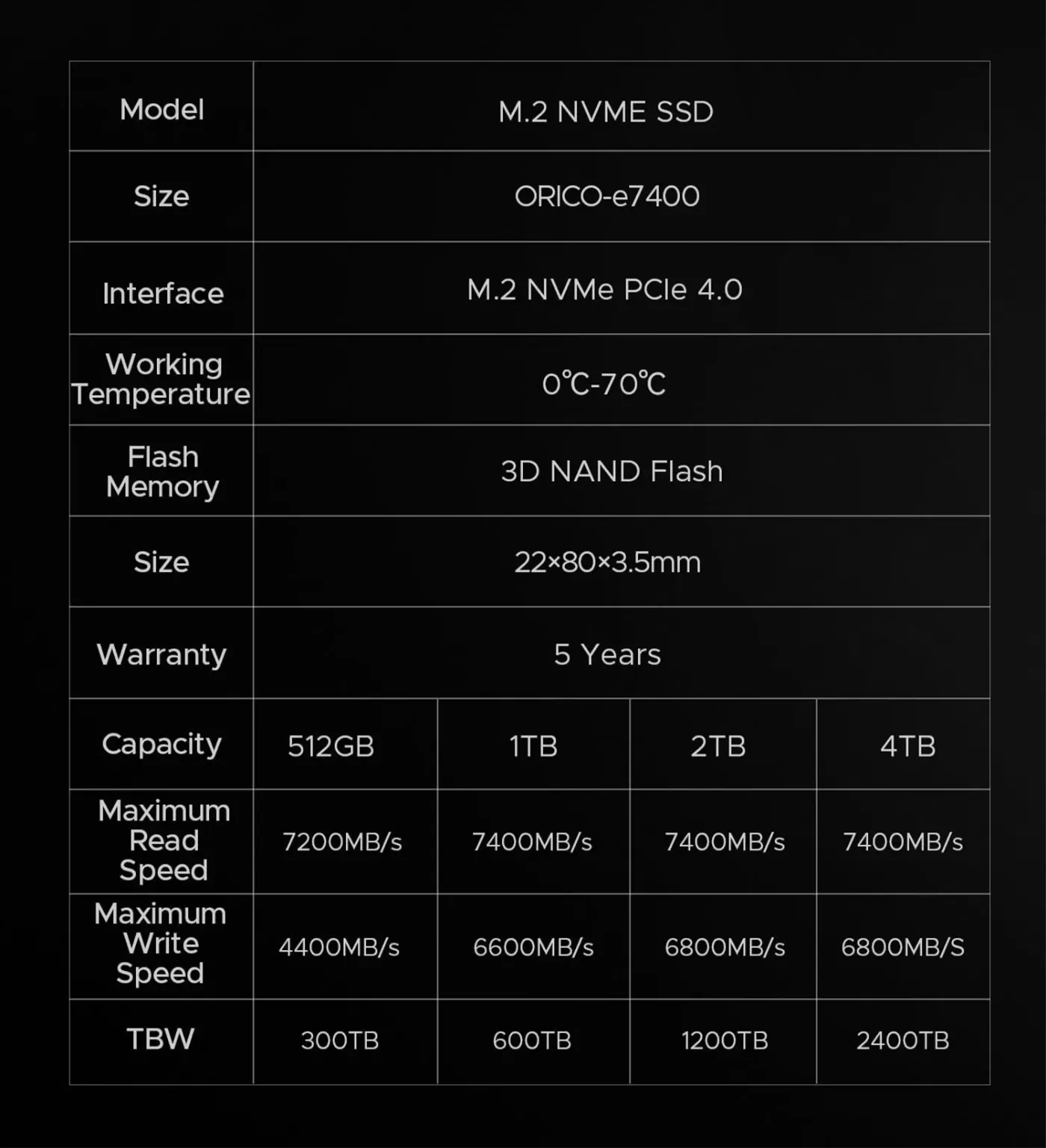
Sequential Writes Up To 6,600MB/s
Writes are rated up to 6,600MB/s, which is the number that applies when data is going onto the drive rather than coming off it. On a 4TB module that matters most during the initial fill: moving a game library, a photo archive or a video project folder across in one pass.
Sequential Writes Up To 6,600MB/s
Writes are rated up to 6,600MB/s, which is the number that applies when data is going onto the drive rather than coming off it. On a 4TB module that matters most during the initial fill: moving a game library, a photo archive or a video project folder across in one pass.

Every Drive Passes Strict Factory Testing
Each ORICO SSD goes through strict testing at the factory, the check that catches modules not holding their rated behaviour. On a 4TB drive consolidating a whole library onto one module, that consistency counts for more than a peak figure measured once.
Every Drive Passes Strict Factory Testing
Each ORICO SSD goes through strict testing at the factory, the check that catches modules not holding their rated behaviour. On a 4TB drive consolidating a whole library onto one module, that consistency counts for more than a peak figure measured once.
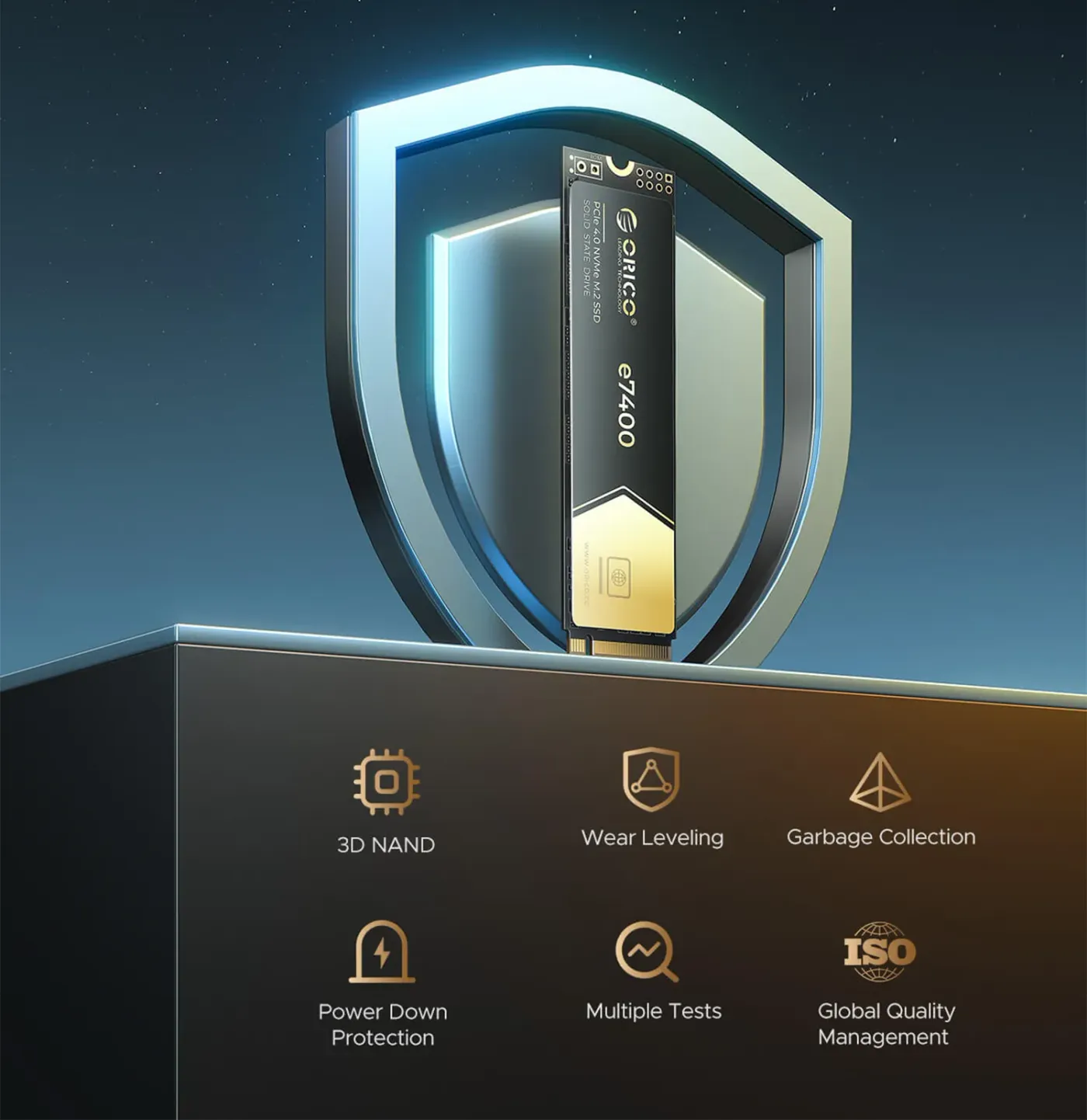
TRIM And S.M.A.R.T. Support Built In
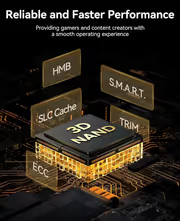
The e7400 supports TRIM, S.M.A.R.T. and other optimisation technologies for long-term stability. TRIM prevents write performance from degrading as the drive is filled and cleared repeatedly, while S.M.A.R.T. makes the drive's own health data readable by monitoring tools on the host system.
TRIM And S.M.A.R.T. Support Built In
The e7400 supports TRIM, S.M.A.R.T. and other optimisation technologies for long-term stability. TRIM prevents write performance from degrading as the drive is filled and cleared repeatedly, while S.M.A.R.T. makes the drive's own health data readable by monitoring tools on the host system.
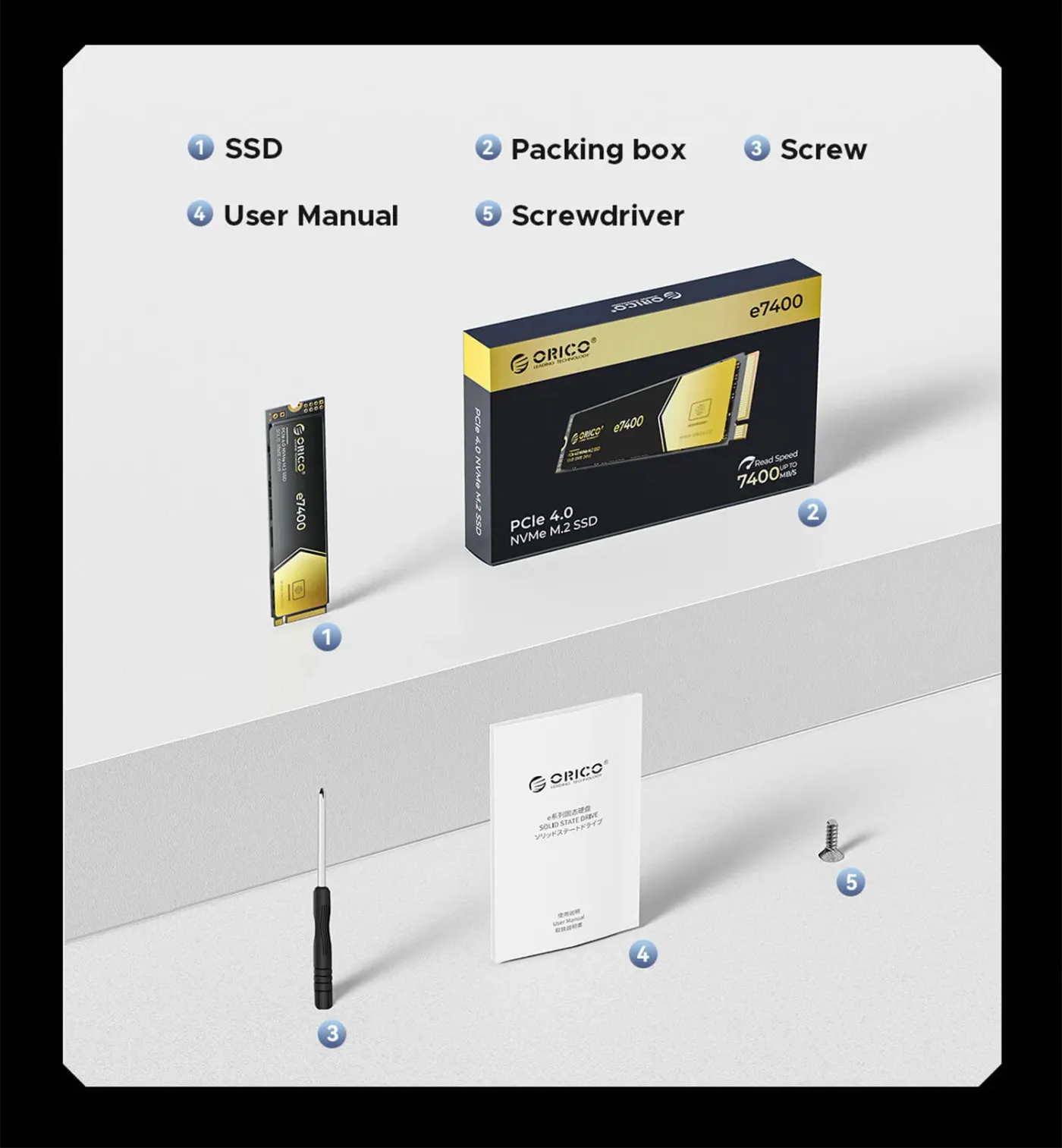
Installs With A Single M.2 Screw
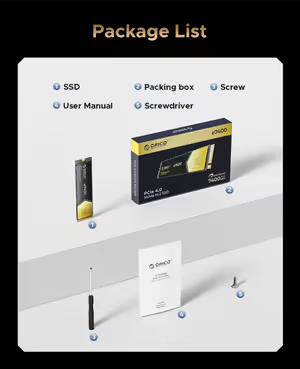
Installation is simple: slide the M.2 module into the slot and secure the screw. No cables, brackets or drive bays are needed, which is why a 4TB M.2 upgrade takes minutes in a desktop, a laptop or a console expansion bay rather than a full teardown.
Installs With A Single M.2 Screw
Installation is simple: slide the M.2 module into the slot and secure the screw. No cables, brackets or drive bays are needed, which is why a 4TB M.2 upgrade takes minutes in a desktop, a laptop or a console expansion bay rather than a full teardown.
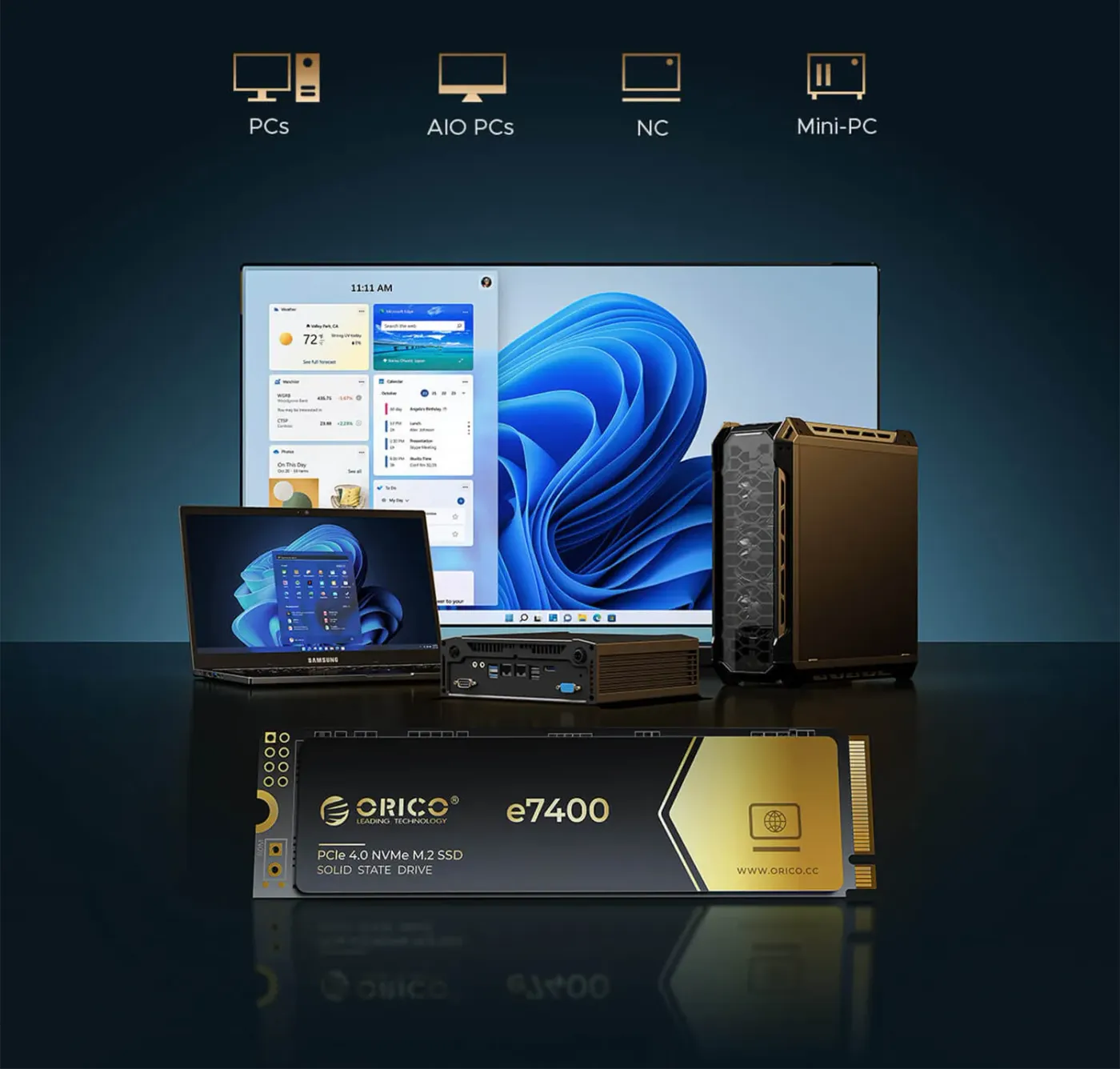
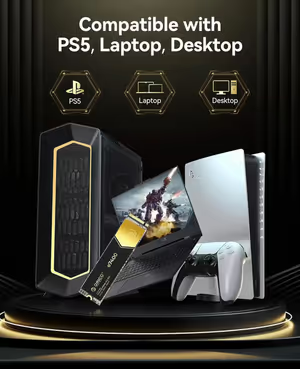
Fits Desktops, Laptops And Game Consoles
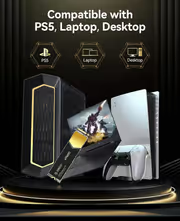
The e7400 is built for desktops, laptops and game consoles, and it is compatible with mainstream operating systems for flexible deployment. That means a drive fitted to a PC now can move to a console or another machine later without the platform dictating the decision.
Fits Desktops, Laptops And Game Consoles
The e7400 is built for desktops, laptops and game consoles, and it is compatible with mainstream operating systems for flexible deployment. That means a drive fitted to a PC now can move to a console or another machine later without the platform dictating the decision.
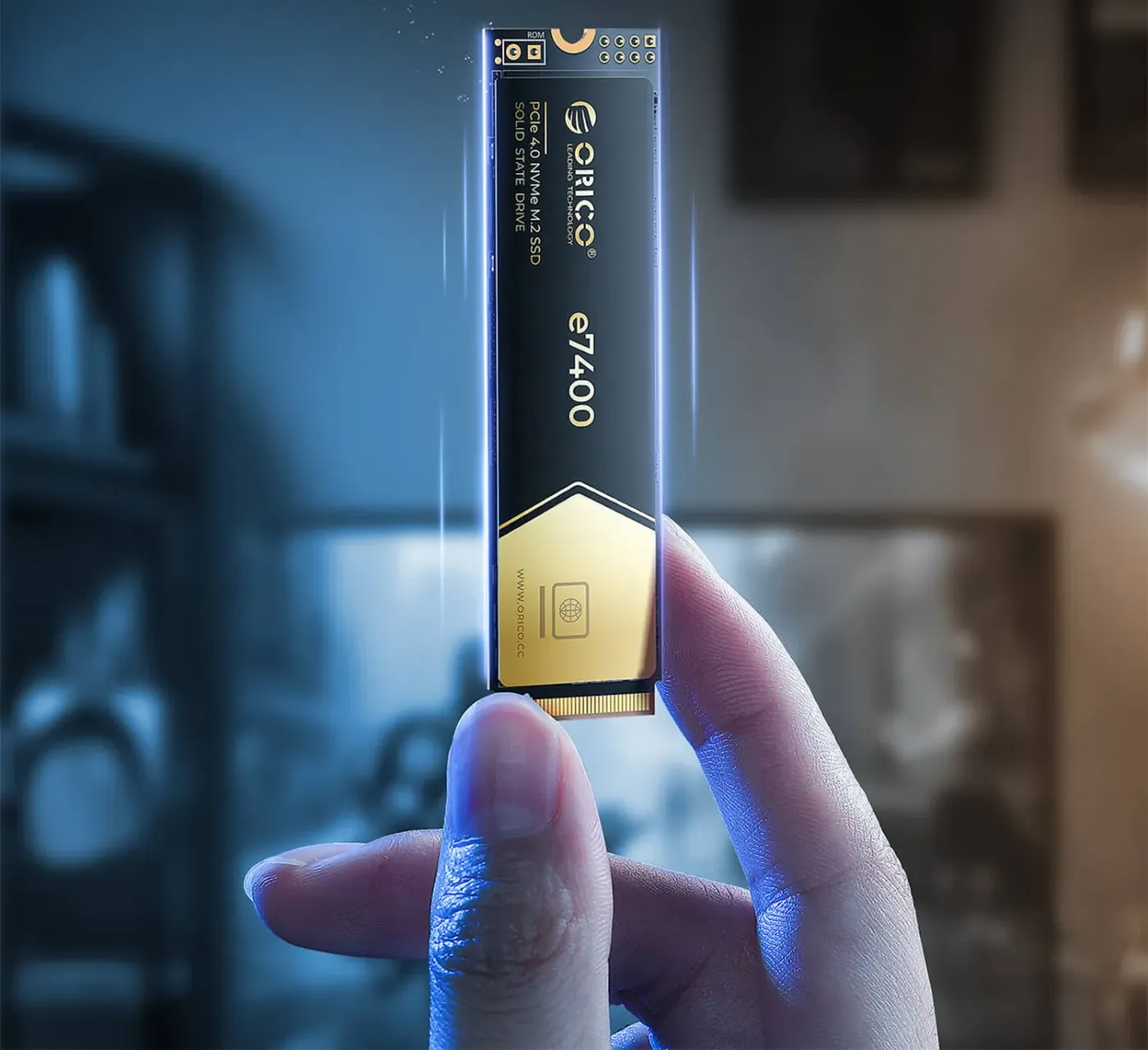
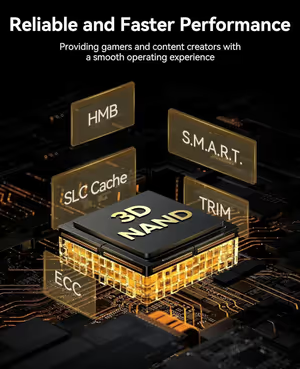
HMB And Dynamic SLC Cache Speed Up Loads
HMB and a dynamic SLC cache accelerate boots, application launches and game loads while sustaining high read and write speeds. HMB puts the drive's mapping tables in a slice of system memory, and the SLC cache takes the first hit of incoming writes so a bulk copy keeps moving.
HMB And Dynamic SLC Cache Speed Up Loads
HMB and a dynamic SLC cache accelerate boots, application launches and game loads while sustaining high read and write speeds. HMB puts the drive's mapping tables in a slice of system memory, and the SLC cache takes the first hit of incoming writes so a bulk copy keeps moving.
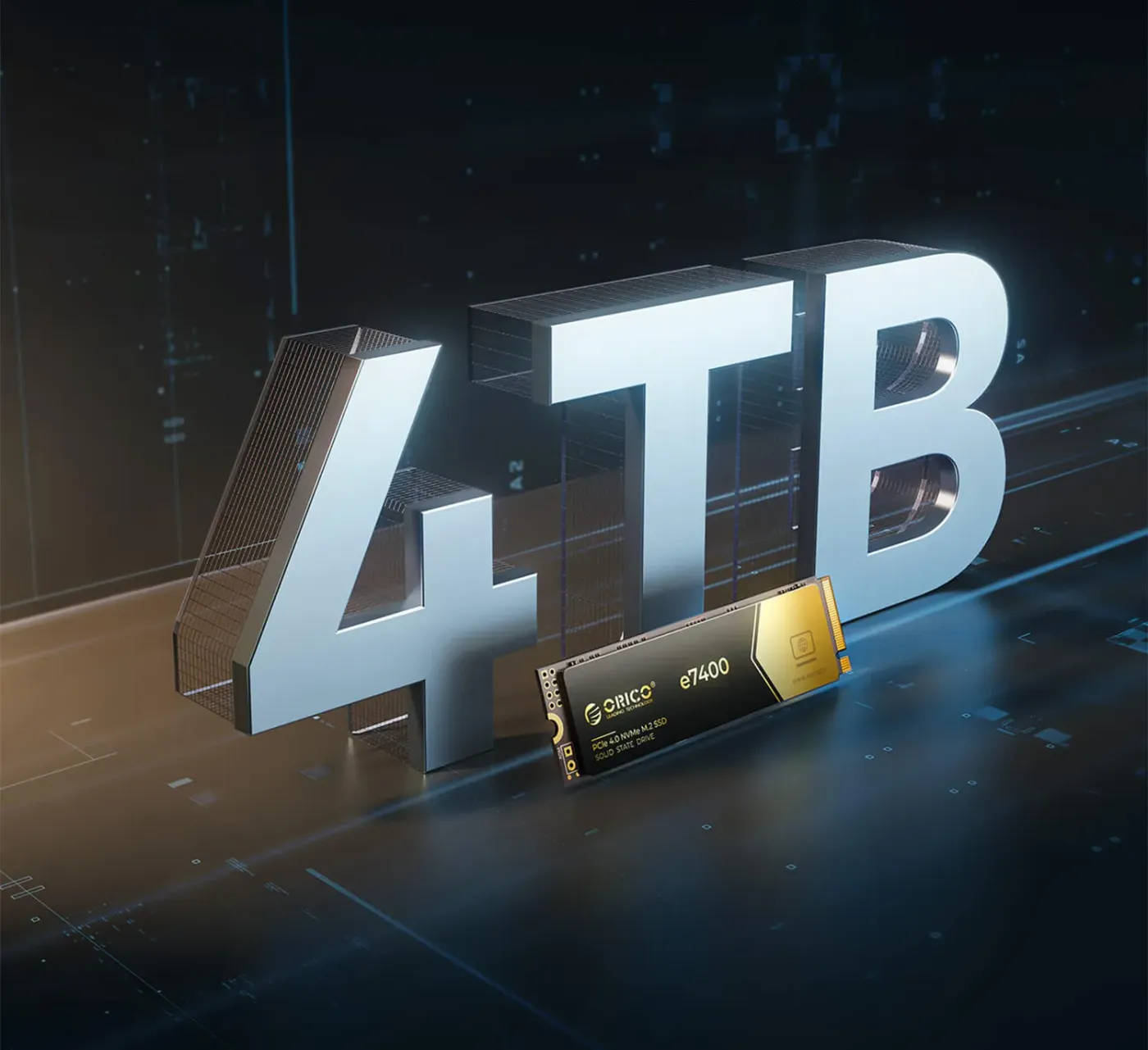
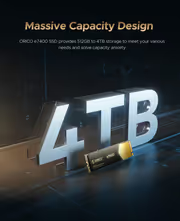
Capacities From 512GB Up To 4TB
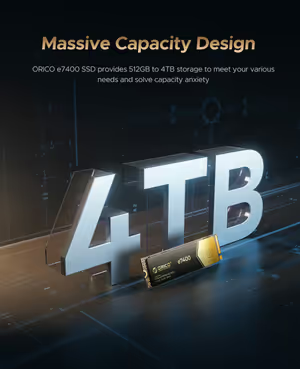
The e7400 series spans 512GB to 4TB, covering everyday needs, creative workloads and large game libraries from a single drive design. This 4TB model sits at the top of that range, which is the option chosen when the whole library is meant to stay installed rather than rotating in and out.
Capacities From 512GB Up To 4TB
The e7400 series spans 512GB to 4TB, covering everyday needs, creative workloads and large game libraries from a single drive design. This 4TB model sits at the top of that range, which is the option chosen when the whole library is meant to stay installed rather than rotating in and out.
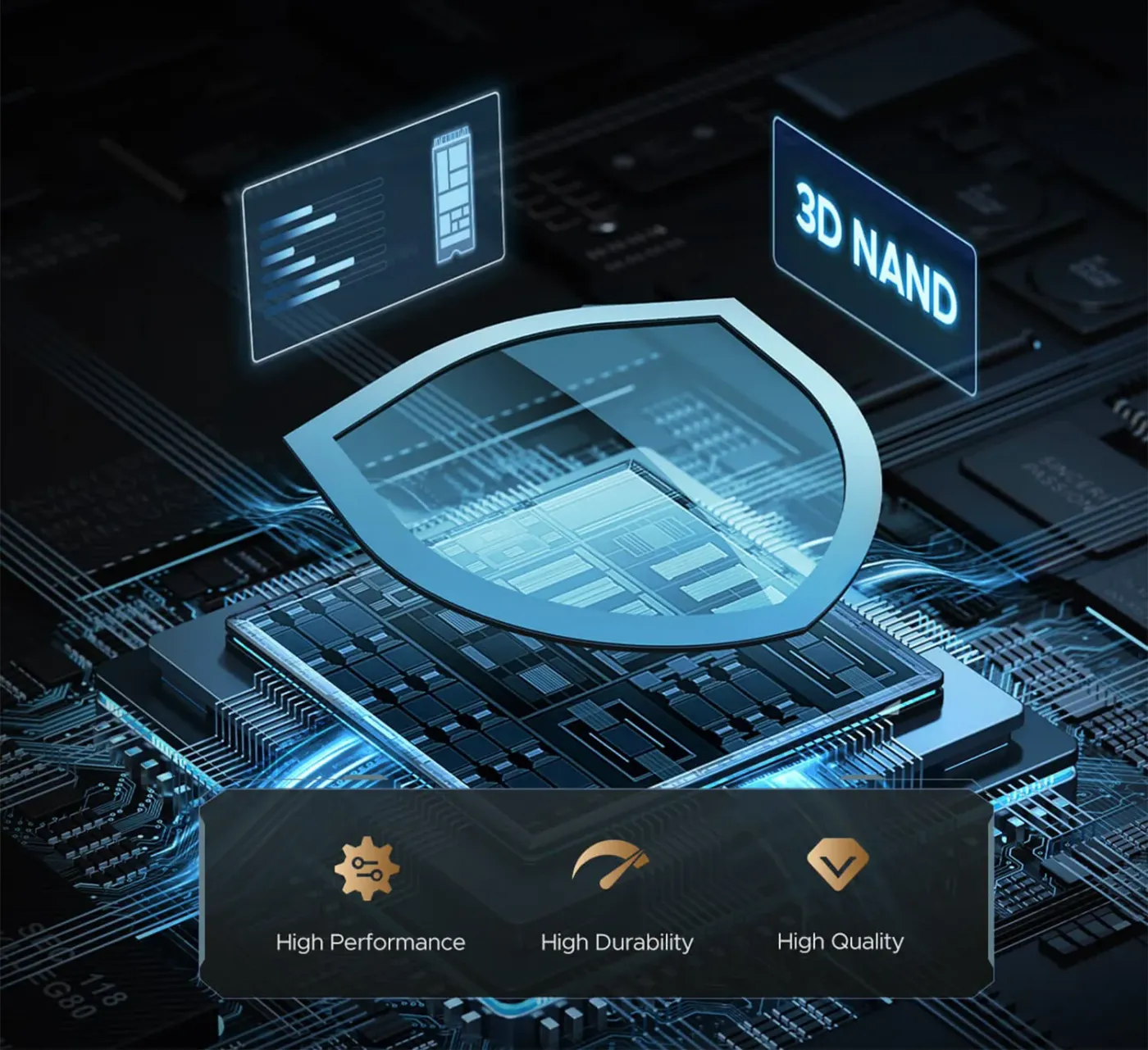
3D NAND Reads Across Multiple Layers
Reliable 3D NAND stacks memory cells in layers and enables access across them, reducing latency and improving responsiveness compared with a flatter arrangement. That architecture is what lets a high-capacity drive stay quick rather than slowing as the density rises.
3D NAND Reads Across Multiple Layers
Reliable 3D NAND stacks memory cells in layers and enables access across them, reducing latency and improving responsiveness compared with a flatter arrangement. That architecture is what lets a high-capacity drive stay quick rather than slowing as the density rises.
MAP1602 Controller Drives The Full Gen4 x4
The MAP1602 controller supports 2400MT/s NAND without overclocking and reliably drives the full PCIe Gen4 x4 interface. Running the flash within its rated envelope instead of pushing it beyond specification is what keeps performance consistent through long sessions and large transfers.
MAP1602 Controller Drives The Full Gen4 x4
The MAP1602 controller supports 2400MT/s NAND without overclocking and reliably drives the full PCIe Gen4 x4 interface. Running the flash within its rated envelope instead of pushing it beyond specification is what keeps performance consistent through long sessions and large transfers.

PCIe 4.0 x4 Shortens Startups And Transfers
The PCIe 4.0 x4 interface is the source of faster startups, quicker application loads and high-speed file transfers on a supported board. Higher per-lane bandwidth than Gen 3 lifts the ceiling on everything the drive does, so the interface is as much a part of the specification as the flash itself.
PCIe 4.0 x4 Shortens Startups And Transfers
The PCIe 4.0 x4 interface is the source of faster startups, quicker application loads and high-speed file transfers on a supported board. Higher per-lane bandwidth than Gen 3 lifts the ceiling on everything the drive does, so the interface is as much a part of the specification as the flash itself.
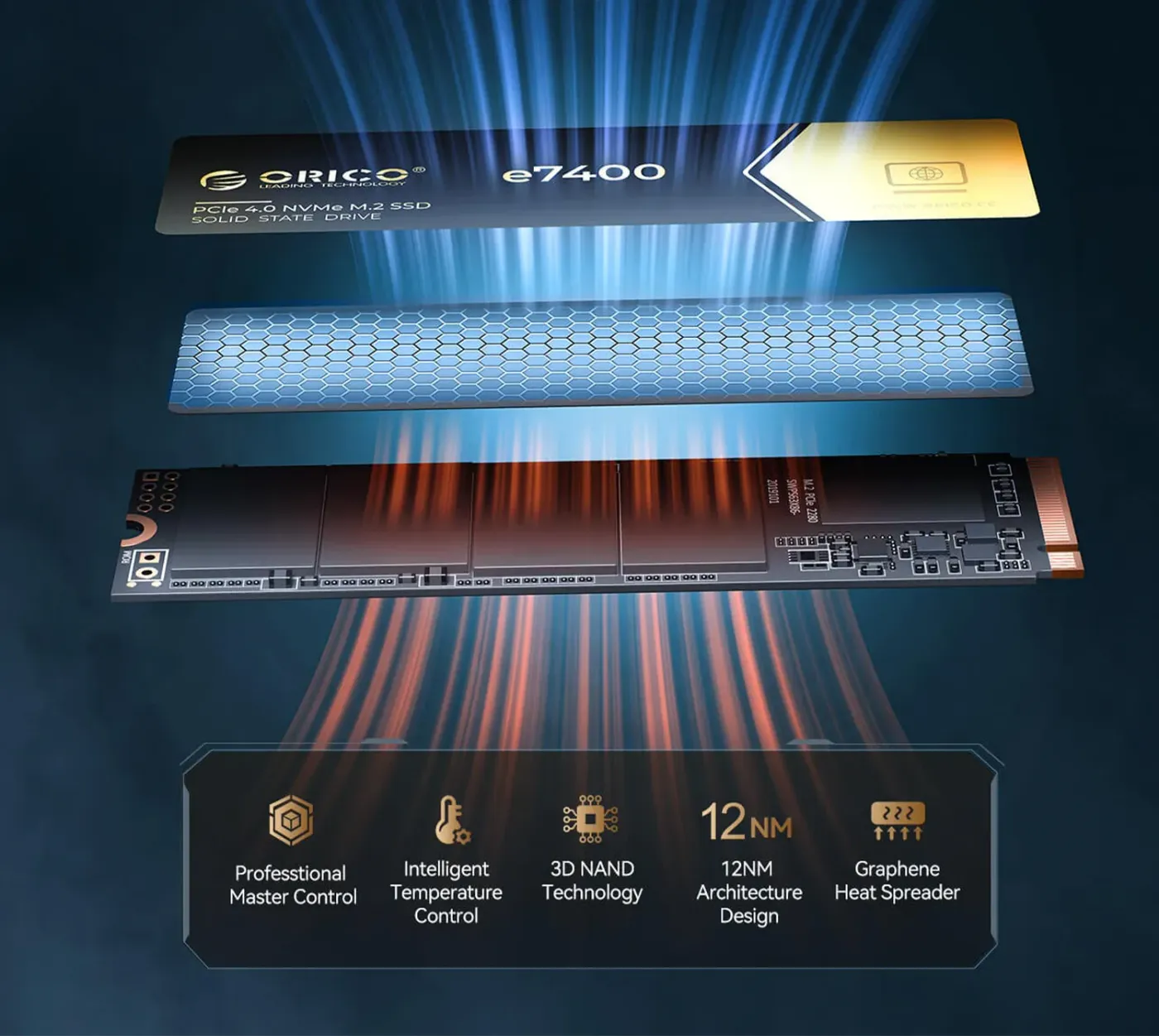
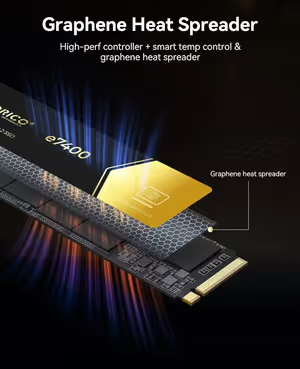
Graphene Heat Spreader Adds No Bulk
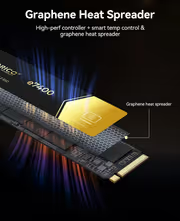
A slim graphene heat spreader manages heat on the module itself, dispersing it efficiently without adding bulk. Keeping the thermal layer thin is what allows an intelligent cooling design on a drive that still has to fit desktops, laptops and consoles without clearance problems.
Graphene Heat Spreader Adds No Bulk
A slim graphene heat spreader manages heat on the module itself, dispersing it efficiently without adding bulk. Keeping the thermal layer thin is what allows an intelligent cooling design on a drive that still has to fit desktops, laptops and consoles without clearance problems.
4TB Holds Whole Game Libraries And 4K Clips
The 4TB capacity is sized to hold large game libraries, school or work projects and 4K clips on one module. At that size the usual routine of uninstalling one title to make room for the next largely disappears, and archive footage can stay on fast storage instead of an external disk.
4TB Holds Whole Game Libraries And 4K Clips
The 4TB capacity is sized to hold large game libraries, school or work projects and 4K clips on one module. At that size the usual routine of uninstalling one title to make room for the next largely disappears, and archive footage can stay on fast storage instead of an external disk.
Also Runs In PCIe Gen 3 Slots
The e7400 works on PCIe Gen 3 at that interface's lower speeds, so an older board still takes the drive. That makes it a flexible upgrade: fit it now, and it reaches its full rated figures once the drive moves into a Gen 4 system rather than needing replacement.
Also Runs In PCIe Gen 3 Slots
The e7400 works on PCIe Gen 3 at that interface's lower speeds, so an older board still takes the drive. That makes it a flexible upgrade: fit it now, and it reaches its full rated figures once the drive moves into a Gen 4 system rather than needing replacement.
Holds Speed Without Heat-Related Throttling
Thermal control is what protects the drive from heat-related throttling, where a fast SSD drops its own speed to shed heat. The e7400's design targets consistent performance and longevity through long transfers, which is exactly the condition a 4TB drive meets when a library is copied across.
Holds Speed Without Heat-Related Throttling
Thermal control is what protects the drive from heat-related throttling, where a fast SSD drops its own speed to shed heat. The e7400's design targets consistent performance and longevity through long transfers, which is exactly the condition a 4TB drive meets when a library is copied across.
PS5, Desktop And Laptop Compatible
The e7400 works with the PS5 as well as desktops and laptops, so one 4TB drive can cover gaming, work and creative tasks across different machines. That cross-platform reach is the practical case for an M.2 NVMe upgrade over storage tied to a single system.
PS5, Desktop And Laptop Compatible
The e7400 works with the PS5 as well as desktops and laptops, so one 4TB drive can cover gaming, work and creative tasks across different machines. That cross-platform reach is the practical case for an M.2 NVMe upgrade over storage tied to a single system.
Files Copy In Seconds And Video Plays Back Clean
In daily use, levels load quickly, files copy in seconds and big videos move without stutter. Boots stay short and multitasking stays smooth, which is the everyday payoff of Gen4 x4 bandwidth rather than a benchmark figure that only appears under synthetic testing.
Files Copy In Seconds And Video Plays Back Clean
In daily use, levels load quickly, files copy in seconds and big videos move without stutter. Boots stay short and multitasking stays smooth, which is the everyday payoff of Gen4 x4 bandwidth rather than a benchmark figure that only appears under synthetic testing.
FAQ
Frequently Asked Questions
Everything you need to know about this product
This is the 4TB model, product code ORICO-e7400-4TB-GD-BP.
It reaches up to 7,400MB/s read and 6,600MB/s write on PCIe Gen4 x4.
Yes, it works with the PS5 as well as desktops and laptops.
Yes, it works on PCIe Gen 3 at that interface's lower speeds.
Slide the M.2 module into the slot and secure it with the screw.
It uses the MAP1602 controller driving the full PCIe Gen4 x4 interface.
It supports 2400MT/s NAND without overclocking.
They accelerate boots, app launches and game loads while sustaining high speeds.
A slim graphene heat spreader disperses heat without adding bulk.
Yes, it supports TRIM, S.M.A.R.T. and other optimisation technologies.
It is sized for large game libraries, school projects and 4K video clips.
Flash storage typically shows about 90% of nominal because of decimal versus binary counting.

AI-Generated Content:These FAQs are generated by an automated AI system and may contain inaccuracies or omissions. Evetech makes no warranties, express or implied, regarding their completeness or reliability. For definitive information, please refer to the manufacturer's official specifications.
Please Note: Product images are for illustrative purposes only and may differ from the actual product.
Choose your
own PC
Hand-pick every part with live stock, compatibility, and instant pricing.
Try the new builderPrice Inc. Vat
R 10,799
Save R 700
ListR 11,499
10799Free Delivery
Qty:
In Stock with Evetech
Choose your
own PC
Hand-pick every part with live stock, compatibility, and instant pricing.
Try the new builderORICO e7400 M2 NVMe SSD 4TB