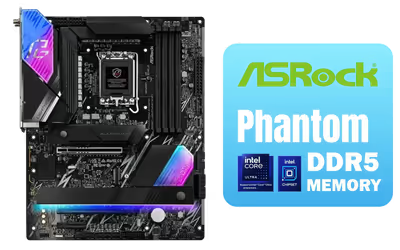
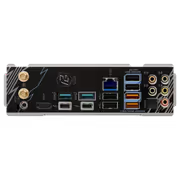
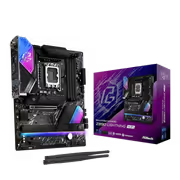
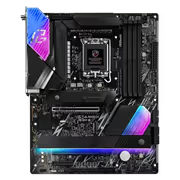
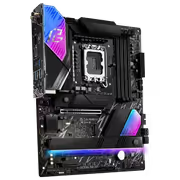
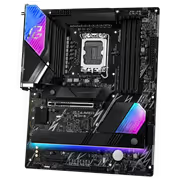
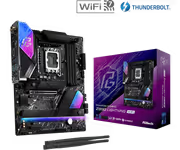
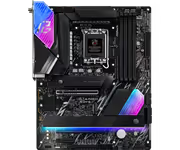
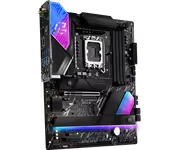
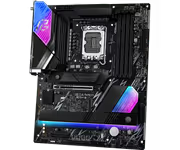
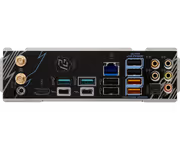
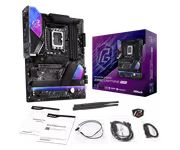
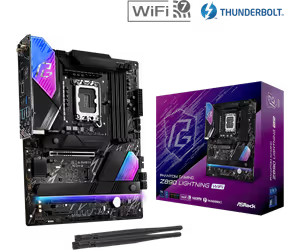
ASRock Phantom Gaming Z890 Lightning Intel Motherboard
ASRock Phantom Gaming Z890 Lightning WiFi Intel Motherboard / ATX Form Factor / Supports Intel® Core™ Ultra Processors (Series 2) / LGA 1851 CPU Socket / 4x DDR5 DIMM Supporting up to 256GB / 90-MXBPG0-A0UAYZ / 90-MXBPG0-A0UAYZ / [+] ASRock Intel Motherboard Z890 & B860 Game Pack Promotion + FREE DELIVERY !
3 Years Local Warranty
Model No : ASROCK 90-MXBPG0-A0UAYZ
Price Inc. Vat
R 6,999
Save R 1,000
ListR 7,999
6999Free Delivery
Qty:
In Stock with Evetech

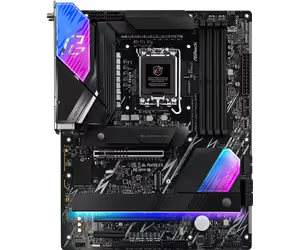
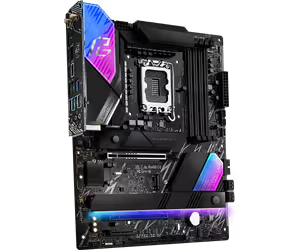
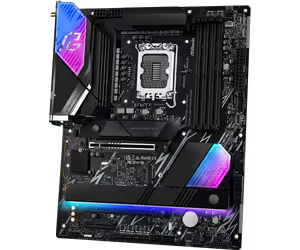
ASRock Phantom Gaming Z890 Lightning WiFi ATX Motherboard
ASRock Phantom Gaming Z890 Lightning WiFi Motherboard
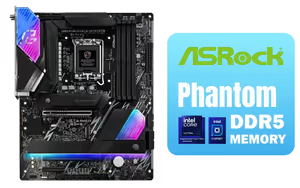
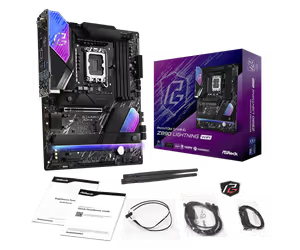
The ASRock Phantom Gaming Z890 Lightning is an ATX Intel motherboard on the Z890 chipset, supporting Intel Core Ultra processors (Series 2) through the LGA 1851 socket. Its four DDR5 DIMM slots hold up to 256GB of high-speed memory for gaming, content creation and multitasking. Integrated WiFi covers wireless networking, so a high-end build needs no add-in network card whether you are upgrading or starting fresh.
ASRock Phantom Gaming Z890 Lightning WiFi Motherboard
The ASRock Phantom Gaming Z890 Lightning is an ATX Intel motherboard on the Z890 chipset, supporting Intel Core Ultra processors (Series 2) through the LGA 1851 socket. Its four DDR5 DIMM slots hold up to 256GB of high-speed memory for gaming, content creation and multitasking. Integrated WiFi covers wireless networking, so a high-end build needs no add-in network card whether you are upgrading or starting fresh.
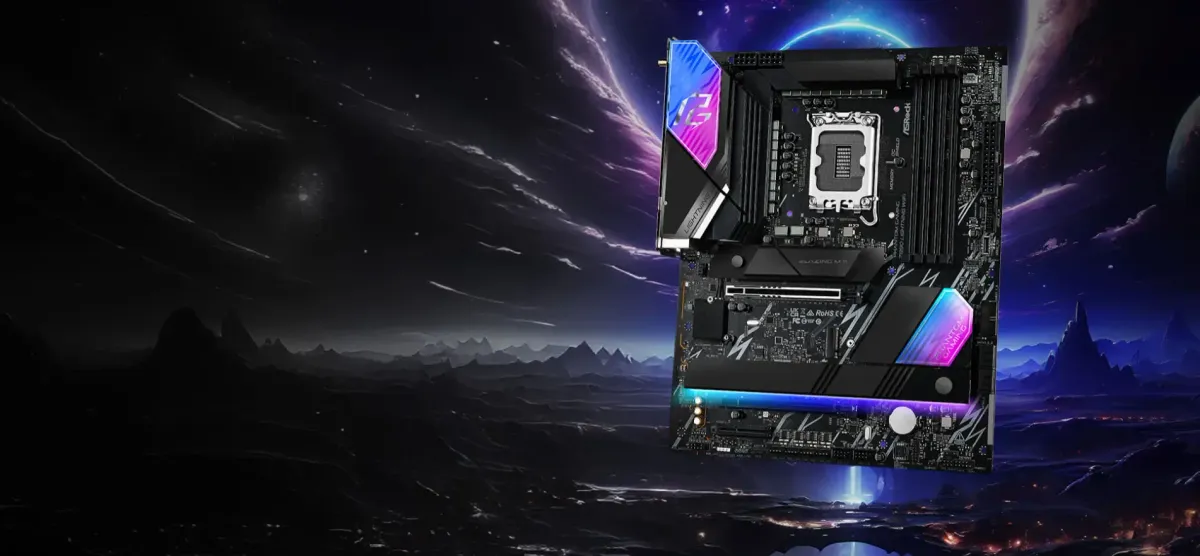
Lightning Series Design Signals Speed And Power
The Lightning series sits in ASRock's Phantom Gaming lineup as a symbol of speed and power. Its linear and angular styling evokes lightning imagery, a visual shorthand for raw energy and fast data transfer, and it carries through the heatsink shrouds and the I/O cover rather than being limited to a printed logo.
Lightning Series Design Signals Speed And Power
The Lightning series sits in ASRock's Phantom Gaming lineup as a symbol of speed and power. Its linear and angular styling evokes lightning imagery, a visual shorthand for raw energy and fast data transfer, and it carries through the heatsink shrouds and the I/O cover rather than being limited to a printed logo.
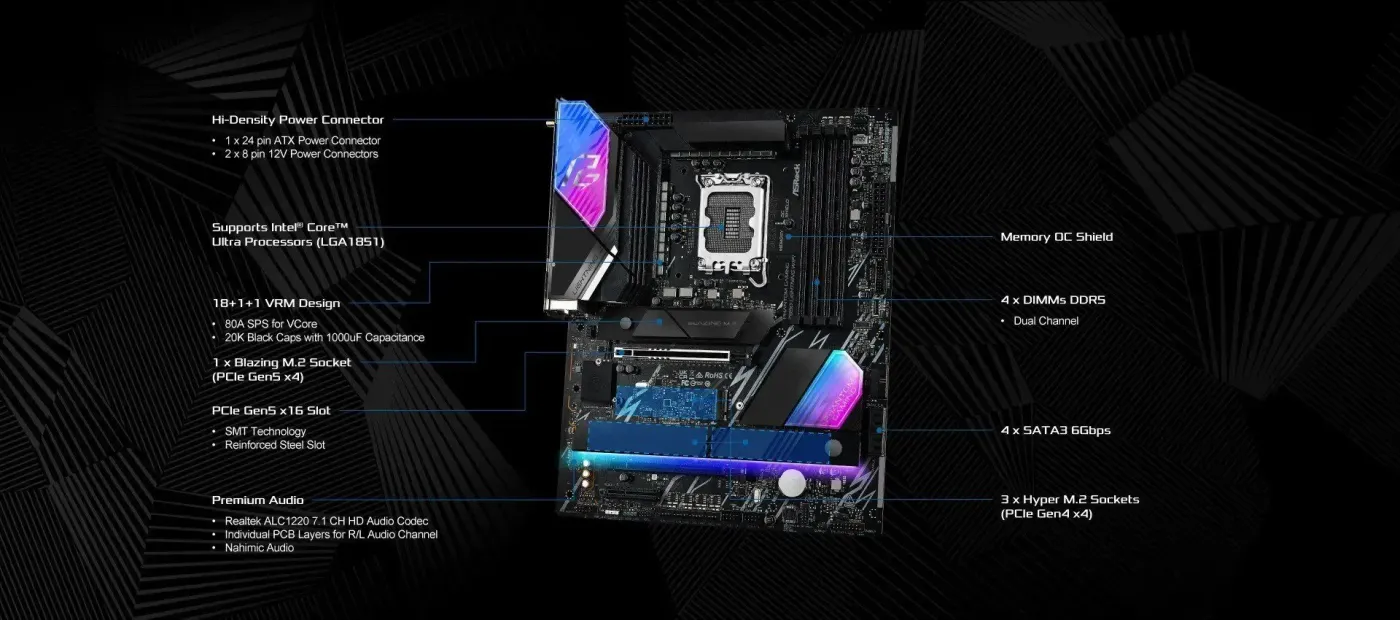
LGA 1851 Socket Takes Intel Core Ultra Series 2
The LGA 1851 socket accepts the latest Intel Core Ultra processors (Series 2), and ASRock tunes the surrounding hardware for fast, reliable and efficient operation. Choosing the socket is the first decision in any Intel build, and this one puts the board on the current desktop platform rather than a generation that has already closed.
LGA 1851 Socket Takes Intel Core Ultra Series 2
The LGA 1851 socket accepts the latest Intel Core Ultra processors (Series 2), and ASRock tunes the surrounding hardware for fast, reliable and efficient operation. Choosing the socket is the first decision in any Intel build, and this one puts the board on the current desktop platform rather than a generation that has already closed.
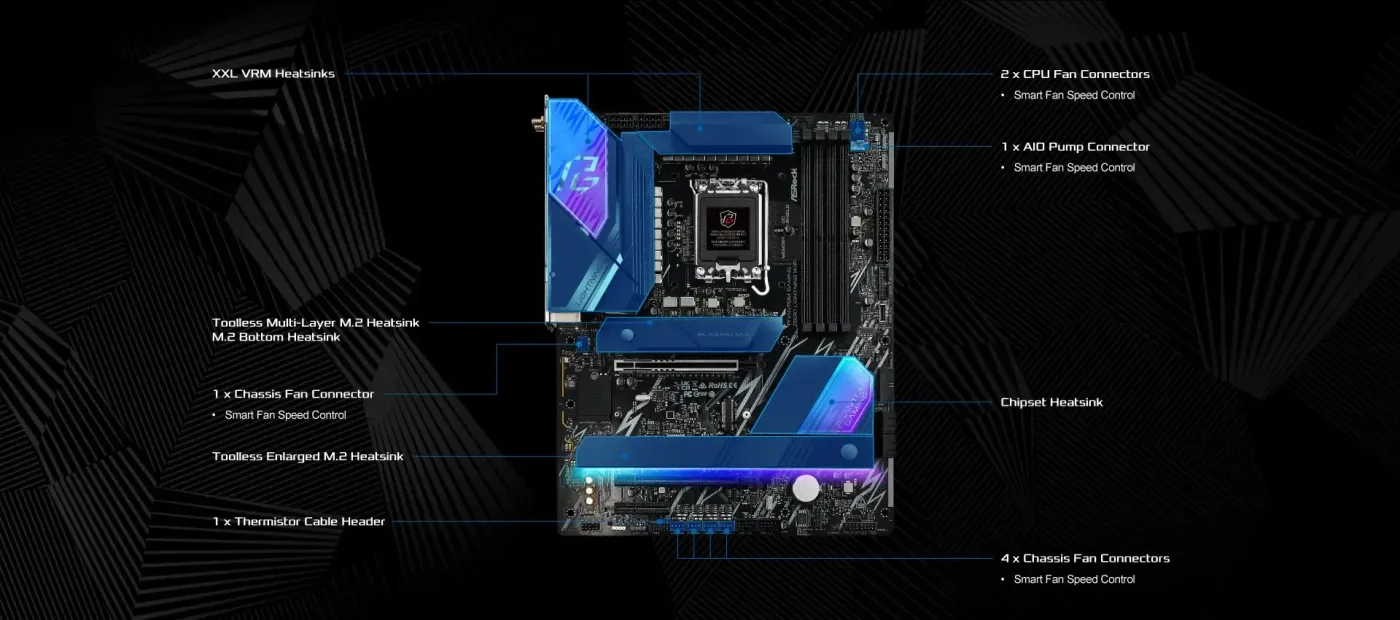
Four DDR5 DIMM Slots Reach 256GB Of Memory
Four DDR5 DIMM slots give the board a 256GB memory ceiling. That is far past what a game needs on its own, which is the point: the capacity is there for video timelines, virtual machines and large project files opened alongside a game, so the same machine handles content creation and heavy multitasking without a rebuild.
Four DDR5 DIMM Slots Reach 256GB Of Memory
Four DDR5 DIMM slots give the board a 256GB memory ceiling. That is far past what a game needs on its own, which is the point: the capacity is there for video timelines, virtual machines and large project files opened alongside a game, so the same machine handles content creation and heavy multitasking without a rebuild.
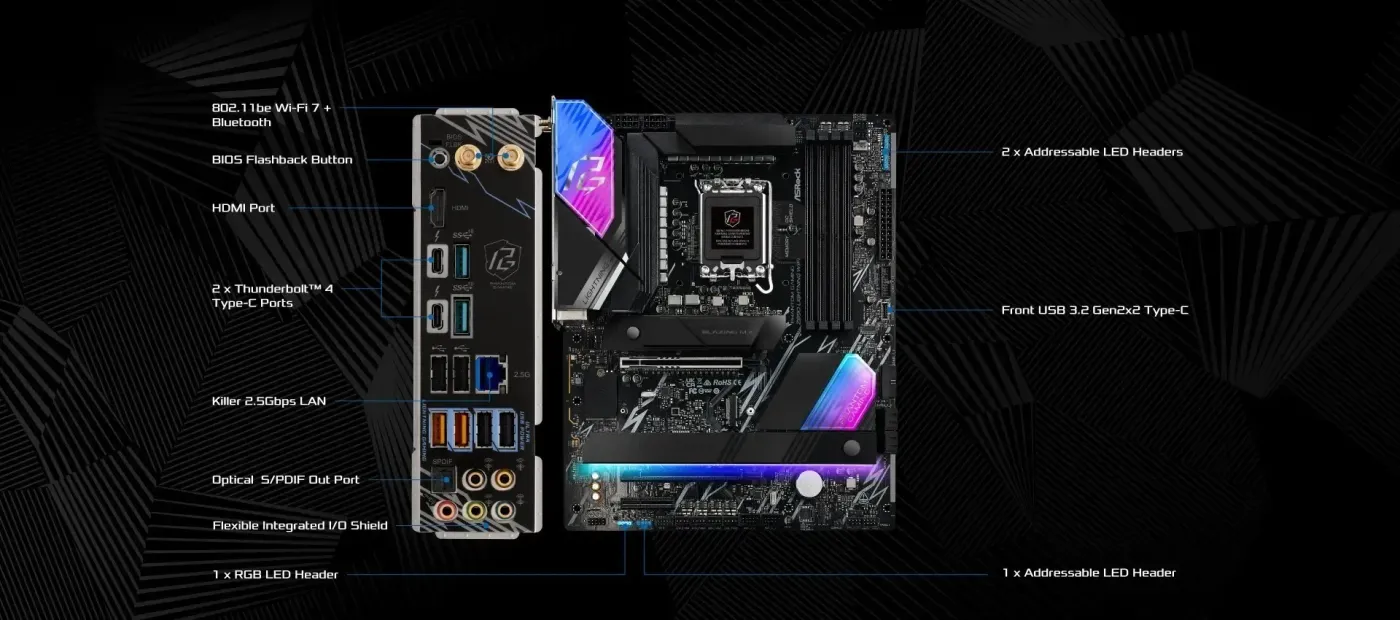
Z890 Chipset In A Standard ATX Layout
The advanced Z890 chipset supplies the connectivity behind this board, and the ATX form factor fits most gaming PC cases. Standoffs, rear I/O cutouts and expansion slot spacing all follow the ATX standard, so the board drops into an existing chassis during an upgrade as readily as into a new build.
Z890 Chipset In A Standard ATX Layout
The advanced Z890 chipset supplies the connectivity behind this board, and the ATX form factor fits most gaming PC cases. Standoffs, rear I/O cutouts and expansion slot spacing all follow the ATX standard, so the board drops into an existing chassis during an upgrade as readily as into a new build.
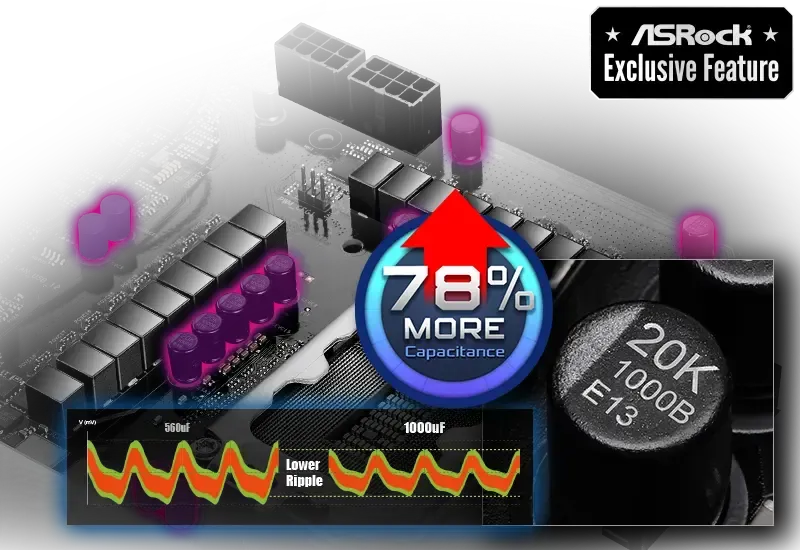
20K Black Capacitors Hold 1000uF For 20,000 Hours
Upgraded 20K Black capacitors carry a 20,000 hour lifespan and raise capacitance from 560uF to 1000uF. Greater energy storage supports high loads, reduced ripple smooths power fluctuations, and the more consistent output keeps delivery steady. The combination is aimed at long-term stability and durability rather than a single benchmark run.
20K Black Capacitors Hold 1000uF For 20,000 Hours
Upgraded 20K Black capacitors carry a 20,000 hour lifespan and raise capacitance from 560uF to 1000uF. Greater energy storage supports high loads, reduced ripple smooths power fluctuations, and the more consistent output keeps delivery steady. The combination is aimed at long-term stability and durability rather than a single benchmark run.
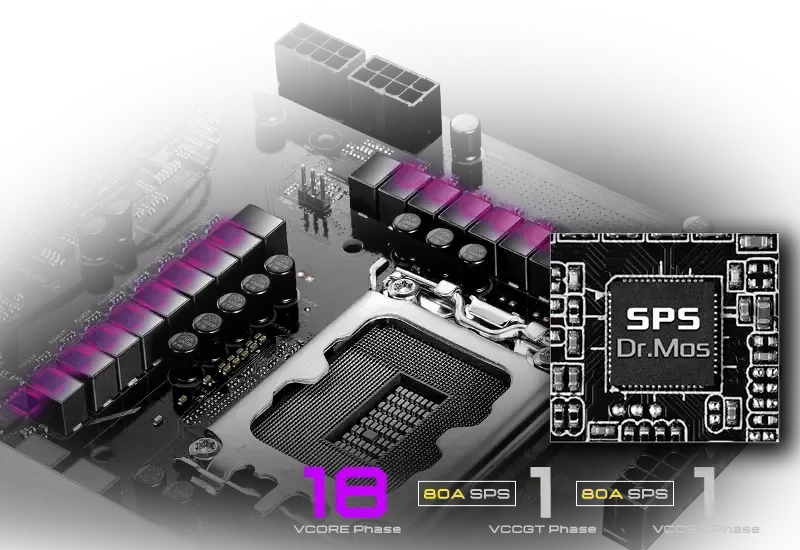
18+1+1+1+1 Power Phases With Smart Power Stage
The VRM runs an 18+1+1+1+1 power phase layout for smoother power delivery and better overclocking capability, designed to hold stability and low temperatures through intense workloads. SPS (Smart Power Stage) brings in Dr.MOS technology to monitor current and temperature, which is what converts extra phases into usable overclocking potential.
18+1+1+1+1 Power Phases With Smart Power Stage
The VRM runs an 18+1+1+1+1 power phase layout for smoother power delivery and better overclocking capability, designed to hold stability and low temperatures through intense workloads. SPS (Smart Power Stage) brings in Dr.MOS technology to monitor current and temperature, which is what converts extra phases into usable overclocking potential.
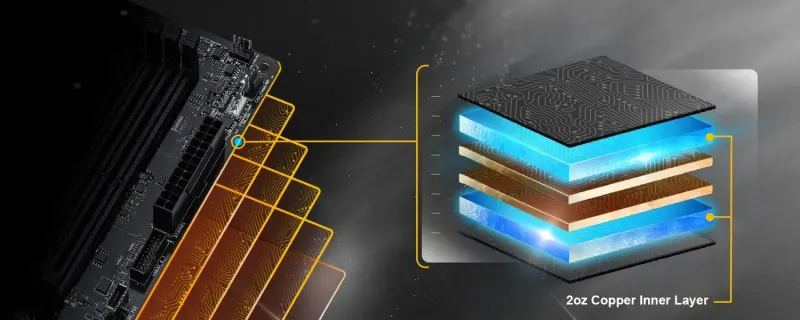
2oz Copper PCB Improves Signal And Heat Spread
Two-ounce copper inner layers give the PCB better signal stability and more efficient heat dissipation. Doubling the copper weight spreads heat across the board instead of concentrating it near the power stages, producing lower temperatures and greater energy efficiency during overclocking and other high-performance tasks.
2oz Copper PCB Improves Signal And Heat Spread
Two-ounce copper inner layers give the PCB better signal stability and more efficient heat dissipation. Doubling the copper weight spreads heat across the board instead of concentrating it near the power stages, producing lower temperatures and greater energy efficiency during overclocking and other high-performance tasks.
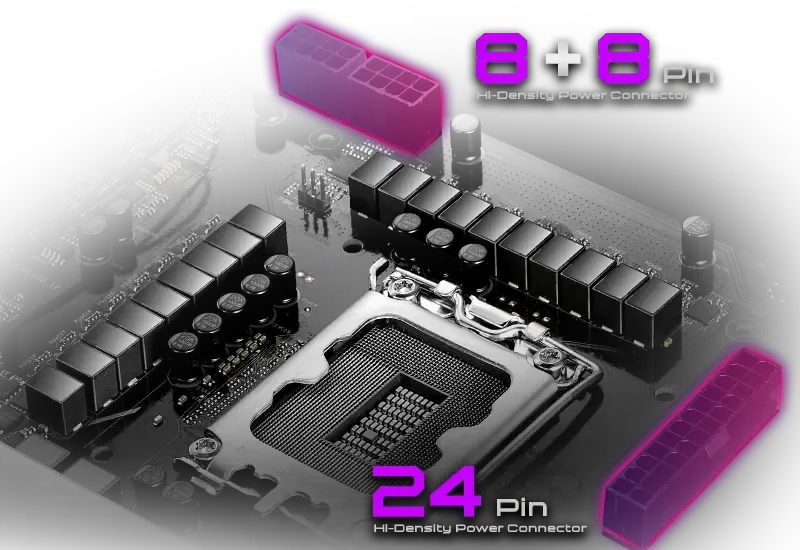
Hi-Density Power Connectors Handle Over 20% More Current
High-current CPU power needs a connector to match, and the Hi-Density Power Connectors offer more than 20% better current handling than traditional connectors. That margin is what keeps the system stable during overclocking and heavy workloads, since the socket at the end of the 12V cable is often the first component to run warm.
Hi-Density Power Connectors Handle Over 20% More Current
High-current CPU power needs a connector to match, and the Hi-Density Power Connectors offer more than 20% better current handling than traditional connectors. That margin is what keeps the system stable during overclocking and heavy workloads, since the socket at the end of the 12V cable is often the first component to run warm.
PCIe Gen5 Blazing M.2 Reaches 128Gb/s
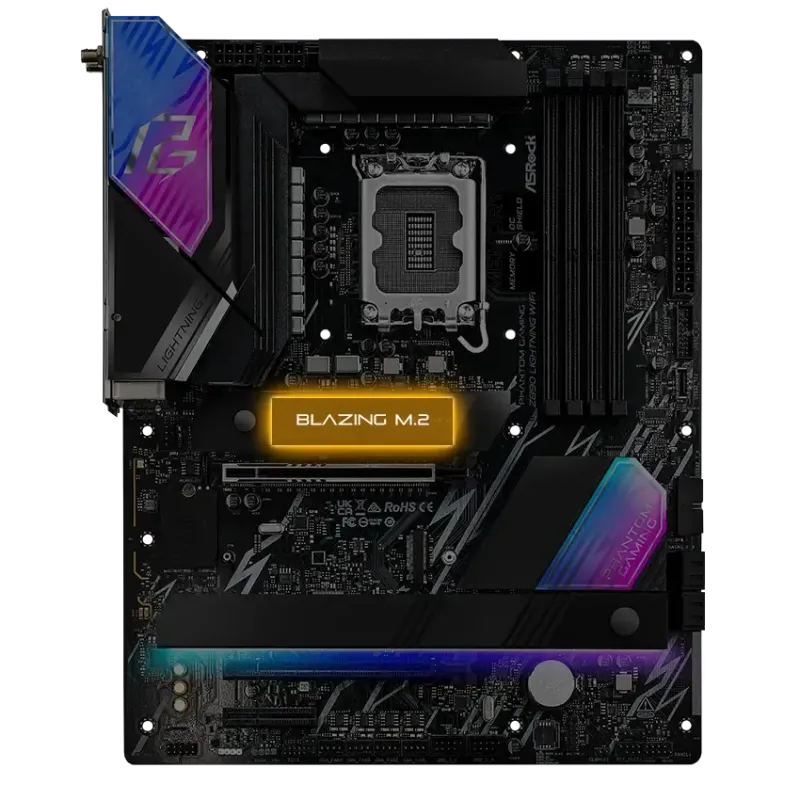
The Blazing M.2 slot supports the PCI Express 5.0 standard with twice the bandwidth of the previous generation, achieving 128Gb/s transfer speeds. Reserving that slot for a Gen5 drive is the straightforward way to make the storage subsystem match the rest of a Core Ultra Series 2 build as ultrafast SSDs become common.
PCIe Gen5 Blazing M.2 Reaches 128Gb/s
The Blazing M.2 slot supports the PCI Express 5.0 standard with twice the bandwidth of the previous generation, achieving 128Gb/s transfer speeds. Reserving that slot for a Gen5 drive is the straightforward way to make the storage subsystem match the rest of a Core Ultra Series 2 build as ultrafast SSDs become common.
Hyper M.2 Gen4 x4 Runs PCIe 4.0 SSDs
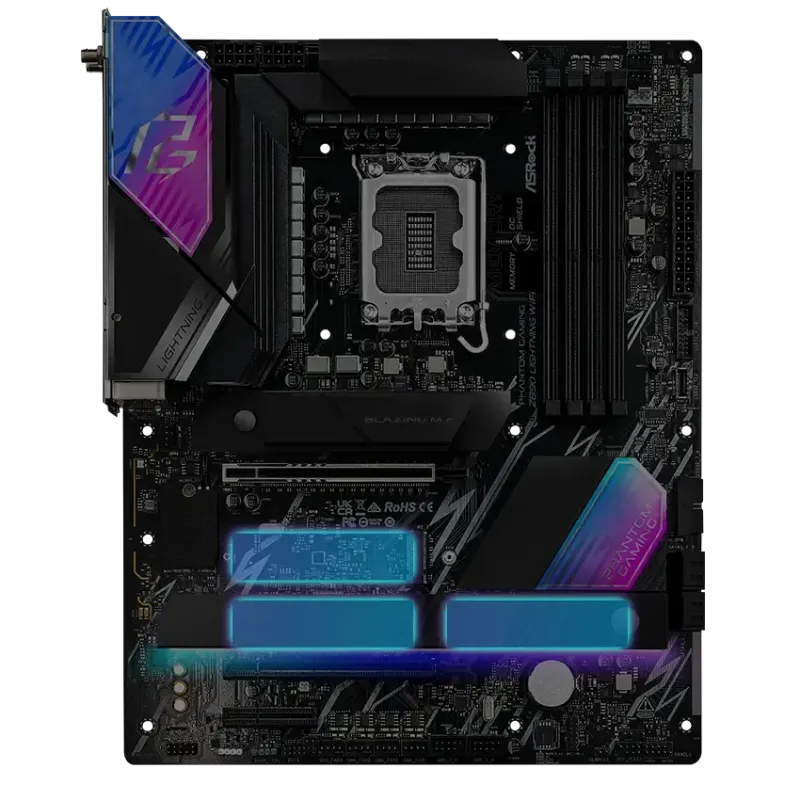
Hyper M.2 Gen4 x4 supports PCI Express 4.0 SSDs at twice the speed of the previous generation. Most drives on the market are still Gen4, so this is the slot that will carry a game library or a working scratch drive, with quick data transfer for both gaming and professional workloads.
Hyper M.2 Gen4 x4 Runs PCIe 4.0 SSDs
Hyper M.2 Gen4 x4 supports PCI Express 4.0 SSDs at twice the speed of the previous generation. Most drives on the market are still Gen4, so this is the slot that will carry a game library or a working scratch drive, with quick data transfer for both gaming and professional workloads.
XXL M.2 Heatsink Uses A Toolless Quick-Release
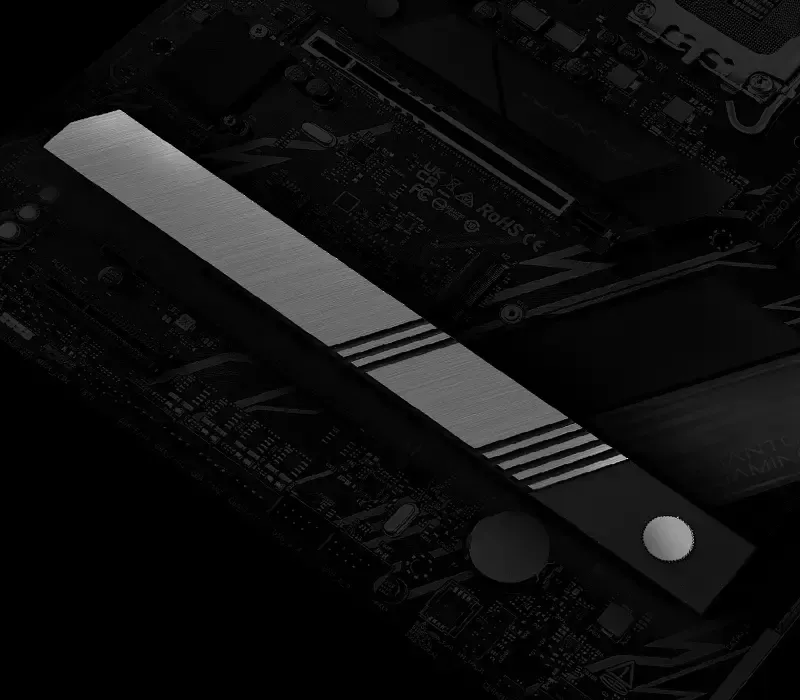
A large aluminium alloy M.2 heatsink with a toolless quick-release design makes SSD installation straightforward and keeps the drive cool once fitted. The heatsink is what protects sustained performance during intense workloads, where an uncooled M.2 drive would otherwise slow down partway through a long write.
XXL M.2 Heatsink Uses A Toolless Quick-Release
A large aluminium alloy M.2 heatsink with a toolless quick-release design makes SSD installation straightforward and keeps the drive cool once fitted. The heatsink is what protects sustained performance during intense workloads, where an uncooled M.2 drive would otherwise slow down partway through a long write.
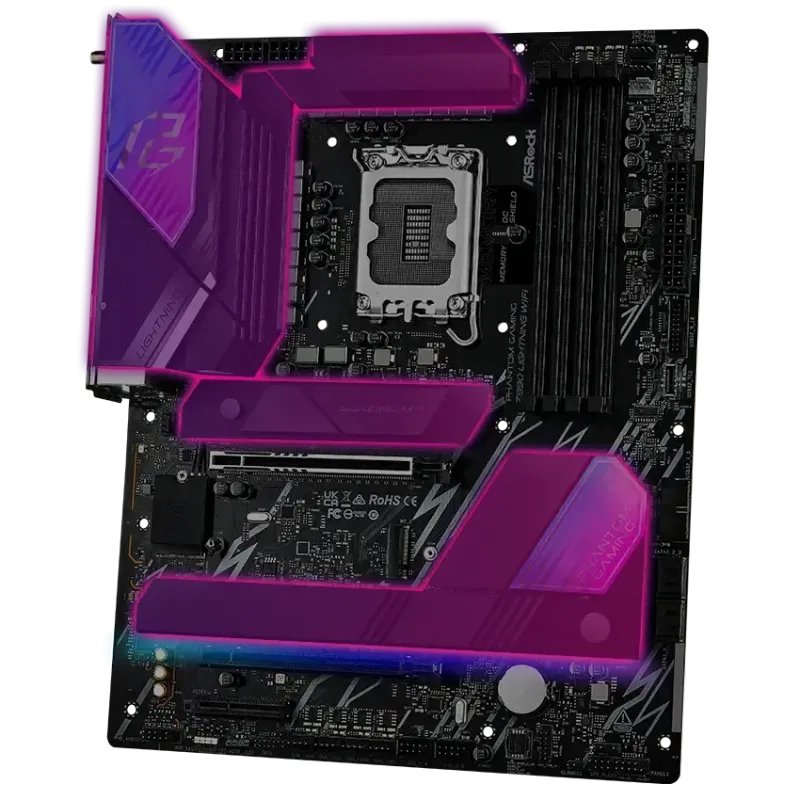
Optimized Aluminium Heatsink For Thermal Management
An optimized aluminium heatsink design handles thermal management across the board. It matters most during heavy gaming and overclocking, when the power stages are working hardest and heat is what limits how long a clock speed can be held. Pulling that heat away is what keeps the system stable through a long session.
Optimized Aluminium Heatsink For Thermal Management
An optimized aluminium heatsink design handles thermal management across the board. It matters most during heavy gaming and overclocking, when the power stages are working hardest and heat is what limits how long a clock speed can be held. Pulling that heat away is what keeps the system stable through a long session.
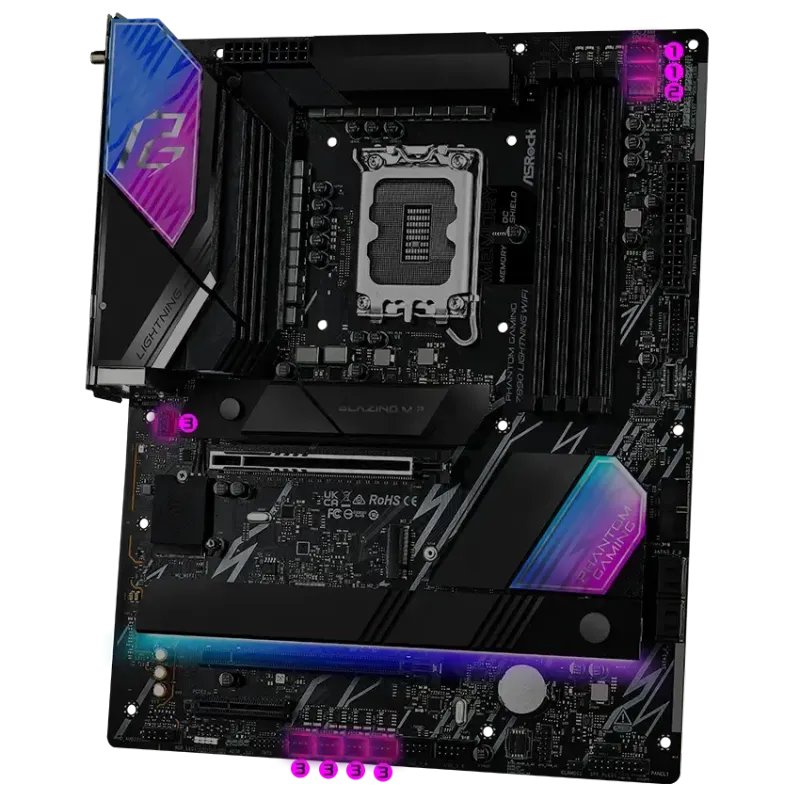
Fan Headers Auto-Detect Mode For Quieter Running
Automatic detection of fan mode lets the board apply precise fan speed control for quieter operation, whichever type of fan is plugged in. The header set covers CPU, AIO Pump and Chassis fans, so an air cooler, an all-in-one liquid cooler and the case fans each get an appropriate connector.
Fan Headers Auto-Detect Mode For Quieter Running
Automatic detection of fan mode lets the board apply precise fan speed control for quieter operation, whichever type of fan is plugged in. The header set covers CPU, AIO Pump and Chassis fans, so an air cooler, an all-in-one liquid cooler and the case fans each get an appropriate connector.
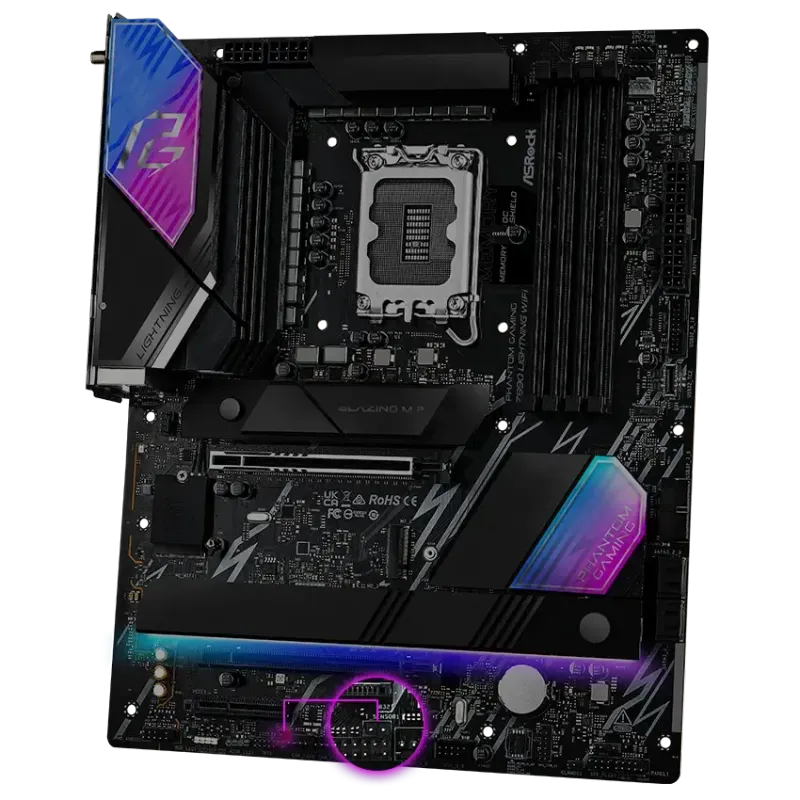
Thermistor Header Enables Precise Temperature Monitoring
The thermistor cable and header enable precise temperature monitoring from a point of your choosing on the build. Readings from it feed thermal management that you customise through fan tuning and BIOS settings, which is useful when the temperature that actually matters is not one the onboard sensors report.
Thermistor Header Enables Precise Temperature Monitoring
The thermistor cable and header enable precise temperature monitoring from a point of your choosing on the build. Readings from it feed thermal management that you customise through fan tuning and BIOS settings, which is useful when the temperature that actually matters is not one the onboard sensors report.
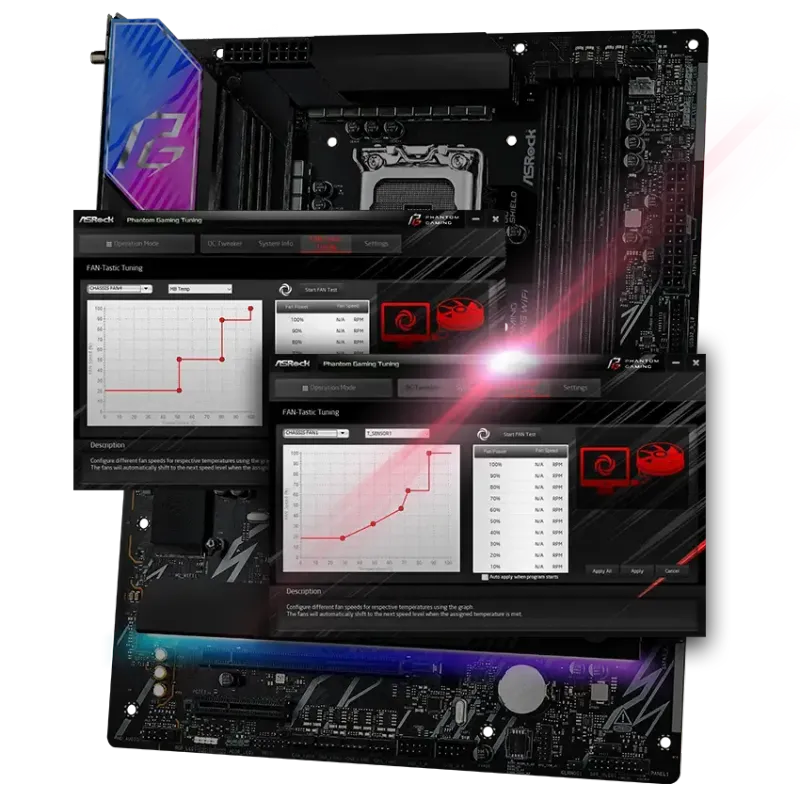
Fan-Tastic Tuning Auto-Detects And Adjusts Fan Curves
Fan-Tastic Tuning auto-detects each fan and lets you adjust its curve through a visual interface. Dragging points on a graph is a far quicker way to balance cooling performance against noise reduction than typing duty percentages, and the settings apply to the fans already wired to the board.
Fan-Tastic Tuning Auto-Detects And Adjusts Fan Curves
Fan-Tastic Tuning auto-detects each fan and lets you adjust its curve through a visual interface. Dragging points on a graph is a far quicker way to balance cooling performance against noise reduction than typing duty percentages, and the settings apply to the fans already wired to the board.
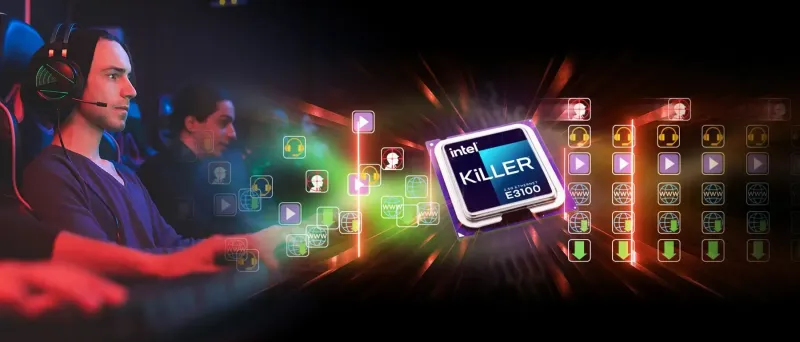
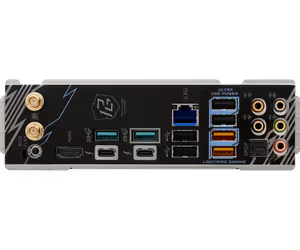
Killer Ethernet E3100 Delivers 2.5 Gbps Wired Networking
The Killer E3100 2.5 Gbps Ethernet controller is aimed at competitive gamers and power users. Beyond raw link speed it applies advanced detection and prioritization to the traffic crossing it, delivering optimized network performance for gaming and multimedia applications rather than treating every packet on the connection the same way.
Killer Ethernet E3100 Delivers 2.5 Gbps Wired Networking
The Killer E3100 2.5 Gbps Ethernet controller is aimed at competitive gamers and power users. Beyond raw link speed it applies advanced detection and prioritization to the traffic crossing it, delivering optimized network performance for gaming and multimedia applications rather than treating every packet on the connection the same way.
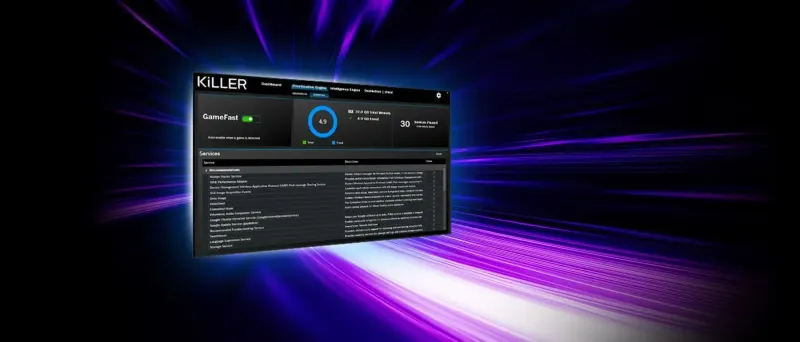
Killer GAMEFAST Frees CPU And Memory Resources
Killer GAMEFAST technology boosts the gaming experience by freeing CPU and memory resources that background processes would otherwise hold. It is enabled in system settings and then optimises gaming traffic automatically, while remaining fully customisable so you can adjust network priorities and stop processes through its controls.
Killer GAMEFAST Frees CPU And Memory Resources
Killer GAMEFAST technology boosts the gaming experience by freeing CPU and memory resources that background processes would otherwise hold. It is enabled in system settings and then optimises gaming traffic automatically, while remaining fully customisable so you can adjust network priorities and stop processes through its controls.
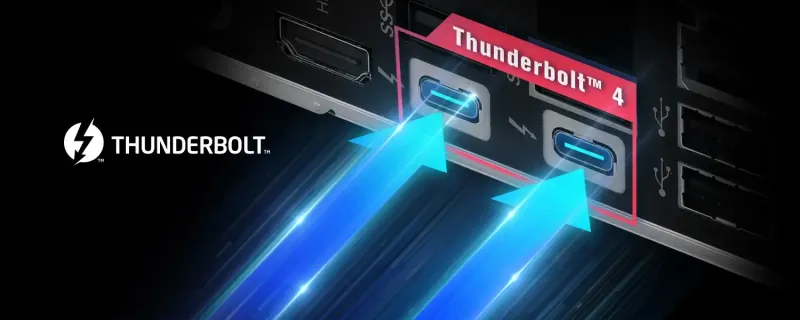
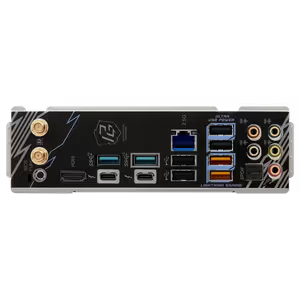
Thunderbolt 4 Type-C Runs At 40Gbps
Thunderbolt 4 provides 40Gbps transfer rates through a single reversible Type-C connector. The same port connects external displays, Thunderbolt devices and USB peripherals, carrying high-speed data and display signals together, which keeps one cable doing the work that would otherwise need several separate connections.
Thunderbolt 4 Type-C Runs At 40Gbps
Thunderbolt 4 provides 40Gbps transfer rates through a single reversible Type-C connector. The same port connects external displays, Thunderbolt devices and USB peripherals, carrying high-speed data and display signals together, which keeps one cable doing the work that would otherwise need several separate connections.
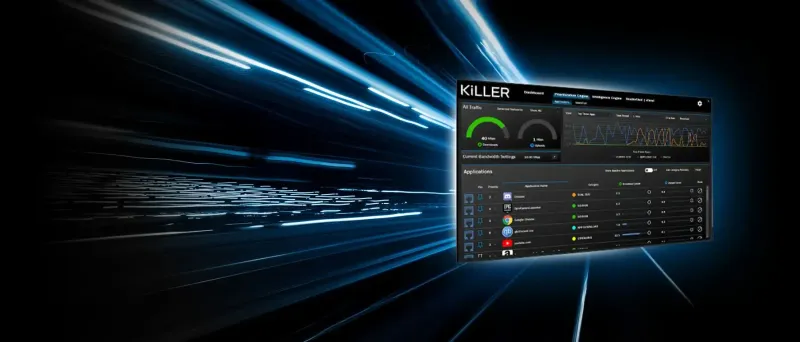
Killer Prioritization Engine Minimises In-Game Latency
The Killer Prioritization Engine puts gaming traffic first to hold in-game latency as low as possible, and optimises the connection for streaming and entertainment so buffering is reduced. Network rules are customisable through the Killer Intelligence Center, which is where you decide what gets priority when the household connection is busy.
Killer Prioritization Engine Minimises In-Game Latency
The Killer Prioritization Engine puts gaming traffic first to hold in-game latency as low as possible, and optimises the connection for streaming and entertainment so buffering is reduced. Network rules are customisable through the Killer Intelligence Center, which is where you decide what gets priority when the household connection is busy.
Lightning Gaming Ports Keep Peripheral Latency Minimal
Lightning Gaming Ports are built for hardcore gamers and enthusiasts, giving gaming mice, keyboards and other peripherals a high-speed connection with minimal latency and fast responses. A reliable connection on those ports is what keeps input consistent through a match, which is where a shared, busy USB controller usually shows its limits.
Lightning Gaming Ports Keep Peripheral Latency Minimal
Lightning Gaming Ports are built for hardcore gamers and enthusiasts, giving gaming mice, keyboards and other peripherals a high-speed connection with minimal latency and fast responses. A reliable connection on those ports is what keeps input consistent through a match, which is where a shared, busy USB controller usually shows its limits.
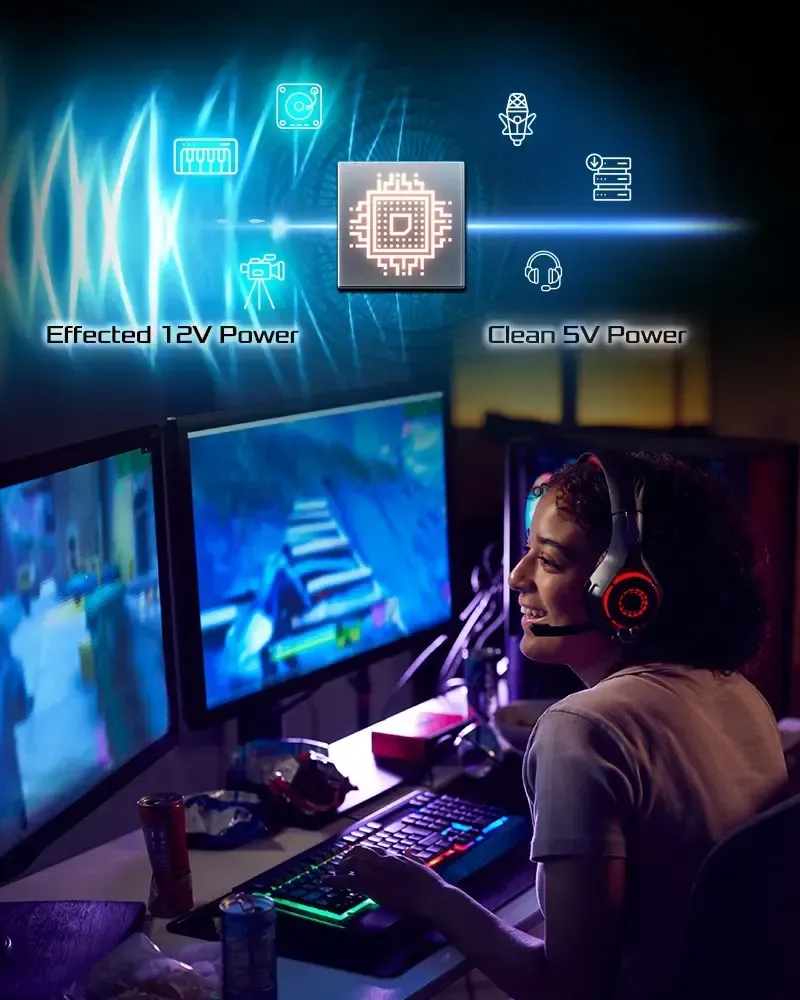
Ultra USB Power Improves Stability And Sound Quality
Ultra USB Power supports ultra-stable power delivery to connected devices and brings enhanced sound quality with it. Lower noise on the USB rail matters for headsets and audio interfaces, and higher energy efficiency during data transfer and device operation means the port behaves the same whether it is idle or driving a bus-powered drive.
Ultra USB Power Improves Stability And Sound Quality
Ultra USB Power supports ultra-stable power delivery to connected devices and brings enhanced sound quality with it. Lower noise on the USB rail matters for headsets and audio interfaces, and higher energy efficiency during data transfer and device operation means the port behaves the same whether it is idle or driving a bus-powered drive.
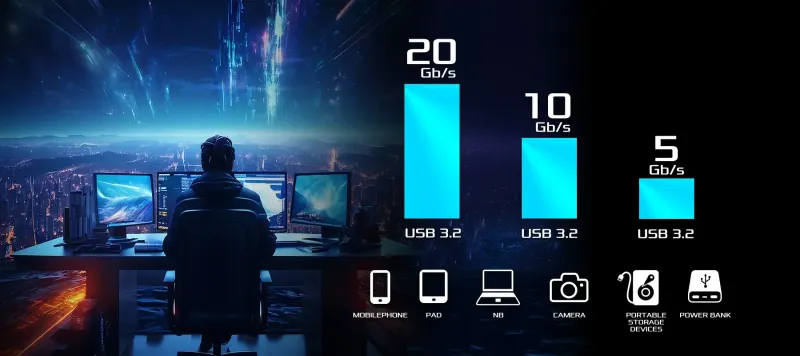
Front Panel USB 3.2 Gen2x2 Type-C Header At 20Gbps
The USB 3.2 Gen2x2 Type-C header supports up to 20Gbps data transfer rates, double the previous generation. Wired to a case's front Type-C port, it makes the fastest connection on the machine the one you can actually reach, and the reversible Type-C design connects external drives and peripherals either way up.
Front Panel USB 3.2 Gen2x2 Type-C Header At 20Gbps
The USB 3.2 Gen2x2 Type-C header supports up to 20Gbps data transfer rates, double the previous generation. Wired to a case's front Type-C port, it makes the fastest connection on the machine the one you can actually reach, and the reversible Type-C design connects external drives and peripherals either way up.
FAQ
Frequently Asked Questions
Everything you need to know about this product
It supports Intel Core Ultra processors (Series 2) through the LGA 1851 socket.
It has four DDR5 DIMM slots and supports up to 256GB of high-speed memory.
It is built on the advanced Z890 chipset in an ATX form factor, which fits most gaming PC cases.
It uses the Killer Ethernet E3100 2.5 Gbps controller with advanced traffic detection and prioritization.
It frees CPU and memory resources for gaming and can be enabled in system settings to optimise gaming traffic automatically.
Yes. The Killer Prioritization Engine puts gaming traffic first, and network rules are customisable through the Killer Intelligence Center.
Yes. The Blazing M.2 slot supports PCI Express 5.0 with twice the bandwidth of the previous generation, at 128Gb/s.
Hyper M.2 Gen4 x4 supports PCI Express 4.0 SSDs at twice the speed of the previous generation.
Thunderbolt 4 achieves 40Gbps transfer rates over a single reversible Type-C connector for displays, Thunderbolt devices and USB peripherals.
The USB 3.2 Gen2x2 Type-C header supports up to 20Gbps, doubling previous generation speeds.
The VRM uses an 18+1+1+1+1 power phase design with SPS (Smart Power Stage) Dr.MOS components.
They offer more than 20% better current handling than traditional connectors, keeping the system stable during overclocking and heavy workloads.

AI-Generated Content:These FAQs are generated by an automated AI system and may contain inaccuracies or omissions. Evetech makes no warranties, express or implied, regarding their completeness or reliability. For definitive information, please refer to the manufacturer's official specifications.
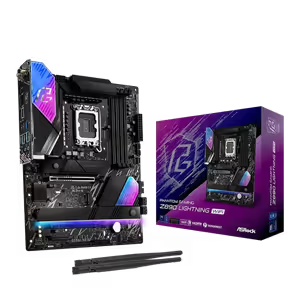
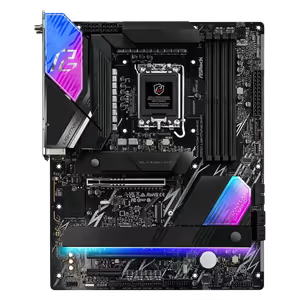
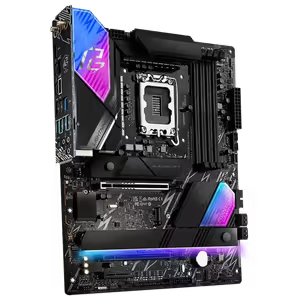
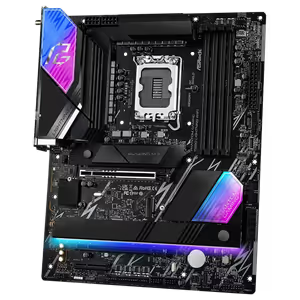
Please Note: Product images are for illustrative purposes only and may differ from the actual product.
Choose your
own PC
Hand-pick every part with live stock, compatibility, and instant pricing.
Try the new builderPrice Inc. Vat
R 6,999
Save R 1,000
ListR 7,999
6999Free Delivery
Qty:
In Stock with Evetech
Choose your
own PC
Hand-pick every part with live stock, compatibility, and instant pricing.
Try the new builderASRock Phantom Gaming Z890 Lightning Intel Motherboard