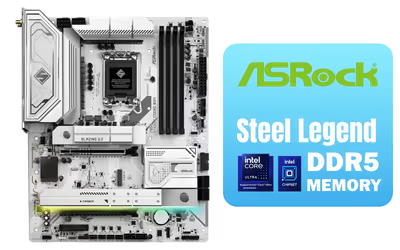
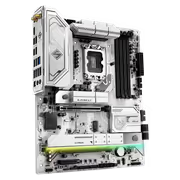
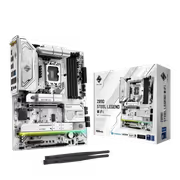
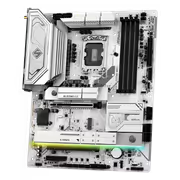
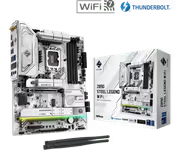
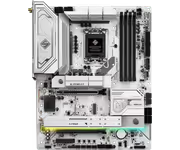
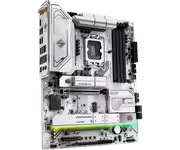
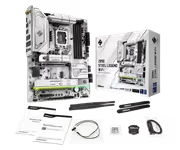
ASRock Z890 Steel Legend Intel Motherboard
ASRock Z890 Steel Legend WiFi Intel Motherboard / ATX Form Factor / Supports Intel® Core™ Ultra Processors (Series 2) / LGA 1851 CPU Socket / 4x DDR5 DIMM Supporting up to 256GB / 90-MXBPF0-A0UAYZ / 90-MXBPF0-A0UAYZ / [+] ASRock Intel Motherboard Z890 & B860 Game Pack Promotion
3 Years Local Warranty
Model No : ASROCK 90-MXBPF0-A0UAYZ
Price Inc. Vat
R 6,699
Save R 800
ListR 7,499
6699Change Quantity:
In Stock with Evetech

ASRock Z890 Steel Legend WiFi ATX Motherboard - LGA 1851, DDR5
ASRock Z890 Steel Legend WiFi For Intel Core Ultra
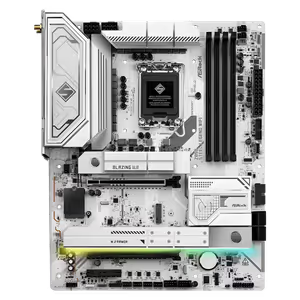
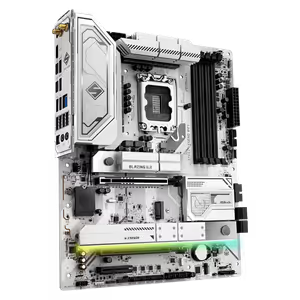
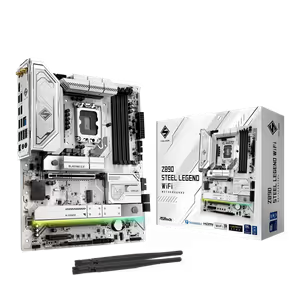
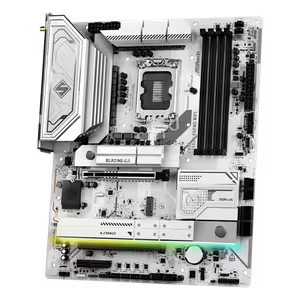
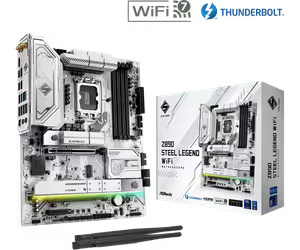
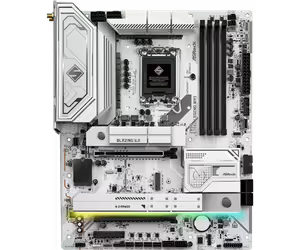
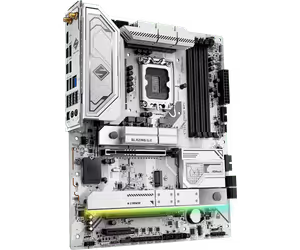
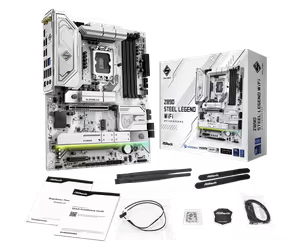
The ASRock Z890 Steel Legend WiFi is an ATX Intel motherboard built around the LGA 1851 socket for Intel Core Ultra processors (Series 2). Four DDR5 DIMM slots take up to 256GB of memory, giving gaming and multitasking builds a long upgrade runway. Integrated WiFi removes the need for extra cabling, and the board pairs comprehensive connectivity with overclocking capability for gamers, content creators and PC enthusiasts.
ASRock Z890 Steel Legend WiFi For Intel Core Ultra
The ASRock Z890 Steel Legend WiFi is an ATX Intel motherboard built around the LGA 1851 socket for Intel Core Ultra processors (Series 2). Four DDR5 DIMM slots take up to 256GB of memory, giving gaming and multitasking builds a long upgrade runway. Integrated WiFi removes the need for extra cabling, and the board pairs comprehensive connectivity with overclocking capability for gamers, content creators and PC enthusiasts.
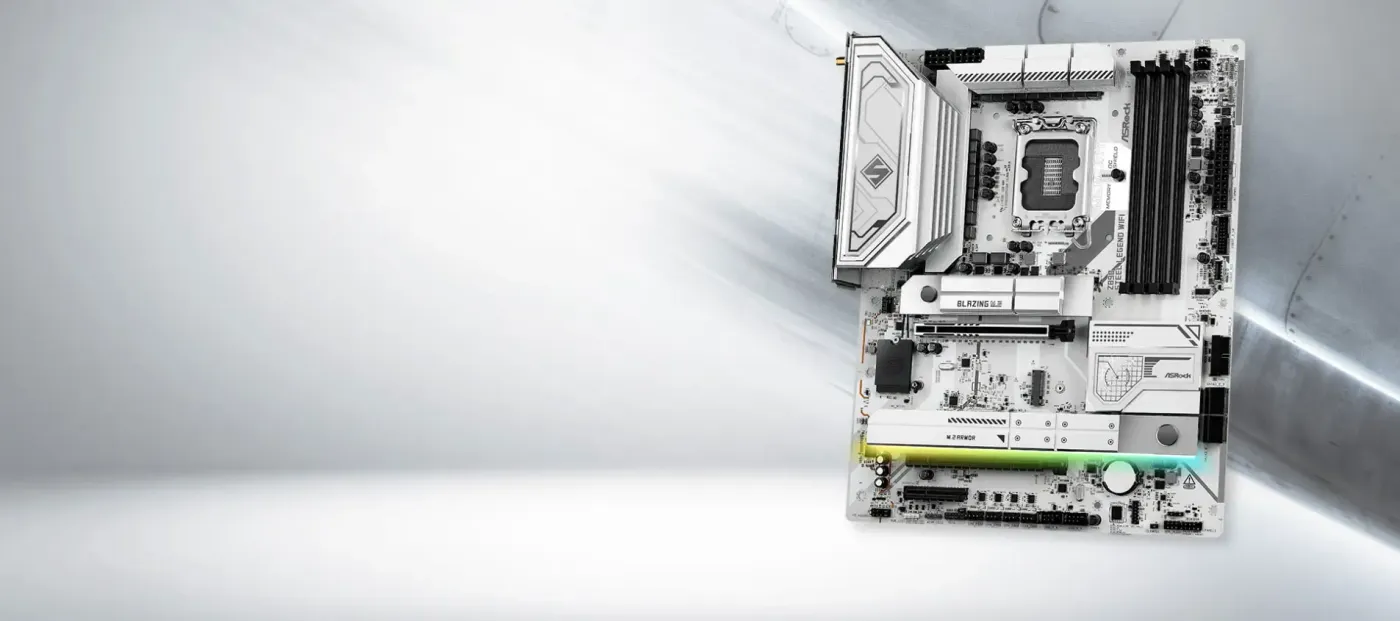
Steel Legend Series Built For Durability And Looks
The Steel Legend series is built on rock-solid durability paired with striking aesthetics. ASRock engineers the range for demanding users and mainstream enthusiasts, fitting it with a premium array of materials and components so performance stays dependable and stable under sustained load. That material choice is what separates the Steel Legend line from a basic board.
Steel Legend Series Built For Durability And Looks
The Steel Legend series is built on rock-solid durability paired with striking aesthetics. ASRock engineers the range for demanding users and mainstream enthusiasts, fitting it with a premium array of materials and components so performance stays dependable and stable under sustained load. That material choice is what separates the Steel Legend line from a basic board.
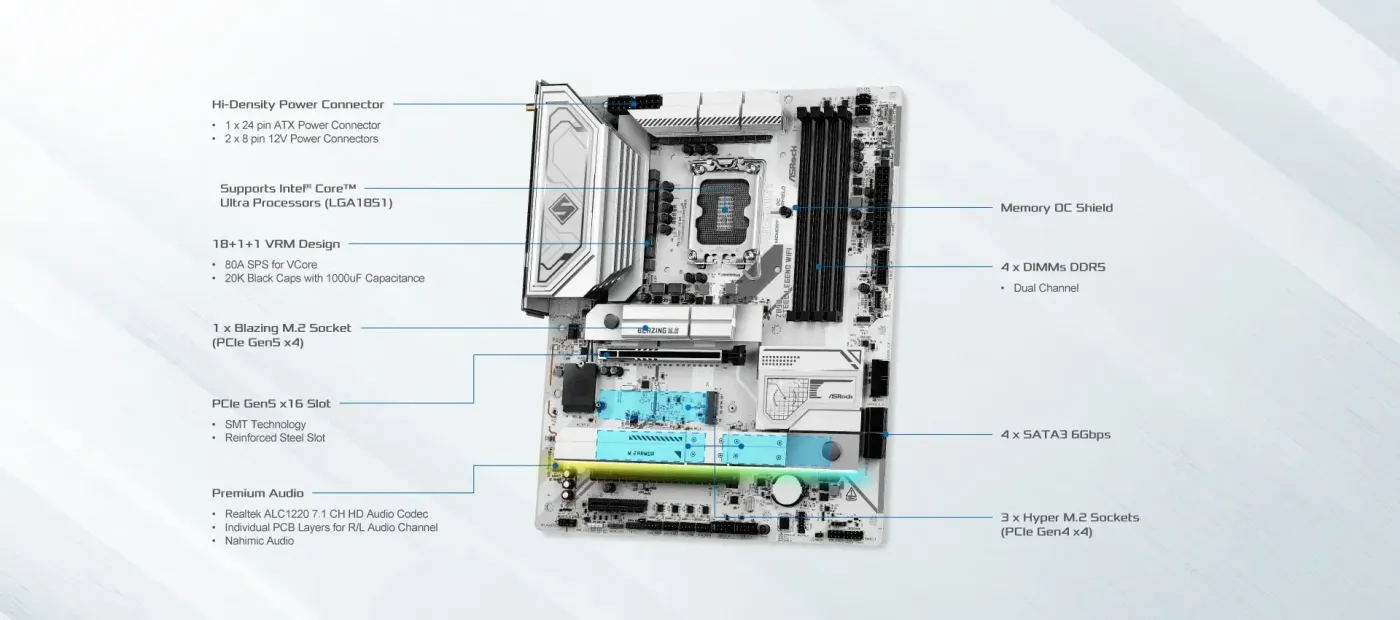
LGA 1851 Socket Runs Intel Core Ultra Series 2
The LGA 1851 CPU socket carries Intel Core Ultra processors (Series 2), the platform this board was designed around. ASRock backs that socket with power delivery and cooling hardware aimed at rapid speeds and exceptional stability, so the processor holds performance instead of backing off under load. It suits a fresh build and a drop-in upgrade equally.
LGA 1851 Socket Runs Intel Core Ultra Series 2
The LGA 1851 CPU socket carries Intel Core Ultra processors (Series 2), the platform this board was designed around. ASRock backs that socket with power delivery and cooling hardware aimed at rapid speeds and exceptional stability, so the processor holds performance instead of backing off under load. It suits a fresh build and a drop-in upgrade equally.
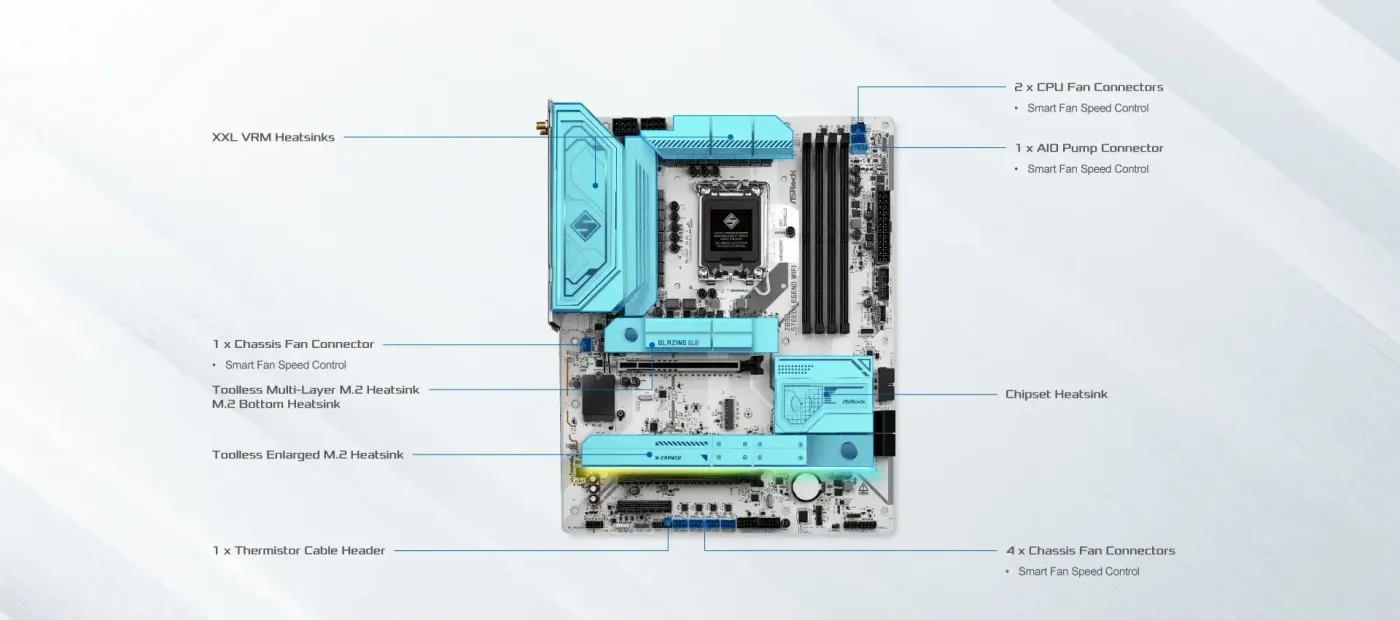
Four DDR5 DIMM Slots Support Up To 256GB
Four DDR5 DIMM slots accommodate up to 256GB of memory in total. That ceiling covers high-performance gaming now and leaves headroom for memory-hungry work such as content creation and heavy multitasking later, which is what makes the board a long-term platform rather than a single-season purchase.
Four DDR5 DIMM Slots Support Up To 256GB
Four DDR5 DIMM slots accommodate up to 256GB of memory in total. That ceiling covers high-performance gaming now and leaves headroom for memory-hungry work such as content creation and heavy multitasking later, which is what makes the board a long-term platform rather than a single-season purchase.
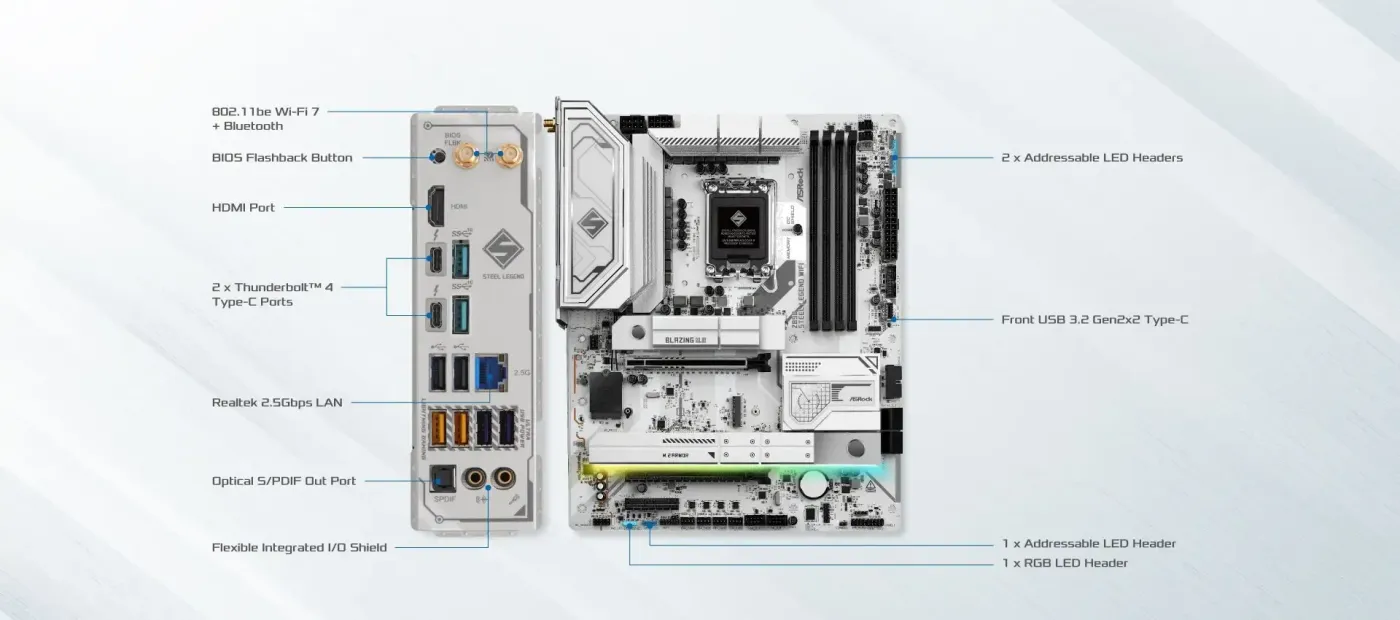
ATX Form Factor Fits A Wide Range Of Cases
The ATX form factor is compatible with a wide range of gaming cases, so mounting points and rear I/O line up in most mid-tower and full-tower chassis. Whether you are upgrading an existing machine or assembling a new build, that standard layout keeps installation predictable and supplies what the rest of the system needs to come together.
ATX Form Factor Fits A Wide Range Of Cases
The ATX form factor is compatible with a wide range of gaming cases, so mounting points and rear I/O line up in most mid-tower and full-tower chassis. Whether you are upgrading an existing machine or assembling a new build, that standard layout keeps installation predictable and supplies what the rest of the system needs to come together.
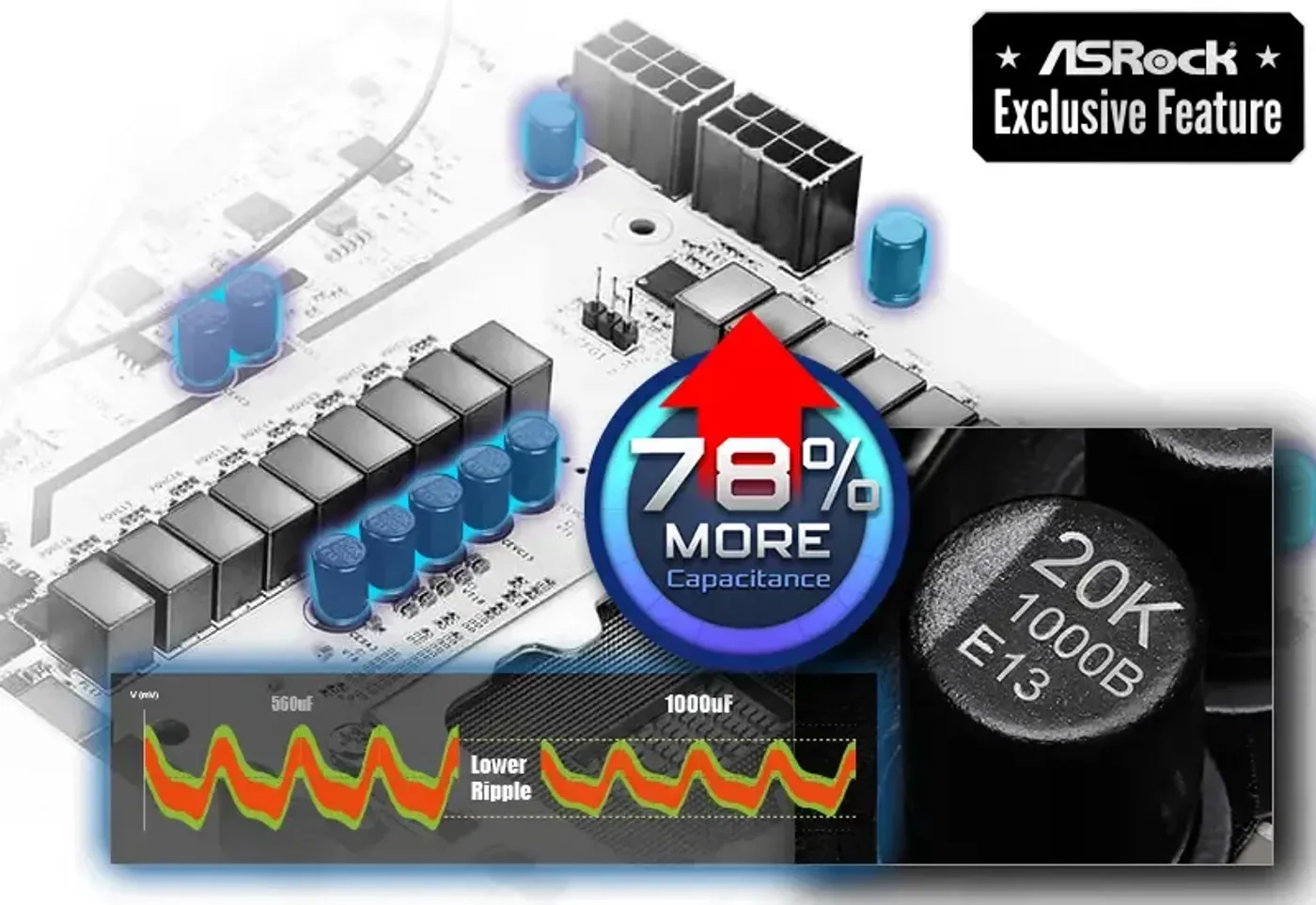
20K Black Capacitors Last 20,000 Hours At 1000uF
The upgraded 20K Black capacitor extends lifespan to 20,000 hours and raises capacitance from 560uF to 1000uF. Higher capacitance improves charge storage under heavy loads, lower ripple reduces output fluctuations, and a more stable output current holds power delivery steady with minimal voltage variance. Together those gains lift reliability and keep performance consistent.
20K Black Capacitors Last 20,000 Hours At 1000uF
The upgraded 20K Black capacitor extends lifespan to 20,000 hours and raises capacitance from 560uF to 1000uF. Higher capacitance improves charge storage under heavy loads, lower ripple reduces output fluctuations, and a more stable output current holds power delivery steady with minimal voltage variance. Together those gains lift reliability and keep performance consistent.
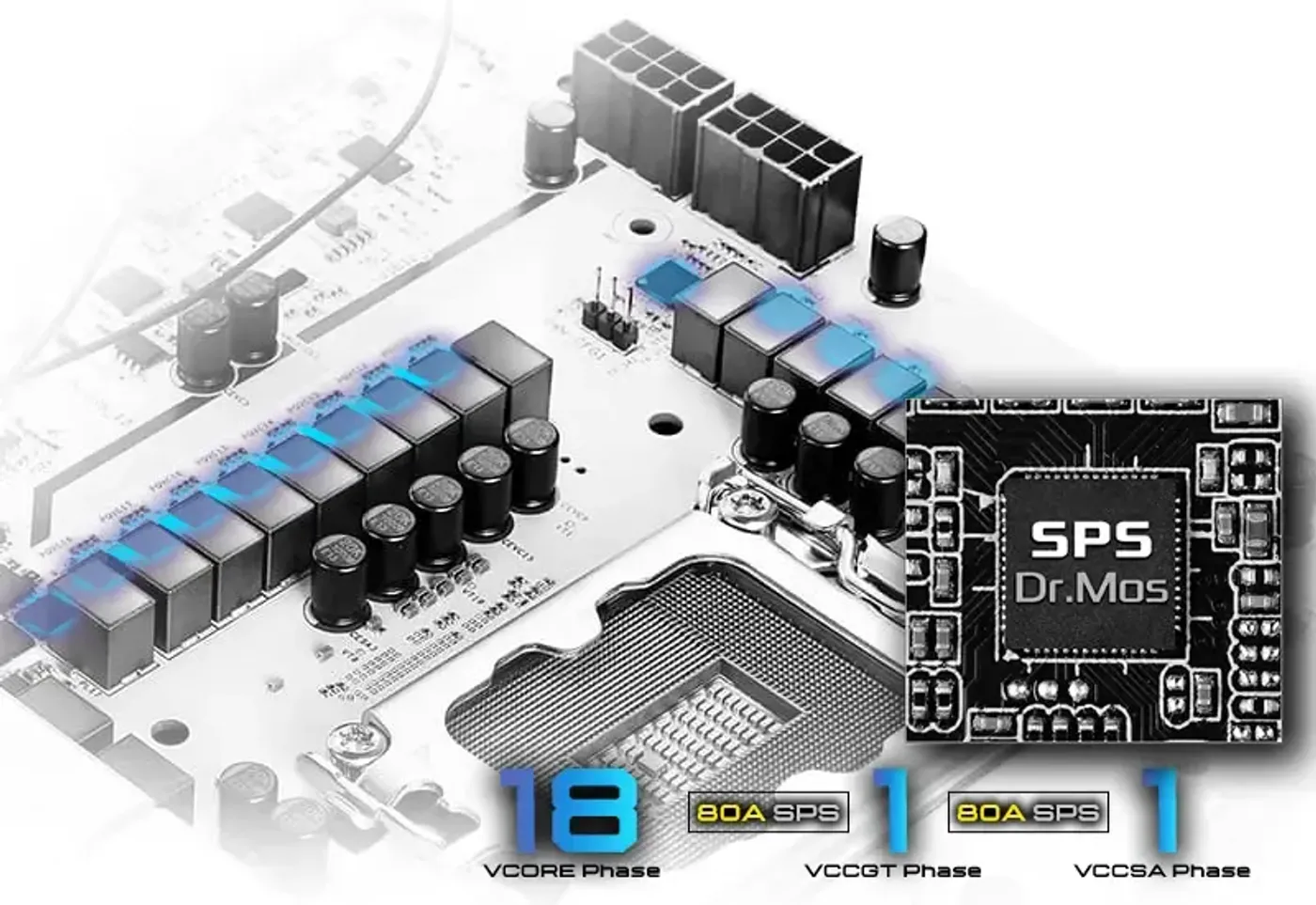
18+1+1+1+1 Power Phases With Dr. MOS Smart Power Stage
An 18+1+1+1+1 power phase architecture feeds the CPU through top-grade components, which is what enables strong overclocking while temperatures stay low. Each phase uses Dr. MOS with the latest SPS (Smart Power Stage) technology, monitoring current and temperature per phase so the power reaching the processor stays stable as the workload swings.
18+1+1+1+1 Power Phases With Dr. MOS Smart Power Stage
An 18+1+1+1+1 power phase architecture feeds the CPU through top-grade components, which is what enables strong overclocking while temperatures stay low. Each phase uses Dr. MOS with the latest SPS (Smart Power Stage) technology, monitoring current and temperature per phase so the power reaching the processor stays stable as the workload swings.
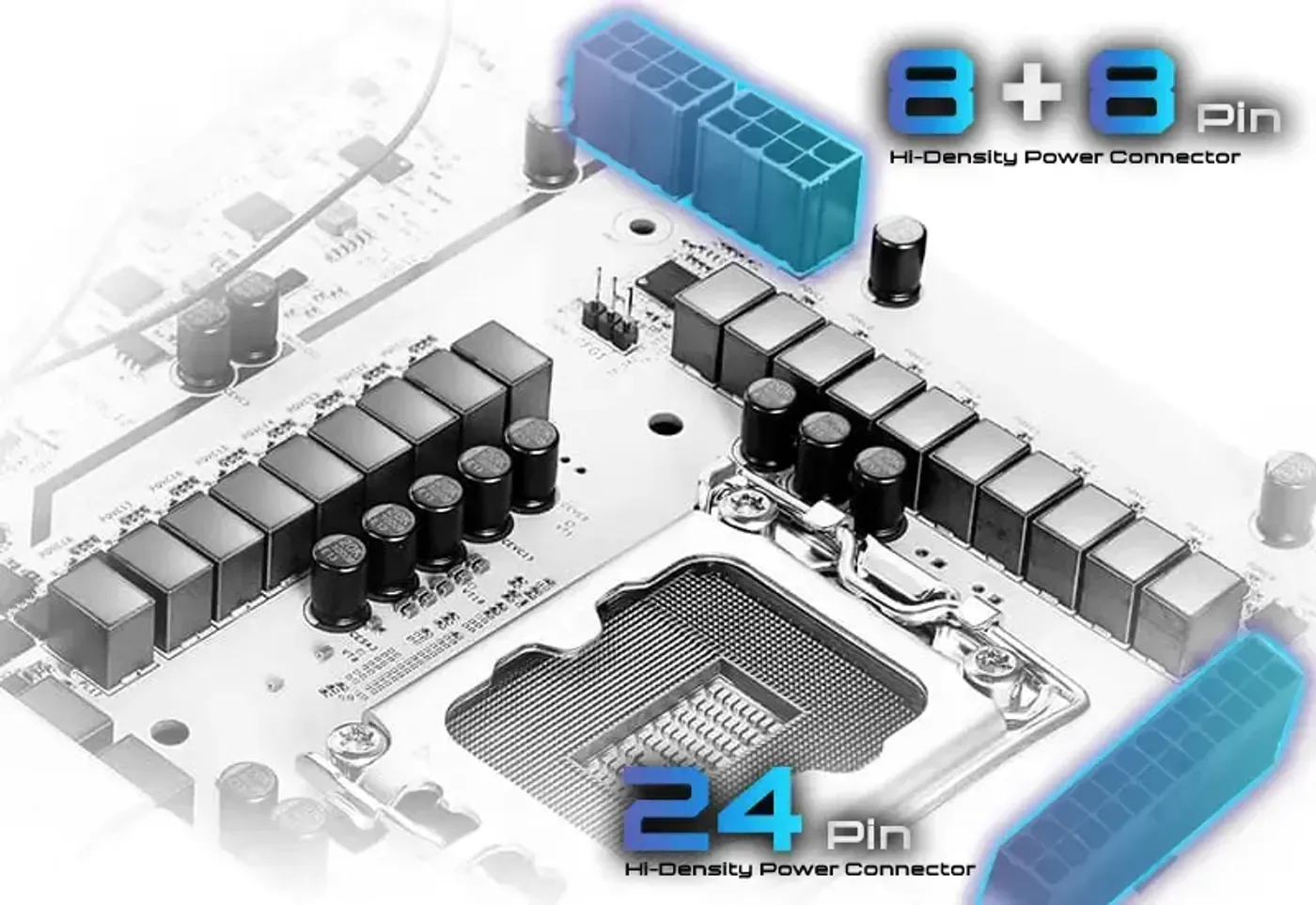
2oz Copper Inner Layers Lower Board Temperatures
Two-ounce copper inner layers give the PCB stable signal pathways and even power distribution. The additional copper carries heat away from the traces, which shows up as lower temperatures and improved energy efficiency once the board is pushed during overclocking. It is a structural advantage built into the board rather than a setting you switch on.
2oz Copper Inner Layers Lower Board Temperatures
Two-ounce copper inner layers give the PCB stable signal pathways and even power distribution. The additional copper carries heat away from the traces, which shows up as lower temperatures and improved energy efficiency once the board is pushed during overclocking. It is a structural advantage built into the board rather than a setting you switch on.
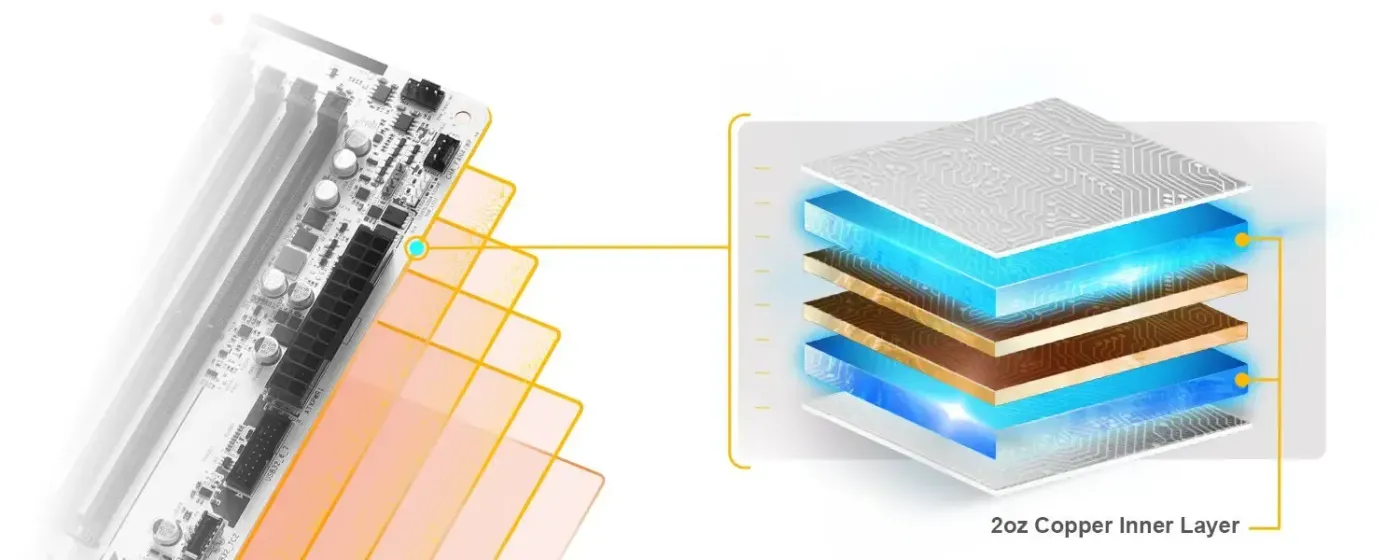
High-Density Power Connectors Carry Greater Current
Overclocking demands higher current, and ASRock's High-Density Power Connectors are engineered to handle greater currents than traditional CPU and ATX connectors. That headroom keeps system operation stable through long, intense overclocking sessions, so the connector itself is not the limiting link between the power supply and the VRM.
High-Density Power Connectors Carry Greater Current
Overclocking demands higher current, and ASRock's High-Density Power Connectors are engineered to handle greater currents than traditional CPU and ATX connectors. That headroom keeps system operation stable through long, intense overclocking sessions, so the connector itself is not the limiting link between the power supply and the VRM.
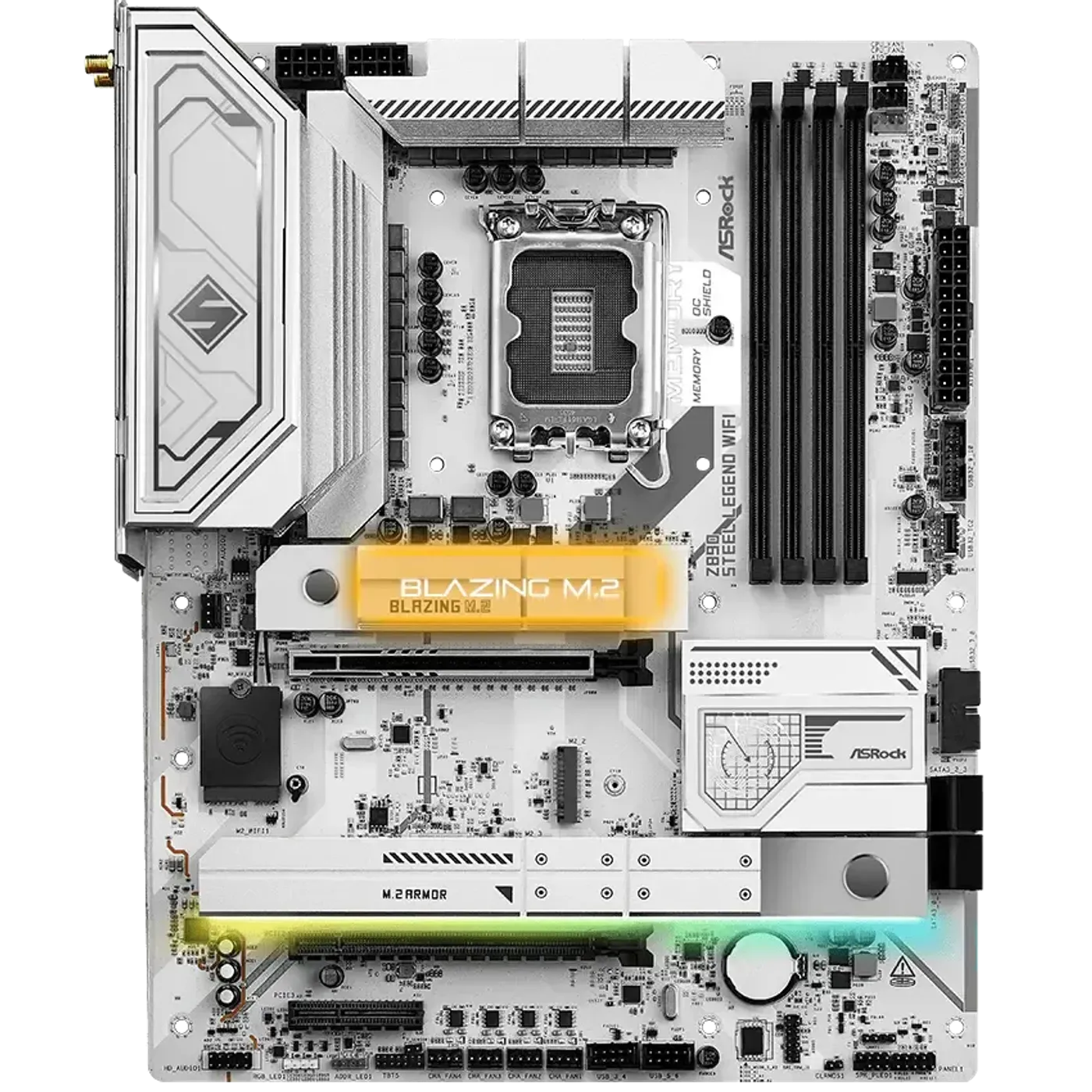
Blazing M.2 Runs PCIe Gen5 At 128Gb/s
The Blazing M.2 interface adopts the PCI Express 5.0 standard and reaches 128Gb/s, double the bandwidth of the previous generation. That gives the board a slot ready for the ultra-fast SSDs still to come, so storage does not become the bottleneck in a system built around Intel Core Ultra Series 2.
Blazing M.2 Runs PCIe Gen5 At 128Gb/s
The Blazing M.2 interface adopts the PCI Express 5.0 standard and reaches 128Gb/s, double the bandwidth of the previous generation. That gives the board a slot ready for the ultra-fast SSDs still to come, so storage does not become the bottleneck in a system built around Intel Core Ultra Series 2.
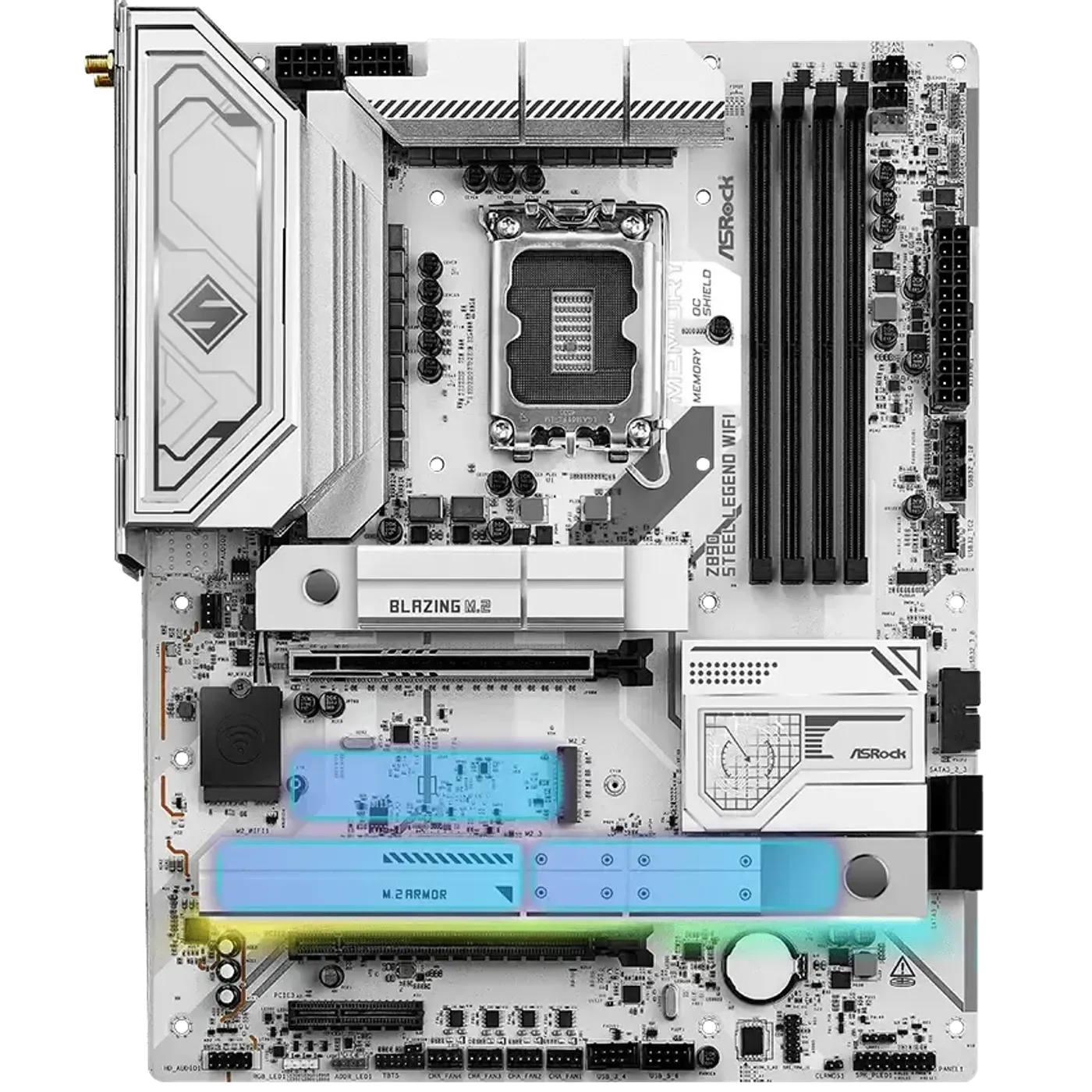
Hyper M.2 Gen4 x4 Doubles Previous Generation Speed
Hyper M.2 Gen4 x4 supports PCI Express 4.0 M.2 SSDs and delivers twice the speed of the generation before it. It covers the drives most builders already own, so a Gen4 SSD handles large game installs and project files quickly while the Gen5 Blazing slot stays free for a later upgrade.
Hyper M.2 Gen4 x4 Doubles Previous Generation Speed
Hyper M.2 Gen4 x4 supports PCI Express 4.0 M.2 SSDs and delivers twice the speed of the generation before it. It covers the drives most builders already own, so a Gen4 SSD handles large game installs and project files quickly while the Gen5 Blazing slot stays free for a later upgrade.
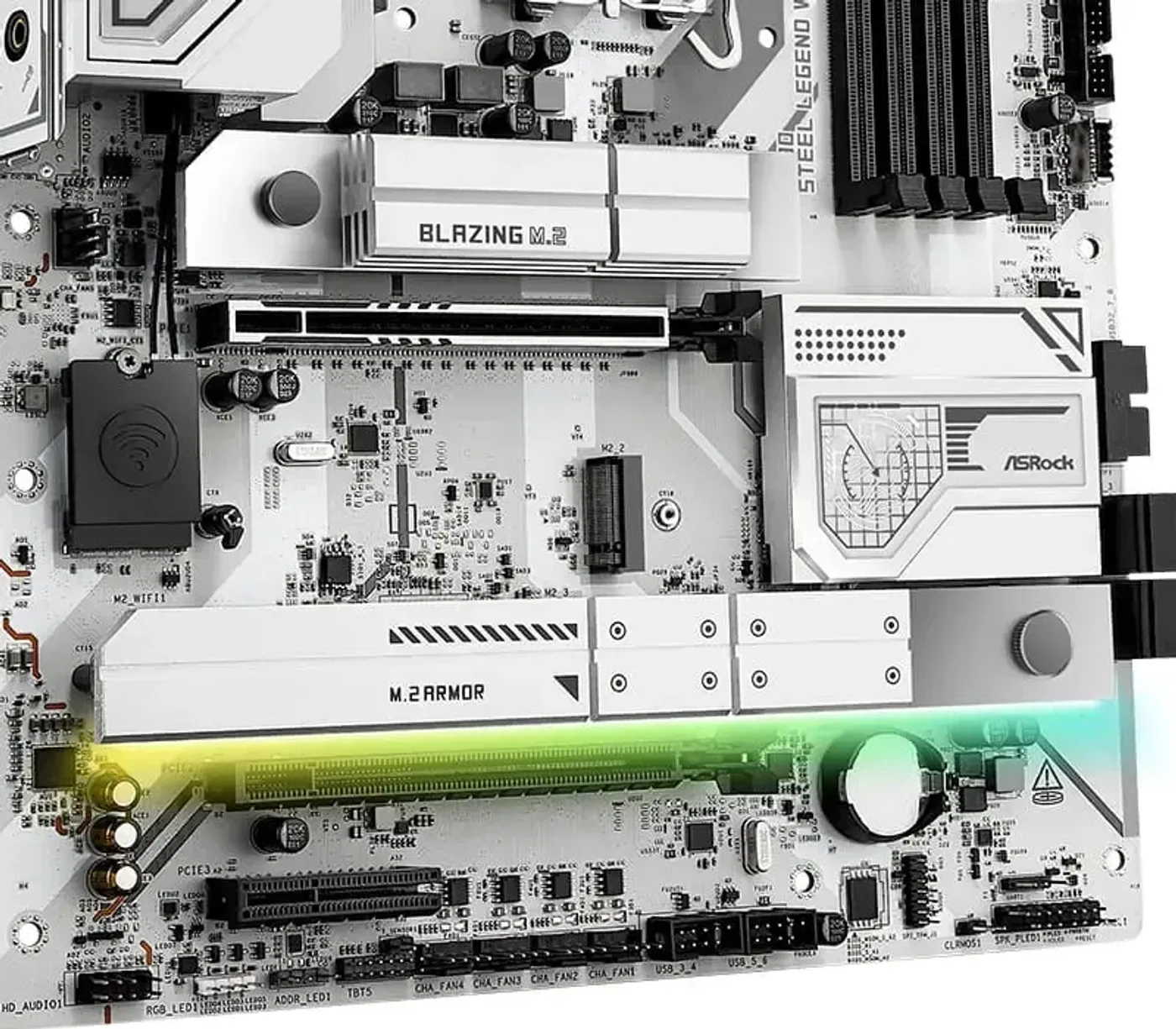
XXL Aluminium M.2 Heatsink Installs Without Tools
An expansive aluminium alloy M.2 heatsink covers the drive and uses a toolless design, so fitting an M.2 SSD needs no screwdriver and no tiny screw to drop inside the case. The larger surface area keeps the drive cool during sustained transfers, and the quick installation matters most when you are swapping drives in a finished build.
XXL Aluminium M.2 Heatsink Installs Without Tools
An expansive aluminium alloy M.2 heatsink covers the drive and uses a toolless design, so fitting an M.2 SSD needs no screwdriver and no tiny screw to drop inside the case. The larger surface area keeps the drive cool during sustained transfers, and the quick installation matters most when you are swapping drives in a finished build.
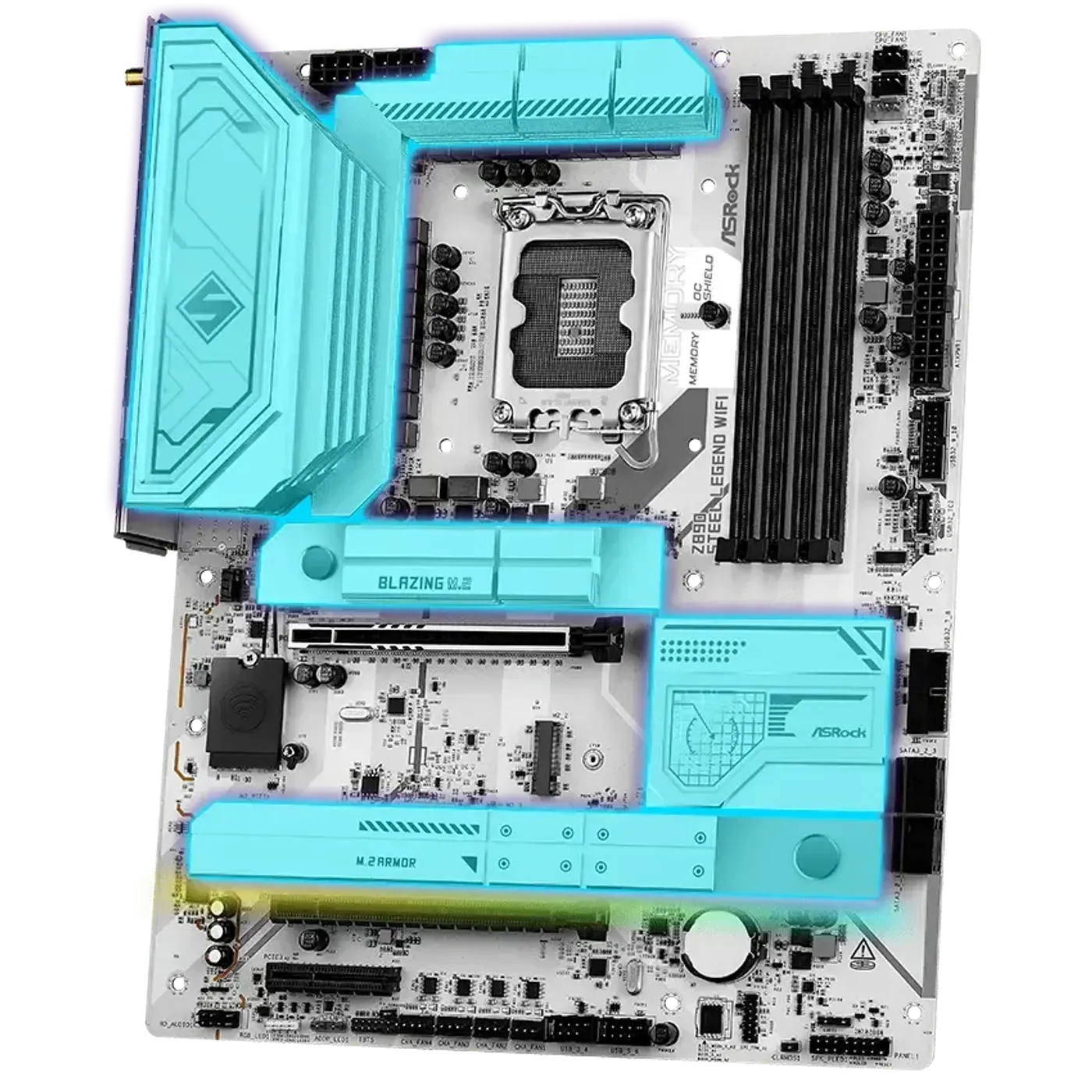
Optimized Aluminium Heatsink Handles Sustained Loads
The optimized aluminium heatsink design does the heat dissipation work across the board's hottest zones. It earns its keep during demanding tasks such as gaming and productivity workloads, where sustained current through the power stages would otherwise raise temperatures and cost stability. Keeping the motherboard cool is what allows the rest of the system to hold performance.
Optimized Aluminium Heatsink Handles Sustained Loads
The optimized aluminium heatsink design does the heat dissipation work across the board's hottest zones. It earns its keep during demanding tasks such as gaming and productivity workloads, where sustained current through the power stages would otherwise raise temperatures and cost stability. Keeping the motherboard cool is what allows the rest of the system to hold performance.
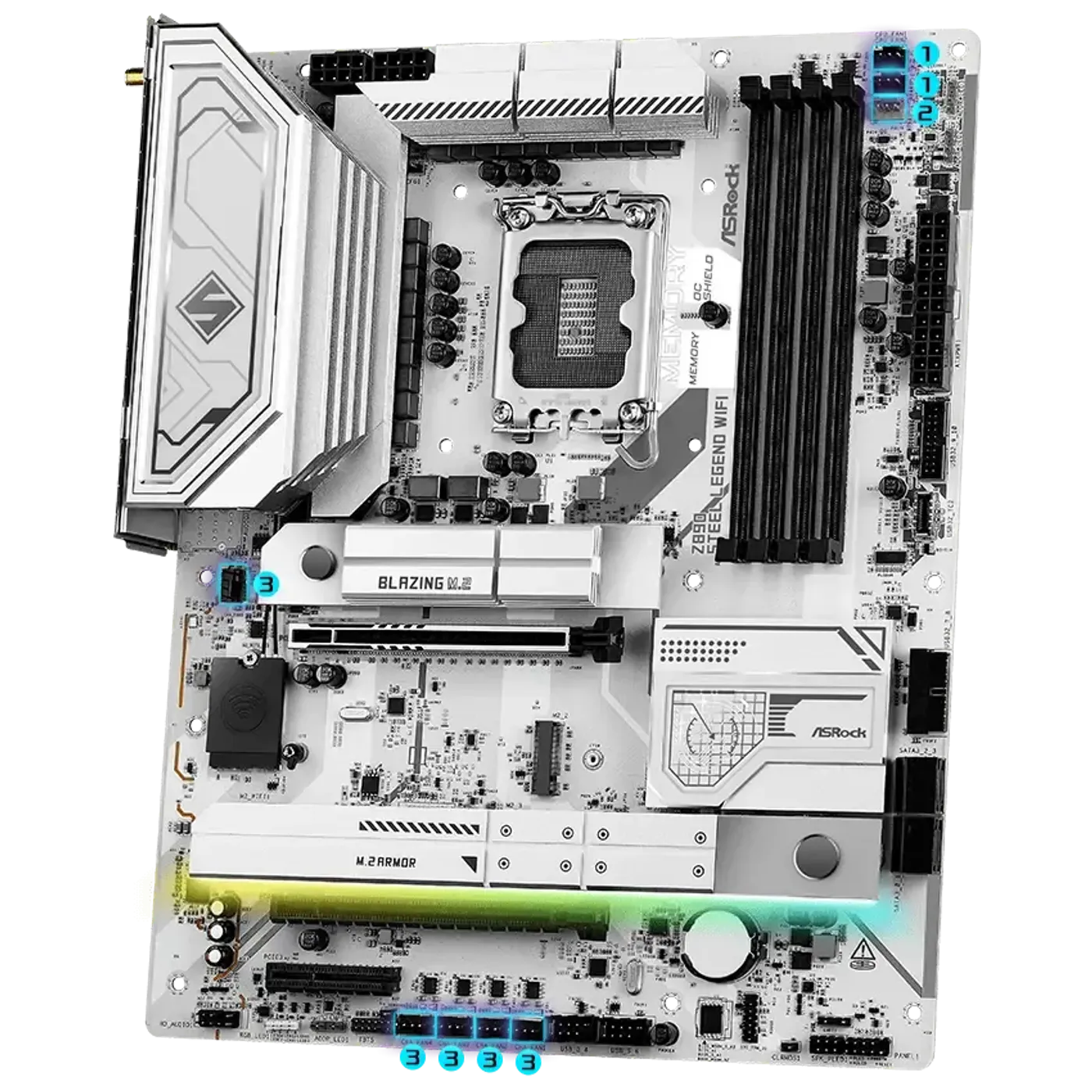
Fan Headers Detect PWM Or DC Mode Automatically
ASRock's fan headers automatically identify whether a connected fan is operating in DC or PWM mode, so fan curves can be fine-tuned for quieter operation without checking the fan's specification first. The board provides a CPU fan connector, an AIO pump fan connector and chassis fan connectors, covering an air cooler or an all-in-one liquid loop.
Fan Headers Detect PWM Or DC Mode Automatically
ASRock's fan headers automatically identify whether a connected fan is operating in DC or PWM mode, so fan curves can be fine-tuned for quieter operation without checking the fan's specification first. The board provides a CPU fan connector, an AIO pump fan connector and chassis fan connectors, covering an air cooler or an all-in-one liquid loop.
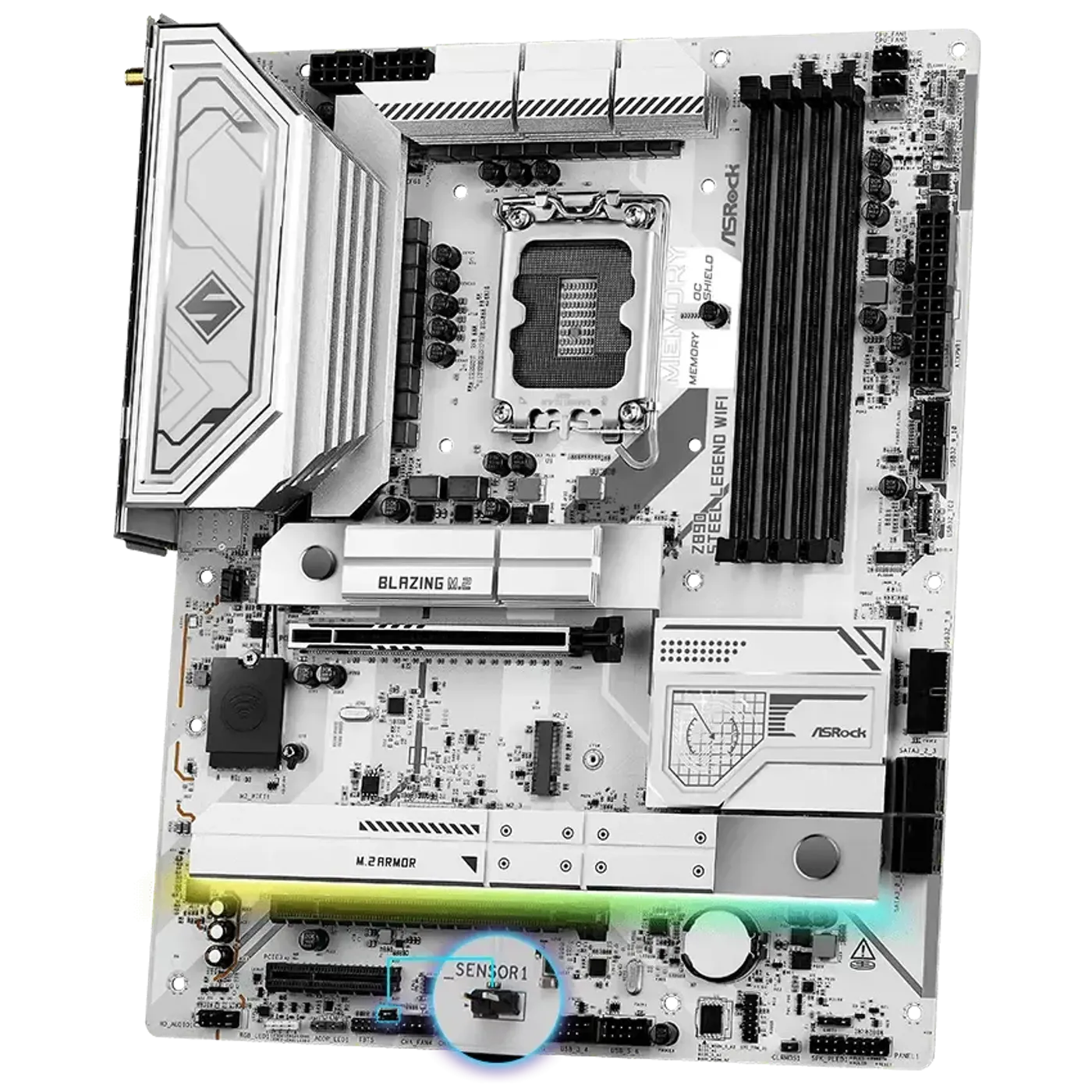
Thermistor Header Adds A Second Temperature Source
The thermistor cable and header provide an additional source for effective temperature monitoring, letting you read a point you choose rather than relying only on the board's built-in sensors. Thermal management can then be tailored to demand, with customization handled through Fan-Tastic Tuning or the UEFI settings.
Thermistor Header Adds A Second Temperature Source
The thermistor cable and header provide an additional source for effective temperature monitoring, letting you read a point you choose rather than relying only on the board's built-in sensors. Thermal management can then be tailored to demand, with customization handled through Fan-Tastic Tuning or the UEFI settings.
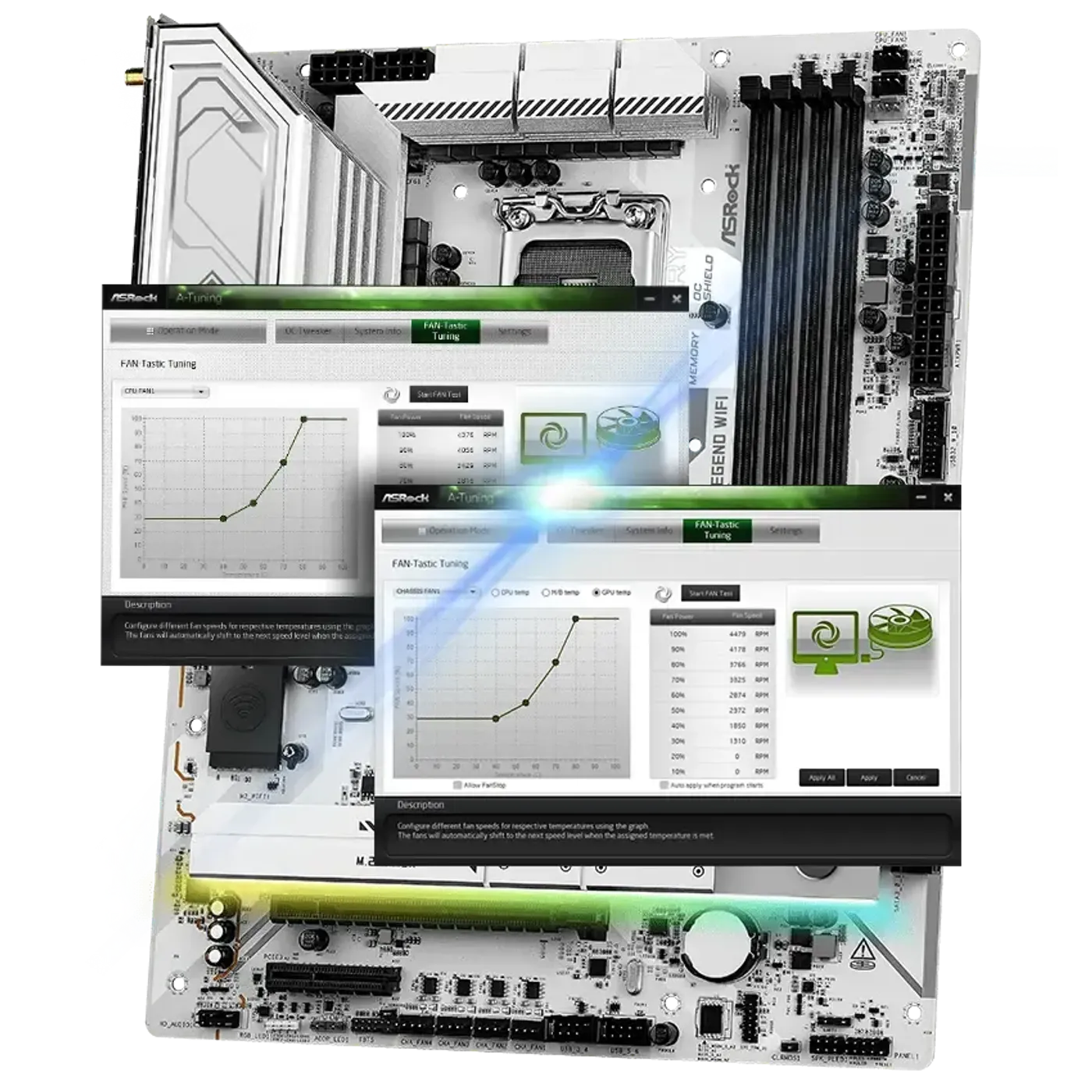
Fan-Tastic Tuning Sets Fan Curves With One Click
ASRock A-Tuning's Fan-Tastic Tuning feature detects each fan's minimum duty cycle automatically with a single click. From there the fan curve is adjusted through a visual interface, so cooling performance can be traded against noise reduction on a graph instead of guessing at duty percentages by hand.
Fan-Tastic Tuning Sets Fan Curves With One Click
ASRock A-Tuning's Fan-Tastic Tuning feature detects each fan's minimum duty cycle automatically with a single click. From there the fan curve is adjusted through a visual interface, so cooling performance can be traded against noise reduction on a graph instead of guessing at duty percentages by hand.
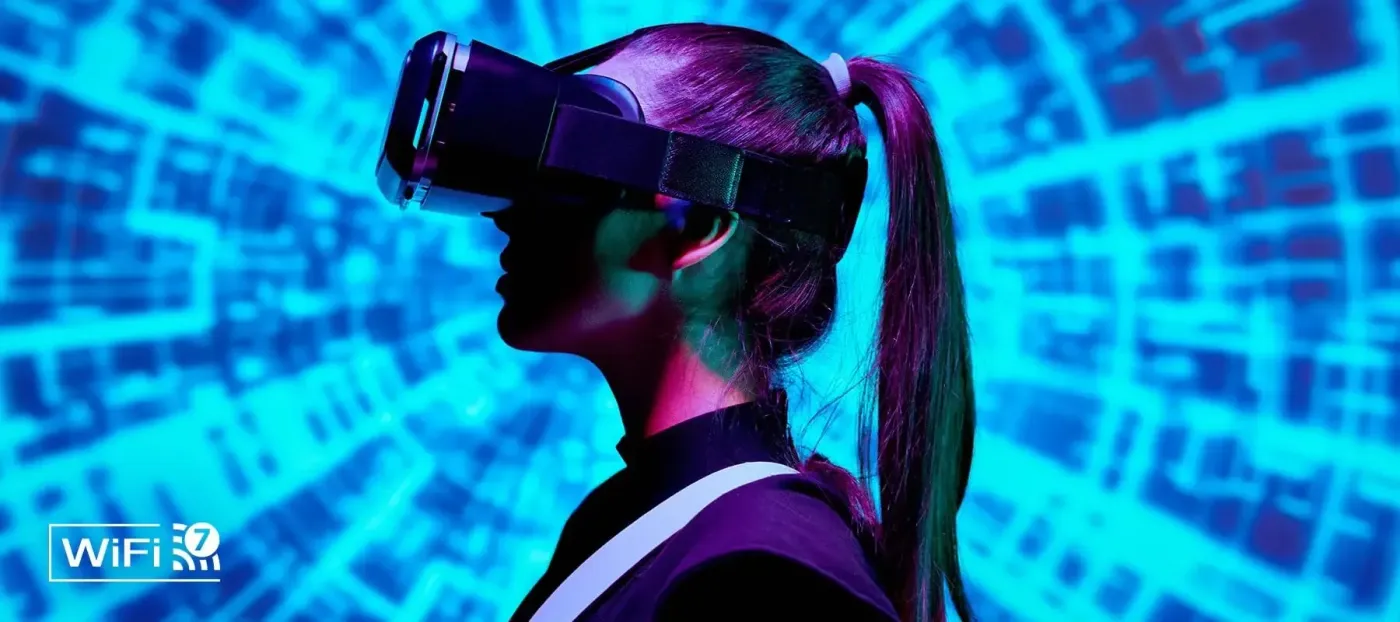
Wi-Fi 7 Raises Throughput And Lowers Latency
Wi-Fi 7 brings substantial increases in data throughput and lowers latency against earlier wireless generations. For VR and AR headsets streaming frames over the air, that pairing is what keeps motion smooth and the experience immersive, because lost throughput and added latency are both felt straight away in a headset.
Wi-Fi 7 Raises Throughput And Lowers Latency
Wi-Fi 7 brings substantial increases in data throughput and lowers latency against earlier wireless generations. For VR and AR headsets streaming frames over the air, that pairing is what keeps motion smooth and the experience immersive, because lost throughput and added latency are both felt straight away in a headset.
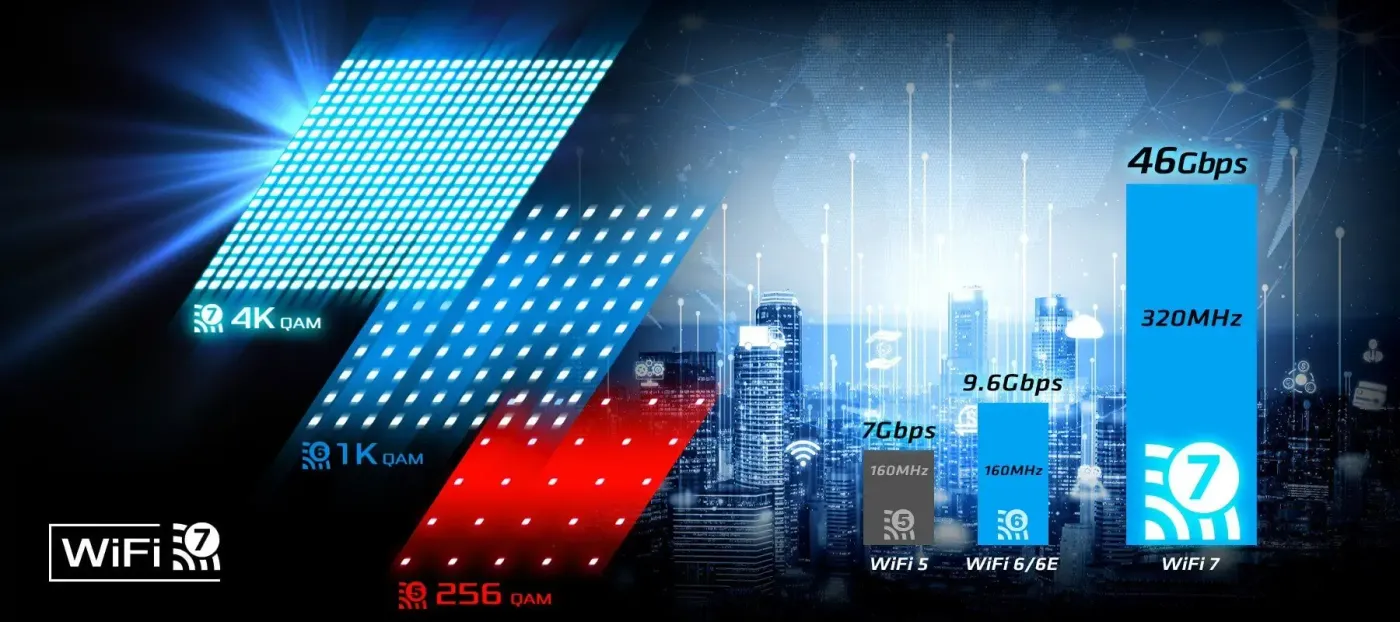
802.11be With Multi-RU And Multi-Link Operation
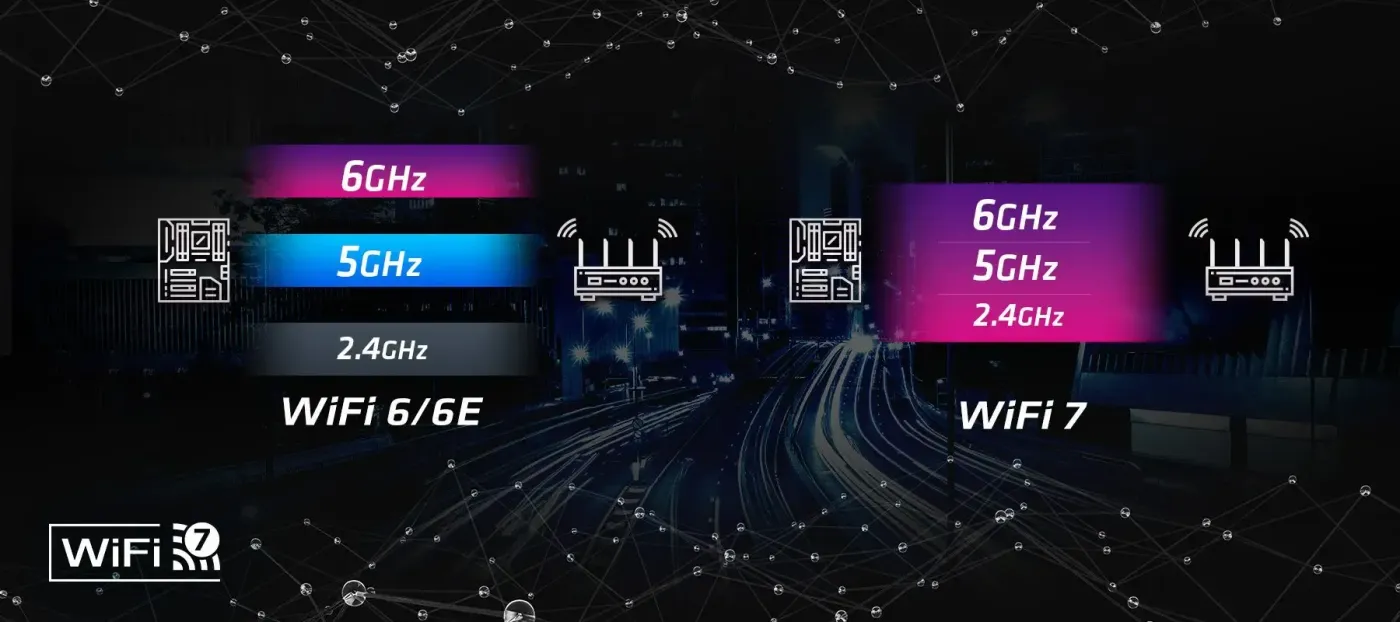
The Wi-Fi 7 802.11be standard delivers extreme wireless speeds and low latency through higher throughput and Multi-RU technology, which is what holds up 8K video streaming and cloud gaming over a wireless link. Multi-Link Operation runs several bands and channels at the same time, raising combined speed and throughput while cutting latency further.
802.11be With Multi-RU And Multi-Link Operation
The Wi-Fi 7 802.11be standard delivers extreme wireless speeds and low latency through higher throughput and Multi-RU technology, which is what holds up 8K video streaming and cloud gaming over a wireless link. Multi-Link Operation runs several bands and channels at the same time, raising combined speed and throughput while cutting latency further.
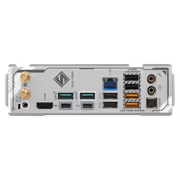
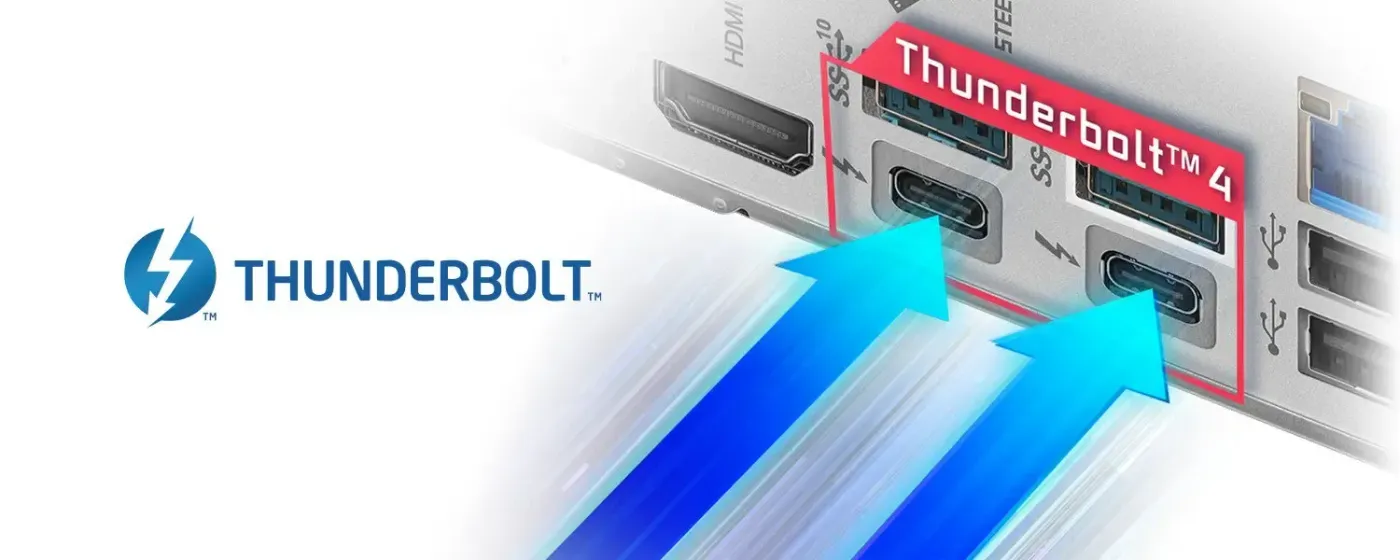
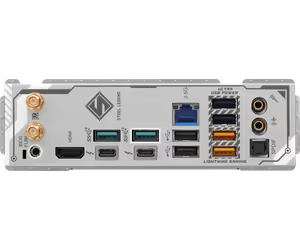
Thunderbolt 4 Type-C Transfers At Up To 40Gbps
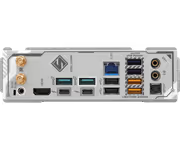
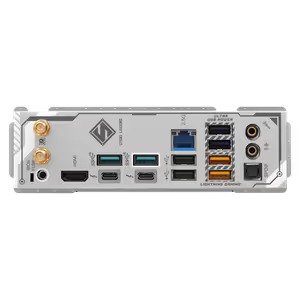
Thunderbolt 4 over the USB Type-C interface carries data at up to 40Gbps and connects external monitors and USB devices through the same port. One interface therefore covers a display and high-speed external storage without adding a separate card, and the Type-C connector plugs in either way round.
Thunderbolt 4 Type-C Transfers At Up To 40Gbps
Thunderbolt 4 over the USB Type-C interface carries data at up to 40Gbps and connects external monitors and USB devices through the same port. One interface therefore covers a display and high-speed external storage without adding a separate card, and the Type-C connector plugs in either way round.
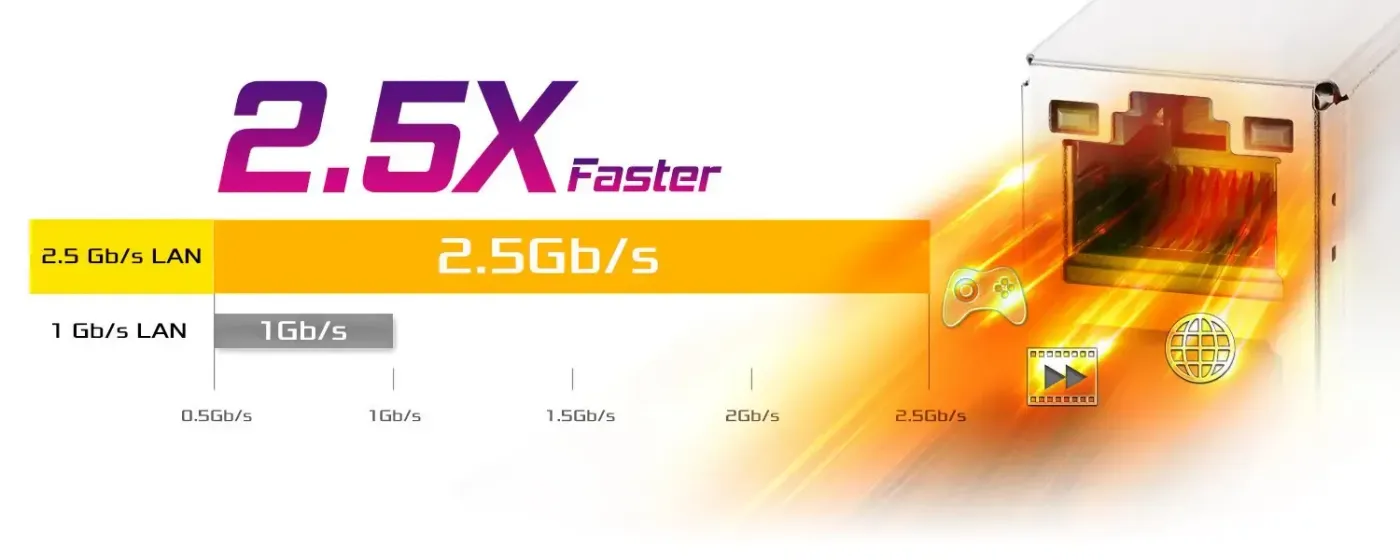
Dragon 2.5Gb/s LAN Gives 2.5x Gigabit Bandwidth
The smart Dragon 2.5Gb/s LAN controller handles wired networking and supplies up to 2.5 times the bandwidth of conventional gigabit Ethernet. That headroom is what makes the wired port worth using ahead of wireless when the router and switch behind it can feed the connection, and it keeps transfers swift and reliable.
Dragon 2.5Gb/s LAN Gives 2.5x Gigabit Bandwidth
The smart Dragon 2.5Gb/s LAN controller handles wired networking and supplies up to 2.5 times the bandwidth of conventional gigabit Ethernet. That headroom is what makes the wired port worth using ahead of wireless when the router and switch behind it can feed the connection, and it keeps transfers swift and reliable.
Wired Networking For Gaming, Streaming And Home Use
ASRock crafted the 2.5Gb/s connection for peak networking performance under the elevated demands of home networking, online gaming and media streaming. Those are the three loads that fill a gigabit link first, whether that is a large game update downloading while someone else streams, or project files moving to a network drive.
Wired Networking For Gaming, Streaming And Home Use
ASRock crafted the 2.5Gb/s connection for peak networking performance under the elevated demands of home networking, online gaming and media streaming. Those are the three loads that fill a gigabit link first, whether that is a large game update downloading while someone else streams, or project files moving to a network drive.
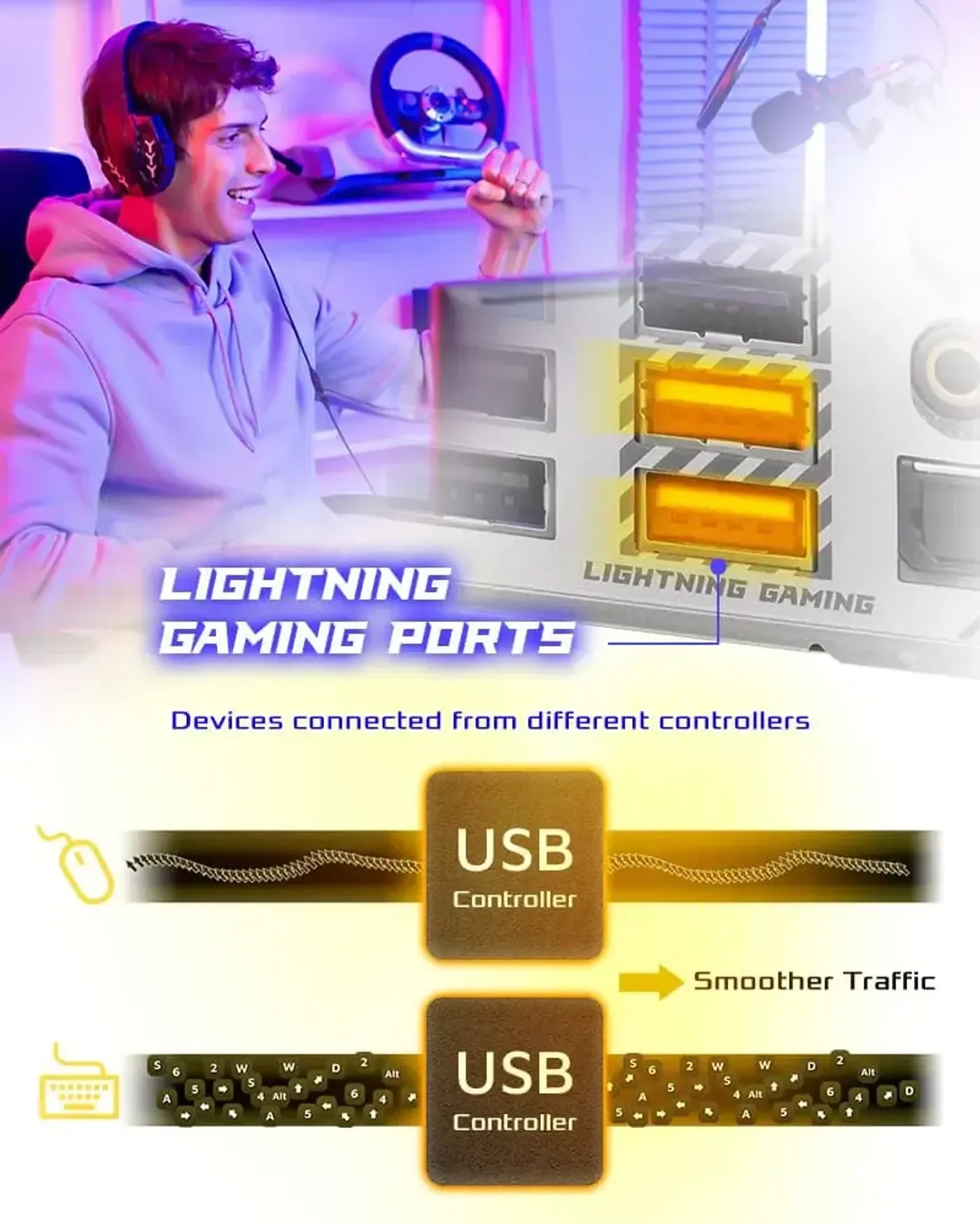
Lightning Gaming Ports Cut Jitter For Mice And Keyboards
Lightning Gaming Ports use distinct controller interfaces to connect high-speed mice and keyboards, holding jitter and latency to a minimum. Keeping those ports off the shared USB controllers is what steadies input during long sessions, which is the detail dedicated gamers and enthusiasts tend to notice first.
Lightning Gaming Ports Cut Jitter For Mice And Keyboards
Lightning Gaming Ports use distinct controller interfaces to connect high-speed mice and keyboards, holding jitter and latency to a minimum. Keeping those ports off the shared USB controllers is what steadies input during long sessions, which is the detail dedicated gamers and enthusiasts tend to notice first.
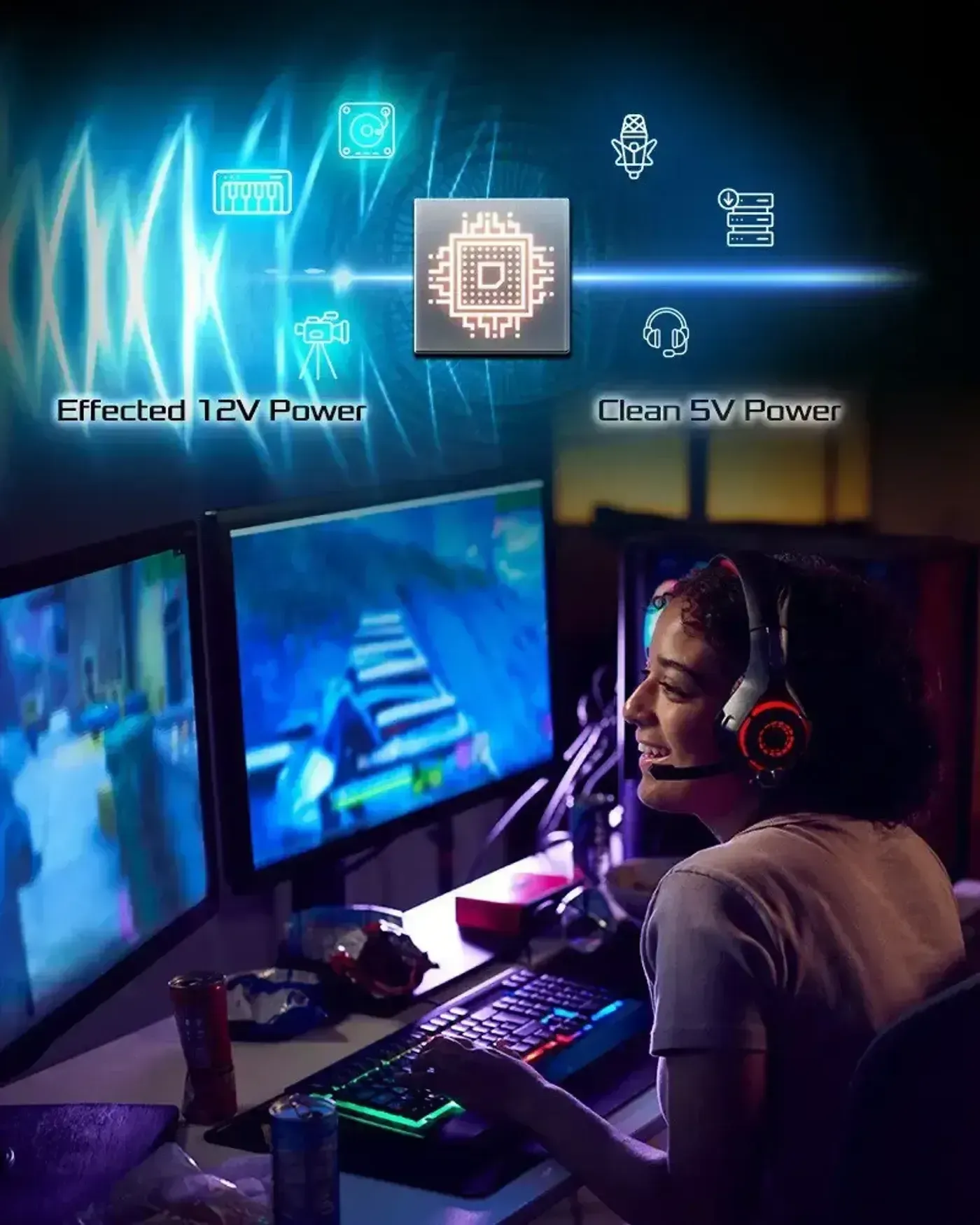
Ultra USB Power Converts +12V Down To +5V
Ultra USB Power converts +12V power to +5V at the port, reducing voltage drops during heavy loads and mitigating noise from other devices and RGB LED lighting. The result is stable power for connected peripherals and an improved audio experience, so USB here is doing more than moving data quickly.
Ultra USB Power Converts +12V Down To +5V
Ultra USB Power converts +12V power to +5V at the port, reducing voltage drops during heavy loads and mitigating noise from other devices and RGB LED lighting. The result is stable power for connected peripherals and an improved audio experience, so USB here is doing more than moving data quickly.
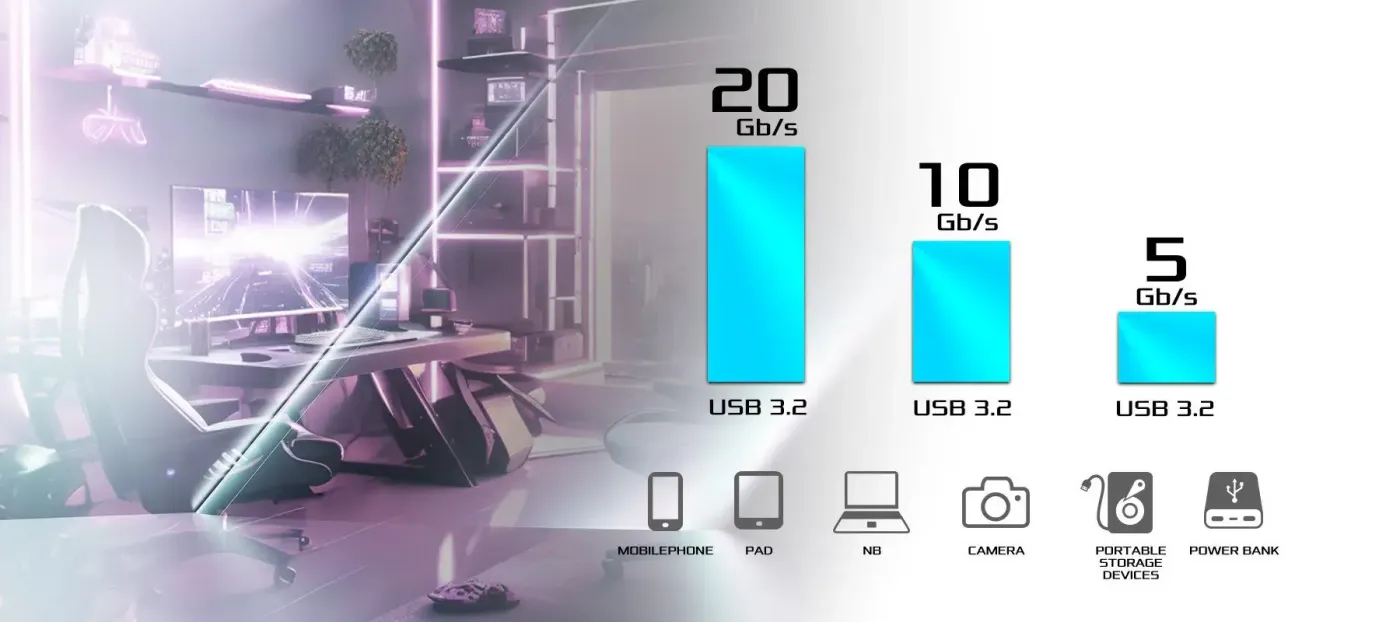
Front Panel USB 3.2 Gen2x2 Type-C Hits 20Gbps
The front panel header carries USB 3.2 Gen2x2 Type-C at data transfer rates of up to 20Gbps, twice as fast as the previous generation. Routed to a case's front Type-C port, it puts quick external drive access at the front of the machine, and the reversible Type-C design plugs in either orientation.
Front Panel USB 3.2 Gen2x2 Type-C Hits 20Gbps
The front panel header carries USB 3.2 Gen2x2 Type-C at data transfer rates of up to 20Gbps, twice as fast as the previous generation. Routed to a case's front Type-C port, it puts quick external drive access at the front of the machine, and the reversible Type-C design plugs in either orientation.
FAQ
Frequently Asked Questions
Everything you need to know about this product
It uses the LGA 1851 CPU socket and supports Intel Core Ultra processors (Series 2).
It has four DDR5 DIMM slots and accommodates up to 256GB of DDR5 memory in total.
It is an ATX motherboard, which is compatible with a wide range of gaming cases.
Yes. The Blazing M.2 interface uses the PCI Express 5.0 standard and reaches 128Gb/s, double the bandwidth of the previous generation.
Hyper M.2 Gen4 x4 supports PCI Express 4.0 M.2 SSDs at twice the speed of the preceding generation.
The board carries Wi-Fi 7 802.11be with Multi-RU technology and Multi-Link Operation for using several bands and channels at once.
The smart Dragon LAN controller runs at 2.5Gb/s, up to 2.5 times the bandwidth of conventional gigabit Ethernet.
Yes. Thunderbolt 4 over USB Type-C transfers data at up to 40Gbps and connects external monitors and USB devices.
The front panel USB 3.2 Gen2x2 Type-C header supports data transfer rates of up to 20Gbps, twice the previous generation.
It uses an 18+1+1+1+1 power phase architecture with Dr. MOS SPS (Smart Power Stage) components monitoring current and temperature per phase.
It uses upgraded 20K Black capacitors with a 20,000 hour lifespan and capacitance increased from 560uF to 1000uF.
It provides a CPU fan connector, an AIO pump fan connector and chassis fan connectors, and each header detects DC or PWM mode automatically.

AI-Generated Content:These FAQs are generated by an automated AI system and may contain inaccuracies or omissions. Evetech makes no warranties, express or implied, regarding their completeness or reliability. For definitive information, please refer to the manufacturer's official specifications.
Please Note: Product images are for illustrative purposes only and may differ from the actual product.
Choose your
own PC
Hand-pick every part with live stock, compatibility, and instant pricing.
Try the new builderPrice Inc. Vat
R 6,699
Save R 800
ListR 7,499
6699Change Quantity:
In Stock with Evetech
Choose your
own PC
Hand-pick every part with live stock, compatibility, and instant pricing.
Try the new builderASRock Z890 Steel Legend Intel Motherboard