Keyboard Switch Explainer
Linear, tactile, clicky. — Three feels. One winning preference.
The switch under each keycap dictates how a board sounds, feels, and competes. The same chassis with different switches becomes a different keyboard entirely — and the right pick depends on whether you type, game, or live with housemates.
- linear · tactile · clicky
- 3 families
- actuation range
- 35-70g
- per switch
- R6-R50
The three switch families
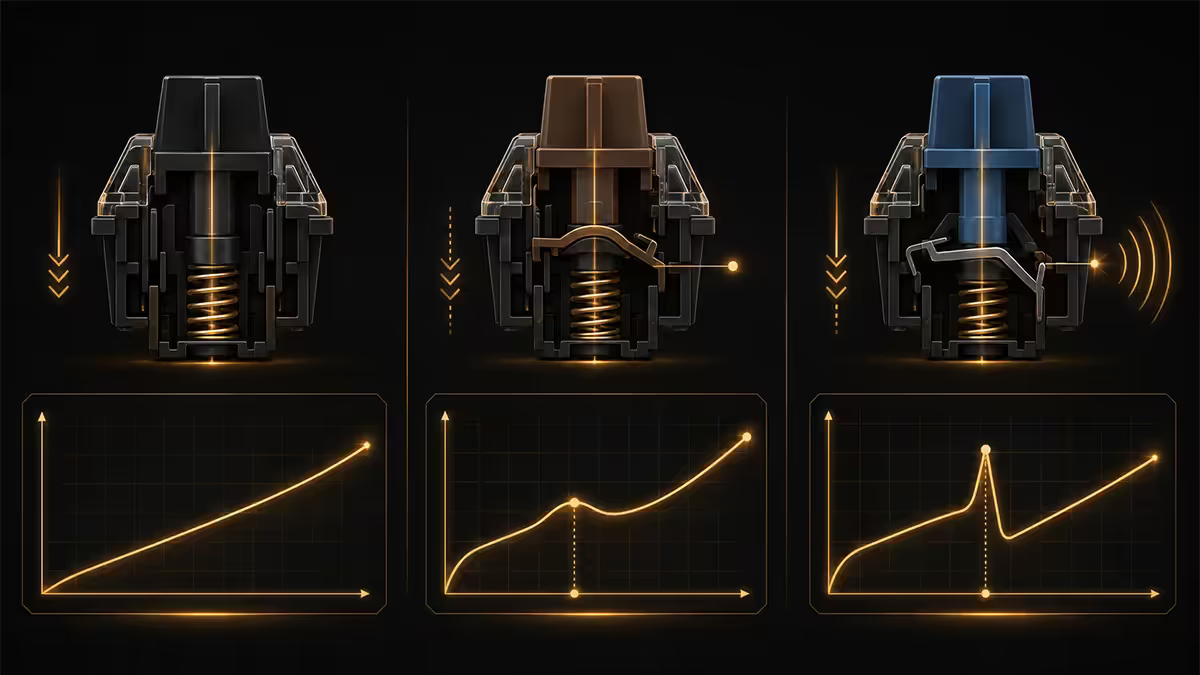
Every mechanical switch is some flavour of one of three feel families. Within each family there are dozens of variants tuned for travel, force and sound — but if you understand the three base feels, you can navigate any switch list.
| Family | Feel | Sound | Best for |
|---|---|---|---|
| Linear | Smooth top-to-bottom, no bump | Quiet thock or muted | Gaming, shared offices |
| Tactile | Small bump at actuation | Moderate thock | Typing, programming |
| Clicky | Bump plus audible click-bar | Loud, divisive | Solo home use, retro feel |
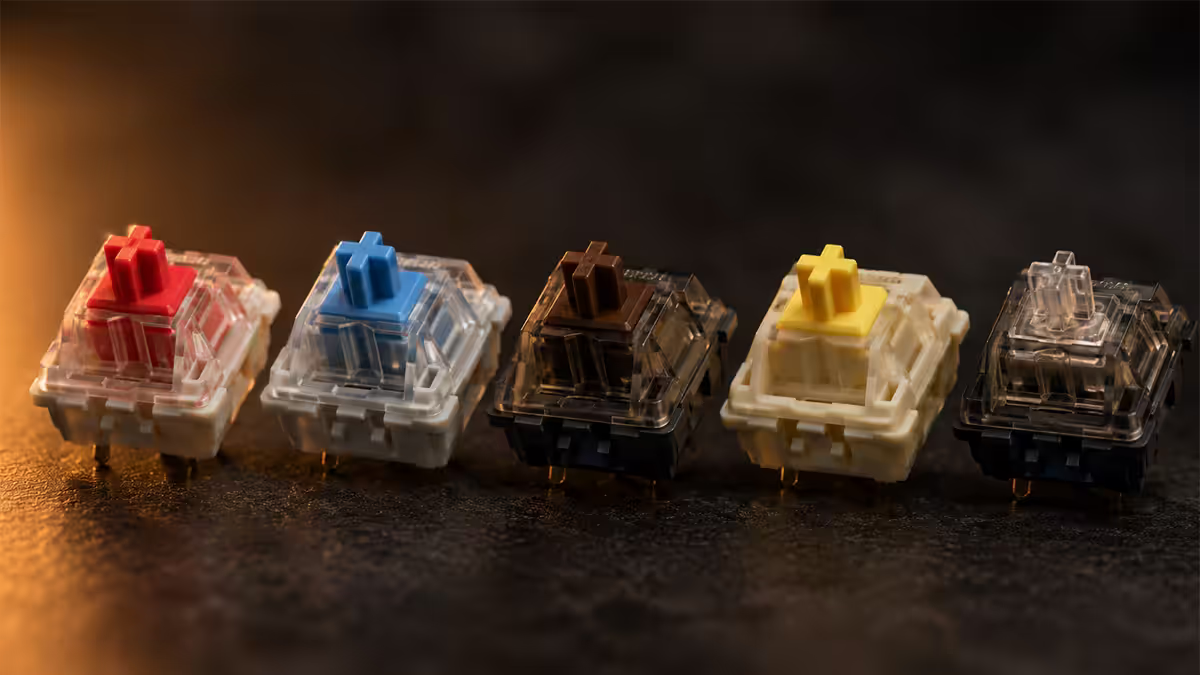
Linear switches (Cherry MX Red, MX Speed Silver, Gateron Yellow, Akko Cream Yellow) press straight down with no interruption. The lack of a bump means you can mash the actuation point repeatedly without a finger stop, which is why competitive shooter players prefer them. Bottom-out feel is smooth.
Tactile switches (Cherry MX Brown, Holy Panda, Boba U4T, Akko Lavender Purple) have a small mechanical bump engineered into the stem. Your finger can feel exactly when the key registers without slamming to the bottom. Typists love them — you can stop short and save finger energy on long sessions.
Clicky switches (Cherry MX Blue, Kailh Box White, Razer Green) add a separate click-bar that snaps loudly at actuation. Sounds wonderful in a solo room and terrible in a Discord call or shared house. Aesthetically and acoustically polarising.
MX vs Gateron vs Kailh vs Akko vs TTC
Once you've picked a family, the brand decides smoothness, sound, factory lube and price. Here's how the major makers compare in 2026.
Cherry MX is the German original — the brand whose Red/Brown/Blue colour codes the rest of the industry copied. Modern Cherry MX2A switches (the 2024+ generation) are noticeably smoother than the older MX line and finally pre-lubed from factory. Premium pricing, premium consistency.
Gateron is the Chinese cost-equal that many enthusiasts now prefer outright. Gateron Yellow (the legendary smooth budget linear), Oil Kings, Cap V2, Box Ink — the brand has more SKUs than is healthy. Slightly smoother than equivalent Cherry MX, slightly less factory-consistent. Great value.
Kailh makes the Box series with a unique dust-resistant box stem that protects the contact leaf. Kailh Box White is widely considered the best clicky switch on the market — the click is crisper and more pure than the famously rattly Cherry MX Blue. Kailh Box Jade and Navy are clicky variants worth knowing.
Akko has become the value champion. Pre-lubed from factory, unique colour profiles (lavender, cream, pink), thoughtful naming (CS Jelly, V3 Pro). Akko Cream Yellow is a community-loved linear at half the price of equivalent Cherry MX. The catch: keycap and switch compatibility is best on Akko's own boards.
TTC makes some of the most respected boutique switches — Bluish White, Wild, Frozen, Gold Pink V3. Reach for TTC when a build deserves something distinctive. Less mainstream availability in SA, but worth importing if you're building an end-game board.
Holy Pandas and the tactile gods
Beyond Cherry MX Brown lies a deeper world of tactile switches. The community has spent the last six years engineering bumps that are sharper, longer, rounder, snappier — each generating cult followings.
Holy Panda is the legendary frankenstein switch — Halo True stems housed in Invyr Panda shells. Created by accident, hailed as the gold standard tactile feel. Original parts are now collector items. Modern reproductions from Drop, Glorious, Akko (CS Jelly Pink) and Gazzew (Boba U4T) deliver 90% of the feel for 10% of the rare-original price.
Boba U4T (Gazzew) is the modern Holy Panda alternative most enthusiasts now reach for. Sharp tactile bump, deep thocky bottom-out, available factory pre-lubed. R20-R35 per switch in SA.
Zealio V2 (ZealPC) — refined tactile bump, available in 62g, 65g, 67g and 78g weights. Premium switch, R45-R60 each — but considered one of the finest tactile switches ever produced. Lifetime end-game purchase for typists.
Glorious Panda — Glorious's licensed take on Holy Panda. Cheaper than originals, factory pre-lubed, widely available. A solid first step into "premium tactile" without remortgaging.
Hall-effect & magnetic switches — the gaming revolution
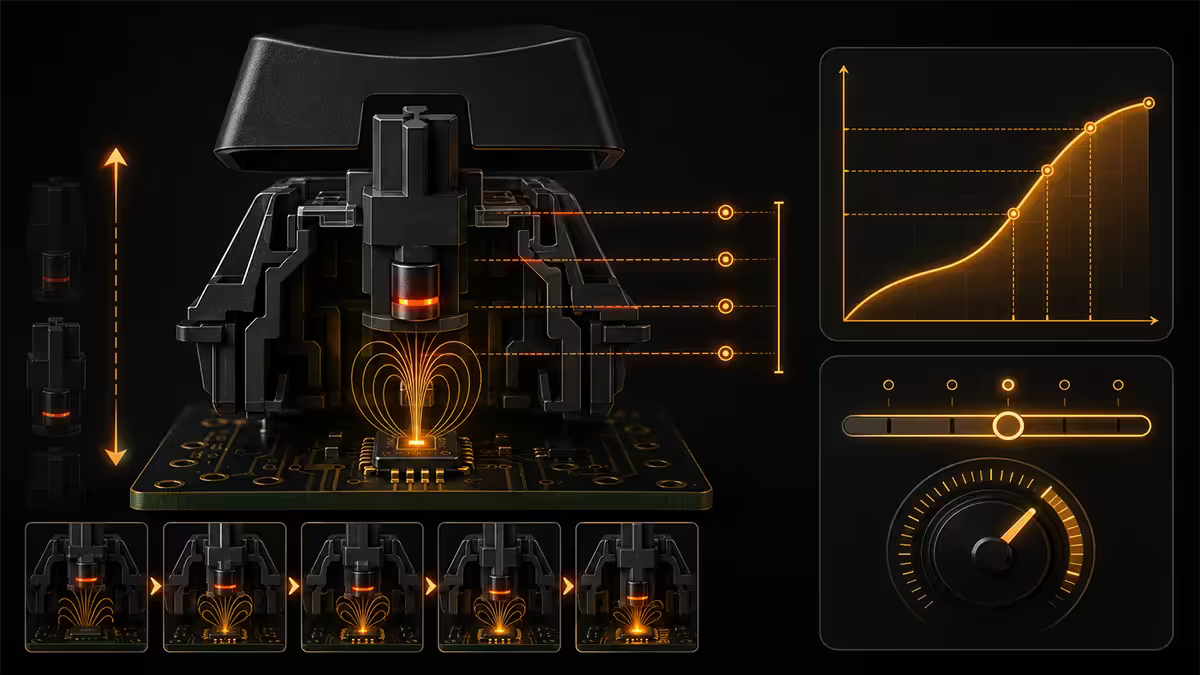
Hall-effect switches replace mechanical contact leaves with a magnet in the stem and a sensor in the PCB. The sensor measures exactly how far the stem has travelled — not just on or off. This sounds technical, but it unlocks game-changing features.
Adjustable actuation point. Set the switch to register at 0.1mm for the lightest gaming touch, or 2.0mm for typing where you don't want to trigger when resting your fingers. Some boards let you set different actuation points per key.
Rapid trigger. The switch resets the moment you start releasing — not when it crosses a fixed reset point on the way up. For Counter-Strike counter-strafing and Valorant strafe-aim, this is a measurable competitive advantage. Players have reported aim improvement worth a rank tier.
Analog input. Hall-effect switches output a continuous pressure value, which means you can use a keyboard like a game controller — gradual acceleration in racing games, partial-throttle aircraft control, walk vs run distinction in stealth games.
The hall-effect lineup in 2026:
- Wooting 60HE / 80HE — original and still community-favourite. Lekker Switches. R5500-R7500 imported.
- Keychron Q1 HE — gasket-mounted, hot-swap hall-effect, Gateron Magnetic Jade switches. R4500-R5500.
- Razer Huntsman V3 Pro — analog optical with rapid trigger, mainstream gaming availability. R4000-R5500.
- NuPhy Field75 HE — hot-swap hall-effect with great typing acoustics. R3800-R4800.
- Drop CSTM65 with magnetic switches — DIY-friendly enthusiast pick. R4500+.
Actuation force & sound profile
Actuation force (grams) is how hard you must press for the keystroke to register. Most switches are in the 35g to 70g range. Light switches reduce finger fatigue at the cost of more typos. Heavier switches prevent accidental presses.
Force gradient examples:
- 35g — Cherry MX Speed Silver, Gateron Clear. Featherweight, fast actuation, typo-prone.
- 45g — Cherry MX Red, Gateron Yellow, Akko Cream Yellow. Most popular linear weight.
- 55g — Cherry MX Brown, Holy Panda. Standard tactile weight.
- 60-67g — Boba U4T, Zealio V2 67g. Heavier tactile for typists who hammer.
- 70g+ — Cherry MX Black, Zealio V2 78g. Heavy linear for typing without bottoming out.
Sound profile depends on switch internals, keycap material (PBT thock vs ABS clack), case foam, mounting style and lube. A "thocky" switch in a gasket-mount case with PBT caps sounds completely different from the same switch in a plate-mount case with ABS caps.
If sound matters, watch typing-test videos on YouTube of the specific board and switch combination before buying. Don't trust marketing renders.
Switch picks by use case
| Use case | Switch pick | SA price / switch |
|---|---|---|
| Competitive FPS gaming | Wooting Lekker / Keychron Magnetic Jade (hall-effect) | Board only · R4000+ |
| Casual / mixed gaming | Gateron Yellow or Akko Cream Yellow (linear) | R6-R8 |
| Programming & long typing sessions | Boba U4T or Kailh Box Brown (tactile) | R25-R35 |
| Premium tactile end-game | Zealio V2 67g | R45-R60 |
| Solo home, satisfying click | Kailh Box White (clicky) | R10-R15 |
| Office / shared space (quiet linear) | Cherry MX Silent Red or Gateron Silent | R8-R14 |
| Heavy-handed typist | Cherry MX Black or Zealio V2 78g | R12-R50 |
| Switch tester (try before you buy) | Akko / Glorious 9-12 switch tester | R200-R500 kit |
Common switch mistakes
Picking clicky for an office. The most common regret purchase. The click that sounds satisfying at home becomes hate mail from desk neighbours within a week. Test in a shared space before committing.
Assuming Cherry MX = quality. Older non-MX2A Cherry switches feel scratchy by 2026 standards. Modern Gateron, Akko and Kailh frequently outperform old Cherry on smoothness. Don't pay a Cherry premium for inferior feel.
Buying a hot-swap board then never swapping. Hot-swap PCBs cost more. If you'll commit to one switch type and never experiment, save the money on a soldered board with better build.
Chasing the most expensive switch. Boba U4T at R25-R35 is within touching distance of Zealio V2 at R45-R60. Bobas, U4Ts, Akko Lavender Purples and Glorious Pandas all deliver excellent tactile feel without the boutique premium.
Ignoring lube. Factory-lubed switches (most modern Gateron, Akko, Boba) feel smoother out of the box than unlubed switches. Hand-lubing is a satisfying hobby but is not required for a good experience.
After testing every major switch family on our build bench through 2025-2026, we've watched the hall-effect generation overtake traditional mechanical for competitive gamers. The rapid trigger and adjustable actuation on a Wooting 80HE or Keychron Q1 HE are the first switch upgrade we've seen in years that actually changes game outcomes. For typists, the story stays the same: Cherry MX Brown is fine, Boba U4T is better, Zealio V2 is end-game.
Behind the Build · From our peripheral bench
Key takeaways
- Three families — linear (smooth, gaming), tactile (bump, typing), clicky (loud, solo home use).
- Gateron Yellow and Akko Cream Yellow are the budget linear champions; Boba U4T leads tactile under R40.
- Hall-effect (Wooting, Keychron Q1 HE, Razer Huntsman V3 Pro) delivers real competitive gaming advantage in 2026.
- Sound profile is cumulative — switch, case, keycaps and mount all contribute. Watch typing test videos before buying.
- Buy a R200-R500 switch tester before committing R3000+ to a full board.
Frequently asked questions
What's the difference between linear, tactile and clicky switches?
Linear is smooth top-to-bottom (Cherry MX Red), tactile has a bump you can feel at actuation (Cherry MX Brown), clicky adds a loud click-bar on top of the bump (Cherry MX Blue).Which switches are best for gaming?
Linear switches for traditional mechanical (Gateron Yellow, MX Red). Hall-effect (Wooting, Keychron Q1 HE, Razer Huntsman V3 Pro) for the competitive edge in 2026 — adjustable actuation and rapid trigger.Cherry MX vs Gateron vs Kailh vs Akko — what's the difference?
Cherry MX is the German original with consistent quality. Gateron is the smooth Chinese equivalent. Kailh makes the dust-resistant Box series (best clicky). Akko delivers pre-lubed value at half Cherry's price.What is a hall-effect switch?
A magnetic switch that measures exact distance pressed — enabling adjustable actuation (0.1mm to 2.0mm per key), rapid trigger (instant reset), and analog input. Used in Wooting, Keychron HE and Razer Huntsman V3 Pro.What is a Holy Panda switch?
A community frankenstein switch combining Halo True/Clear stems with Invyr Panda housings — became the gold-standard tactile feel. Modern clones (Boba U4T, Glorious Panda, Akko CS Jelly Pink) deliver 90% of the experience at much lower cost.What's the actuation force in grams and does it matter?
How hard you must press to register a keystroke — 35g to 70g typical. 45g is the popular linear weight (MX Red, Gateron Yellow). 55-67g suits tactile typing. 70g+ for heavy-handed typists who hate accidental presses.Are gaming-marketed switches (Razer, SteelSeries) different?
Mostly marketing rebadges. Razer Yellow is functionally MX Speed Silver, Razer Green is MX Blue. SteelSeries OptiPoint is genuinely fast optical but proprietary. Razer Huntsman V3 Pro hall-effect is the exception — real innovation.Where can I try switches before buying a keyboard?
Switch tester kits — 9 to 12 sample switches on a board for R200-R500. Available from Evetech, Wootware and Takealot. Akko, Glorious and Keychron all sell their own testers.
Get the Evetech app
Exclusive app-only prices, daily flash sales, and free delivery on orders over R4,000 — download the app and start saving.