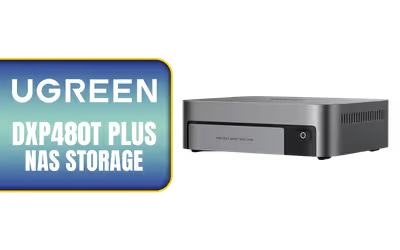
ugreen-nasync-dxp480t-plus-nas-storage-10gbe-32tb-nvme
UGREEN NASync DXP480T Plus NAS Storage / Up to 32TB NVMe Storage / 1250MB/s 10GbE Network Speed / 12th Gen Intel Core i5 Processor / AI Photo Album Organization / One App for All NAS Functions / Professional Data Security Protection / Compatible with Third-Party Drives / DXP480TPLUS-25892B + FREE DELIVERY !
2 Years Local Warranty
Model No : UGREEN DXP480TPLUS-25892B
Price Inc. Vat
R 14,799
Save R 2,200.00
ListR 16,999
14799Free Delivery
Qty:
In Stock with Evetech
UGREEN NASync DXP480T Plus NAS Storage, 10GbE i5, Up to 32TB
UGREEN NASync DXP480T Plus All-Flash NAS
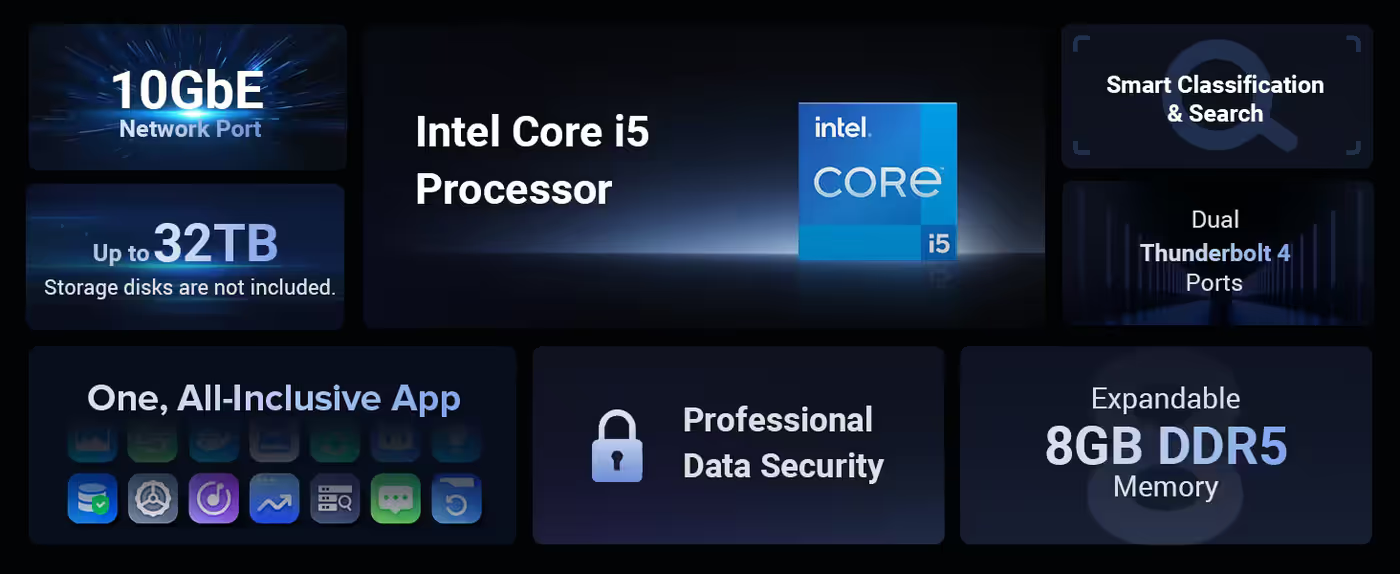
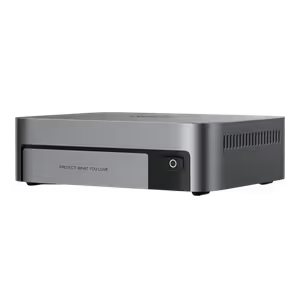
The UGREEN NASync DXP480T Plus is an all-flash network storage unit built around four M.2 NVMe slots, a 12th generation Intel Core i5 and a 10GbE network port. It measures 7.05 by 5.59 by 2.05 inches, so it sits on a shelf rather than occupying a rack. This is a NAS designed around speed rather than raw capacity.
UGREEN NASync DXP480T Plus All-Flash NAS
The UGREEN NASync DXP480T Plus is an all-flash network storage unit built around four M.2 NVMe slots, a 12th generation Intel Core i5 and a 10GbE network port. It measures 7.05 by 5.59 by 2.05 inches, so it sits on a shelf rather than occupying a rack. This is a NAS designed around speed rather than raw capacity.
Four M.2 NVMe Slots, Third-Party Drives Welcome
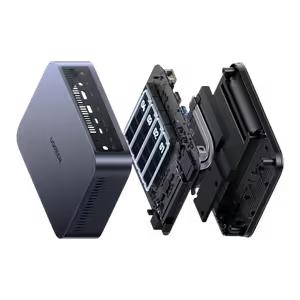
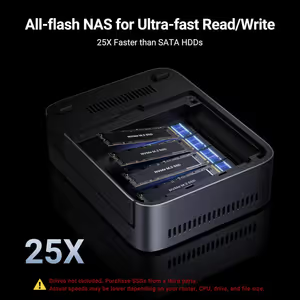
Storage runs across four M.2 NVMe slots with no SATA bays at all, which is why the unit stays this small and this quiet. It is compatible with third-party drives, so you choose the make and capacity rather than being locked to one vendor's modules. For anyone who already owns a set of NVMe drives, that is the difference between a straightforward build and starting from scratch.
Four M.2 NVMe Slots, Third-Party Drives Welcome
Storage runs across four M.2 NVMe slots with no SATA bays at all, which is why the unit stays this small and this quiet. It is compatible with third-party drives, so you choose the make and capacity rather than being locked to one vendor's modules. For anyone who already owns a set of NVMe drives, that is the difference between a straightforward build and starting from scratch.
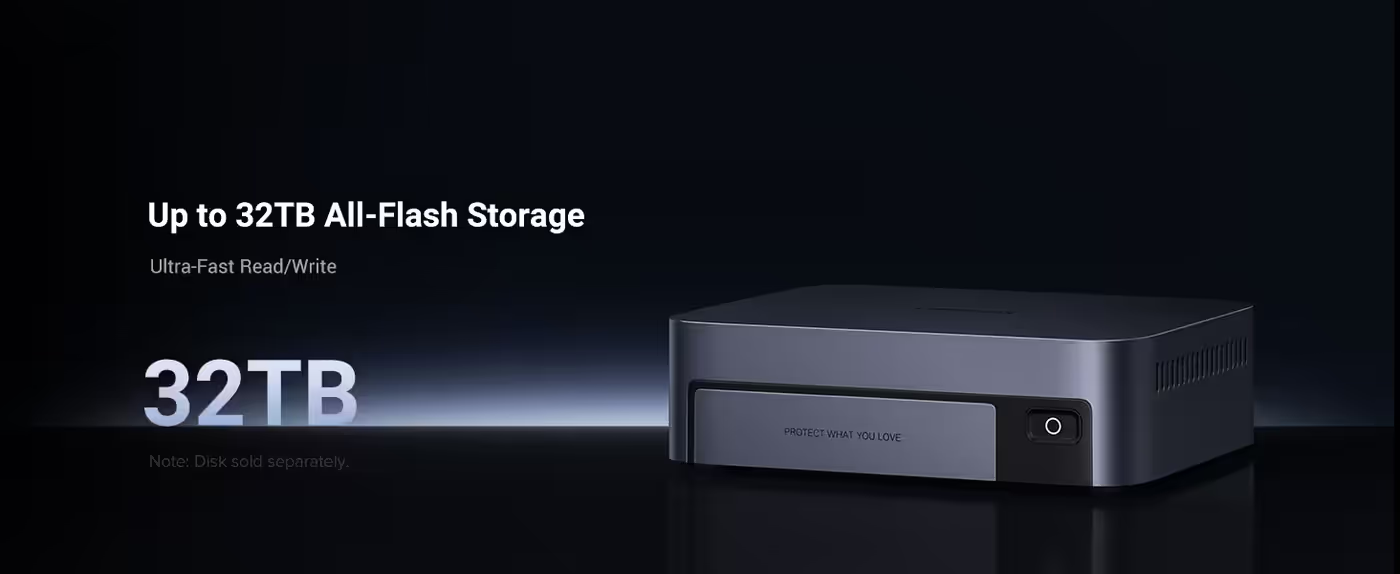
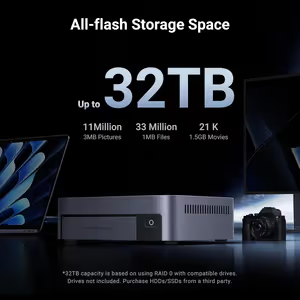
Up To 32TB Across Four 8TB Drives
Maximum capacity is 32TB, reached as four 8TB NVMe drives. All-flash arrays have historically traded capacity for speed, and 32TB is enough to hold a serious photo and video archive rather than only a working set. Every terabyte of it runs at NVMe speed, not the mechanical speed of a spinning disk array.
Up To 32TB Across Four 8TB Drives
Maximum capacity is 32TB, reached as four 8TB NVMe drives. All-flash arrays have historically traded capacity for speed, and 32TB is enough to hold a serious photo and video archive rather than only a working set. Every terabyte of it runs at NVMe speed, not the mechanical speed of a spinning disk array.
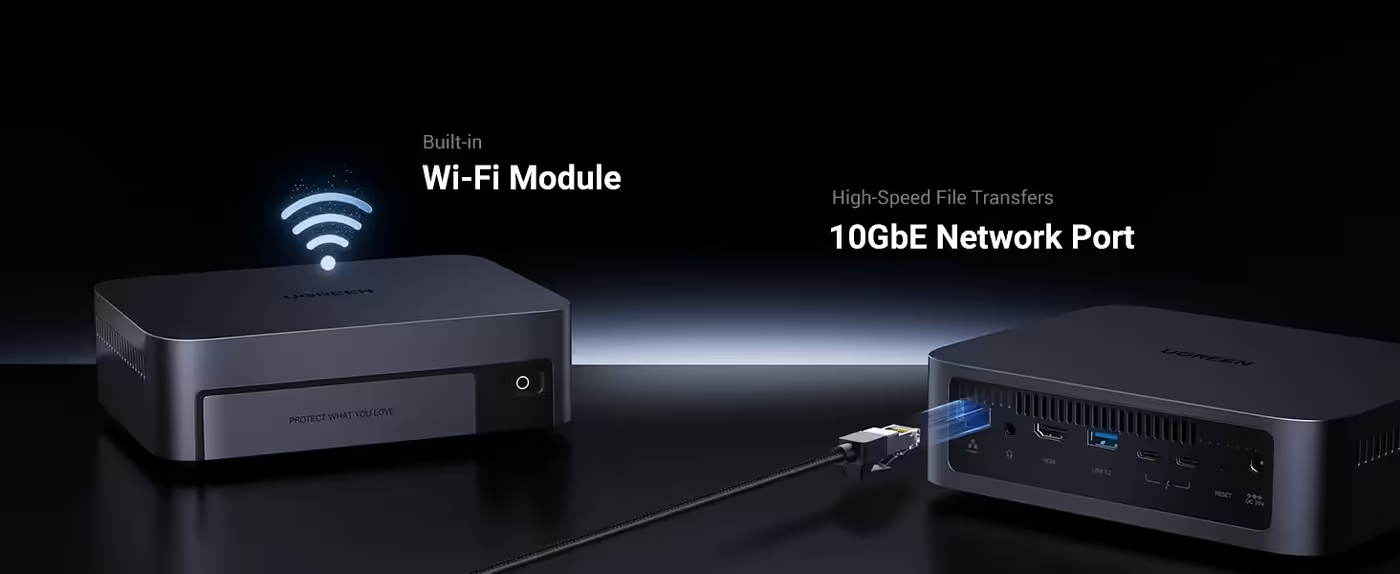
10GbE Networking At 1250MB/s
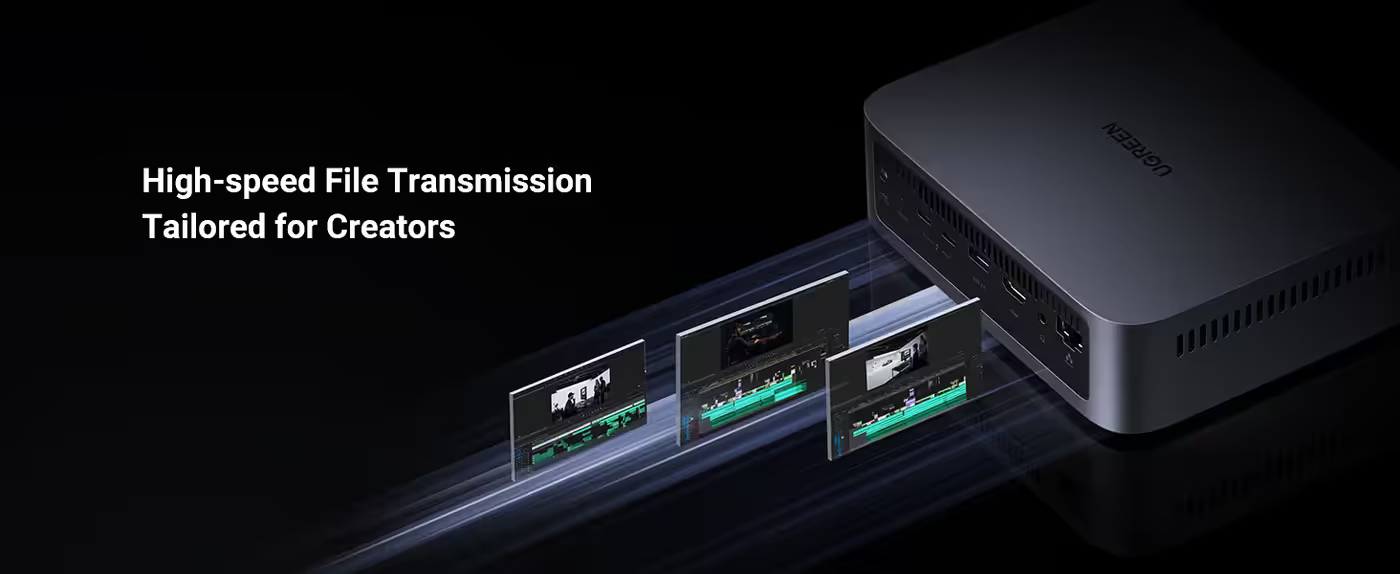
A single 10GbE RJ45 port delivers up to 1250MB/s over the network. That is ten times the ceiling of the gigabit ports most NAS units ship with, and it is the specification that decides whether you edit video directly off the NAS or copy it to a local drive first. Fast drives behind a slow port would be wasted.
10GbE Networking At 1250MB/s
A single 10GbE RJ45 port delivers up to 1250MB/s over the network. That is ten times the ceiling of the gigabit ports most NAS units ship with, and it is the specification that decides whether you edit video directly off the NAS or copy it to a local drive first. Fast drives behind a slow port would be wasted.
One Gigabyte Moves In About Three Seconds
At 1250MB/s, a one gigabyte file crosses the network in roughly three seconds. Scaled up, that is what turns a camera card offload from a coffee break into a pause, and a project folder sync from an overnight job into something you watch complete. Transfer speed is the single figure that changes how a NAS feels to use daily.
One Gigabyte Moves In About Three Seconds
At 1250MB/s, a one gigabyte file crosses the network in roughly three seconds. Scaled up, that is what turns a camera card offload from a coffee break into a pause, and a project folder sync from an overnight job into something you watch complete. Transfer speed is the single figure that changes how a NAS feels to use daily.
12th Generation Intel Core i5-1235U Processor
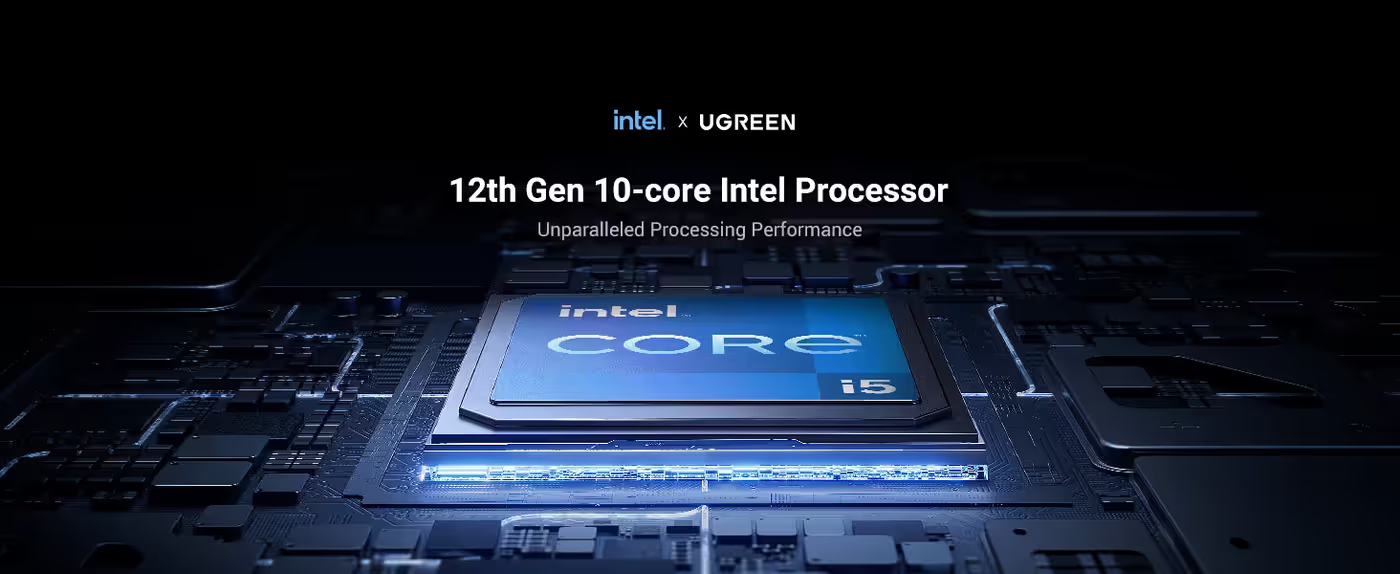
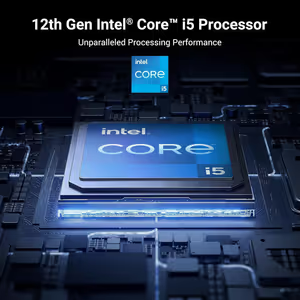
The processor is an Intel Core i5-1235U on the x86 architecture, from the 12th generation. An x86 chip of this class means the NAS runs containers, virtual machines and media transcoding as well as file serving, which the ARM processors in entry-level units struggle with. It is a small server rather than a file cabinet with a network port.
12th Generation Intel Core i5-1235U Processor
The processor is an Intel Core i5-1235U on the x86 architecture, from the 12th generation. An x86 chip of this class means the NAS runs containers, virtual machines and media transcoding as well as file serving, which the ARM processors in entry-level units struggle with. It is a small server rather than a file cabinet with a network port.
Ten Cores And Twelve Threads Of Headroom
The i5-1235U brings 10 cores and 12 threads. That thread count is what allows several jobs to run at once without any of them stalling: a backup writing, a photo library indexing, a container serving a service and a stream transcoding for a television, all in parallel. Core count is what separates a NAS you can load up from one you have to schedule around.
Ten Cores And Twelve Threads Of Headroom
The i5-1235U brings 10 cores and 12 threads. That thread count is what allows several jobs to run at once without any of them stalling: a backup writing, a photo library indexing, a container serving a service and a stream transcoding for a television, all in parallel. Core count is what separates a NAS you can load up from one you have to schedule around.
8GB DDR5 Memory Expandable To 64GB
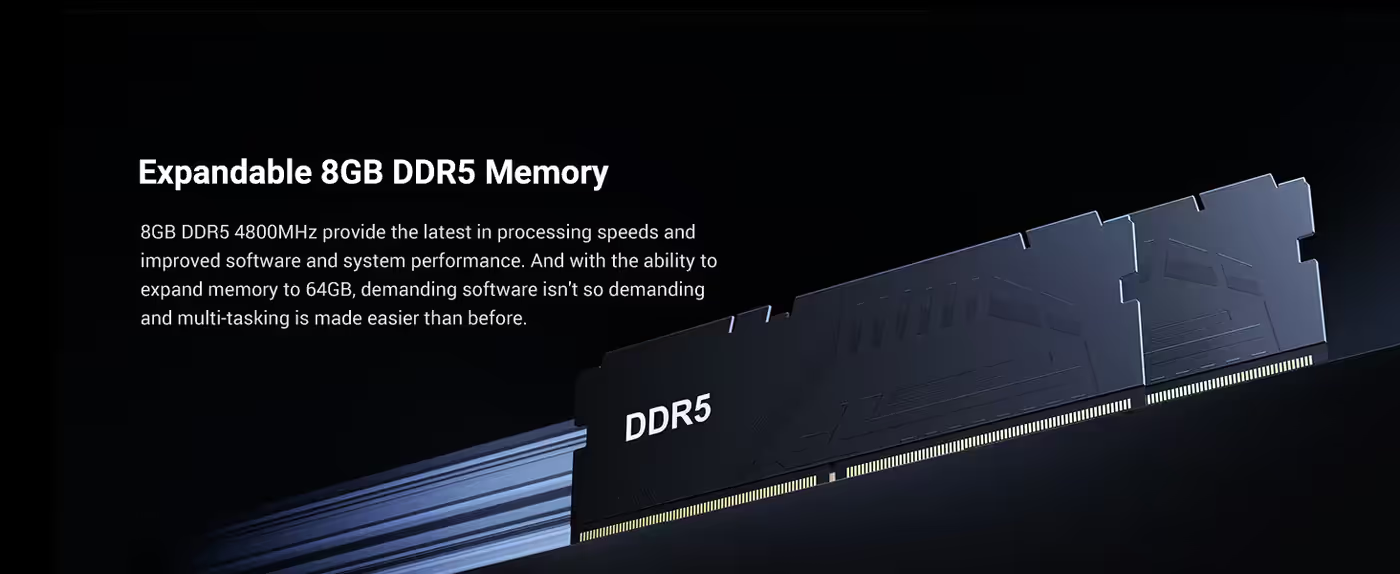
Memory ships as 8GB of DDR5 and expands to a maximum of 64GB. Memory is what a NAS uses for caching and for running applications alongside file services, so headroom matters as soon as you add virtual machines, containers or a large photo index. Eight times the shipped capacity is a generous ceiling for a unit this size.
8GB DDR5 Memory Expandable To 64GB
Memory ships as 8GB of DDR5 and expands to a maximum of 64GB. Memory is what a NAS uses for caching and for running applications alongside file services, so headroom matters as soon as you add virtual machines, containers or a large photo index. Eight times the shipped capacity is a generous ceiling for a unit this size.

RAID 0, 1, 5, 6, 10, JBOD And Basic
Supported array types run across JBOD, Basic, RAID 0, RAID 1, RAID 5, RAID 6 and RAID 10. RAID 5 is the usual home for a four-bay unit, surviving one drive failure while keeping most of the capacity usable, and RAID 6 trades more capacity to survive two. The full range means the array can be built for capacity, speed or resilience.
RAID 0, 1, 5, 6, 10, JBOD And Basic
Supported array types run across JBOD, Basic, RAID 0, RAID 1, RAID 5, RAID 6 and RAID 10. RAID 5 is the usual home for a four-bay unit, surviving one drive failure while keeping most of the capacity usable, and RAID 6 trades more capacity to survive two. The full range means the array can be built for capacity, speed or resilience.
128GB SSD System Disk Keeps Bays Free
A separate 128GB SSD carries the system as flash memory, so the operating system does not consume space or slots in the main array. Keeping the OS off the data drives means all four NVMe slots stay available for storage, and a system update never touches the array. It is the tidy way to lay out a NAS.
128GB SSD System Disk Keeps Bays Free
A separate 128GB SSD carries the system as flash memory, so the operating system does not consume space or slots in the main array. Keeping the OS off the data drives means all four NVMe slots stay available for storage, and a system update never touches the array. It is the tidy way to lay out a NAS.
ODECC Memory Error Correction Supported
The unit supports ODECC, on-die error correcting code, which detects and corrects memory errors as they happen rather than letting a flipped bit propagate into stored data. On a machine holding an archive you intend to keep for years, silent corruption is the failure mode nobody watches for, and error correction is the defence against it.
ODECC Memory Error Correction Supported
The unit supports ODECC, on-die error correcting code, which detects and corrects memory errors as they happen rather than letting a flipped bit propagate into stored data. On a machine holding an archive you intend to keep for years, silent corruption is the failure mode nobody watches for, and error correction is the defence against it.
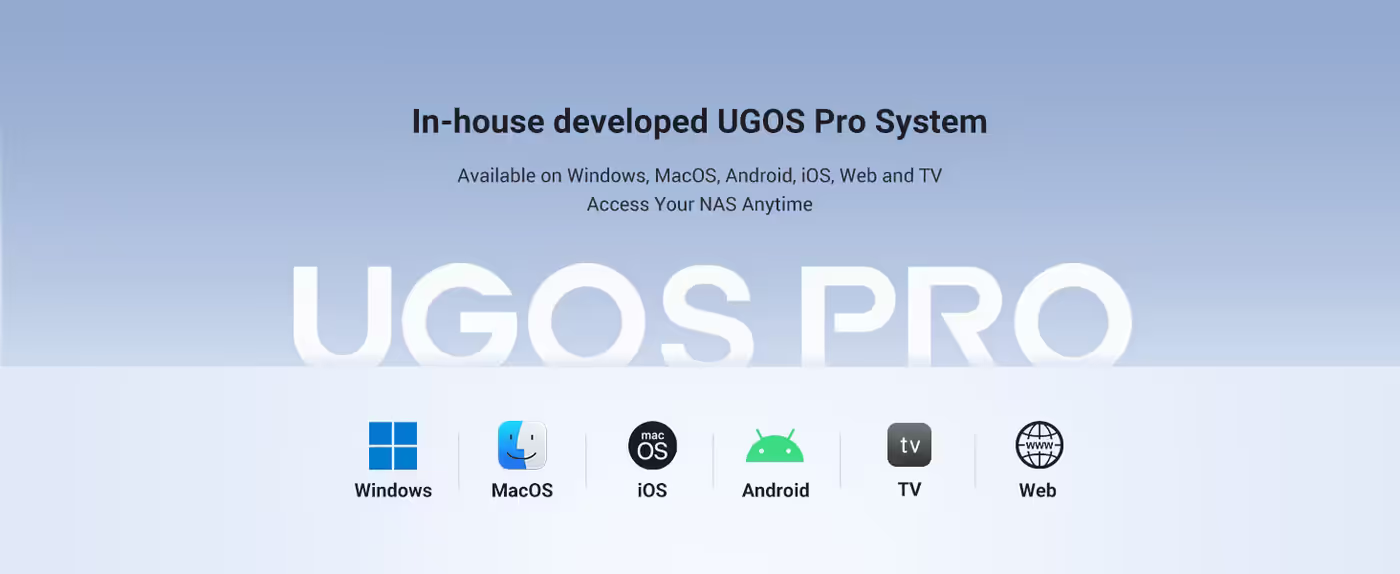
UGOS Pro In Eight Interface Languages
The unit runs UGOS Pro, UGREEN's own NAS operating system, with the interface available in English, Deutsch, Francais, Espanol, Portugues, Italiano, Chinese and Japanese. A NAS operating system is what you actually interact with day to day, so language coverage and interface quality carry more weight than most buyers expect before they own one.
UGOS Pro In Eight Interface Languages
The unit runs UGOS Pro, UGREEN's own NAS operating system, with the interface available in English, Deutsch, Francais, Espanol, Portugues, Italiano, Chinese and Japanese. A NAS operating system is what you actually interact with day to day, so language coverage and interface quality carry more weight than most buyers expect before they own one.
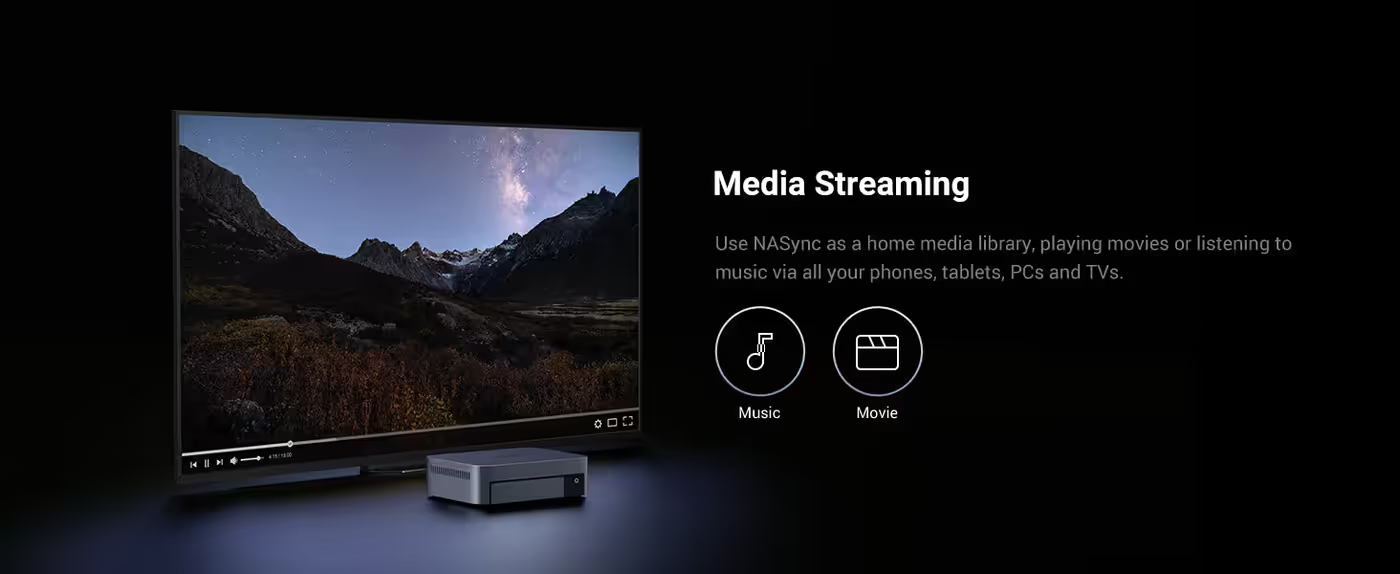
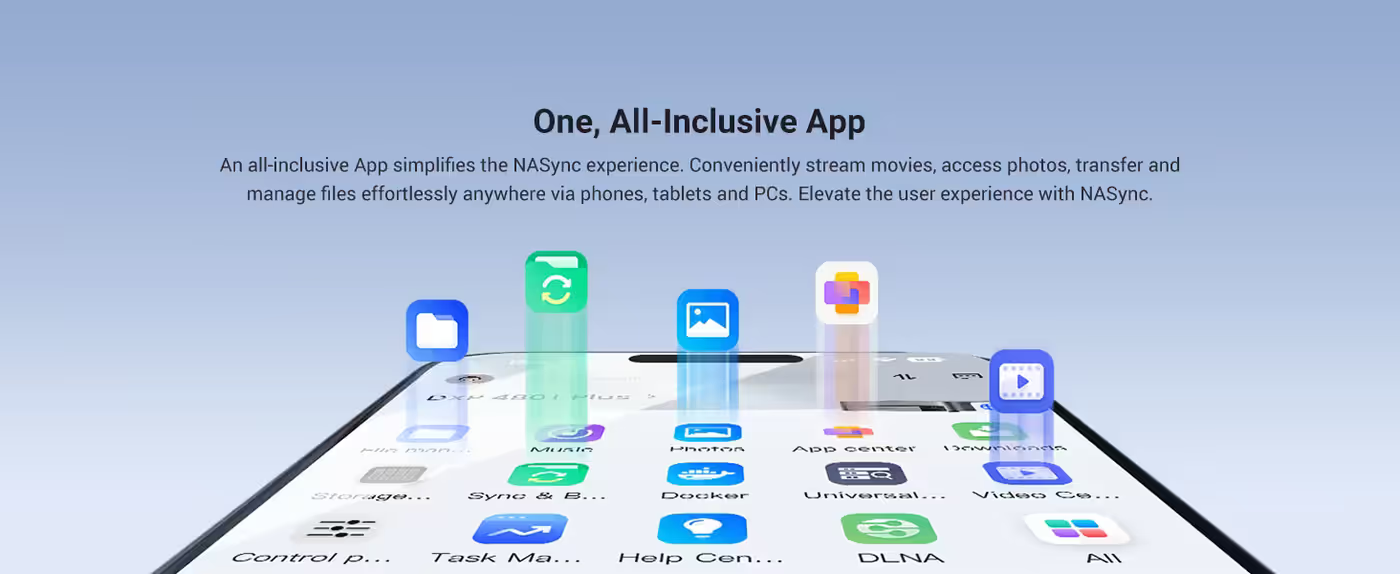
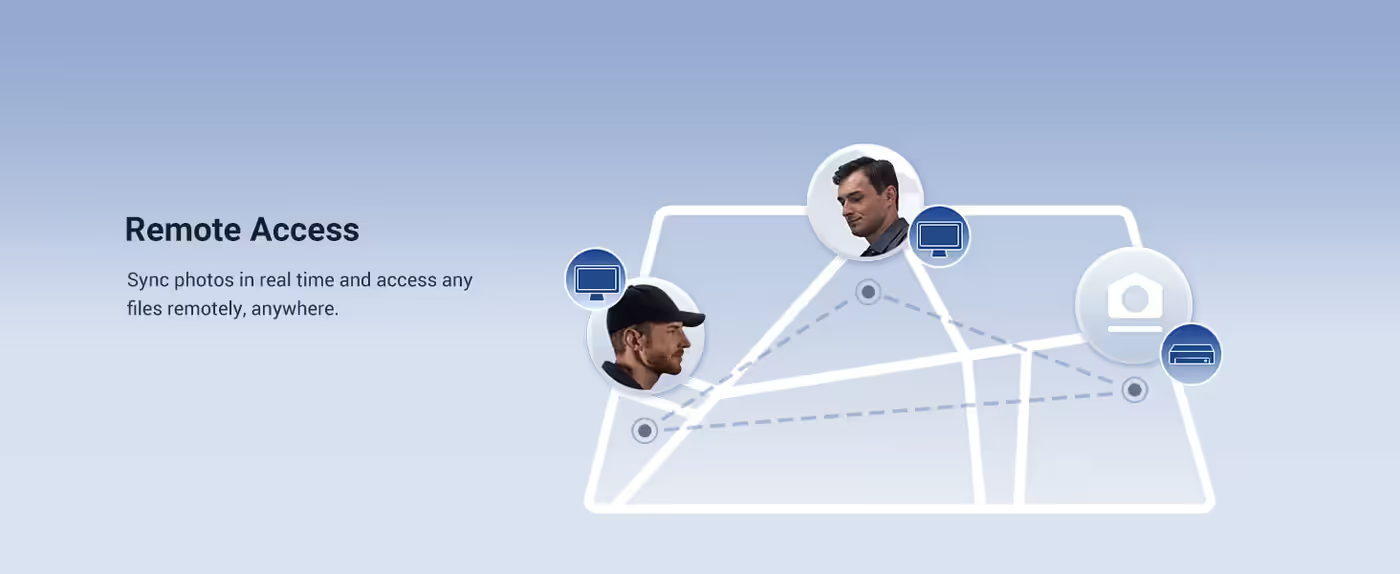
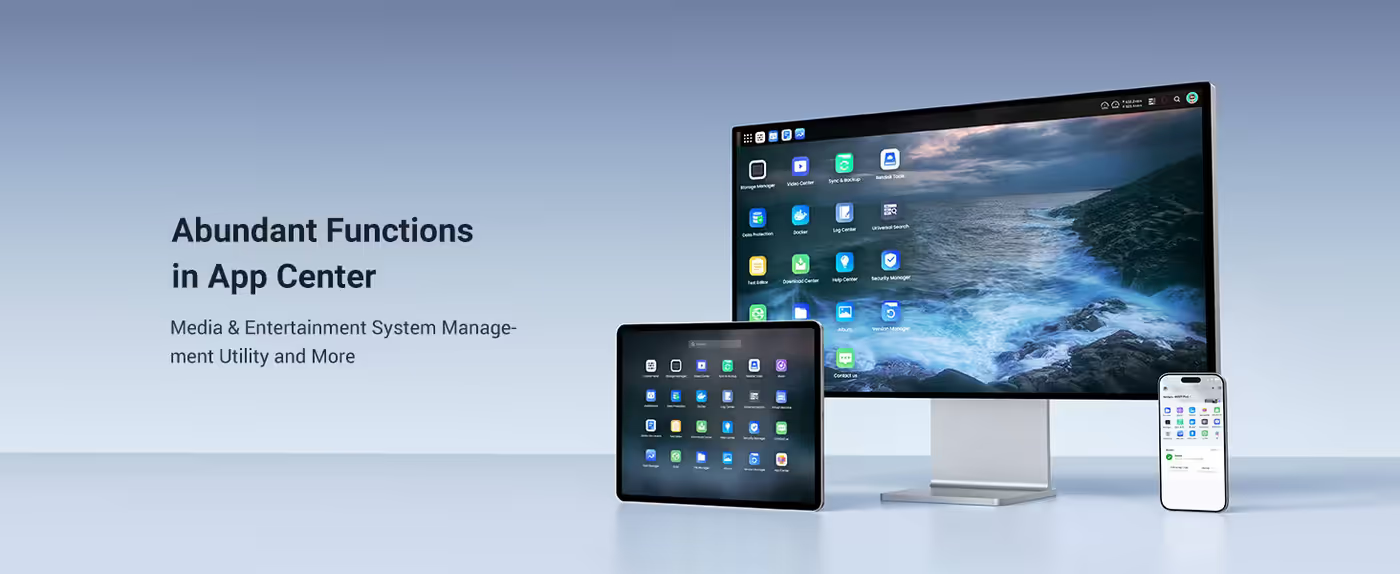
One App Across Windows, Mac And Mobile
A single app manages the NAS from Windows, Mac or a mobile device, so the same interface follows you between a desk and a phone. Consolidating every function into one application is what makes a NAS usable by a household rather than only by whoever set it up. Content stays reachable regardless of which device is to hand.
One App Across Windows, Mac And Mobile
A single app manages the NAS from Windows, Mac or a mobile device, so the same interface follows you between a desk and a phone. Consolidating every function into one application is what makes a NAS usable by a household rather than only by whoever set it up. Content stays reachable regardless of which device is to hand.
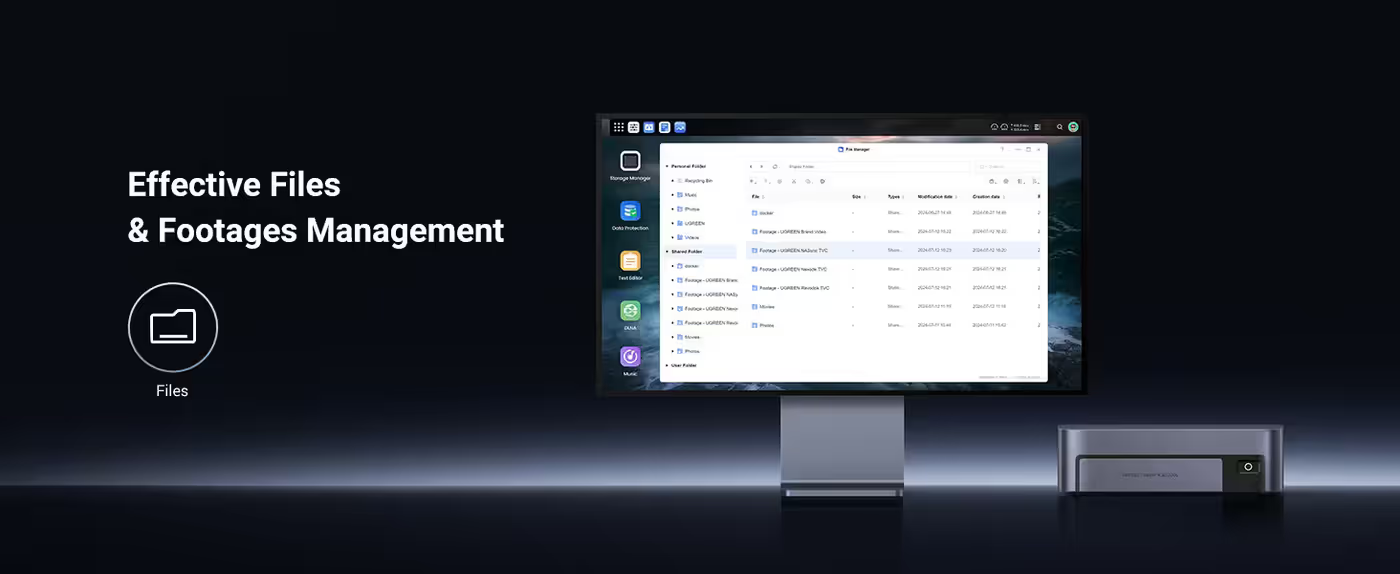
AI Photo Album Sorts Faces Automatically
The built-in AI photo organiser categorises images by the faces it recognises, building albums per person without you tagging anything. On a library that has grown to tens of thousands of photos, that is the difference between an archive you can search and a folder tree nobody opens. It runs locally on the NAS hardware.
AI Photo Album Sorts Faces Automatically
The built-in AI photo organiser categorises images by the faces it recognises, building albums per person without you tagging anything. On a library that has grown to tens of thousands of photos, that is the difference between an archive you can search and a folder tree nobody opens. It runs locally on the NAS hardware.
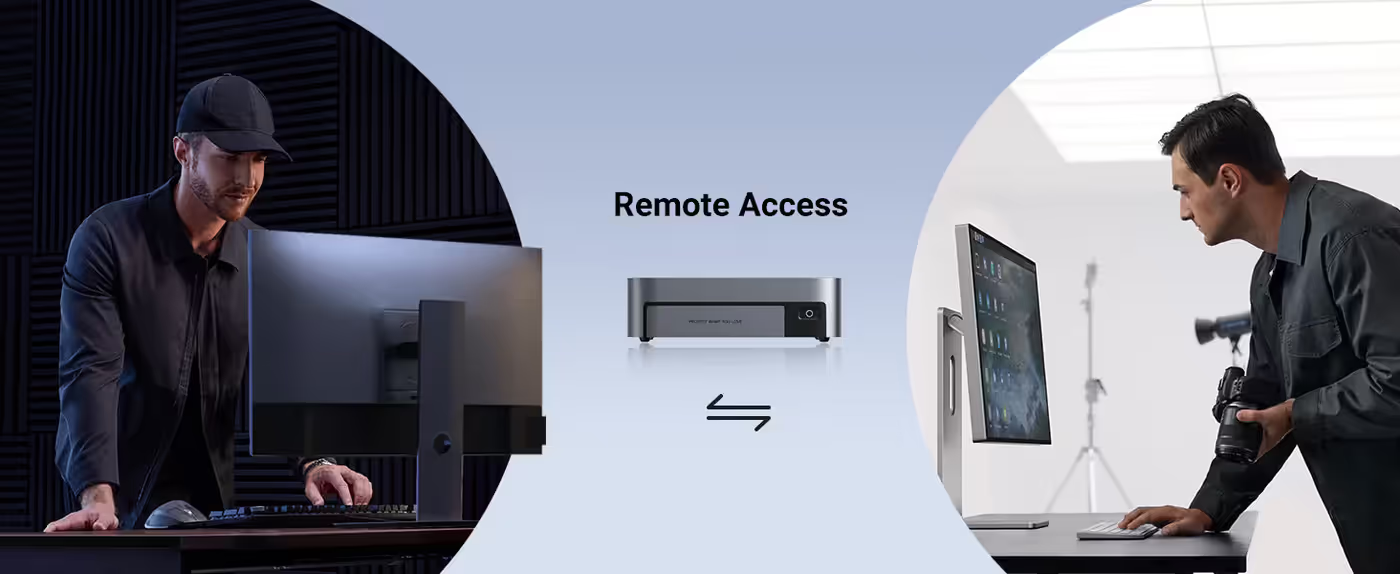
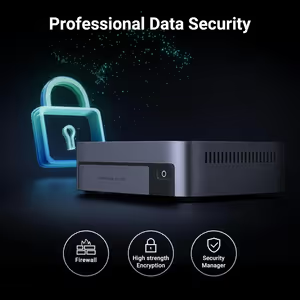
Local Encrypted Two-Factor Authentication
Access protection includes local encrypted two-factor authentication, so reaching the data requires a second factor rather than a password alone. Running that verification locally rather than through an external service means the security of your files does not depend on somebody else's login system staying available. For a NAS holding personal records, that distinction matters.
Local Encrypted Two-Factor Authentication
Access protection includes local encrypted two-factor authentication, so reaching the data requires a second factor rather than a password alone. Running that verification locally rather than through an external service means the security of your files does not depend on somebody else's login system staying available. For a NAS holding personal records, that distinction matters.

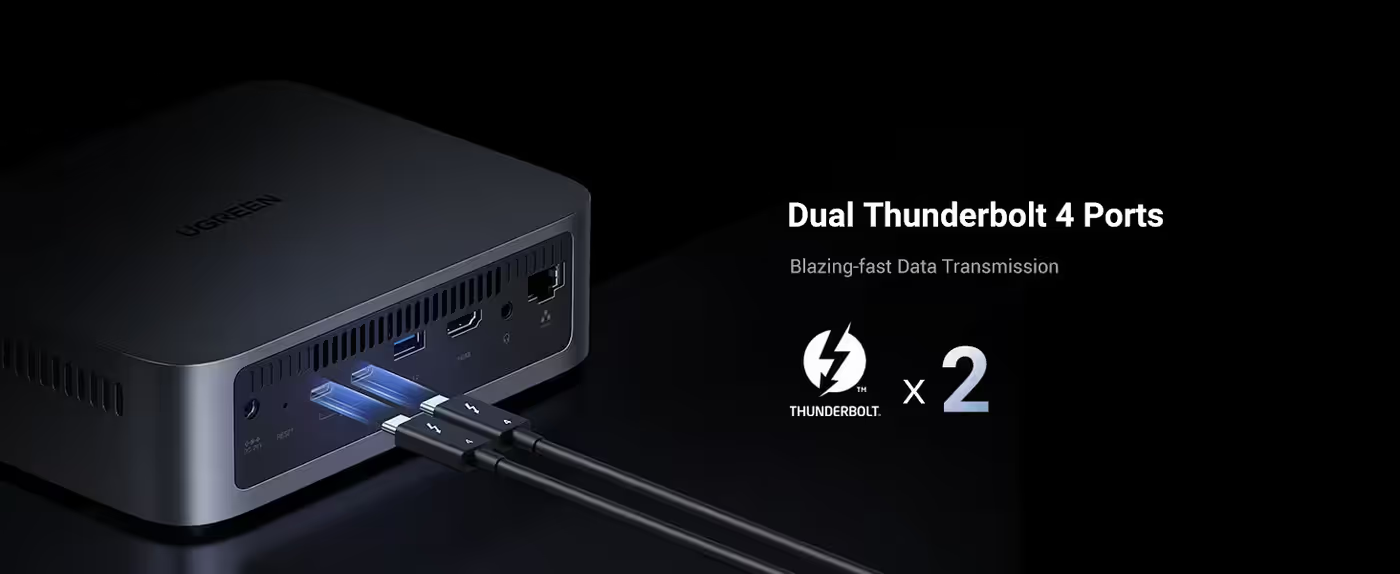
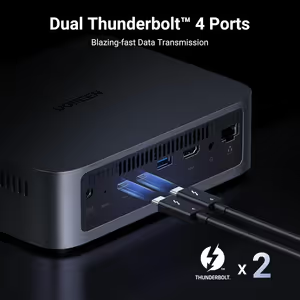
Two Thunderbolt 4 Ports At 40Gb/s
Two Thunderbolt 4 ports on the rear panel run at 40Gb/s each. Thunderbolt is faster than the 10GbE network link, so a directly attached workstation gets the quickest possible path to the array. It also opens up direct attached storage expansion and high-speed peripheral connections that a standard NAS simply cannot offer.
Two Thunderbolt 4 Ports At 40Gb/s
Two Thunderbolt 4 ports on the rear panel run at 40Gb/s each. Thunderbolt is faster than the 10GbE network link, so a directly attached workstation gets the quickest possible path to the array. It also opens up direct attached storage expansion and high-speed peripheral connections that a standard NAS simply cannot offer.
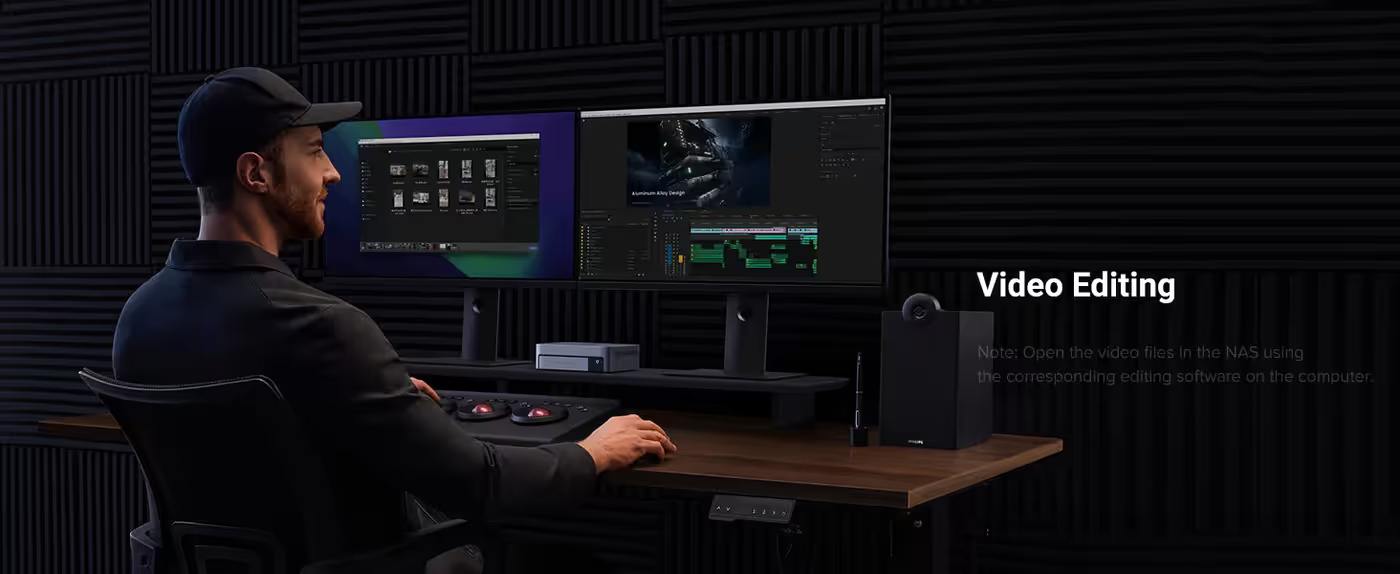
USB-A Port At 10Gb/s For External Drives
A rear USB-A port runs at 10Gb/s, which is the connection you use for plugging in an external drive to run a backup off the NAS or to import a bulk archive into it. Ten gigabits is fast enough that a USB drive is not the bottleneck, which is not true of the USB 2.0 ports still fitted to cheaper units.
USB-A Port At 10Gb/s For External Drives
A rear USB-A port runs at 10Gb/s, which is the connection you use for plugging in an external drive to run a backup off the NAS or to import a bulk archive into it. Ten gigabits is fast enough that a USB drive is not the bottleneck, which is not true of the USB 2.0 ports still fitted to cheaper units.
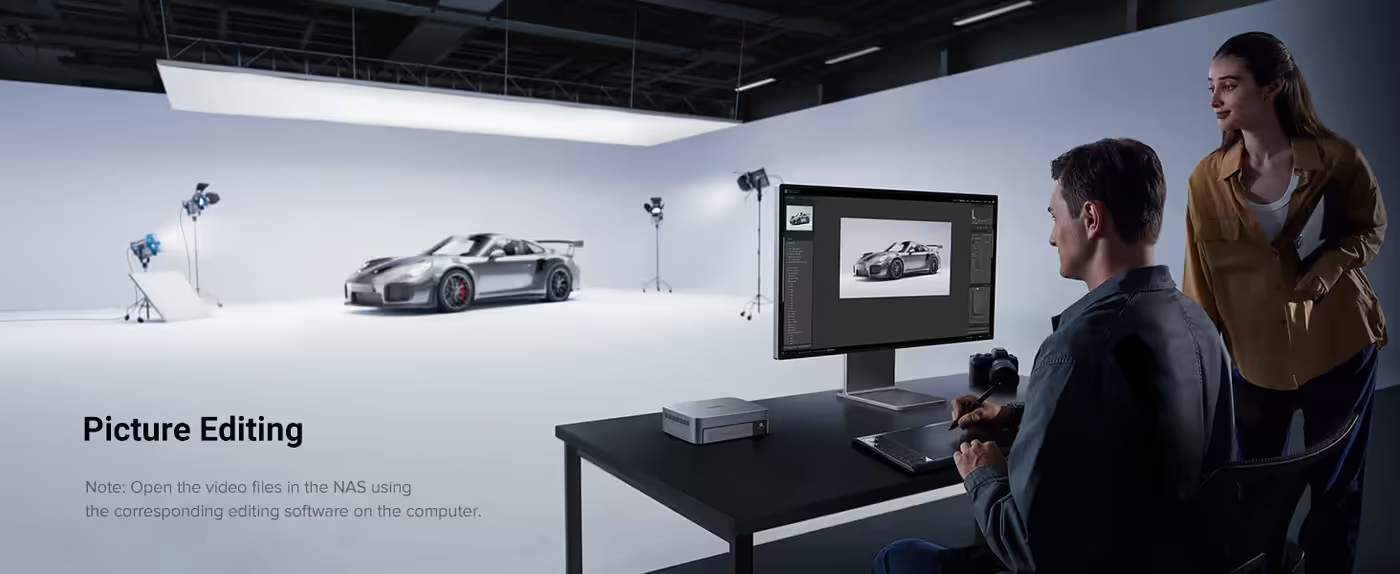
8K HDMI Output Built Into The Unit
An HDMI port supports 8K output, letting the NAS drive a display directly rather than only serving files over the network. That turns the unit into a media player connected straight to a television, or gives you a local console for administration without needing another computer on the network to reach the interface.
8K HDMI Output Built Into The Unit
An HDMI port supports 8K output, letting the NAS drive a display directly rather than only serving files over the network. That turns the unit into a media player connected straight to a television, or gives you a local console for administration without needing another computer on the network to reach the interface.
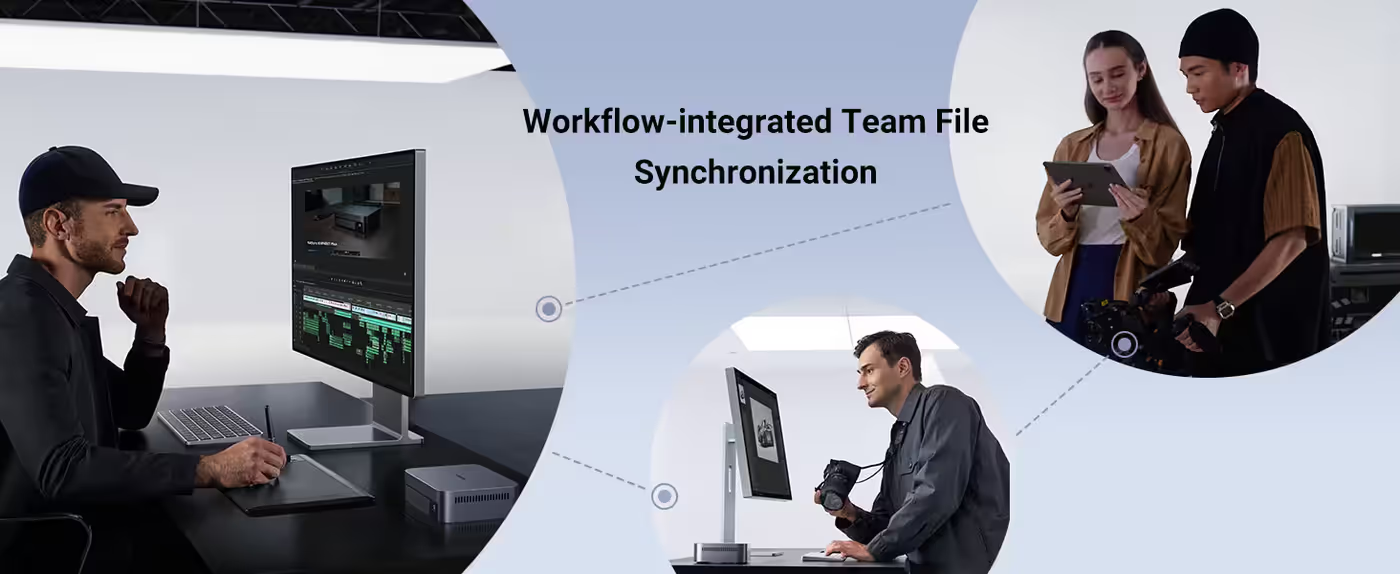
Built-In Wi-Fi For Flexible Placement
Wi-Fi is built into the unit, so it can join a network without being tethered to a switch by cable. That flexibility matters when the best physical spot for a NAS is not next to the router, though the 10GbE port remains the connection to use whenever transfer speed is what you are after.
Built-In Wi-Fi For Flexible Placement
Wi-Fi is built into the unit, so it can join a network without being tethered to a switch by cable. That flexibility matters when the best physical spot for a NAS is not next to the router, though the 10GbE port remains the connection to use whenever transfer speed is what you are after.
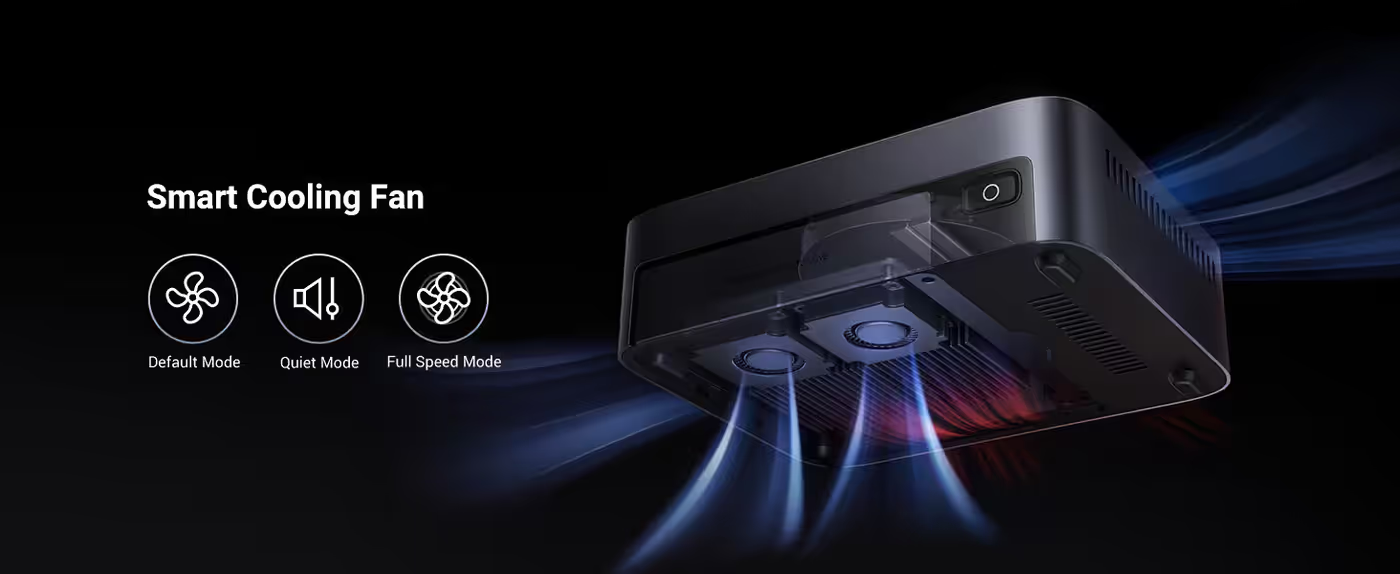
Compact Footprint With Low Power Draw
The unit measures 7.05 by 5.59 by 2.05 inches and draws 23.14W while accessing drives, dropping to 16.94W when drives hibernate. For a machine that stays powered around the clock, that idle figure is the number that matters, and an all-flash design is what keeps both the draw and the noise this low.
Compact Footprint With Low Power Draw
The unit measures 7.05 by 5.59 by 2.05 inches and draws 23.14W while accessing drives, dropping to 16.94W when drives hibernate. For a machine that stays powered around the clock, that idle figure is the number that matters, and an all-flash design is what keeps both the draw and the noise this low.
FAQ
Frequently Asked Questions
Everything you need to know about this product
It has four M.2 NVMe slots and no SATA bays, making it an all-flash NAS.
Maximum capacity is 32TB, reached as four 8TB NVMe drives.
Yes, the unit is compatible with third-party drives, so you are not locked to one vendor's modules.
A 10GbE RJ45 port delivers up to 1250MB/s, which moves a one gigabyte file in about three seconds.
It runs a 12th generation Intel Core i5-1235U with 10 cores and 12 threads on the x86 architecture.
It ships with 8GB of DDR5 memory and can be expanded to a maximum of 64GB.
Supported types are JBOD, Basic, RAID 0, RAID 1, RAID 5, RAID 6 and RAID 10.
No, a separate 128GB SSD carries the system, leaving all four NVMe slots free for storage.
It runs UGOS Pro, with the interface available in eight languages including English.
There are two Thunderbolt 4 ports at 40Gb/s, one USB-A port at 10Gb/s and an 8K HDMI output.
The built-in AI photo organiser categorises images by recognised faces, building albums without manual tagging.
It draws 23.14W while accessing drives and 16.94W when the drives are hibernating.

AI-Generated Content:These FAQs are generated by an automated AI system and may contain inaccuracies or omissions. Evetech makes no warranties, express or implied, regarding their completeness or reliability. For definitive information, please refer to the manufacturer's official specifications.

Please Note: Product images are for illustrative purposes only and may differ from the actual product.
Choose your
own PC
Hand-pick every part with live stock, compatibility, and instant pricing.
Try the new builderPrice Inc. Vat
R 14,799
Save R 2,200.00
ListR 16,999
14799Free Delivery
Qty:
In Stock with Evetech
Choose your
own PC
Hand-pick every part with live stock, compatibility, and instant pricing.
Try the new builderUGREEN NASync DXP480T Plus NAS Storage