
1 Year Local Warranty
Model No : ASUS GT-BE19000AI
Price Inc. Vat
R 11,999
Save R 1,200
ListR 13,199
11999Free Delivery
Qty:
In Stock with Evetech
Price Inc. Vat
R 11,999
Save R 1,200
ListR 13,199
11999Free Delivery
Qty:
In Stock with Evetech
Trusted Partners
Please Note: Product images are for illustrative purposes only and may differ from the actual product.
Hand-pick every part with live stock, compatibility, and instant pricing.
Try the new builderHand-pick every part with live stock, compatibility, and instant pricing.
Try the new builderASUS ROG Rapture GT-BE19000AI Tri-Band WiFi 7 AI Gaming Rout
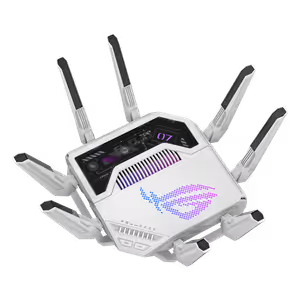
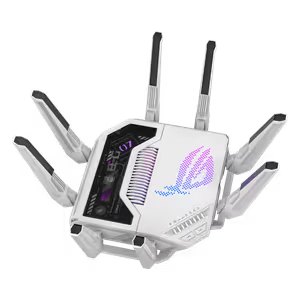
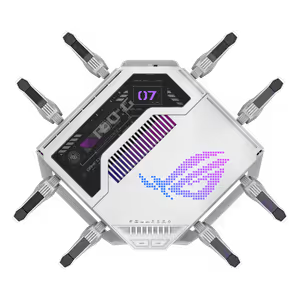
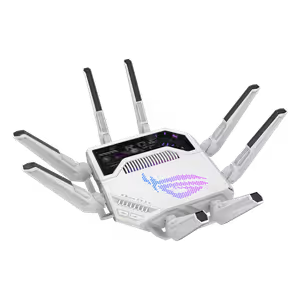
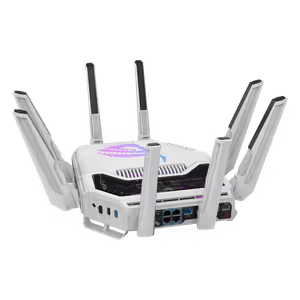
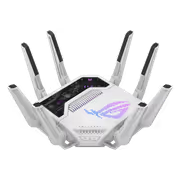
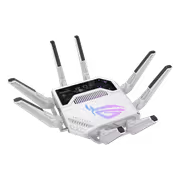
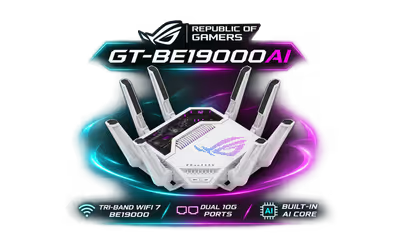
The ASUS ROG Rapture GT-BE19000AI is a tri-band WiFi 7 gaming router built around two systems: the router itself, and a separate AI board with its own processor, memory and NPU. It adds two 10G ports, four 2.5G ports, Docker support for home apps and AI Game Boost for lower latency in online games.
The ASUS ROG Rapture GT-BE19000AI is a tri-band WiFi 7 gaming router built around two systems: the router itself, and a separate AI board with its own processor, memory and NPU. It adds two 10G ports, four 2.5G ports, Docker support for home apps and AI Game Boost for lower latency in online games.
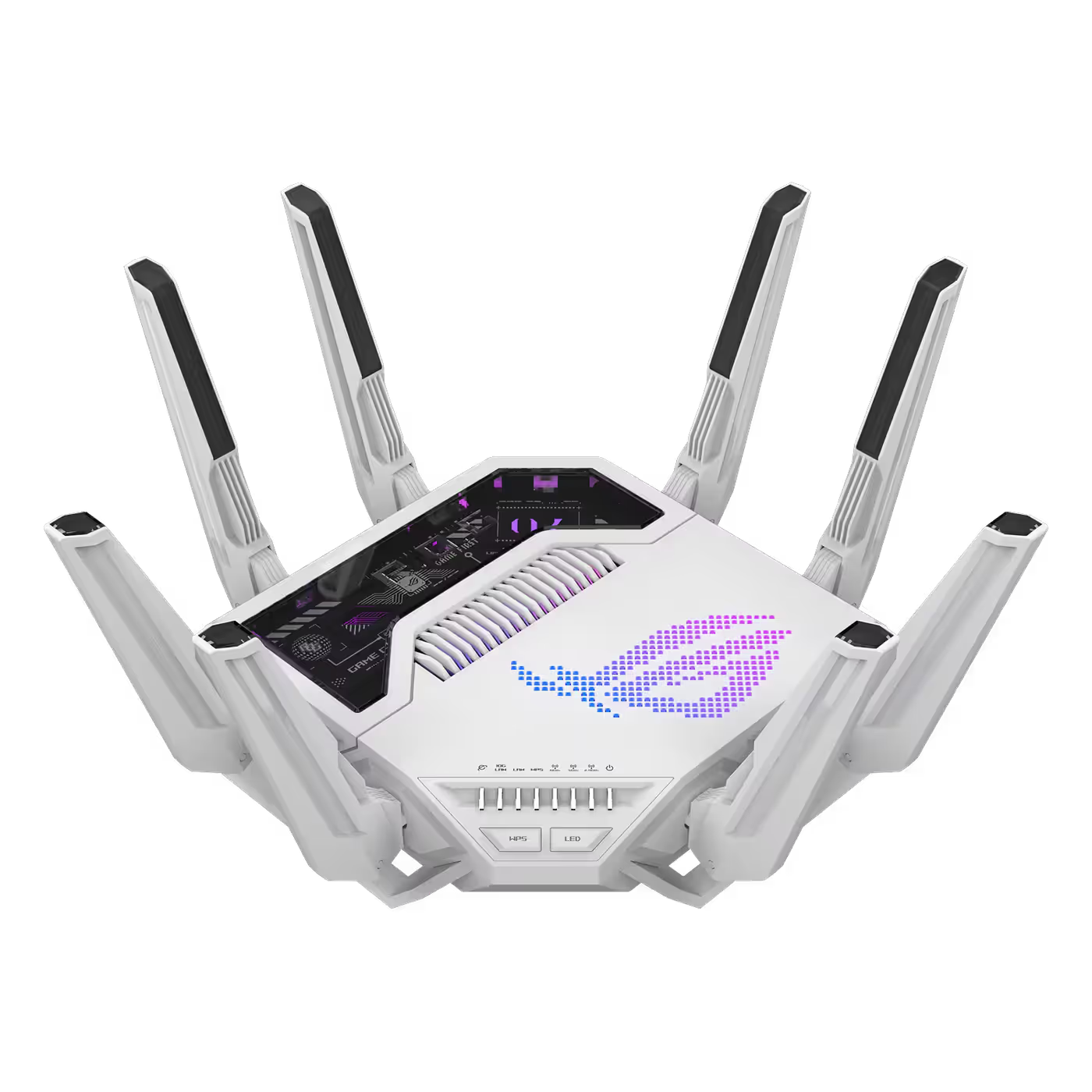
Each of the three bands runs 4x4 with 4096-QAM: up to 1376Mbps on 2.4GHz, 5764Mbps on 5GHz and 11529Mbps on 6GHz, where WiFi 7 devices can use 320MHz-wide channels. The router also supports WiFi 6 and older standards, so existing phones, laptops and consoles connect as normal.
Each of the three bands runs 4x4 with 4096-QAM: up to 1376Mbps on 2.4GHz, 5764Mbps on 5GHz and 11529Mbps on 6GHz, where WiFi 7 devices can use 320MHz-wide channels. The router also supports WiFi 6 and older standards, so existing phones, laptops and consoles connect as normal.
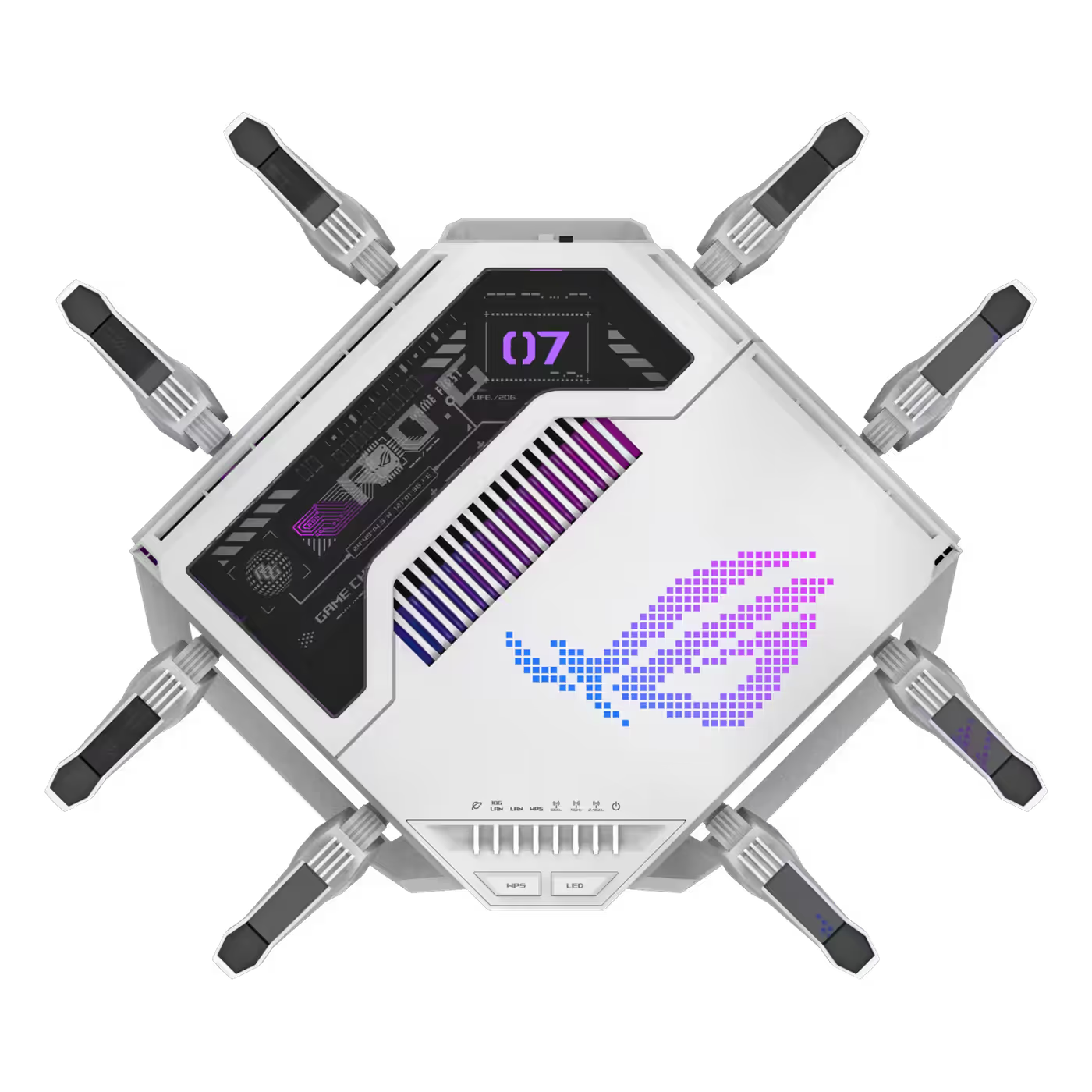
Next to the router's own 2.6GHz quad-core CPU, 4GB RAM and 32GB flash, a separate AI board carries a quad-core CPU, 4GB RAM, 32GB flash and an NPU rated at 7.9 TOPS. AI features run on that board, so they do not take resources away from routing traffic.
Next to the router's own 2.6GHz quad-core CPU, 4GB RAM and 32GB flash, a separate AI board carries a quad-core CPU, 4GB RAM, 32GB flash and an NPU rated at 7.9 TOPS. AI features run on that board, so they do not take resources away from routing traffic.
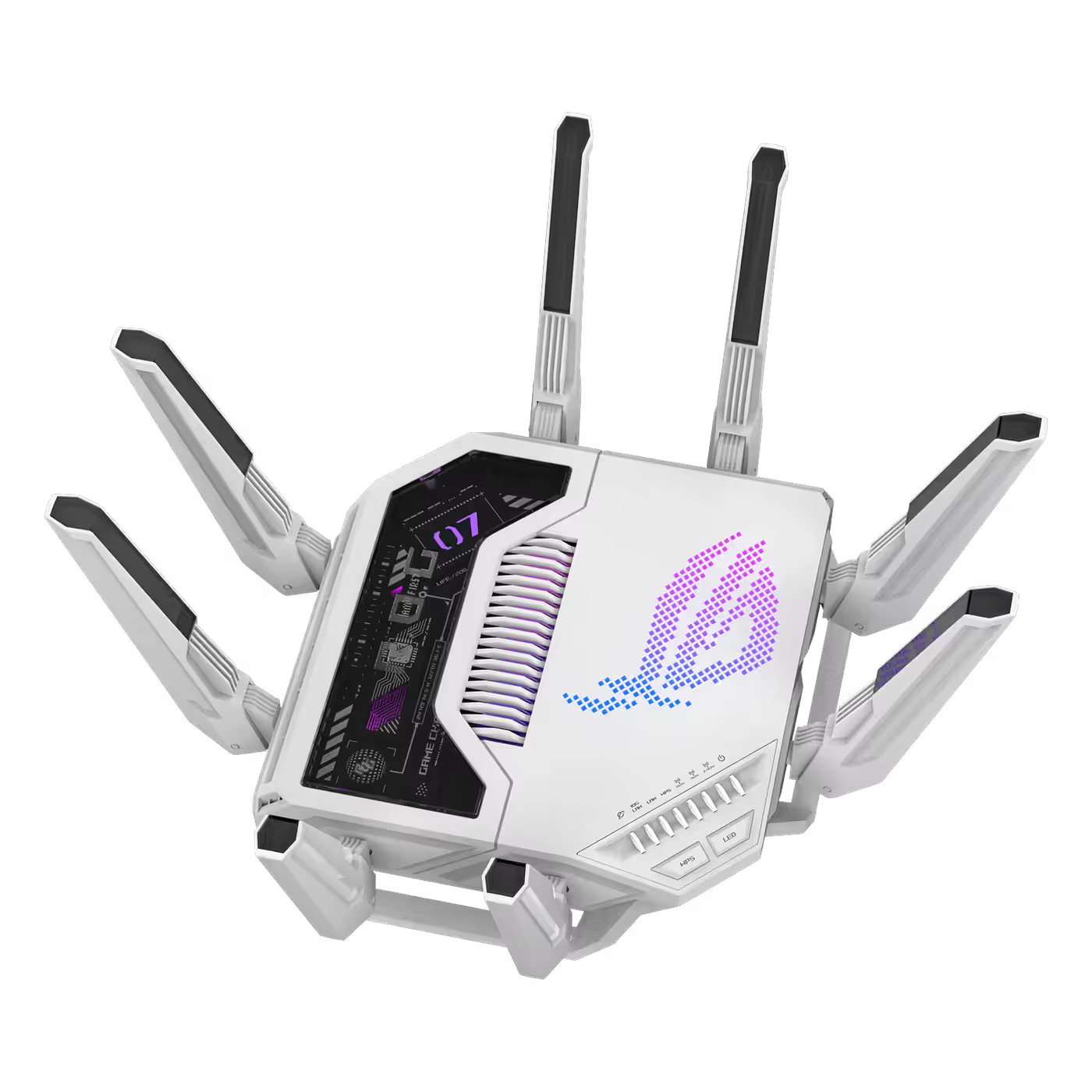
The AI board runs Docker containers, so ASUS names apps such as Home Assistant for smart home control and Frigate for camera video recognition as ones that can run on the router itself, without a separate PC or development board. A private Edge AI assistant answers router questions locally, in English for now.
The AI board runs Docker containers, so ASUS names apps such as Home Assistant for smart home control and Frigate for camera video recognition as ones that can run on the router itself, without a separate PC or development board. A private Edge AI assistant answers router questions locally, in English for now.
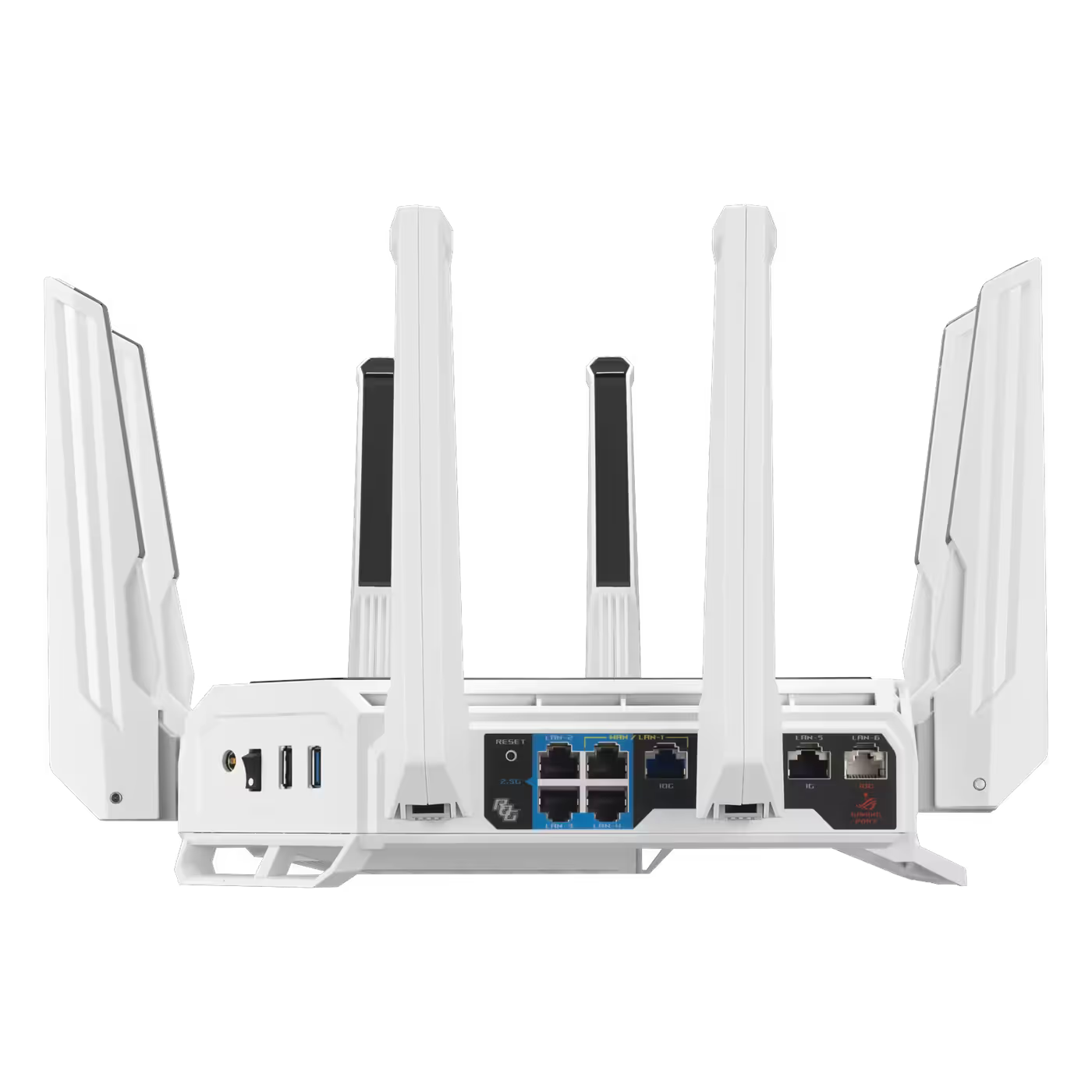
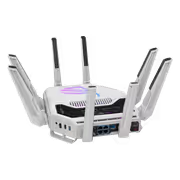
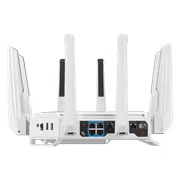
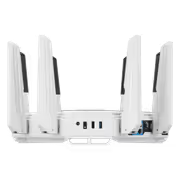
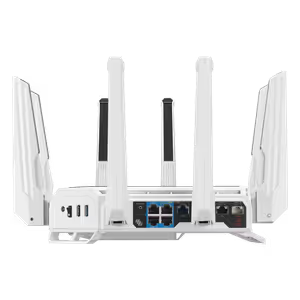
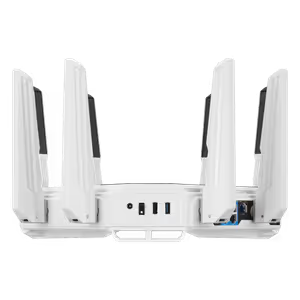
The back carries a 10G WAN/LAN port, a 10G LAN port that works as a dedicated gaming port, a 2.5G WAN/LAN port, three 2.5G LAN ports and a Gigabit LAN port. ASUS rates the total wired capacity at up to 31G, with up to 20G link aggregation.
The back carries a 10G WAN/LAN port, a 10G LAN port that works as a dedicated gaming port, a 2.5G WAN/LAN port, three 2.5G LAN ports and a Gigabit LAN port. ASUS rates the total wired capacity at up to 31G, with up to 20G link aggregation.
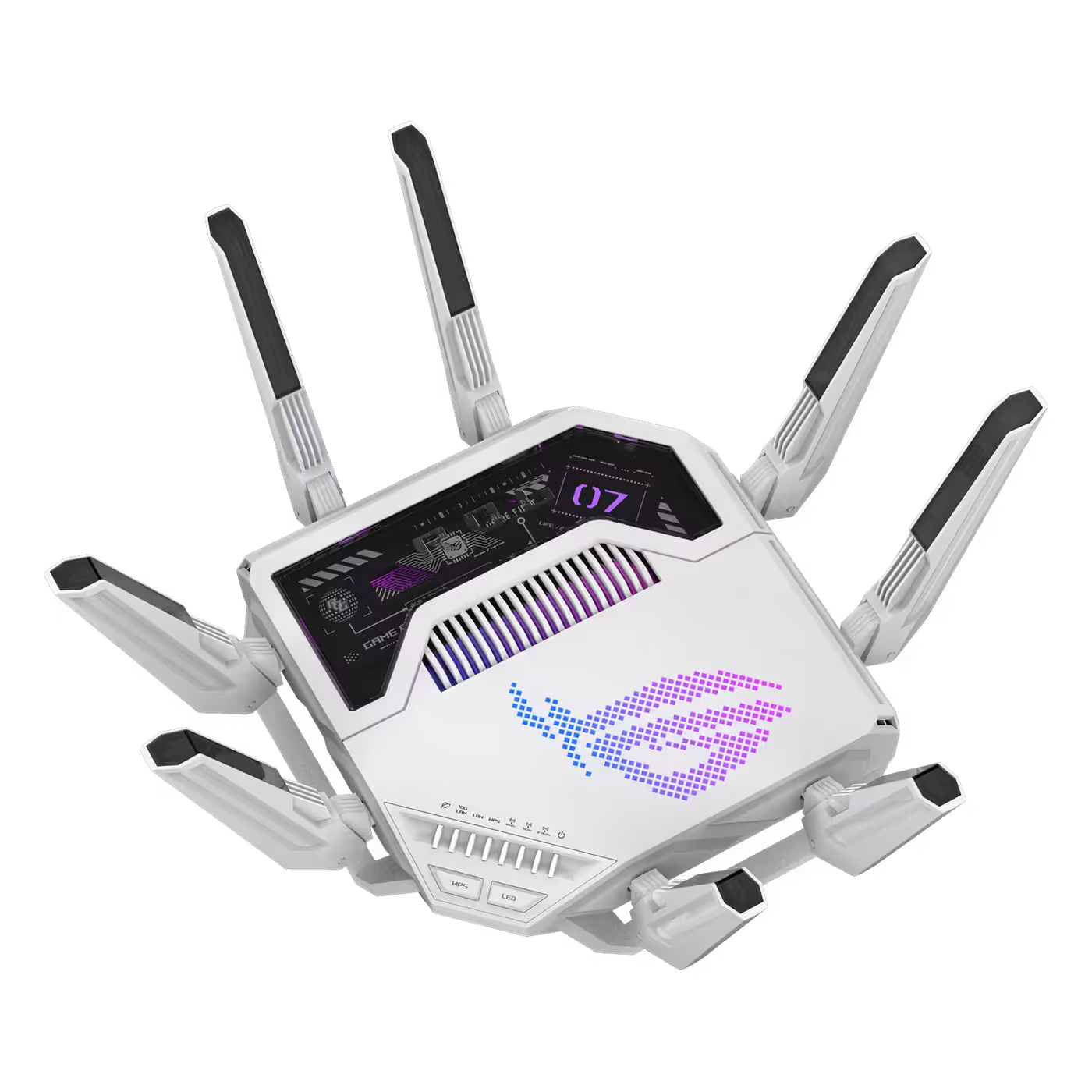
Gaming devices are detected and prioritised automatically over LAN or WiFi. Adaptive QoE adjusts traffic priorities in real time, and GTNet routes game traffic by real-time latency rather than the shortest path. ASUS quotes up to 34% lower latency in its own lab tests on a bandwidth-limited connection.
Gaming devices are detected and prioritised automatically over LAN or WiFi. Adaptive QoE adjusts traffic priorities in real time, and GTNet routes game traffic by real-time latency rather than the shortest path. ASUS quotes up to 34% lower latency in its own lab tests on a bandwidth-limited connection.
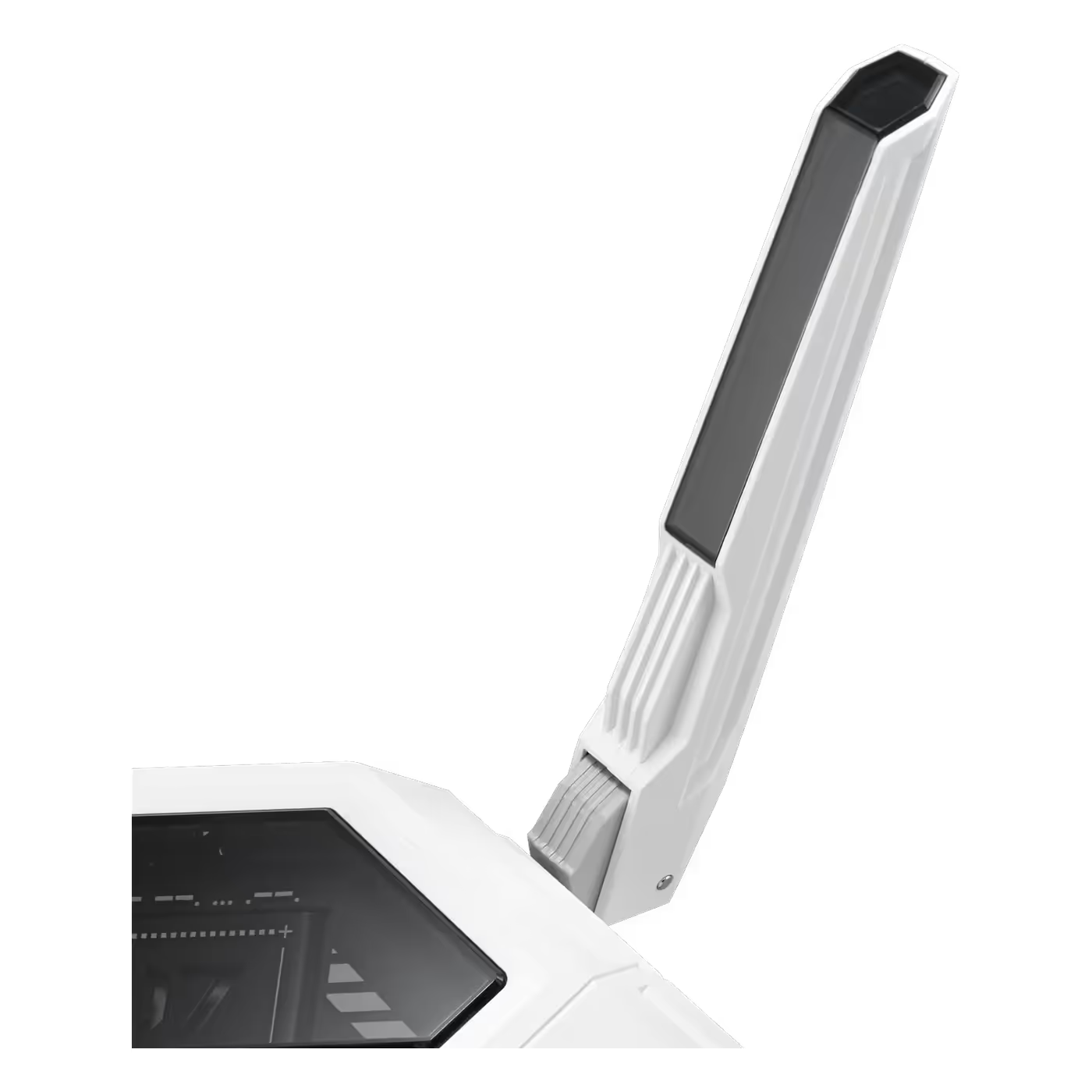
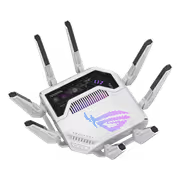
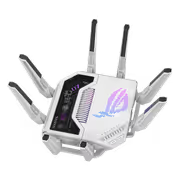
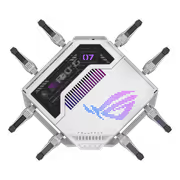
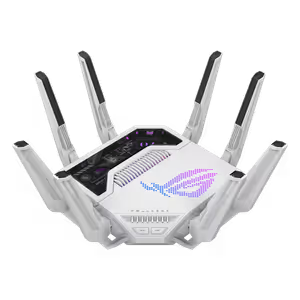
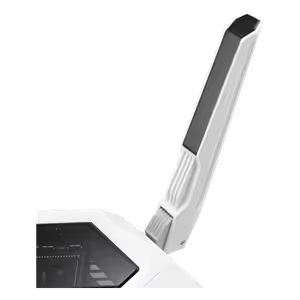
Eight external antennas carry the three 4x4 bands. WiFi Insight scans every channel for WiFi and non-WiFi interference, such as microwaves, switches channels when needed and keeps a 24-hour history, while Energy Saving Mode switches off bands and functions that are not being used.
Eight external antennas carry the three 4x4 bands. WiFi Insight scans every channel for WiFi and non-WiFi interference, such as microwaves, switches channels when needed and keeps a 24-hour history, while Energy Saving Mode switches off bands and functions that are not being used.
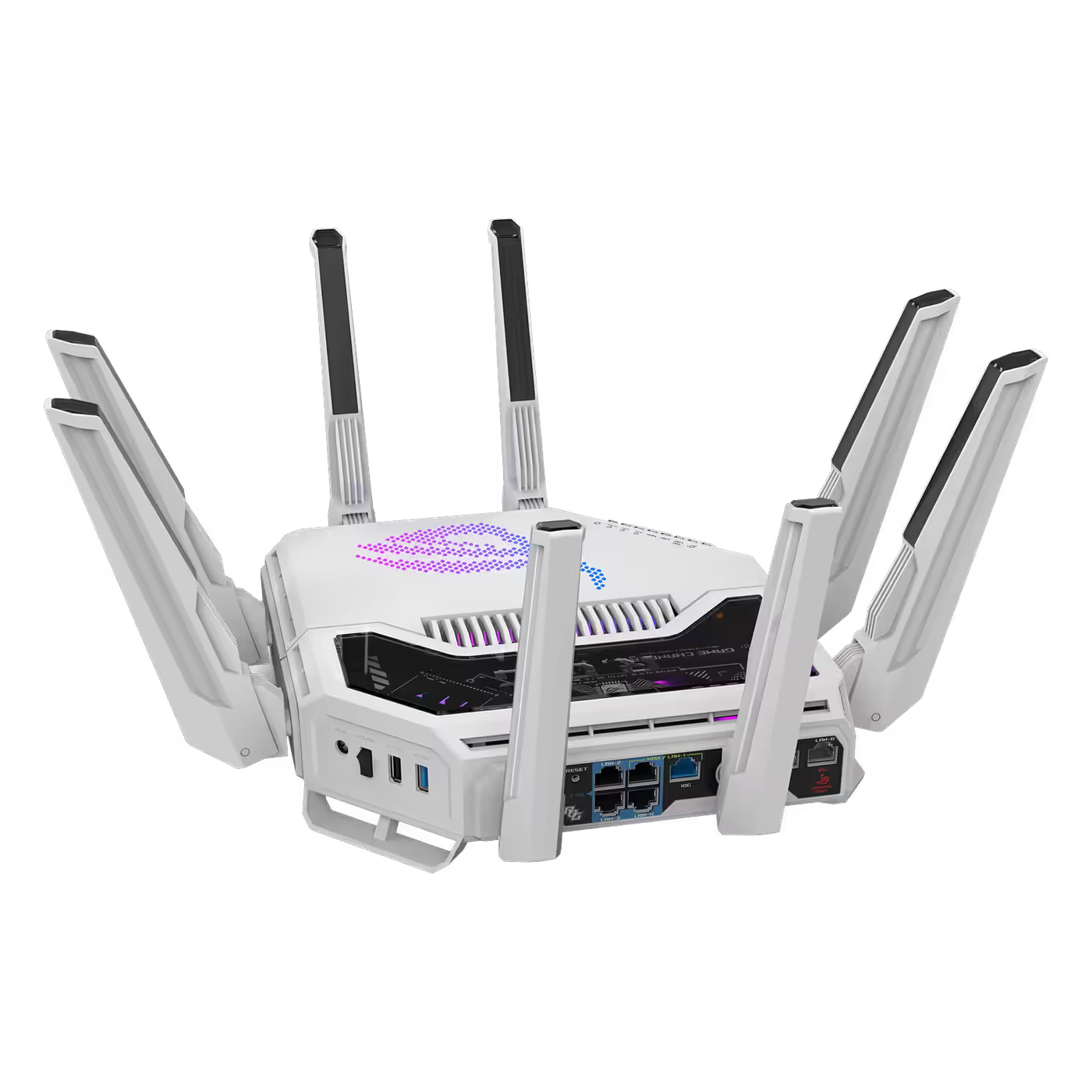
A USB 3.2 Gen 1 port and a USB 2.0 port let the router share a drive across the network, act as a media server with Samba and FTP access, or connect a 4G or 5G phone for mobile tethering.
A USB 3.2 Gen 1 port and a USB 2.0 port let the router share a drive across the network, act as a media server with Samba and FTP access, or connect a 4G or 5G phone for mobile tethering.
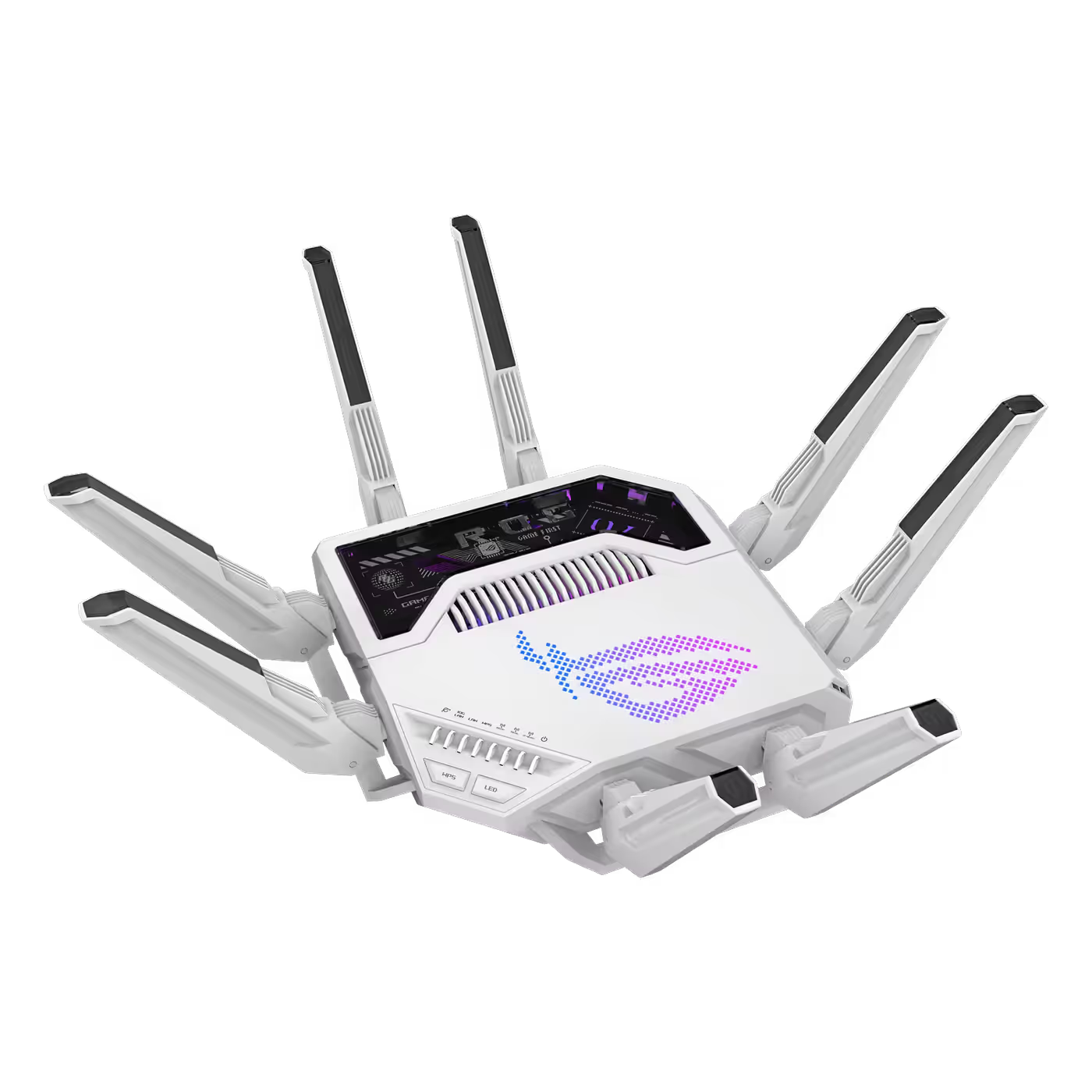
The GT-BE19000AI can run an ASUS AiMesh system as the main router, join one as a node, or work as an access point. Guest Network Pro creates up to five separate SSIDs or VLANs for gaming, IoT or guests, and AiProtection adds ad and tracker blocking, a security scan and parental controls with no subscription.
The GT-BE19000AI can run an ASUS AiMesh system as the main router, join one as a node, or work as an access point. Guest Network Pro creates up to five separate SSIDs or VLANs for gaming, IoT or guests, and AiProtection adds ad and tracker blocking, a security scan and parental controls with no subscription.
Everything you need to know about this product
It is rated BE19000: up to 1376Mbps on 2.4GHz, 5764Mbps on 5GHz and 11529Mbps on 6GHz. Those are the maximum link rates of the three bands added together, so real-world speeds depend on your devices, your internet line and the layout of your home.
A separate board inside the router with its own quad-core CPU, 4GB RAM, 32GB flash and an NPU rated at 7.9 TOPS. It runs the AI features and Docker apps, so they do not take resources from the main router, which has its own 2.6GHz quad-core CPU, 4GB RAM and 32GB flash.
Yes. ASUS built Docker support into the AI core, and names Home Assistant and Frigate as examples of apps that can run on the router itself instead of on a separate PC or development board.
One 10G WAN/LAN port, one 2.5G WAN/LAN port, one 10G LAN port that works as a dedicated gaming port, three 2.5G LAN ports, one Gigabit LAN port, one USB 3.2 Gen 1 port and one USB 2.0 port.
Yes. It can be the main router of an ASUS AiMesh system or join one as an AiMesh node, and it can also run as an access point. The 10G ports can carry a wired backhaul to other AiMesh routers.
No. It also supports WiFi 6 and older WiFi standards, so existing devices connect as normal. The 320MHz channels and 4096-QAM on the 6GHz band need a WiFi 7 device that supports them.
ASUS lists it at 350.41 x 350.41 x 220.6 mm and 2000g, with eight external antennas. It runs from a 12V 5A power adapter.
The router, an RJ-45 network cable, a power adapter, a quick start guide and a warranty card.


AI-Generated Content: These FAQs are generated by an automated AI system and may contain inaccuracies or omissions. Evetech makes no warranties, express or implied, regarding their completeness or reliability. For definitive information, please refer to the manufacturer's official specifications.