Gaming Headphones Explainer
Open back. Closed back. Footsteps either way.
Every R6000 gaming headset is outclassed by an R4500 audiophile pair plus a R1000 mic. The real question is not which gaming brand to buy — it's what you give up when you trap sound inside the earcup or let it breathe.
- soundstage winner
- Open
- isolation winner
- Closed
- SA tiers
- R1500-R10k+
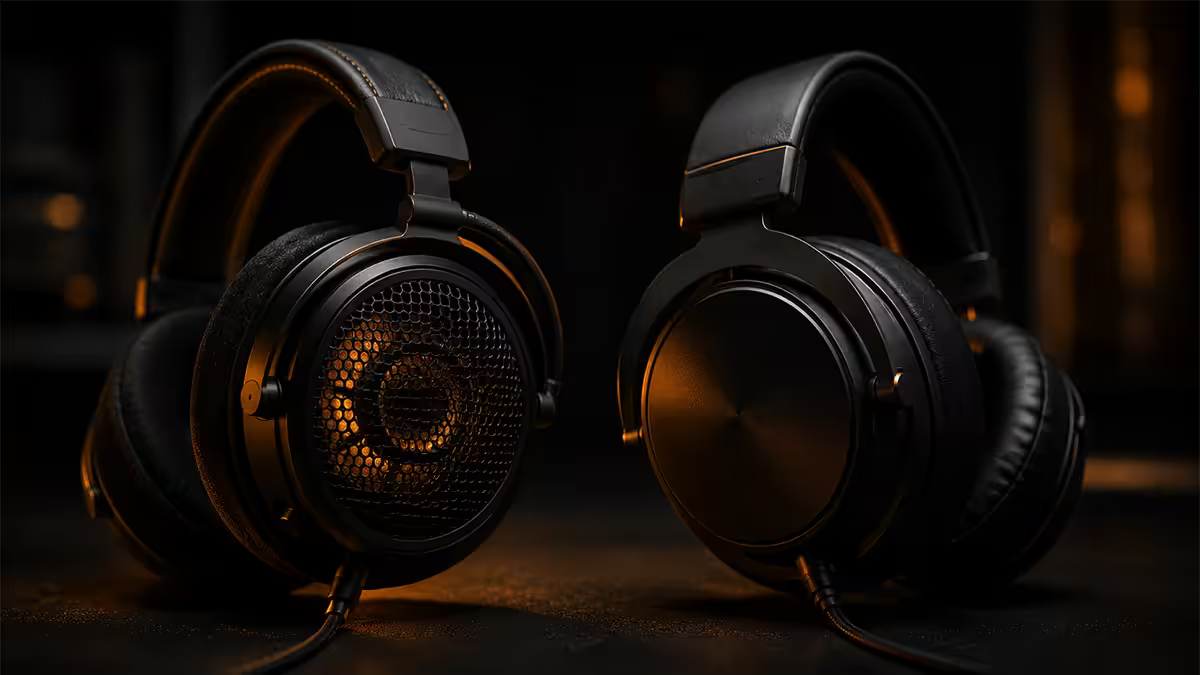
Soundstage — why open-back wins FPS
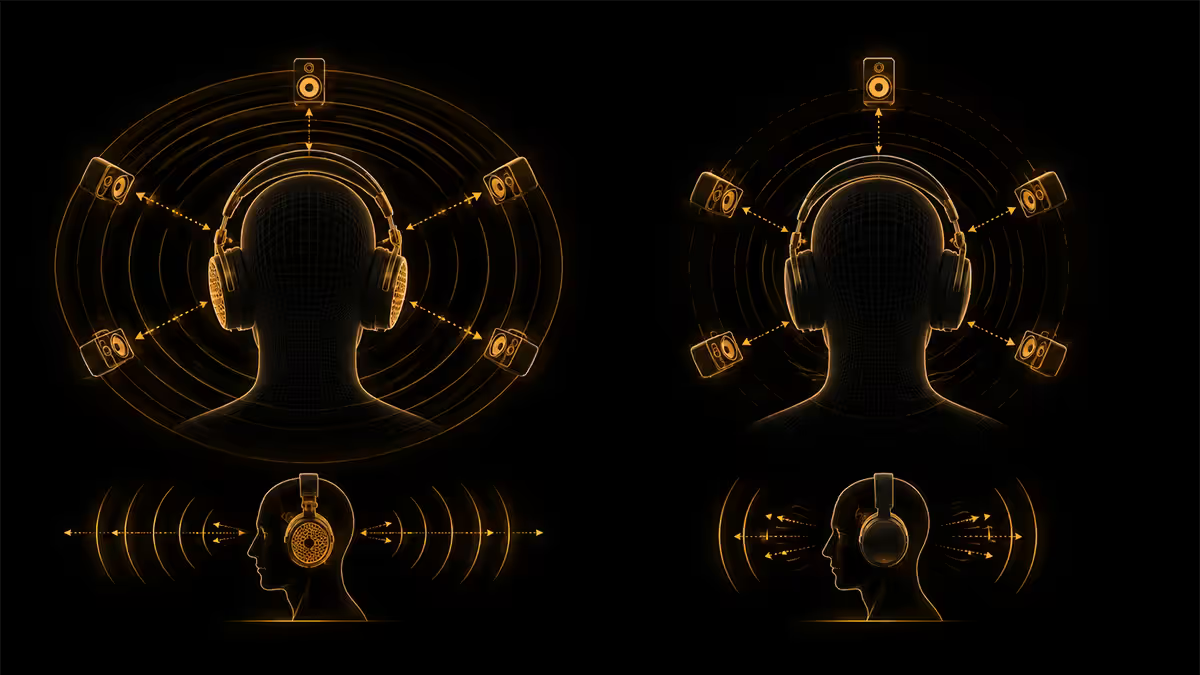
Soundstage is the perceived sense of space around the music or game audio — how far away sounds feel, how distinct their direction is. Open-back headphones produce wider, more accurate soundstages because the driver can move air freely behind it, just like a speaker. The reflections you'd naturally hear in a room are present, helping your brain place sounds in 3D.
In competitive FPS games, this matters. A footstep behind you registers as behind rather than in your head. Counter-Strike, Valorant, Apex Legends, Rainbow Six and Tarkov all use positional audio as a core gameplay mechanic — and an open-back pair gives you measurably better information.
How big is the difference? In blind tests, players using open-back audiophile headphones (HD 560S, DT 990 Pro) call out positional audio more accurately than the same players using closed-back gaming headsets at the same price. Not by a small margin — by a tier or two of clarity.
Closed-back soundstage is more intimate by design. The sound sits closer to your head, with less environmental cue. For single-player narrative gaming, atmospheric titles, music production and bass-heavy cinematic moments, this can be the preferred experience. But for picking up the third footstep around a corner, open-back wins.
Isolation & leakage — the closed-back case
The flip side of open-back's soundstage advantage is that sound flows both directions through the grille. The room hears your game audio. You hear the room.
Leakage reality: at normal listening volume, a person sitting one metre away from an open-back headphone wearer can hear the audio as clearly as if it were playing on a phone speaker. Two metres away, it's a noticeable background sound. Three metres in a quiet room, still audible.
This rules open-back out for:
- Shared bedrooms or living spaces (roommate / partner / family).
- Open-plan offices.
- Libraries, coffee shops, public transit.
- Recording vocals or streaming (mic picks up the leaked audio).
- Late-night gaming when others are sleeping.
Closed-back isolation varies by model. Audio-Technica M50x and Beyerdynamic DT 770 Pro 80-ohm isolate adequately for office and shared-room use. AKG K371 and Sony MDR-Z7M2 isolate strongly. Higher-end closed-backs like Audeze LCD-XC isolate near-passive-ANC levels.
You also hear less of the room. Closed-back pads block outside noise — phone notifications, conversations, traffic — so you can focus deeper. For some people this is the primary headphone benefit, not the audio quality at all.
Comfort tier — pads, clamp, weight
Most gamers wear headphones for 4-8 hour sessions. Comfort matters more than headphones marketing suggests. Three factors define long-session wearability.
Pad material. Velour pads breathe well and stay cool — great for 6+ hour sessions in warm rooms. Pleather and leather pads seal better for bass and isolation but trap heat (your ears get hot and sweaty). Memory-foam pads conform to head shape but compress over time. Most premium headphones offer replaceable third-party pads — a R600 pad swap can transform an uncomfortable headphone.
Clamp force. How tightly the headphones grip your head. Too loose and they slide around or fall off. Too tight and you get pressure headaches by hour three. Beyerdynamic DT 770/990 ship with notoriously tight clamp that loosens after 50-100 hours of wear or stretching over a stack of books overnight.
Weight. Sub-300g headphones (HD 560S at 240g, HD 6XX at 260g, SHP9500 at 320g) feel like nothing after a few minutes. 400-500g headphones (DT 1770 Pro at 388g, DT 1990 at 370g, HiFiMan Ananda at 399g) require strong neck muscles for marathon sessions. Audeze planar magnetics (550-650g) are weekend-only territory for most heads.
Audiophile cans vs gaming headsets — the embarrassing math
Gaming headsets dominate marketing budgets but lose every blind sound-quality test against audiophile competitors at the same price. The reason is component cost allocation.
A R6000 gaming headset spends roughly:
- R600 on the drivers (the part that makes sound).
- R800 on the microphone module.
- R1000 on RGB, wireless module and software.
- R1500 on plastic chassis, branding and marketing margin.
- R2100 on retail markup, distribution and the “gaming” tax.
A R6000 audiophile headphone spends roughly:
- R3500 on drivers and acoustic engineering.
- R1000 on chassis and pads.
- R1500 on retail margin and distribution.
The result: the audiophile pair has ~6x the driver budget. Sound is dramatically better. The catch is no microphone — you add a ModMic V5+ (R1500), Antlion ModMic Wireless (R3500), or use a desktop mic like a Blue Yeti / HyperX QuadCast (R2500-R4000).
Full audiophile gaming setup at R6000-R10000:
- Headphones: Sennheiser HD 560S (R4000) or HD 6XX (R6000)
- DAC/amp: FiiO K3 (R2500) — needed for higher impedance HD 6XX
- Microphone: ModMic V5+ (R1500) or HyperX QuadCast on desk (R3000)
- Total: R6000-R10500 for a setup that outclasses R12000+ gaming headsets
Do you need an amp and DAC?
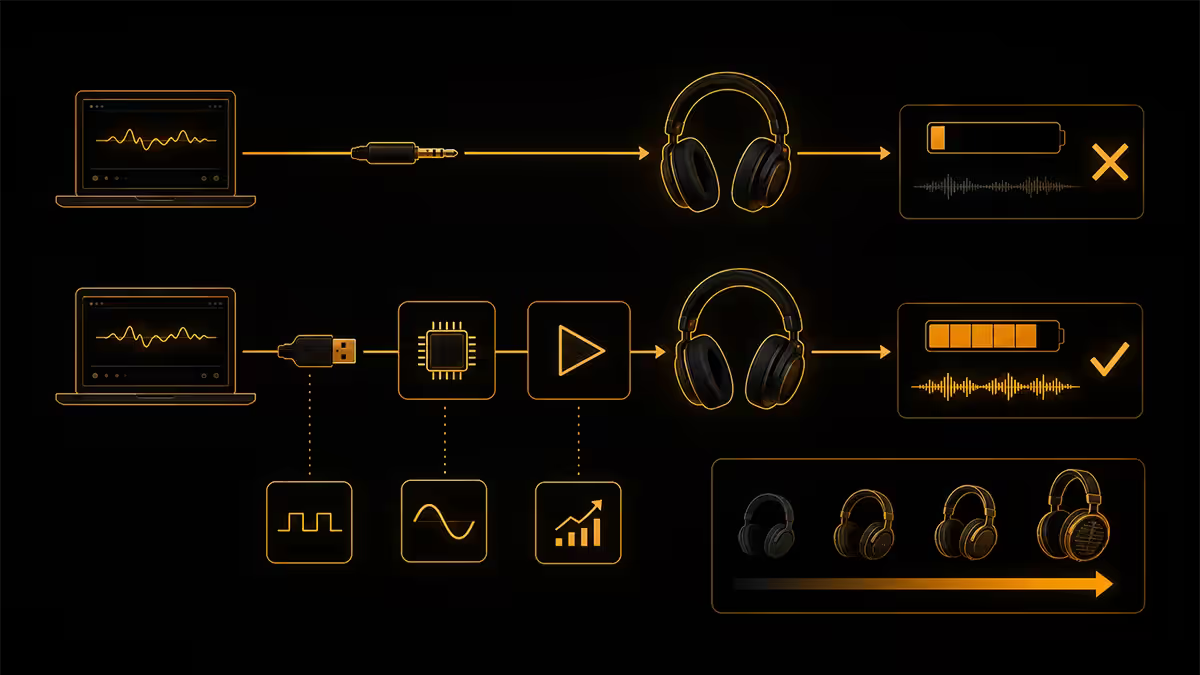
An amp provides the voltage/current to drive the headphone driver. A DAC converts the digital signal from your PC into an analog signal the amp can amplify. Many setups combine both into a single box (FiiO K3, Schiit Magni+Modi stack, JDS Atom+DAC).
Whether you need one depends on headphone impedance and sensitivity:
| Headphone | Impedance | Needs amp/DAC? |
|---|---|---|
| Audio-Technica M50x | 38 ohm | No — motherboard fine |
| Philips SHP9500 | 32 ohm | No — motherboard fine |
| Audio-Technica AD700X | 38 ohm | No — motherboard fine |
| Sennheiser HD 560S | 120 ohm | Optional, recommended |
| Beyerdynamic DT 770 80-ohm | 80 ohm | Optional, recommended |
| Beyerdynamic DT 990 Pro | 250 ohm | Yes — basic amp needed |
| Sennheiser HD 6XX / HD 650 | 300 ohm | Yes — essential |
| Beyerdynamic DT 1770/1990 | 250 ohm | Yes — quality amp needed |
| HiFiMan Sundara | 32 ohm | Optional but transformative |
Quality SA amp/DAC picks under R5000:
- FiiO K3 (R2500) — entry combo, drives anything up to 300 ohm.
- FiiO K5 Pro (R3500) — desk-grade combo with more power headroom.
- Schiit Magni+Modi stack (R5500-R6500 imported) — separates for upgrade path.
- JDS Labs Atom 2 + DAC (R5500-R6500 imported) — reference-grade for under R7000.
- Topping E30+L30 stack (R4500-R5500 imported) — measures incredibly clean.
The best gaming headphones by tier (SA, 2026)
Entry tier (R1500-R3000)
- Philips SHP9500 (R1500-R2000) — open-back, the legendary budget FPS pick. Surprisingly good driver, decent comfort.
- Audio-Technica ATH-M40x (R2200-R2800) — closed-back, flat reference signature, great for music too.
- Audio-Technica ATH-AD700X (R2000-R2800) — open-back, gigantic earcups, extremely comfortable, soundstage legend.
- Moondrop Cosmo / Sennheiser HD 599 SE when on sale.
Mid tier (R3000-R5000)
- Sennheiser HD 560S (R3800-R4500) — open-back, the most-recommended pick under R5000.
- Audio-Technica ATH-M50x (R3000-R3800) — closed-back classic, the safe choice.
- Beyerdynamic DT 770 Pro 80-ohm (R3800-R4500) — closed-back, deep bass, comfortable velour pads.
- Beyerdynamic DT 990 Pro 250-ohm (R3800-R4800) — open-back, V-shaped fun signature, great for gaming.
Premium tier (R5000-R8000)
- Sennheiser HD 6XX / HD 650 (R5500-R7000) — open-back, the all-time reference. 300 ohm — needs amp.
- HiFiMan Sundara (R6500-R8000) — open-back planar magnetic, detail king. Easy to drive but scales with quality.
- Drop + Sennheiser HD 8XX (R7000-R8500) — wider soundstage variant.
- Beyerdynamic DT 1770 Pro (R8500-R10500) — closed-back end-game, deep bass with detail.
Enthusiast tier (R8000+)
- Beyerdynamic DT 1990 Pro (R8500-R10000) — open-back analytical king.
- HiFiMan Ananda / Edition XS (R12000-R18000) — open-back planar with massive soundstage.
- Audeze LCD-XC / LCD-X 2021 (R20000+) — closed and open planar with cinematic bass.
- Sennheiser HD 800S (R25000+) — the soundstage benchmark.
Common headphone-buying mistakes
Buying open-back without checking the room. The most common regret. Open-back leakage is much worse than buyers expect. If you share a room or live with people who'll be in earshot, open-back is not for you regardless of how much you want better soundstage.
Buying a 250+ ohm headphone without an amp. The HD 6XX and DT 990 Pro 250-ohm at motherboard volume sound lifeless and quiet. Without an amp you're listening to a fraction of what the headphone can do.
Paying gaming-brand premium for inferior sound. A R8000 gaming wireless headset has ~R1200 of driver inside. The same money on audiophile cans plus a wired mic delivers reference-grade sound. The wireless freedom is real value but the sound penalty is also real.
Ignoring weight on premium cans. Audeze planar magnetics are stunning at the desk but punishingly heavy for 6-hour sessions. Try before you commit at the R20000+ tier.
Skipping the microphone calculation. Audiophile headphones need a separate mic. Budget R1500 minimum (ModMic V5+) or R3000+ for a desktop USB mic (HyperX QuadCast, Blue Yeti). Add to your headphone budget upfront.
Key takeaways
- Open-back wins soundstage and FPS positional audio. Closed-back wins isolation, bass impact and shared-space respect.
- Sennheiser HD 560S (R4000) is the highest-recommended pick under R5000 — outperforms every gaming headset at twice the price.
- HD 6XX + FiiO K3 + ModMic V5+ at R9000-R10500 is the end-game gaming setup that beats R12000+ headsets.
- Anything 250+ ohm (HD 6XX, DT 990, DT 1990) needs an amp — don't buy without budgeting one.
- Open-back leakage is much worse than buyers expect — check your room before committing.
Frequently asked questions
What's the difference between open-back and closed-back headphones?
Open-back headphones have perforated or grilled earcups that let sound move freely between the driver and the room. This produces a wider, more natural soundstage but leaks sound (and lets ambient noise in). Closed-back headphones have sealed earcups that contain the sound — better bass impact, better isolation from outside noise, but a more 'in-your-head' soundstage.Are open-back headphones better for gaming?
For competitive FPS games (CS2, Valorant, Apex), yes — open-back headphones produce a wider, more accurate soundstage that improves positional audio. You can hear footsteps directionally with more precision. For casual single-player gaming, closed-back works equally well and offers better bass impact for cinematic moments.How much sound leaks from open-back headphones?
Significantly. A person sitting one metre away will hear everything you're listening to clearly. Open-backs are unsuitable for shared rooms, public spaces, libraries or any environment where leakage matters. If anyone else is in the room, closed-back is the only respectful choice.What are the best open-back headphones for gaming?
Entry: Audio-Technica ATH-AD700X (R2000-R2800) or Philips SHP9500 (R1500-R2000) are the legendary budget FPS picks. Mid: Sennheiser HD 560S (R3500-R4500) or Beyerdynamic DT 990 Pro (R3800-R4800). Premium: Sennheiser HD 6XX/650 (R5500-R7000), HiFiMan Sundara (R6500-R8000), Beyerdynamic DT 1990 (R8500-R10000).What are the best closed-back headphones for gaming?
Entry: Audio-Technica ATH-M40x (R2200-R2800) for a flat reference sound. Mid: Audio-Technica ATH-M50x (R3000-R3800) and Beyerdynamic DT 770 Pro 80-ohm (R3800-R4500). Premium: Beyerdynamic DT 1770 Pro (R8500-R10500), Audeze LCD-XC (R20000+), Sony MDR-Z7M2 (R12000+).Do I need an amp or DAC for gaming headphones?
For headphones under 80 ohms (M50x, AD700X, HD 560S), most modern motherboard audio and onboard DACs drive them adequately. For higher impedance headphones (HD 6XX at 300 ohms, DT 990 at 250 ohms, DT 1990 at 250 ohms), a dedicated amp/DAC like the FiiO K3, Schiit Magni+Modi or JDS Atom is essential to unlock the headphones' full potential.Are audiophile headphones really better than gaming headsets?
Yes, by a wide margin. An R4500 Sennheiser HD 560S outperforms an R6000 gaming headset for sound quality in every dimension that matters — soundstage, detail, comfort over long sessions, longevity. The catch is they lack a microphone. Add a ModMic V5+ or boom mic (R800-R1500) for a complete setup that still costs less than premium gaming headsets and sounds substantially better.Will closed-back headphones make me sweaty for long sessions?
Often yes — sealed earcups trap heat. Models with leather or pleather pads (M50x, DT 770) get especially warm during long sessions. Velour pads (DT 1770, HiFiMan Sundara, Sennheiser HD 6XX) breathe better. If you game 4+ hours at a time in a warm climate (most of SA), velour pads or open-back are kinder to your ears.
Get the Evetech app
Exclusive app-only prices, daily flash sales, and free delivery on orders over R4,000 — download the app and start saving.