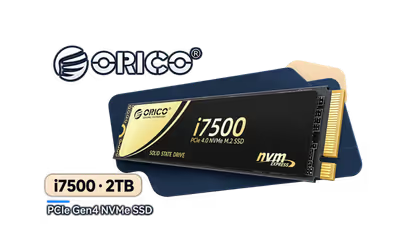
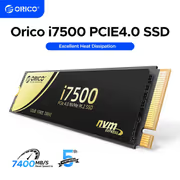
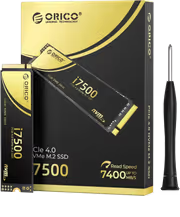
ORICO i7500 M.2 NVMe SSD 2TB
ORICO i7500 M.2 NVMe SSD - 2TB / 3D NAND Flash / PCIe Gen4.0 x4 / Up to 7,200MB/s Read and 6,100MB/s Write Speeds / ORICO-i7500-2TB-GD-BP + FREE DELIVERY !
5 Years Local Warranty
Model No : Orico ORICO-i7500-2TB-GD-BP
Price Inc. Vat
R 5,499
Save R 500
ListR 5,999
5499Free Delivery
Qty:
In Stock with Evetech
ORICO i7500 2TB PCIe Gen4 NVMe SSD — Up to 7,200MB/s
2TB PCIe Gen 4 NVMe SSD For Desktops And Laptops
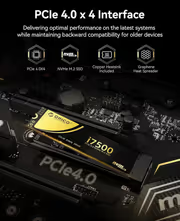
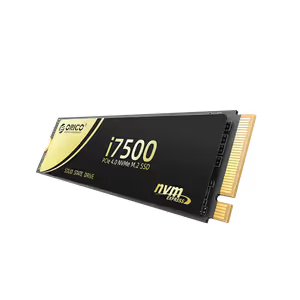
The ORICO i7500 M.2 NVMe SSD is a 2TB drive on a PCIe Gen 4 x4 interface, rated up to 7,200MB/s read and 6,100MB/s write. Windows starts quickly, games load faster and large files move in seconds, while 3D NAND Flash improves endurance and keeps data accurate. The 2280 length fits most modern desktops and laptops with NVMe Gen 4 support, and it also runs on Gen 3 at Gen 3 speeds.
2TB PCIe Gen 4 NVMe SSD For Desktops And Laptops
The ORICO i7500 M.2 NVMe SSD is a 2TB drive on a PCIe Gen 4 x4 interface, rated up to 7,200MB/s read and 6,100MB/s write. Windows starts quickly, games load faster and large files move in seconds, while 3D NAND Flash improves endurance and keeps data accurate. The 2280 length fits most modern desktops and laptops with NVMe Gen 4 support, and it also runs on Gen 3 at Gen 3 speeds.
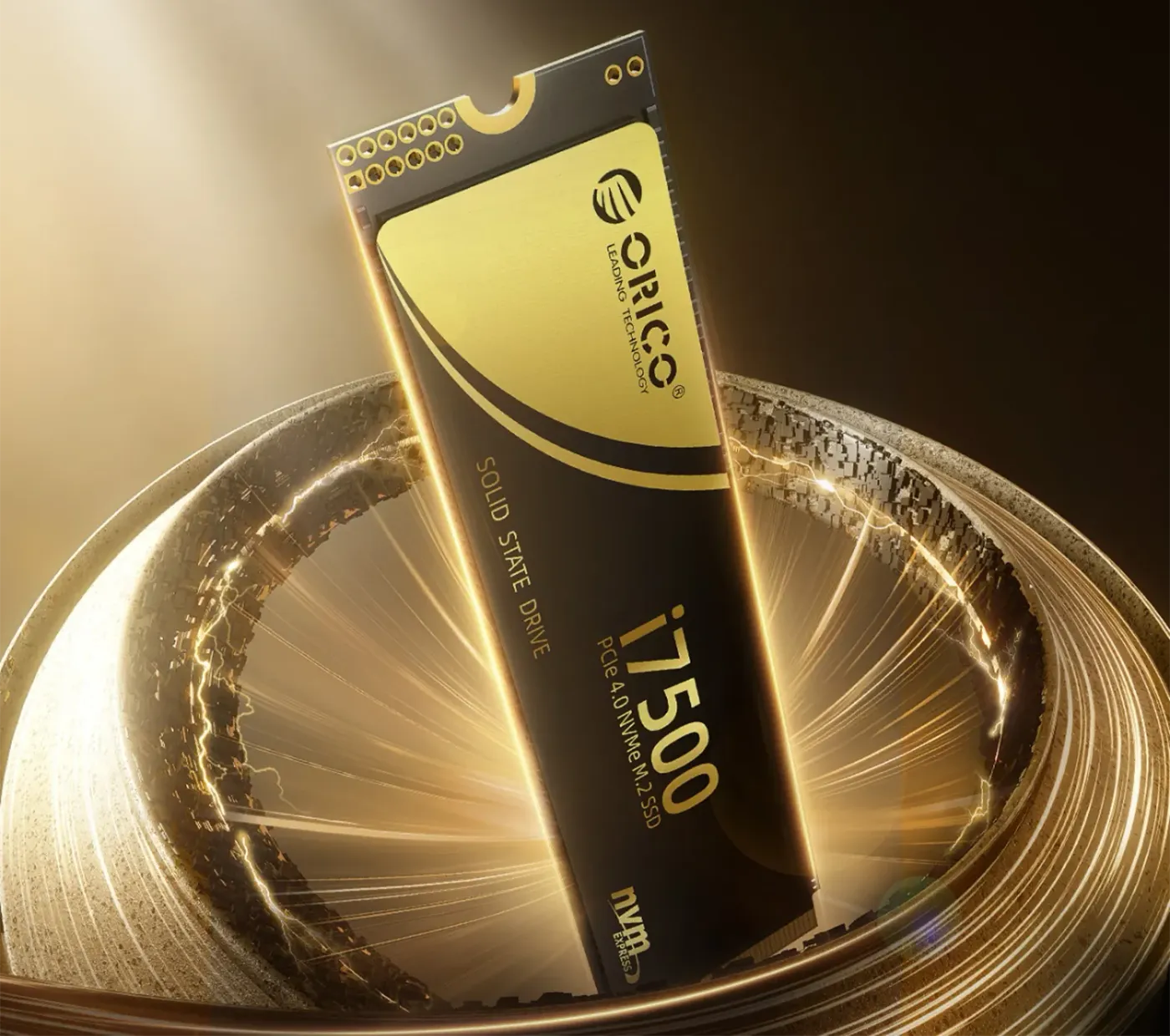
M.2 2280 Stick For PCIe 4.0 x4 Slots
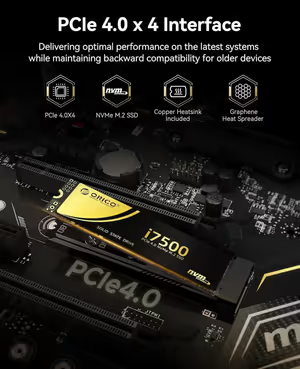
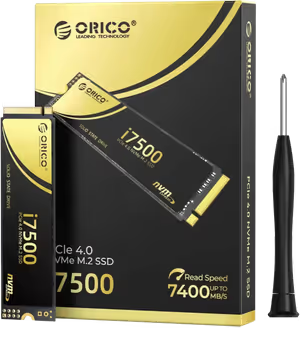
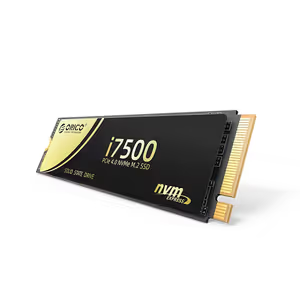
The i7500 is an M.2 2280 NVMe SSD built for PCIe 4.0 x4 slots in desktops and laptops. The 2280 length is the layout most consumer motherboards and notebooks are wired for, so the drive drops into an existing slot without an adapter, a bay or a power cable, which keeps the upgrade contained to the board itself.
M.2 2280 Stick For PCIe 4.0 x4 Slots
The i7500 is an M.2 2280 NVMe SSD built for PCIe 4.0 x4 slots in desktops and laptops. The 2280 length is the layout most consumer motherboards and notebooks are wired for, so the drive drops into an existing slot without an adapter, a bay or a power cable, which keeps the upgrade contained to the board itself.
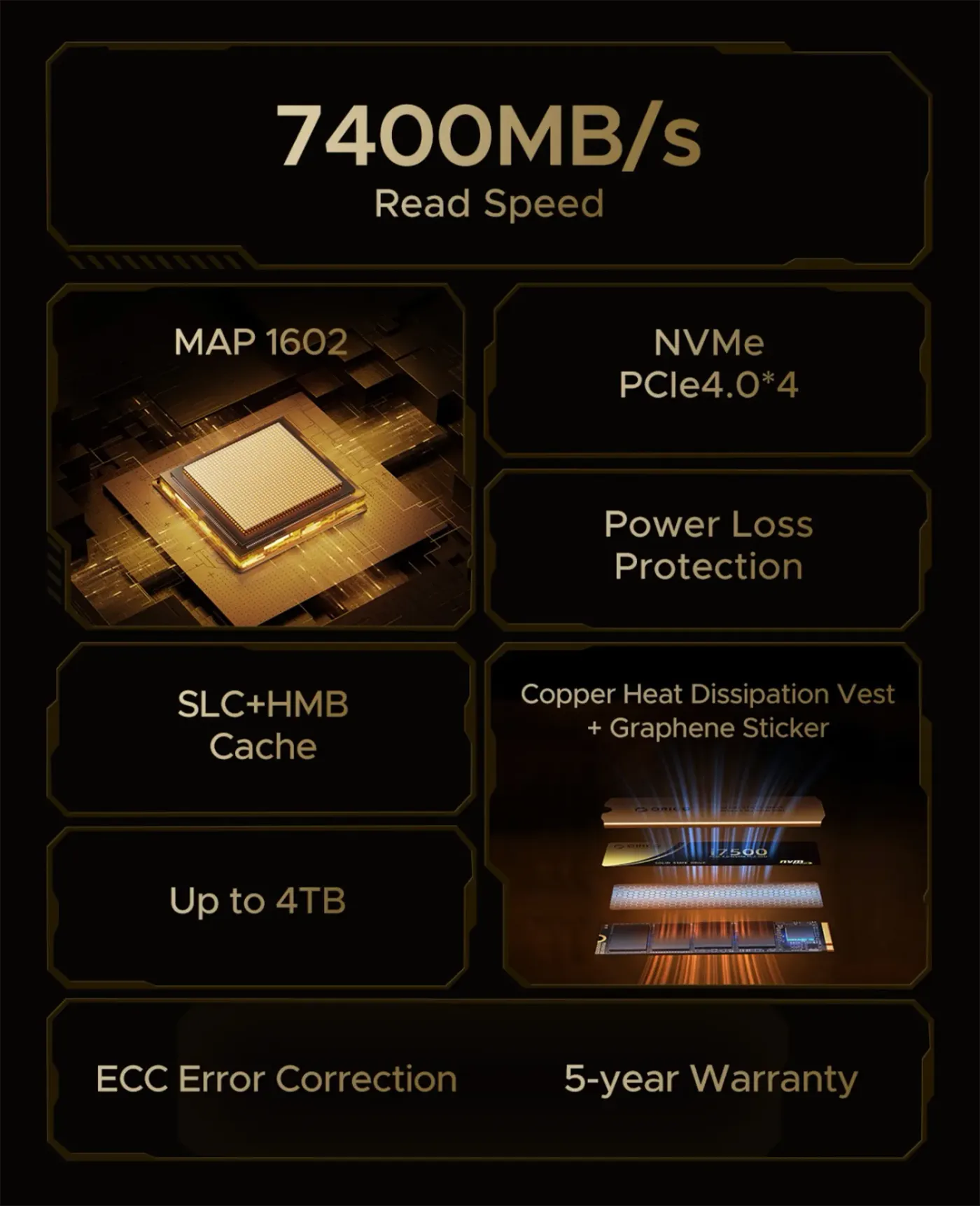
Read Speeds Up To 7,200MB/s Over NVMe
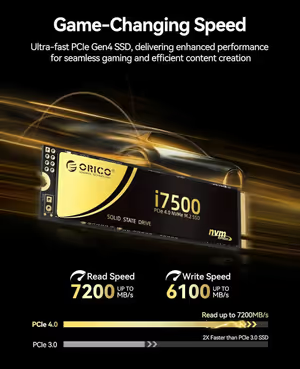
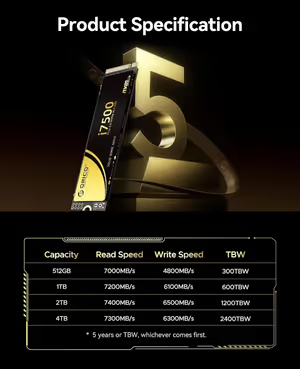
Built on the NVMe protocol with PCIe 4.0 x4, the i7500 delivers reads of up to 7,200MB/s. That bandwidth turns into quick boots, fast game loads and rapid file transfers, and read speed is what a system leans on hardest when launching applications, loading game levels or opening a large project.
Read Speeds Up To 7,200MB/s Over NVMe
Built on the NVMe protocol with PCIe 4.0 x4, the i7500 delivers reads of up to 7,200MB/s. That bandwidth turns into quick boots, fast game loads and rapid file transfers, and read speed is what a system leans on hardest when launching applications, loading game levels or opening a large project.
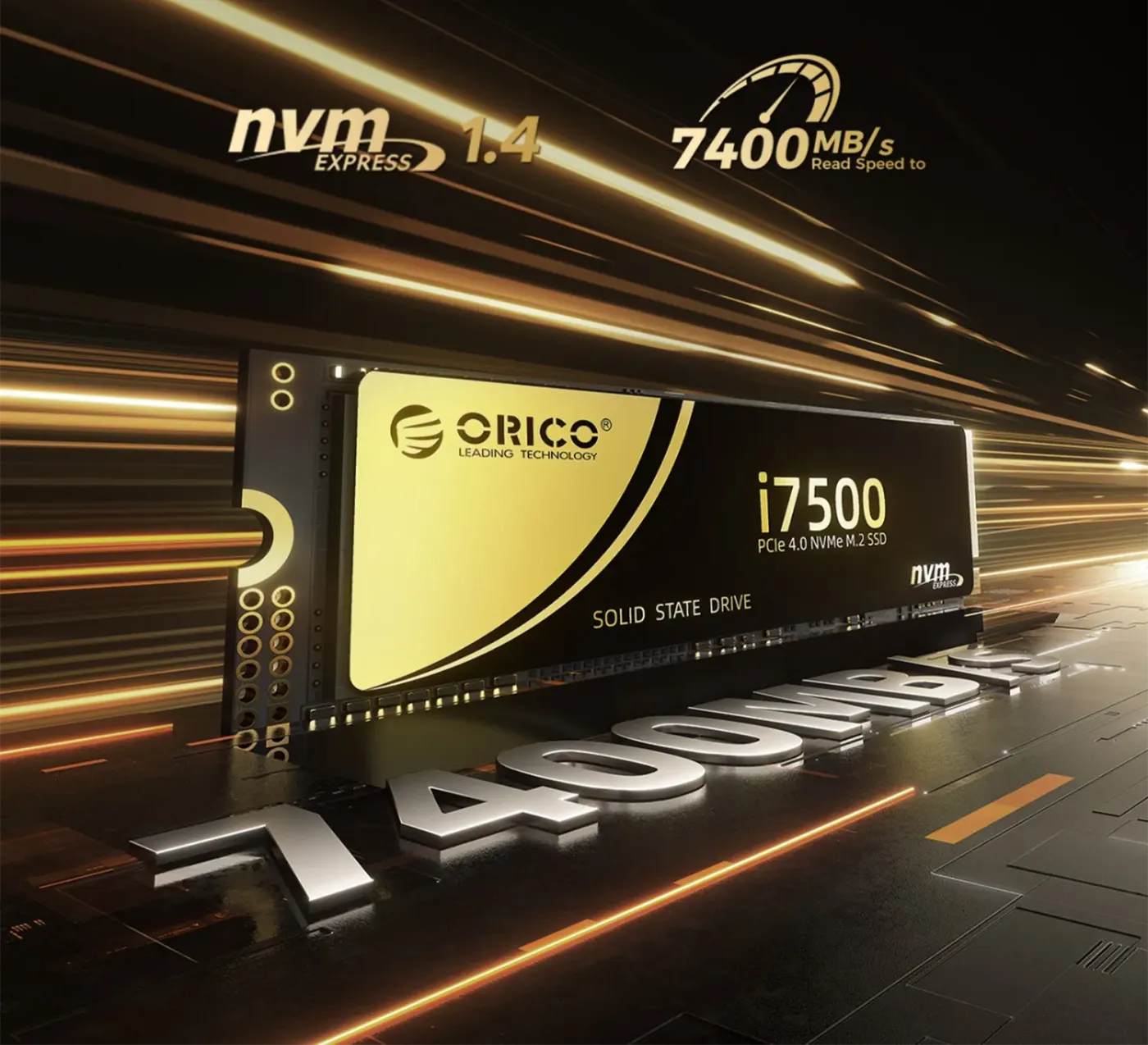
Fourth-Generation MAP1602 Controller Holds Throughput Steady
The fourth-generation MAP1602 controller efficiently saturates the PCIe Gen 4 x4 channel, which is what produces steady throughput and low latency rather than a fast burst that fades. On a 2TB drive the controller has more NAND to manage, so its efficiency is what keeps performance consistent as the drive fills with games, applications and project files.
Fourth-Generation MAP1602 Controller Holds Throughput Steady
The fourth-generation MAP1602 controller efficiently saturates the PCIe Gen 4 x4 channel, which is what produces steady throughput and low latency rather than a fast burst that fades. On a 2TB drive the controller has more NAND to manage, so its efficiency is what keeps performance consistent as the drive fills with games, applications and project files.
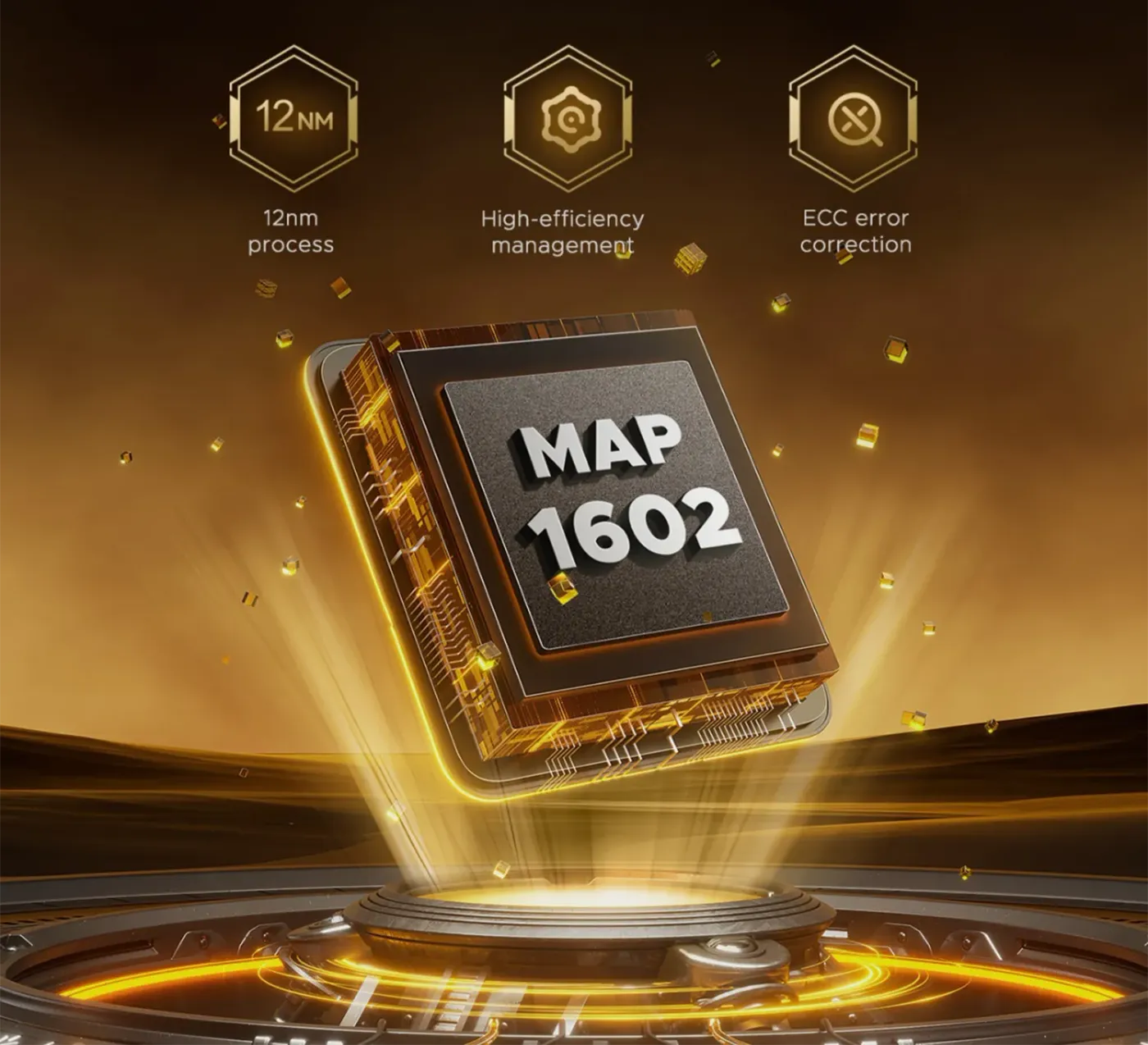
3D NAND Flash Improves Endurance And Accuracy
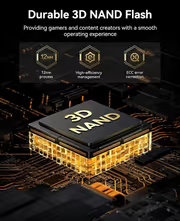
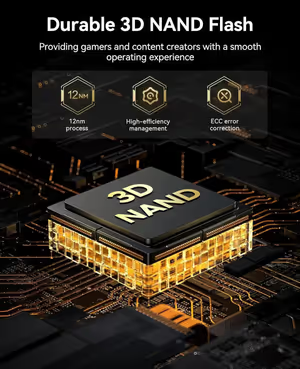
Premium 3D NAND Flash gives the i7500 its performance, density and endurance. Endurance matters most on a drive that holds an operating system, since it is written to every day by updates, caches and game patches, and 3D NAND is also what keeps stored data accurate across years of daily use rather than only in the first months.
3D NAND Flash Improves Endurance And Accuracy
Premium 3D NAND Flash gives the i7500 its performance, density and endurance. Endurance matters most on a drive that holds an operating system, since it is written to every day by updates, caches and game patches, and 3D NAND is also what keeps stored data accurate across years of daily use rather than only in the first months.
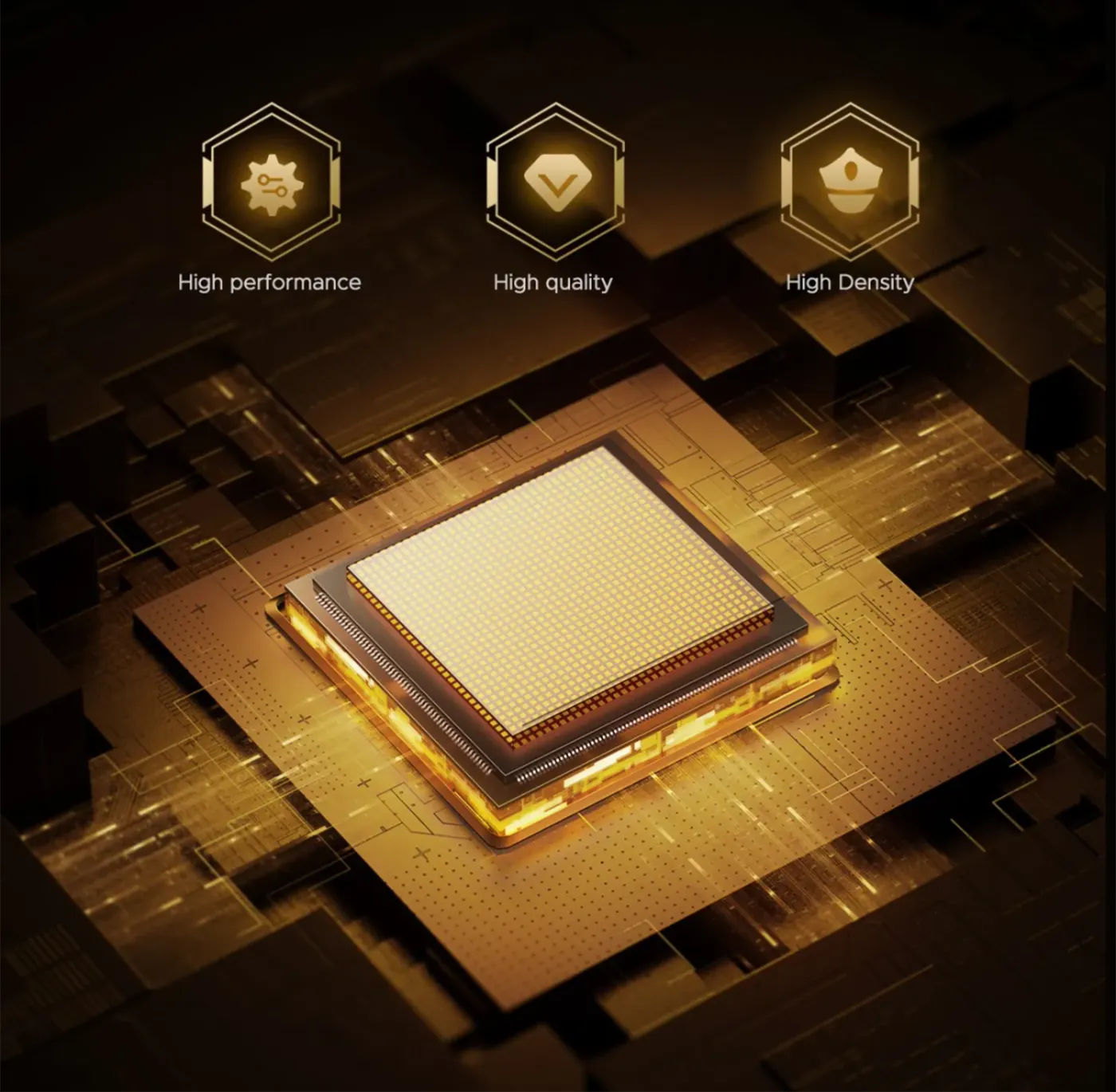
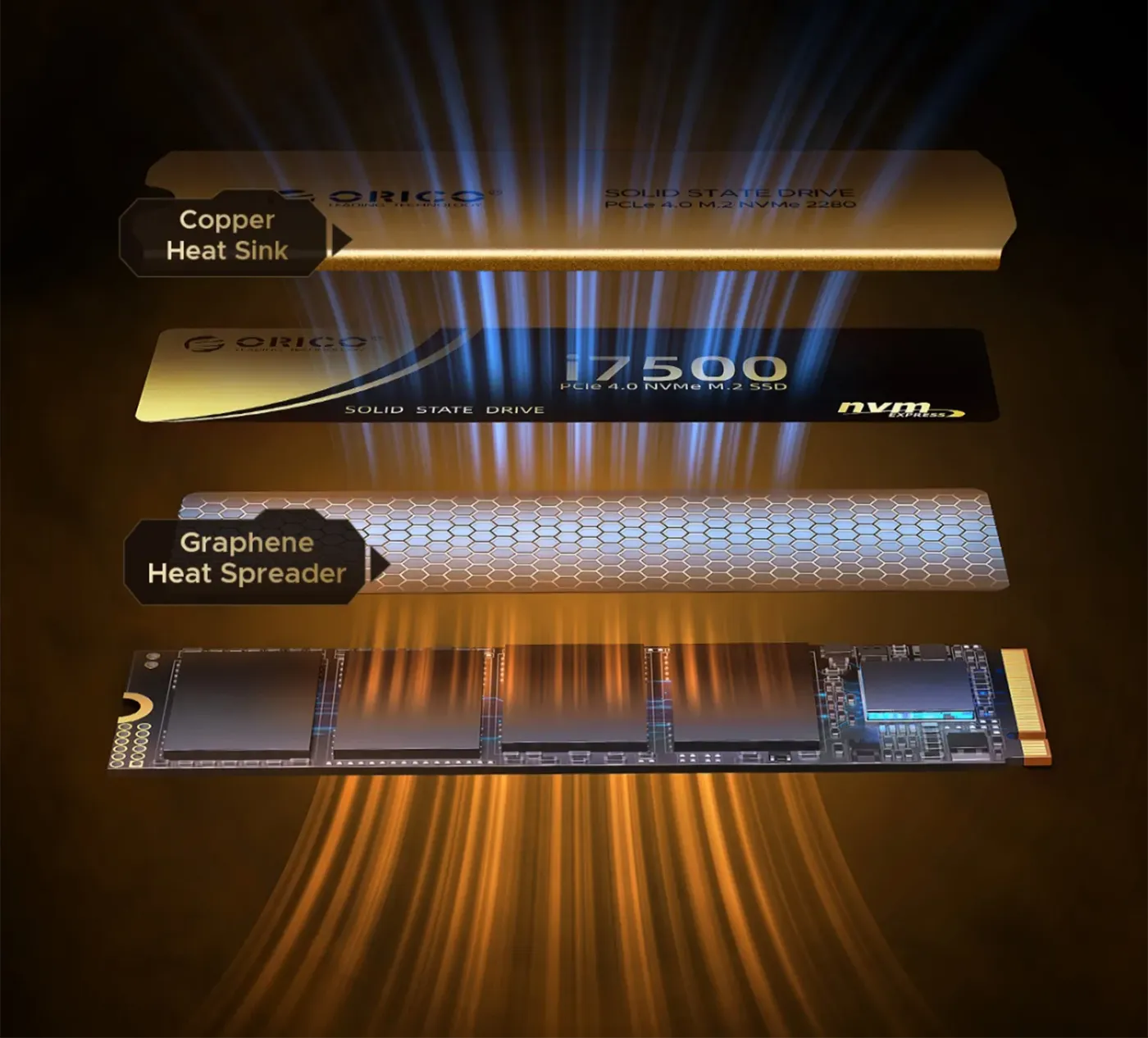
Graphene And Copper Heat Sinks Prevent Slowdown
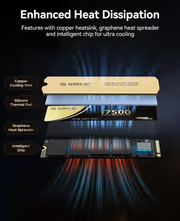
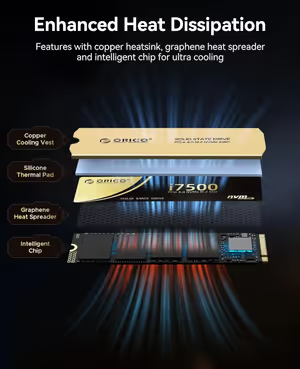
Graphene sheets and copper heat sinks draw heat off the i7500 so it stays cool through long sessions and holds peak speed. Thermal build-up is the usual reason a fast NVMe drive slows partway through a big transfer, so shifting that heat away is what makes the rated figures relevant to sustained work rather than short bursts.
Graphene And Copper Heat Sinks Prevent Slowdown
Graphene sheets and copper heat sinks draw heat off the i7500 so it stays cool through long sessions and holds peak speed. Thermal build-up is the usual reason a fast NVMe drive slows partway through a big transfer, so shifting that heat away is what makes the rated figures relevant to sustained work rather than short bursts.
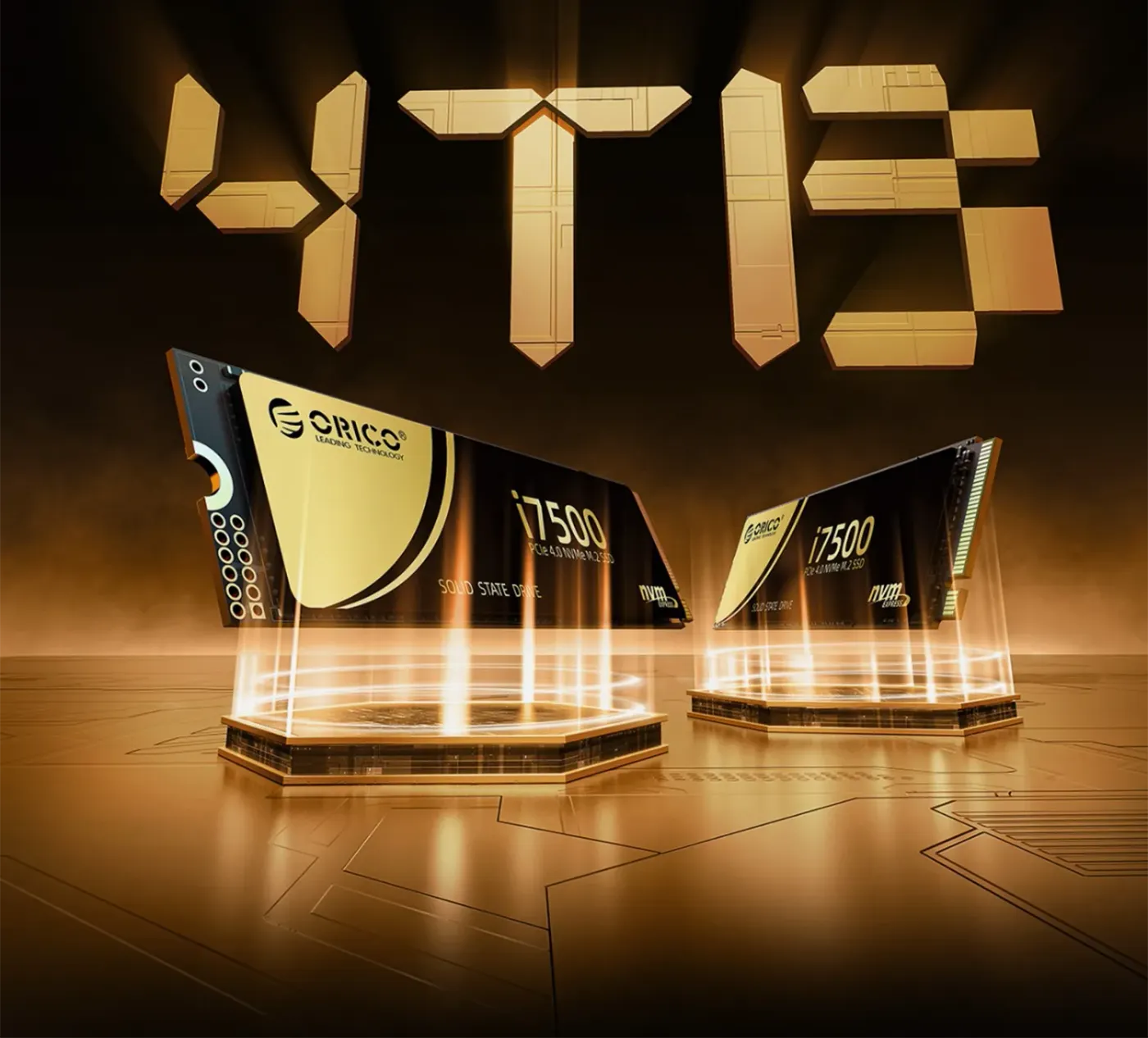
2TB Of Room, With The Range Reaching 4TB
This model carries 2TB, and the i7500 range extends to 4TB. Two terabytes leaves room for a growing game library alongside 4K video and project files, which is the point at which most users stop uninstalling one title to make space for the next. It suits video editing, school work and a large Steam or console library equally.
2TB Of Room, With The Range Reaching 4TB
This model carries 2TB, and the i7500 range extends to 4TB. Two terabytes leaves room for a growing game library alongside 4K video and project files, which is the point at which most users stop uninstalling one title to make space for the next. It suits video editing, school work and a large Steam or console library equally.
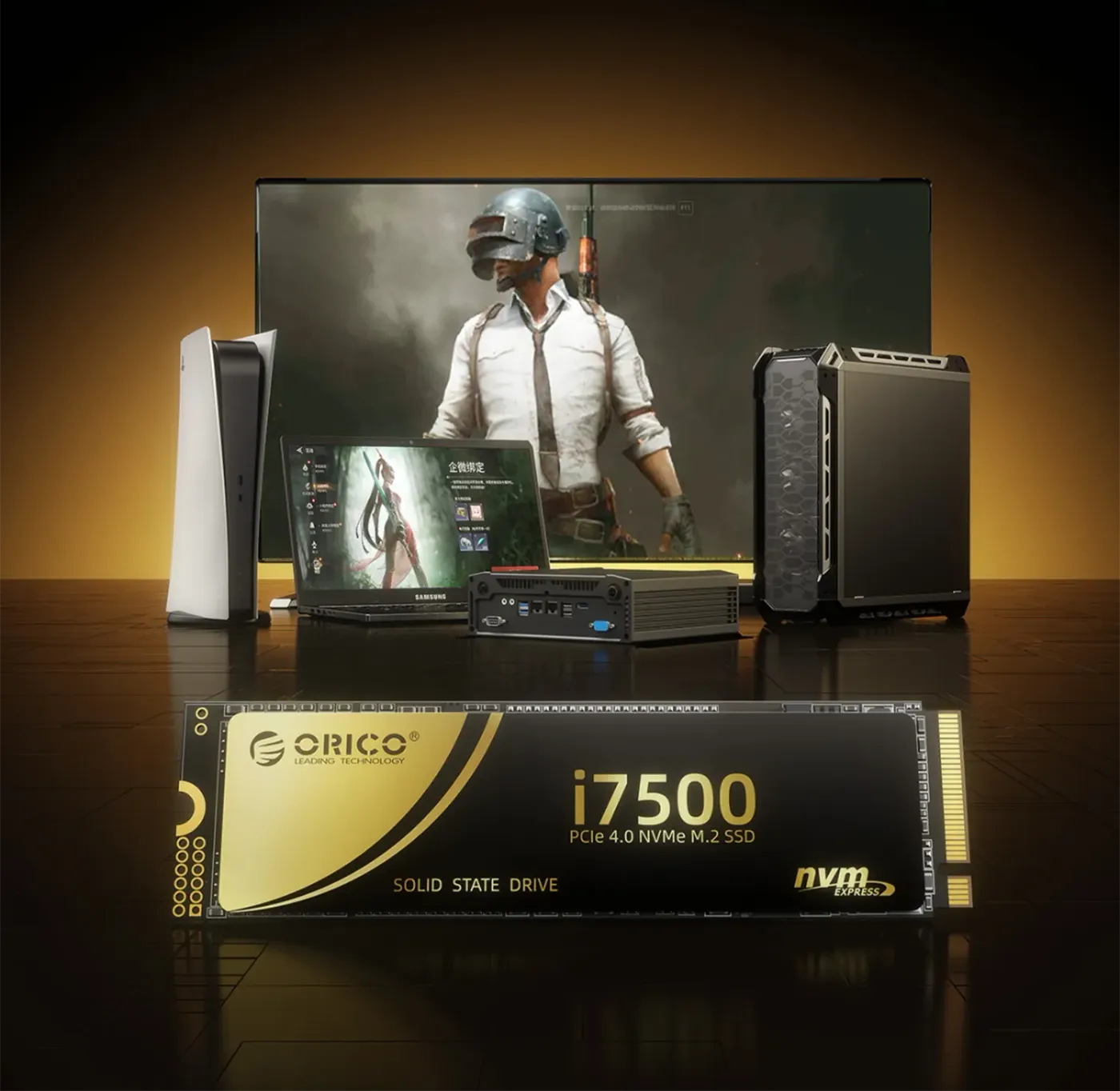
Fits Desktops, Laptops And Consoles Like The PS5
The i7500 works with desktops, laptops and game consoles such as the PS5, and runs smoothly on all major operating systems. A single M.2 2280 stick therefore covers a gaming desktop, a work notebook and a console expansion slot, so the drive can be moved on rather than retired when the host machine is replaced.
Fits Desktops, Laptops And Consoles Like The PS5
The i7500 works with desktops, laptops and game consoles such as the PS5, and runs smoothly on all major operating systems. A single M.2 2280 stick therefore covers a gaming desktop, a work notebook and a console expansion slot, so the drive can be moved on rather than retired when the host machine is replaced.
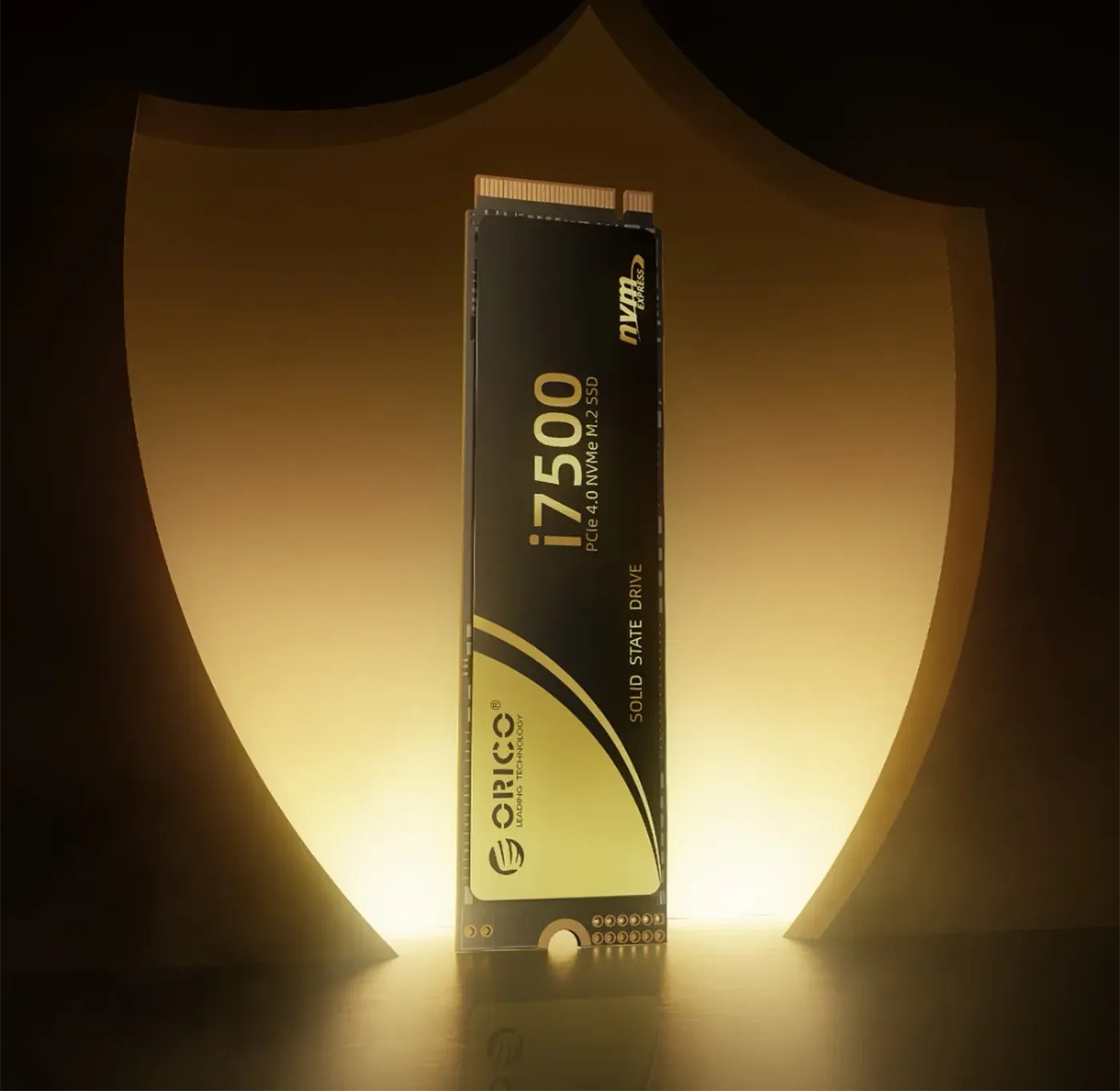
Safeguards Include Power Loss Protection And Wear Levelling
The i7500 carries multiple safety designs, among them power loss protection and wear levelling. Power loss protection reduces the risk of corruption if the machine cuts out during a write, while wear levelling distributes writes across the NAND so no single region ages faster than the rest. Both work to keep SSD operation stable and data intact.
Safeguards Include Power Loss Protection And Wear Levelling
The i7500 carries multiple safety designs, among them power loss protection and wear levelling. Power loss protection reduces the risk of corruption if the machine cuts out during a write, while wear levelling distributes writes across the NAND so no single region ages faster than the rest. Both work to keep SSD operation stable and data intact.
Writes At Up To 6,100MB/s For Editing Work
Write speed reaches up to 6,100MB/s, and on a 2TB drive that is the number that decides how long a large ingest takes. Video editing, exporting a project, installing a game or restoring a large folder are all write-bound, so the write figure matters as much as the read figure for anyone producing files rather than only opening them.
Writes At Up To 6,100MB/s For Editing Work
Write speed reaches up to 6,100MB/s, and on a 2TB drive that is the number that decides how long a large ingest takes. Video editing, exporting a project, installing a game or restoring a large folder are all write-bound, so the write figure matters as much as the read figure for anyone producing files rather than only opening them.

Technical Specifications For The 2TB i7500
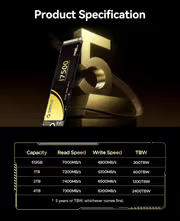
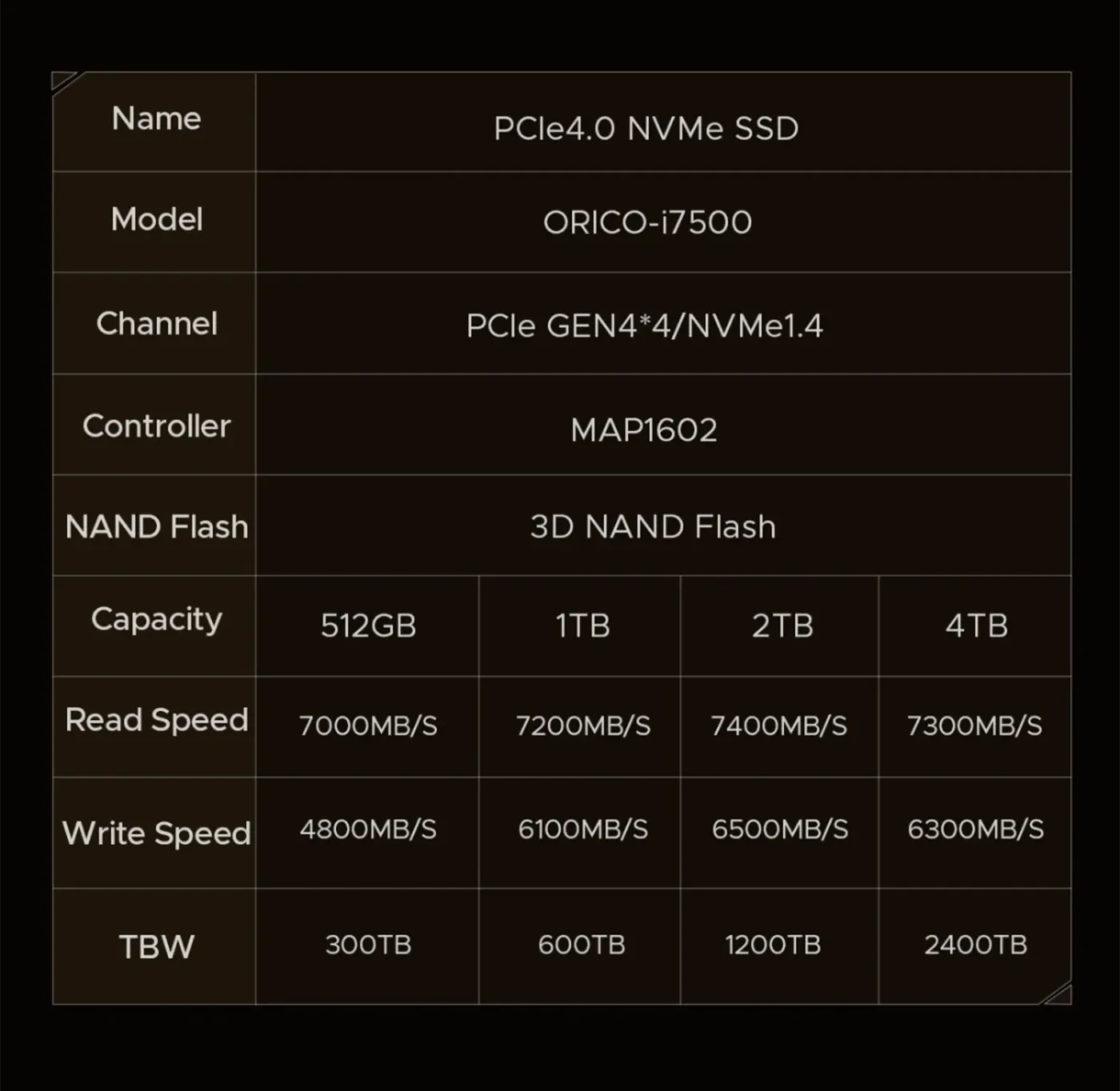
The specification set covers 2TB of capacity in the M.2 2280 form factor, a PCIe Gen 4 x4 NVMe interface, the MAP1602 controller and 3D NAND Flash, rated at up to 7,200MB/s read and 6,100MB/s write. Confirm your motherboard or laptop has a free M.2 slot with NVMe Gen 4 support before ordering, or expect Gen 3 speeds on a Gen 3 slot.
Technical Specifications For The 2TB i7500
The specification set covers 2TB of capacity in the M.2 2280 form factor, a PCIe Gen 4 x4 NVMe interface, the MAP1602 controller and 3D NAND Flash, rated at up to 7,200MB/s read and 6,100MB/s write. Confirm your motherboard or laptop has a free M.2 slot with NVMe Gen 4 support before ordering, or expect Gen 3 speeds on a Gen 3 slot.
Runs On Gen 3 Boards At Gen 3 Speeds
The 2280 size fits most modern desktops and laptops that support NVMe Gen 4, and the i7500 also works on Gen 3 systems at Gen 3 speeds. That means an older machine can take the drive now and the same 2TB stick can move into a Gen 4 build later, where it will run at its full rated bandwidth.
Runs On Gen 3 Boards At Gen 3 Speeds
The 2280 size fits most modern desktops and laptops that support NVMe Gen 4, and the i7500 also works on Gen 3 systems at Gen 3 speeds. That means an older machine can take the drive now and the same 2TB stick can move into a Gen 4 build later, where it will run at its full rated bandwidth.
Install In Three Steps: Slot, Screw, Format
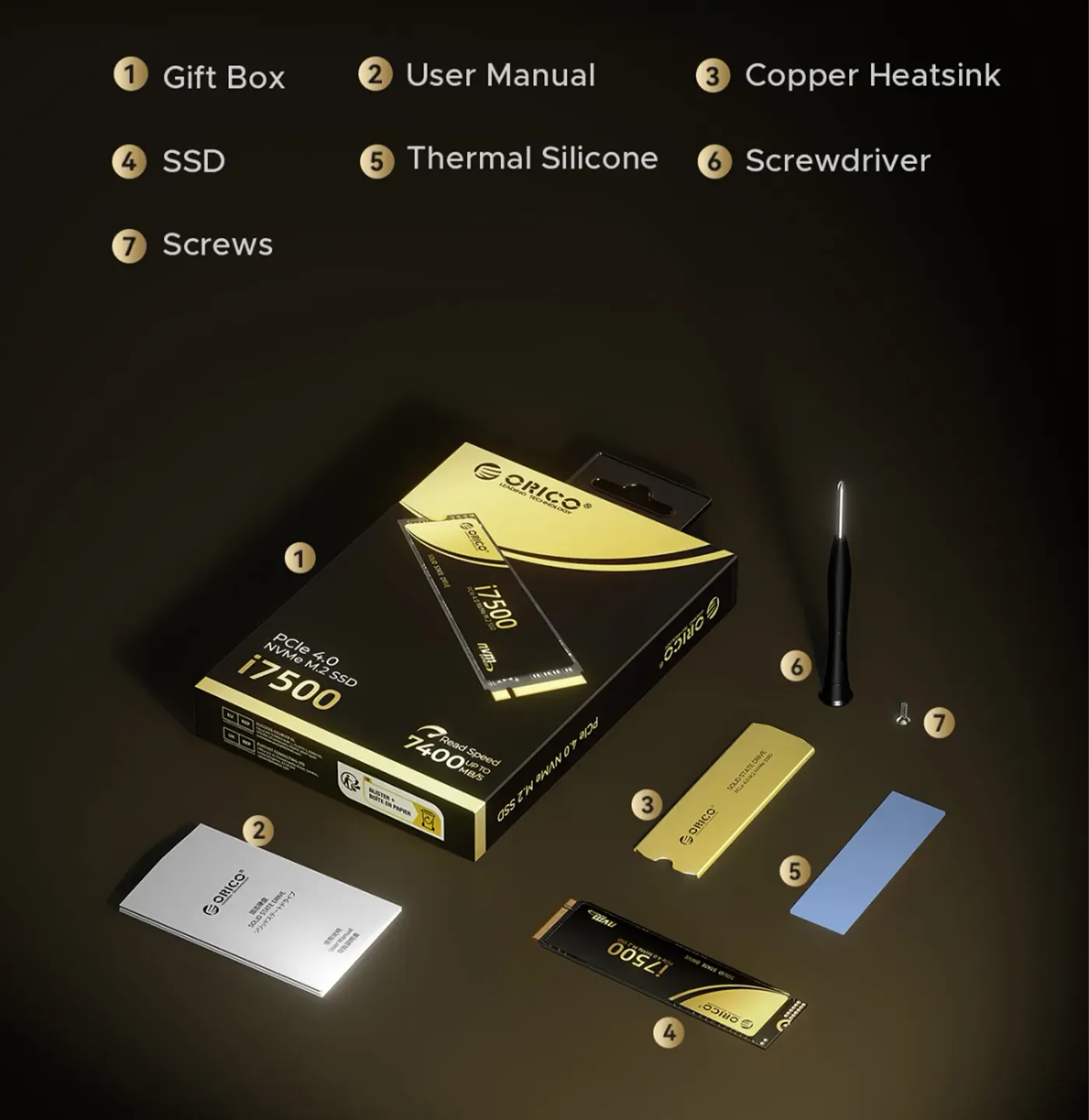
Installing the i7500 means sliding the drive into the M.2 slot, tightening one screw and formatting it. There are no data or power cables involved and nothing to mount in a drive bay, so the job is measured in minutes on any desktop or laptop that already exposes a free M.2 slot.
Install In Three Steps: Slot, Screw, Format
Installing the i7500 means sliding the drive into the M.2 slot, tightening one screw and formatting it. There are no data or power cables involved and nothing to mount in a drive bay, so the job is measured in minutes on any desktop or laptop that already exposes a free M.2 slot.
FAQ
Frequently Asked Questions
Everything you need to know about this product
This model holds 2TB, and the i7500 range extends up to 4TB.
It reaches up to 7,200MB/s read and 6,100MB/s write over PCIe Gen 4 x4.
It is an M.2 2280 NVMe drive, the size most modern desktops and laptops accept.
Yes, it works on Gen 3 systems and runs at Gen 3 speeds in that slot.
The fourth-generation MAP1602 controller, which saturates the PCIe Gen 4 x4 channel.
It uses 3D NAND Flash, which improves endurance and keeps stored data accurate.
Graphene sheets and copper heat sinks move heat away so the drive keeps its peak speed.
It works with desktops, laptops and game consoles like the PS5.
The drive runs smoothly on all major operating systems.
Power loss protection, wear levelling and other safeguards keep SSD operation stable.
Slide it into the M.2 slot, tighten one screw and format the drive before use.
Yes, 2TB gives room for games, applications and project files such as 4K video together.

AI-Generated Content:These FAQs are generated by an automated AI system and may contain inaccuracies or omissions. Evetech makes no warranties, express or implied, regarding their completeness or reliability. For definitive information, please refer to the manufacturer's official specifications.
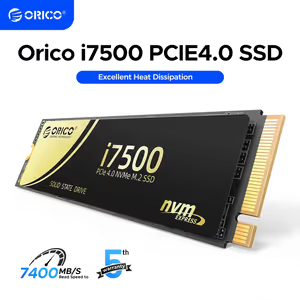

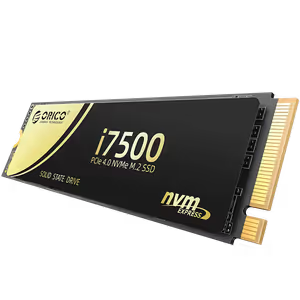
Please Note: Product images are for illustrative purposes only and may differ from the actual product.
Choose your
own PC
Hand-pick every part with live stock, compatibility, and instant pricing.
Try the new builderPrice Inc. Vat
R 5,499
Save R 500
ListR 5,999
5499Free Delivery
Qty:
In Stock with Evetech
Choose your
own PC
Hand-pick every part with live stock, compatibility, and instant pricing.
Try the new builderORICO i7500 M.2 NVMe SSD 2TB