High-Speed USB Flash Drives for Backup, Media and Everyday Storage
USB flash drives are pocketable storage that plugs into almost anything - laptops, desktops, gaming consoles, smart TVs and phones. Evetech stocks USB-A, USB-C and dual-connector drives from trusted brands like SanDisk, Samsung and Kingston, in capacities from 64GB up to 1TB, for backups, file transfers, bootable installers and moving media between devices.
Two things decide the right drive: interface and capacity. USB 3.2 Gen 1 (5Gbps, the old USB 3.0) handles documents and photos comfortably, while USB 3.2 Gen 2 drives push read speeds up to around 1000MB/s for large video files and full backups in seconds. Match the connector to your gear - a dual USB-A + USB-C stick moves easily between an older desktop and a newer phone or ultrabook. Remember a drive only runs as fast as the port it is plugged into, and every drive ships with local warranty and fast delivery across South Africa.
Top 5 Reasons to Buy Gaming Laptops
Gaming laptops offer portability, powerful performance, versatility, advanced features, and future-proofing capabilities, making them an attractive choice for gamers who want to enjoy their favorite titles anywhere, anytime. With their high-performance hardware, advanced features, and flexibility, gaming laptops provide users with a convenient and immersive gaming experience.
Summary: Gaming laptops provide portability, powerful performance, versatility, advanced features, and future-proofing capabilities. They are a popular choice for gamers looking for a convenient and immersive gaming experience without compromising on performance or versatility.
How to Choose a USB Flash Drive
Picking a USB flash drive comes down to interface, capacity, build quality and, for sensitive files, encryption. Here is what each choice means so you buy the right stick the first time.
Choose by the ports you actually use. USB-A still fits most desktops, older laptops and TVs; USB-C suits modern phones, tablets and ultrabooks. A dual-connector drive with both plugs is the most flexible option and works across old and new devices without an adapter. Check that your device's port supports USB 3.x if you want full speed.
64GB covers documents, installers and light media; 128GB-256GB suits photo and video libraries, with 256GB now the sensible mainstream pick; 512GB and 1TB are for large media collections, 4K footage or full-system backups. Buy one tier above what you need today so you are not swapping drives in a year.
USB 3.2 Gen 1 (formerly USB 3.0) runs at 5Gbps, with typical drives reading around 100-150MB/s. USB 3.2 Gen 2 doubles the ceiling to 10Gbps, and fast drives can reach 500-1000MB/s reads. The difference is obvious when copying large videos or backups; for everyday documents, either is fine.
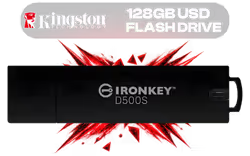
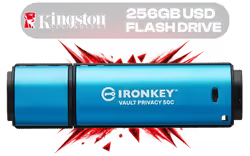
If you carry confidential or work data, yes. Hardware-encrypted drives with built-in AES have almost no speed penalty and protect data if the drive is lost. Software encryption like BitLocker (Windows) or VeraCrypt works on any drive but can slow writes on CPUs without AES acceleration. For personal media, standard drives are fine.
Stick to branded drives from SanDisk, Samsung, Kingston, Lexar or Corsair, which use graded NAND and tested controllers. Suspiciously cheap high-capacity 'no-name' sticks often report false size or throttle badly and fail sooner. Buying from a local retailer like Evetech also means a real warranty and support if a drive faults.