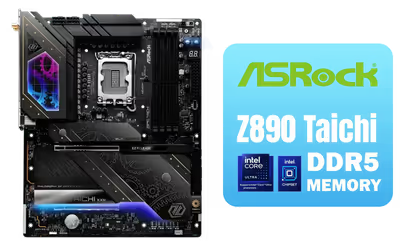
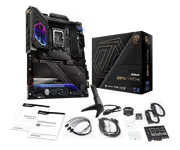
asrock-z890-taichi-wifi-motherboard
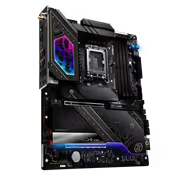
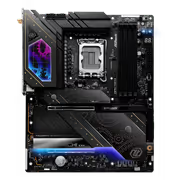
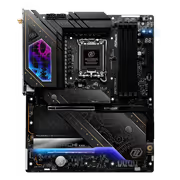
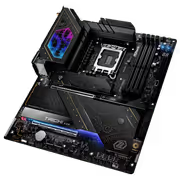
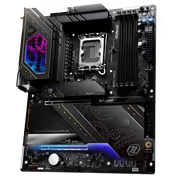
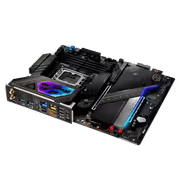
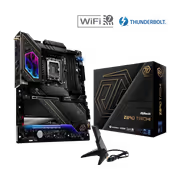
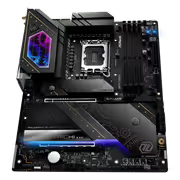
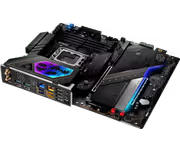
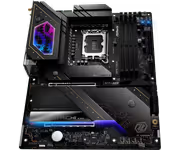
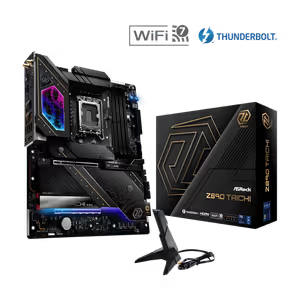
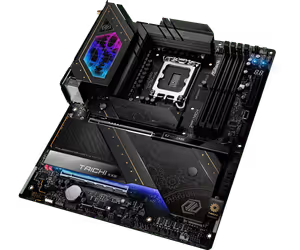
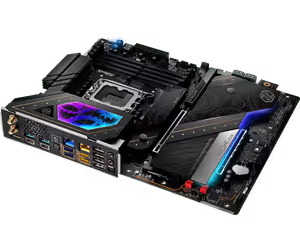
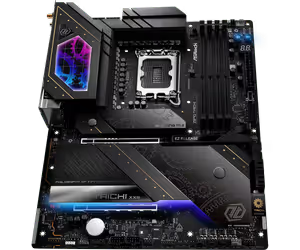
ASRock Z890 Taichi WiFi Intel Motherboard / ATX Form Factor / Supports Intel® Core™ Ultra Processors (Series 2) / LGA 1851 CPU Socket / 4x DDR5 DIMM Supporting up to 256GB / 90-MXBPR0-A0UAYZ / 90-MXBPR0-A0UAYZ / [+] ASRock Intel Motherboard Z890 & B860 Game Pack Promotion + FREE DELIVERY !
3 Years Local Warranty
Model No : ASROCK 90-MXBPR0-A0UAYZ
Price Inc. Vat
R 9,999
Save R 1,300
ListR 11,299
9999Free Delivery
Qty:
In Stock with Evetech

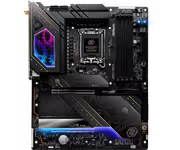
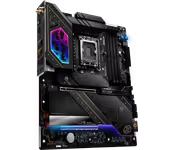
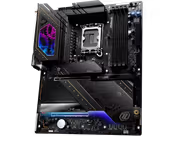
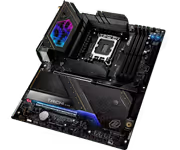
ASRock Z890 Taichi WiFi ATX Motherboard — DDR5, LGA1851
Built For Intel Core Ultra Series 2 On LGA 1851
The ASRock Z890 Taichi WiFi is an elite-level Intel motherboard built around the LGA 1851 socket for Intel Core Ultra processors (Series 2). It is specified for gaming enthusiasts and demanding workloads rather than basic desktop duty, with power delivery and cooling scaled to match. Advanced connectivity across the board keeps data transfers fast and latency low for both gaming and productivity work.
Built For Intel Core Ultra Series 2 On LGA 1851
The ASRock Z890 Taichi WiFi is an elite-level Intel motherboard built around the LGA 1851 socket for Intel Core Ultra processors (Series 2). It is specified for gaming enthusiasts and demanding workloads rather than basic desktop duty, with power delivery and cooling scaled to match. Advanced connectivity across the board keeps data transfers fast and latency low for both gaming and productivity work.
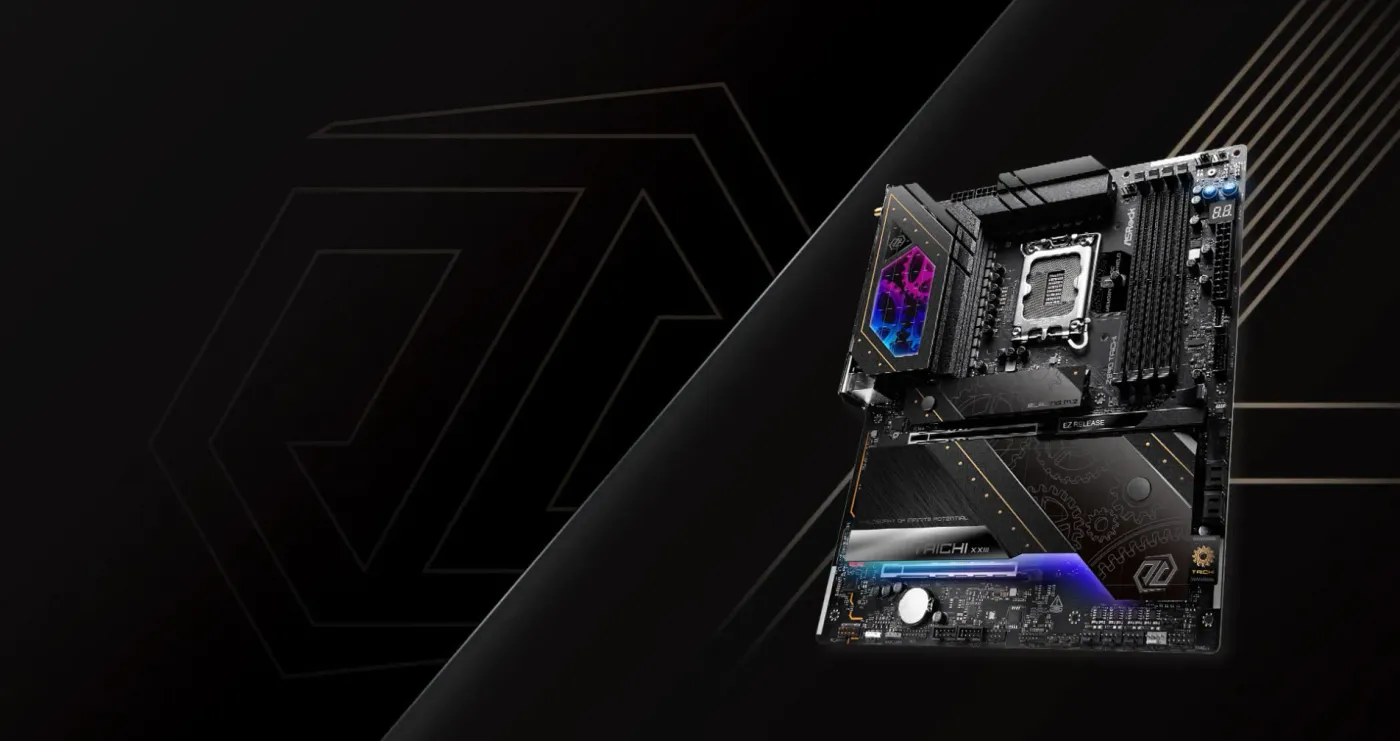
Flagship Taichi Board With Robust Power Management
The Z890 Taichi sits at the top of ASRock's Taichi series, pairing premium hardware specifications with robust power management and user-friendly design touches. It is aimed at high-end gamers who want a board that presents well in a windowed build and still holds up under sustained load. Aesthetics and performance are treated as equal priorities rather than one traded for the other.
Flagship Taichi Board With Robust Power Management
The Z890 Taichi sits at the top of ASRock's Taichi series, pairing premium hardware specifications with robust power management and user-friendly design touches. It is aimed at high-end gamers who want a board that presents well in a windowed build and still holds up under sustained load. Aesthetics and performance are treated as equal priorities rather than one traded for the other.
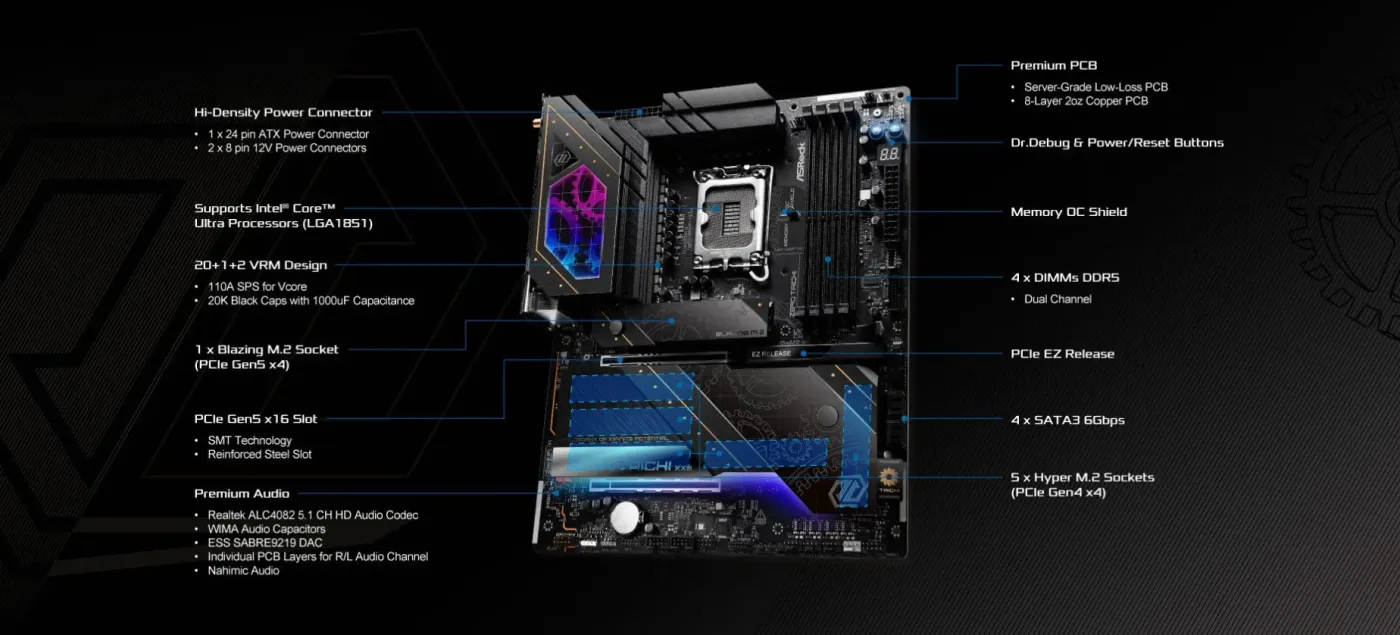
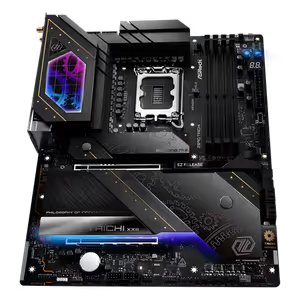
Four DDR5 DIMM Slots Carry Up To 256GB
Four DDR5 DIMM slots carry up to 256GB of memory on the Z890 Taichi, giving it capacity for heavy multitasking and high-speed operations. That ceiling covers large project files and memory-hungry creative applications running alongside a game. DDR5 is the memory standard throughout, matching the Intel Core Ultra Series 2 platform the board is built for.
Four DDR5 DIMM Slots Carry Up To 256GB
Four DDR5 DIMM slots carry up to 256GB of memory on the Z890 Taichi, giving it capacity for heavy multitasking and high-speed operations. That ceiling covers large project files and memory-hungry creative applications running alongside a game. DDR5 is the memory standard throughout, matching the Intel Core Ultra Series 2 platform the board is built for.
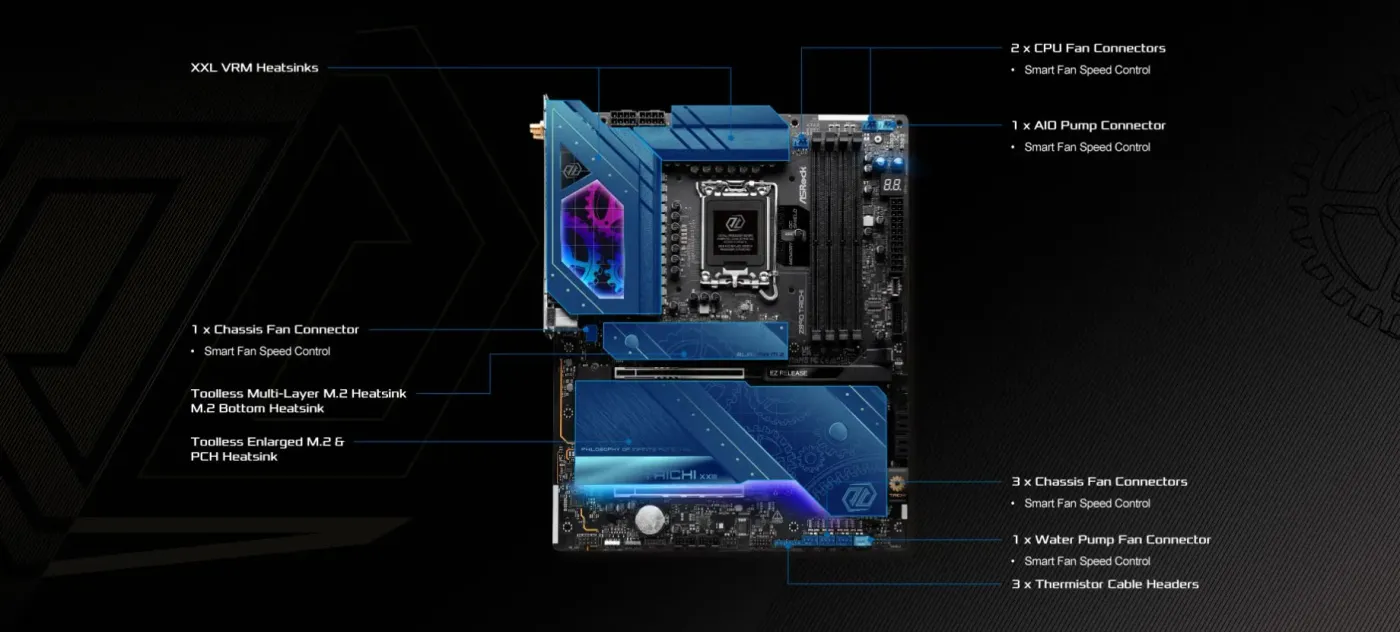
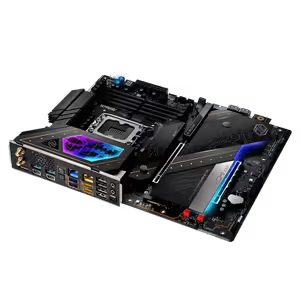
ATX Form Factor Fits A Broad Range Of Cases
The Z890 Taichi uses the standard ATX form factor, so it drops into the broad spectrum of PC cases that accept ATX boards instead of needing a specialist chassis. Its layout is designed around optimal power delivery and its own visual presentation, which matters once a side panel is glass. Stability and current technology combine in a board intended for a top-tier gaming rig.
ATX Form Factor Fits A Broad Range Of Cases
The Z890 Taichi uses the standard ATX form factor, so it drops into the broad spectrum of PC cases that accept ATX boards instead of needing a specialist chassis. Its layout is designed around optimal power delivery and its own visual presentation, which matters once a side panel is glass. Stability and current technology combine in a board intended for a top-tier gaming rig.
20+1+2+1+1 Power Phase Configuration For Overclocking
A 20+1+2+1+1 power phase configuration handles CPU power delivery, using robust components to keep the supply smooth under load. The arrangement offers exceptional overclocking potential with low-temperature operation, which is what advanced gaming asks of a VRM across a long session. It is the foundation of the board's advanced VRM architecture.
20+1+2+1+1 Power Phase Configuration For Overclocking
A 20+1+2+1+1 power phase configuration handles CPU power delivery, using robust components to keep the supply smooth under load. The arrangement offers exceptional overclocking potential with low-temperature operation, which is what advanced gaming asks of a VRM across a long session. It is the foundation of the board's advanced VRM architecture.
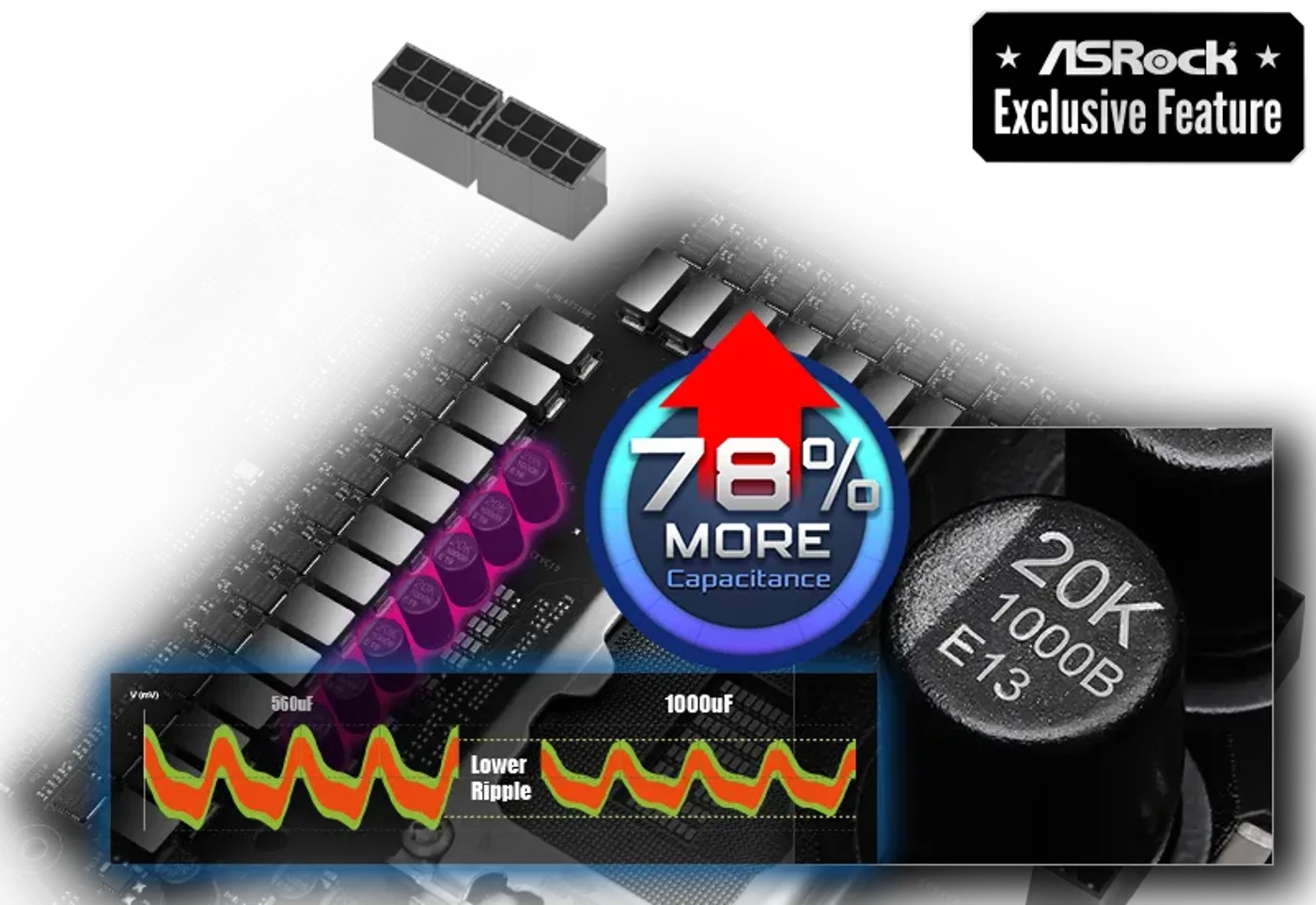
20K Black Capacitor Lasts 20,000 Hours At 1000uF
The advanced 20K Black capacitor extends operational lifespan to 20,000 hours and increases capacitance from 560uF to 1000uF. Higher charge storage keeps performance optimal under load, while ripple is reduced so fluctuations in power output stay minimal. Current output remains stable with fewer voltage variations, and the result is greater system reliability and performance consistency.
20K Black Capacitor Lasts 20,000 Hours At 1000uF
The advanced 20K Black capacitor extends operational lifespan to 20,000 hours and increases capacitance from 560uF to 1000uF. Higher charge storage keeps performance optimal under load, while ripple is reduced so fluctuations in power output stay minimal. Current output remains stable with fewer voltage variations, and the result is greater system reliability and performance consistency.
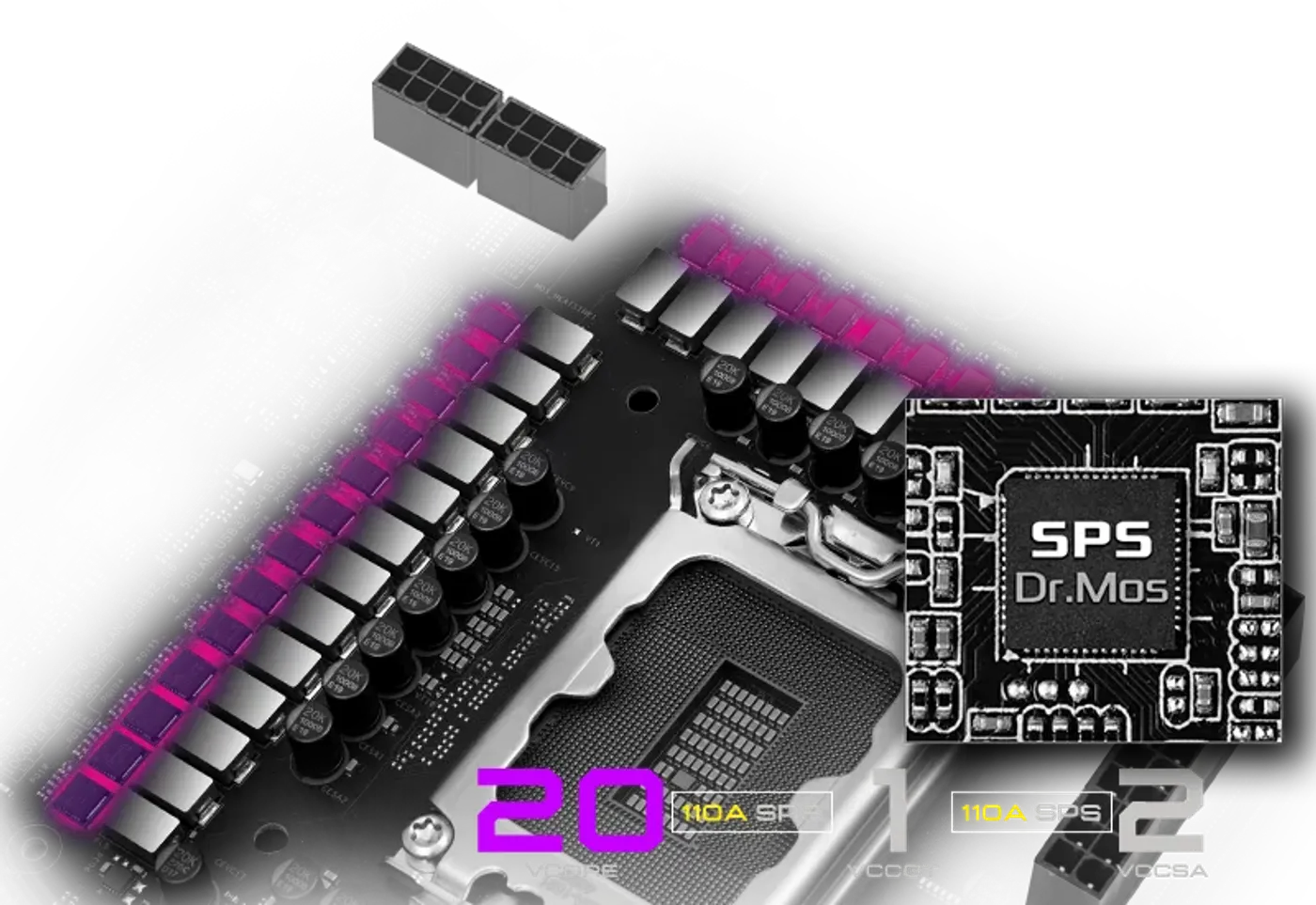
Smart Power Stage Monitors Current And Temperature
SPS, or Smart Power Stage, is an innovative Dr.MOS design optimised for real-time monitoring of current and temperature. That live feedback is what assures efficient power delivery to the CPU as the load changes, rather than holding to one fixed setting. SPS works alongside the board's power phase design as part of the same VRM package.
Smart Power Stage Monitors Current And Temperature
SPS, or Smart Power Stage, is an innovative Dr.MOS design optimised for real-time monitoring of current and temperature. That live feedback is what assures efficient power delivery to the CPU as the load changes, rather than holding to one fixed setting. SPS works alongside the board's power phase design as part of the same VRM package.
Dual Layer 2oz Copper PCB Reduces Temperatures
A dual layer PCB built with 2 ounce copper carries the board's signal traces and power routing. The extra copper mass reduces temperatures and improves energy performance, which counts most when the CPU is overclocked and pulling sustained current. Stable routing is what keeps signals clean once the board runs outside stock settings.
Dual Layer 2oz Copper PCB Reduces Temperatures
A dual layer PCB built with 2 ounce copper carries the board's signal traces and power routing. The extra copper mass reduces temperatures and improves energy performance, which counts most when the CPU is overclocked and pulling sustained current. Stable routing is what keeps signals clean once the board runs outside stock settings.
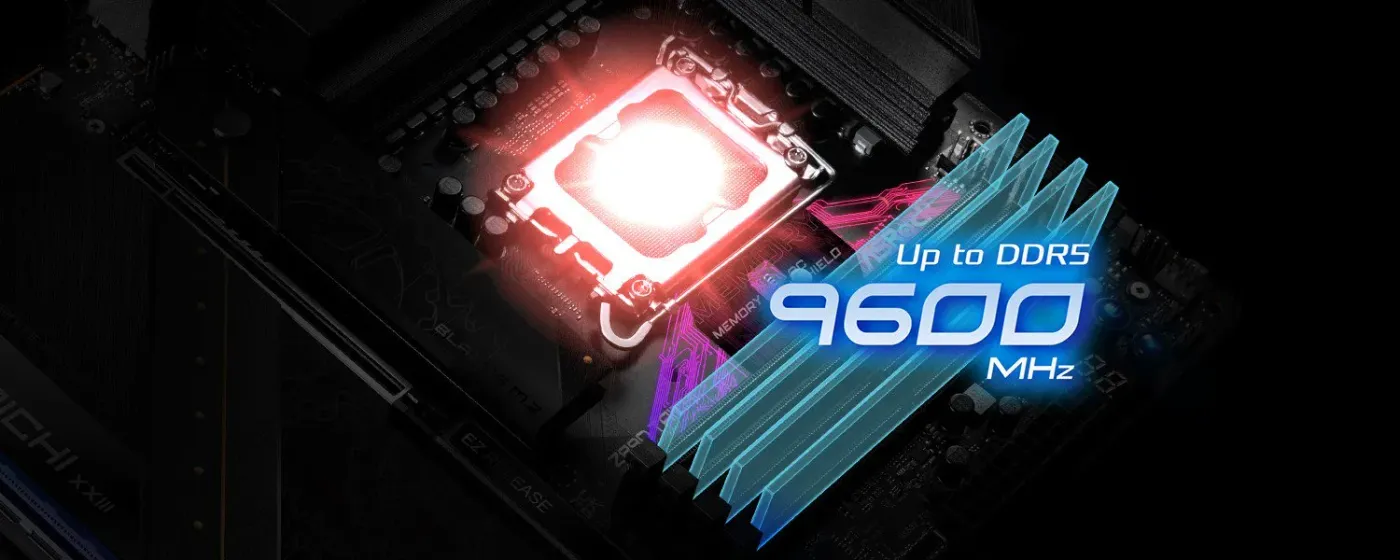
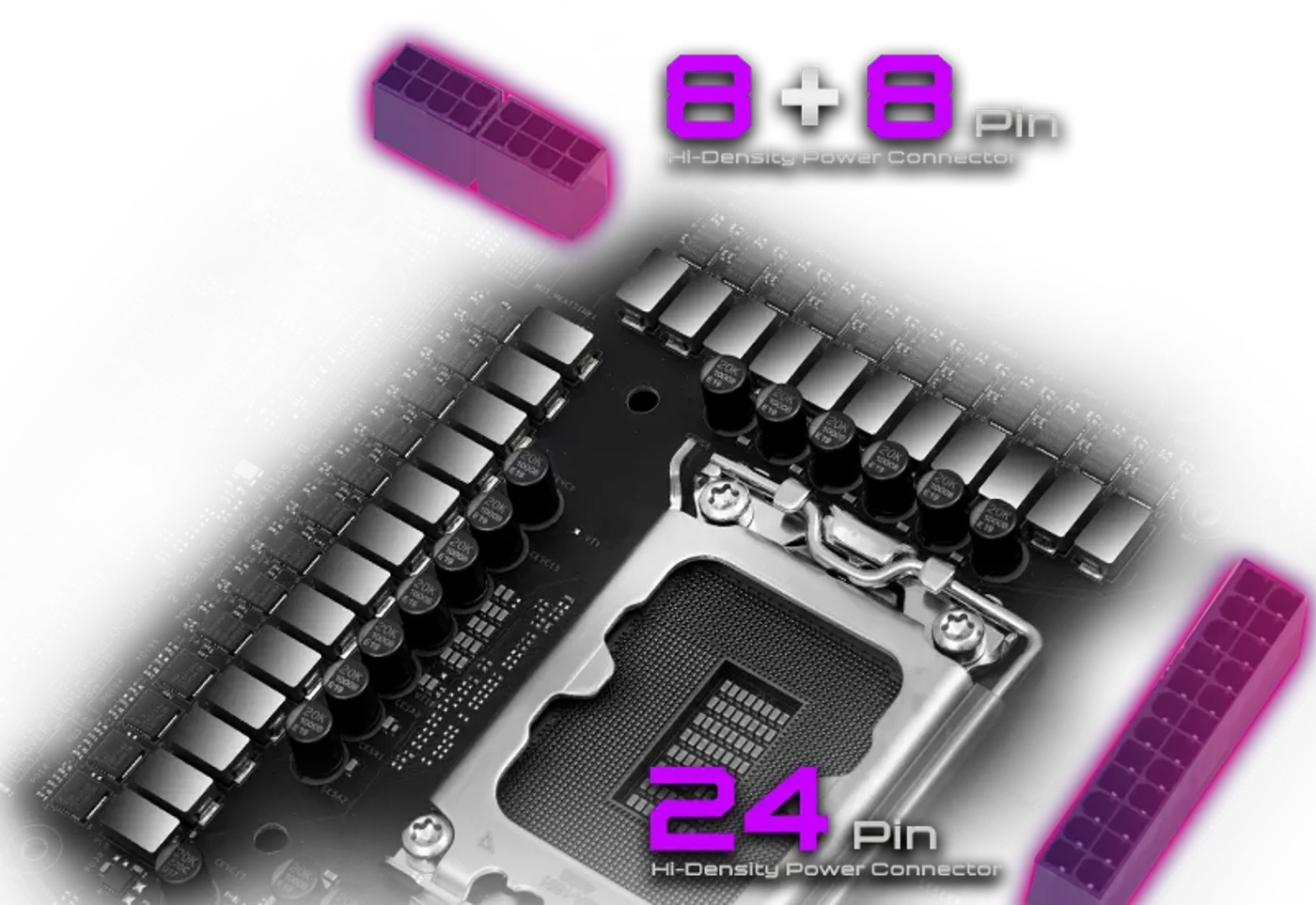
Hi-Density Power Connectors Handle Overclocking Currents
CPU overclocking draws higher currents than stock operation, and the ASRock Hi-Density Power Connectors are engineered to handle those increased loads compared with standard connectors. The result is enhanced system stability during intense overclocking and a lower fire risk at the connector itself. This is the point where the power supply meets the board, so it carries everything the VRM then distributes.
Hi-Density Power Connectors Handle Overclocking Currents
CPU overclocking draws higher currents than stock operation, and the ASRock Hi-Density Power Connectors are engineered to handle those increased loads compared with standard connectors. The result is enhanced system stability during intense overclocking and a lower fire risk at the connector itself. This is the point where the power supply meets the board, so it carries everything the VRM then distributes.
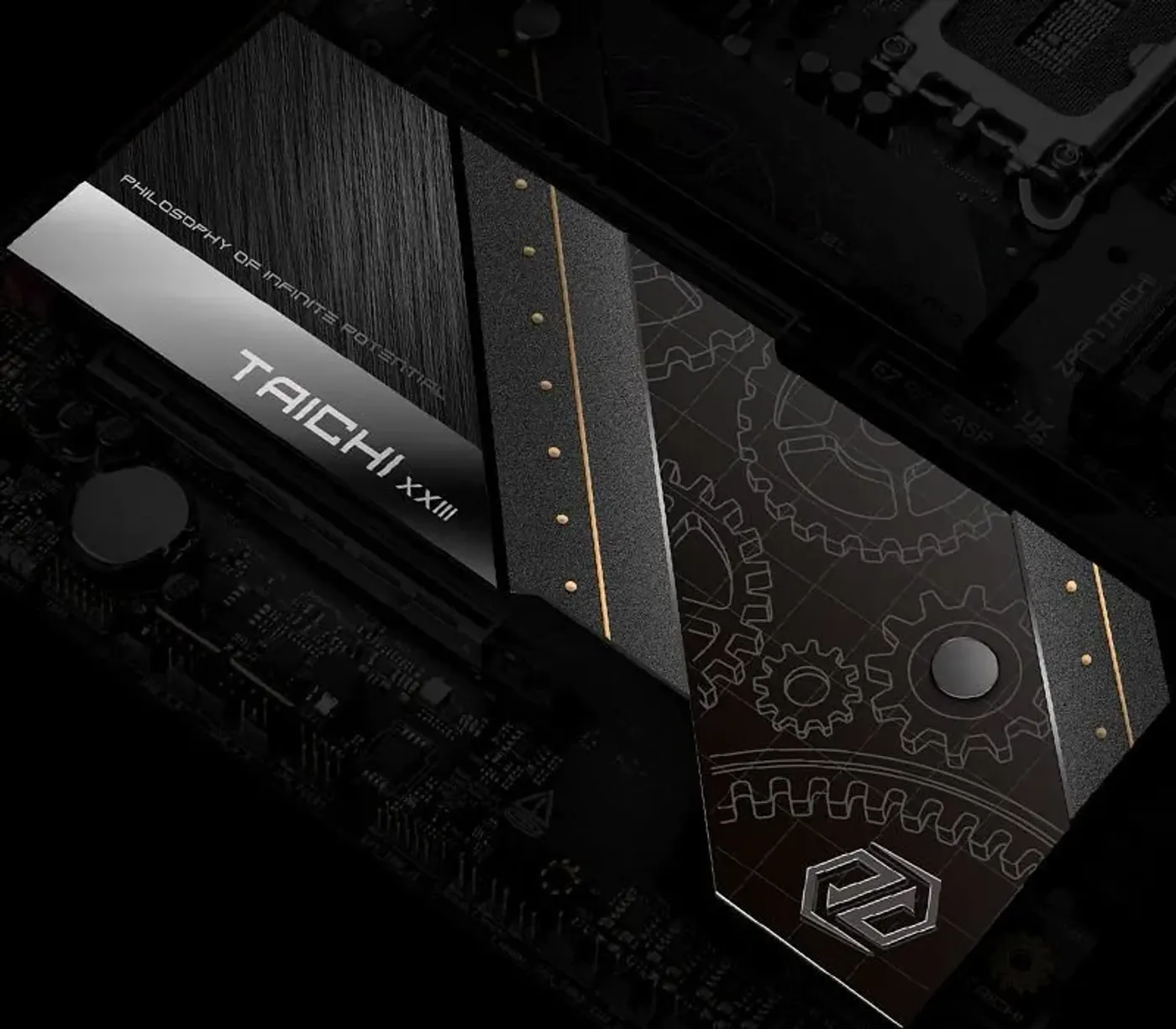
XXL Aluminium M.2 Heatsink Installs Without Tools
An oversized aluminum alloy M.2 heatsink covers the board's M.2 storage, and its toolless design means an SSD goes in without hunting for a screwdriver or a tiny standoff screw. The larger mass provides superior cooling and a performance gain for the drive underneath. Installation time and thermal headroom both improve over a bare slot.
XXL Aluminium M.2 Heatsink Installs Without Tools
An oversized aluminum alloy M.2 heatsink covers the board's M.2 storage, and its toolless design means an SSD goes in without hunting for a screwdriver or a tiny standoff screw. The larger mass provides superior cooling and a performance gain for the drive underneath. Installation time and thermal headroom both improve over a bare slot.
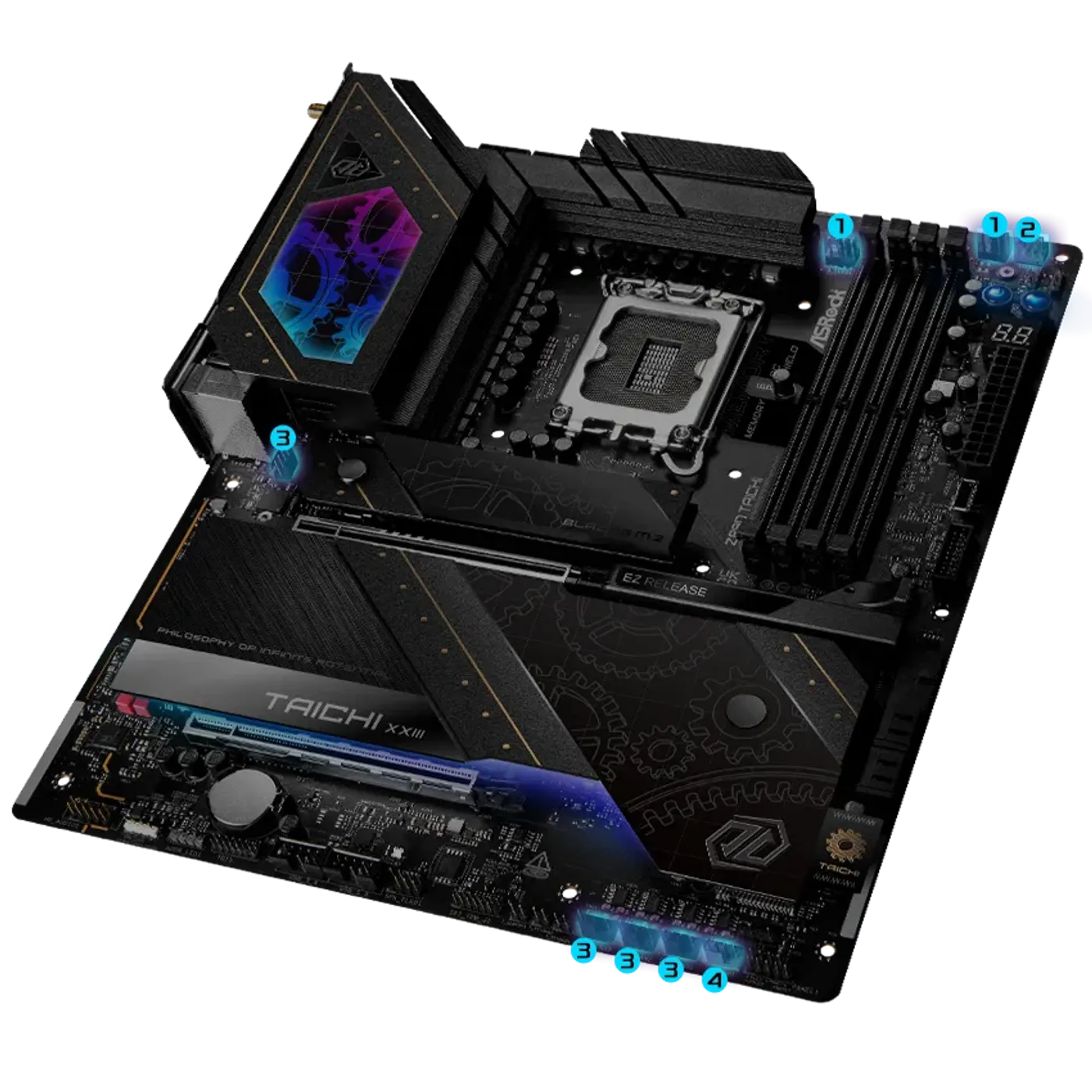
Fan Headers Auto-Detect DC And PWM Fans
ASRock's fan headers automatically detect whether a connected fan is running in DC or PWM mode, so curves can be tuned finely for reduced noise and optimal cooling. The board provides a CPU fan connector, an AIO pump fan connector, chassis fan connectors and a water pump fan connector. That covers air coolers, all-in-one liquid coolers and custom loops from the same header set.
Fan Headers Auto-Detect DC And PWM Fans
ASRock's fan headers automatically detect whether a connected fan is running in DC or PWM mode, so curves can be tuned finely for reduced noise and optimal cooling. The board provides a CPU fan connector, an AIO pump fan connector, chassis fan connectors and a water pump fan connector. That covers air coolers, all-in-one liquid coolers and custom loops from the same header set.
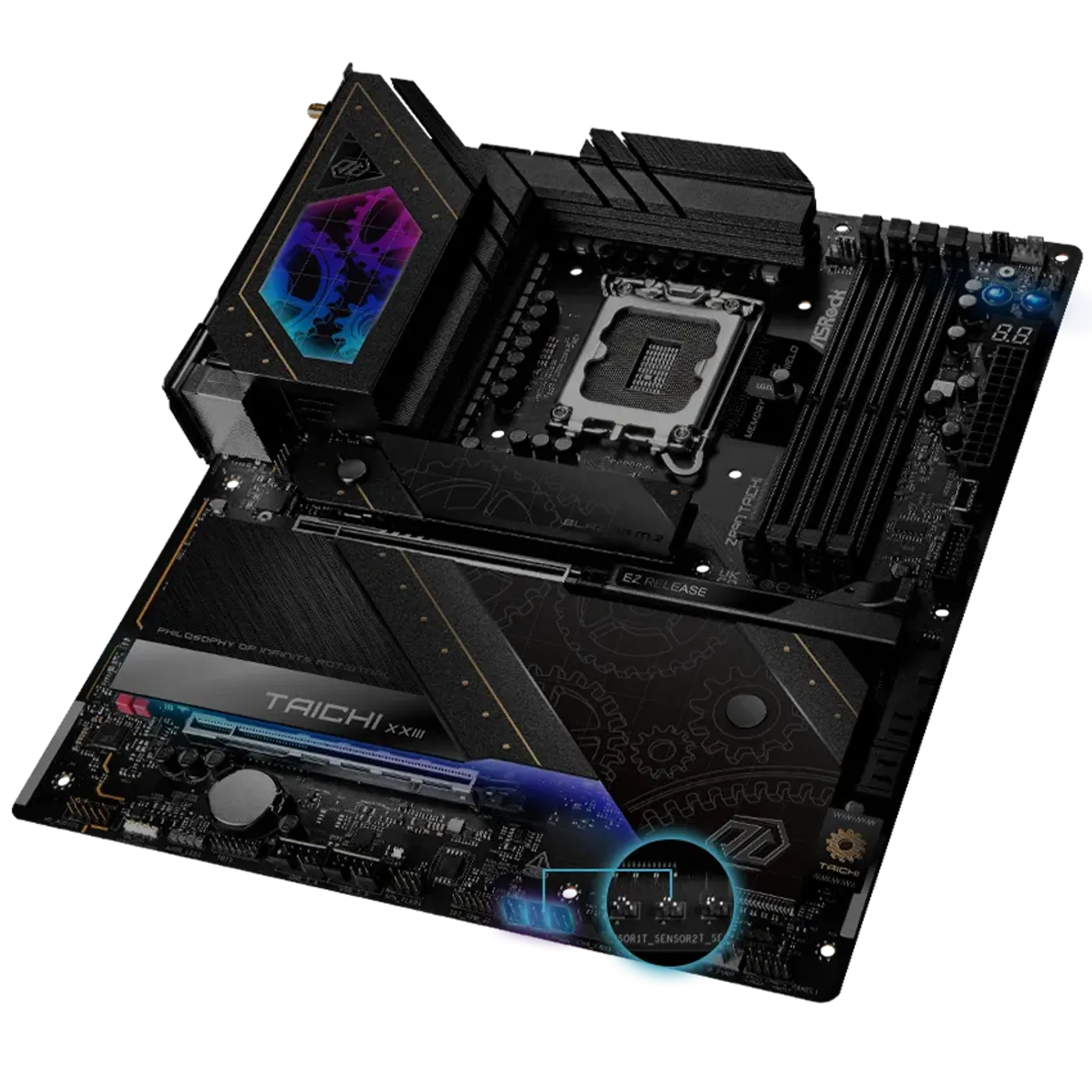
Thermistor Header Adds Custom Temperature Monitoring
A thermistor cable and header allow temperature monitoring at a point of your choosing inside the build. Those readings feed customised thermal management based on the workload, configured through Fan-Tastic Tuning or directly in UEFI. It earns its place when a case has an unusual airflow path or a hot component sitting away from the board's own sensors.
Thermistor Header Adds Custom Temperature Monitoring
A thermistor cable and header allow temperature monitoring at a point of your choosing inside the build. Those readings feed customised thermal management based on the workload, configured through Fan-Tastic Tuning or directly in UEFI. It earns its place when a case has an unusual airflow path or a hot component sitting away from the board's own sensors.
Composite VRM Heatsink Combines Fan, Sink And Heat Pipe
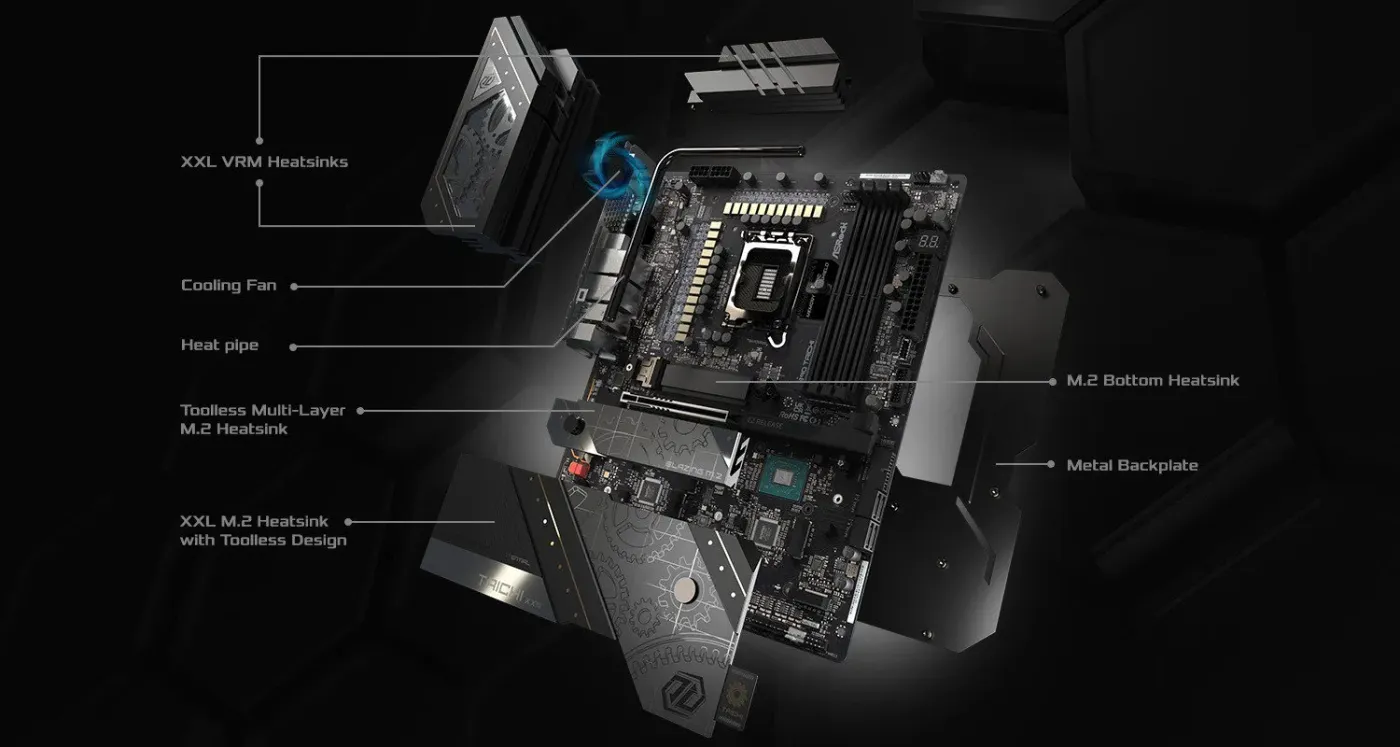
The composite VRM heatsink integrates a cooling fan, a large aluminum sink and a heat pipe into a single assembly, so heat leaves the power stages by more than one route. Active airflow handles the peak, the aluminum mass absorbs it and the heat pipe spreads it across the assembly. Heat dissipation performance is maximised at the part of the board that runs hottest.
Composite VRM Heatsink Combines Fan, Sink And Heat Pipe
The composite VRM heatsink integrates a cooling fan, a large aluminum sink and a heat pipe into a single assembly, so heat leaves the power stages by more than one route. Active airflow handles the peak, the aluminum mass absorbs it and the heat pipe spreads it across the assembly. Heat dissipation performance is maximised at the part of the board that runs hottest.
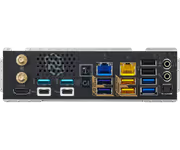
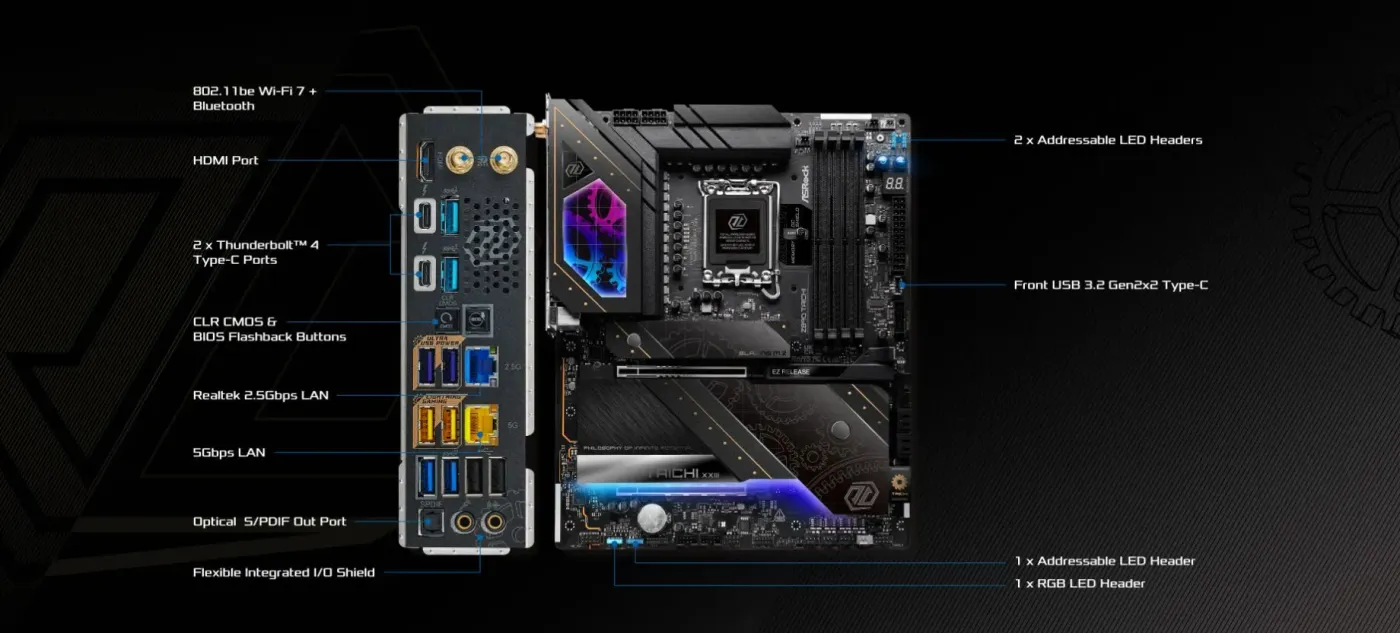
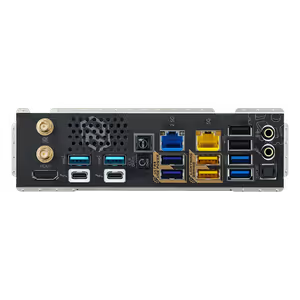
Thunderbolt 4 Type-C Reaches 40Gbps
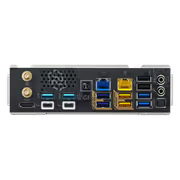
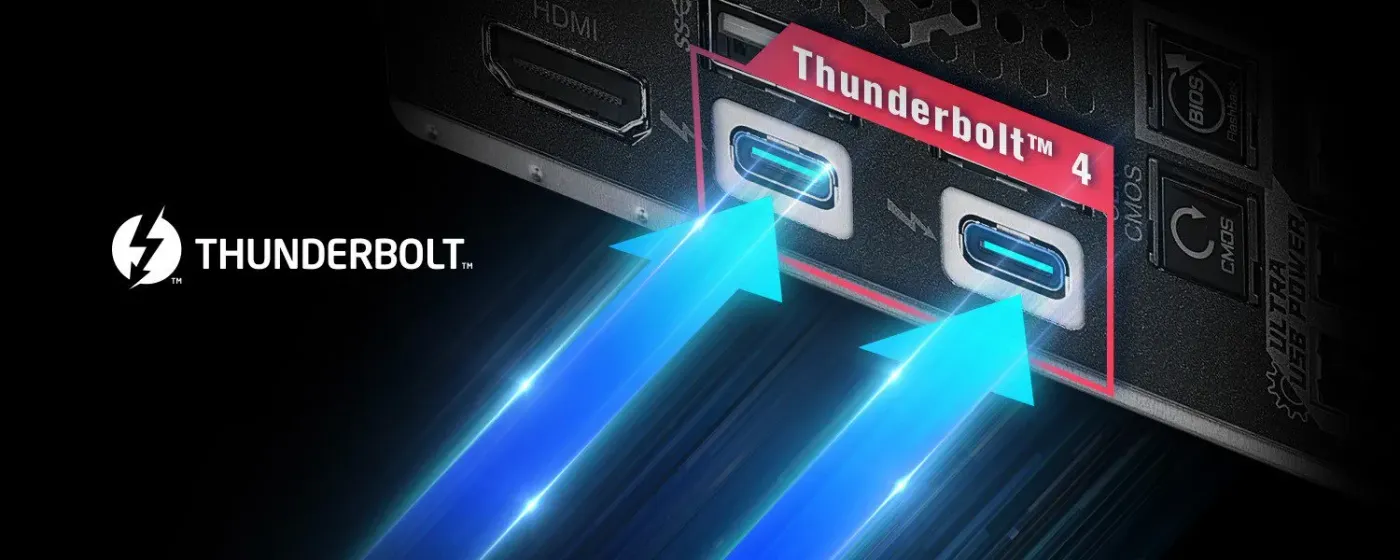
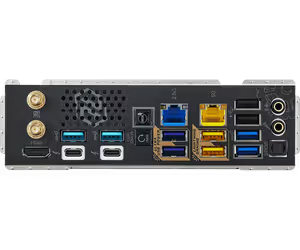
Thunderbolt 4 over USB Type-C delivers data transfer rates of up to 40Gbps and connects external displays as well as devices. A monitor and fast external storage can therefore share the same Type-C connection instead of occupying two separate ports. It is the highest-bandwidth interface on the Z890 Taichi and the reason the board suits creative work as much as gaming.
Thunderbolt 4 Type-C Reaches 40Gbps
Thunderbolt 4 over USB Type-C delivers data transfer rates of up to 40Gbps and connects external displays as well as devices. A monitor and fast external storage can therefore share the same Type-C connection instead of occupying two separate ports. It is the highest-bandwidth interface on the Z890 Taichi and the reason the board suits creative work as much as gaming.
5 Gb/s Ethernet Port With Patent-Pending EMI Design
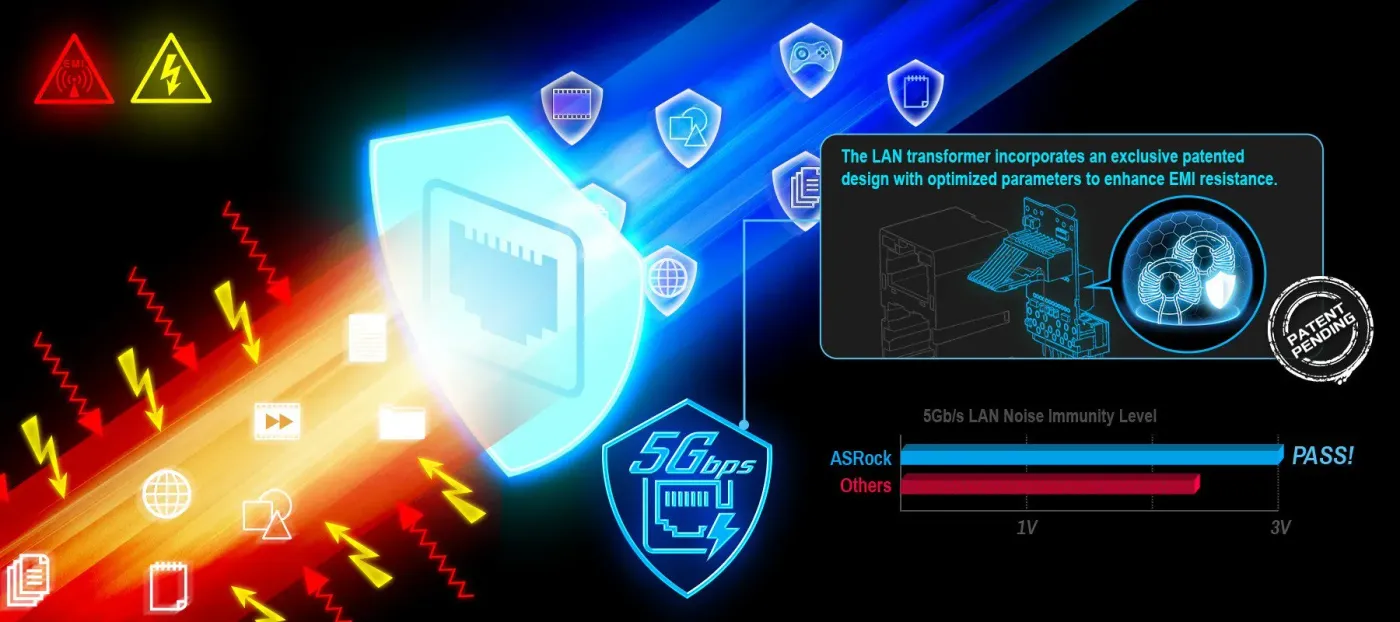
The ASRock 5Gb/s LAN connector uses a patent-pending design that significantly improves resistance to electromagnetic interference. Better interference resistance is what keeps a wired link steady inside a chassis packed with a graphics card, fans and RGB wiring. The outcome is remarkable speed stability and a stronger networking experience on the 5 Gb/s port.
5 Gb/s Ethernet Port With Patent-Pending EMI Design
The ASRock 5Gb/s LAN connector uses a patent-pending design that significantly improves resistance to electromagnetic interference. Better interference resistance is what keeps a wired link steady inside a chassis packed with a graphics card, fans and RGB wiring. The outcome is remarkable speed stability and a stronger networking experience on the 5 Gb/s port.
One-Click Fan Curve Tuning With A-Tuning
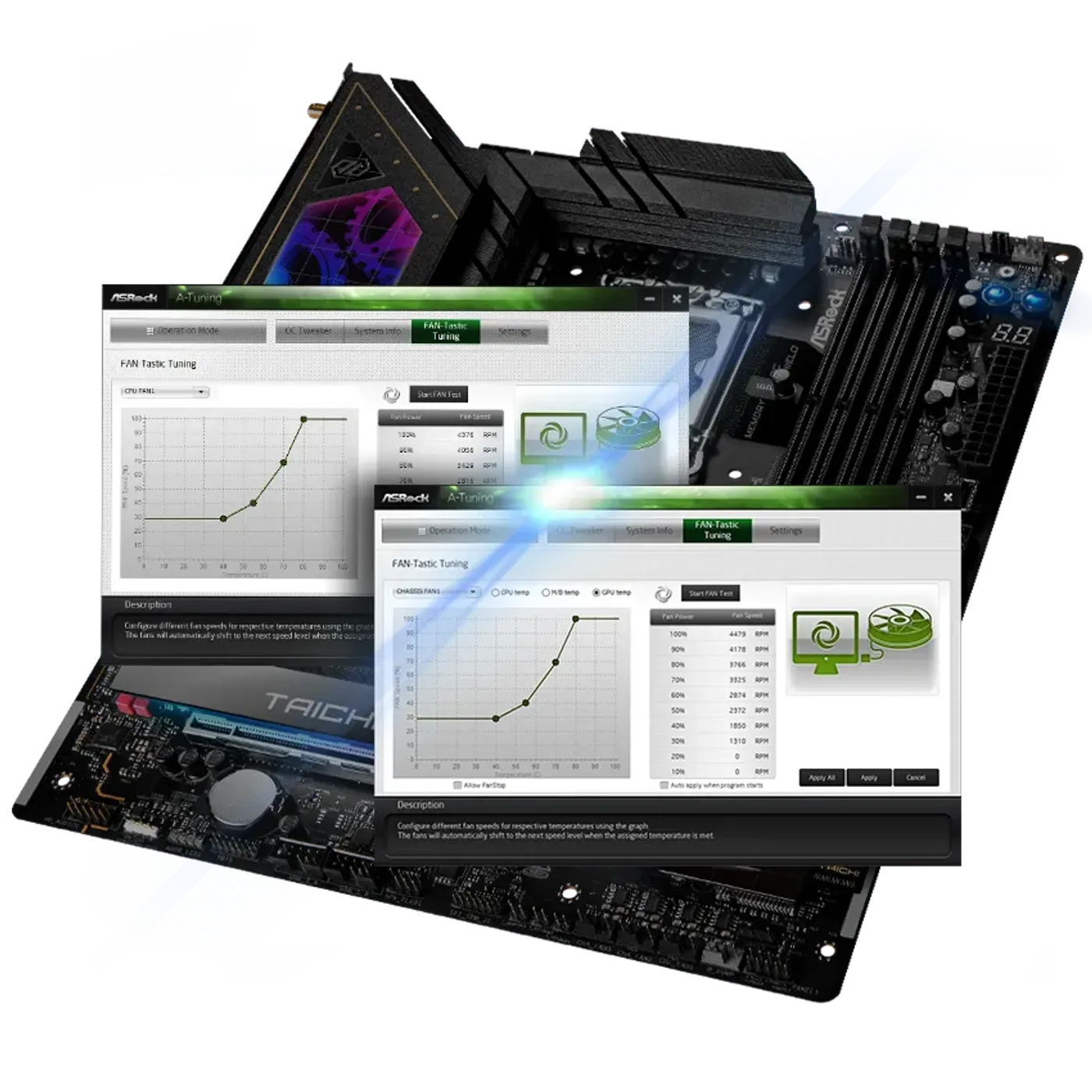
ASRock's A-Tuning Fan-Tastic Tuning function detects the minimum duty of each connected fan with a single click, then lets you shape every fan curve through a visual interface. Working from each fan's measured minimum rather than a guess is what makes a genuinely quiet idle profile possible. Cooling performance is optimised and noise minimised without editing values by hand.
One-Click Fan Curve Tuning With A-Tuning
ASRock's A-Tuning Fan-Tastic Tuning function detects the minimum duty of each connected fan with a single click, then lets you shape every fan curve through a visual interface. Working from each fan's measured minimum rather than a guess is what makes a genuinely quiet idle profile possible. Cooling performance is optimised and noise minimised without editing values by hand.
Ultra USB Power Delivers A Stabilised 5V Supply
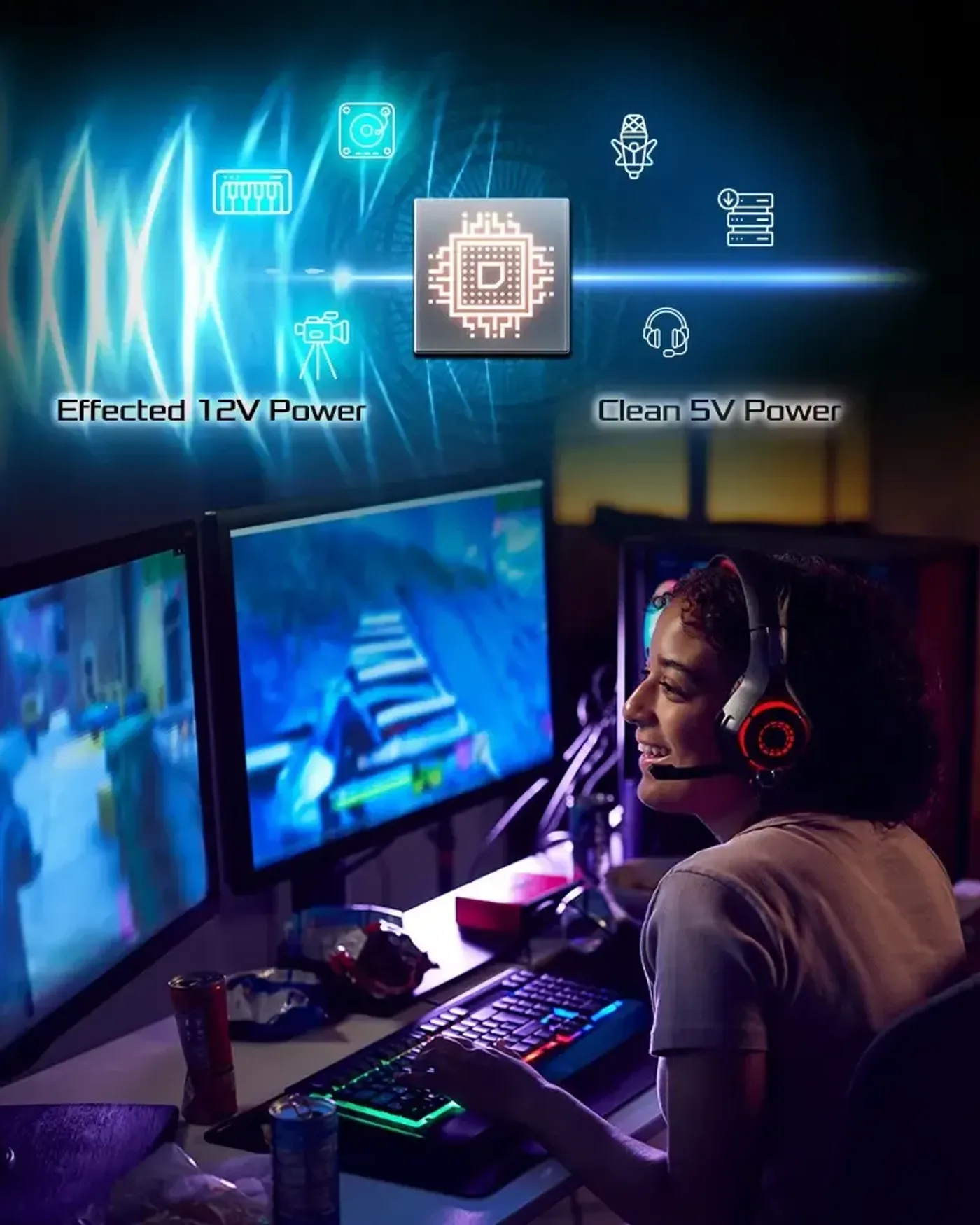
Ultra USB Power transforms +12V into a stabilised 5V supply for the USB ports, minimising voltage drop under heavy loads. Cleaner power enhances sound quality and reduces the noise picked up from other devices or RGB LED configurations. USB audio gear such as a headset or external converter benefits from that stability far more than a mouse or keyboard would.
Ultra USB Power Delivers A Stabilised 5V Supply
Ultra USB Power transforms +12V into a stabilised 5V supply for the USB ports, minimising voltage drop under heavy loads. Cleaner power enhances sound quality and reduces the noise picked up from other devices or RGB LED configurations. USB audio gear such as a headset or external converter benefits from that stability far more than a mouse or keyboard would.
USB 3.2 Gen2x2 Type-C Header Runs At 20 Gbps
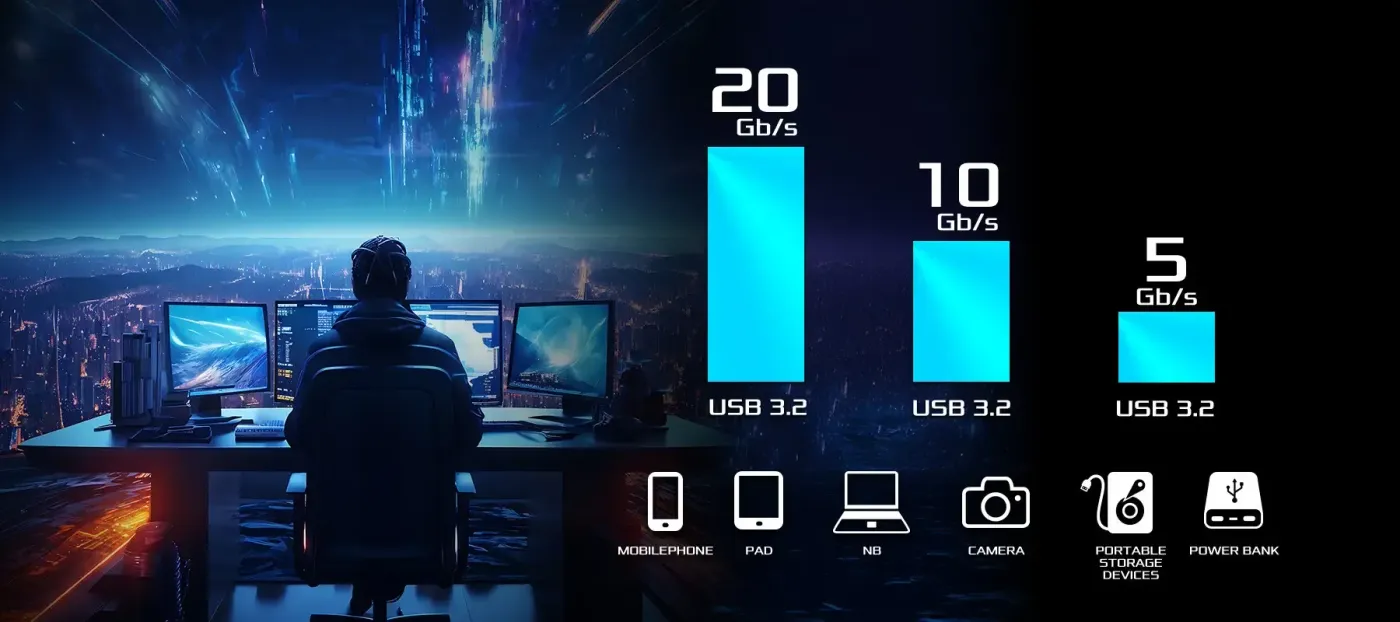
The USB 3.2 Gen2x2 Type-C header allows data transfer rates of up to 20 Gbps, twice as fast as the previous generation. Its reversible design means the connector goes in either way round, so there is no fumbling to find the correct orientation. It gives the board a rapid and efficient interface for high-speed external storage.
USB 3.2 Gen2x2 Type-C Header Runs At 20 Gbps
The USB 3.2 Gen2x2 Type-C header allows data transfer rates of up to 20 Gbps, twice as fast as the previous generation. Its reversible design means the connector goes in either way round, so there is no fumbling to find the correct orientation. It gives the board a rapid and efficient interface for high-speed external storage.
FAQ
Frequently Asked Questions
Everything you need to know about this product
It uses the LGA 1851 socket and supports Intel Core Ultra processors (Series 2).
It has four DDR5 DIMM slots and supports up to 256GB of memory in total.
It is an ATX motherboard, so it fits the broad spectrum of PC cases built to the ATX standard.
Yes. It supports Thunderbolt 4 over USB Type-C, with data transfer rates of up to 40Gbps and external display output.
The board uses an ASRock 5Gb/s LAN connector with a patent-pending design for improved electromagnetic interference resistance.
It runs a 20+1+2+1+1 power phase design, with SPS Smart Power Stage Dr.MOS components handling CPU power delivery.
The 20K Black capacitor extends operational lifespan to 20,000 hours and raises capacitance from 560uF to 1000uF.
No. The oversized aluminum alloy M.2 heatsink uses a toolless design for easy SSD installation.
It provides a CPU fan connector, an AIO pump fan connector, chassis fan connectors and a water pump fan connector.
Yes. The fan headers automatically detect whether a fan runs in DC or PWM mode, so each curve can be tuned correctly.
It transfers data at up to 20 Gbps, twice as fast as the previous generation, using a reversible Type-C design.
A composite VRM heatsink combines a cooling fan, a large aluminum sink and a heat pipe to maximise heat dissipation.

AI-Generated Content:These FAQs are generated by an automated AI system and may contain inaccuracies or omissions. Evetech makes no warranties, express or implied, regarding their completeness or reliability. For definitive information, please refer to the manufacturer's official specifications.
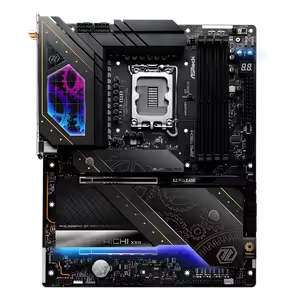
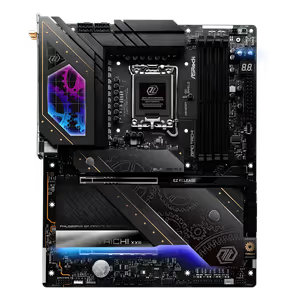
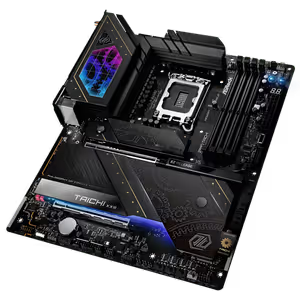
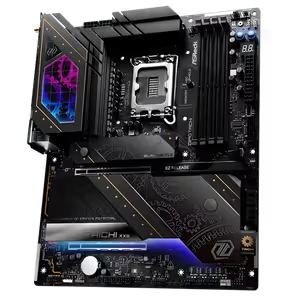
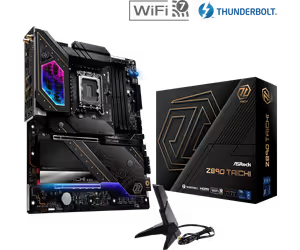
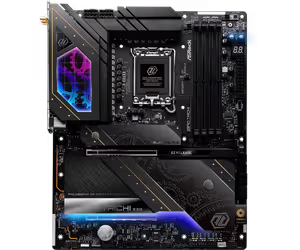
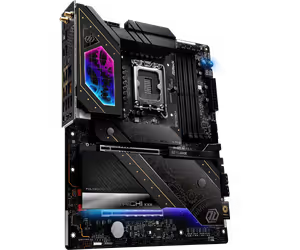
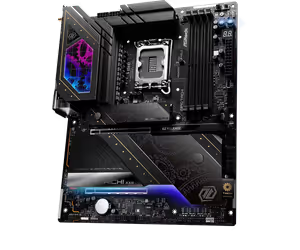
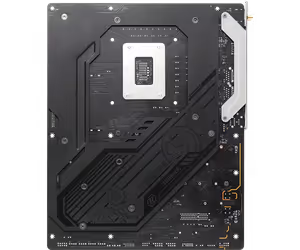
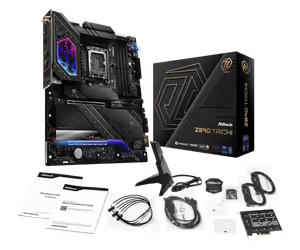
Please Note: Product images are for illustrative purposes only and may differ from the actual product.
Choose your
own PC
Hand-pick every part with live stock, compatibility, and instant pricing.
Try the new builderPrice Inc. Vat
R 9,999
Save R 1,300
ListR 11,299
9999Free Delivery
Qty:
In Stock with Evetech
Choose your
own PC
Hand-pick every part with live stock, compatibility, and instant pricing.
Try the new builderASRock Z890 Taichi WiFi Intel Motherboard