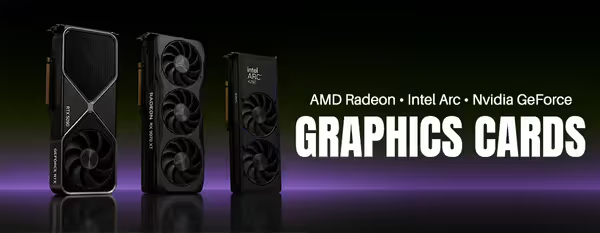
Graphics Cards (GPUs) for Gaming & Creation
Gaming Graphics Cards — GeForce RTX 50, Radeon RX & Arc (57)


How to Choose a Graphics Card
The right GPU comes down to three things: your target resolution, the games or apps you run, and the rest of your build. Use the guide below to match a card to your needs and budget before you buy.
Your monitor sets the target. For 1080p, an entry-to-mid card delivers high frame rates. 1440p high-refresh needs a mid-to-upper card. For 4K, or high-refresh gaming with ray tracing, choose a high-end GPU. Buying more GPU than your display can show is wasted money.
VRAM holds textures and frame data. 8GB is workable at 1080p, 12GB is comfortable at 1440p, and 16GB or more suits 4K plus heavily modded or ray-traced titles. Creators working in video and 3D also benefit from more VRAM.
Modern GPUs add realistic lighting with hardware ray tracing and recover frame rate with upscaling — NVIDIA's DLSS and AMD's FSR. If you want ray tracing at high frame rates, weigh upscaling support when comparing NVIDIA, AMD and Intel cards.
High-end GPUs draw real power — check your PSU has the wattage and correct connectors, and leave 200–300W of headroom. Measure your case's GPU clearance too, as flagship cards are long and can block drive bays or front radiators.
NVIDIA GeForce leads in ray tracing, DLSS and creator-app support. AMD Radeon often gives more VRAM and raster performance per rand. Intel Arc is strong value at the entry level. Match the brand to what you actually play and create.