gamemax-fn12a-s8i-r-120mm-reverse-argb-fan-black-frame
GAMEMAX FN12A-S8I-R 120mm Reverse ARGB Case Fan - Black Frame / Reverse Blade Design for Bottom Intake & PSU Shroud Mounting / PWM Intelligent Speed Control (800–1600 RPM) / Addressable RGB Lighting with Inner & Outer Effects / 5V 3-Pin ARGB + 4-Pin PWM Support / Aura Sync Compatible / Ultra-Quiet Operation (Max 31.21dBA) / 8× Shock-Absorbing Rubber Pads / Enhanced Airflow for Vertical Case Layouts / FN12A-S8I-R
1 Year Local Warranty
Model No : Gamemax FN12A-S8I-R
Price Inc. Vat
R 299
Save R 100
ListR 399
299Change Quantity:
In Stock with Evetech
GAMEMAX FN12A-S8I-R 120mm Reverse ARGB Case Fan - PWM Quiet
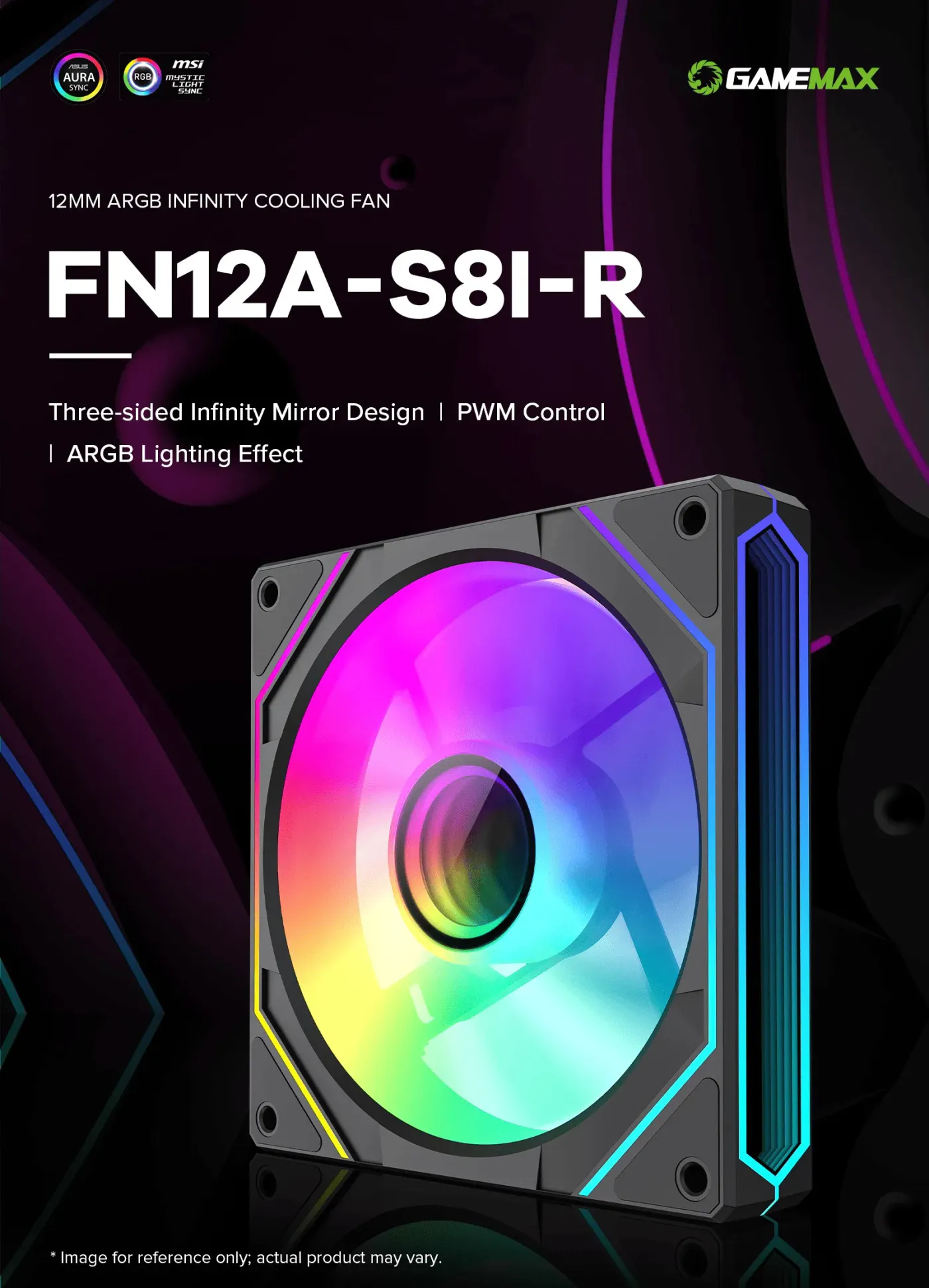
120mm Reverse ARGB Fan In A Black Frame
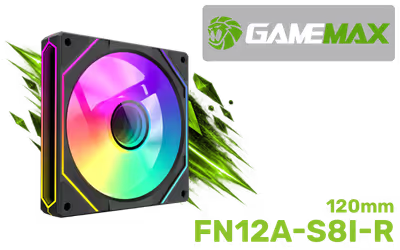
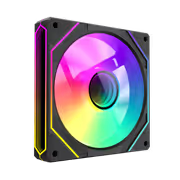
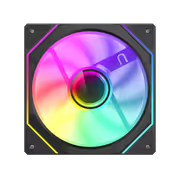
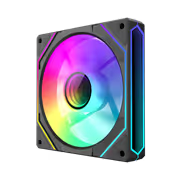
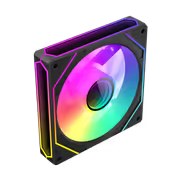
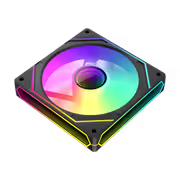
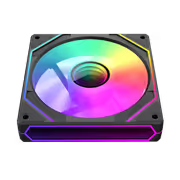
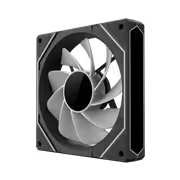
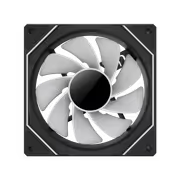
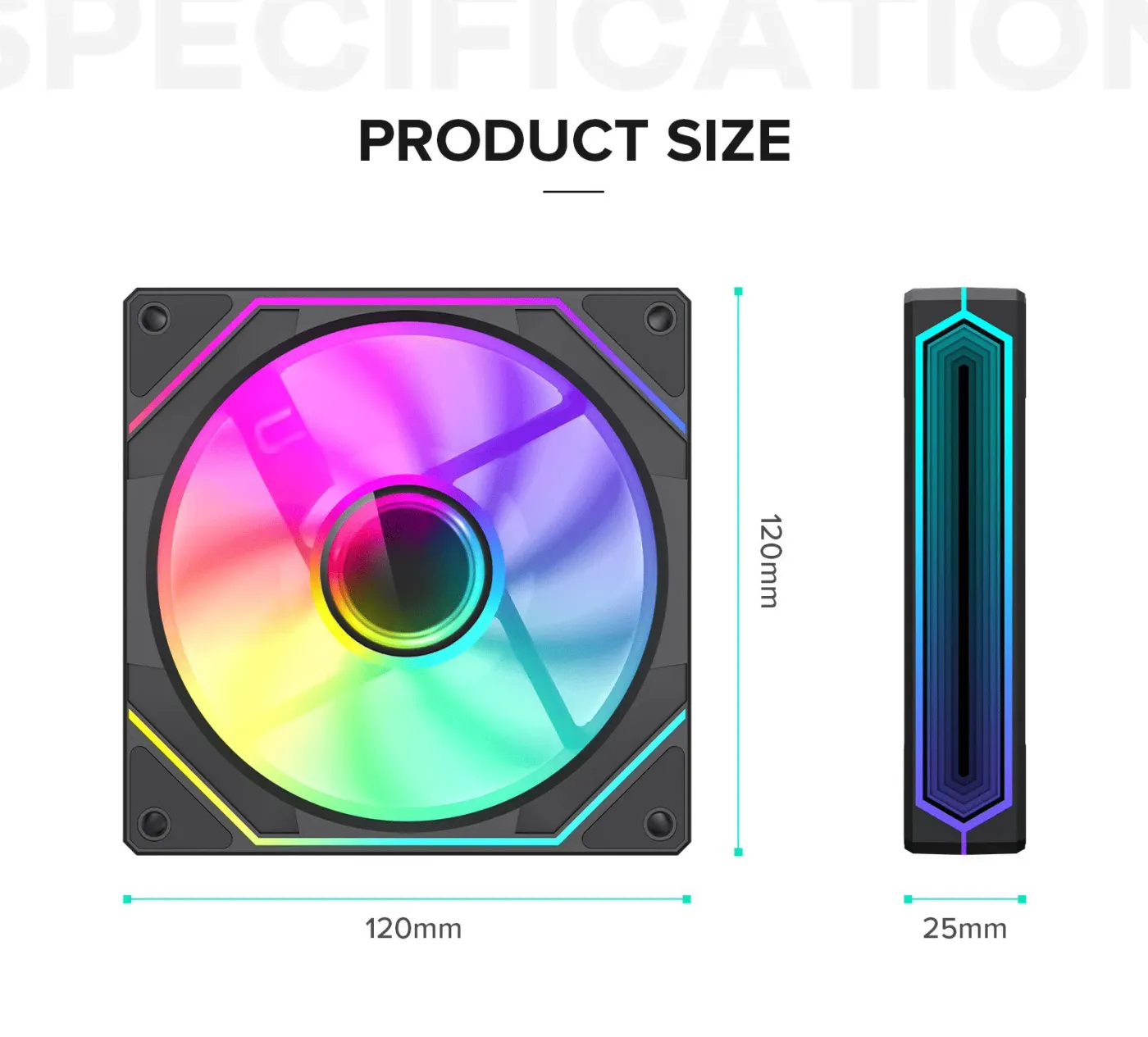
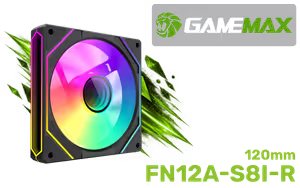
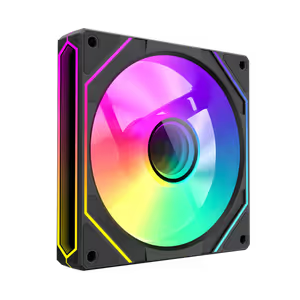
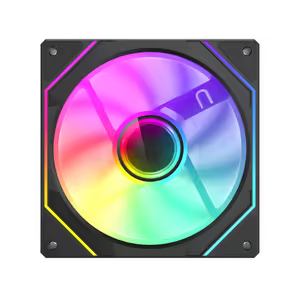
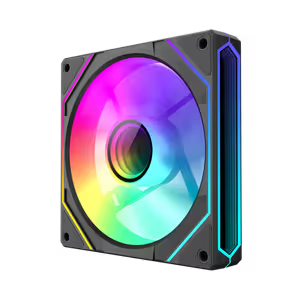
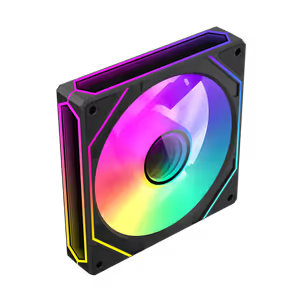
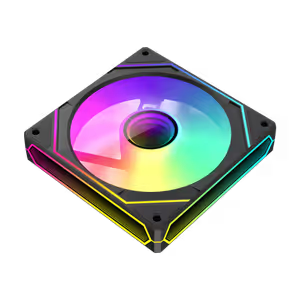
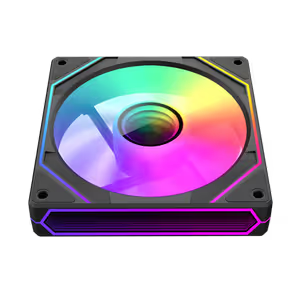
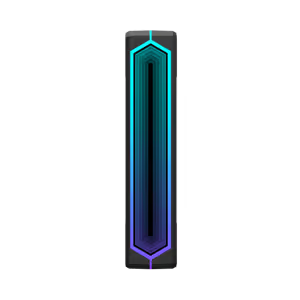
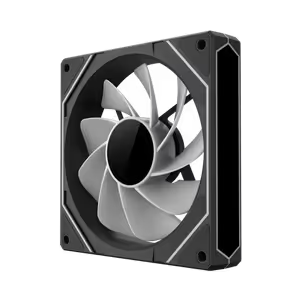
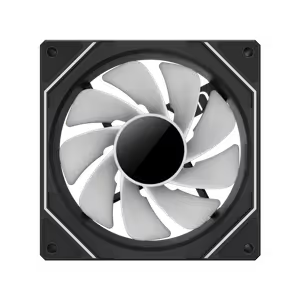
The GAMEMAX FN12A-S8I-R measures 120 x 120 x 25mm and sets nine semi-transparent white reverse blades inside a black frame. The dark frame keeps the fan discreet against a black chassis while the lighter blades still carry colour clearly. It is the reverse-blade model, intended for positions where a normal fan would face the wrong way.
Reverse Blades Put The Finished Face Forward
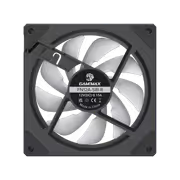
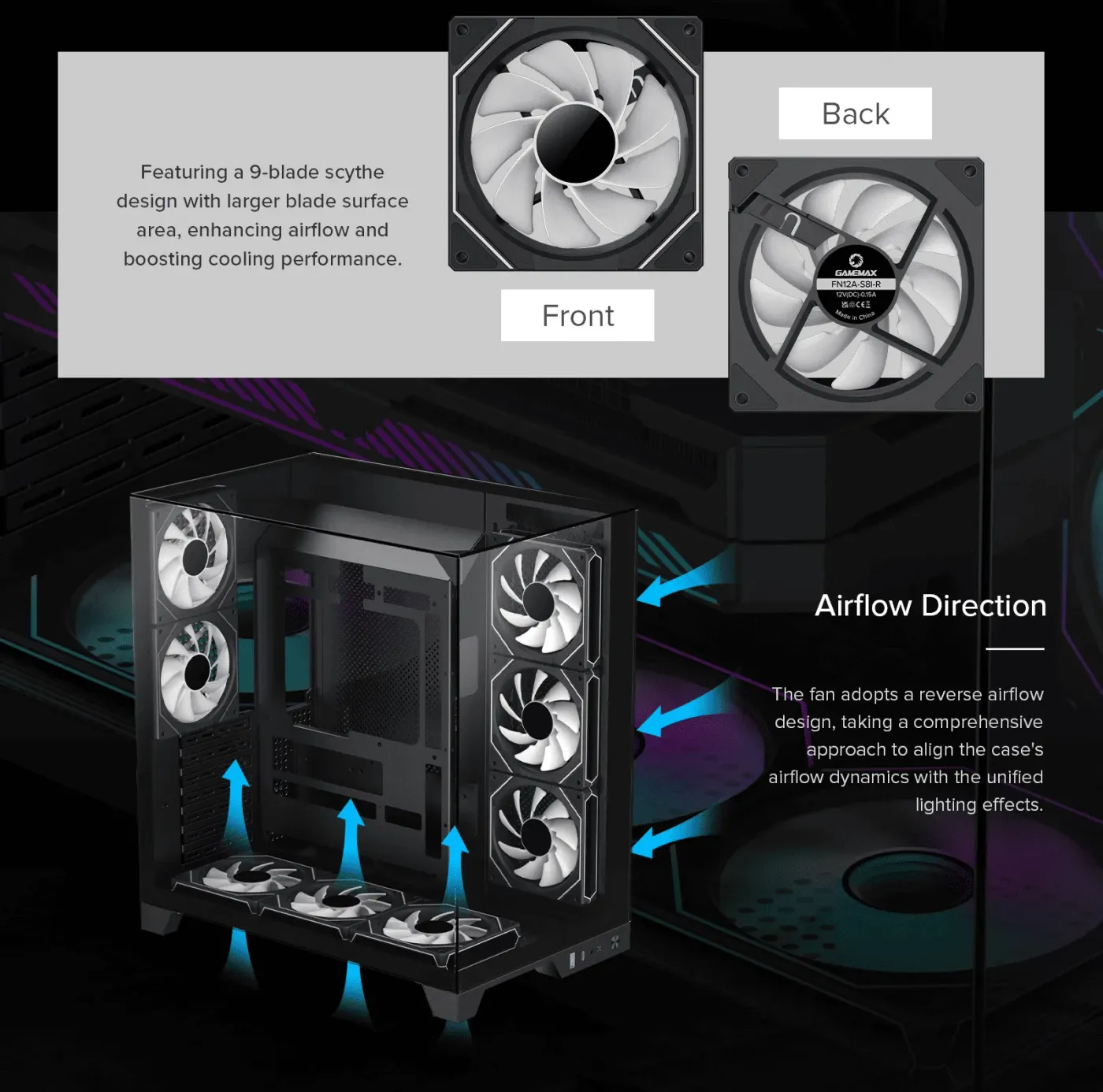
Reverse blades are curved in the opposite direction to a conventional fan, so air is driven out through the front face instead of being drawn in behind it. The practical result is that the tidy, illuminated side of the fan can face your glass panel while the air still travels in the direction the build requires.
Made For Bottom Intake And PSU Shroud Positions
This fan is aimed at bottom intake mounts and power supply shroud mounts, the two spots in a vertical case layout where a standard fan has to turn its motor housing toward the viewer. Fitted there, the FN12A-S8I-R sends fresh air up under the graphics card while keeping a clean face on display.
800 To 1600 RPM Under Motherboard Control
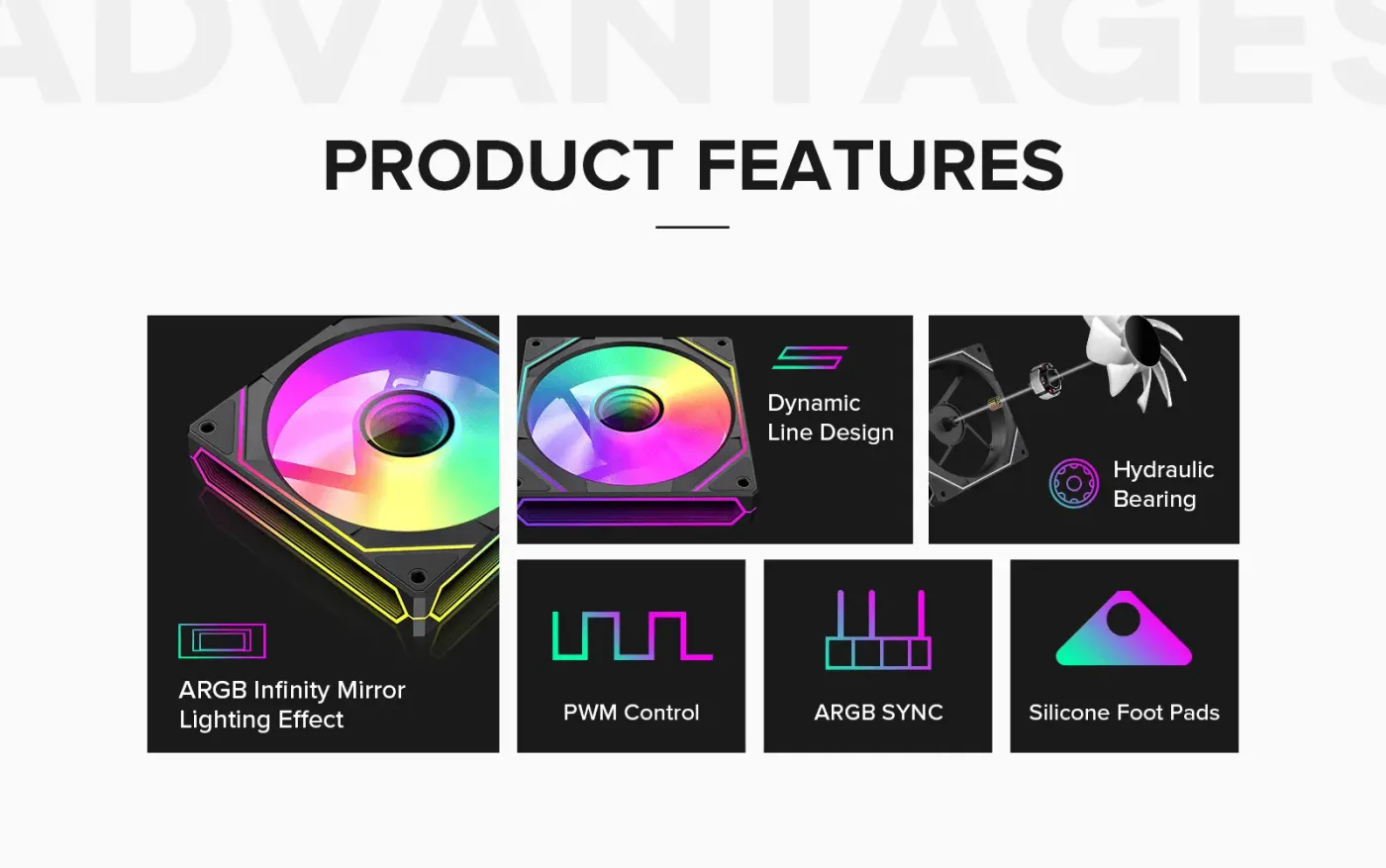
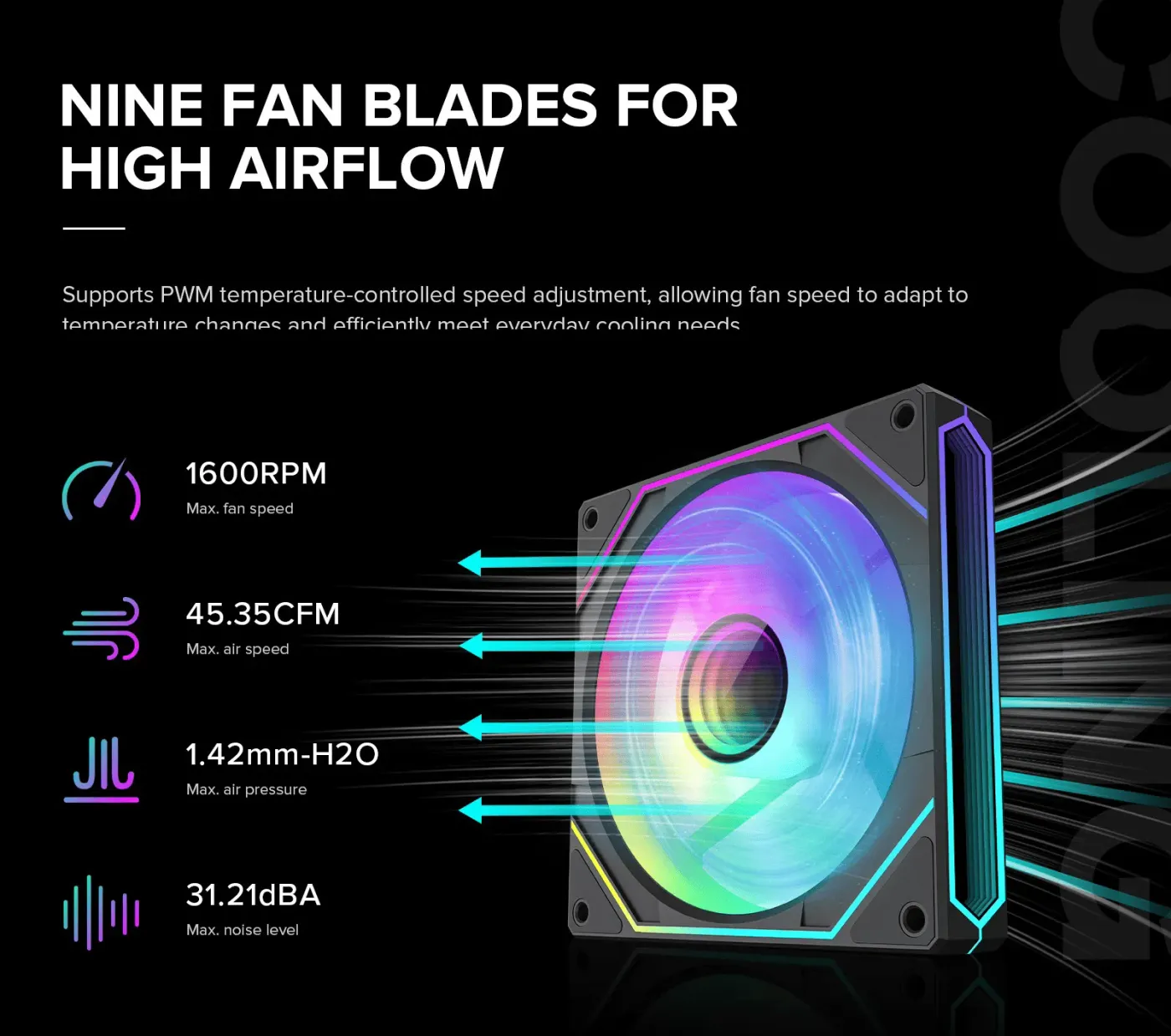
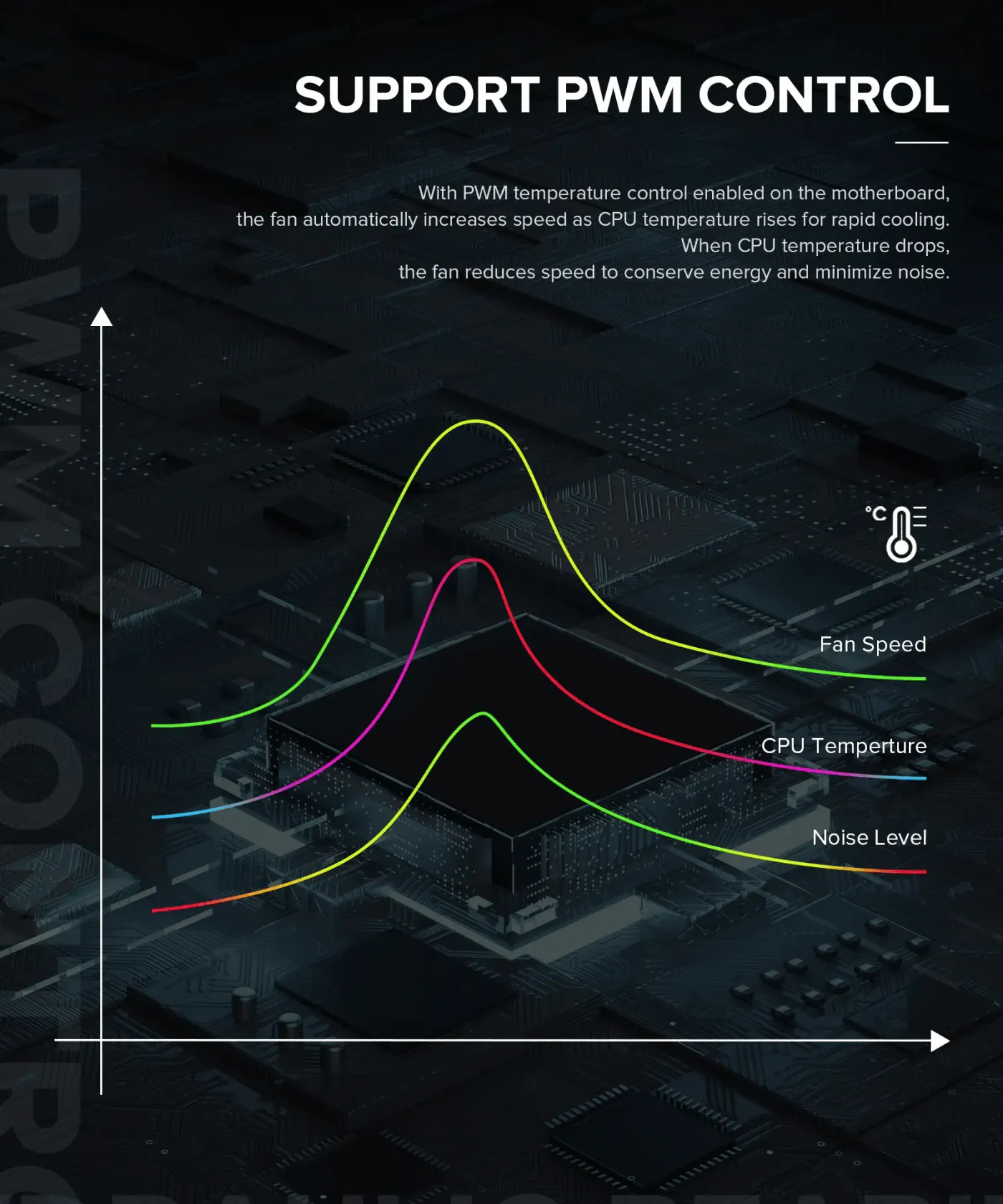
A 4-pin PWM connector lets the motherboard set the speed anywhere from 800 to 1600 RPM, within a 10 percent tolerance. A doubling of speed between the floor and the ceiling gives a genuinely useful curve, so the fan can idle quietly during ordinary desktop work and only ramp when the components it is feeding start heating up.
44.35 CFM Feeding The Graphics Card
Peak airflow is 44.35 CFM with a 10 percent tolerance. In a bottom intake position that air travels straight up into the underside of a graphics card, which is normally the hottest and most starved part of a modern build. Delivering cool air directly there is more effective than adding another exhaust fan at the rear.
1.42mmH2O Static Pressure For Filtered Intakes
Maximum static air pressure is 1.42mmH2O. Bottom intakes almost always sit behind a removable floor filter that collects dust from the carpet or desk below, and a filter is exactly the sort of restriction that flattens a low-pressure fan. This rating is what lets the fan keep working through it as the filter loads up.
Ultra-Quiet Operation Up To 31.21dBA
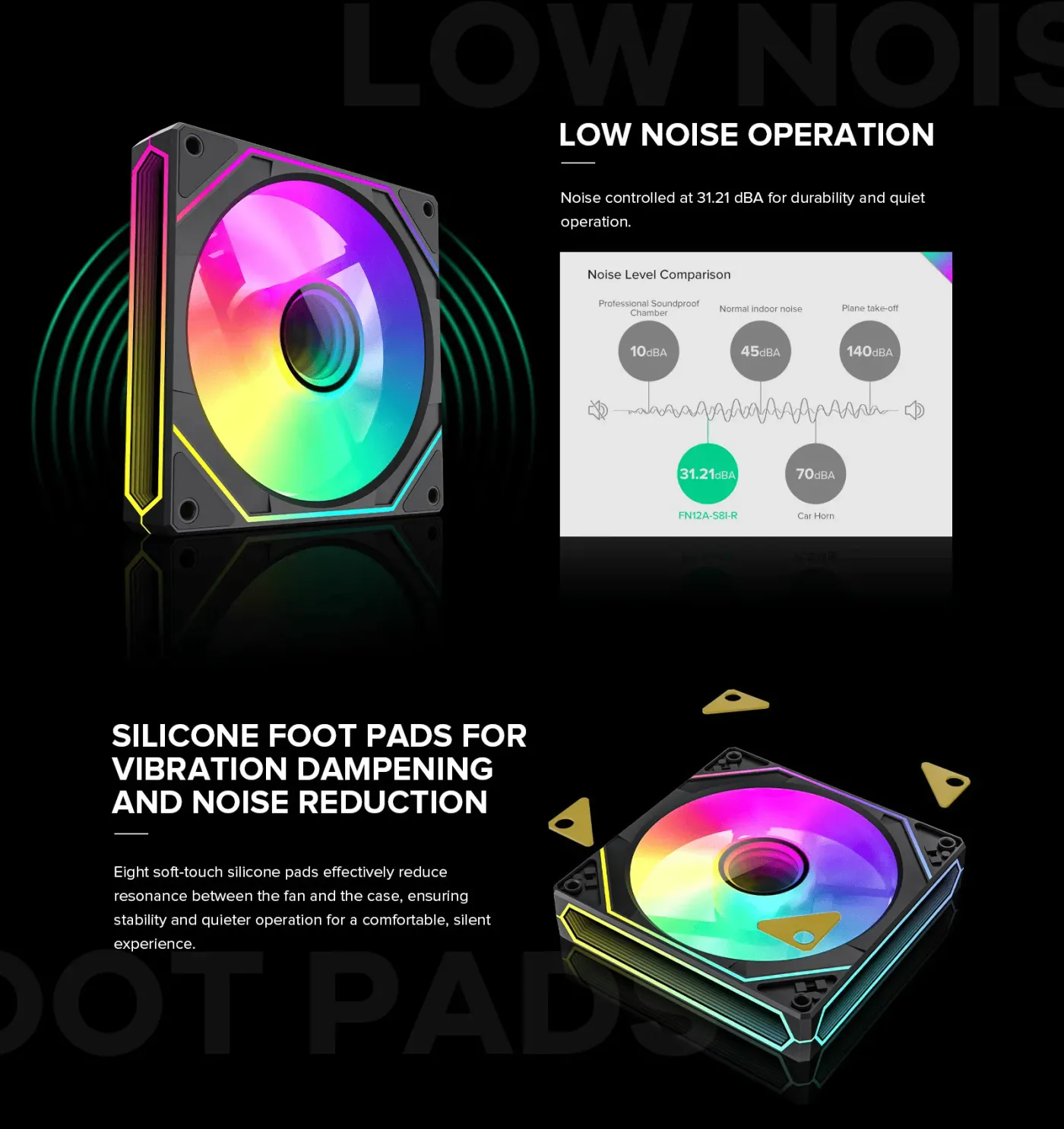
The noise ceiling is 31.21dB(A), reached only when the fan is running at its full 1600 RPM. For most of a working day a sensible fan curve keeps it well below that. Low-mounted fans reflect sound off the floor and desk, so keeping the maximum modest makes a noticeable difference to how the finished machine sounds.
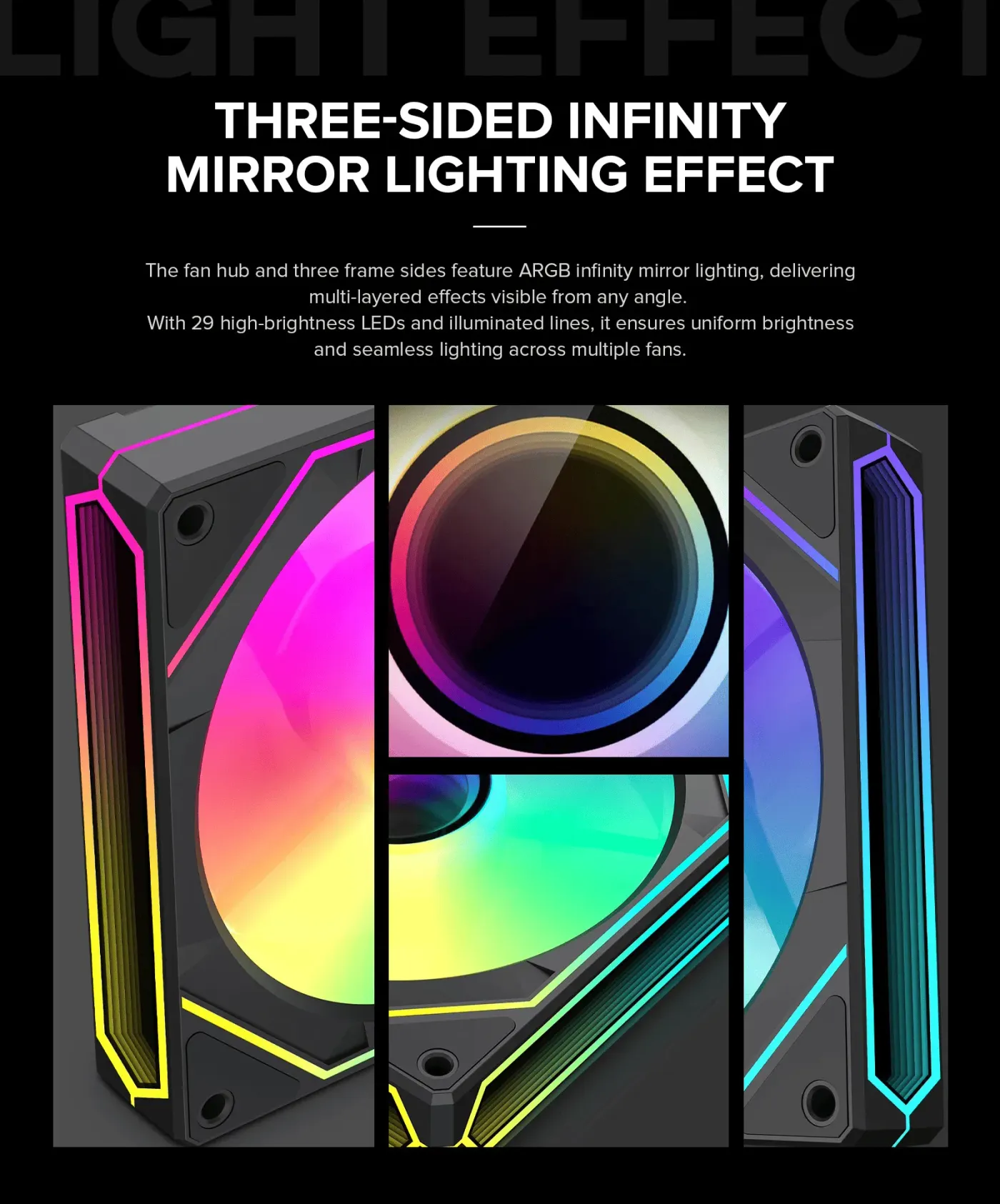
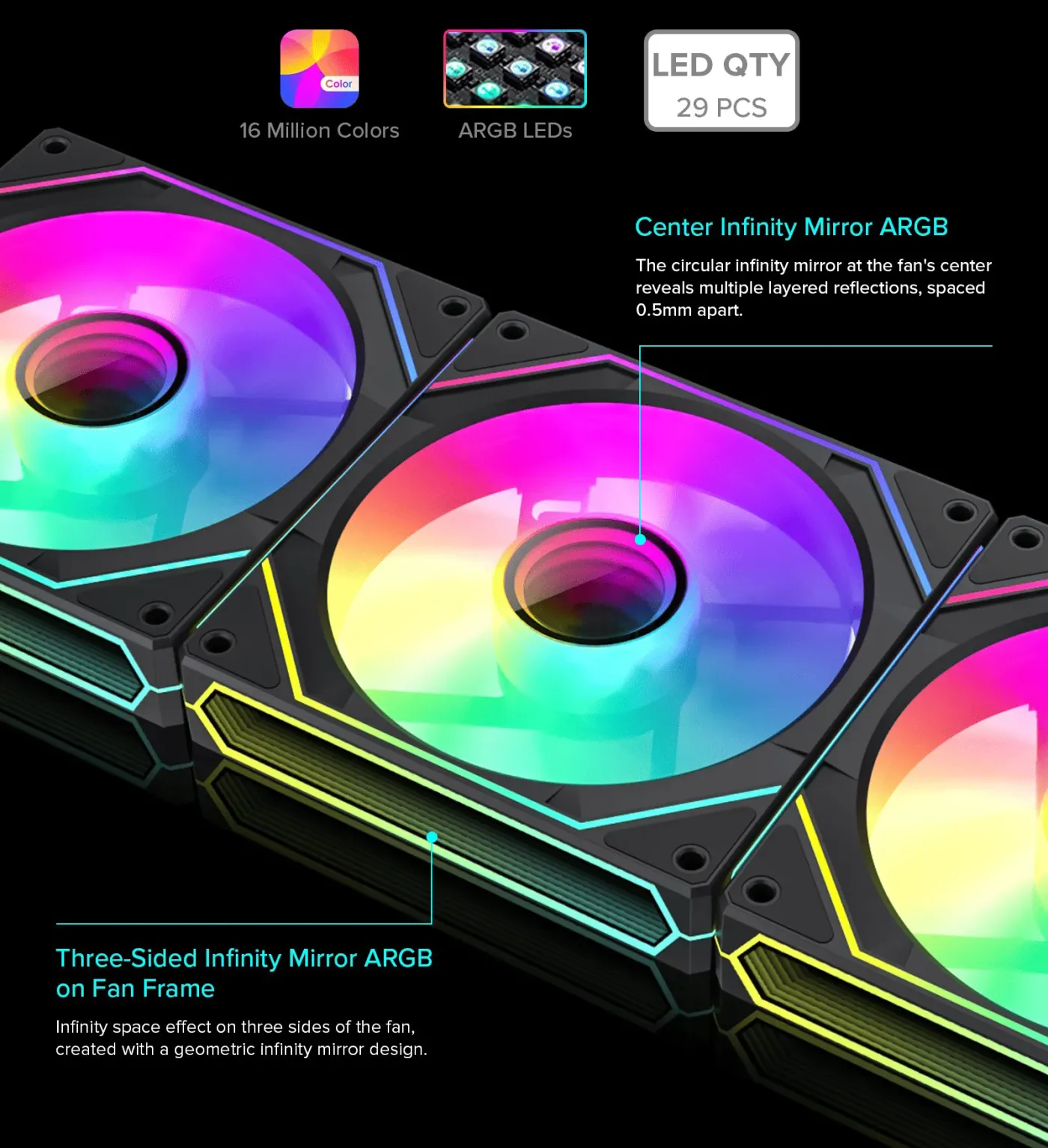
Dual ARGB Rings With 24 Addressable LEDs
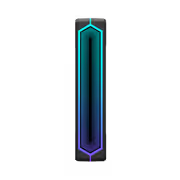
Two independent lighting zones carry twenty-four addressable LEDs in total: eight in the centre hub and sixteen around the outer ring. Running them separately allows a colour to travel around the rim while the hub holds a contrasting shade, and both zones stay in view because the fan faces forward in a shroud or floor mount.
5V 3-Pin ARGB With Aura Sync Compatibility
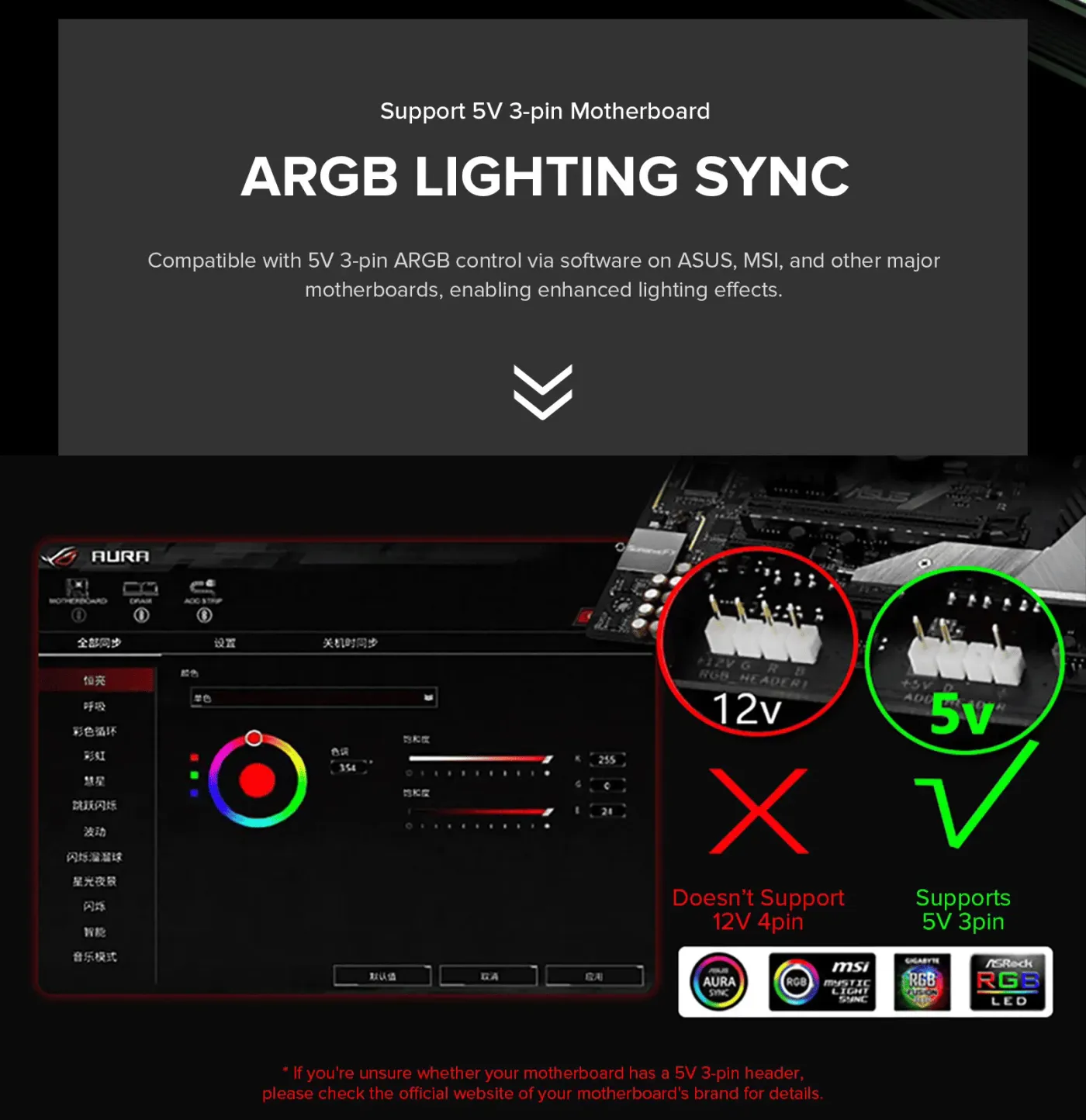
Lighting runs on the standard 5V 3-pin addressable header and is compatible with Aura Sync, so the fan follows the same profile as the memory, cooler and strips already in the machine. Because standard and reverse fans in this range share the same lighting hardware, a mixed set can be made to run identical effects.
Eight Rubber Pads For Vibration-Free Mounting
Eight shock-absorbing rubber pads separate the fan frame from the metal it is bolted to. A large flat panel is an efficient sounding board, which is why an otherwise quiet fan can buzz once it is screwed directly to one. Decoupling the two surfaces removes that path and helps the mounting stay tight over time.
Hydraulic Bearing Rated To 30,000 Hours
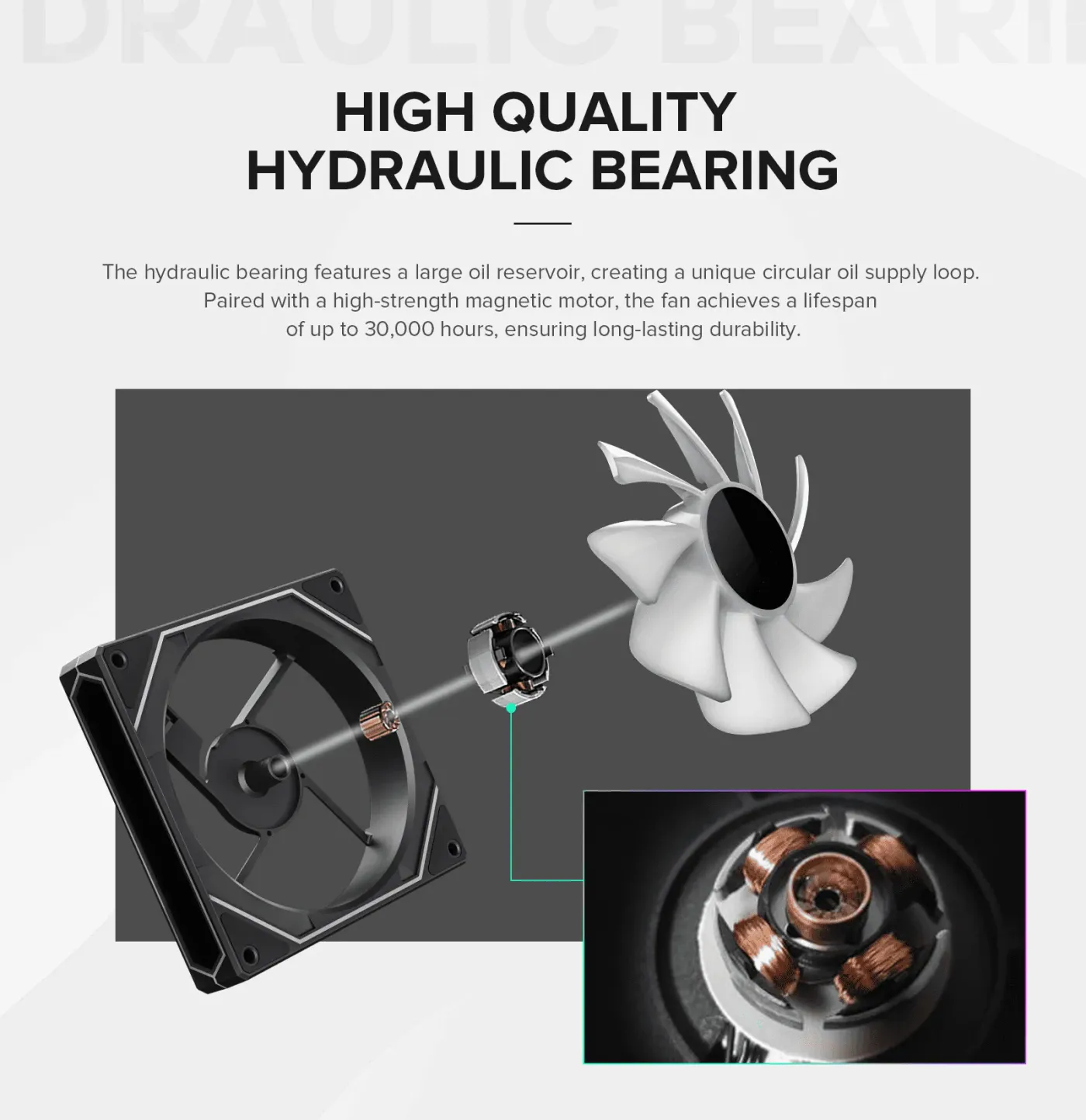
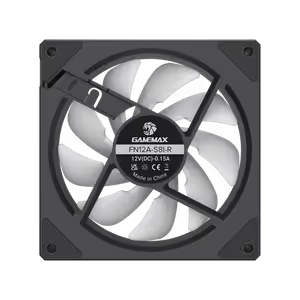
A hydraulic bearing supports the rotor, rated at 30,000 hours mean time between failures. Electrically the fan is rated and tested at 12V, drawing 0.15A with a 0.18A maximum, giving 1.8W and a 2.16W peak. Its 5V start voltage means it spins back up dependably after being taken to the bottom of a fan curve.
Two 500mm Leads And Screws Supplied
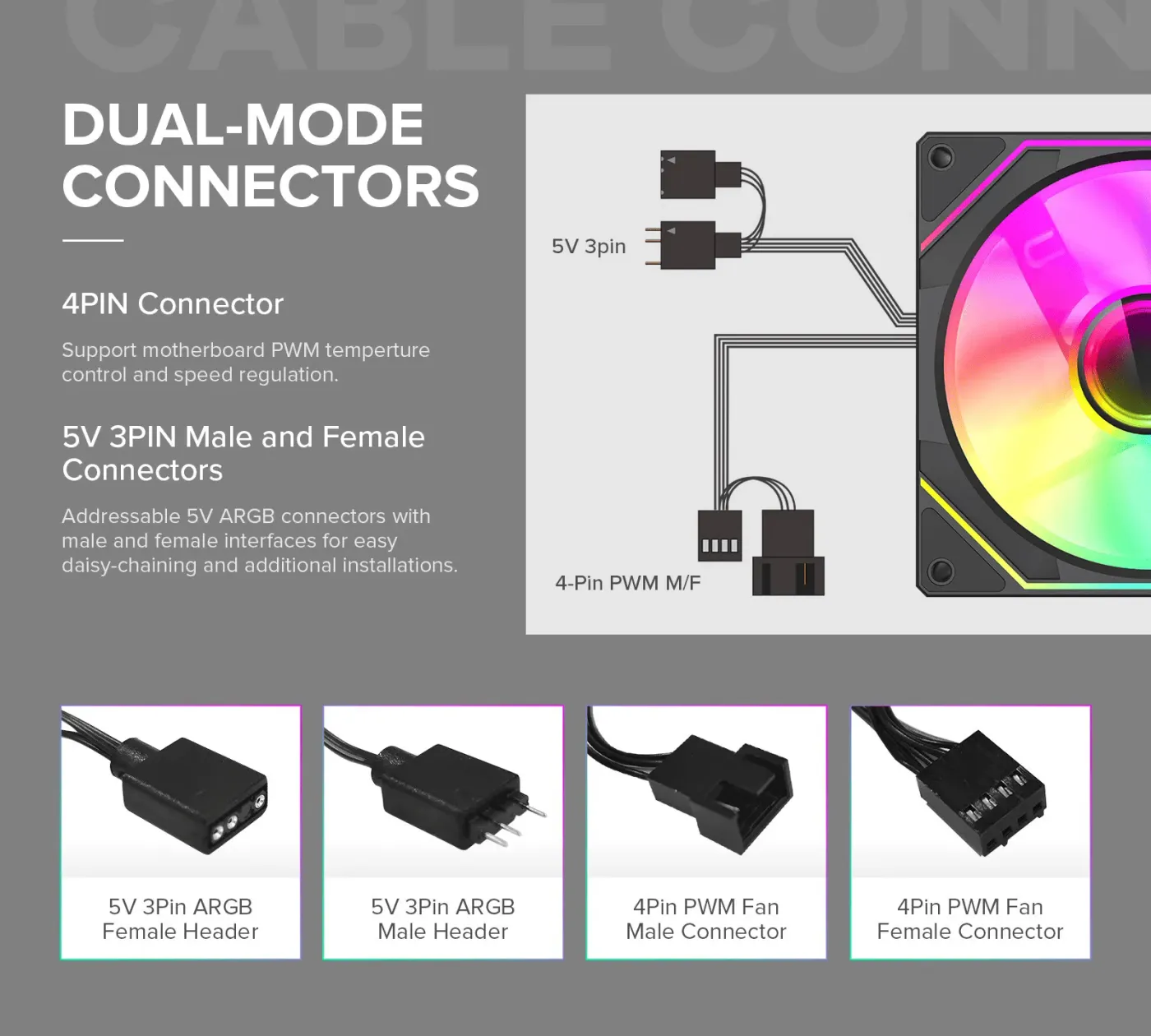
The fan carries a 4-pin PWM power lead and a 3-pin ARGB lead, both 500mm long and both fitted with male and female ends so fans can be daisy-chained instead of each taking its own header. Mounting screws are included, making installation four screws and two plugs before any software configuration begins.
FAQ
Frequently Asked Questions
Everything you need to know about this product
Its blades are curved the opposite way, so the fan blows air out through its visible front face.
It is built for bottom intake positions and power supply shroud mounts in vertical case layouts.
It measures 120 x 120 x 25mm and uses a black frame with semi-transparent white blades.
The fan runs between 800 and 1600 RPM with a 10 percent tolerance under 4-pin PWM control.
Maximum airflow is rated at 44.35 CFM with a 10 percent tolerance.
Maximum static air pressure is 1.42mmH2O, enough to keep air moving through a fitted dust filter.
Its maximum noise level is 31.21dB(A), which is only reached at the top of its speed range.
There are twenty-four addressable LEDs, eight in the centre hub and sixteen in the outer ring.
It uses a 5V 3-pin addressable RGB header and is compatible with Aura Sync.
It uses a hydraulic bearing with a 30,000-hour mean time between failures rating.
It is rated at 12V and 0.15A for 1.8W, rising to 0.18A and 2.16W at maximum.
Mounting screws are included, along with 500mm PWM and ARGB cables attached to the fan.

AI-Generated Content: These FAQs are generated by an automated AI system and may contain inaccuracies or omissions. Evetech makes no warranties, express or implied, regarding their completeness or reliability. For definitive information, please refer to the manufacturer's official specifications.
Please Note: Product images are for illustrative purposes only and may differ from the actual product.
Choose your
own PC
Hand-pick every part with live stock, compatibility, and instant pricing.
Try the new builderPrice Inc. Vat
R 299
Save R 100
ListR 399
299Change Quantity:
In Stock with Evetech
Choose your
own PC
Hand-pick every part with live stock, compatibility, and instant pricing.
Try the new builderGAMEMAX FN12A-S8I-R 120mm Reverse ARGB Case Fan