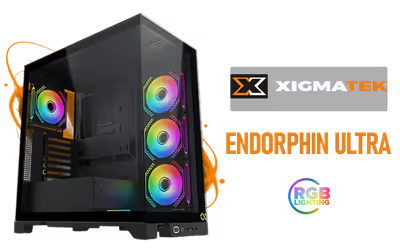
Xigmatek Endorphin Ultra Mid Tower Gaming Case Black
Xigmatek Endorphin Ultra RGB ATX Mid Tower Gaming Case - Black / 5 x Pre Installed ARGB Fans / EN41327 / EN41327 + FREE DELIVERY !
1 Year Local Warranty
Model No : Xigmatek EN41327
Price Inc. Vat
R 2,499
Save R 1,000.00
ListR 3,499
2499Free Delivery
Qty:
In Stock with Evetech
Xigmatek Endorphin Ultra RGB EN41327 ATX Mid Tower Case
Five Pre-Installed ARGB Fans In A Black Mid Tower
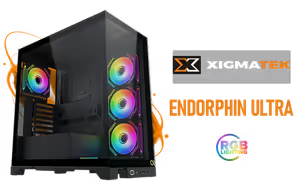
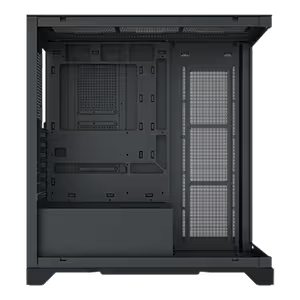
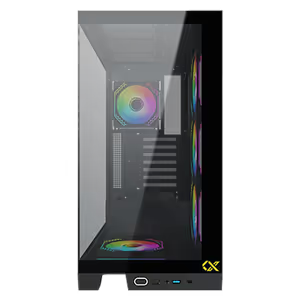
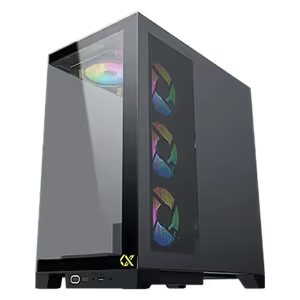
The Xigmatek Endorphin Ultra RGB ATX Mid Tower Gaming Case ships with five pre-installed ARGB fans, so air is already circulating through the chassis before you add a single cooler of your own. It takes full-size motherboards, long graphics cards, large power supplies and flexible storage, and the premium tempered glass side panel with the sleek black finish keeps the build visible without giving up airflow.
Five Pre-Installed ARGB Fans In A Black Mid Tower
The Xigmatek Endorphin Ultra RGB ATX Mid Tower Gaming Case ships with five pre-installed ARGB fans, so air is already circulating through the chassis before you add a single cooler of your own. It takes full-size motherboards, long graphics cards, large power supplies and flexible storage, and the premium tempered glass side panel with the sleek black finish keeps the build visible without giving up airflow.

Supports Motherboards Up To E-ATX
The Endorphin Ultra accepts motherboards up to E-ATX, so the chassis is not the limit when you move from a standard ATX board to a wider workstation or high-end gaming platform. Note that the motherboard-panel fan and radiator mounts are available on ATX boards only, since a wider E-ATX board covers that area.
Supports Motherboards Up To E-ATX
The Endorphin Ultra accepts motherboards up to E-ATX, so the chassis is not the limit when you move from a standard ATX board to a wider workstation or high-end gaming platform. Note that the motherboard-panel fan and radiator mounts are available on ATX boards only, since a wider E-ATX board covers that area.

190mm Of CPU Cooler Clearance
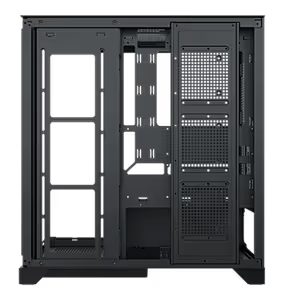
CPU cooler clearance is 190mm, which is enough height for the tall tower air coolers that most high-core-count processors are paired with. Builders who prefer air over liquid do not have to check whether the side panel will close, and the same headroom leaves room for tall RAM under a wide cooler.
190mm Of CPU Cooler Clearance
CPU cooler clearance is 190mm, which is enough height for the tall tower air coolers that most high-core-count processors are paired with. Builders who prefer air over liquid do not have to check whether the side panel will close, and the same headroom leaves room for tall RAM under a wide cooler.

Mounts For Up To Eight Fans
The chassis supports up to eight fans in total across its mounting positions. Five are already fitted, so the remaining positions are there for builders who want to add intake or exhaust where their specific hardware runs hottest rather than starting a fan plan from nothing.
Mounts For Up To Eight Fans
The chassis supports up to eight fans in total across its mounting positions. Five are already fitted, so the remaining positions are there for builders who want to add intake or exhaust where their specific hardware runs hottest rather than starting a fan plan from nothing.

Power Supply Bay Takes Units Up To 200mm
The power supply bay accepts units up to 200mm long, which covers the longer high-wattage ATX units rather than only compact ones. That length allowance matters most on builds where the PSU has to feed a large graphics card and a full set of drives.
Power Supply Bay Takes Units Up To 200mm
The power supply bay accepts units up to 200mm long, which covers the longer high-wattage ATX units rather than only compact ones. That length allowance matters most on builds where the PSU has to feed a large graphics card and a full set of drives.
Graphics Cards Up To 420mm Long
Graphics card clearance runs to 420mm, which is well past the length of current flagship triple-fan cards. Leaving that much room means the card can be installed without removing drive cages or fighting front-mounted hardware for space.
Graphics Cards Up To 420mm Long
Graphics card clearance runs to 420mm, which is well past the length of current flagship triple-fan cards. Leaving that much room means the card can be installed without removing drive cages or fighting front-mounted hardware for space.

Radiator Support Up To 360mm
The Endorphin Ultra takes radiators up to 360mm, the size most all-in-one liquid coolers use for high-wattage CPUs. Supporting a full 360mm at the top means you are not limited to a 240mm cooler when the processor needs the extra surface area.
Radiator Support Up To 360mm
The Endorphin Ultra takes radiators up to 360mm, the size most all-in-one liquid coolers use for high-wattage CPUs. Supporting a full 360mm at the top means you are not limited to a 240mm cooler when the processor needs the extra surface area.
Removable Top Panel For Easy Access
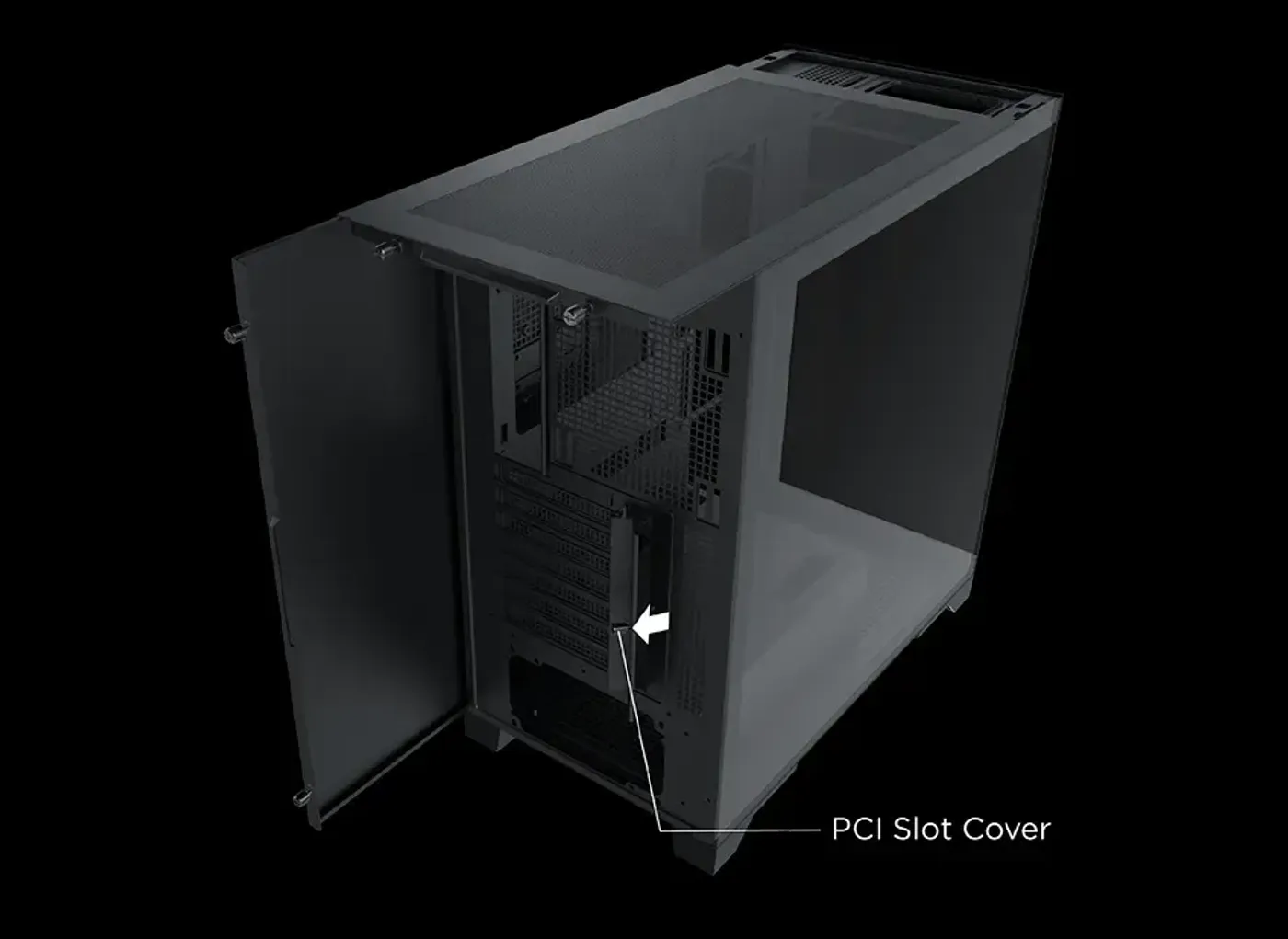
The top panel lifts off the Endorphin Ultra for easy access during a build. Working on the top fan or radiator mounts outside the case is far quicker than reaching over a fitted motherboard, and it makes cleaning the top of the chassis a two-minute job later on.
Removable Top Panel For Easy Access
The top panel lifts off the Endorphin Ultra for easy access during a build. Working on the top fan or radiator mounts outside the case is far quicker than reaching over a fitted motherboard, and it makes cleaning the top of the chassis a two-minute job later on.
Removable Left Tempered Glass Side Panel
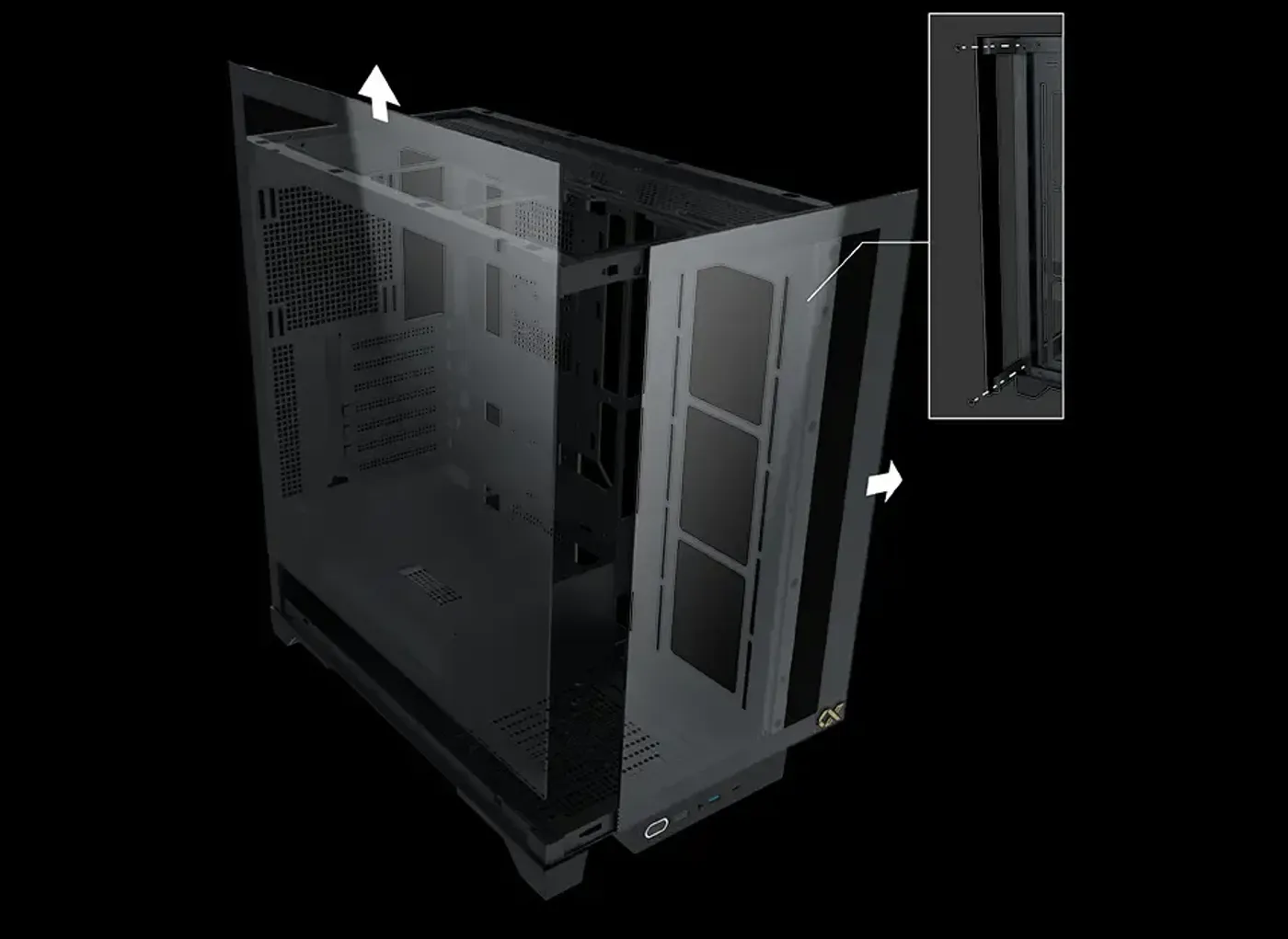
The left side panel is tempered glass and comes away completely rather than hinging open. A fully removable panel gives clear working access to the motherboard tray while you route cables, and it puts the whole interior on show once the build is finished.
Removable Left Tempered Glass Side Panel
The left side panel is tempered glass and comes away completely rather than hinging open. A fully removable panel gives clear working access to the motherboard tray while you route cables, and it puts the whole interior on show once the build is finished.
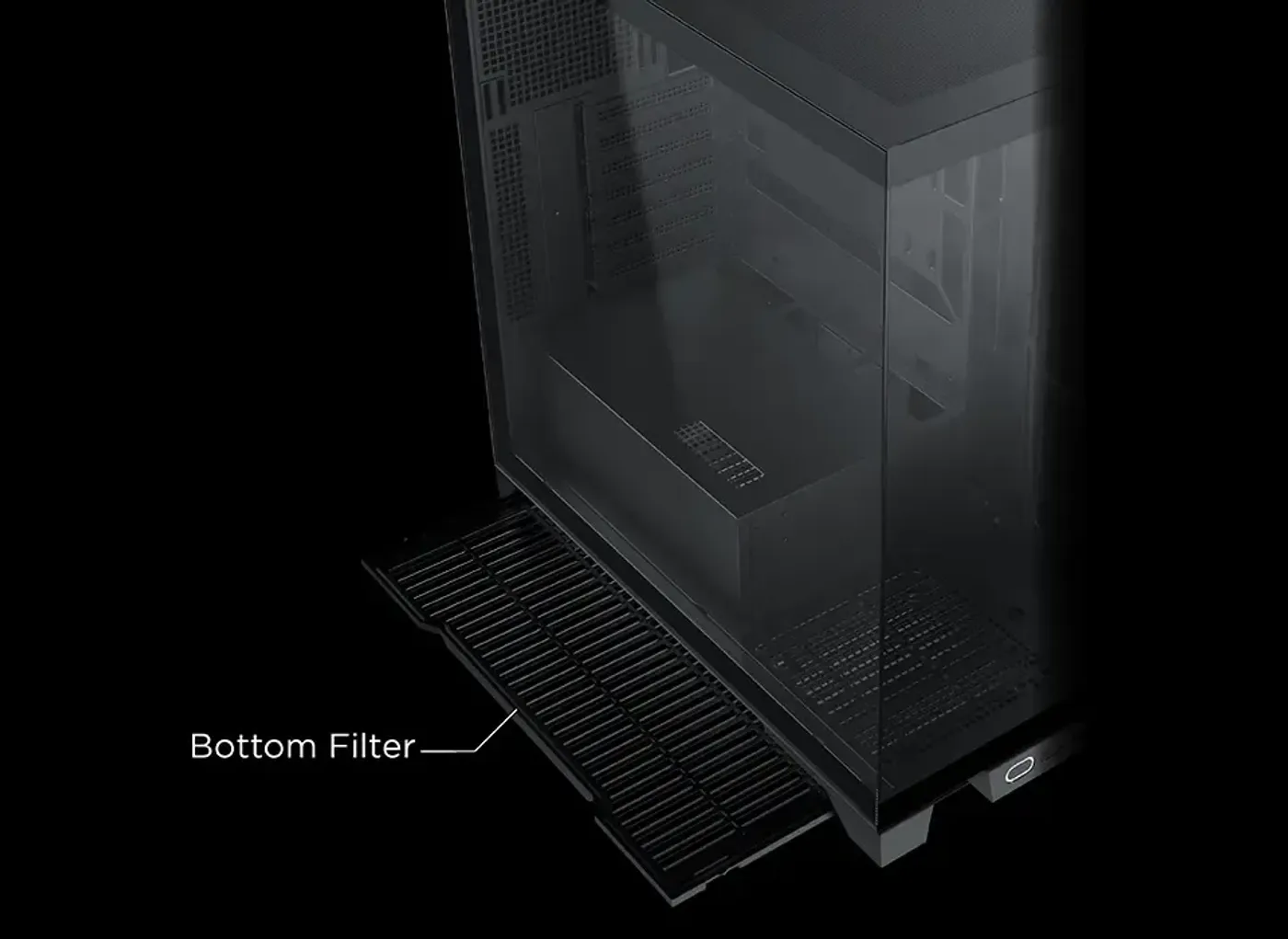
Mesh Vent Panel And Bottom Dust Filter
A high-performance mesh vent panel feeds air into the chassis and a bottom filter catches dust before it reaches the components. The mesh is what lets the intake fans actually pull the air they are rated for, and the filter keeps that path from clogging over months of use.
Mesh Vent Panel And Bottom Dust Filter
A high-performance mesh vent panel feeds air into the chassis and a bottom filter catches dust before it reaches the components. The mesh is what lets the intake fans actually pull the air they are rated for, and the filter keeps that path from clogging over months of use.
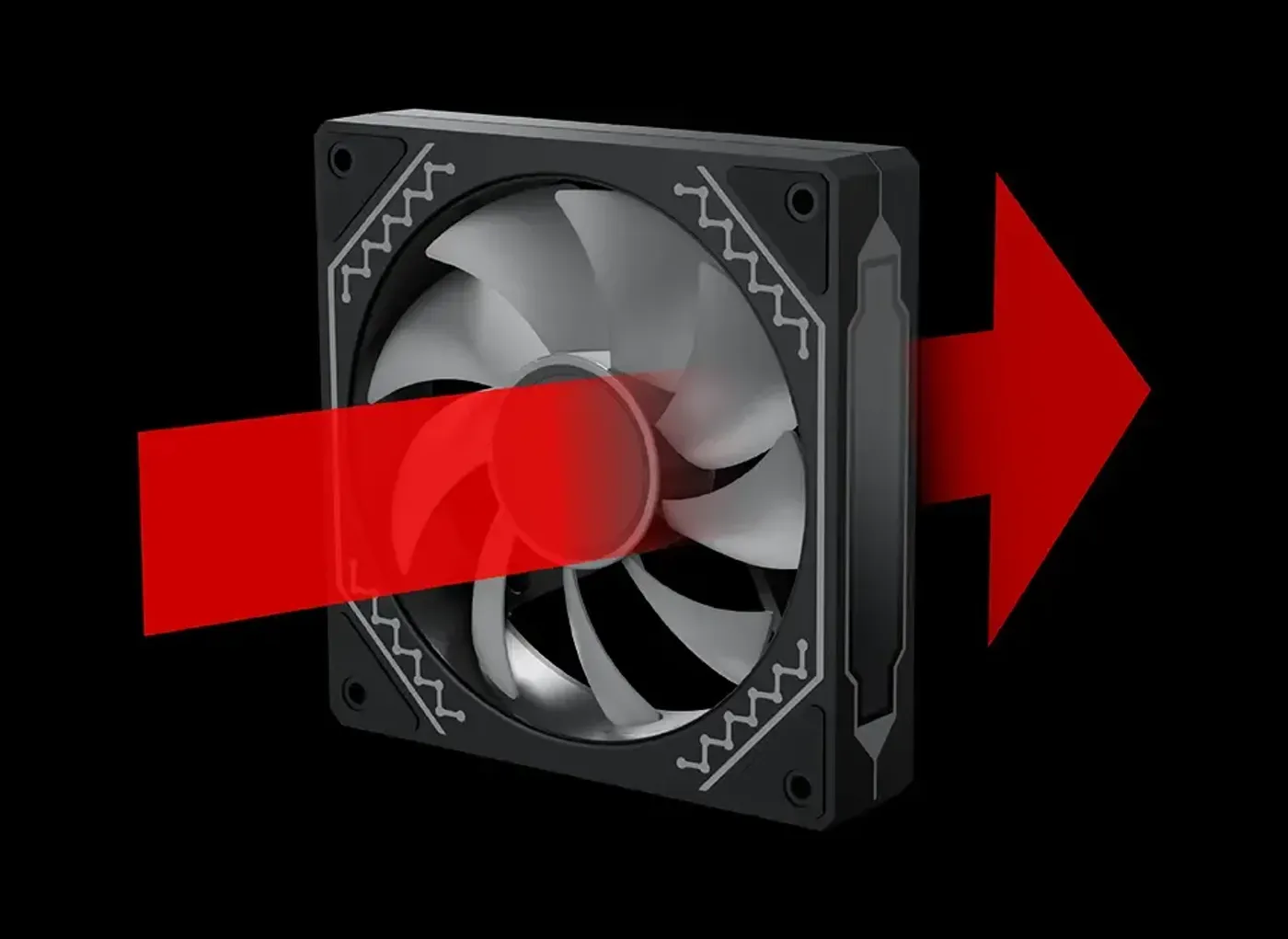
Traditional Fan Blades For The Rear Position
The Endorphin Ultra uses a traditional fan blade design that Xigmatek recommends for the rear fan position. Traditional blades are shaped to push air in the direction the housing faces, which is what a rear-mounted fan needs to clear hot air out of the CPU area.
Traditional Fan Blades For The Rear Position
The Endorphin Ultra uses a traditional fan blade design that Xigmatek recommends for the rear fan position. Traditional blades are shaped to push air in the direction the housing faces, which is what a rear-mounted fan needs to clear hot air out of the CPU area.
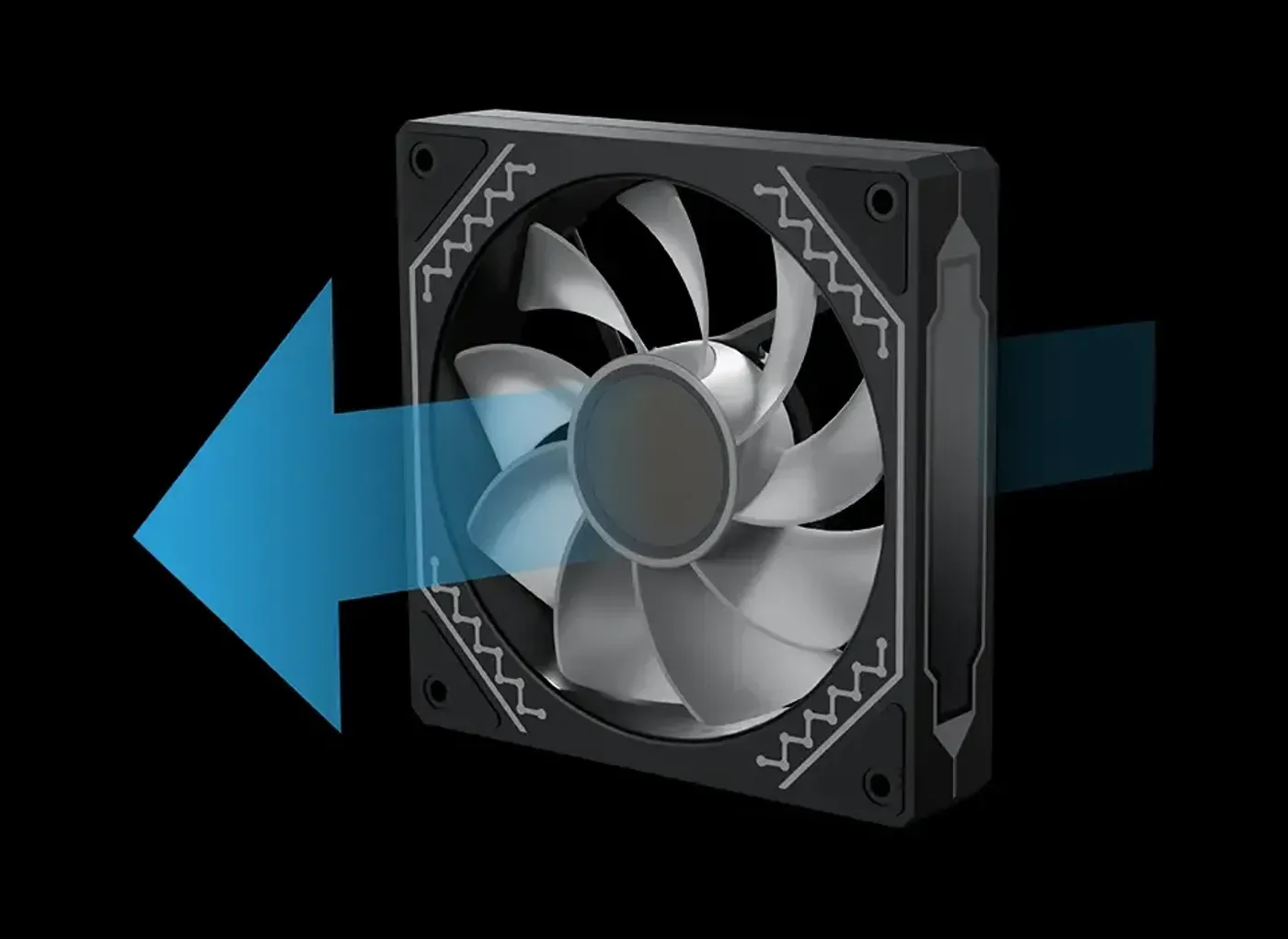
Reverse Fan Blades For Superior Cooling
A reverse fan blade option is also recommended for the rear fan position, where the source lists it for superior cooling. Reverse blades present the finished face of the fan to the viewer while still moving air the right way, so a visible fan does not have to be an ugly one.
Reverse Fan Blades For Superior Cooling
A reverse fan blade option is also recommended for the rear fan position, where the source lists it for superior cooling. Reverse blades present the finished face of the fan to the viewer while still moving air the right way, so a visible fan does not have to be an ugly one.
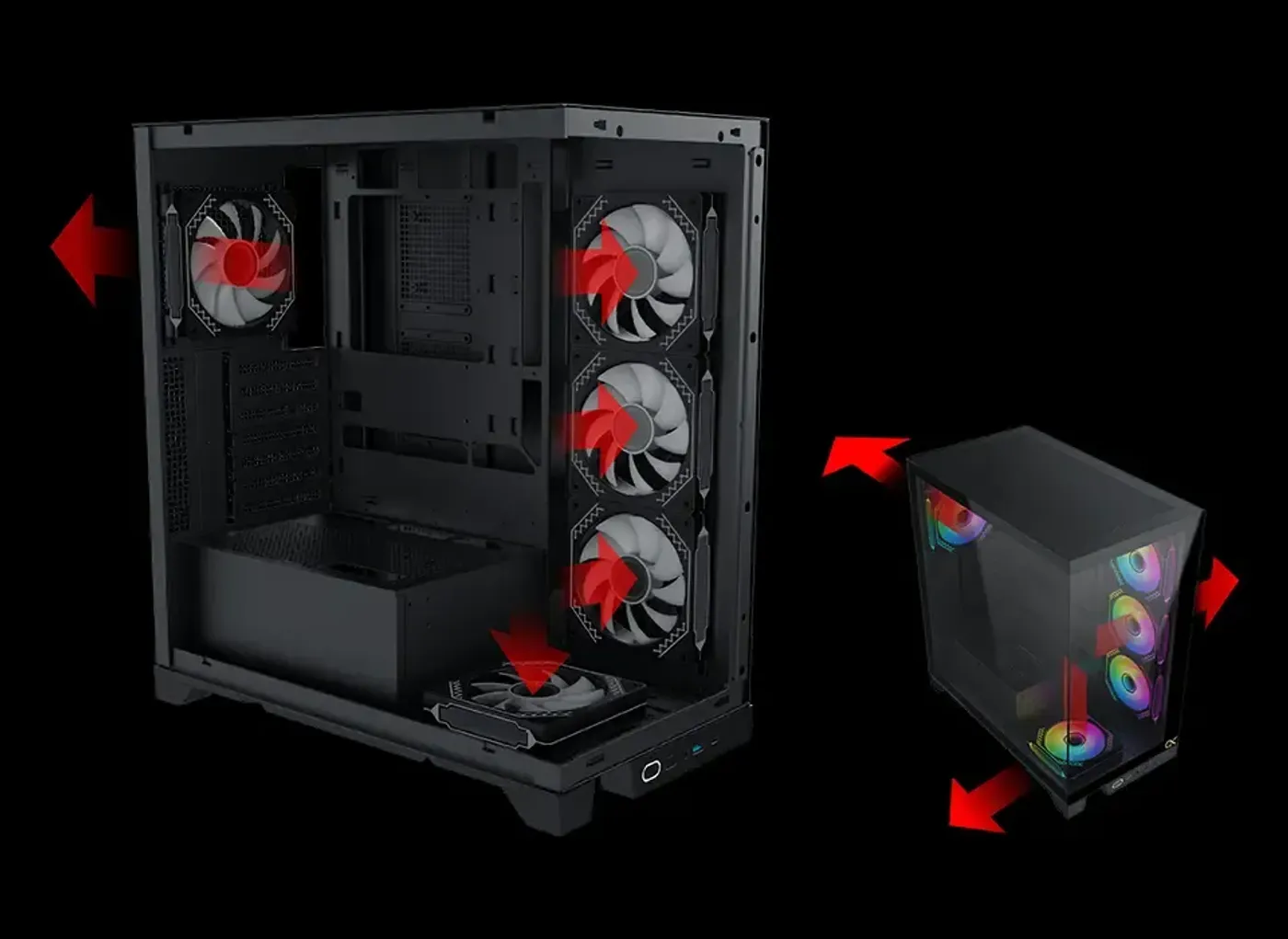
Exhaust Airflow Clears Heat From The Chassis
Traditional fan blades handle exhaust airflow, moving warm air out of the case rather than letting it recirculate around the CPU and graphics card. A case that only pulls air in ends up pressurised and hot, so the exhaust side of the arrangement is what keeps intake air doing any work.
Exhaust Airflow Clears Heat From The Chassis
Traditional fan blades handle exhaust airflow, moving warm air out of the case rather than letting it recirculate around the CPU and graphics card. A case that only pulls air in ends up pressurised and hot, so the exhaust side of the arrangement is what keeps intake air doing any work.
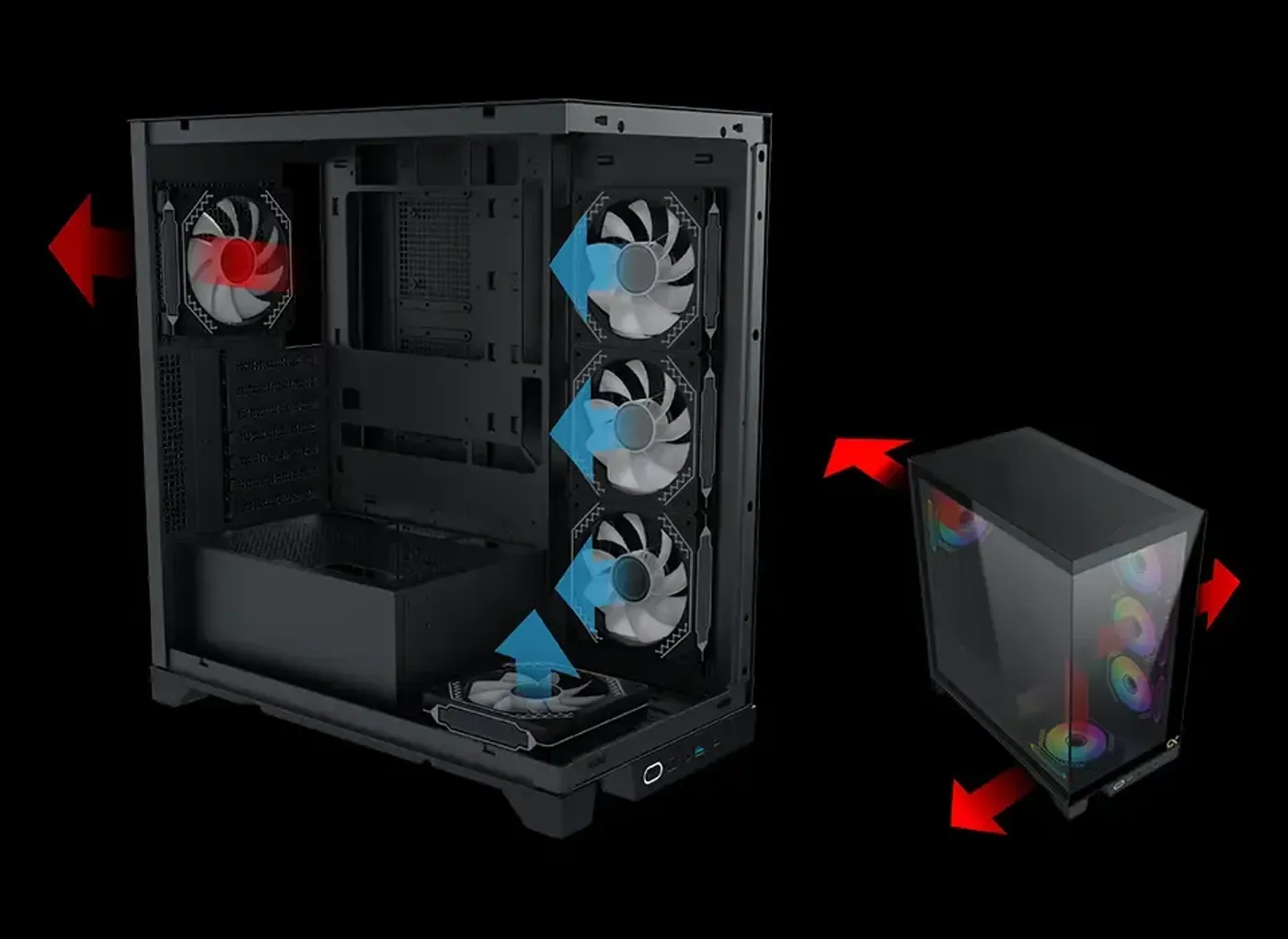
ARGB Fans Fitted Out Of The Box
Five ARGB fans come pre-installed in the Endorphin Ultra, so the lighting and the airflow arrive together and the chassis is ready to run on the day it is built. Buying five addressable fans separately is normally a meaningful part of a case budget, and here they are already mounted in their positions.
ARGB Fans Fitted Out Of The Box
Five ARGB fans come pre-installed in the Endorphin Ultra, so the lighting and the airflow arrive together and the chassis is ready to run on the day it is built. Buying five addressable fans separately is normally a meaningful part of a case budget, and here they are already mounted in their positions.
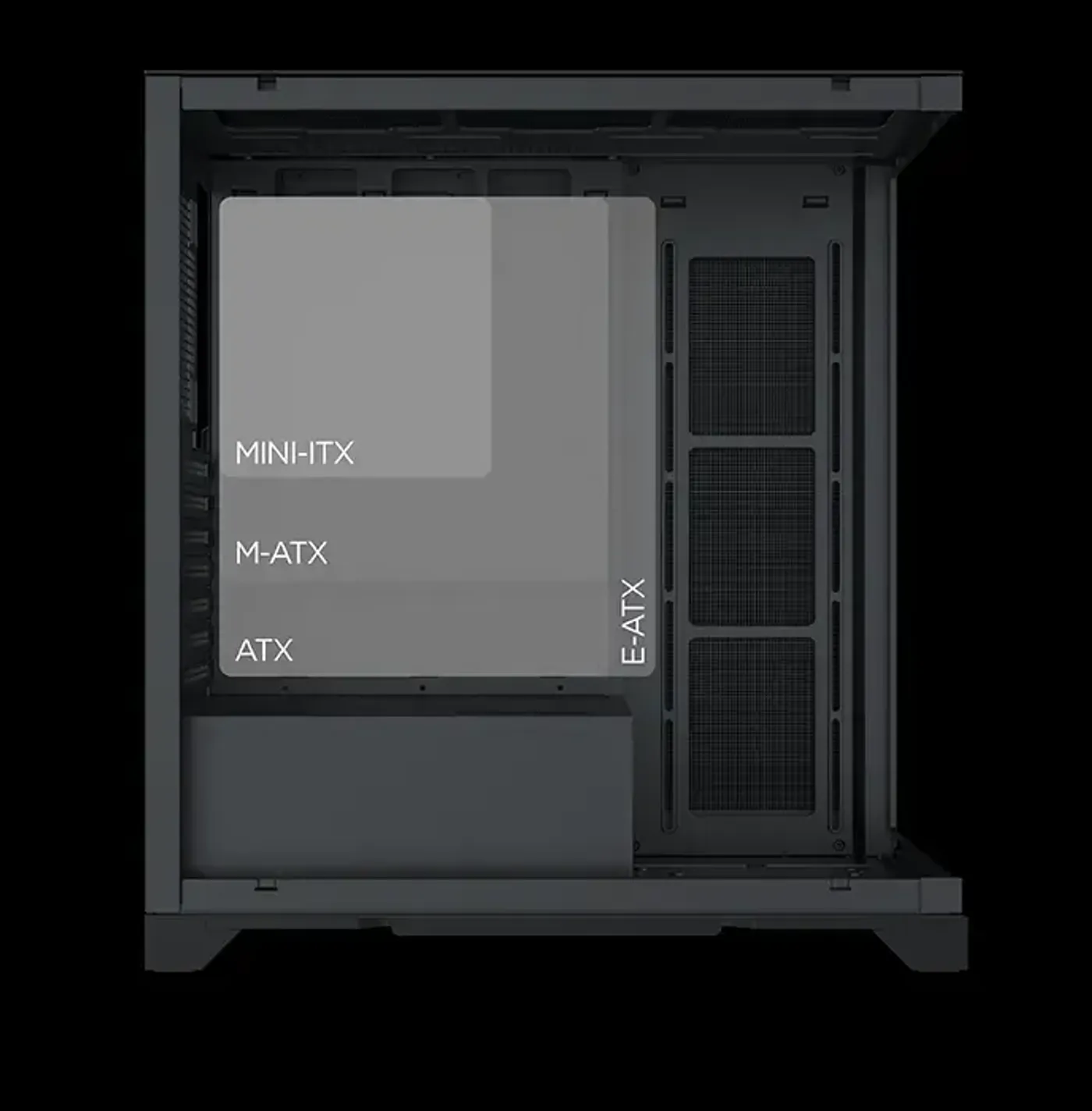
Motherboard Panel Takes Three 120mm Fans
The motherboard panel carries mounts for three 120mm fans or a 240mm radiator, both available on ATX boards only. Side-panel cooling aimed straight at the board is unusual in a mid tower, and it is the reason an ATX build here can run cooler than the same parts in a conventional layout.
Motherboard Panel Takes Three 120mm Fans
The motherboard panel carries mounts for three 120mm fans or a 240mm radiator, both available on ATX boards only. Side-panel cooling aimed straight at the board is unusual in a mid tower, and it is the reason an ATX build here can run cooler than the same parts in a conventional layout.
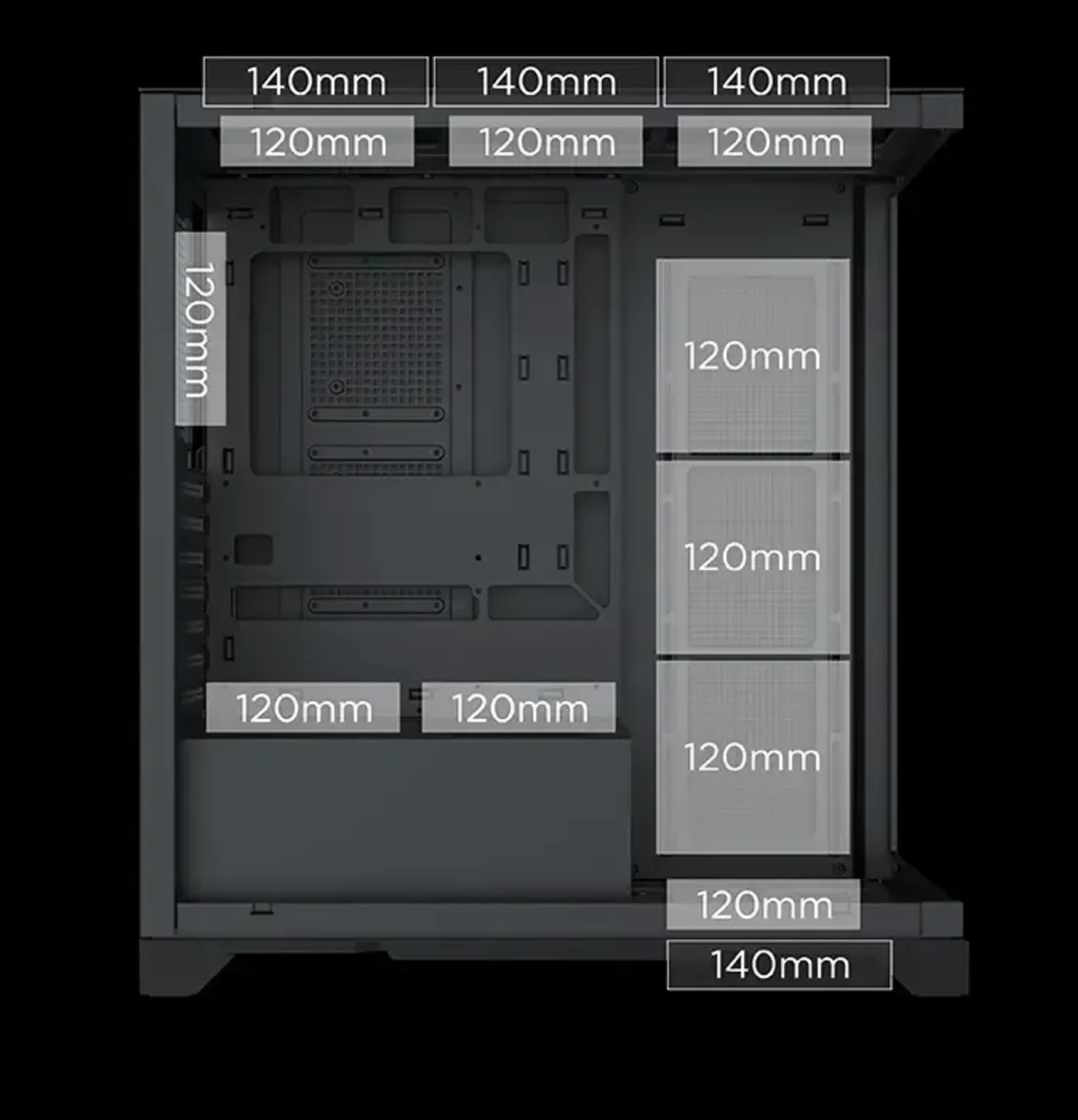
Top, Bottom And Rear Fan Positions
The fan layout takes three 120mm or 140mm fans up top, one 120mm or 140mm fan at the bottom and one 120mm fan at the rear. Accepting 140mm sizes at the top and bottom lets you move the same volume of air at lower fan speeds, which is the quietest way to hit a given temperature.
Top, Bottom And Rear Fan Positions
The fan layout takes three 120mm or 140mm fans up top, one 120mm or 140mm fan at the bottom and one 120mm fan at the rear. Accepting 140mm sizes at the top and bottom lets you move the same volume of air at lower fan speeds, which is the quietest way to hit a given temperature.
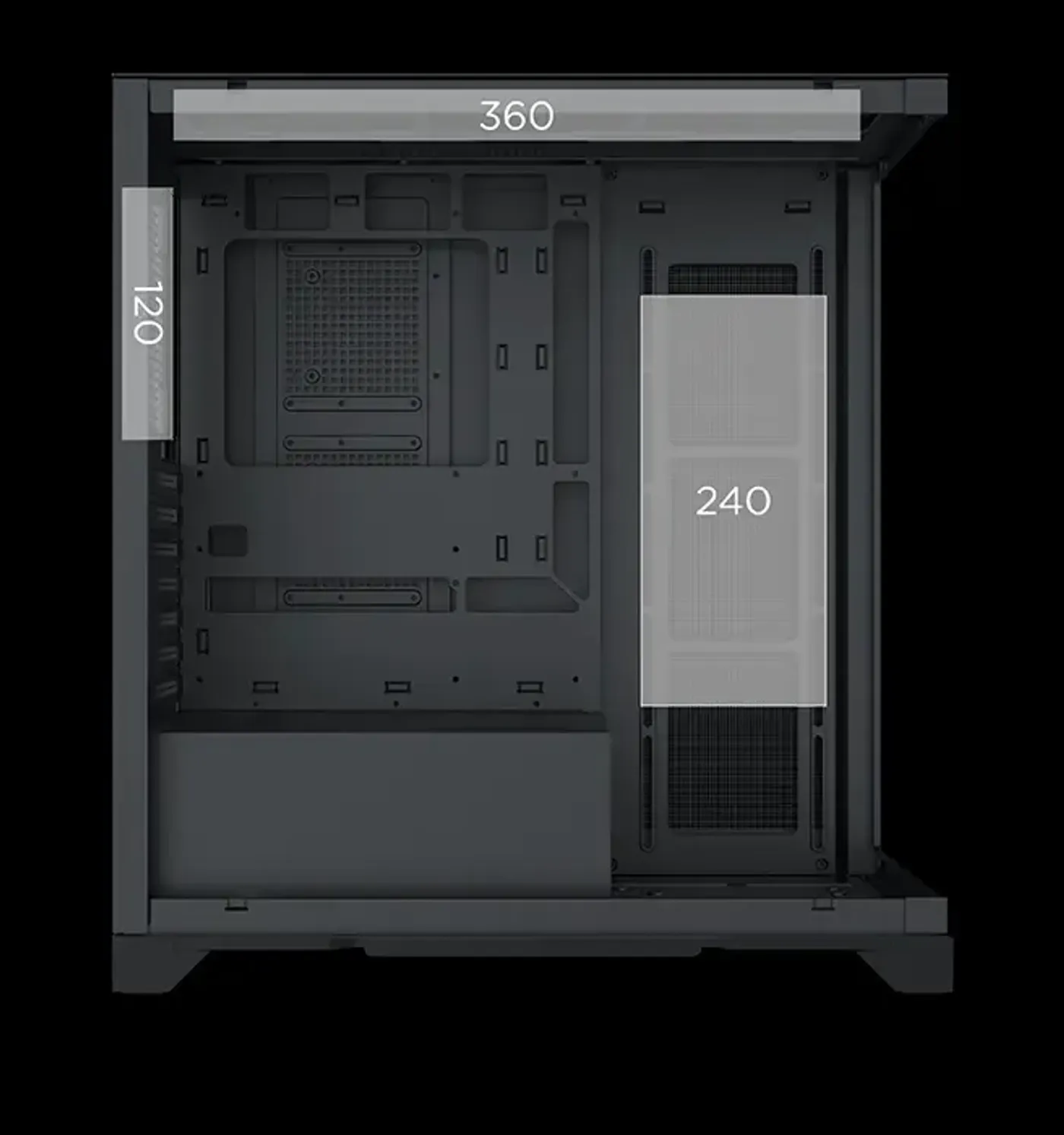
Liquid Cooling Up To 360mm Top And 120mm Rear
For liquid cooling the Endorphin Ultra takes a 360mm radiator at the top and a 120mm radiator at the rear. Running the main radiator up top and a smaller one at the back gives an all-in-one loop somewhere to reject heat without blocking the front intake path.
Liquid Cooling Up To 360mm Top And 120mm Rear
For liquid cooling the Endorphin Ultra takes a 360mm radiator at the top and a 120mm radiator at the rear. Running the main radiator up top and a smaller one at the back gives an all-in-one loop somewhere to reject heat without blocking the front intake path.
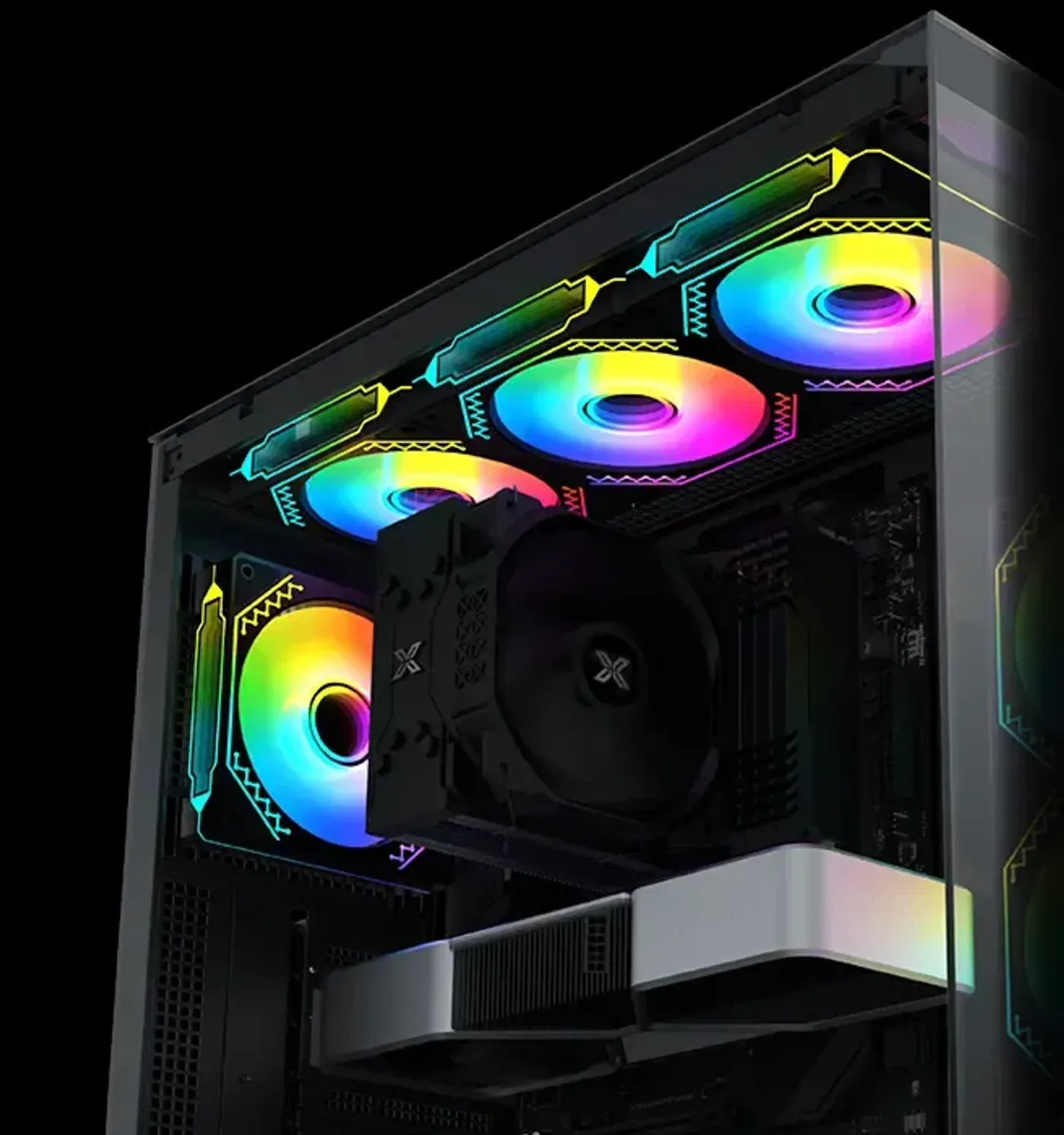
Built For Effective Heat Dissipation
Everything in the Endorphin Ultra is arranged for effective heat dissipation, from the vented intake surfaces to the number of exhaust positions available. Advanced cooling performance is the stated purpose of the chassis, and it holds up whether the load is a long gaming session or a demanding rendering workload.
Built For Effective Heat Dissipation
Everything in the Endorphin Ultra is arranged for effective heat dissipation, from the vented intake surfaces to the number of exhaust positions available. Advanced cooling performance is the stated purpose of the chassis, and it holds up whether the load is a long gaming session or a demanding rendering workload.
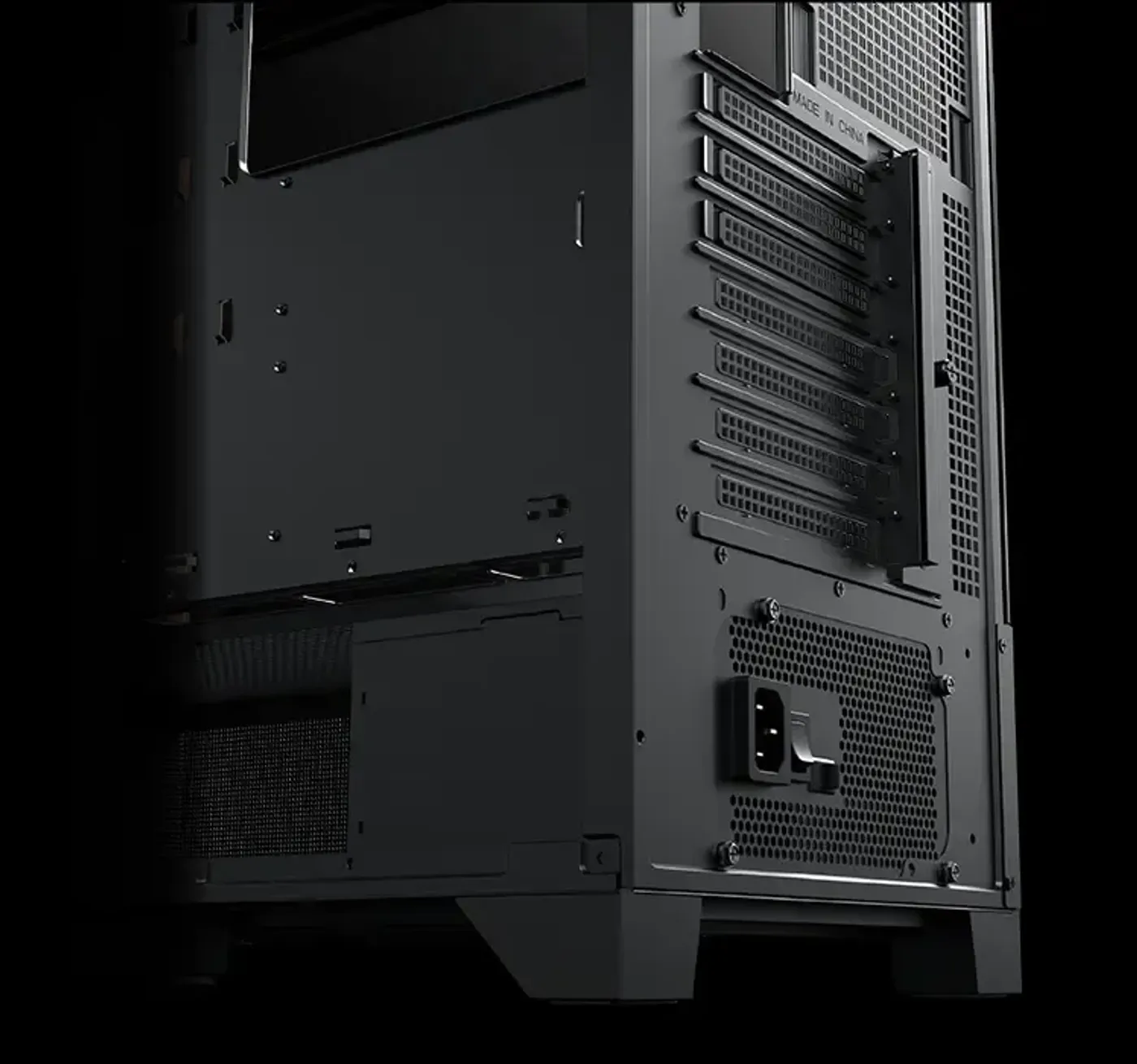
PSU Shroud Mounts Two Extra 120mm Fans
Two 120mm fan positions sit on the PSU shroud, adding cooling from below the graphics card where hot air normally sits still. Shroud-mounted fans feed cool air directly at the underside of a large card, which is the part of a build most likely to be starved of airflow.
PSU Shroud Mounts Two Extra 120mm Fans
Two 120mm fan positions sit on the PSU shroud, adding cooling from below the graphics card where hot air normally sits still. Shroud-mounted fans feed cool air directly at the underside of a large card, which is the part of a build most likely to be starved of airflow.
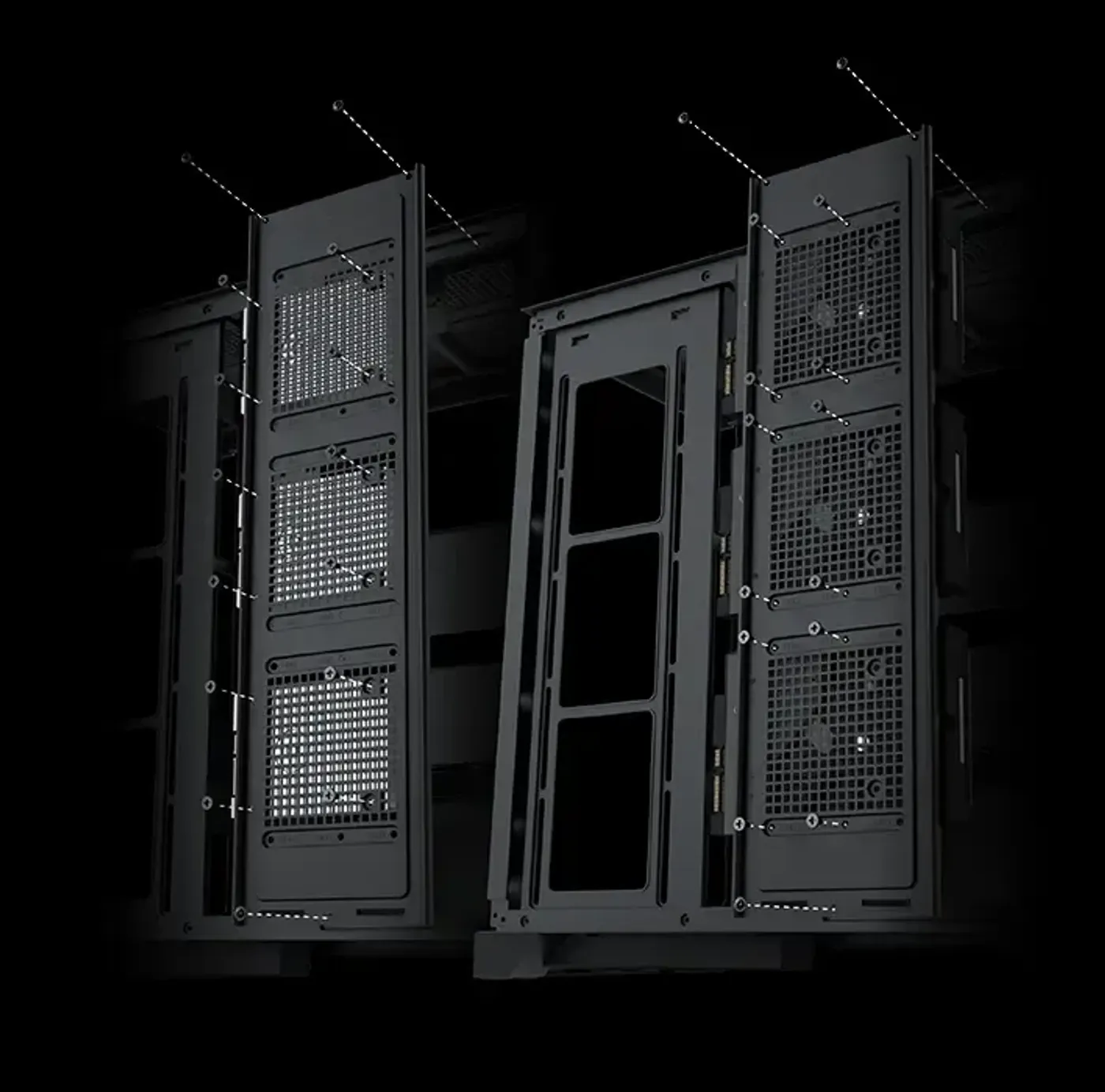
Two Combo Brackets Take 3.5-Inch Or 2.5-Inch Drives
Storage runs on two combo brackets that each accept a 3.5-inch or a 2.5-inch drive. That flexibility lets one build run a pair of large mechanical drives for bulk storage while another runs SATA SSDs, without needing a different cage for each.
Two Combo Brackets Take 3.5-Inch Or 2.5-Inch Drives
Storage runs on two combo brackets that each accept a 3.5-inch or a 2.5-inch drive. That flexibility lets one build run a pair of large mechanical drives for bulk storage while another runs SATA SSDs, without needing a different cage for each.
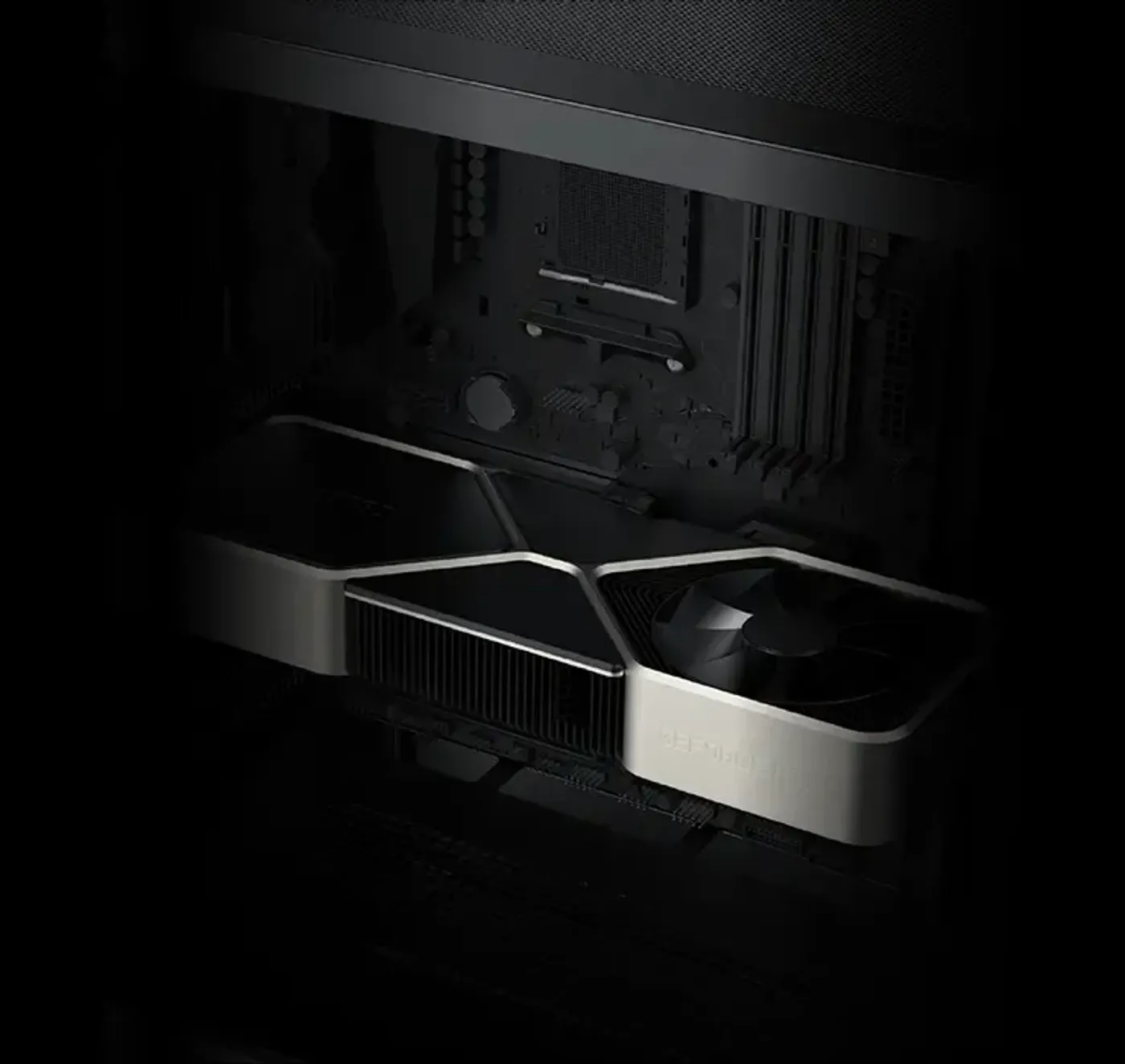
270mm Card Limit With A Motherboard-Panel Radiator
Fitting a liquid cooler on the motherboard panel reduces graphics card clearance from 420mm to 270mm. It is the one trade-off worth planning before you order, because a long flagship card and a side-mounted radiator cannot both occupy that space.
270mm Card Limit With A Motherboard-Panel Radiator
Fitting a liquid cooler on the motherboard panel reduces graphics card clearance from 420mm to 270mm. It is the one trade-off worth planning before you order, because a long flagship card and a side-mounted radiator cannot both occupy that space.
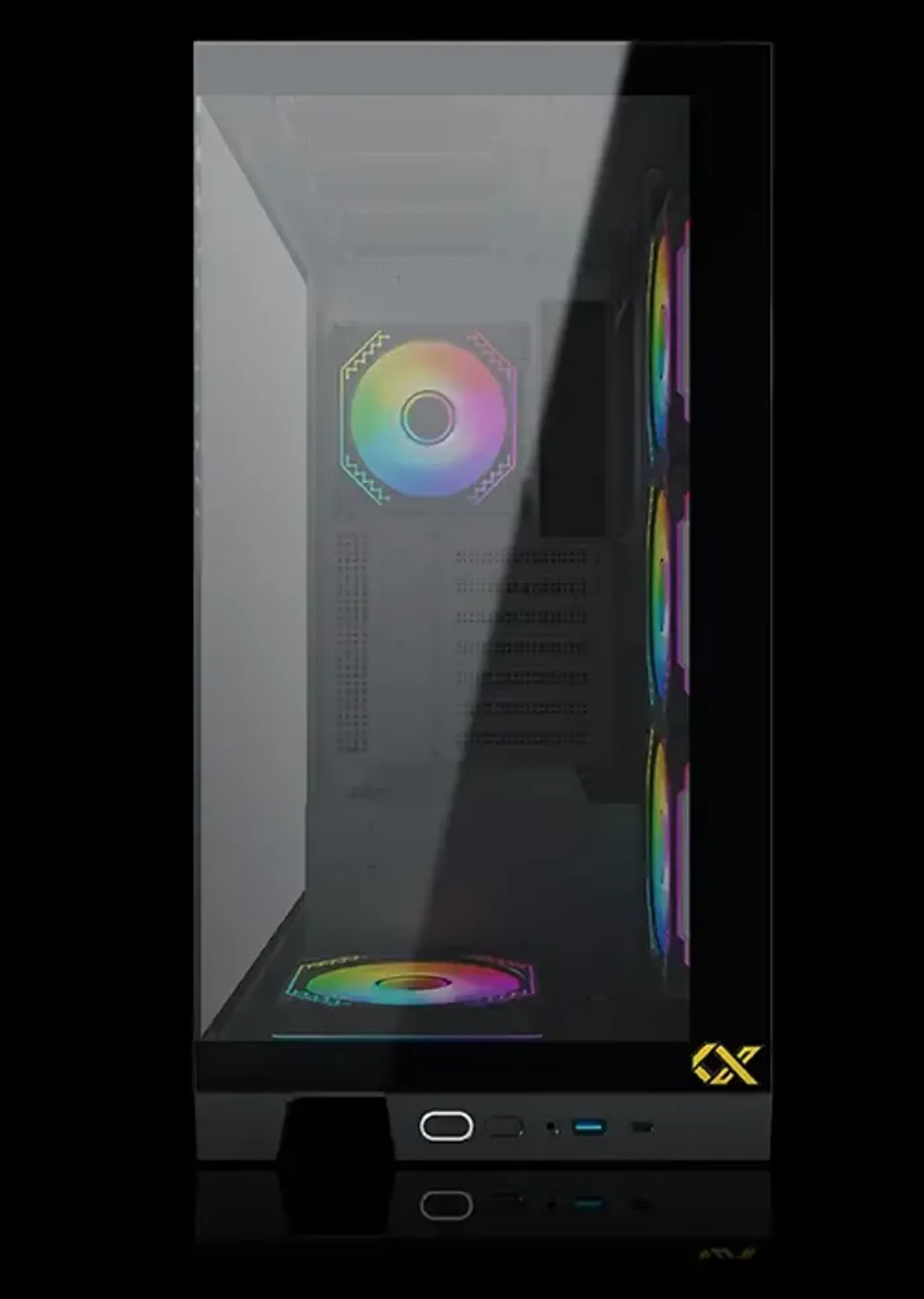
Top-Mounted I/O With USB Type-C
The I/O cluster sits on the top of the case and carries a reset button, an HD audio jack, one USB 3.0 port and one USB Type-C port. Putting Type-C on the top panel means a modern phone or portable drive plugs in without reaching around to the back of the machine.
Top-Mounted I/O With USB Type-C
The I/O cluster sits on the top of the case and carries a reset button, an HD audio jack, one USB 3.0 port and one USB Type-C port. Putting Type-C on the top panel means a modern phone or portable drive plugs in without reaching around to the back of the machine.
FAQ
Frequently Asked Questions
Everything you need to know about this product
Five ARGB fans are pre-installed, and the chassis supports up to eight fans in total.
It supports motherboards up to E-ATX, though the motherboard-panel fan and radiator mounts are for ATX boards only.
Up to 420mm with no liquid cooler on the motherboard panel, or up to 270mm when a motherboard-panel cooler is fitted.
CPU cooler clearance is 190mm, which accommodates most large tower air coolers.
The case takes a 360mm radiator at the top, a 120mm radiator at the rear and a 240mm radiator on the motherboard panel with an ATX board.
The power supply bay takes units up to 200mm in length.
Three 120mm or 140mm fans on top, three 120mm on the motherboard panel with an ATX board, one 120mm or 140mm at the bottom, two 120mm on the PSU shroud and one 120mm at the rear.
It has two combo brackets, each of which takes either a 3.5-inch or a 2.5-inch drive.
The top-mounted I/O has a reset button, an HD audio jack, one USB 3.0 port and one USB Type-C port.
Yes, the left side panel is tempered glass and is fully removable for access during a build.
Yes, the case combines a high-performance mesh vent panel with a bottom filter.
Yes, the top panel is removable for easier access when installing top fans or a radiator.

AI-Generated Content:These FAQs are generated by an automated AI system and may contain inaccuracies or omissions. Evetech makes no warranties, express or implied, regarding their completeness or reliability. For definitive information, please refer to the manufacturer's official specifications.
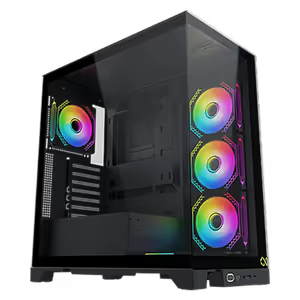
Please Note: Product images are for illustrative purposes only and may differ from the actual product.
Choose your
own PC
Hand-pick every part with live stock, compatibility, and instant pricing.
Try the new builderPrice Inc. Vat
R 2,499
Save R 1,000.00
ListR 3,499
2499Free Delivery
Qty:
In Stock with Evetech
Choose your
own PC
Hand-pick every part with live stock, compatibility, and instant pricing.
Try the new builderXigmatek Endorphin Ultra Mid Tower Gaming Case Black