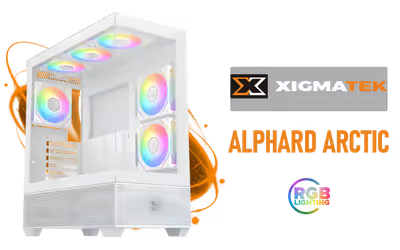
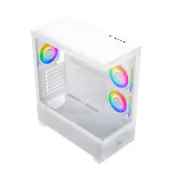
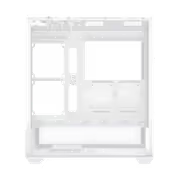
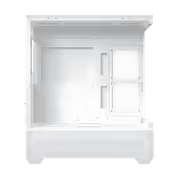
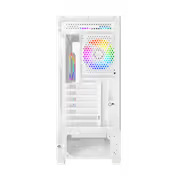
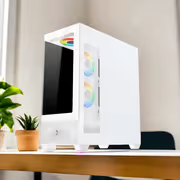
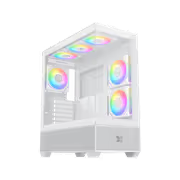
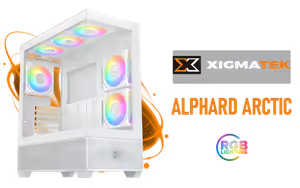
Xigmatek Alphard Arctic Mid Tower Gaming Case White
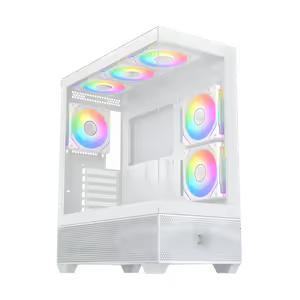
Xigmatek Alphard Arctic Mid Tower Gaming Case - White / Supports Motherboards up to E-ATX / 6 x Pre-Installed Fans Included / EN43833 / EN43833 + FREE DELIVERY !
1 Year Local Warranty
Model No : Xigmatek EN43833
Price Inc. Vat
R 1,599
Save R 400
ListR 1,999
1599Free Delivery
Qty:
In Stock with Evetech
Xigmatek Alphard Arctic White Mid Tower — E-ATX Support
Mid Tower Chassis Built For E-ATX Gaming Builds
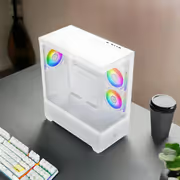
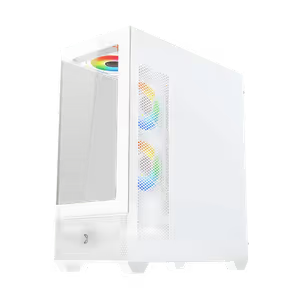
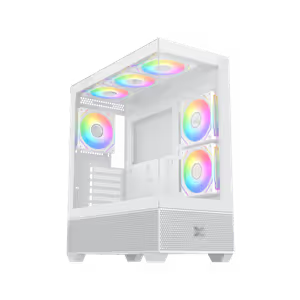
The Xigmatek Alphard Arctic is a mid tower gaming case in a white finish that takes E-ATX and every smaller motherboard size. It leaves room for high-performance components, long graphics cards and organised cable routing, and multiple fan mounting positions keep temperatures under control during long sessions. The result is a build that stays cool and looks tidy behind glass.
Mid Tower Chassis Built For E-ATX Gaming Builds
The Xigmatek Alphard Arctic is a mid tower gaming case in a white finish that takes E-ATX and every smaller motherboard size. It leaves room for high-performance components, long graphics cards and organised cable routing, and multiple fan mounting positions keep temperatures under control during long sessions. The result is a build that stays cool and looks tidy behind glass.
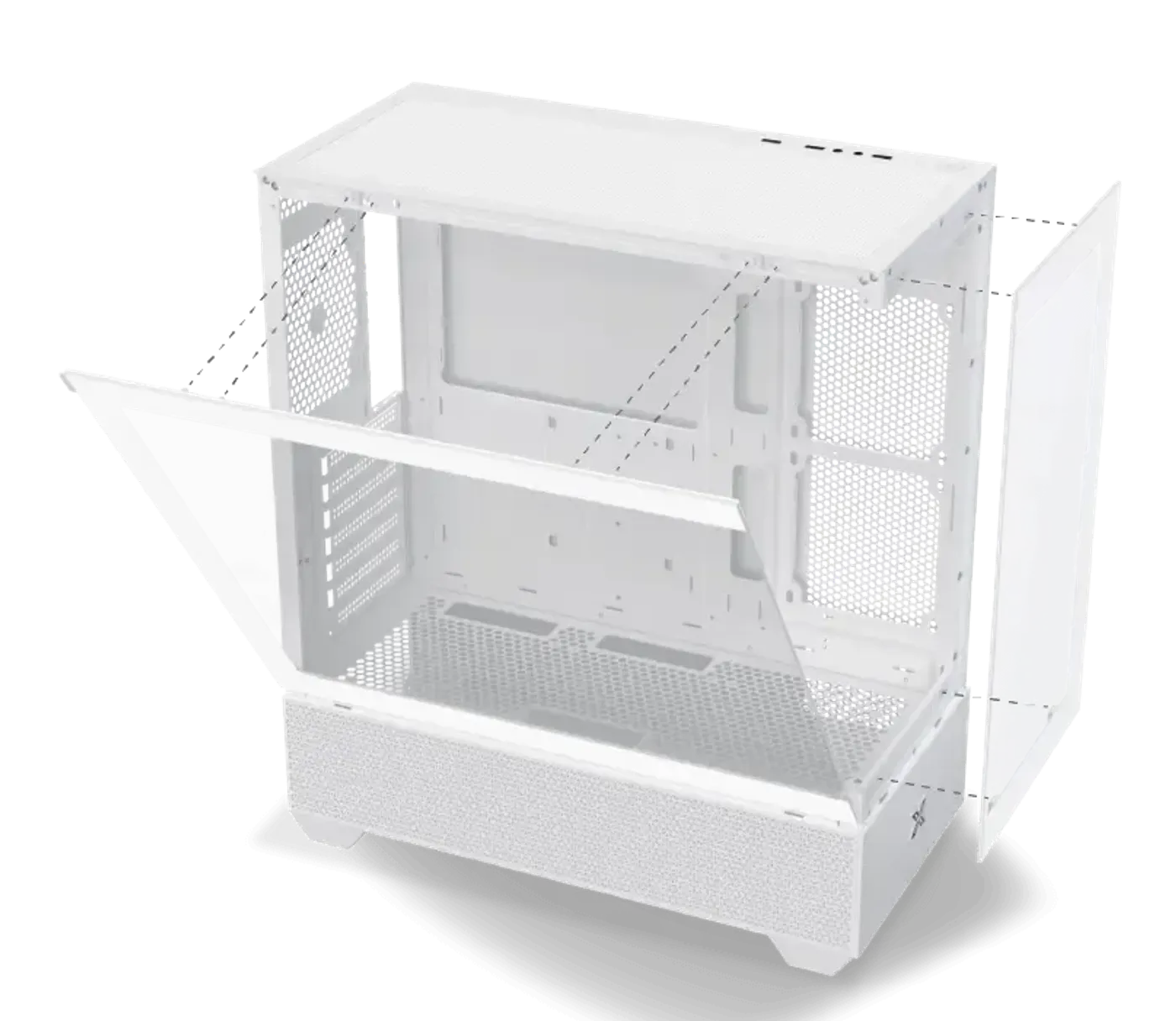
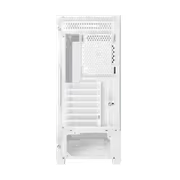
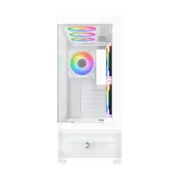
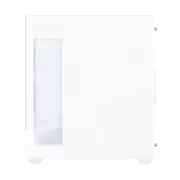
Tempered Glass Side Panel Lifts Away For Access
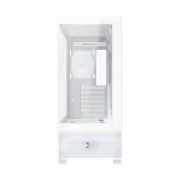
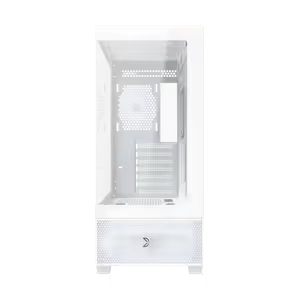
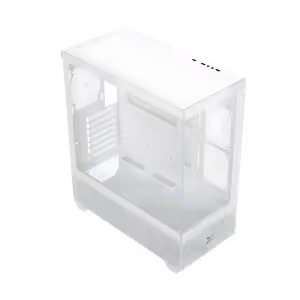
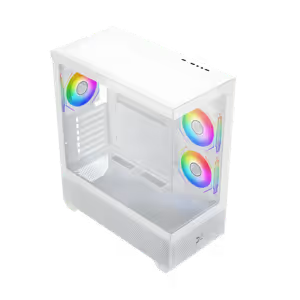
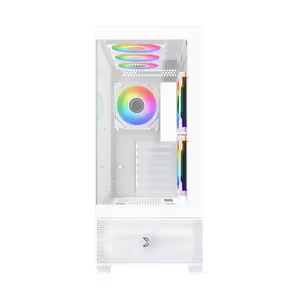
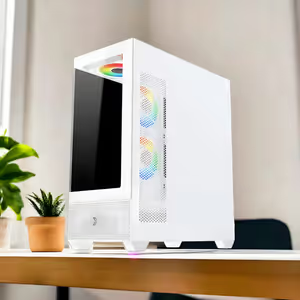
The tempered glass side panel is removable, so the interior opens up whenever you need to fit a cooler, route cables or swap a card. Glass keeps the completed build on display instead of hiding it behind steel, and taking the panel off is a quick step rather than a strip-down of the whole chassis.
Tempered Glass Side Panel Lifts Away For Access
The tempered glass side panel is removable, so the interior opens up whenever you need to fit a cooler, route cables or swap a card. Glass keeps the completed build on display instead of hiding it behind steel, and taking the panel off is a quick step rather than a strip-down of the whole chassis.
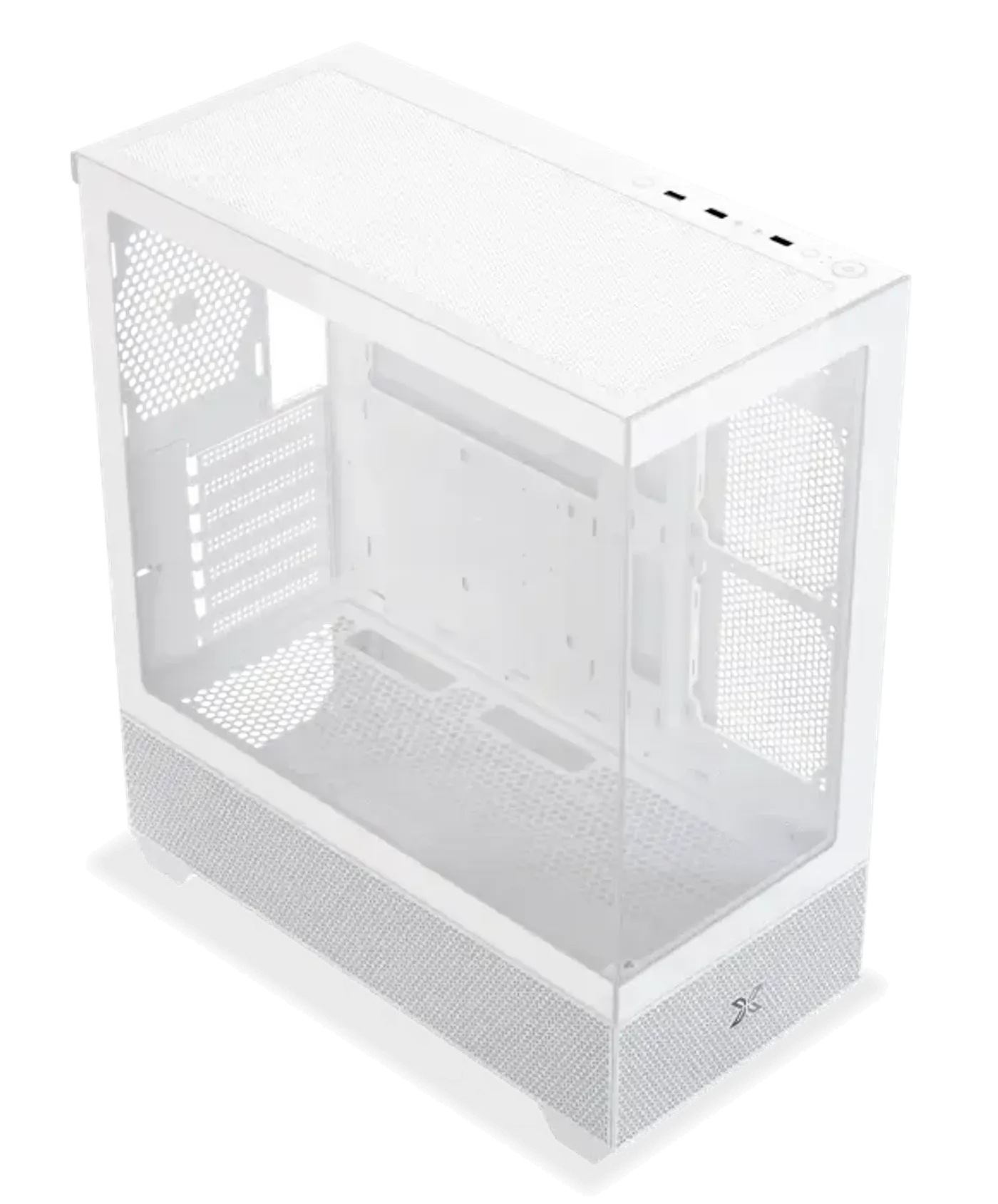
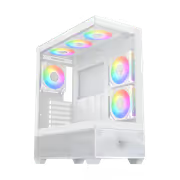
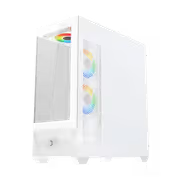
Mesh Top Panel Plus Dual Tempered Glass Windows
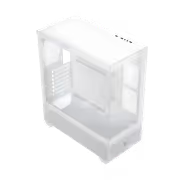
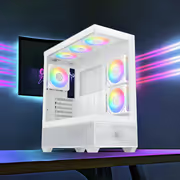
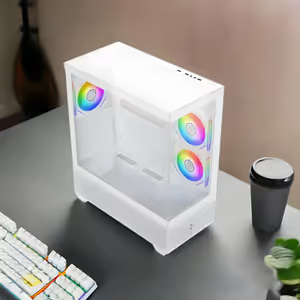
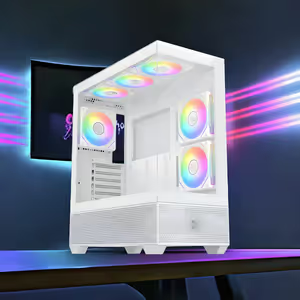
A mesh top panel sits above dual tempered glass windows, pairing an open exhaust path with two viewing surfaces. Warm air leaves through the mesh while the glass keeps the components and any lighting visible from more than one angle. It is the styling detail that separates the Alphard Arctic from a plain single-window chassis.
Mesh Top Panel Plus Dual Tempered Glass Windows
A mesh top panel sits above dual tempered glass windows, pairing an open exhaust path with two viewing surfaces. Warm air leaves through the mesh while the glass keeps the components and any lighting visible from more than one angle. It is the styling detail that separates the Alphard Arctic from a plain single-window chassis.
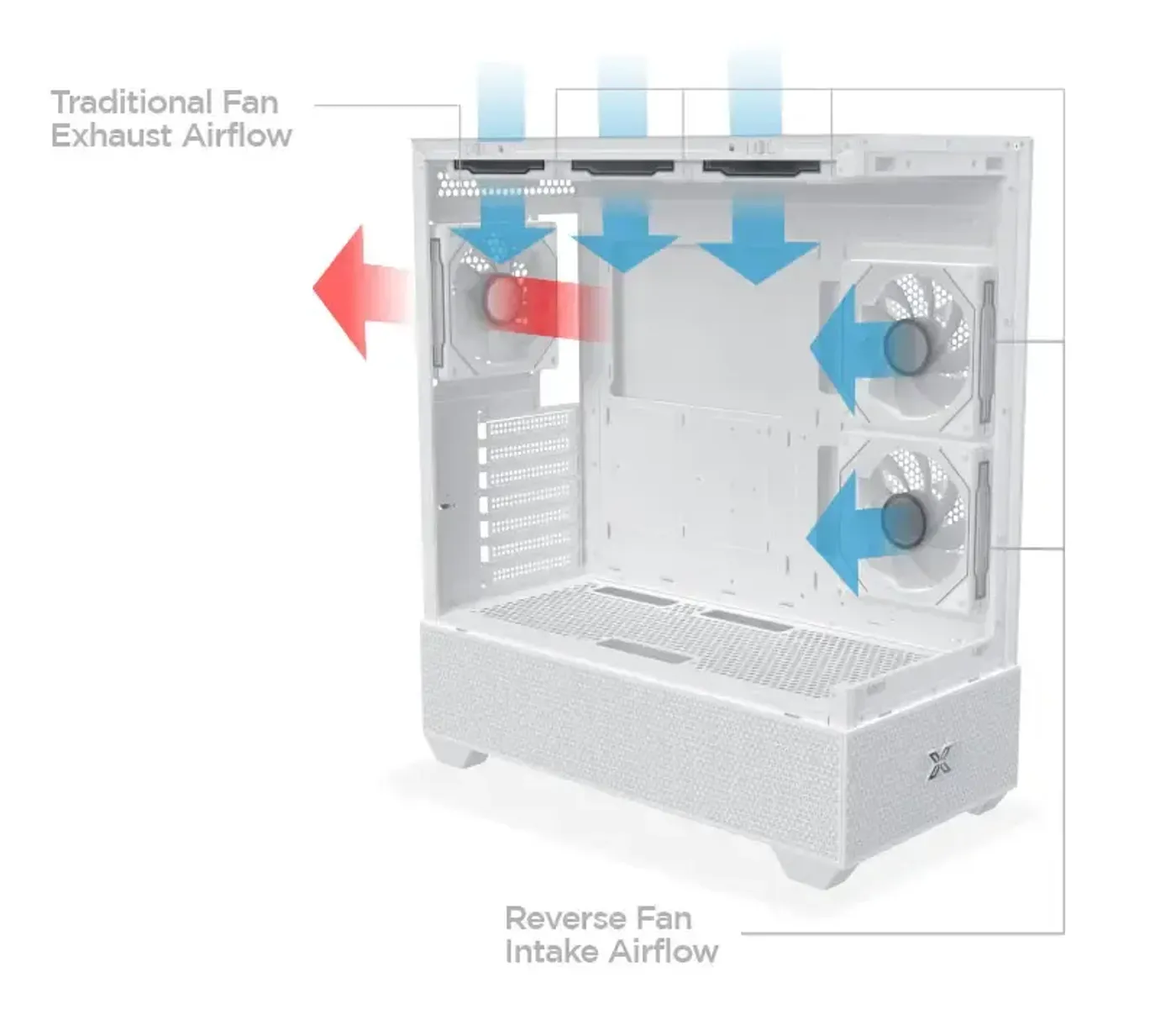
Ventilation System Feeds Air Straight To Components
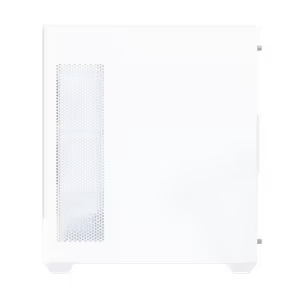
The Alphard Arctic is engineered for superior airflow, with a ventilation system that moves cool air through the chassis and past the components that generate the most heat. Combined with organised cable management, which keeps loose leads out of the air path, the case holds optimal temperatures through intense gaming sessions rather than only at idle.
Ventilation System Feeds Air Straight To Components
The Alphard Arctic is engineered for superior airflow, with a ventilation system that moves cool air through the chassis and past the components that generate the most heat. Combined with organised cable management, which keeps loose leads out of the air path, the case holds optimal temperatures through intense gaming sessions rather than only at idle.
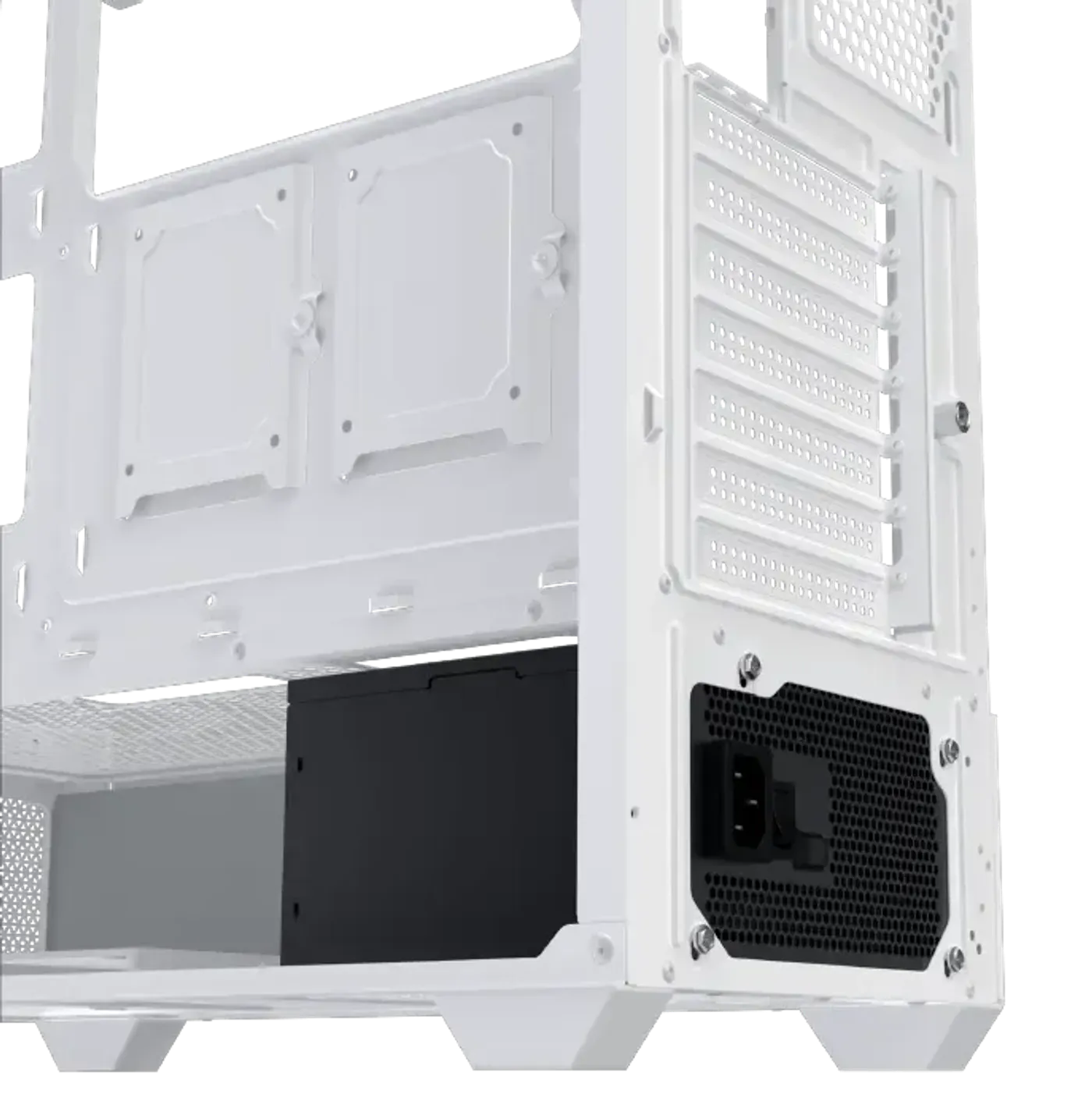
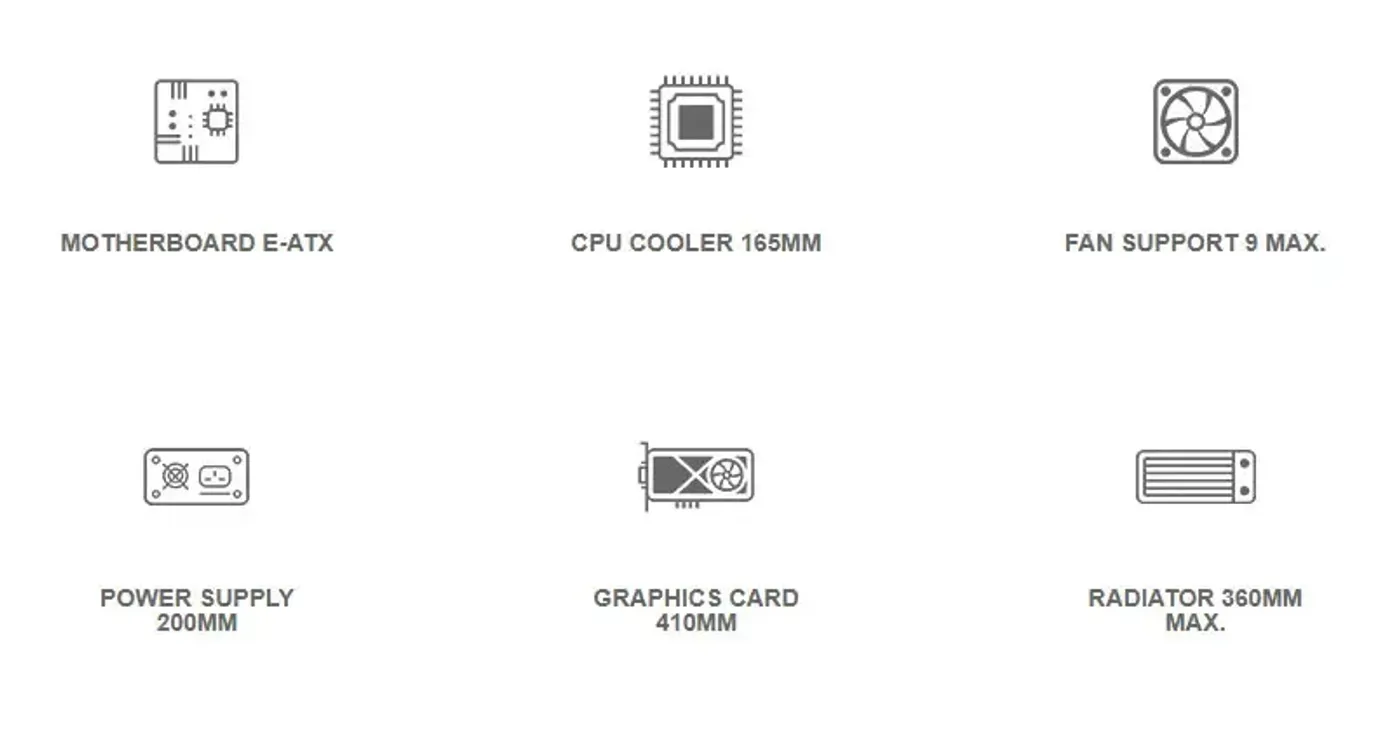
Power Supply Bay Clears Up To 200 mm
PSU compatibility runs to 200 mm of clearance, which covers full-size ATX units rather than restricting you to short-body models. That headroom matters when a higher-wattage supply with a longer casing and a thick cable bundle has to sit in the shroud alongside the drive hardware without fighting for space.
Power Supply Bay Clears Up To 200 mm
PSU compatibility runs to 200 mm of clearance, which covers full-size ATX units rather than restricting you to short-body models. That headroom matters when a higher-wattage supply with a longer casing and a thick cable bundle has to sit in the shroud alongside the drive hardware without fighting for space.
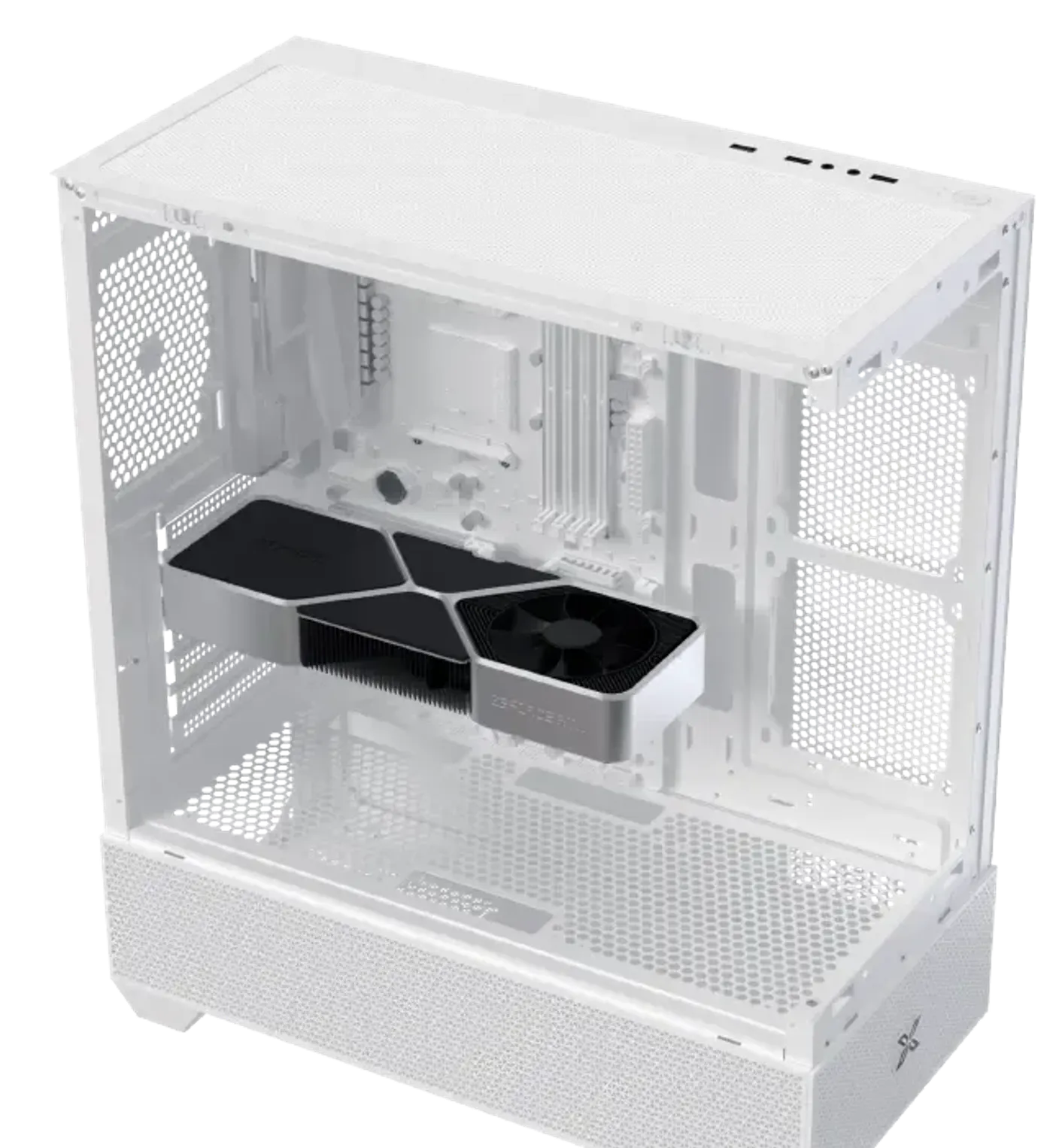
Fits Graphics Cards Up To 410 mm Long
Graphics card support extends to 410 mm in length, so triple-fan flagship cards fit without the card nosing into the front of the chassis. That figure is the number to check before buying, because modern high-end GPUs are the single component most likely to be blocked by a mid tower case.
Fits Graphics Cards Up To 410 mm Long
Graphics card support extends to 410 mm in length, so triple-fan flagship cards fit without the card nosing into the front of the chassis. That figure is the number to check before buying, because modern high-end GPUs are the single component most likely to be blocked by a mid tower case.
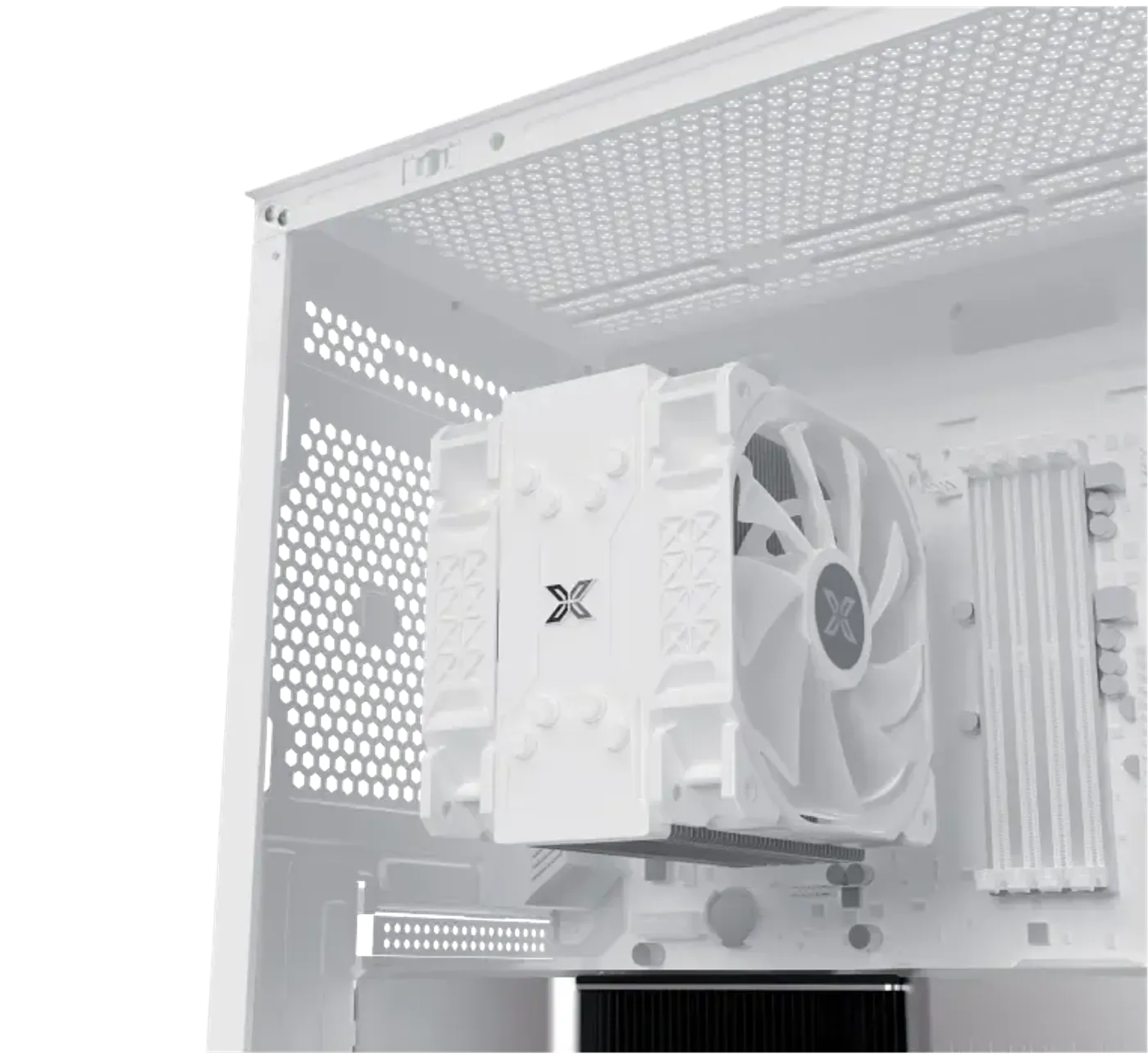
CPU Cooler Clearance Reaches 165 mm
There is 165 mm of CPU cooler clearance between the motherboard tray and the side panel, which accommodates tall tower air coolers instead of limiting you to a low-profile heatsink. Check this measurement against your cooler's height specification, since it decides whether a large dual-tower design will let the side panel close.
CPU Cooler Clearance Reaches 165 mm
There is 165 mm of CPU cooler clearance between the motherboard tray and the side panel, which accommodates tall tower air coolers instead of limiting you to a low-profile heatsink. Check this measurement against your cooler's height specification, since it decides whether a large dual-tower design will let the side panel close.
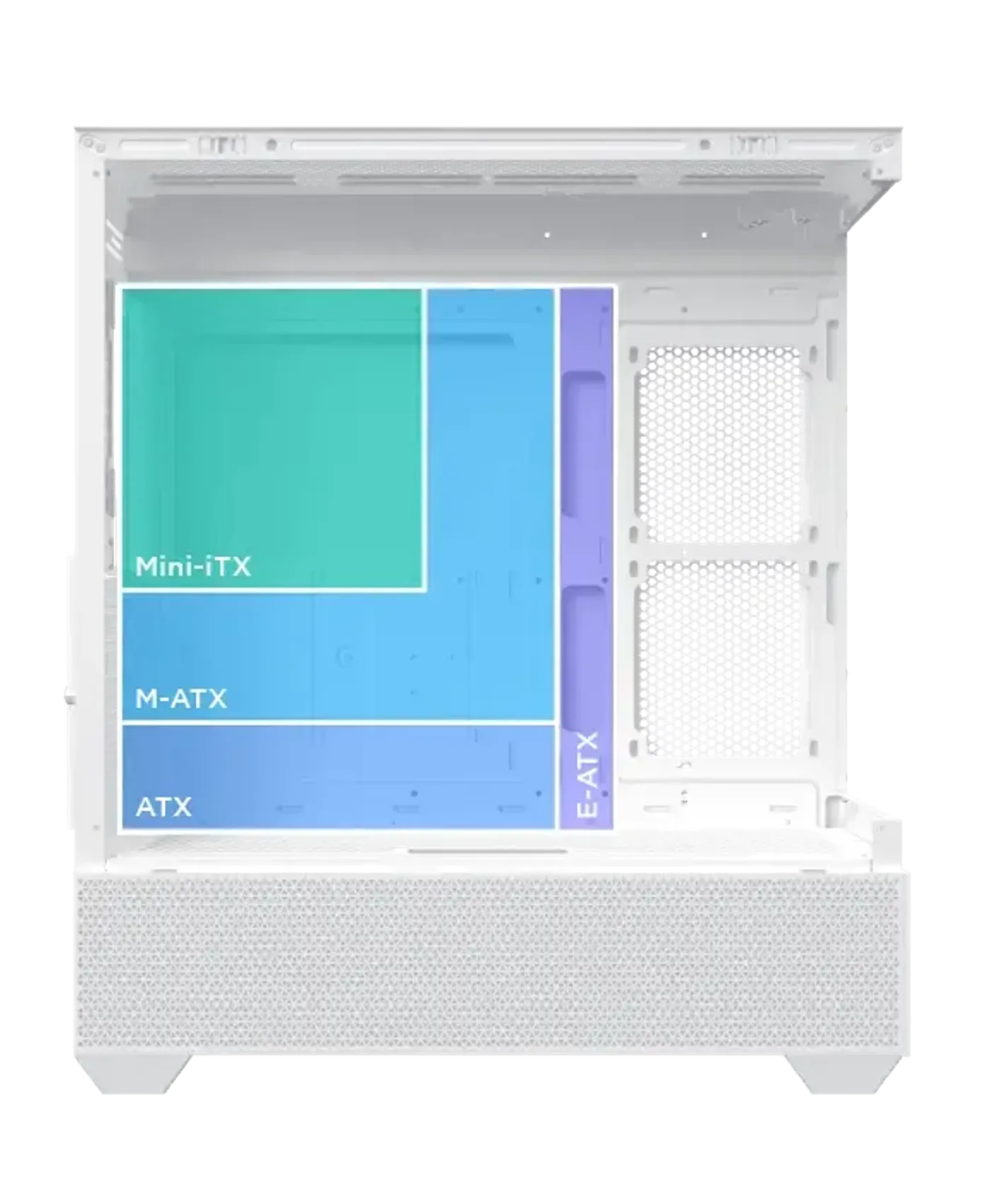
Takes E-ATX Boards And Every Smaller Size
The motherboard tray supports E-ATX and smaller form factors, so a workstation-class board with extra VRM real estate and additional expansion slots drops in without modification. Building on a standard ATX or micro-ATX board instead is equally supported, which keeps the same chassis usable if you change platform later.
Takes E-ATX Boards And Every Smaller Size
The motherboard tray supports E-ATX and smaller form factors, so a workstation-class board with extra VRM real estate and additional expansion slots drops in without modification. Building on a standard ATX or micro-ATX board instead is equally supported, which keeps the same chassis usable if you change platform later.
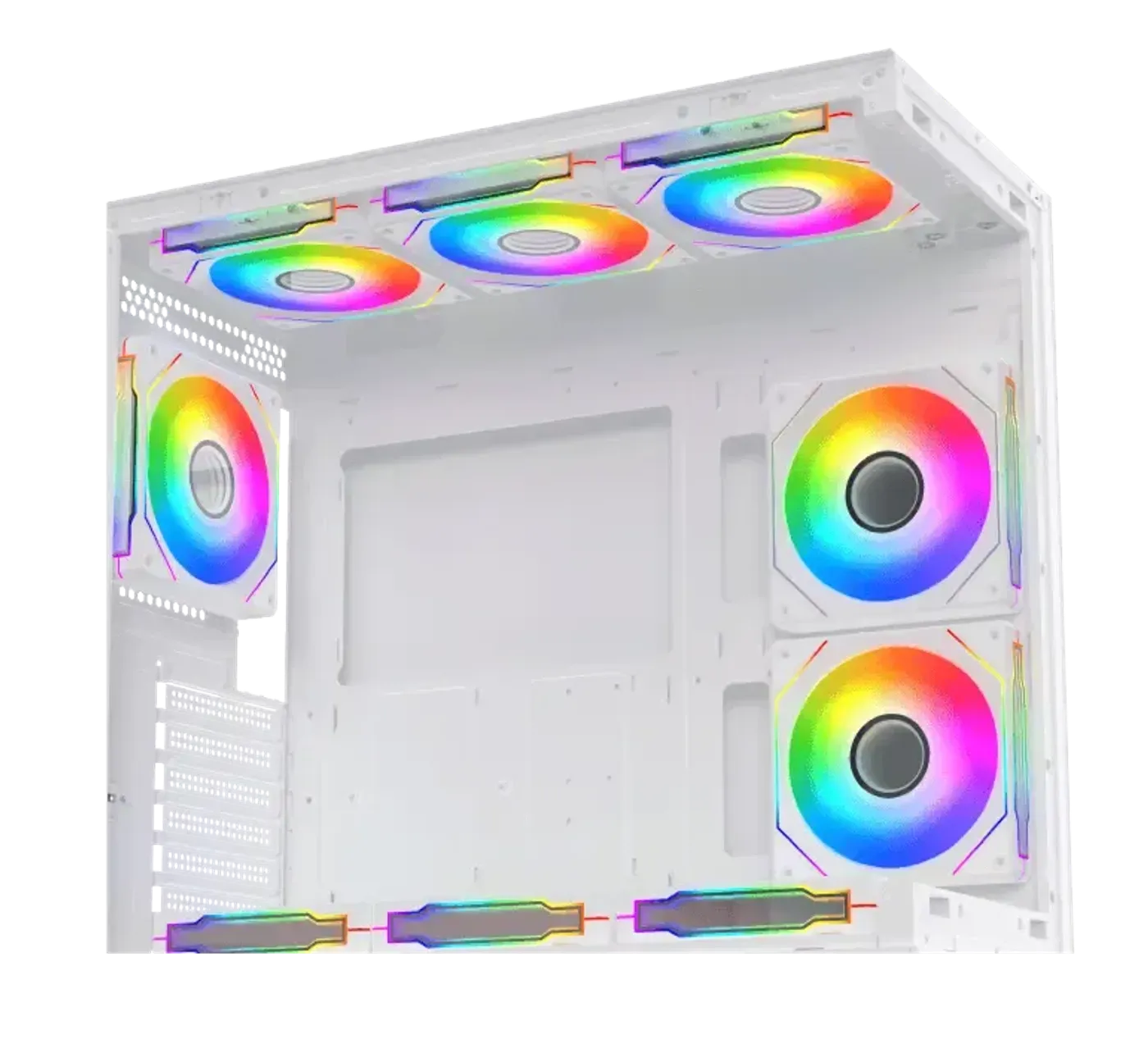
Room For A Maximum Of Nine Fans
The chassis holds a maximum of nine fans for optimal cooling, spread across the top, motherboard panel, PSU shroud and rear. Few builders fill every position from day one, but the headroom means you can add intake or exhaust later as the hardware inside gets hotter, without changing case.
Room For A Maximum Of Nine Fans
The chassis holds a maximum of nine fans for optimal cooling, spread across the top, motherboard panel, PSU shroud and rear. Few builders fill every position from day one, but the headroom means you can add intake or exhaust later as the hardware inside gets hotter, without changing case.
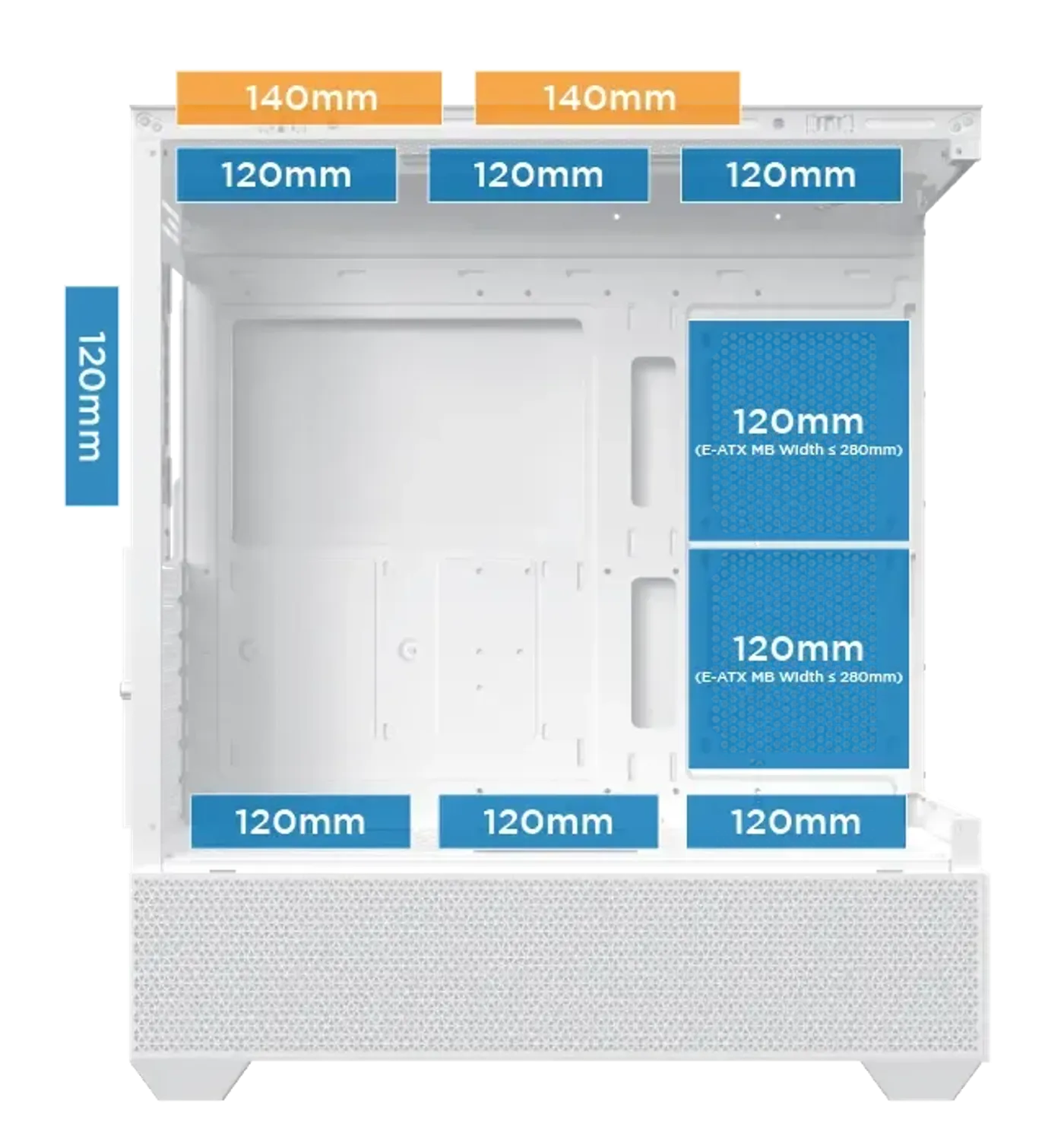
Fan Mounting Positions By Location
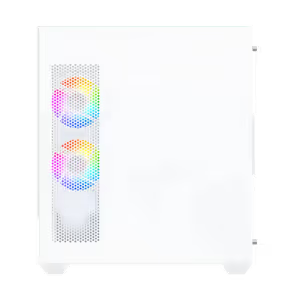
The top panel takes three 120 mm fans or two 140 mm fans, the motherboard panel takes up to two 120 mm fans on boards with an E-ATX width of 280 mm or less, the PSU shroud takes up to three 120 mm fans, and the rear takes a single 120 mm fan. Plan your loadout against those positions.
Fan Mounting Positions By Location
The top panel takes three 120 mm fans or two 140 mm fans, the motherboard panel takes up to two 120 mm fans on boards with an E-ATX width of 280 mm or less, the PSU shroud takes up to three 120 mm fans, and the rear takes a single 120 mm fan. Plan your loadout against those positions.
FAQ
Frequently Asked Questions
Everything you need to know about this product
It supports large graphics cards up to 410 mm in length.
CPU cooler clearance is up to 165 mm, which allows tall tower air coolers.
It supports E-ATX motherboards and all smaller form factors.
The PSU area offers up to 200 mm of clearance for the power supply.
The chassis supports a maximum of nine fans for optimal cooling.
The top panel supports three 120 mm fans or two 140 mm fans.
Yes, the motherboard panel supports up to two 120 mm fans on E-ATX boards with a width of 280 mm or less.
Yes, the PSU shroud supports up to three 120 mm fans.
The rear of the case accepts one 120 mm fan.
Yes, the case uses a conveniently removable tempered glass side panel for access to the interior.
It uses a stylish mesh top panel paired with dual tempered glass windows.
This model has a sleek white finish designed to suit a light-coloured gaming setup.

AI-Generated Content: These FAQs are generated by an automated AI system and may contain inaccuracies or omissions. Evetech makes no warranties, express or implied, regarding their completeness or reliability. For definitive information, please refer to the manufacturer's official specifications.
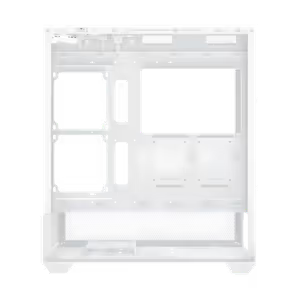
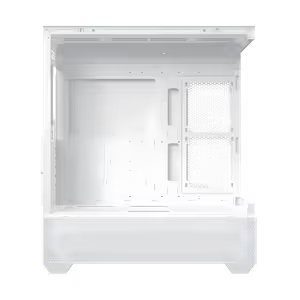
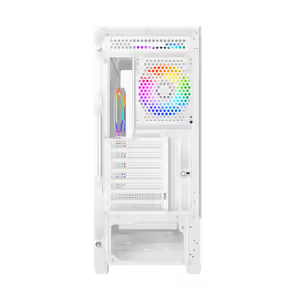
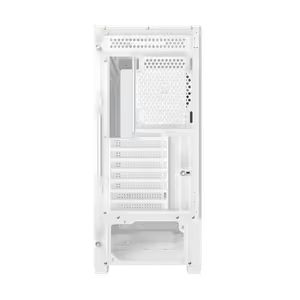
Please Note: Product images are for illustrative purposes only and may differ from the actual product.
Choose your
own PC
Hand-pick every part with live stock, compatibility, and instant pricing.
Try the new builderPrice Inc. Vat
R 1,599
Save R 400
ListR 1,999
1599Free Delivery
Qty:
In Stock with Evetech
Choose your
own PC
Hand-pick every part with live stock, compatibility, and instant pricing.
Try the new builderXigmatek Alphard Arctic Mid Tower Gaming Case White