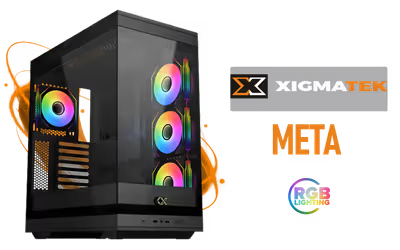
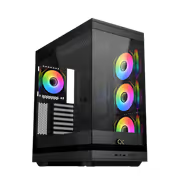
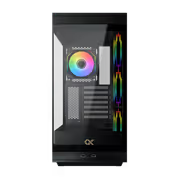
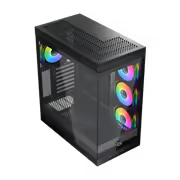
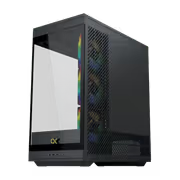
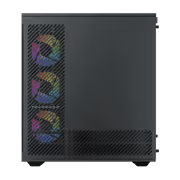
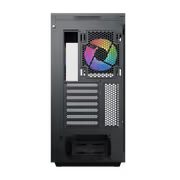
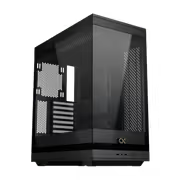
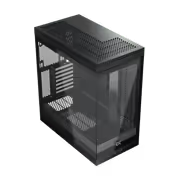
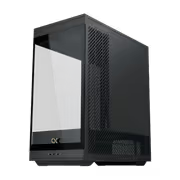
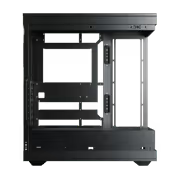
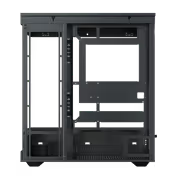
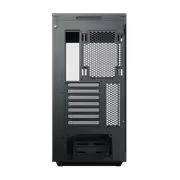
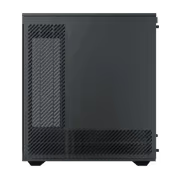
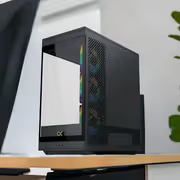
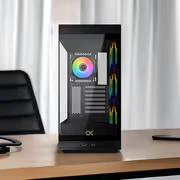
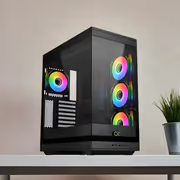
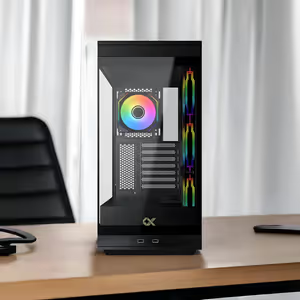
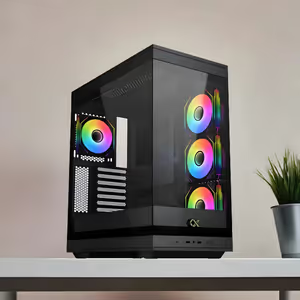
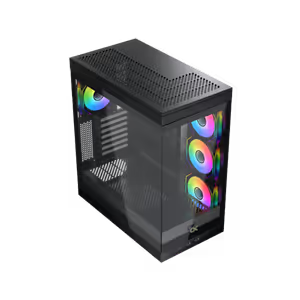
Xigmatek Meta Mid Tower Gaming Case Black
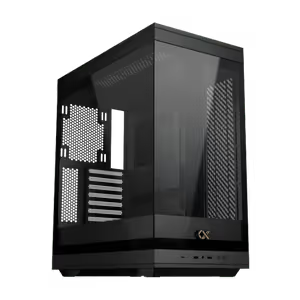
Xigmatek Meta Mid Tower Gaming Case - Black / Supports Motherboards up to E-ATX / 4 x Pre-Installed Fans Included / EN45066 / EN45066
1 Year Local Warranty
Model No : Xigmatek EN45066
Price Inc. Vat
R 1,799
Save R 700
ListR 2,499
1799Change Quantity:
In Stock with Evetech
Xigmatek Meta Mid Tower Case — E-ATX Support, Black
Black Mid Tower Built Around Its Airflow System
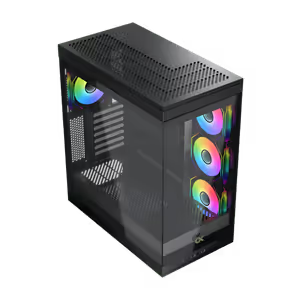
The Xigmatek Meta Mid Tower is a gaming case in black with an airflow system engineered to keep components cool through high-intensity gaming. Ample internal space and ventilation give a custom build room to breathe, and the layout is flexible enough to serve as the foundation for a system chosen around performance rather than around chassis limits.
Black Mid Tower Built Around Its Airflow System
The Xigmatek Meta Mid Tower is a gaming case in black with an airflow system engineered to keep components cool through high-intensity gaming. Ample internal space and ventilation give a custom build room to breathe, and the layout is flexible enough to serve as the foundation for a system chosen around performance rather than around chassis limits.
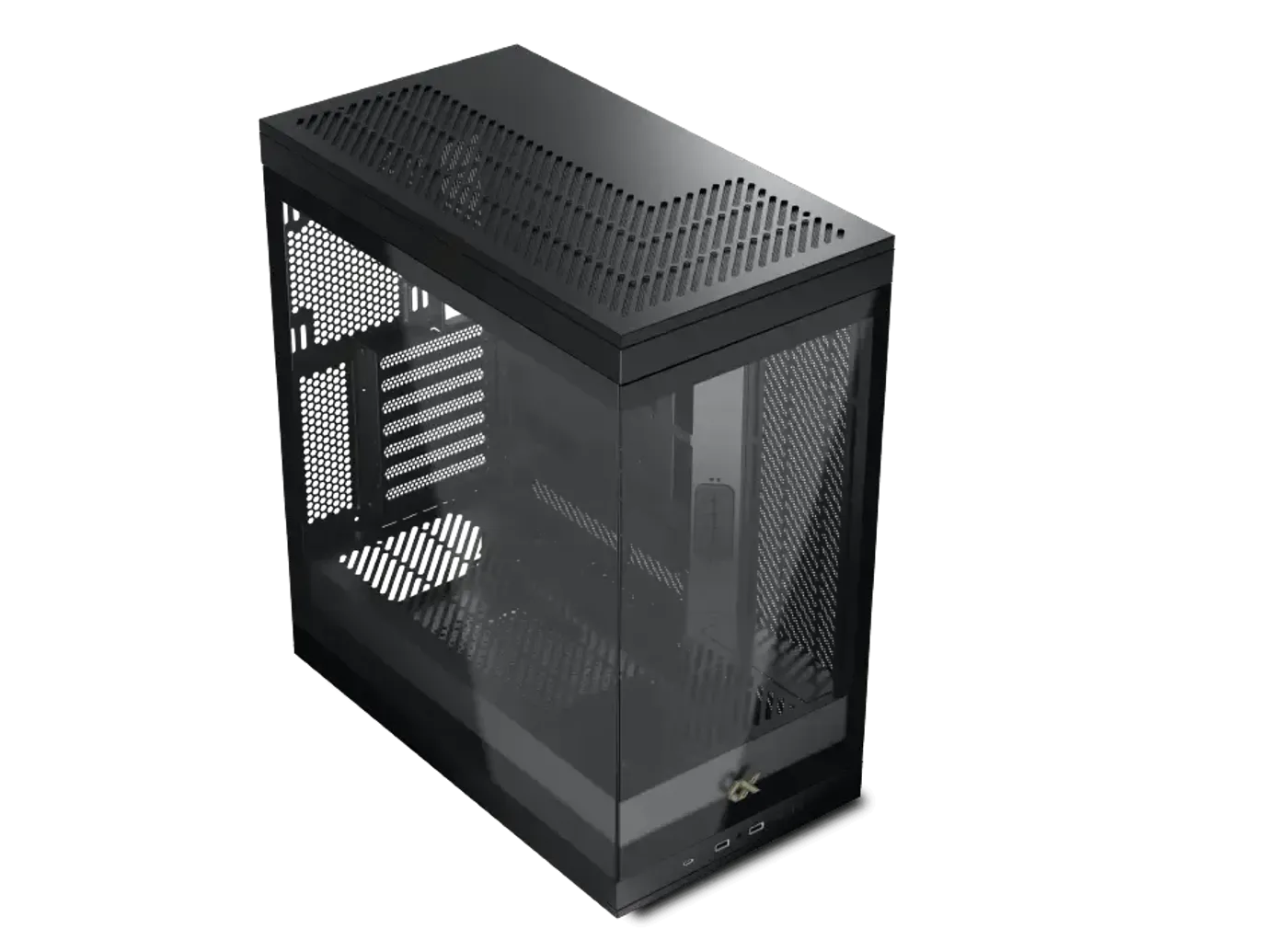
Dual Tempered Glass Panels On The Chassis
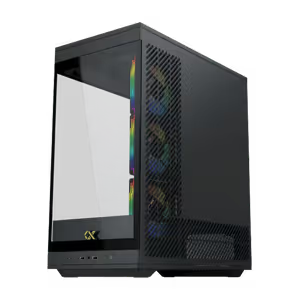
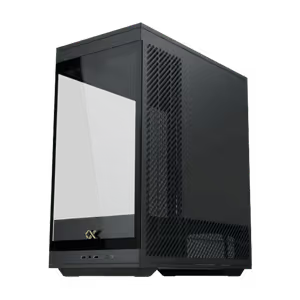
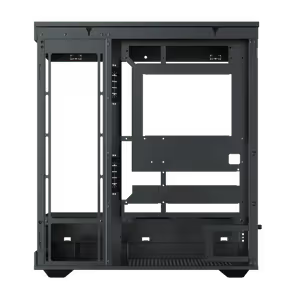
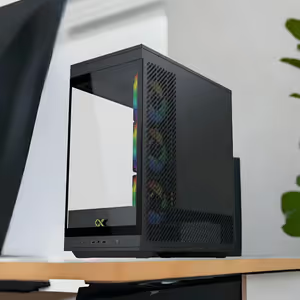
The Meta uses a chassis with dual tempered glass panels, showing the build across two faces instead of through one side window. Glass on both visible sides suits a case designed to sit out in the open, and it means the components and any lighting inside read from more than a single viewing angle.
Dual Tempered Glass Panels On The Chassis
The Meta uses a chassis with dual tempered glass panels, showing the build across two faces instead of through one side window. Glass on both visible sides suits a case designed to sit out in the open, and it means the components and any lighting inside read from more than a single viewing angle.
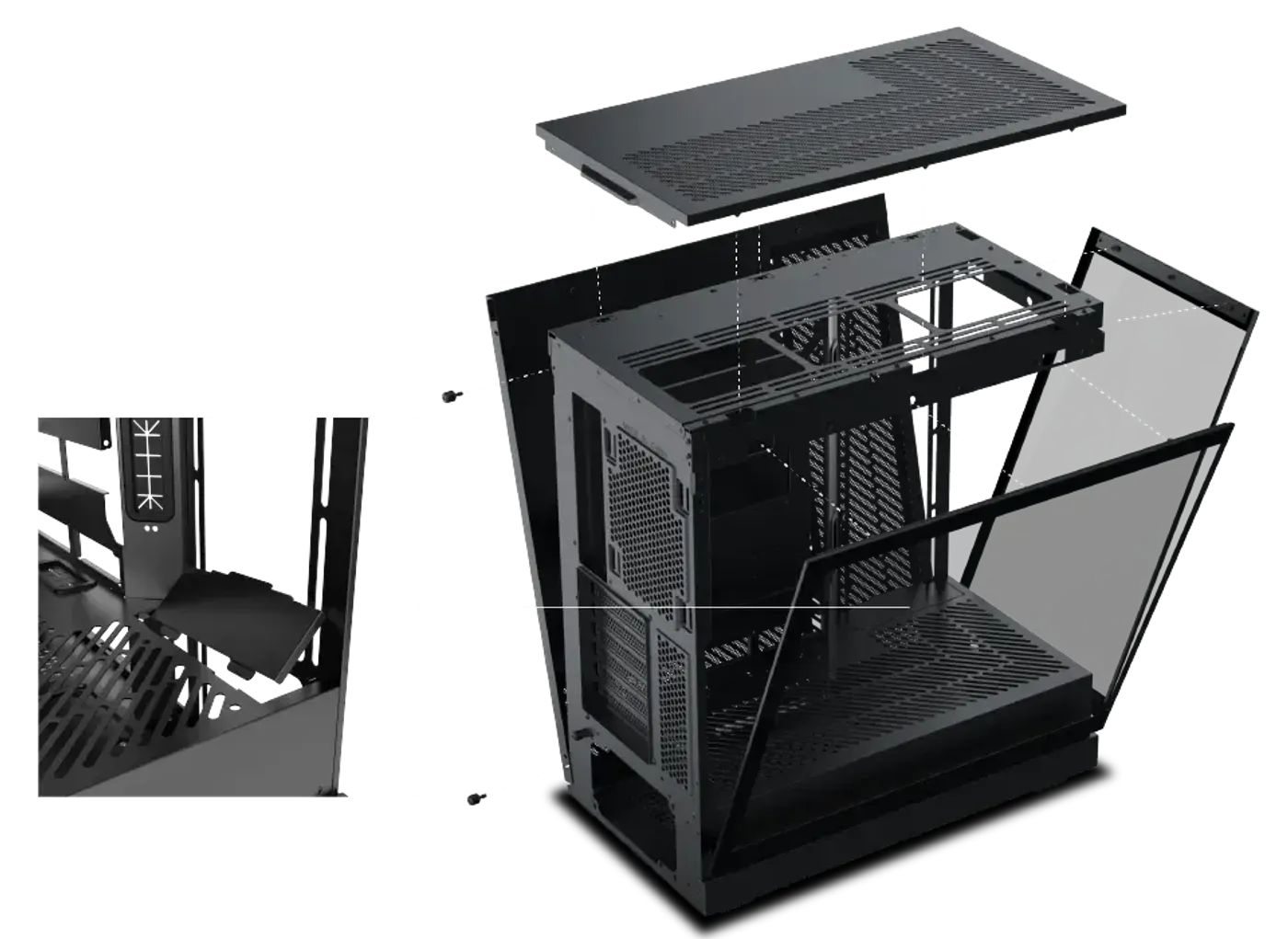
Removable Fan Cover Adds A Third 120 mm Fan
The motherboard panel fan cover is removable, and that choice changes the fan count: with the cover in place the panel takes two 120 mm fans, and with it removed the panel takes three. It is a straightforward trade between a cleaner covered look and an extra intake fan aimed straight at the board.
Removable Fan Cover Adds A Third 120 mm Fan
The motherboard panel fan cover is removable, and that choice changes the fan count: with the cover in place the panel takes two 120 mm fans, and with it removed the panel takes three. It is a straightforward trade between a cleaner covered look and an extra intake fan aimed straight at the board.
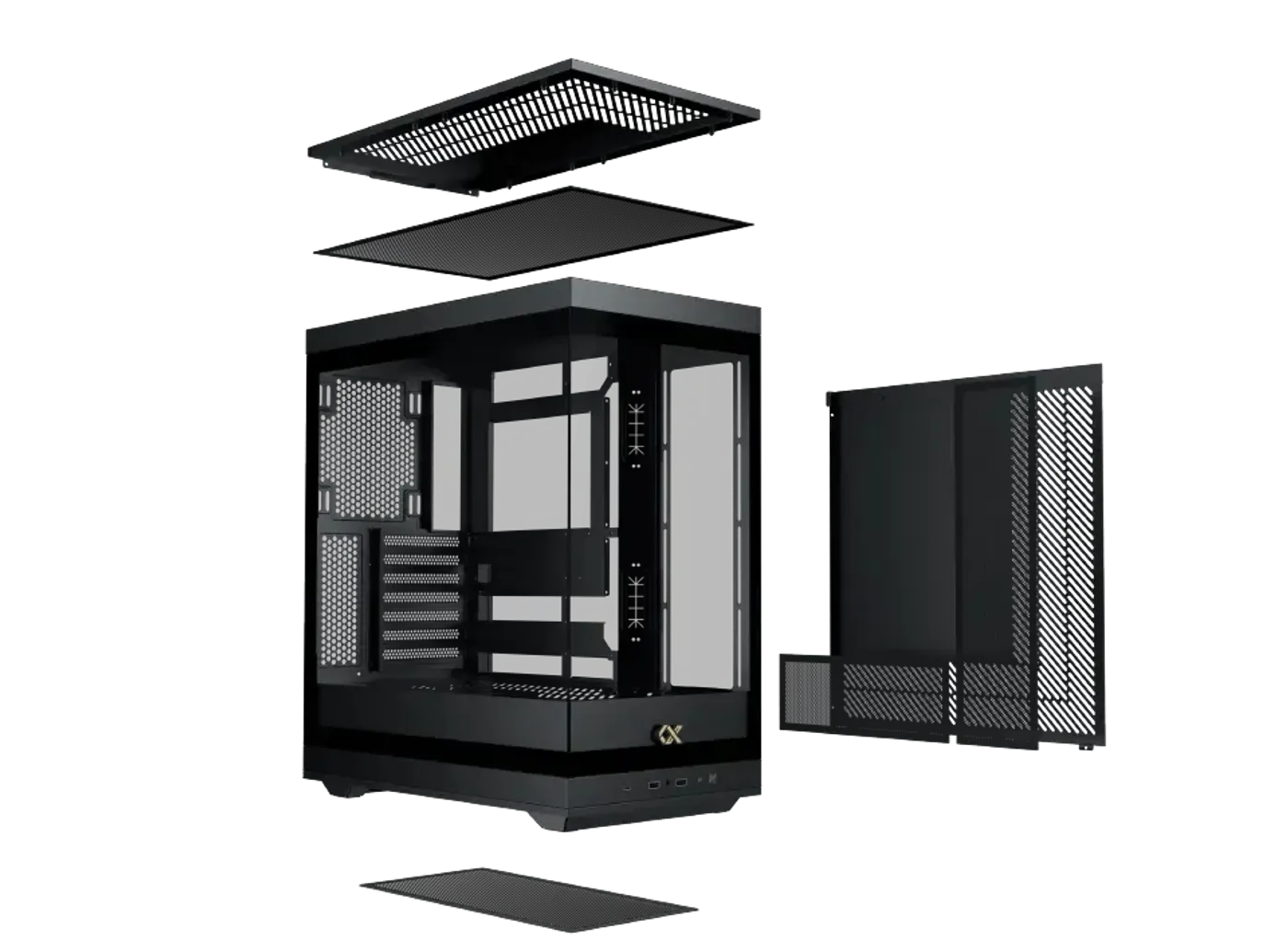
Dust Filters Pre-Installed On Three Surfaces
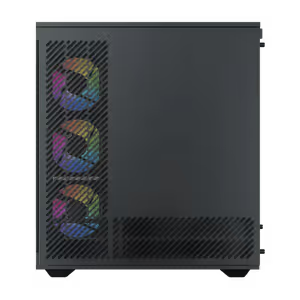
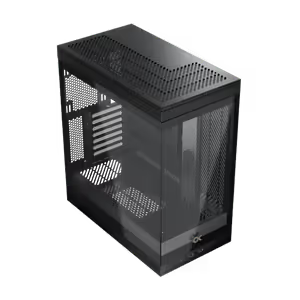
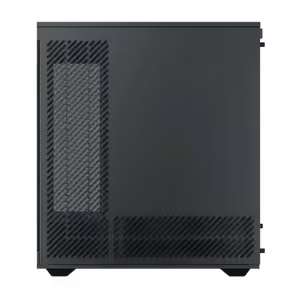
Dust filters come pre-installed on the top, the bottom and the right side of the chassis, so the intake paths are screened from the day the case is unboxed. Filtering the air on the way in is what keeps dust off the heatsink fins and fan blades, where it otherwise builds into a slow, measurable loss of cooling performance.
Dust Filters Pre-Installed On Three Surfaces
Dust filters come pre-installed on the top, the bottom and the right side of the chassis, so the intake paths are screened from the day the case is unboxed. Filtering the air on the way in is what keeps dust off the heatsink fins and fan blades, where it otherwise builds into a slow, measurable loss of cooling performance.
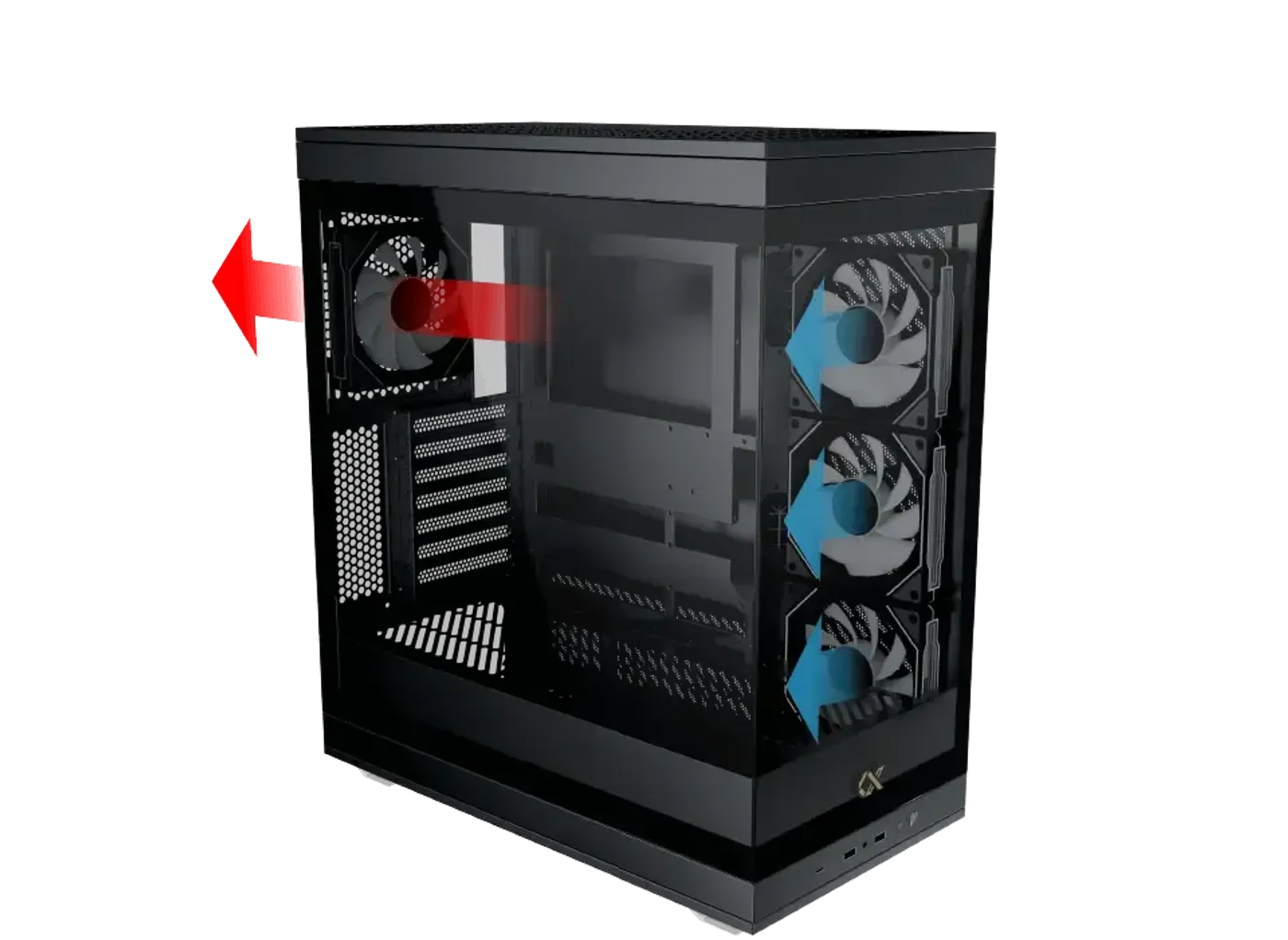
Ventilation Design Moves Air Through The Build
The Meta's airflow and ventilation design is optimised to carry cool air across the components and hot air out, which is what holds temperatures during long, high-intensity sessions. Ample internal space plays into the same result, because a clear path through the chassis is worth as much as the number of fans mounted in it.
Ventilation Design Moves Air Through The Build
The Meta's airflow and ventilation design is optimised to carry cool air across the components and hot air out, which is what holds temperatures during long, high-intensity sessions. Ample internal space plays into the same result, because a clear path through the chassis is worth as much as the number of fans mounted in it.
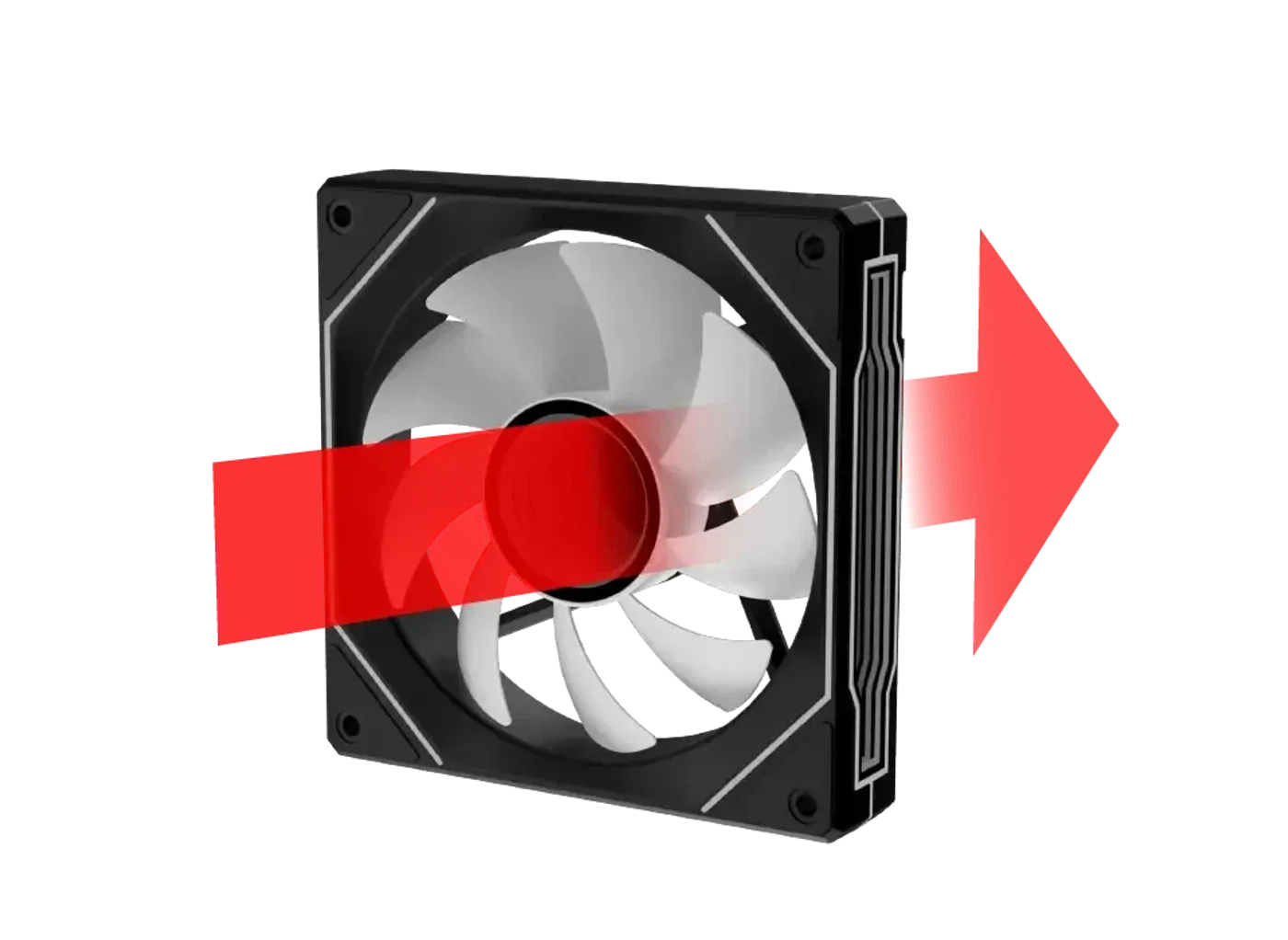
Standard Blade Fan Pre-Installed At The Rear
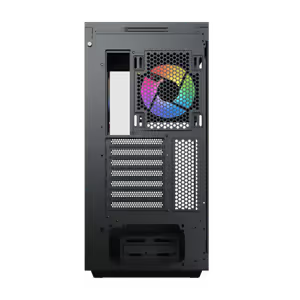
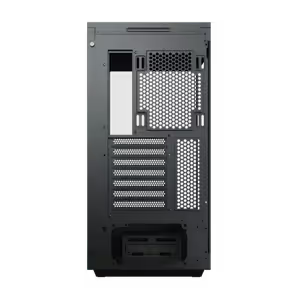
A standard fan blade configuration comes pre-installed on the rear side of the case, giving the build a working exhaust before you add anything. The conventional blade is the efficient shape for that position, where the fan pushes hot air straight out behind the motherboard and is not on display through the glass.
Standard Blade Fan Pre-Installed At The Rear
A standard fan blade configuration comes pre-installed on the rear side of the case, giving the build a working exhaust before you add anything. The conventional blade is the efficient shape for that position, where the fan pushes hot air straight out behind the motherboard and is not on display through the glass.
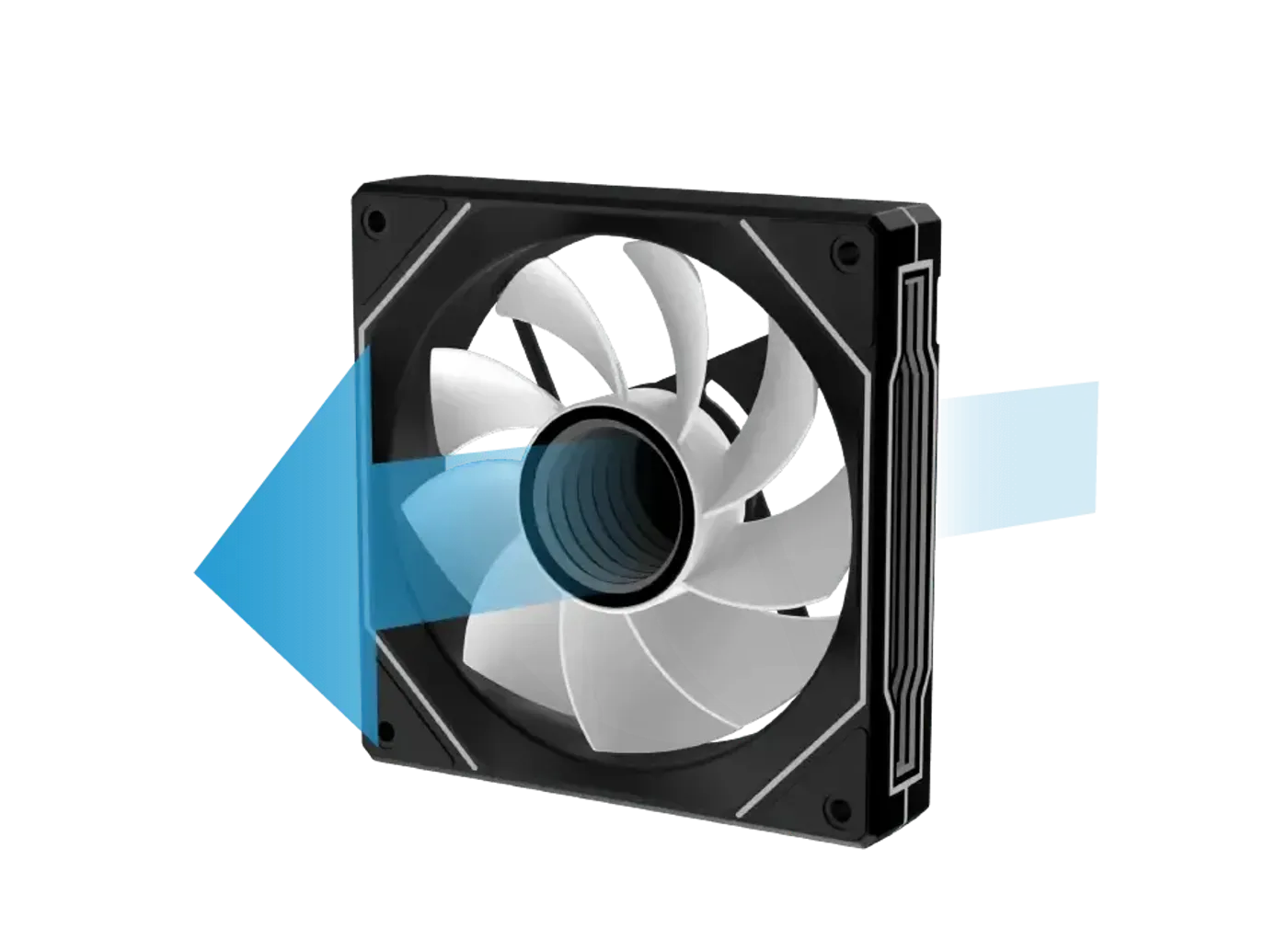
Reverse Blade Fan On The Motherboard Panel Side
A reverse blade fan comes pre-installed on the motherboard panel side, feeding air directly across the board. Reverse blades turn their finished face toward the viewer, so the fan that sits in the line of sight behind the glass looks deliberate rather than showing the frame and hub a conventional fan presents from that angle.
Reverse Blade Fan On The Motherboard Panel Side
A reverse blade fan comes pre-installed on the motherboard panel side, feeding air directly across the board. Reverse blades turn their finished face toward the viewer, so the fan that sits in the line of sight behind the glass looks deliberate rather than showing the frame and hub a conventional fan presents from that angle.
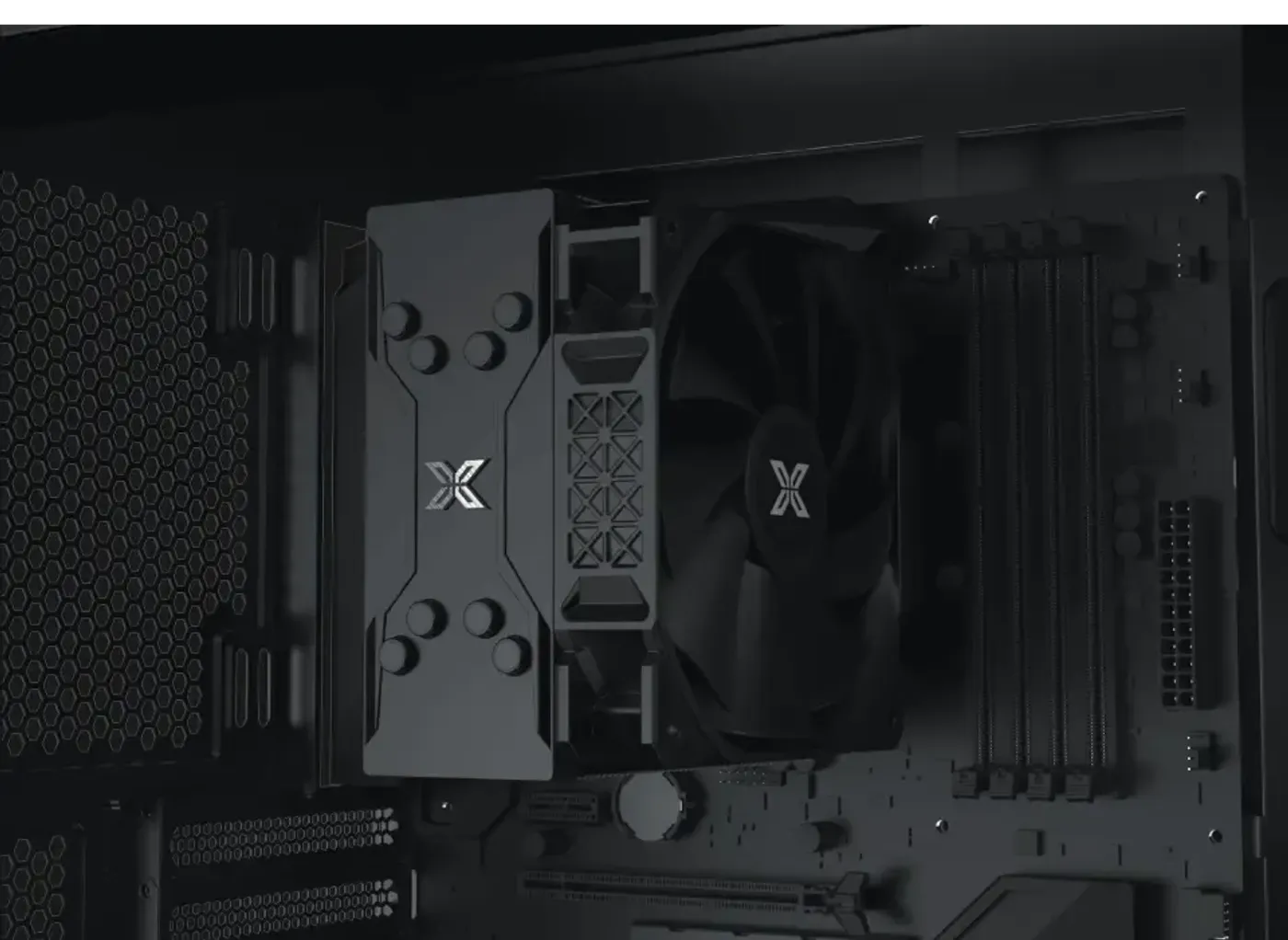
CPU Cooler Clearance Up To 175 mm
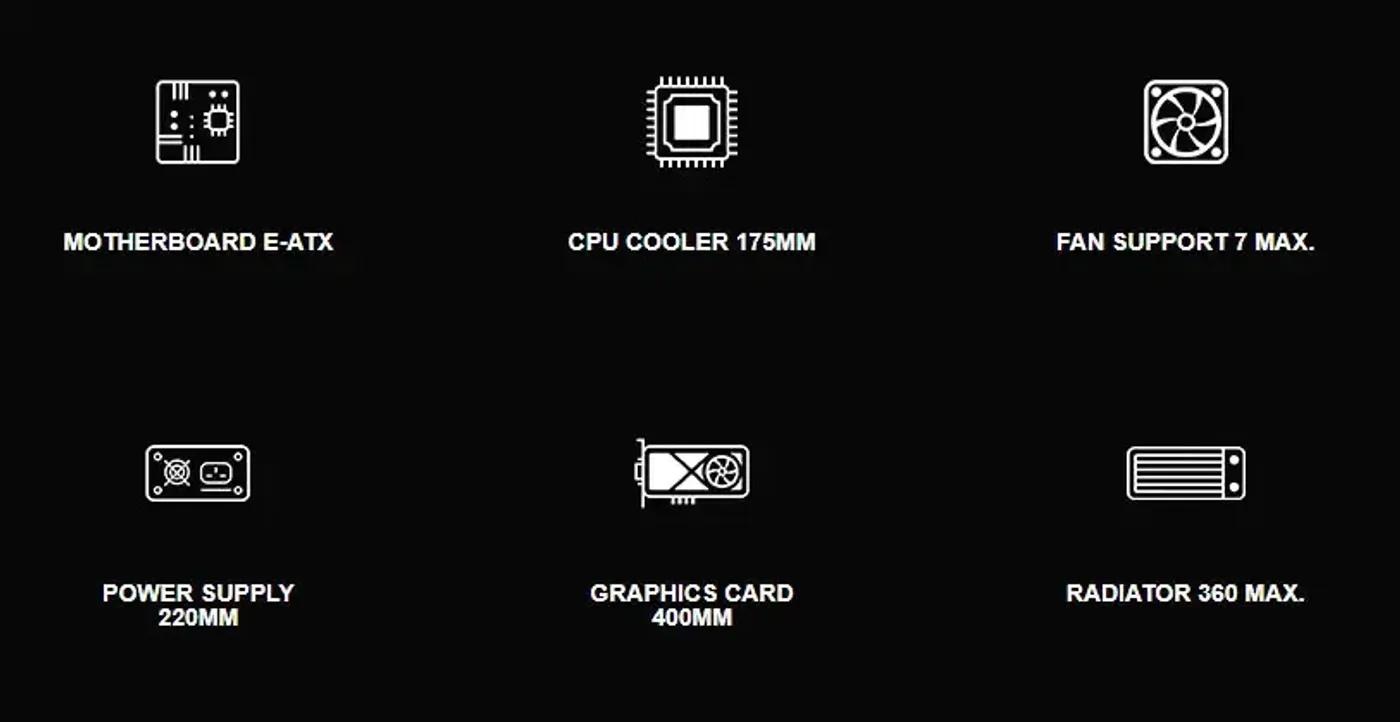
The case allows CPU cooler clearance up to 175 mm, which takes in large dual-tower air coolers rather than only mid-height models. That headroom means an air cooler remains a serious option here instead of a compromise, so a liquid loop is a preference rather than a requirement forced on you by the chassis.
CPU Cooler Clearance Up To 175 mm
The case allows CPU cooler clearance up to 175 mm, which takes in large dual-tower air coolers rather than only mid-height models. That headroom means an air cooler remains a serious option here instead of a compromise, so a liquid loop is a preference rather than a requirement forced on you by the chassis.
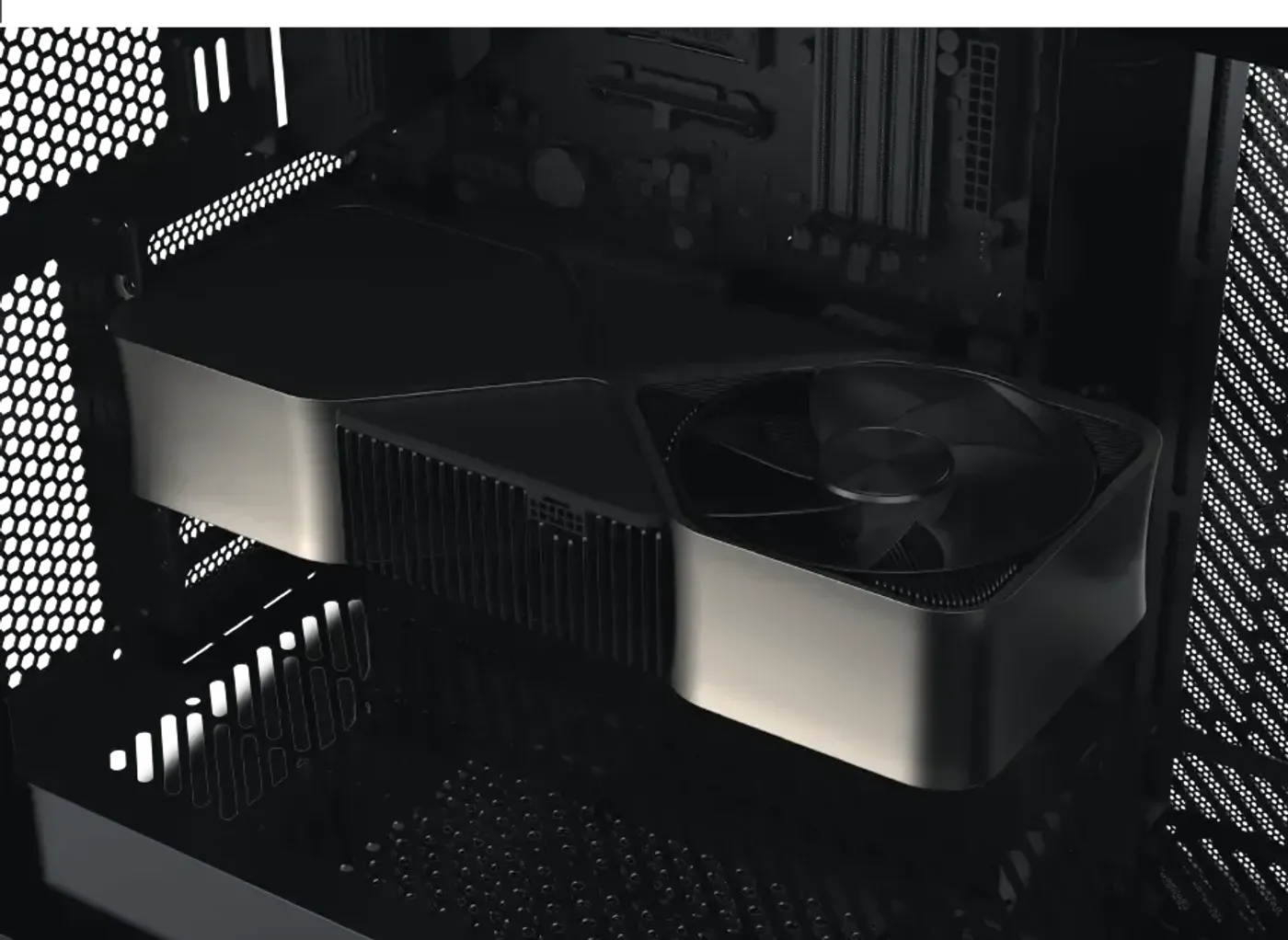
Graphics Cards Up To 400 mm Long
Maximum GPU length support is 400 mm, which covers the long triple-fan cards at the top of the current range. Card length is the specification most likely to block a build, so confirming 400 mm of clearance up front removes the main physical constraint on which graphics card the system can carry.
Graphics Cards Up To 400 mm Long
Maximum GPU length support is 400 mm, which covers the long triple-fan cards at the top of the current range. Card length is the specification most likely to block a build, so confirming 400 mm of clearance up front removes the main physical constraint on which graphics card the system can carry.
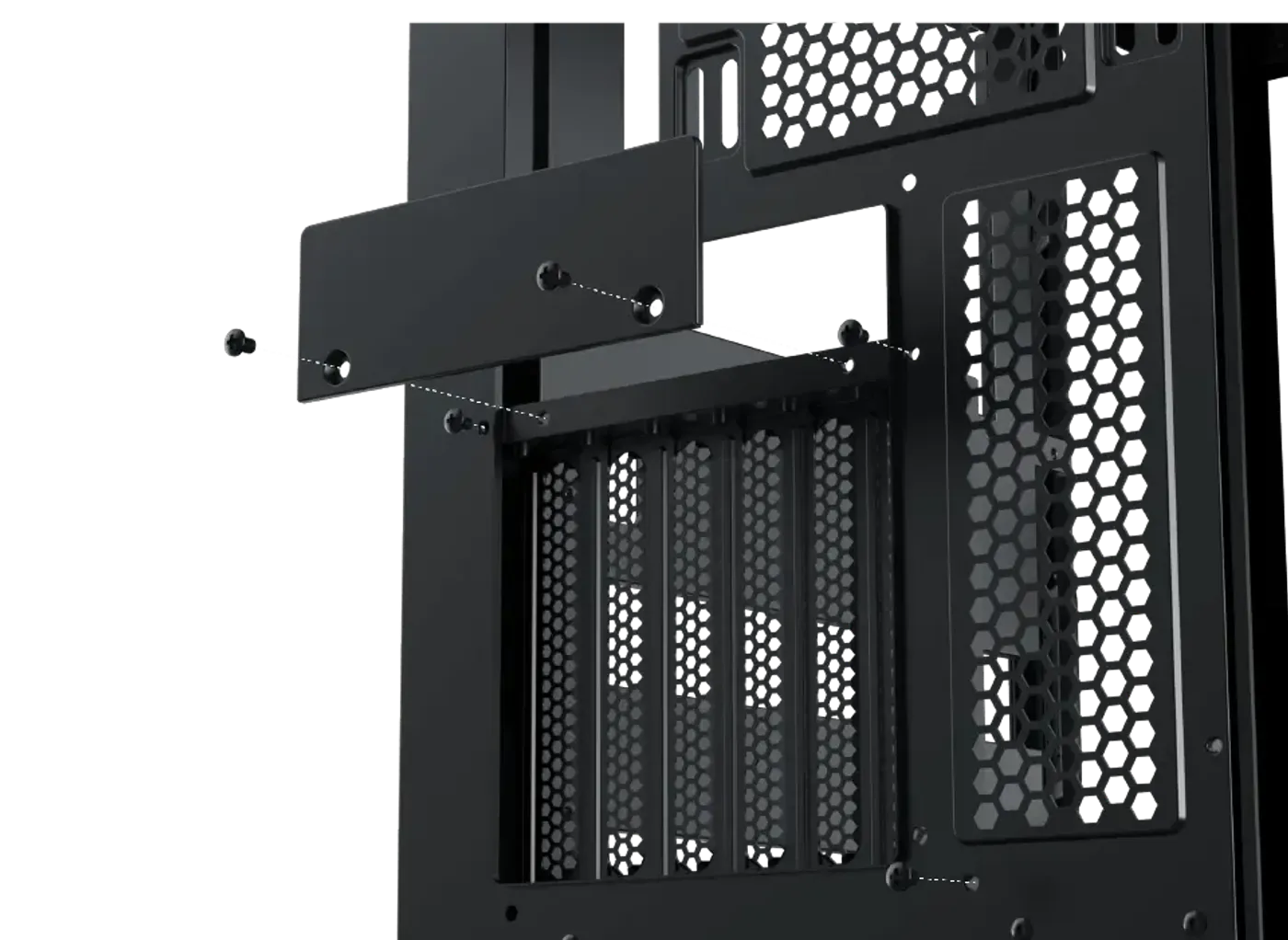
Vertical GPU Mounting Is Supported
The Meta supports vertical GPU installation, turning the graphics card to face the glass instead of sitting edge-on in the expansion slots. On a chassis with dual tempered glass panels that puts the most visually interesting component on show, which is the main reason builders choose a vertical mount in the first place.
Vertical GPU Mounting Is Supported
The Meta supports vertical GPU installation, turning the graphics card to face the glass instead of sitting edge-on in the expansion slots. On a chassis with dual tempered glass panels that puts the most visually interesting component on show, which is the main reason builders choose a vertical mount in the first place.
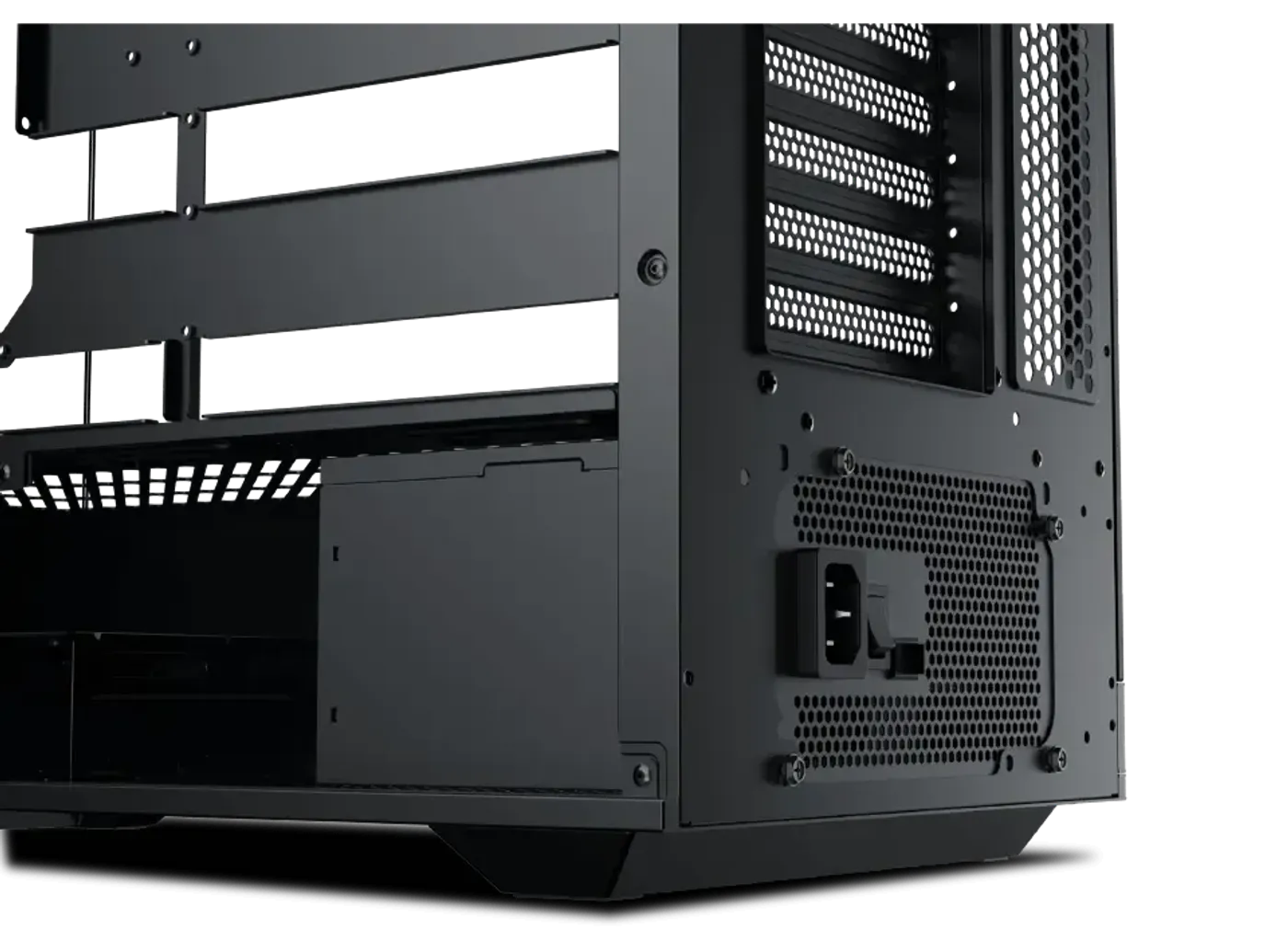
Power Supply Bay Takes Units Up To 220 mm
The power supply unit limitation is 220 mm, which comfortably covers full-size ATX supplies including longer high-wattage models. Depth in that bay is not only about the unit itself: it leaves space behind the supply for the cable bundle, so the leads are not crushed into a tight bend the moment they exit.
Power Supply Bay Takes Units Up To 220 mm
The power supply unit limitation is 220 mm, which comfortably covers full-size ATX supplies including longer high-wattage models. Depth in that bay is not only about the unit itself: it leaves space behind the supply for the cable bundle, so the leads are not crushed into a tight bend the moment they exit.
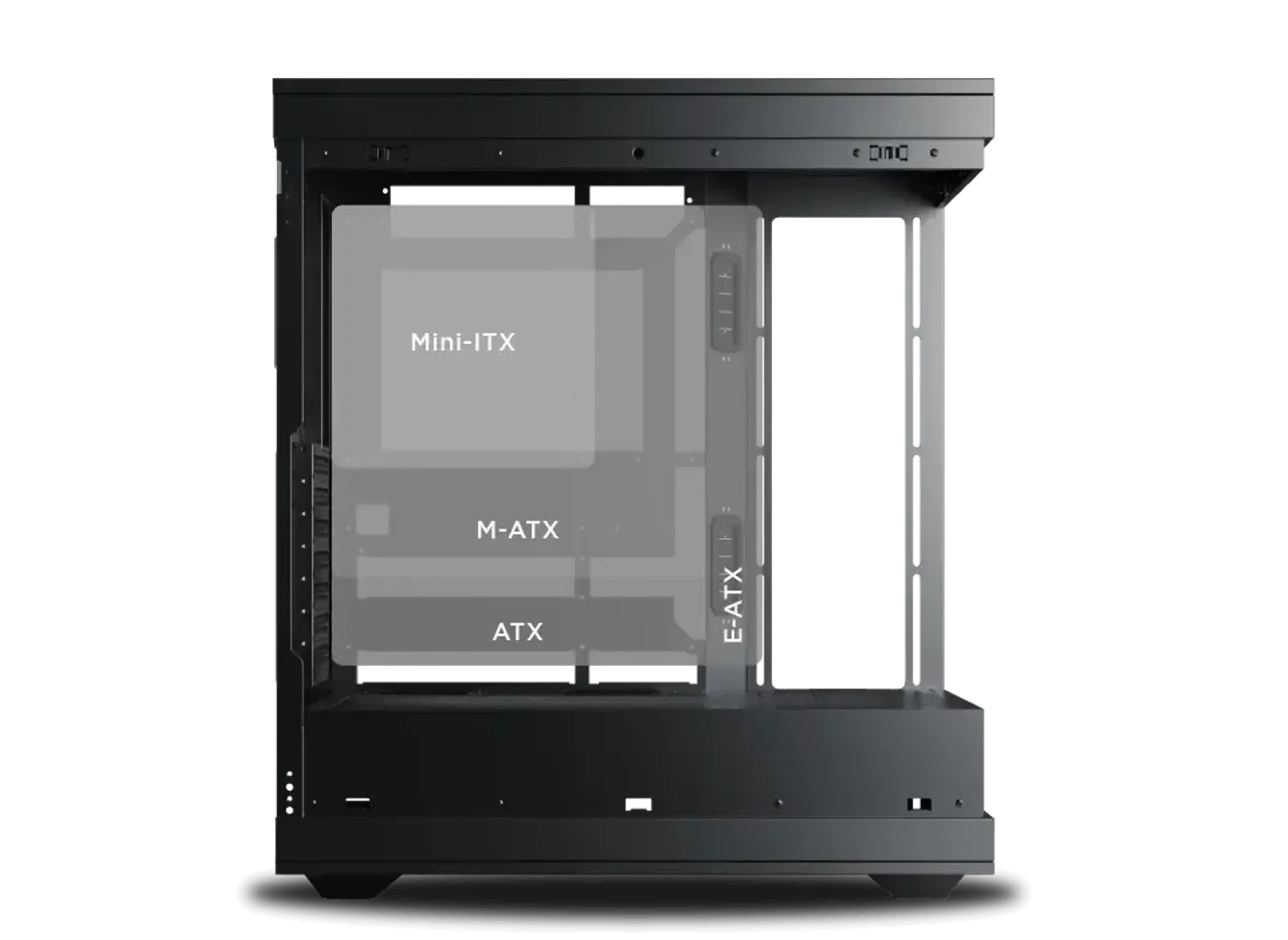
Motherboard Tray Supports Up To E-ATX
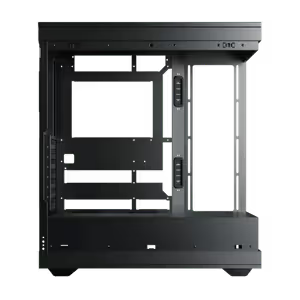
Motherboard support runs up to E-ATX, so a wide board with extra expansion slots and heavier power delivery mounts without modification. Smaller standards use the same tray, which keeps the chassis useful whether the build starts on a compact board now or moves to a larger platform in a later upgrade.
Motherboard Tray Supports Up To E-ATX
Motherboard support runs up to E-ATX, so a wide board with extra expansion slots and heavier power delivery mounts without modification. Smaller standards use the same tray, which keeps the chassis useful whether the build starts on a compact board now or moves to a larger platform in a later upgrade.
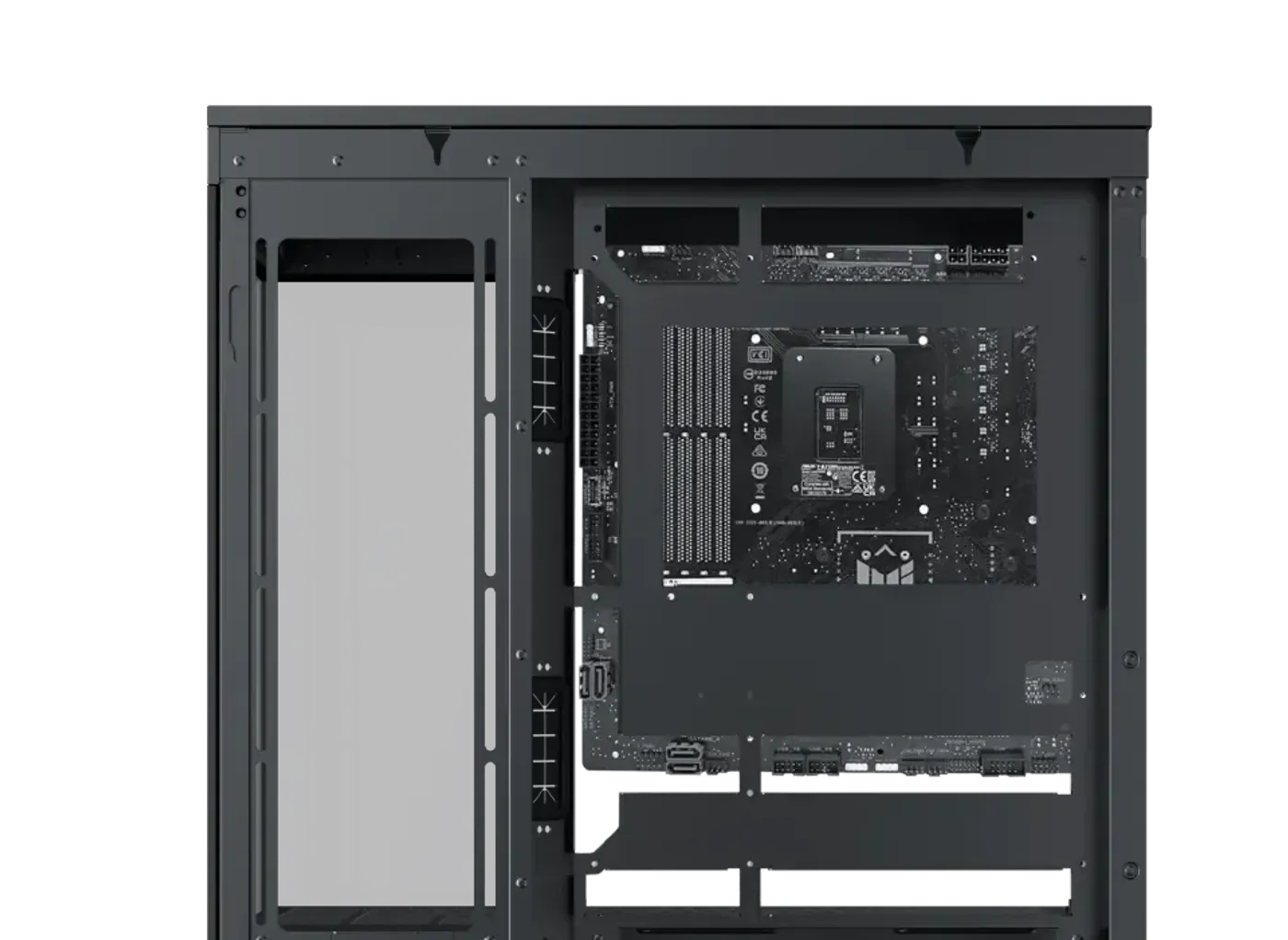
Takes ATX Back Plug Motherboards Including Project Zero
The Meta is compatible with ATX back plug motherboards, which route their connectors out of the rear of the board for a build with no visible cables. Listed compatible models include the ASUS TUF B760M-BTF WIFI-D4, the ASUS TUF-Gaming-B760M-BTF-WIFI-D4, the MSI Z790 PROJECT ZERO and the COLORFUL CVN B760M-BACK FROZEN-WIFI V20, with more models to follow.
Takes ATX Back Plug Motherboards Including Project Zero
The Meta is compatible with ATX back plug motherboards, which route their connectors out of the rear of the board for a build with no visible cables. Listed compatible models include the ASUS TUF B760M-BTF WIFI-D4, the ASUS TUF-Gaming-B760M-BTF-WIFI-D4, the MSI Z790 PROJECT ZERO and the COLORFUL CVN B760M-BACK FROZEN-WIFI V20, with more models to follow.
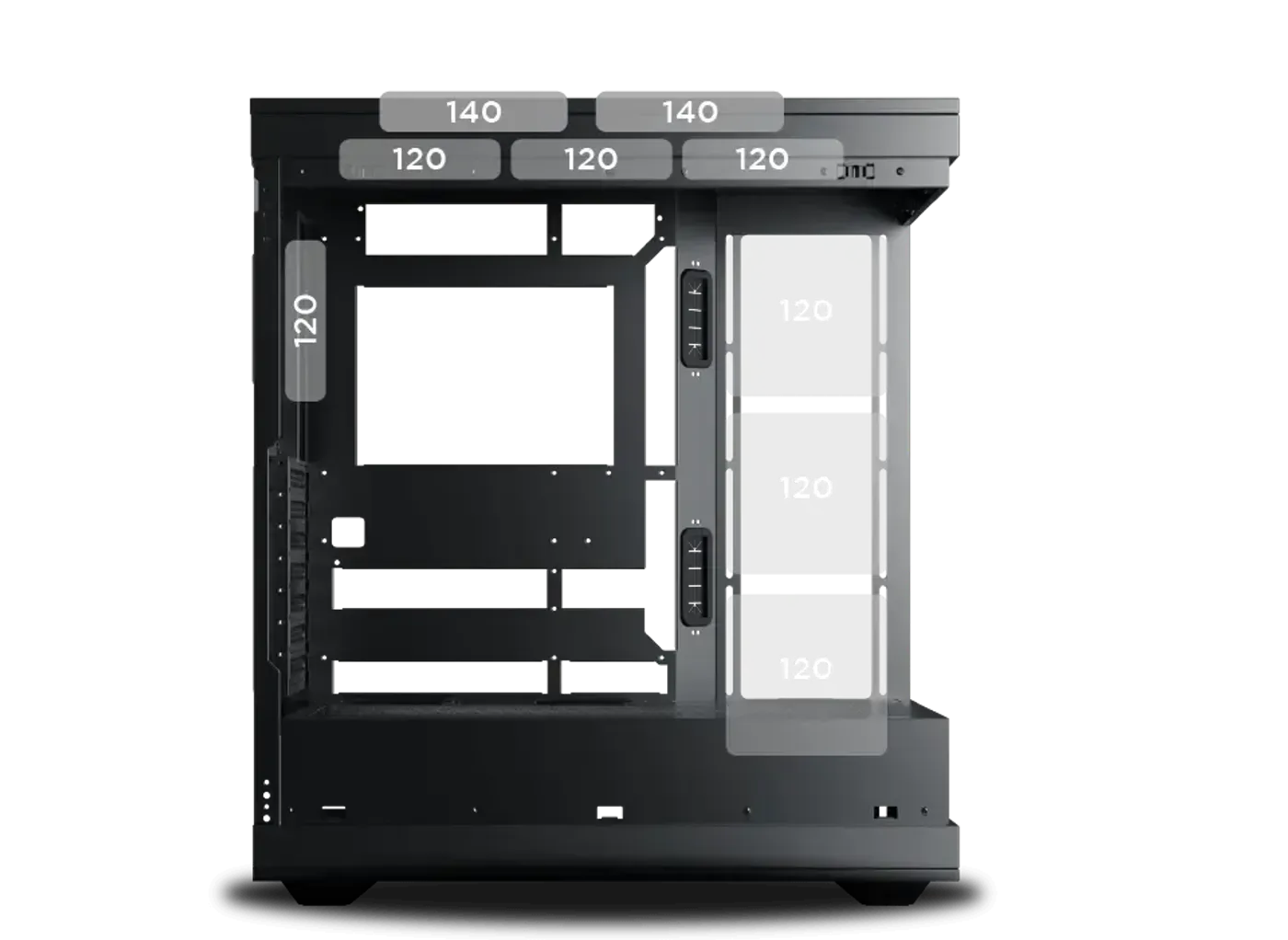
Fan Mounts On Top, Motherboard Panel And Rear
The top takes three 120 mm fans or two 140 mm fans, the motherboard panel takes three 120 mm fans and the rear takes one 120 mm fan. Those three banks let you set up a full intake and exhaust path, with the motherboard panel feeding air straight onto the components that generate the most heat.
Fan Mounts On Top, Motherboard Panel And Rear
The top takes three 120 mm fans or two 140 mm fans, the motherboard panel takes three 120 mm fans and the rear takes one 120 mm fan. Those three banks let you set up a full intake and exhaust path, with the motherboard panel feeding air straight onto the components that generate the most heat.
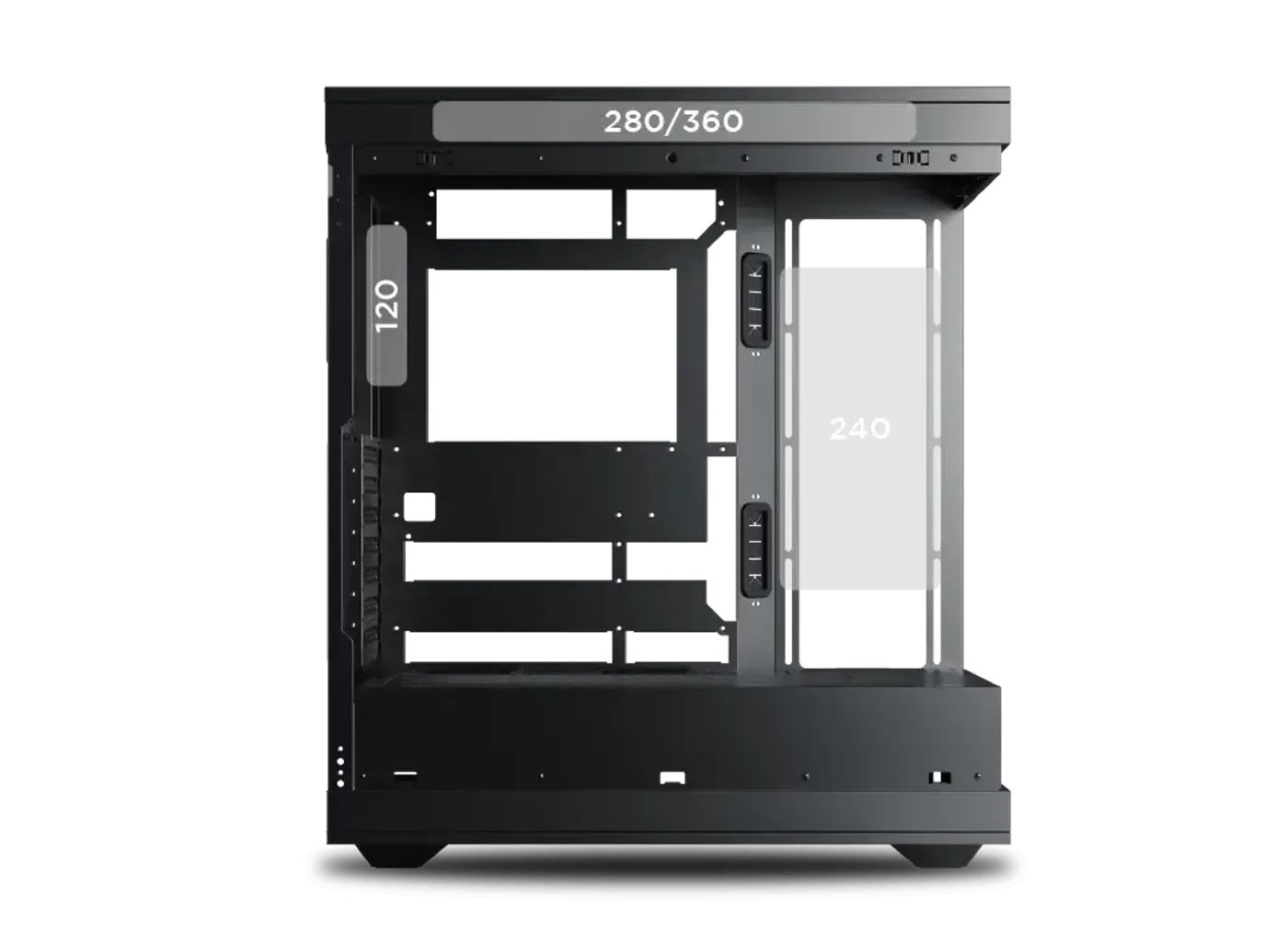
Radiators Up To 360 mm On The Top
Liquid cooling support covers a 280 or 360 mm radiator on top, a 240 mm on the motherboard panel for E-ATX boards up to 28.5 cm wide, a 120 mm at the rear and a 120 mm at the bottom. Four positions mean a large all-in-one cooler does not have to displace the case's main exhaust.
Radiators Up To 360 mm On The Top
Liquid cooling support covers a 280 or 360 mm radiator on top, a 240 mm on the motherboard panel for E-ATX boards up to 28.5 cm wide, a 120 mm at the rear and a 120 mm at the bottom. Four positions mean a large all-in-one cooler does not have to displace the case's main exhaust.
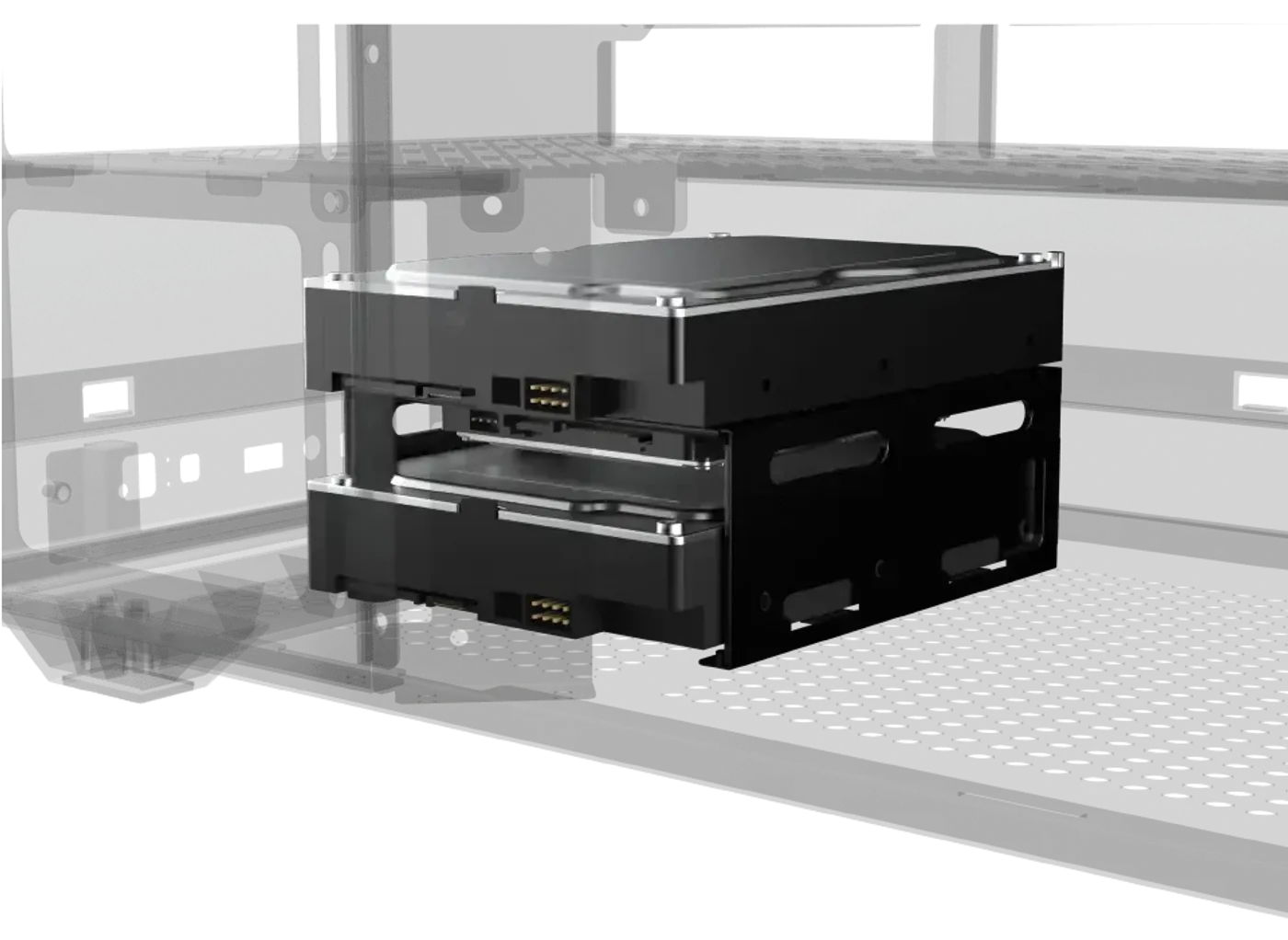
HDD Cage Holds Two 3.5-Inch Drives
The hard drive cage has space for two 3.5-inch drives, which is enough for a pair of high-capacity mechanical disks used for game libraries, recordings or backups. Keeping the bulk storage in a dedicated cage means those drives sit clear of the airflow path rather than blocking it midway through the chassis.
HDD Cage Holds Two 3.5-Inch Drives
The hard drive cage has space for two 3.5-inch drives, which is enough for a pair of high-capacity mechanical disks used for game libraries, recordings or backups. Keeping the bulk storage in a dedicated cage means those drives sit clear of the airflow path rather than blocking it midway through the chassis.
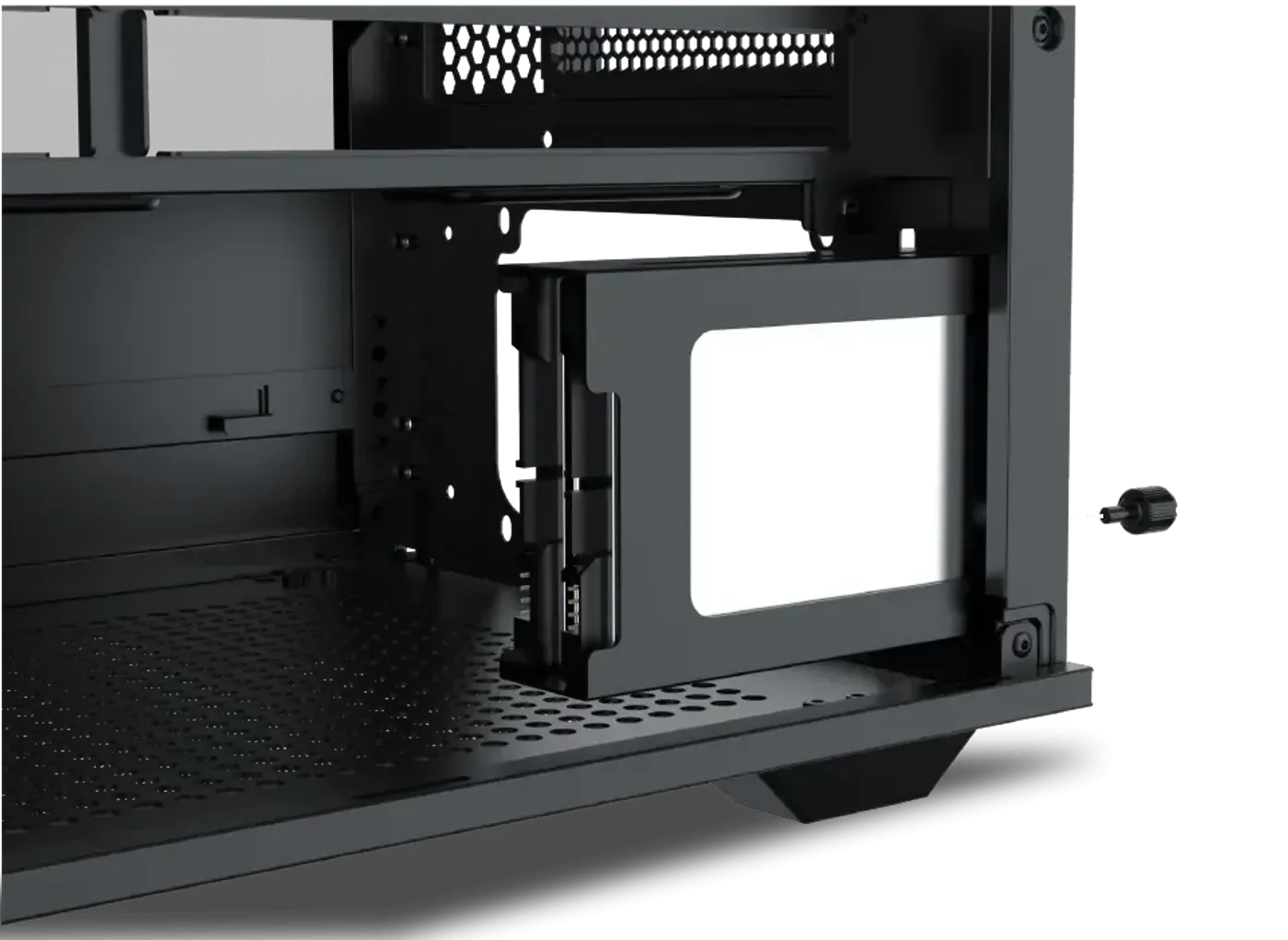
SSD Cage Takes Two 2.5-Inch Drives
A separate SSD cage holds two 2.5-inch drives, so solid state storage mounts independently of the mechanical cage. Running the two cages apart means a boot SSD and a second fast drive can be fitted without disturbing the hard drives, and it gives the build four total drive positions across both cages.
SSD Cage Takes Two 2.5-Inch Drives
A separate SSD cage holds two 2.5-inch drives, so solid state storage mounts independently of the mechanical cage. Running the two cages apart means a boot SSD and a second fast drive can be fitted without disturbing the hard drives, and it gives the build four total drive positions across both cages.
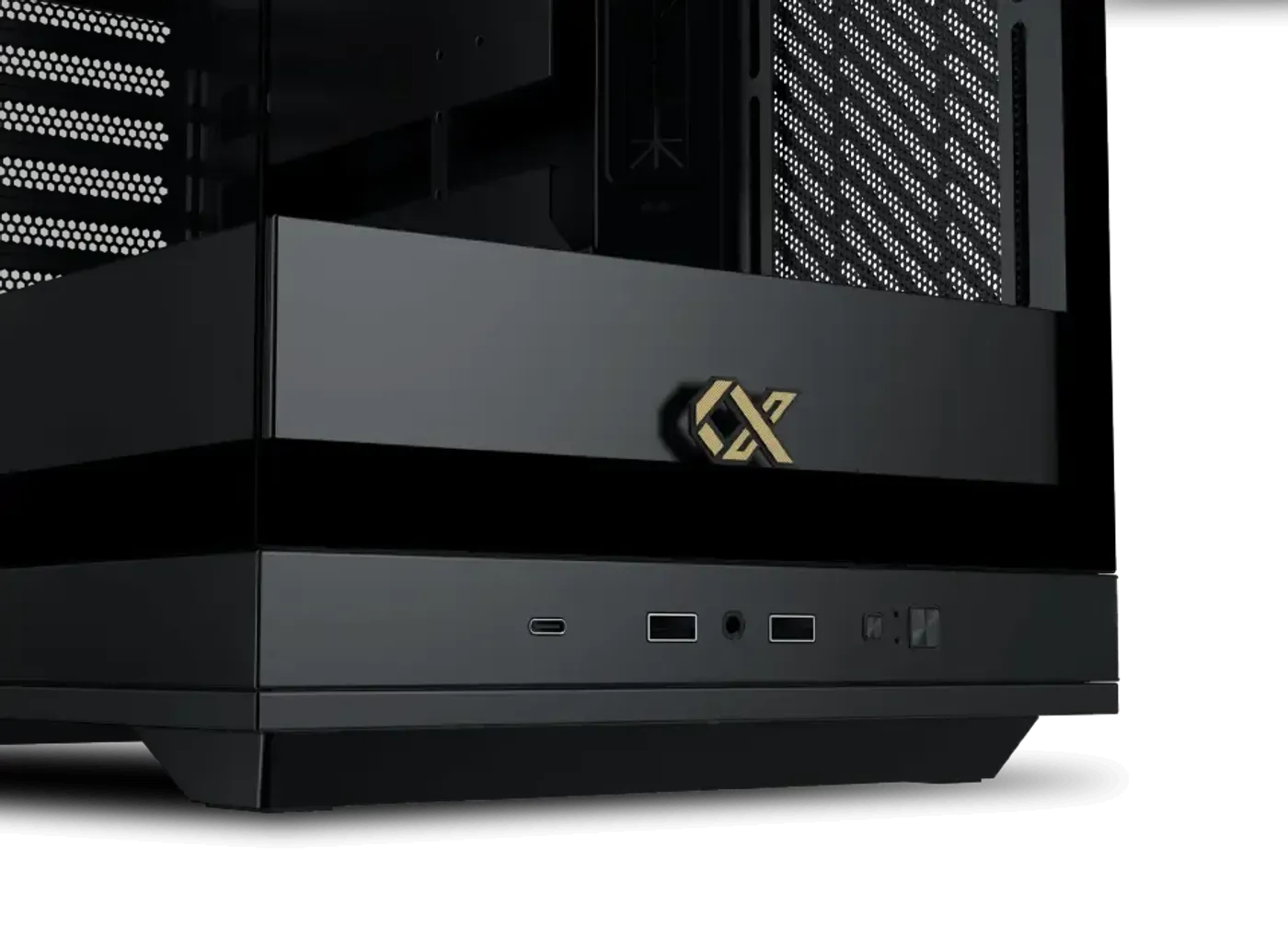
Front I/O Includes USB-C And Two USB 3.0
The front-mounted I/O carries a power button, a reset button, one USB-C port, two USB 3.0 ports and an HD audio jack. Having USB-C on the front panel matters for current phones, portable drives and headsets, since it saves reaching around to the motherboard's rear I/O every time one of them is plugged in.
Front I/O Includes USB-C And Two USB 3.0
The front-mounted I/O carries a power button, a reset button, one USB-C port, two USB 3.0 ports and an HD audio jack. Having USB-C on the front panel matters for current phones, portable drives and headsets, since it saves reaching around to the motherboard's rear I/O every time one of them is plugged in.
FAQ
Frequently Asked Questions
Everything you need to know about this product
Motherboard support runs up to E-ATX, along with the smaller form factors.
Yes, it is compatible with ATX back plug motherboards including the MSI Z790 PROJECT ZERO and the ASUS TUF B760M-BTF WIFI-D4.
The case supports graphics cards up to 400 mm long.
Yes, the Meta supports vertical GPU installation.
CPU cooler clearance is up to 175 mm.
The power supply unit limitation is 220 mm.
280 or 360 mm on top, 240 mm on the motherboard panel for E-ATX boards up to 28.5 cm wide, 120 mm at the rear and 120 mm at the bottom.
Three 120 mm fans without the fan cover, or two 120 mm fans with the cover fitted.
Yes, filters are pre-installed on the top, bottom and right side.
Yes, a standard blade fan at the rear and a reverse blade fan on the motherboard panel side.
The HDD cage takes two 3.5-inch drives and the SSD cage takes two 2.5-inch drives.
Yes, the front I/O has one USB-C port, two USB 3.0 ports and an HD audio jack.

AI-Generated Content: These FAQs are generated by an automated AI system and may contain inaccuracies or omissions. Evetech makes no warranties, express or implied, regarding their completeness or reliability. For definitive information, please refer to the manufacturer's official specifications.
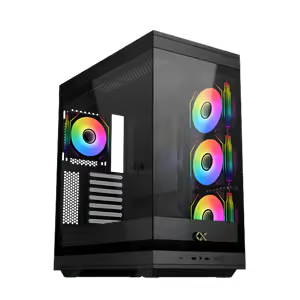
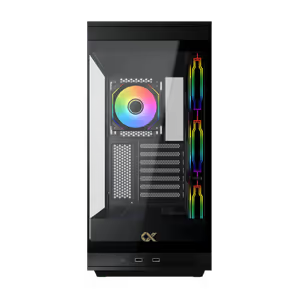
Please Note: Product images are for illustrative purposes only and may differ from the actual product.
Choose your
own PC
Hand-pick every part with live stock, compatibility, and instant pricing.
Try the new builderPrice Inc. Vat
R 1,799
Save R 700
ListR 2,499
1799Change Quantity:
In Stock with Evetech
Choose your
own PC
Hand-pick every part with live stock, compatibility, and instant pricing.
Try the new builderXigmatek Meta Mid Tower Gaming Case Black