Sim Racing Setup Guide
How to build a sim racing rig.
The wheel and pedals are what your hands and feet actually touch — that's where realism lives. Everything else is built around making those inputs feel correct. Here's the buy-order that turns a desk into a cockpit.
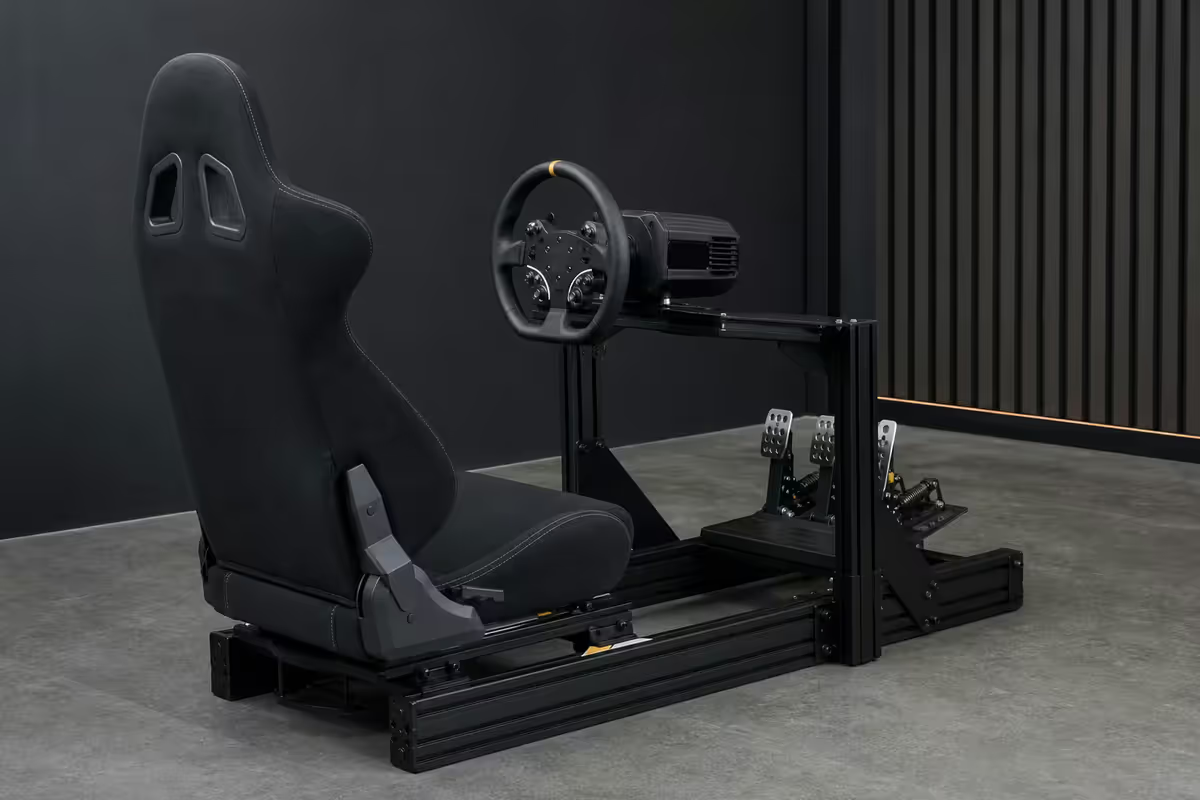
The 4 pillars of a sim racing rig
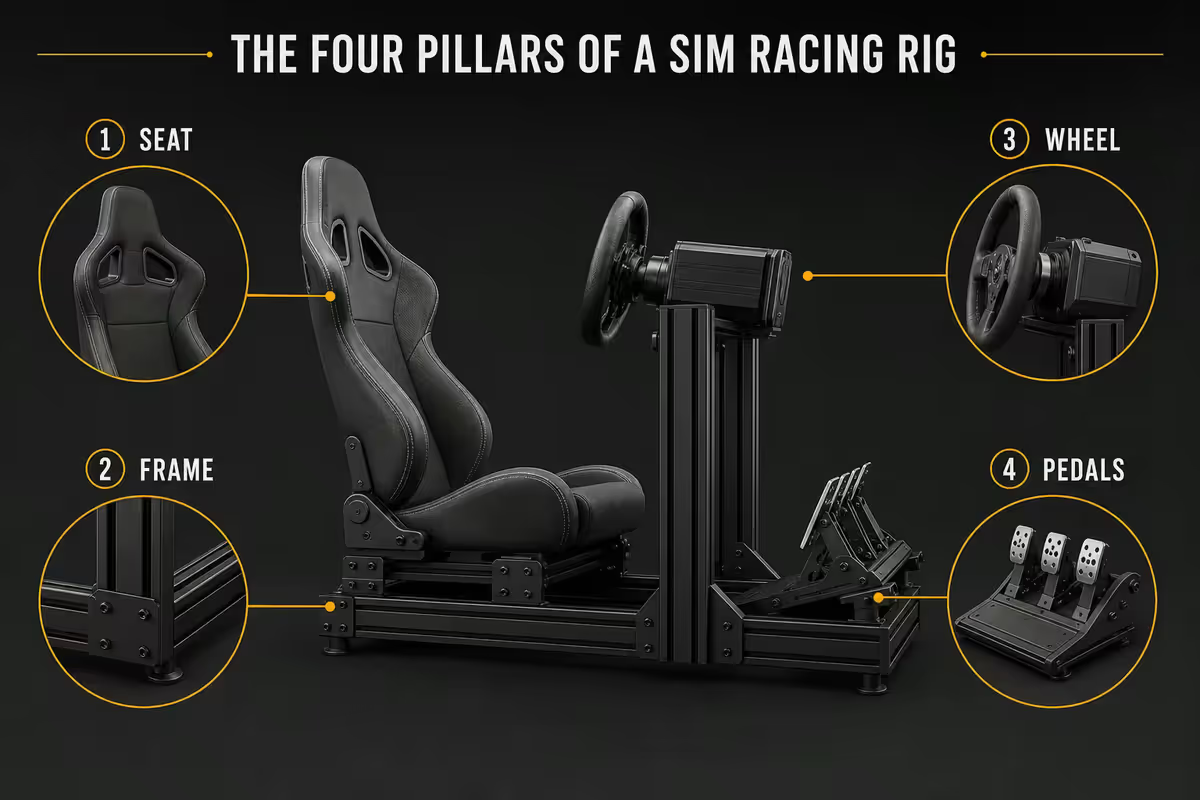
Every sim rig — from a R5,000 desk-clamp starter to a R200,000 motion platform — is built from the same four parts. Get these right and everything else is polish. Get any of them wrong and no amount of extras will fix the feel.
| Pillar | What it controls | Failure mode if wrong |
|---|---|---|
| Wheel base + rim | Force feedback, steering precision | Cars feel numb, dead, "video-gamey" |
| Pedal set (load-cell brake) | Brake modulation, throttle control | Lock-ups, missed apexes, inconsistent laps |
| Cockpit chassis | Rigid mounting of wheel + pedals | Flex, wobble, wheel torque lifts the rig |
| Display (mono / triple / VR) | Peripheral vision, depth perception | Missed reference points, motion sickness |
Wheel base is the heart of the rig. Gear-driven units (Logitech G923, Thrustmaster T248) are entry-tier — strong enough for casual play, noisy and notchy on hard inputs. Belt-driven units (Thrustmaster T-GT II, Fanatec CSL Elite) feel dramatically more refined. Direct-drive (DD) bases — Moza R5/R9/R12, Fanatec CSL DD / DD2, Simucube 2 Sport/Pro — connect the motor shaft directly to the wheel and deliver true racing-car feel. The torque numbers (5 Nm entry DD, 12 Nm mid, 25 Nm enthusiast) tell you how aggressive the force feedback can get.
Pedals are where lap-times are actually made. A load-cell brake pedal measures pressure (not travel), which is how real racing brakes work. Upgrading from a potentiometer brake to a load-cell is the single largest "I'm suddenly faster" moment for most sim racers. Moza SR-P, Fanatec CSL Elite LC, Heusinkveld Sprint and Asetek Forte are the credible options.
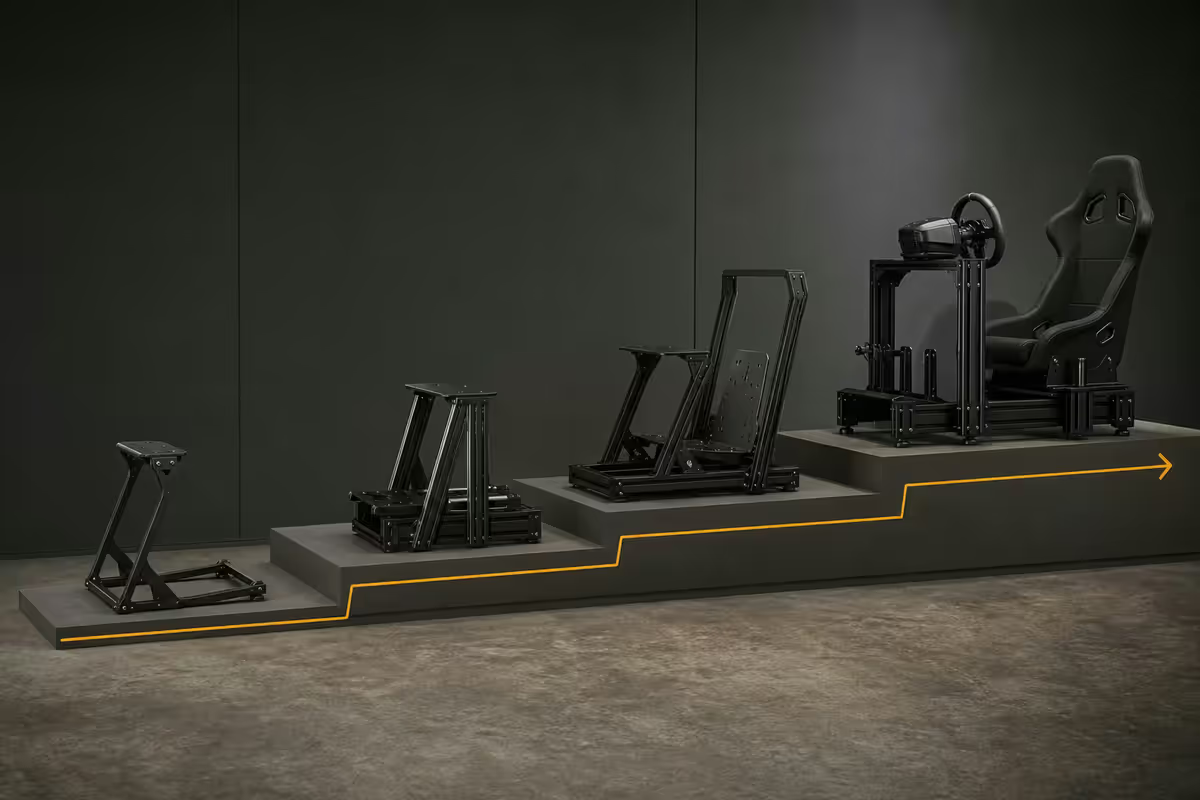
Cockpit chassis — the upgrade ladder
The chassis is the part most beginners underspend on and most experienced sim racers wish they'd bought first. There are four credible tiers, each with a clear ceiling.
Entry: foldable / tubular steel (R3,500 - R8,000)
Playseat Challenge, Playseat Trophy, Wheel Stand Pro. Fold-flat designs that work in a small flat or shared room. Holds Logitech G923 / Moza R3 / R5 force feedback without complaint. Above 8 Nm of wheel torque they start to flex visibly. Good as a starting point; you'll outgrow them within 6-12 months if you take the hobby seriously.
Mid: tubular steel cockpit (R8,000 - R20,000)
Next Level Racing GTRacer, F-GT, F-GT Lite, GTtrack. Welded tubular-steel frame with proper seat sliders, adjustable pedal plate angle and stable wheel deck. Handles up to ~15 Nm direct-drive cleanly. Locally stocked by Evetech and other SA retailers, so no import lead-time. The GTtrack is the sweet-spot for serious club racers who don't want to commit to aluminium-extrusion budgets.
Enthusiast: aluminium 80/20 extrusion (R20,000 - R55,000)
SimLab P1X, SimLab GT1 EVO, Trak Racer TR8 Pro. Industrial aluminium-profile (T-slot) construction — the same material used in CNC machine frames. Effectively zero flex up to 25 Nm wheel torque, infinitely adjustable, modular bolt-on extensions for triple-monitor mounts, shifter rails, button-box decks. Imported (3-6 week SA lead time for SimLab) but the build quality is generational. This is the chassis tier where the rig stops being a peripheral and starts being furniture.
Custom: DIY 80/20 extrusion rig (R8,000 - R30,000 in parts)
DIY route. Source 40x40mm aluminium extrusion locally (T-slot specialists in Joburg / CT), cut to length, bolt together with brackets. Total cost lands between a Next Level GTRacer and a SimLab P1X. Requires you to own (or borrow) a chop-saw and have one weekend free. Rewards: exact dimensions for your space, your monitor, your seat — and a learning curve into proper chassis engineering.
Seat type — bucket vs F1 vs reclining GT
The seat is what you sit in for hours at a time. Get it wrong and you'll quit the hobby blaming the wheel.
Racing bucket (Sparco-style, fixed-back). The serious choice. Used on every mid and enthusiast cockpit. Holds you firmly in place during heavy braking and direction changes. Often the OMP TRS-X, Sparco R100, Cobra Imola or generic FIA-style replicas. Requires harness slots cut into the seat back for a 4-point belt (recommended above mid-tier).
F1-style reclined (laid-back, low-slung). For formula and prototype racers — your legs extend forward, your back reclines almost flat. Cramped for tall drivers, divisive on shorter sessions, but utterly committed to the discipline. Common on SimLab GT1 EVO and Trak Racer F1 cockpits.
Reclining GT seat (couch-style). The entry-level Playseat option. Soft foam, reclining back, comfortable for an hour. Wrong choice above entry tier — the foam compresses under load and you slowly slide into the wheel during long stints.
Monitor count — single, triple or VR
The display question splits the sim community three ways. Each has a real argument.
| Setup | Best for | SA all-in cost |
|---|---|---|
| Single 32-inch ultrawide (3440x1440) | Best value, easiest to live with | R8k-R14k |
| Single 49-inch super-ultrawide (5120x1440) | One-screen immersion, simple cabling | R20k-R30k |
| Triple 27-inch (3x 2560x1440) | Serious league racers, 1:1 mirrors | R20k-R35k + triple mount R4k |
| Triple 32-inch (3x 2560x1440 or 4K) | Enthusiast, full peripheral vision | R35k-R60k |
| VR — Meta Quest 3 | Maximum immersion, wireless | R10k-R12k |
| VR — Pimax Crystal / Crystal Light | Enthusiast VR, very high resolution | R30k-R45k import |
Single ultrawide is the right call for most SA sim racers. One DisplayPort cable, one stand, one calibration. The 32-inch 21:9 form factor matches roughly the same field of view you get in a real GT3 car looking through the windscreen. You miss the side-mirror views, but for casual to serious league racing, it's sufficient.
Triple monitors let you see your side mirrors at glance angle — a huge advantage in close racing. They also need a stronger GPU (each monitor adds another 1440p or 4K of pixel load), a triple-monitor stand or chassis-mounted bracket, and roughly 1.5 metres of desk width. Most serious SA sim racers run triples.
VR is the most immersive option by a wide margin — you literally turn your head to look through corners and check mirrors. Meta Quest 3 (R10k-R12k) is the surprise champion: wireless, sharp enough for sim, and works as a standalone device too. Pimax Crystal is the enthusiast pick (and a 4080-class GPU minimum). Downsides: harder to use SimHub / Discord / chat overlays, and your face gets warm during long sessions.
Across the hundreds of sim rigs we've put together for SA customers at Evetech, the pattern is brutally consistent. The rigs that get used 5 nights a week are always the ones built wheel-first, chassis-second. The rigs that gather dust within 3 months are the ones where the customer spent the budget on a giant curved screen and a soft Playseat. Every single time. Inputs make the hobby. Display makes the photos. Build the inputs first.
Evetech Hardware Team — Behind the Build
Bass shakers and tactile immersion
Once your wheel, pedals, chassis and display are sorted, the next-best upgrade isn't another monitor — it's tactile feedback through your body.
A bass shaker (sometimes called a tactile transducer or buttkicker) is a heavy electromagnetic actuator that bolts to your seat frame or pedal plate. Driven through SimHub with live telemetry from the game, it rumbles with engine RPM, vibrates on kerb strikes, shudders during wheel-lock, and thumps when you hit a rumble strip. It adds the missing physical channel that no headset or monitor can deliver.
SA-available options:
- Buttkicker Gamer Plus — purpose-built kit with amplifier included. R4,500-R6,500. Plug-and-play.
- Dayton Audio TT25 — small puck-style shaker. R600-R900 each, but needs a separate amp (R1,500). Best price/performance.
- Earthquake Sound MiniShaker — slightly larger Dayton-style. R1,200-R1,800 each.
- SimHub — free software that drives all of the above with live telemetry from iRacing, ACC, Le Mans Ultimate, AMS2, Dirt Rally, F1 25, etc.
A two-shaker setup (one on the seat back, one on the pedal plate) feels noticeably more directional than a single shaker. Most SA sim racers start with a Buttkicker Gamer Plus, then graduate to a pair of Daytons + budget amplifier once they understand what they like.
Shifter and handbrake — optional but disciplined
Whether you need a shifter depends entirely on which cars you drive. Most modern sim disciplines don't.
F1, GT3, prototypes, modern touring cars — paddle shifters on the wheel rim. No external shifter needed.
Historic GT, classic Le Mans, NASCAR Cup pre-2020, drift, rally — H-pattern or sequential shifter. Options stocked in SA:
- Logitech G shifter — entry, R1,800-R2,500. H-pattern only. Pairs with G923. Notchy but functional.
- Thrustmaster TH8A — mid, R3,500-R4,800. H-pattern + sequential, metal construction. The sensible upgrade.
- Moza HBP — H-pattern with magnetic detents. R5,500-R7,500. Pairs cleanly with Moza wheel ecosystem.
- Fanatec ClubSport SQ V1.5 — enthusiast, R8,500-R11,000. Both H-pattern and sequential, real-quality build.
Handbrake only matters for drift and rally. The Moza HBP, Fanatec ClubSport handbrake and Heusinkveld handbrake are the credible options (R3,500-R8,500). Skip the handbrake until you know you'll use it.
Common sim rig mistakes
Buying the monitor before the chassis. The most common mistake. A 49-inch ultrawide on a desk with a Logitech G923 will feel less involving than a 27-inch on a SimLab cockpit with a Moza R9. Display is the last pillar to upgrade, not the first.
Soft seat with serious force feedback. A foam Playseat seat compresses under heavy braking g-forces transmitted through your legs. You slowly slide forward, your reference points shift, your laps get worse over the course of a stint. Firm bucket seat is mandatory above entry tier.
Undersized desk-clamp rig with direct-drive wheel. The desk physically lifts off the floor during snap-oversteer. We've seen Moza R9 setups rip the screw threads out of IKEA desks. If you're going direct-drive, you need a real cockpit.
No rig at all — wheel on lap, pedals on carpet. The pedals slide, the wheel wobbles, you tense your shoulders for 90 minutes and quit the hobby. Even a R3,500 Wheel Stand Pro is dramatically better than no rig.
Buying the shifter and handbrake before the pedals. Shifter and handbrake are discipline-specific polish. A load-cell brake upgrade is foundational. Don't put extras before the core inputs.
Forgetting the PC budget. A R80,000 rig connected to a 5-year-old GTX 1660 will run iRacing at 45 fps with stutters. Budget at least R20k-R30k of headroom for a credible 1440p gaming PC; more if you're going triple monitors or VR.
Key takeaways
- Buy in order: wheel + pedals + seat first, monitor and shifter later. Inputs make the hobby; display makes the photos.
- Load-cell brake pedal is the single largest "I'm faster" upgrade. Replace the brake before upgrading the wheel.
- Above 5 Nm wheel torque you need a real cockpit chassis — Next Level GTRacer (R10k-R15k) or SimLab P1X (R25k-R40k).
- Single 32-inch ultrawide is the best-value display. Triples for serious league racers, VR for maximum immersion.
- Add a bass shaker once the foundation is in place — it adds the missing physical feedback no monitor can deliver.
Frequently asked questions
What do I actually need to build a sim racing rig?
Four pillars: a force-feedback wheel base + rim, a pedal set (ideally load-cell brake), a rigid cockpit chassis, and a display. Starter rig R15k-R25k, mid-tier R40k-R70k, enthusiast R80k-R150k+.In what order should I buy the parts?
Wheel + pedal + seat first, monitor + shifter later. The wheel and pedals are what your hands and feet touch; a rigid cockpit makes them feel correct. Display matters but a 32-inch you already own is fine to start.Do I really need a cockpit, or can I use my desk?
You need a cockpit. Desk-clamp wheels cap out at ~5 Nm; above that the desk lifts off the floor. A proper aluminium-extrusion or steel cockpit is non-negotiable above entry tier.Single ultrawide, triple monitors or VR?
Single 32-inch ultrawide is best value (R8k-R14k). Triple 27-inch for serious league racers with side-mirror needs. VR (Quest 3 or Pimax Crystal) for maximum immersion at the cost of overlay convenience.What's a bass shaker and do I need one?
A bass shaker vibrates with low-frequency telemetry — engine, kerbs, lock-ups. Adds the physical channel no monitor delivers. Buttkicker Gamer Plus (R4,500-R6,500) or Dayton Audio TT25 + amp (R2,500-R3,500) are the SA picks.What about shifter and handbrake?
Optional. F1/GT3 use paddle shifters on the wheel rim. Historic, drift and rally need an H-pattern or sequential. Buy after wheel/pedals/chassis/display — discipline-specific, not foundational.How long does a full sim rig build take to assemble?
Playseat foldable: 30 minutes. Next Level GTRacer: 60-90 minutes. SimLab P1X aluminium-profile: 3-5 hours first time. Plan the rig as a 3-12 month upgrade ladder, not one weekend.Can I run this on my existing PC?
Single 1080p/1440p: RTX 4060 / RX 7600 is enough. Triple 1440p: RTX 4070 Super or RX 7800 XT. VR: Quest 3 wants RTX 4070 minimum, Pimax Crystal pushes 4080 Super or 4090. CPU single-thread matters more than core count.
Get the Evetech app
Exclusive app-only prices, daily flash sales, and free delivery on orders over R4,000 — download the app and start saving.