Sim Racing Wheel Buying Guide
How to choose a racing wheel.
Sim racing has three big choices stacked on top of each other — drive type, force feedback Nm, and pedal mechanism — and most buyers fixate on the wheel while ignoring the pedals that actually decide their lap times. Here's the order that matters.
- force feedback ladder
- 2-25 Nm
- SA price range
- R3.5k-R50k+
- rotation lock-to-lock
- 900°-1080°
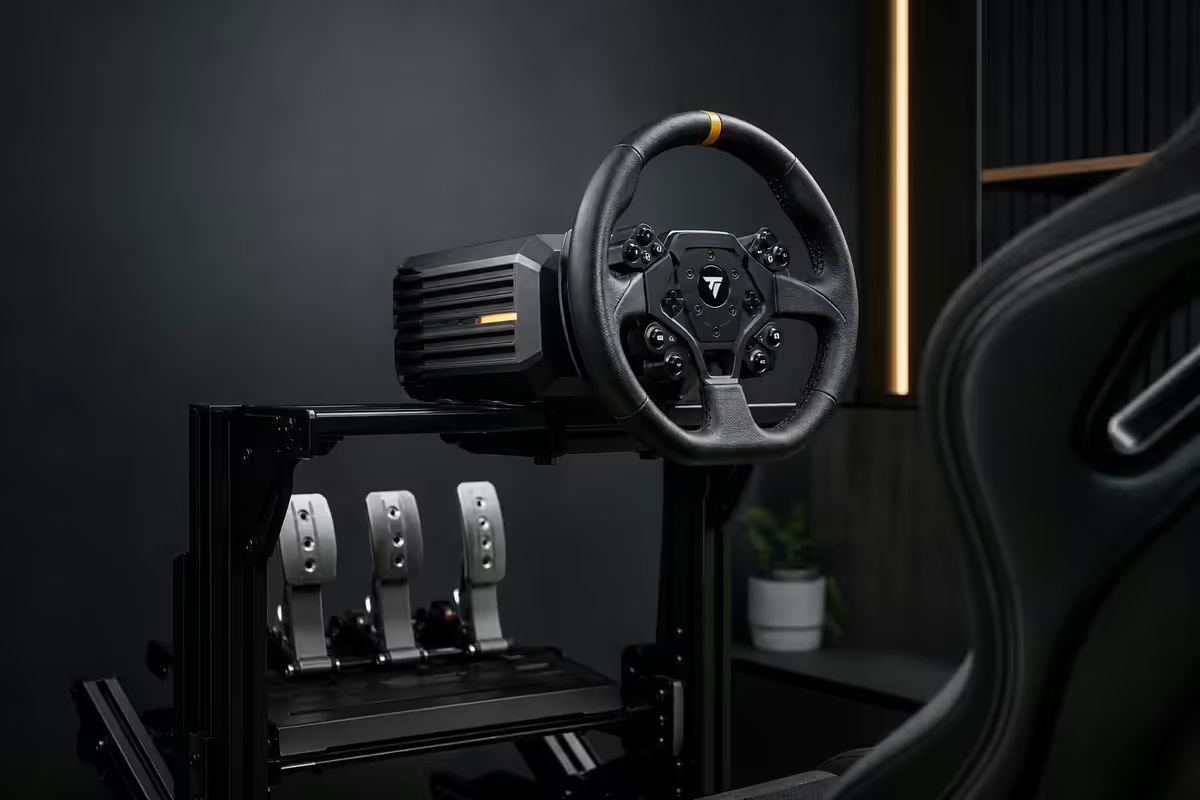
Drive types — gear, belt, direct
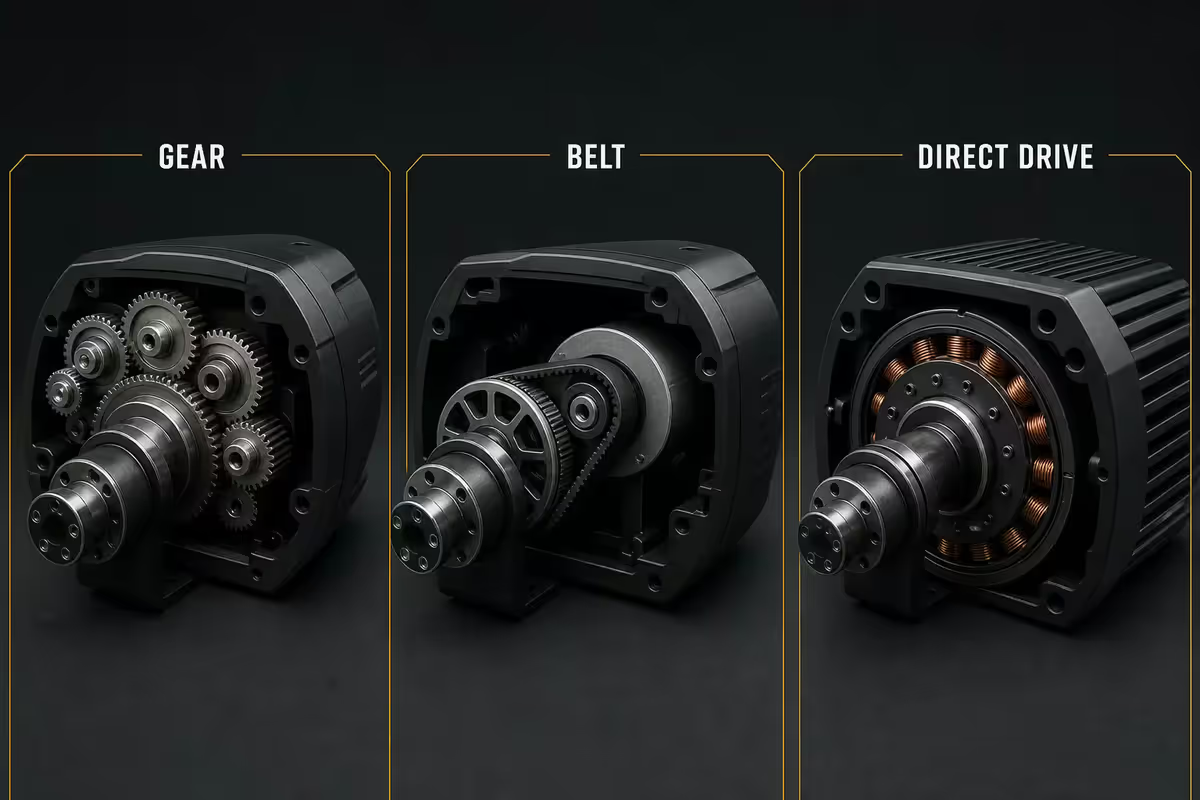
Every racing wheel translates motor torque into force you feel through the rim. The mechanism connecting the motor to the rim is the single biggest factor in how a wheel feels — bigger than brand, bigger than Nm rating on paper.
| Drive type | Best for | Real-world feel |
|---|---|---|
| Gear drive | Entry, casual racers, console testers | Notchy, audible, ~2 Nm peak |
| Belt drive | Mid-range smoothness on a budget | Quieter, smoother, 3-6 Nm |
| Direct drive (DD) | Anyone serious about sim racing | Crisp, strong, 5-25 Nm |
Gear-drive wheels (Logitech G29/G923, Thrustmaster T128/T248) use a small motor coupled to the rim through a plastic or metal gear set. They're cheap, durable, and have a recognisable mechanical "notchy" feel through the rim — you can feel the gear teeth meshing during quick direction changes. Fine for entry-level. Forgiving on a desk.
Belt-drive wheels (Thrustmaster T300 RS, T-GT II) use a toothed belt between motor and rim. The belt absorbs the gear-mesh notchiness, so the wheel feels smoother and quieter. Historically the mid-range upgrade — but as direct drive has dropped in price, belt drive is increasingly squeezed between cheap gear and affordable DD.
Direct-drive wheels (Moza R5/R9/R12, Fanatec GT DD Pro, Simagic Alpha Mini, Fanatec ClubSport DD) bolt the wheel rim straight onto the motor shaft. No gears, no belts, no signal loss. You feel the front tyres in a way gear drive cannot fake — kerbs, snap oversteer, the moment grip breaks loose. The catch is the motor needs to be big enough to deliver the torque, which is why DD wheelbases are heavier, bigger and more expensive.
Force feedback — how much Nm do you need?
Peak torque in Newton-metres (Nm) is the headline spec on every modern wheelbase. It's also the spec most likely to mislead you into buying something inappropriate for your setup.
Here's the actual ladder:
- ~2 Nm — entry gear drive. Logitech G29, Thrustmaster T128. You can play with one hand for fun. Real F1/GT cars feel nothing like this, but you'll have a great time anyway.
- 3-5 Nm — belt drive and entry DD. Thrustmaster T300, Moza R3, Moza R5. Approaching the ballpark of a real road car at low speeds. Comfortable on a sturdy desk.
- 8-9 Nm — mid direct drive. Moza R9, Fanatec GT DD Pro. This is the sweet-spot for most serious sim racers. Realistic-feeling without becoming exhausting on long stints. Marginal on a desk; ideal on a rig.
- 12-15 Nm — enthusiast DD. Moza R12, Simagic Alpha Mini, Fanatec ClubSport DD. Realistic GT3 / F1 muscle requirements. Mandatory rig.
- 20-25 Nm — pro DD. Moza R16, Simagic Alpha U, Asetek La Prima/Forte/Invicta, Fanatec ClubSport DD+. Will hurt you if you're not paying attention. Pro racers and serious enthusiasts only.
Reality check: most people drive 8 Nm wheels at 70-80% of max torque, and 12 Nm wheels at 50-60%. There's no need to chase peak Nm beyond your forearms. A well-tuned 5 Nm wheel feels better than a poorly-tuned 12 Nm wheel every time.
Wheelbase + rim — the ecosystem decision
Modern sim racing splits the wheel into two parts. The wheelbase is the motor, the box that bolts to your rig. The rim is the round part you hold. They connect via a quick-release coupling — pull a lever, swap a GT-style round wheel for an F1-style rectangular one in 10 seconds.
This matters because it changes your upgrade path forever:
- All-in-one wheels (Logitech G29/G923, Thrustmaster T128/T248/T300, Hori RWA): base and rim are one inseparable unit. Cheaper. No upgrade path within the brand — when you want more force feedback, you sell the whole thing and start over.
- Modular ecosystems (Moza, Fanatec, Simagic, Asetek): the wheelbase has a quick-release. You can buy a GT3 rim today, a Formula-style rim next year, and a rallycross rim after that — all on the same base. Upgrading the wheelbase later means keeping all your rims.
Within ecosystems, rims usually only work with the same brand's bases — though Fanatec and Simagic offer wider compatibility through standardised QR adapters. Moza rims will not bolt onto a Fanatec base without an adapter. Plan your ecosystem choice the same way you'd plan a camera-lens system: switch costs are real.
Pedals — the upgrade that actually wins races
Most first-time sim racers focus 100% on the wheel and 0% on the pedals. This is backwards. The wheel decides how a corner feels; the pedals decide your lap times.
Three pedal mechanisms exist:
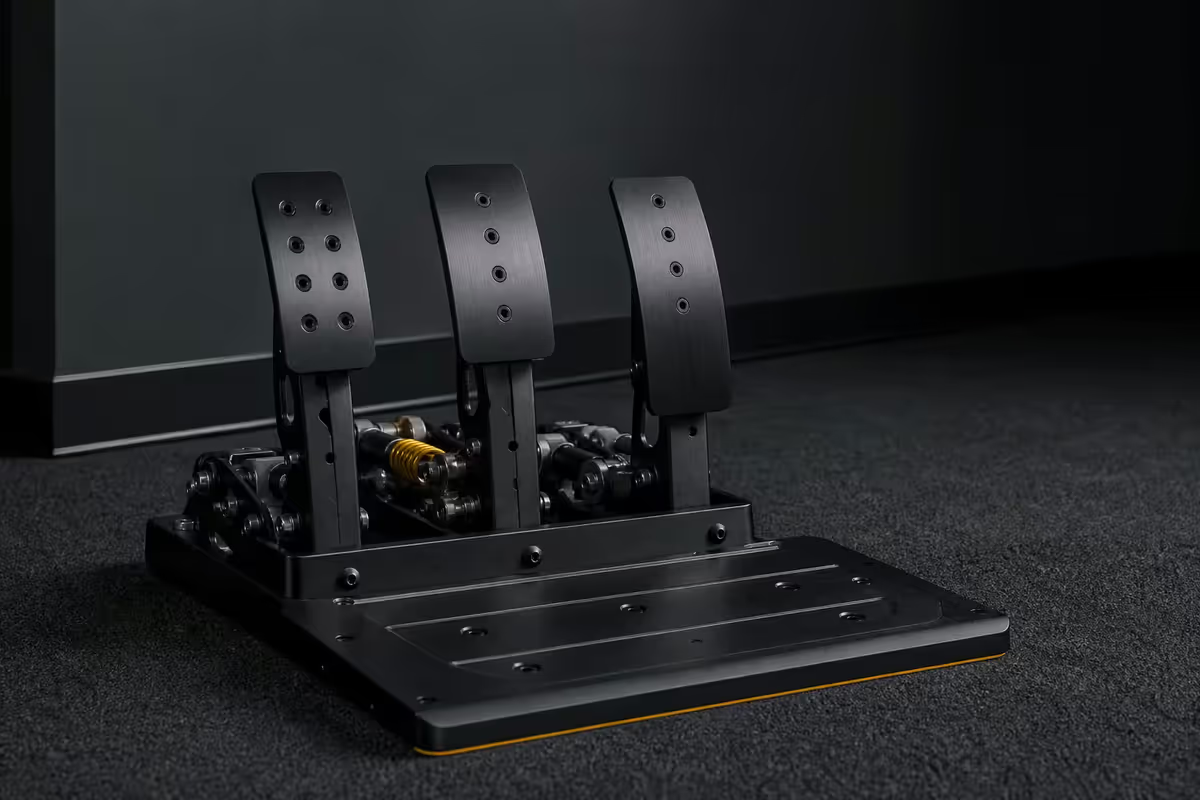
- Potentiometer pedals (Logitech G29 stock, Thrustmaster T128 stock): measure pedal travel. Push the pedal down, the sensor reads the angle. Cheap. Mushy. Inconsistent at threshold braking — the input you need at lap-time level.
- Hall-effect pedals (Thrustmaster T-LCM, Moza SR-P, Fanatec CSL): magnetic sensors that don't wear out. Precise enough for most racers. Mid-tier.
- Load-cell brake pedals (Moza CRP, Simagic P1000, Fanatec ClubSport V3, Heusinkveld Sprint): measure how hard you push, not how far. Exactly like a real car. Brake modulation goes from guessing to feeling.
The single biggest upgrade most sim racers ever make is potentiometer brake to load-cell brake. The difference in trail-braking — releasing brake pressure as you turn in — is night and day. Lap times drop by 0.5-1.5 seconds on most tracks within a week of practice.
Rig, cockpit and mounting — the forgotten budget line
A racing wheel is only as good as what it's bolted to. Flex in the desk or rig translates directly into mushy, imprecise force feedback. Up to about 5 Nm you can clamp safely to a sturdy desk. Beyond that you need a rigid mount.
Wheel stand (Next Level Racing Wheel Stand 2.0, Playseat Challenge X — R3 500-R6 500): a folding metal frame holding wheel and pedals at the right angles. Good for limited space. Marginal above 8 Nm.
Cockpit / seat-and-rig combo (Sim-Lab P1-X, Trak Racer TR8, Next Level Racing GTtrack — R8 000-R20 000): full aluminium-profile frame with a racing seat. Bolt-down strong enough for 25 Nm DD. The serious answer.
DIY 80/20 aluminium-extrusion rig: build your own from raw extrusion and brackets. Cheapest at scale, requires patience. SA suppliers exist but extrusion lead times are 2-4 weeks.
Many SA sim racers underestimate the rig cost. Budget the rig at the same line item as the wheel — it's that important.
Calibration, drivers and software setup
A new wheel out of the box is almost never tuned correctly. Default force-feedback settings are generic and tend to feel either dead or violent. Time spent on initial calibration pays back forever.
What you need: the manufacturer's PC software (Moza Pit House, Fanatec Control Panel, Simagic SimPro Manager, Thrustmaster Control Panel, Logitech G HUB), 15-30 minutes, and one familiar track to test on.
Procedure: set rotation to match your sim (900° for most road cars and GT, 540° for open-wheel, 1080° for rally — usually the sim auto-detects). Set peak force to 100% in software, then attenuate inside each game's settings to taste. Calibrate pedal travel and load-cell pressure for each pedal individually.
Avoid: stacked filters and dampers (kills feel), running max Nm if you're new (fatigues you in 20 minutes), and chasing other people's settings online without baselining your own first. Every rig and pair of hands is different.
Recommended racing wheels by use case
| Use case | Pick | SA price |
|---|---|---|
| Entry / first wheel | Logitech G29 or G923 (wheel + pedals) | R5 500-R7 500 |
| Budget / console (Xbox) | Thrustmaster T128 (Xbox or PS variant) | R4 500-R5 500 |
| Belt-drive smooth mid | Thrustmaster T248 or T300 RS GT | R7 500-R11 000 |
| Best-value direct drive | Moza R5 bundle (5 Nm + SR-P pedals) | R14 000-R17 000 |
| Mid DD console / PC | Fanatec GT DD Pro 8 Nm (PS5/PC) | R18 000-R24 000 |
| Enthusiast PC DD | Moza R9 + CRP load-cell pedals | R22 000-R30 000 |
| High-end enthusiast | Moza R12 or Simagic Alpha Mini + LC pedals | R32 000-R45 000 |
| Pro / extreme | Moza R16, Simagic Alpha U, Fanatec ClubSport DD+ | R50 000+ |
Common racing wheel mistakes
Buying a 12 Nm wheelbase before owning a rig. The most common mistake we see. The wheel arrives, gets clamped to a desk, twists the desk and the wheel within ten laps. Buy the rig first.
Ignoring the pedals. Spending R20 000 on a wheelbase and using the R600 plastic pedals that came with your old G29. Load-cell brake upgrade has more lap-time impact than any other single change.
Buying without checking console compatibility. Logitech G29 is PS-only. Different G923 variants for Xbox vs PlayStation. Moza wheels do not work on consoles at all (PC only). Confirm compatibility before you click checkout.
Skipping the quick release. Buying an all-in-one wheel when you already know sim racing will become an obsession. The R5 000 you save on a Logitech G923 you'll spend twice over when you re-buy as a Moza or Fanatec DD bundle a year later.
Chasing max Nm too early. 25 Nm DD wheels are exhausting after 20 minutes. Most enthusiasts run 12 Nm wheels at 50-60% strength. More Nm headroom is nice; max Nm output is rarely useful day-to-day.
Key takeaways
- Logitech G29/G923 (R5 500-R7 500) is the right starter — strong resale if you bail, fine for years if you don't.
- Moza R5 bundle (R14 000-R17 000) is the best-value direct-drive entry — 5 Nm and a modular ecosystem to grow into.
- Above 8 Nm needs a rigid rig — budget R5 000-R15 000 for an aluminium-profile cockpit before buying the wheelbase.
- Load-cell brake pedals beat a fancier wheelbase for lap times — the single biggest upgrade most sim racers ever make.
- Confirm console compatibility before buying — Moza is PC-only, Fanatec GT DD Pro is PS5/PC, Logitech and Thrustmaster split Xbox/PS variants.
Frequently asked questions
What racing wheel should I buy as a beginner?
Logitech G29 or G923 (R5 500-R7 500) is the right starter — gear-driven, reliable, strong used-market resale. Thrustmaster T128 (R4 500-R5 500) is an even cheaper alternative. Both teach you if sim racing sticks before you spend serious money.Gear drive, belt drive or direct drive — which one for me?
Gear (Logitech G29) is cheapest but notchy. Belt (Thrustmaster T300) is smoother. Direct drive (Moza, Fanatec, Simagic) is the enthusiast standard from 5 Nm up. Mid DD now starts around R14 000, making belt drive a shrinking middle ground.How much force feedback (Nm) do I actually need?
2 Nm entry (G29), 5-9 Nm sweet spot (Moza R5/R9, Fanatec GT DD Pro), 12-25 Nm enthusiast/pro (Moza R12/R16, Simagic Alpha Mini/U). Anything above 8 Nm needs a proper rig — a desk clamp cannot hold it.Are load-cell pedals worth the upgrade?
Yes — the single biggest upgrade most sim racers make. Load cells measure brake pressure (real-car physics) instead of travel. Expect 0.5-1.5 seconds off your lap times within a week of practice.Do I need a sim racing cockpit/rig?
Below 8 Nm a sturdy desk works. Above 8 Nm a rigid aluminium-profile rig is mandatory — budget R5 000-R15 000 for a quality SA-stocked cockpit. Buying a 12 Nm wheelbase without a rig is the classic costly mistake.Should I buy into an ecosystem like Moza or Fanatec?
Modular ecosystems (Moza, Fanatec, Simagic, Asetek) let you swap rims and pedals across upgrades. Smart long-term path. All-in-one wheels (Logitech G29, Thrustmaster T300) are the right entry point until you commit.What is the SA pricing reality for racing wheels in 2026?
Entry R4 500-R7 500 (T128/G29). Mid R14 000-R24 000 (Moza R5/R9, Fanatec GT DD Pro). Enthusiast R25 000-R50 000+ (Moza R12/R16, Simagic Alpha Mini/U). Add R5 000-R15 000 for a rig. Fanatec/Simagic often have 2-6 week import lead times.PC, PlayStation or Xbox — does the wheel I pick matter?
Yes. G29 is PS+PC only. G923 has separate Xbox+PC and PS+PC variants. Thrustmaster T128 ships in Xbox or PS variants. Fanatec GT DD Pro is PS5+PC. Moza is PC-only — no console support. Always confirm before buying.