Future Tech · 2026 Landscape
The future of handheld gaming PCs. — Console-quality portable. Finally honest.
Three years after Steam Deck rewrote the portable PC category, the 2026 landscape is the most exciting it has ever been. OLED is standard, Bazzite has solved Windows-on-handheld, and Z2 Extreme silicon makes AAA portable real.
- SA price band
- R12k-R35k
- OLED standard
- 7-8"
- Steam library on SteamOS
- 95%
The 2026 handheld landscape
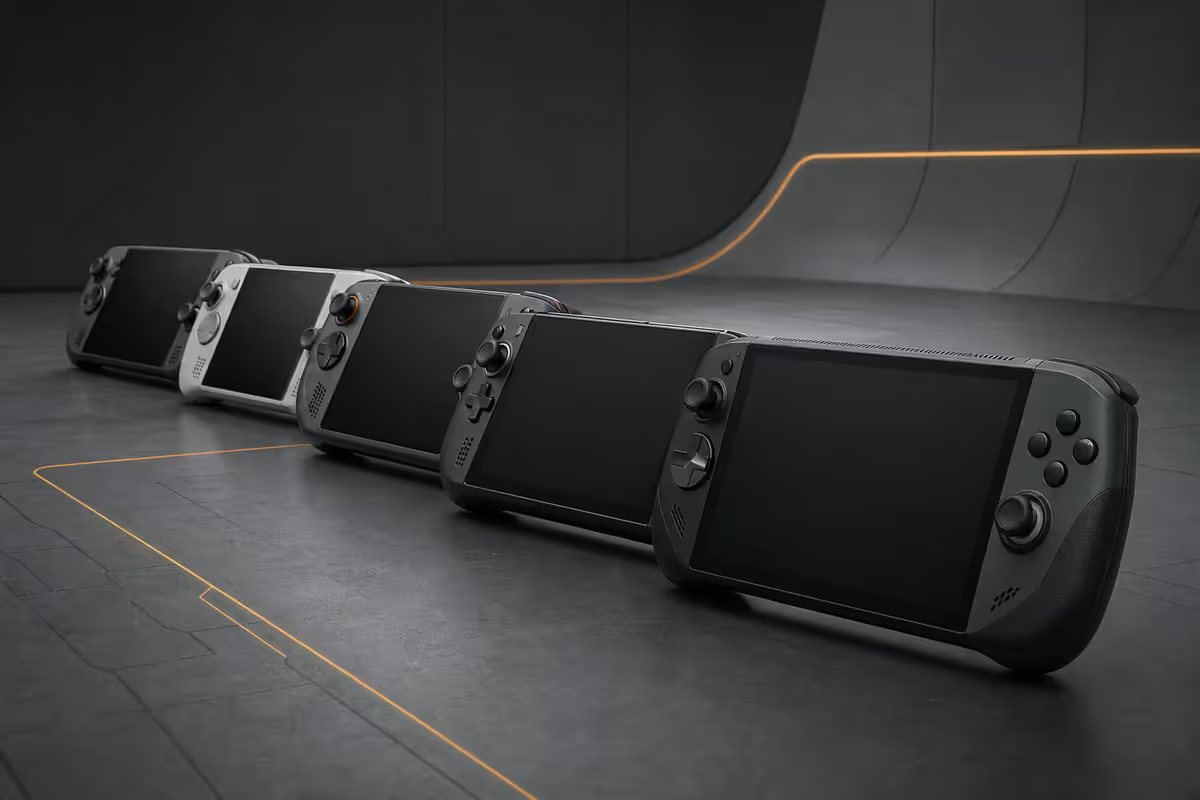
When Valve shipped the original Steam Deck in 2022, the category barely existed. By 2026 it's one of the most competitive corners of consumer PC. Five things shifted to make the present-day landscape what it is:
- OLED is standard. Steam Deck OLED, ROG Ally X v2, premium Legion Go S, MSI Claw 2 premium SKU and most AYANEO units all ship OLED in 2026.
- Z2 Extreme and Strix Halo silicon closed the performance gap with desktop Ryzen 5/7. AAA at medium-high settings is now the floor, not the ceiling.
- Bazzite OS matured into a polished alternative to Windows on third-party handhelds, eliminating the touchscreen-Windows-11 frustration.
- The market consolidated around 4-5 serious manufacturers. The wild-west early-2024 era of micro-vendors is over.
- SteamOS 4 became available on third-party handhelds (officially supported on Legion Go S, community-supported on Ally and Claw via dual-boot).
Steam Deck OLED — three years of polish
The Steam Deck OLED earns its slot as 2026's best-rounded handheld through accumulated polish. The hardware spec sheet isn't the most impressive — the Z1 Extreme handhelds have more raw power — but the experience is the most mature.
What three years of polish looks like:
- SteamOS is the only handheld OS designed from the ground up for the form factor. Sleep / resume / battery management is years ahead.
- Proton compatibility covers ~95% of Steam library in 2026 — including most anti-cheat-protected titles after Valve's 2025 EAC and BattlEye work.
- Hardware build is tighter than any third-party (excluding 60W AYANEO premium tier). Buttons feel right after thousands of hours.
- Repair access — Valve sells official replacement parts and publishes service manuals. Repairs are realistic.
- The aftermarket for cases, docks, skins, microSD cards and accessories is unmatched.
SA pricing: R13 999 (512GB OLED), R16 999 (1TB OLED). Import via Evetech, Wootware or Takealot tech specialists — Valve doesn't sell direct in SA.
ROG Ally X v2, Legion Go S, MSI Claw 2
ASUS ROG Ally X v2 — the performance pick
R21 999. Ryzen Z2 Extreme, 24GB LPDDR5X-8000, 1TB NVMe, 7-inch 1080p 120Hz OLED, 80Wh battery (almost double the original Ally). The new Z2 silicon brings ~25% more performance than the previous Z1 Extreme at the same power budget. Windows 11 ships standard but Bazzite is the smarter install.
Lenovo Legion Go S — the distinctive form factor
R18 999. 8-inch 1440p IPS or 1200p OLED panel, detachable Switch-like controllers, kickstand for tabletop play, Z1 Extreme silicon. Ships with SteamOS-supported model OR Windows model — Lenovo / Valve partnership. The detachable controllers make this the most flexible handheld for tabletop and TV play with two players.
MSI Claw 2 — the underrated Intel pick
R19 499. Intel Core Ultra 7 (Lunar Lake-class), 32GB RAM, 7-inch 120Hz OLED, comfortable ergonomic grip. Intel handhelds were slow to mature; the Claw 2 is the first that genuinely competes with AMD. XeSS upscaling helps in supported titles. Drivers and Windows handheld optimisation still trail AMD by 5-10%.
AYANEO Pocket S successor + Kunai
R25 000-R35 000. The premium tier — magnesium chassis, sharper OLED panels, Snapdragon X Plus or Strix Halo silicon, and the boutique ergonomics that AYANEO has spent five years refining. Niche but the ceiling for what handhelds can be in 2026.
Ryzen Z2 Extreme & Strix Halo — the silicon leap
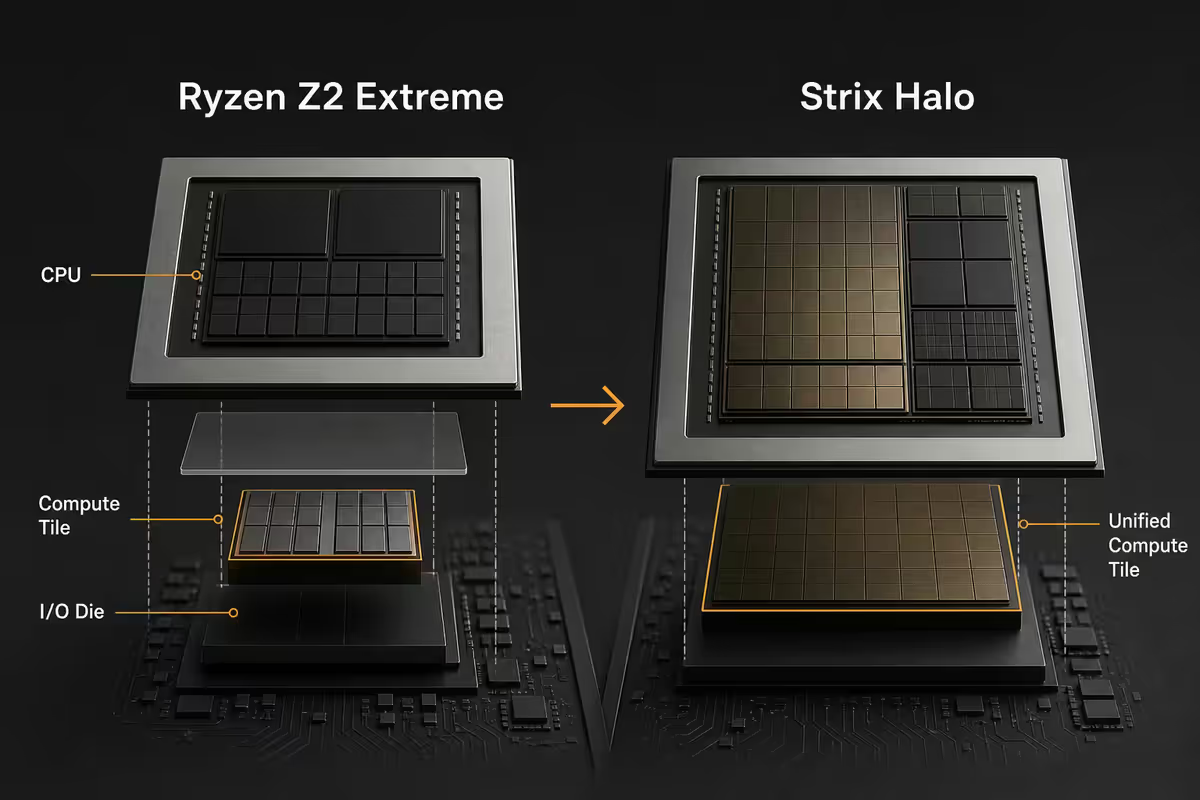
The 2024-2025 generation ran on Z1 / Z1 Extreme silicon — capable but power-limited. The 2026 generation moves to Z2 Extreme (and the larger Strix Halo for higher-end handhelds), delivering measurable improvements without burning more battery.
| Silicon | CPU / GPU cores | TDP range |
|---|---|---|
| Ryzen Z1 (entry) | 6C / 4 RDNA3 CU | 9-15W |
| Ryzen Z1 Extreme | 8C / 12 RDNA3 CU | 15-30W |
| Ryzen Z2 Extreme | 8C / 16 RDNA3.5 CU | 15-35W |
| Strix Halo (Z3 class) | 16C / 40 RDNA3.5 CU | 35-80W |
| Intel Core Ultra 7 (Lunar Lake) | 8C / Arc Xe2 graphics | 17-30W |
Strix Halo handhelds (AYANEO premium, GPD Win 5 Max, OneXFly F1 Pro Max) are an entirely different category — pushing 80W TDP for desktop-class fps but with proportional weight and battery cost. They're handheld-form-factor gaming desktops more than they're portable consoles. Niche but real.
OLED & 1440p — the display reality
OLED on a 7-inch handheld is genuinely transformative — pure blacks, vivid colour, true HDR support, and (because pixels are off when displaying black) better power efficiency in dark games. After a week on an OLED handheld, LCD looks washed out.
1440p — the trickier question. Pushing 1440p native on a 7-inch screen consumes ~40% more GPU than 1080p for marginal visual benefit at that pixel density. The Legion Go's original 1600p panel was widely considered an overspec. The 2026 consensus has settled on 1080p OLED with FSR / XeSS / DLSS upscaling as the sweet spot — visually equivalent to native 1440p without the battery hit.
Windows 11 vs SteamOS vs Bazzite OS
The OS choice now affects daily use more than the underlying silicon. 2026's three options:
SteamOS (Steam Deck + Legion Go S)
Designed from the ground up for handhelds. Boot in 8 seconds, instant resume, battery-efficient idle, console-style UI you can navigate by D-pad alone. The only meaningful limitation is non-Steam game stores — Epic, GOG and Battle.net require workarounds (Heroic Launcher, Lutris) that work but aren't seamless.
Bazzite OS (third-party install)
Fedora-based Linux distribution that brings SteamOS-style polish to non-Steam-Deck handhelds. 20-minute install, optional dual-boot with Windows for the cases where you need it. Same Proton compatibility as SteamOS (~95% of Steam library). 15-20% better battery life than Windows on the same hardware. The smart install for any Ally / Claw / Legion Go owner not buying SteamOS-licensed hardware.
Windows 11 (default on most third-party handhelds)
Maximum compatibility — Xbox Game Pass, Epic, GOG, Battle.net, Riot client, every browser game, mod managers, Discord overlay. The cost: 15-20% worse battery, longer boot times, and a touchscreen UI never designed for 7-inch handhelds. Windows handheld mode in 2026 is better than 2024 but still trails SteamOS / Bazzite for daily use.
The Bazzite + Windows dual-boot is what most savvy buyers run in 2026 — Bazzite for daily gaming, Windows for the specific titles that need it.
AAA on the go — what actually runs
| 2024-2026 AAA title | Steam Deck OLED | ROG Ally X v2 / Z2 Extreme |
|---|---|---|
| Baldur's Gate 3 | 30-40 fps medium | 45-60 fps high |
| Cyberpunk 2077 (Phantom Liberty) | 30 fps low + FSR | 45-55 fps medium + FSR |
| Helldivers 2 | 30-40 fps medium | 50-60 fps high |
| Final Fantasy VII Rebirth | 30 fps low | 40-50 fps medium |
| Dragon's Dogma 2 | 25-30 fps medium | 40-50 fps medium-high |
| Black Myth: Wukong | 20-25 fps low | 35-45 fps medium + FSR |
| Indiana Jones & the Great Circle | 25 fps low | 40-50 fps medium |
| Elden Ring + Shadow of the Erdtree | 30-45 fps medium | 55-60 fps high |
The honest takeaway: Steam Deck OLED targets 30 fps and gets there on most AAA with reduced settings. Z2 Extreme handhelds target 45-60 fps on medium-high. Neither matches a R30 000 desktop on a 4K monitor, but both deliver console-equivalent experiences for travel, commutes and second-screen play.
SA import pricing reality
| Handheld | US RRP equiv. ZAR | SA retail (June 2026) |
|---|---|---|
| Steam Deck OLED 512GB | ~R10 700 | R13 999 |
| Steam Deck OLED 1TB | ~R12 500 | R16 999 |
| ROG Ally X v2 | ~R17 500 | R21 999 |
| Lenovo Legion Go S | ~R15 200 | R18 999 |
| MSI Claw 2 | ~R16 000 | R19 499 |
| AYANEO Kunai Strix Halo | ~R26 500 | R32 999-R35 999 |
| OneXFly F1 Pro Max | ~R28 000 | R34 499 |
Mistakes to skip
Buying a first-generation device on launch day. Original Ally, original Claw, original Legion Go all had driver / firmware / build issues that took 6-12 months to address. Wait for the second-generation refresh or buy a device that's been on the market 6+ months.
Pricing the handheld against your desktop. A R20 000 handheld will never match a R20 000 desktop on fps-per-rand. The handheld pays for flexibility — play on flights, in bed, at the airport, on the couch when someone else has the TV.
Sticking with Windows on a third-party handheld. If you're spending R20 000+ on an Ally or Claw, the 20 minutes to install Bazzite is the highest-ROI handheld upgrade you can make. 15-20% better battery, faster boot, console-style UI.
Buying a Strix Halo handheld as a primary device. They're impressive proofs of concept but heavy, hot, expensive and short on battery. Consider them third-screen luxury, not daily-driver portables.
Skipping the microSD card. Every handheld supports microSD expansion. 1TB Samsung Evo Plus or Sandisk Extreme Pro at R1 099 doubles your storage for almost nothing. Buy on day one.
Key takeaways
- Steam Deck OLED remains the safest and most polished handheld choice in 2026 — R13 999 entry.
- For raw performance, ROG Ally X v2 with Ryzen Z2 Extreme is the new king at R21 999.
- OLED is standard on 2026 flagships; 1080p with FSR / XeSS / DLSS beats native 1440p for battery efficiency.
- Install Bazzite OS on third-party handhelds for 15-20% better battery and a proper console-style UI.
- Console-quality portable AAA at 30-60 fps is real in 2026 — the category has matured beyond beta-test status.
Frequently asked questions
What's the best handheld gaming PC in 2026?
The Steam Deck OLED (R13 999 in SA) remains the best-rounded handheld in 2026 — mature SteamOS, excellent OLED display, robust software ecosystem and three years of community refinement. For raw performance with AAA at higher settings, the ROG Ally X v2 (R21 999) with Ryzen Z2 Extreme is the new performance king. The Lenovo Legion Go S (R18 999) and MSI Claw 2 (R19 499) sit between them with distinctive form factors and SteamOS support.Are handheld gaming PCs strong enough for AAA games in 2026?
Yes for most AAA — 2024-2025 releases like Cyberpunk 2077, Baldur's Gate 3, Helldivers 2, Final Fantasy VII Rebirth, Dragon's Dogma 2 run at 30-60 fps on medium-high settings on Z2 Extreme handhelds. Genuinely demanding titles like Wukong, Star Wars Outlaws, Indiana Jones and 2026's biggest releases need DLSS / FSR upscaling and 30-40 fps caps. The console-quality portable vision is real for ~80% of the library.SteamOS vs Windows on a handheld — which is better?
SteamOS (Steam Deck) and Bazzite OS (third-party handhelds) win for battery life (15-25% better), boot speed, controller-first UI, and lower idle power draw. Windows 11 wins for game compatibility outside Steam (Xbox Game Pass, Epic, GOG, Battle.net), Discord, browser, and easy access to mods. SteamOS now runs ~95% of Steam library via Proton; Windows runs everything but burns battery doing it. Most informed buyers pick SteamOS or install Bazzite.What is Bazzite OS and should I install it?
Bazzite is a Linux-based handheld OS forked from Fedora that brings SteamOS-style polish to non-Steam-Deck handhelds (ROG Ally, Legion Go, MSI Claw, OneXPlayer). It installs in 20 minutes, dual-boots with Windows, adds 15-20% battery life and a console-style UI. For anyone tired of fighting Windows 11 on a 7-inch touchscreen, Bazzite is the answer. Trade-off: some anti-cheat in competitive shooters (Valorant, Fortnite, certain CoD modes) won't run.OLED or LCD — does it matter on a handheld?
OLED is a genuine upgrade — pure blacks, vivid colour, HDR support, and improved power efficiency at darker scenes. The Steam Deck OLED is the textbook example. ROG Ally X v2 ships with a 7-inch OLED panel; Legion Go S has a 1080p IPS LCD on the entry SKU and OLED on the premium SKU. Once you've spent a week on an OLED handheld, LCD looks visibly washed out by comparison.How much does a handheld gaming PC cost in South Africa?
Steam Deck OLED 512GB at R13 999. Steam Deck OLED 1TB at R16 999. ROG Ally X v2 from R21 999. Legion Go S from R18 999. MSI Claw 2 from R19 499. AYANEO and OneXPlayer premium units R25 000-R35 000. The cheapest entry remains Steam Deck OLED 512GB; the ceiling sits around the Strix Halo handhelds at R35 000+. Most pricing reflects 10-25% import duty + 15% VAT on top of US RRP.Can I dock a handheld PC to a TV?
Yes — every modern handheld PC supports USB-C DisplayPort output to a TV or monitor. Steam Deck has an official dock (R1 599); third-party docks from Anker, Jsaux and Baseus work with any handheld at R599-R1 199. Plugged in, handhelds output 1080p 60Hz or 1440p 60Hz on the higher-power SKUs, making them console-replacement candidates for living-room TV play with a wireless Xbox or DualSense controller.Is a handheld gaming PC worth it in SA in 2026?
For PC gamers who travel, commute, share TVs at home or want flexible play locations, yes — R14 000-R22 000 buys a genuine portable gaming PC that plays the entire Steam library. For desktop gamers who never leave home, a R20 000 desktop build delivers 3-4x the performance at the same price. The handheld is about flexibility, not raw fps-per-rand. The market is also the safest it's ever been — three generations of mature hardware means buying in 2026 isn't a beta-test.
Get the Evetech app
Exclusive app-only prices, daily flash sales, and free delivery on orders over R4,000 — download the app and start saving.