Handheld Console Buying Guide
How to choose a handheld console.
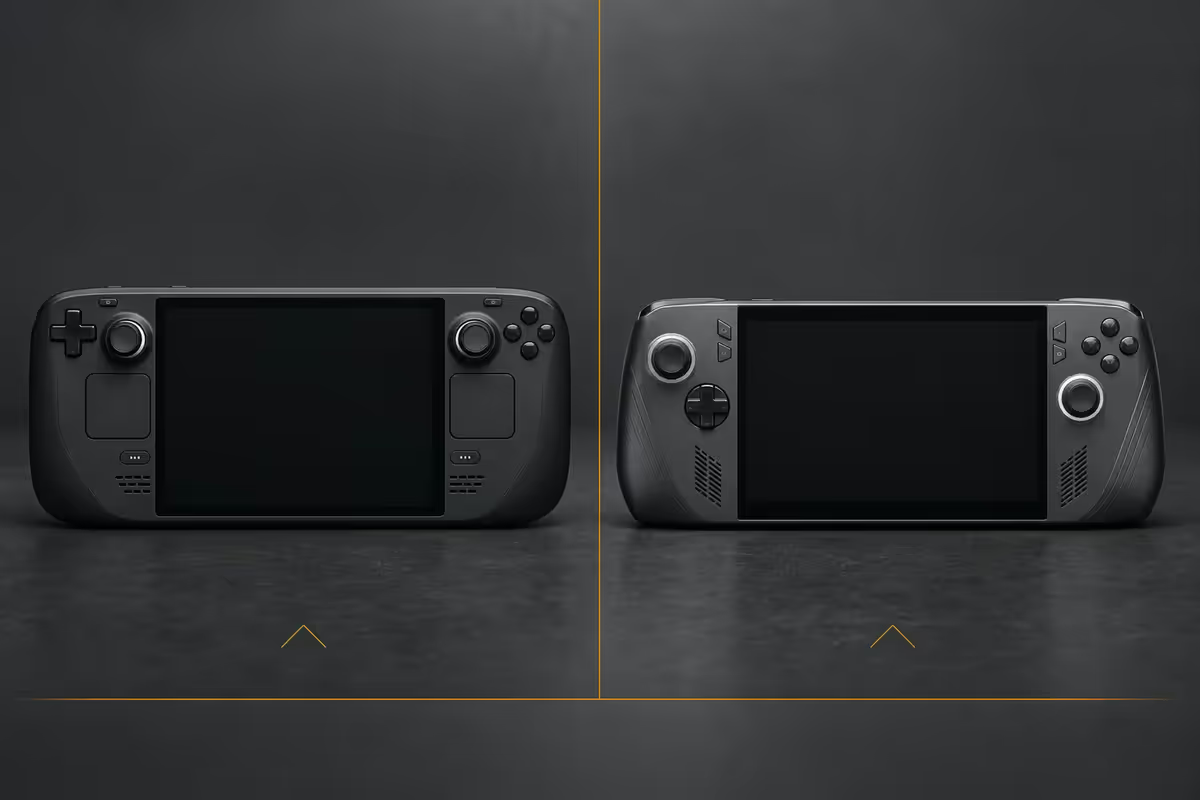
2026 is the year handhelds got real. Steam Deck OLED, ROG Ally X 2, Legion Go S, MSI Claw 8 AI+ — all genuinely good. The wrong one will frustrate you weekly. The right one becomes the device you reach for more than your PC.
- vs Windows decision
- SteamOS
- battery range
- 2-8 hrs
- SA price band
- R12.5k-R30k
The library question — answer this first
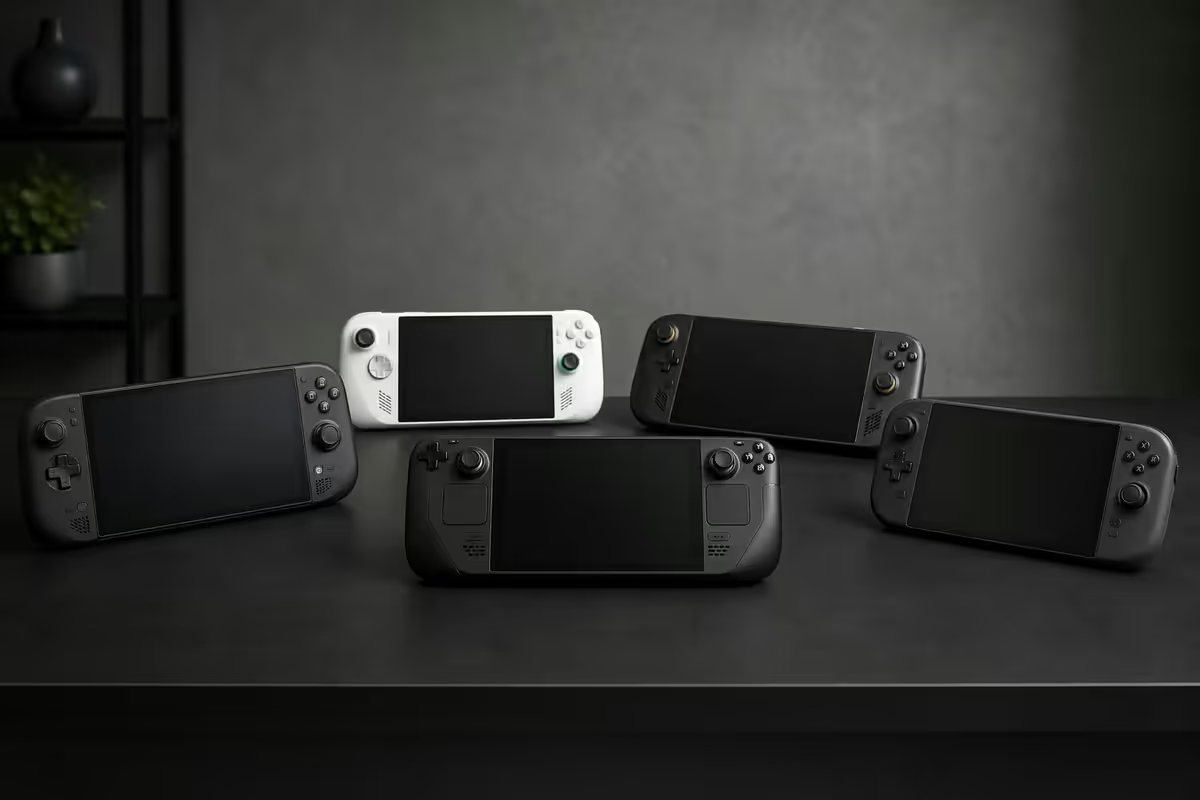
Before any spec sheet, ask yourself one thing: where do you actually buy and play your games?
Open your Steam library, your Epic library, your Game Pass list, your GOG account. Count the games you've played in the last 12 months — not the ones you own. Where do they live?
- 80%+ on Steam → SteamOS device. Steam Deck OLED, Lenovo Legion Go S SteamOS variant. Everything else is overcomplication.
- Heavy Game Pass user → Windows handheld. ROG Ally X 2, Legion Go S Windows variant, MSI Claw 8 AI+. Xbox cloud + native installs.
- Mixed across Steam, Epic, GOG, Battle.net → Windows handheld. The friction of running non-Steam storefronts on SteamOS isn't worth the SteamOS UX win.
- Hardcore competitive multiplayer (Valorant, Apex, Fortnite) → Windows. Many competitive games block SteamOS via anti-cheat.
- Indie + retro emulation + JRPGs → Steam Deck OLED. Battery life is king here, and SteamOS makes this category effortless.
Why this matters more than specs: the handheld market has converged on roughly similar performance (mid-tier AMD APUs). The real differentiator is which storefront and OS suits your library — and that's an entirely personal answer.
Steam Deck OLED — reality vs Steam Deck 2 wait
The Steam Deck OLED, refreshed in late 2023 and still flagship in 2026, remains the safest single handheld purchase. Larger battery than the original LCD model, dramatically better screen, faster Wi-Fi 6E, slightly improved APU efficiency.
The recurring question: "Should I wait for Steam Deck 2?"
Valve's stated position (as of mid-2026) is that the Steam Deck 2 is at minimum 18-24 months away — late 2026 to early 2027 best-case. The reason Valve is waiting is APU generational change; they don't want to push out a Deck 2 that's a marginal improvement over the OLED. When it lands, the OLED model will continue selling at a lower price tier as the entry-level Deck.
The verdict: buy the OLED now. You'll get 12-18 months of full flagship use before the Deck 2 launches, and even then the OLED stays in production. The only reason to wait is if you specifically want the rumoured AAA-class APU upgrade — and that performance jump is not confirmed.
The 2026 contenders — what's actually available
| Device | OS | Sweet spot |
|---|---|---|
| Steam Deck OLED (512GB / 1TB) | SteamOS | Steam-heavy, indies, JRPG, battery champion |
| ASUS ROG Ally X 2 | Windows 11 | Power user, Game Pass, AAA at higher refresh |
| Lenovo Legion Go S (SteamOS variant) | SteamOS | SteamOS with more horsepower than Deck |
| Lenovo Legion Go S (Windows variant) | Windows 11 | Mid-tier Windows alternative to Ally |
| MSI Claw 8 AI+ | Windows 11 | Largest screen, Intel Lunar Lake |
| Original Lenovo Legion Go (clearance) | Windows 11 | Detachable controllers, often discounted |
| AYANEO 3 / GPD Win Max 3 | Windows 11 | Niche specialty handhelds |
Steam Deck OLED
Strengths: SteamOS UX is a delight (instant resume, suspend mid-Elden-Ring, no Windows updates). 7.4" OLED display with true blacks and fast response. Best-in-class battery for the price. Strong indie/retro performance with Decky Loader and Steam community ROMs. R12,500-R16,500 depending on storage. Best value handheld of 2026.
Weaknesses: Weaker APU than newer Windows handhelds (AAA at 30fps medium, not 60fps high). 90Hz refresh ceiling. No native Game Pass, Epic, GOG storefronts (Heroic Launcher works as a workaround but adds friction).
ASUS ROG Ally X 2
Strengths: Most powerful AMD handheld in 2026 — AAA games at higher framerates than the Deck. 120Hz LCD display. Full Windows means Game Pass, Epic, GOG, Battle.net all work natively. Doubles as a tiny office PC. R22,000-R28,000 depending on configuration.
Weaknesses: Windows UX is clumsy on a handheld — Armoury Crate helps but the system tray, mouse cursor and random updates still leak in. Worse battery life than Deck. LCD vs OLED for dark games. R10,000+ premium over Deck.
Lenovo Legion Go S
Strengths: Available in both SteamOS and Windows variants (genuinely useful flexibility). Strong build quality, comfortable grips. The SteamOS variant offers Deck-style UX with stronger hardware. R18,000-R22,000.
Weaknesses: Detachable controllers from the original Legion Go are gone in the S model. SA distribution can be sporadic — usually pre-order via Yuppiechef-tier specialty channels.
MSI Claw 8 AI+
Strengths: Largest screen (8") in the mainstream handheld category. Intel Lunar Lake APU with strong NPU for upscaling. Premium build quality. R25,000-R30,000 imported.
Weaknesses: Intel's handheld driver story is still maturing — some 2024-2025 titles show compatibility gaps that AMD handhelds don't have. SA stock is limited; mostly direct import. Largest screen means heaviest device — 700g+, fatigues in long sessions.
SteamOS vs Windows — the operating system trade-off
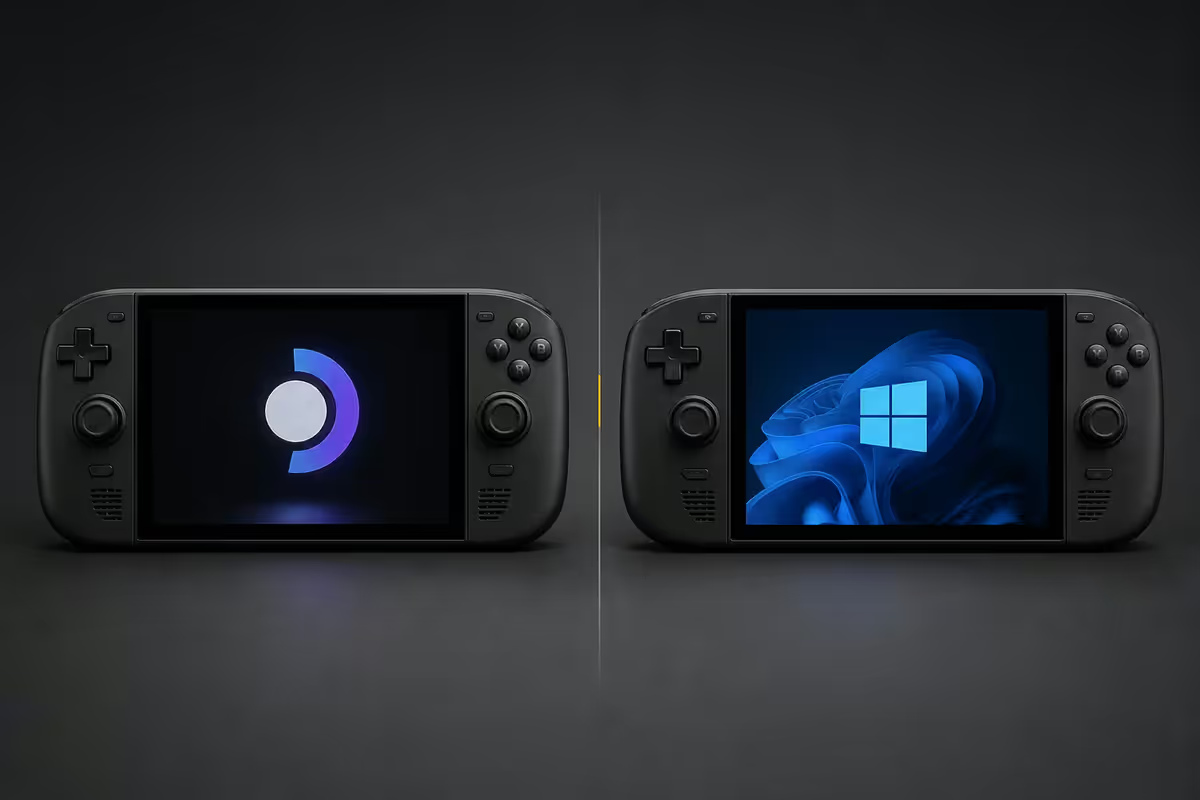
This is the second-most-important decision after library.
| Property | SteamOS | Windows 11 |
|---|---|---|
| Suspend / resume | Instant, mid-game | Slow, sometimes loses state |
| System updates mid-play | Never interrupt gaming | Random forced restarts |
| Boot-to-game time | 5-10 seconds | 20-40 seconds |
| Game Pass support | Cloud only | Native installs |
| Epic, GOG, Battle.net | Possible via Heroic / Lutris | Native |
| Anti-cheat competitive games (Valorant, Apex) | Often blocked | Works |
| Office / browsing use | Awkward | Full PC |
| Background processes / bloat | Almost none | Significant |
SteamOS is dramatically better as a pure gaming OS. Suspend mid-Elden-Ring, pick up the next morning exactly where you left off. No system tray popups. No mid-game Windows update reboots. Boot direct to game library in seconds.
Windows is the right choice for ecosystem flexibility. If you want one device that's a tiny gaming PC + tiny work laptop + Game Pass machine, Windows handhelds deliver that. The trade-off is hundreds of small UX paper cuts that SteamOS doesn't have.
Screen tier and battery — the daily-use levers
OLED vs LCD matters more on a handheld than on a desktop monitor. You're holding the screen 40cm from your face, often in dim couch lighting where contrast is king. OLED's true blacks transform dark games (Elden Ring's caves, Cyberpunk's night, Hollow Knight's depths). LCD wins on peak brightness (better for outdoor / SA sun-on-couch use) and refresh rate (120Hz on ROG Ally, vs Deck's 90Hz).
Battery life varies wildly by game and brightness:
| Device | Light games (indies, 2D) | Modern AAA |
|---|---|---|
| Steam Deck OLED | 4-8 hours | 2-4 hours |
| ROG Ally X 2 | 3-6 hours | 90 min - 2.5 hours |
| Lenovo Legion Go S | 3-5.5 hours | 90 min - 2.5 hours |
| MSI Claw 8 AI+ | 2.5-5 hours | 75 min - 2.5 hours |
The honest take: none of them last a long-haul flight at AAA settings. All comfortably do a 2-hour couch session. Battery anxiety on AAA games is real on every handheld; for indies, retro and 2D none of them will run flat in a sane session.
Game compatibility — Proton has changed the math
Five years ago, SteamOS handhelds couldn't run most modern games. Today, Proton (Valve's Windows compatibility layer) runs the vast majority of Steam's catalogue, often at performance parity with Windows.
The Deck's "Verified" badge system tells you which games run flawlessly. As of mid-2026, over 18,000 Steam games are Verified or Playable on the Deck — including most major AAA releases.
The remaining gaps:
- Competitive anti-cheat titles. Valorant, Apex Legends, Fortnite (BR mode), Fall Guys, R6 Siege — some still block SteamOS via kernel-level anti-cheat. Windows handhelds run them all.
- Latest AAA releases. First 30-60 days post-launch, occasional games launch with broken Proton support before Valve patches it. Windows handhelds avoid this delay.
- Non-Steam storefronts. Game Pass native installs, Epic exclusives, Battle.net games (WoW, Diablo IV), GOG — Windows handhelds get these natively. SteamOS requires Heroic Launcher or Lutris workarounds.
The Game Pass on Windows handheld factor: if you're a Game Pass subscriber, Windows handheld unlocks 400+ games to play natively without owning them individually. That's a genuinely massive library multiplier — and reason enough for some users to choose Windows over SteamOS purely on game volume.
SA pricing & picks — June 2026
| Tier / Use case | Pick | SA price |
|---|---|---|
| Best value (Steam-heavy library) | Steam Deck OLED 512GB | R12,500-R15,000 |
| Bigger storage Steam Deck | Steam Deck OLED 1TB | R16,500-R19,000 |
| Power user / Game Pass / Windows | ASUS ROG Ally X 2 | R22,000-R28,000 |
| SteamOS with more horsepower | Lenovo Legion Go S (SteamOS) | R18,000-R22,000 |
| Largest screen, Intel | MSI Claw 8 AI+ | R25,000-R30,000 |
| Clearance value (detachable controllers) | Original Lenovo Legion Go | R14,000-R17,000 |
| Accessories (case + screen + 512GB microSD) | JSAUX hard case + dbrand skin + Samsung Pro Plus | R1,200-R2,500 |
Key takeaways
- The library question is the real decision. Steam-heavy → Deck. Game Pass + AAA → Ally X 2.
- Buy Steam Deck OLED now. Steam Deck 2 is 12-24 months away and the OLED keeps selling alongside it.
- SteamOS gives delightful handheld UX. Windows gives ecosystem flexibility. Pick the trade you can live with.
- OLED matters for dark and story games. LCD wins on brightness and refresh rate.
- SA import pricing swings R2k+ with the rand. Watch the ZAR/USD before committing.
Frequently asked questions
Steam Deck OLED or wait for Steam Deck 2?
Buy the OLED now. Steam Deck 2 is at minimum late 2026 / early 2027 away. The OLED keeps selling alongside it once it launches.Steam Deck OLED vs ROG Ally X 2 — which is better?
Different tools. Steam Deck OLED for Steam-heavy libraries, polished UX, battery life. ROG Ally X 2 for power, Game Pass, multi-store flexibility — at R10,000+ more.What about the Lenovo Legion Go S?
Interesting alternative — comes in SteamOS and Windows variants. The SteamOS version is a Deck competitor with stronger hardware. R18,000-R22,000.Is the MSI Claw 8 AI+ worth the import premium?
Only if you specifically want Intel Lunar Lake or the larger 8" screen. AMD-based handhelds remain the safer bet for game compatibility in 2026.SteamOS vs Windows on a handheld?
SteamOS is better as a pure gaming OS — instant resume, no updates mid-game. Windows gives Game Pass, Epic, GOG native installs plus office use.What battery life can I expect?
Deck OLED: 4-8h light games, 2-4h AAA. Ally X 2 / Legion Go S: 3-6h light, 90min-2.5h AAA. Claw 8: 2.5-5h depending on title.OLED vs LCD on a handheld — does it matter?
Yes, more than you'd expect. OLED for dark and story games — Elden Ring, Cyberpunk, Hollow Knight. LCD for brightness and higher refresh rates (120Hz).What's the SA pricing reality for handhelds in 2026?
Deck OLED 512GB: R12,500-R15,000. Ally X 2: R22,000-R28,000. Legion Go S: R18,000-R22,000. Claw 8 AI+: R25,000-R30,000 imported. Watch the rand.
Get the Evetech app
Exclusive app-only prices, daily flash sales, and free delivery on orders over R4,000 — download the app and start saving.