Solar Gaming Buying Guide
Solar gaming — the Eskom-free dream.
Loadshedding made off-grid gaming a serious build. The maths is simpler than the marketing makes it look: inverter wattage, lithium kWh and a roof that catches the sun.
- gaming inverter
- 3kVA
- evening battery
- 5kWh
- entry to off-grid
- R30k-R150k
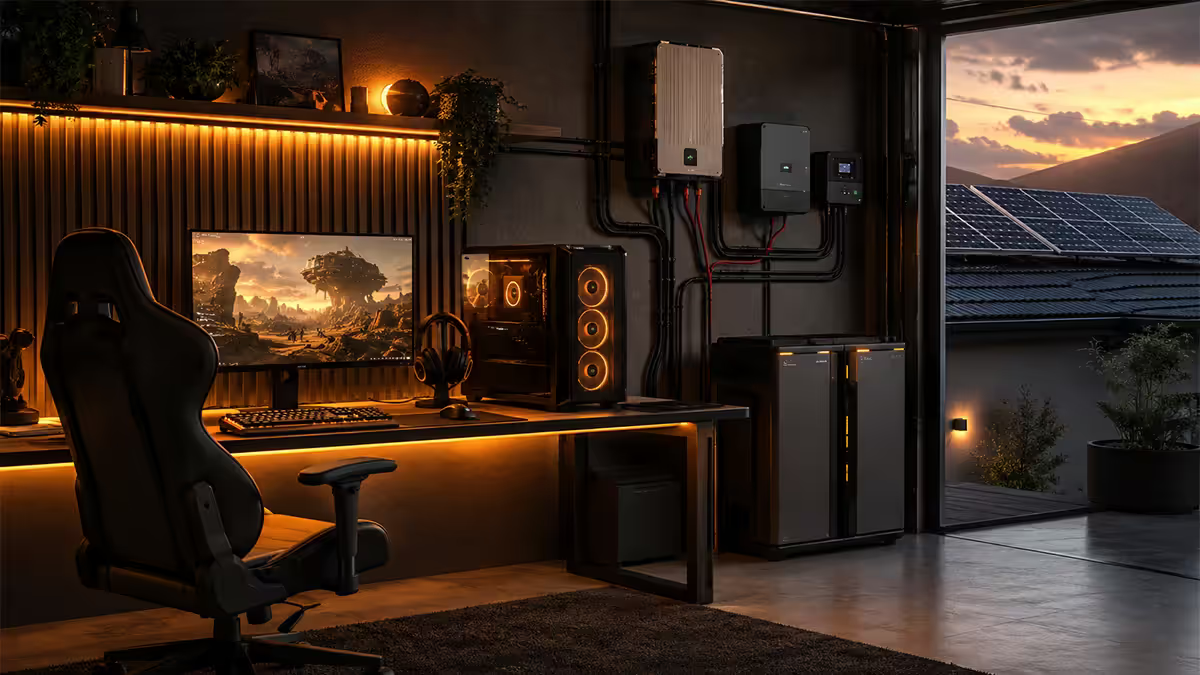
What a gaming PC actually draws
The first myth to clear: a 750W PSU does not mean your PC draws 750W. The PSU rating is the headroom; the actual gaming draw is much lower.
| Component | Real-world gaming draw | PSU spec assumption |
|---|---|---|
| RTX 4070 + Ryzen 7 7800X3D | 350-450W | 750W PSU |
| RTX 4080 + Ryzen 9 7900X | 450-550W | 850W PSU |
| RTX 4090 + Core i9 + 64GB | 550-700W | 1000W PSU |
| 32-inch 144Hz monitor | 30-50W | — |
| Peripherals + LED + speakers | 20-40W | — |
For sizing, use total real draw at peak: a typical "500W gaming PC" build actually draws 400-500W under load. That number drives everything else — inverter wattage, battery kWh, and panel count.
Inverter wattage — 3kVA, 5kVA or 8kVA
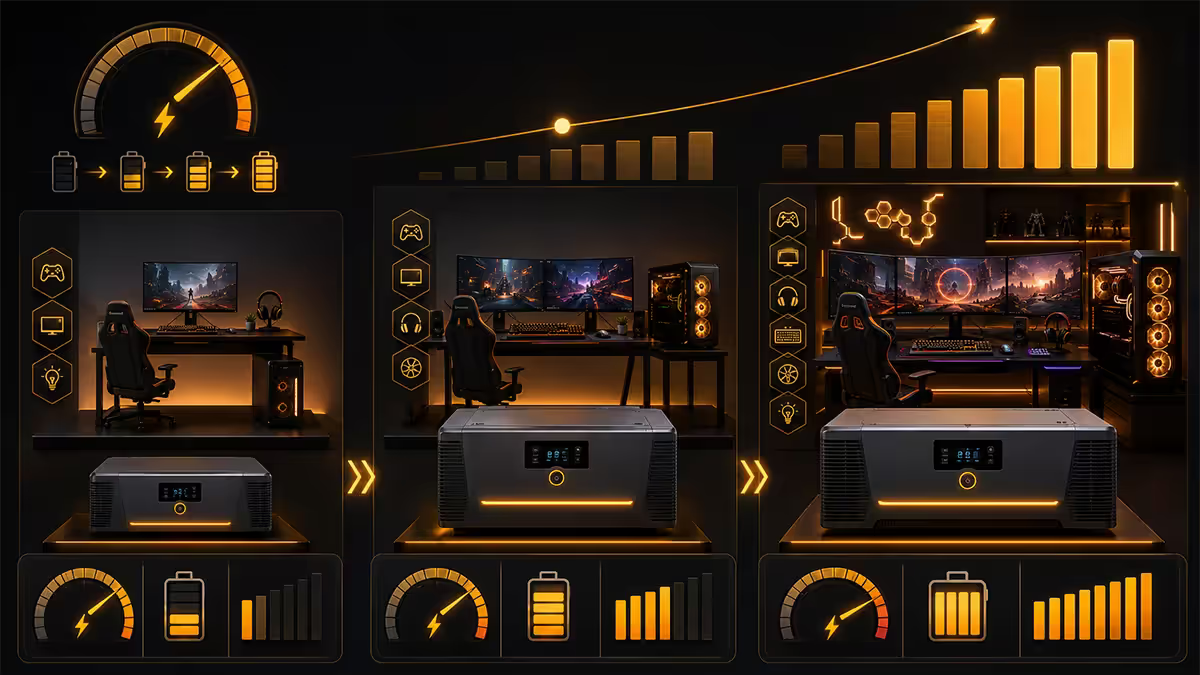
The inverter handles the conversion from DC (battery) to AC (your wall plugs). For gaming, the rules are simple:
- 3kVA inverter (~R18,000-R28,000): handles a single gaming PC + monitor + peripherals + LED lighting + Wi-Fi router with comfortable headroom. Good for gaming-room-only loadshedding backup.
- 5kVA inverter (~R28,000-R45,000): covers your gaming setup plus a fridge, the lounge TV and a few standard household loads. The sweet spot for most gamers who want loadshedding immunity beyond just the PC.
- 8kVA inverter (~R45,000-R75,000): powers a whole flat or a small house with gaming setup included. Overkill if it's just for gaming; right call if the rest of the home depends on it too.
Pure sine wave is non-negotiable. Modified sine wave inverters slowly damage modern PSUs, audio gear and monitor backlights. Every reputable SA brand sells pure sine — just confirm before you click buy.
Battery capacity — the kWh math
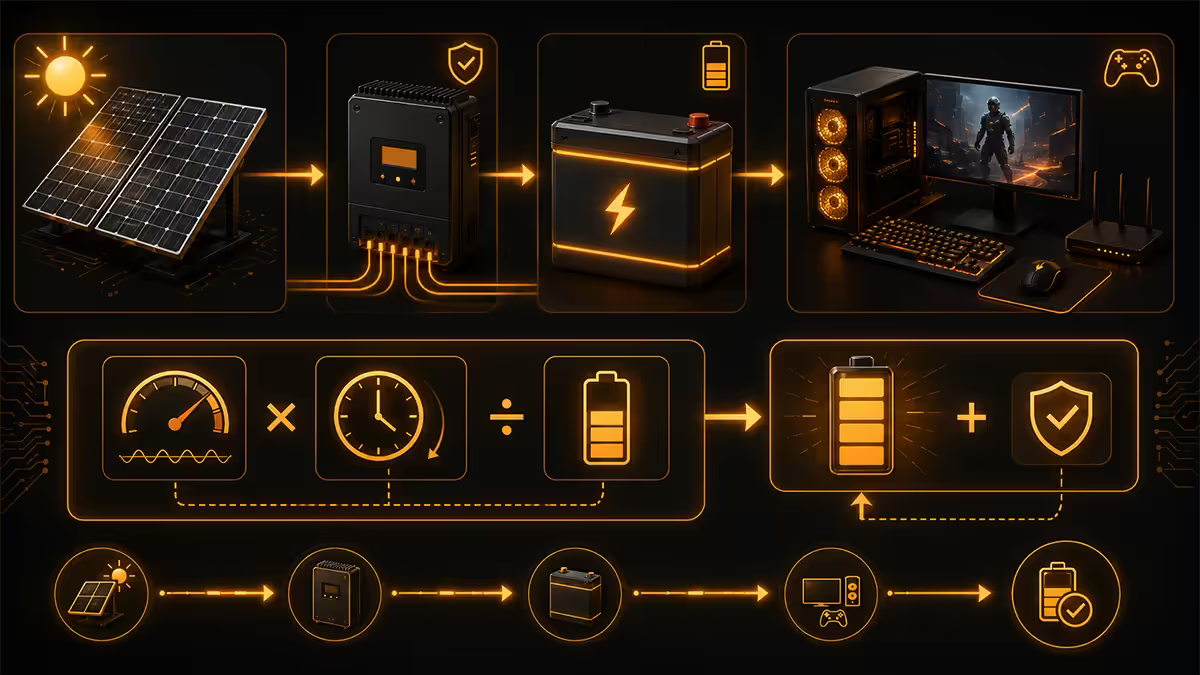
The battery decides how long you can game during loadshedding. Lithium iron phosphate (LiFePO4) is the only sensible chemistry in 2026 — 5-10x more cycles than lead-acid, safer, and the price gap has closed.
The maths: 1 kWh = 1,000 watts for one hour. A gaming PC drawing 450W will use 0.45 kWh per hour of play.
| Battery size | Gaming runtime (450W draw) | SA ZAR price |
|---|---|---|
| 5 kWh LiFePO4 | ~8 hours gaming-only | R28,000-R45,000 |
| 10 kWh LiFePO4 | ~16 hours gaming, ~10 hrs mixed loads | R55,000-R80,000 |
| 15 kWh LiFePO4 | Whole evening + lights + Wi-Fi + fridge | R75,000-R105,000 |
| 20 kWh LiFePO4 | Full off-grid daily cycling | R95,000-R130,000 |
Real-world derate: never plan to discharge a lithium battery to 0%. Practical capacity is ~80% of nameplate (so a 10kWh bank gives you ~8kWh usable, day after day). That's the number to plug into your runtime math.
Victron vs Sunsynk vs Deye vs Mecer — the SA reality
Four brands cover 95% of SA solar installs in 2026. Each has a clear sweet spot.
Sunsynk (5kVA from ~R34,000)
The default SA mid-market pick. Hybrid by default — handles solar, battery and grid in one box. Local support is excellent, firmware updates frequent, and most installers know them inside out. The 5kW and 8kW models are SA bestsellers.
Deye (5kVA from ~R28,000)
Sunsynk's biggest competitor — same OEM chassis as some Sunsynk models, cheaper by about 15-20%. Strong choice if budget is tight and your installer is comfortable with the brand.
Victron MultiPlus (5kVA from ~R45,000)
The enthusiast / premium pick. Modular — you build the system from separate Victron components (inverter, MPPT, GX device, battery). Best-in-class monitoring (VRM portal), most reliable, longest warranties. Worth the premium for full off-grid; overkill for backup-only.
Mecer 3kVA pure sine (R18,000-R22,000)
The entry "inverter UPS" pick. Pure sine, gaming-PC-safe, perfect for the "I just want my PC to stay on during loadshedding" use case. Pairs with a 5kWh lithium bank for an under-R50k total starter system.
Solar panel count + roof orientation
Once you have inverter + battery sized, panels are the input side. The maths:
Daily energy you need to harvest = daily gaming + household consumption.
A gamer doing 4 hours/day at 450W uses 1.8 kWh just on gaming. Add lights, Wi-Fi, fridge, charging laptops and it's typically 8-15 kWh/day for a small household. Divide by SA's 4-5 effective peak sun hours and you get your required panel wattage.
Panel size in SA today: 545-580W mono panels are the standard (~R1,800-R2,800 each before mounting). A typical small system is 6 panels (~3.3 kW total), enough to charge a 10 kWh bank plus run mid-day household loads.
Roof orientation rules for SA (southern hemisphere):
- North-facing is best — peak sun, full output.
- Tilt 25-35° matches SA latitude — close to optimal year-round.
- East/west split works if no north roof — slightly lower yield, but spreads generation across morning and afternoon (good for gaming after work).
- South-facing is the worst choice — avoid if at all possible.
DC-coupled or AC-coupled — which for a new install
There are two ways to wire the solar into the system, and the choice matters more than most installers explain.
| Topology | How it works | Best for |
|---|---|---|
| DC-coupled | Panels feed directly into a hybrid inverter, which charges the battery | Most new SA installs — cheaper, more efficient, simpler |
| AC-coupled | Separate solar (grid-tie) inverter + separate battery inverter, both on AC bus | Homes that already have a grid-tie solar system and want to add battery backup |
For a first-time gaming-focused install, DC-coupled with a Sunsynk or Deye hybrid is the standard path. You buy one box (the hybrid inverter), wire panels in, wire battery in, and you're done.
Of the solar + gaming PC combos we've shipped from Centurion, the most popular configuration is a <strong>Sunsynk 5kVA + 10kWh BSL/Hubble battery + 6 × 550W panels</strong>, landing between R85,000 and R110,000 fully installed. That setup carries a typical gaming household through Stage 6 loadshedding with zero ceremony, and feeds back into the home during the day. The second most popular is the <strong>"do it in two stages" pattern</strong>: inverter + battery now (R55,000), panels in 12-18 months once the budget recovers. Both are sensible. What we strongly advise against is buying a tiny 1.5kVA "UPS-style" inverter for a gaming setup — they trip on GPU boost transients and corrupt save files.
Behind the Build · From our solar bench
The recommended upgrade path
Most gamers don't have R150k sitting in cash. The sensible SA upgrade path:
- Stage 1 (R30,000-R50,000): 3kVA Mecer pure sine + 5kWh lithium. Covers gaming PC + monitor + Wi-Fi through Stage 6 loadshedding. No panels yet.
- Stage 2 (+R30,000-R45,000): Upgrade inverter to 5kVA Sunsynk/Deye, add 5kWh more battery. Now covers gaming + most of the home.
- Stage 3 (+R30,000-R50,000): Add 6 × 550W panels + MPPT mounting. Now solar-feeding the battery daily — true off-grid capable.
Each stage stands alone. The inverter from Stage 1 may need to be replaced at Stage 2 (Mecer to Sunsynk), but the battery and (later) panels carry forward.
Recommended solar gaming bundles
| Use case | Build | SA price |
|---|---|---|
| Gaming-only loadshedding | Mecer 3kVA + 5kWh lithium, no panels | R30,000-R45,000 |
| Gaming + small household | Deye 5kVA + 5kWh lithium, no panels | R45,000-R60,000 |
| Gaming + household + start solar | Sunsynk 5kVA + 10kWh + 4 panels | R75,000-R95,000 |
| Full off-grid gaming household | Sunsynk 8kVA + 15kWh + 8 panels | R110,000-R140,000 |
| Premium full off-grid | Victron MultiPlus 5kVA + 20kWh + 10 panels | R140,000-R180,000 |
| Streamer / dual-PC setup | Sunsynk 8kVA + 15kWh + 8 panels | R115,000-R145,000 |
Key takeaways
- A "500W gaming PC" really draws 350-500W under load — size your inverter and battery off that, not the PSU label.
- 3kVA for gaming-only, 5kVA for gaming + household, 8kVA for a full home with gaming included. Pure sine wave is non-negotiable.
- 5kWh lithium = ~8 hours pure gaming; 10kWh = a full evening with household loads. Always size from 80% usable, not nameplate.
- Sunsynk/Deye are the SA mid-market default; Victron is the premium pick; Mecer is the entry inverter-UPS option.
- Start with inverter + battery now (R45k), add panels in 12-18 months (R30-50k more) to go fully off-grid.
Frequently asked questions
What size inverter do I need for a gaming PC?
3kVA covers a gaming PC + monitor + peripherals with headroom. 5kVA adds household loads. 8kVA powers a whole flat. For gaming alone, 3kVA pure sine is the sweet spot at R18,000-R28,000.How much battery capacity for off-grid gaming?
5kWh = ~8 hours pure gaming during loadshedding. 10kWh = a full evening with household loads. 15-20kWh = full off-grid daily cycling. Plan on 80% usable depth-of-discharge, not the nameplate number.Victron vs Sunsynk vs Deye vs Mecer — which inverter for a gaming setup?
Sunsynk and Deye are SA mid-market favourites — pure sine, hybrid by default, gaming-PC-safe. Victron is the premium pick. Mecer 3kVA is the entry gaming-only choice. Avoid modified sine wave at all costs.How many solar panels for a gaming setup?
A typical small system is 6 × 545-580W mono panels (~3.3kW total) — enough to charge a 10kWh bank plus run mid-day household loads. North-facing, 25-35° tilt for peak SA output.DC-coupled or AC-coupled solar — which for gaming?
DC-coupled (hybrid inverter) is cheaper, simpler and more efficient for new installs. AC-coupled is for homes that already have grid-tie solar and want to add a battery. For first installs, go DC-coupled hybrid.Can I just use an inverter UPS for gaming during loadshedding?
Yes — and it's the recommended entry. A 3kVA inverter + 5kWh battery (no panels) at R30,000-R50,000 gives 6+ hours of gaming during loadshedding. Add panels later when budget allows.What does a 500W gaming PC actually draw during gaming?
A typical RTX 4070 / Ryzen 7 PC draws 350-450W under gaming load, not the 500W PSU rating. Add monitor (30-50W), peripherals (20-40W), LEDs (10W) — total real draw is 350-525W. The PSU rating is headroom.Is solar gaming worth it in South Africa?
Loadshedding immunity alone pays for the entry inverter-UPS setup within months in saved hours and protected hardware. Full off-grid (R120-150k) pays back over 4-7 years on electricity savings plus loadshedding immunity.
Get the Evetech app
Exclusive app-only prices, daily flash sales, and free delivery on orders over R4,000 — download the app and start saving.