VPN Gaming Guide
VPN for gaming — help or hurt? — Usually hurts. Sometimes saves.
Every YouTube ad promises lower ping. Every Reddit thread says the opposite. The honest answer is: it depends — and the cases where it actually helps are narrower than the marketing suggests.
- typical add
- +5-50ms
- cases it helps
- 4
- per month
- R80-R180
The latency reality — VPNs add hops
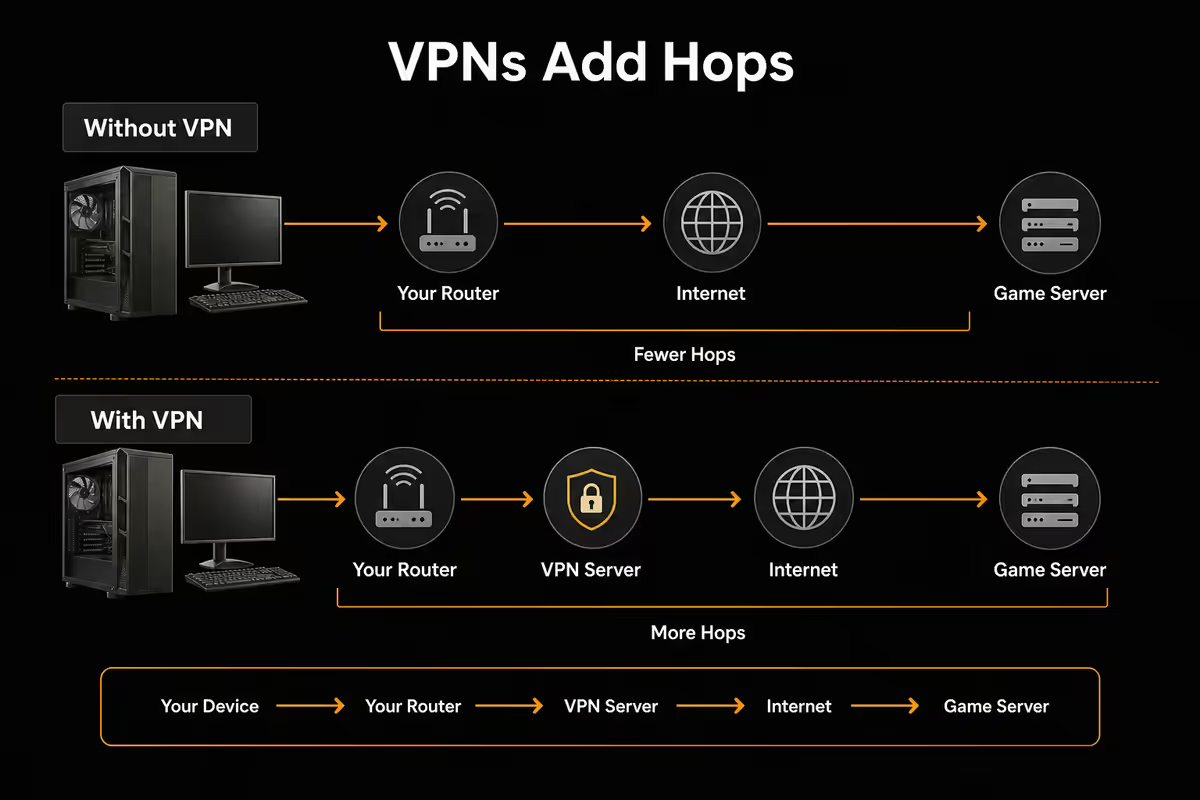
Every VPN, no matter how good, inserts an extra server between your PC and the game. Your packets travel you → VPN endpoint → game server instead of directly. That added hop always costs time. The only question is how much.
| Connection | Typical ping add | Verdict |
|---|---|---|
| Direct (no VPN), JNB game server | Baseline (5-25ms) | Best case |
| VPN with JNB endpoint, JNB game server | +5 to +15 ms | Playable for most games |
| VPN with CPT endpoint, JNB game server | +15 to +25 ms | Acceptable for casual |
| VPN with London endpoint, JNB game server | +120 to +180 ms | Unplayable for competitive |
| VPN with US East, JNB game server | +200 to +280 ms | Unplayable |
For 95% of SA gamers on Vumatel, Openserve, or Frogfoot fibre, the raw connection delivers the lowest possible ping to local game servers. WireGuard-based VPNs are faster than OpenVPN, and modern dedicated gaming endpoints (Lightway, NordLynx) are faster still — but they still add latency. They don't subtract it.
The exception is when your ISP routes traffic through bad peering. If your ISP sends your traffic through Cape Town to reach a Johannesburg server, a VPN with a JNB endpoint can occasionally bypass that detour. This is rare on modern fibre but does happen, particularly on smaller regional ISPs.
DDoS protection — the strongest case
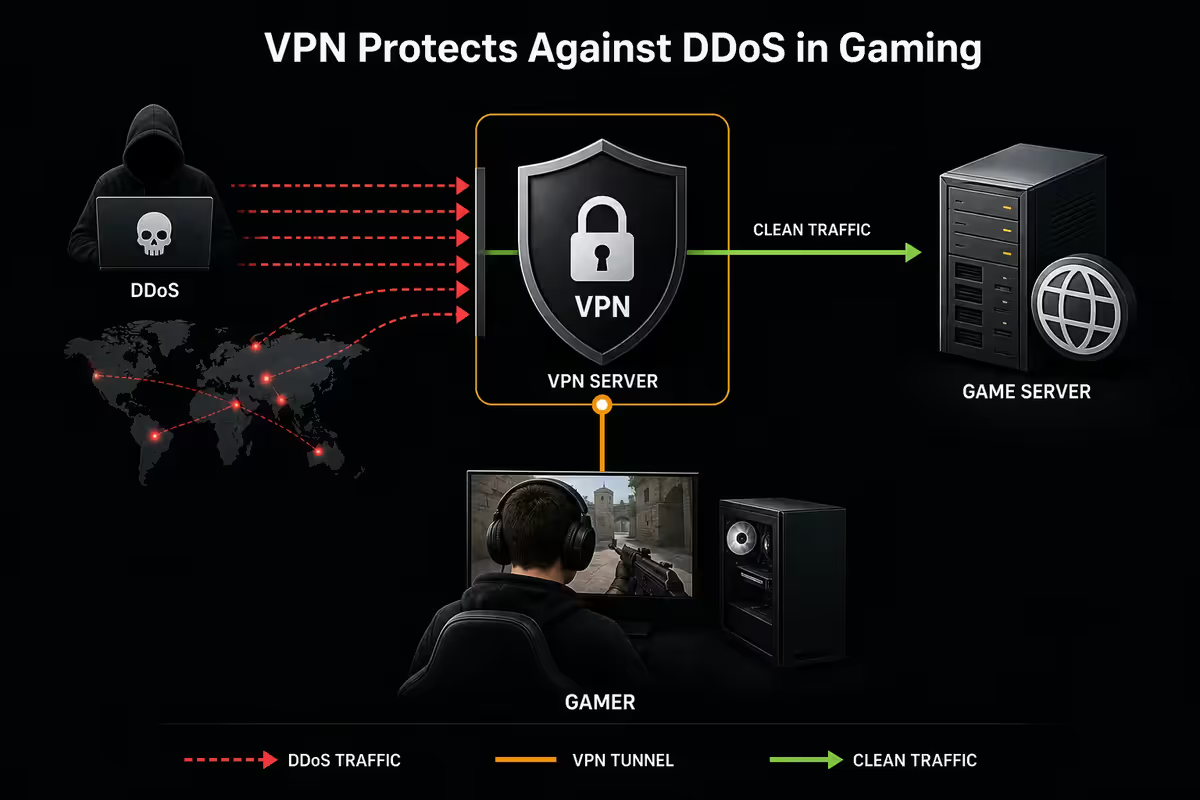
If your IP is exposed to opponents — whether through P2P matchmaking, voice chat clients, or streaming — you're a target. DDoS-for-hire services are R200-R500 for an hour-long attack; petty rivals do this casually.
A VPN masks your real IP. Attackers see the VPN provider's IP instead. Reputable providers (NordVPN, ExpressVPN, Mullvad, Proton VPN) have multi-Tbps networks that absorb hobbyist DDoS attacks without breaking a sweat. Your match continues; the attack ricochets off infrastructure that exists for exactly this purpose.
Who benefits most:
- Twitch / YouTube streamers. Anyone showing their face in chat is a target. A VPN is essential workflow infrastructure for any serious streamer.
- Competitive players in P2P games. CoD, R6 Siege and some other titles share player IPs with opponents. Stream-snipers and stalkers use this.
- Anyone who's been swatted or DDoS'd before. Once you're on someone's list, they keep coming back. VPN puts a wall between you and them.
Who doesn't need it for DDoS: casual matchmade-server players on Valorant, CS2, Fortnite or Apex — these games never expose your IP to opponents.
ISP throttling in South Africa — honest
"My ISP throttles my games" is one of the most common claims in SA gaming forums. The reality in 2026 is more nuanced.
Modern uncapped fibre packages from Webafrica, Afrihost, Cool Ideas, Vox, RSAWEB and others generally do not throttle game traffic. Their business model relies on selling unlimited speeds; throttling specific protocols would damage their reputation immediately.
Where throttling does still happen:
- Some legacy capped packages from older Telkom DSL accounts and certain smaller ISPs still shape traffic during peak hours.
- 4G/5G mobile data (MTN, Vodacom, Cell C) often shapes specific traffic types as part of fair-use policies.
- Some workplace and student housing networks deliberately throttle or block game traffic to preserve bandwidth for productive use.
A VPN encrypts your traffic into a single stream the ISP can't categorise. They see "encrypted data" — not "Call of Duty traffic" — and can't apply game-specific throttling. This is a real, measurable benefit on packages that throttle. On packages that don't throttle, the VPN just adds latency.
Region-pricing and geo-lock reality
Steam's regional pricing creates a real temptation. A game that costs R1,200 in South Africa might be R600 in Turkey or R450 in India. Some gamers use VPNs to access these cheaper regions. Here's why you shouldn't.
Steam locks accounts to regions based on payment method (which card and which billing address), IP history (which countries you've connected from), and home address. They detect VPN-region purchases with increasing sophistication and lock accounts that abuse it.
Consequences of region-hopping for cheaper prices:
- Account permanently locked to the cheaper region (you can never buy from SA again).
- Affected games removed from your library without refund.
- In some cases, full Steam account ban — losing every game you've ever bought.
Legitimate ways to pay less for games in SA:
- Wait for Steam regional sales. SA pricing on Steam includes regional discounts — Summer Sale, Winter Sale, Autumn Sale offer 50-90% off.
- GreenManGaming, Fanatical, Humble Bundle. Legitimate third-party stores selling Steam keys at SA-acceptable prices.
- Subscription services. Game Pass for PC and EA Play give you a huge library for ~R150/month, often well under per-game pricing.
- Wait for bundles. Many recent AAA games show up in R200 Humble Choice or Fanatical Build-Your-Own bundles within a year of release.
Trusted VPN brands
| Provider | Best for | SA price (approx) |
|---|---|---|
| NordVPN | All-rounder, JNB endpoint, NordLynx fast | R75-R150/mo |
| ExpressVPN | Best ping in SA, Lightway protocol, simple UI | R150-R220/mo |
| Mullvad | Privacy-first, anonymous accounts, flat €5/month | ~R110/mo |
| Proton VPN | Free tier exists, strong audit history | R0 free / R100-R150 paid |
| Surfshark | Unlimited devices on one account, CPT endpoint | R45-R130/mo |
| Free / unknown brands | Skip these — they monetise via data sale or ads | "Free" |
For SA gamers specifically: NordVPN and ExpressVPN have the most consistent JNB endpoints with the lowest added latency. Surfshark has CPT endpoints (better for Cape Town gamers). Mullvad and Proton are excellent for privacy but have fewer SA-local options.
Free VPN — the honest warning
Free VPNs survive somehow. They have servers to run, support staff to pay, bandwidth to buy. Since they don't charge you, you're the product. Here's how that usually breaks down:
- Selling browsing data to data brokers. Your entire DNS history goes to advertisers.
- Injecting ads into the pages you visit. Sometimes including phishing or malware.
- Capping speeds to a few hundred kbps — fine for browsing, useless for gaming.
- Selling your idle bandwidth as exit nodes for other people's traffic. Hola was caught doing this in 2015; the model still exists.
- Outright malware in a handful of cases — fake "VPN" apps that are RATs.
The single exception: Proton VPN offers a genuinely free tier from a reputable Swiss company. Speeds are limited and only three server locations are available, but no data is sold and no ads are injected. If you can't afford a paid VPN, this is the only free option that's safe to use.
When VPN actually helps vs hurts gaming
VPN helps when:
- DDoS protection. Streamers, P2P-matchmaking targets, anyone who's been DDoS'd before.
- ISP throttling exists on your line. Some legacy DSL, some mobile data, some workplace networks.
- Queue manipulation. Connecting to a different region during off-hours when your home server is empty.
- Region-locked content access. Specific server lists in some older games, regional event servers.
VPN hurts when:
- Competitive matchmaking in Valorant, CS2, Apex, Fortnite, Overwatch. Every millisecond matters; the added 5-50ms is a clear K/D hit.
- Modern fibre with no throttling. You're adding cost and latency for no benefit.
- Steam region shopping. Risks losing your library entirely.
- Fighting games and rhythm games. Added latency directly degrades the gameplay experience.
Key takeaways
- VPNs add 5-50ms latency. For routine competitive gaming, they hurt more than help.
- DDoS protection is the strongest case — essential for streamers and P2P-matchmaking targets.
- Modern SA fibre doesn't throttle games. VPN-for-throttling helps mainly on legacy DSL or mobile data.
- NordVPN and ExpressVPN have JNB endpoints — keep added ping under 20ms for local gaming.
- Skip every free VPN except Proton's free tier. Region-shopping Steam risks losing your library.
Frequently asked questions
Does a VPN make gaming faster?
Almost never. A VPN adds an extra hop between you and the game server, which typically increases latency by 5-50ms. The few situations where a VPN can lower ping are specific — your ISP routes traffic poorly through their default path, or you're connecting to a server in a region where the VPN provider has better peering than your ISP. For 95% of South African gamers on Vumatel, Openserve or Frogfoot fibre, raw connection without VPN delivers lower ping.Will a VPN help with ISP throttling in South Africa?
Sometimes. Some ISPs throttle specific game traffic during peak hours, particularly on capped or older uncapped packages. A VPN encrypts your traffic so the ISP can't identify it as gaming traffic and apply throttling rules. Real-world cases include some legacy Telkom DSL packages and a few smaller ISPs. Modern fibre packages from Webafrica, Afrihost, Cool Ideas and Vox rarely throttle, so the VPN gives no benefit there.Can a VPN protect me from DDoS attacks?
Yes, this is the strongest case for using one. Streamers, tournament players and anyone who leaks their IP to opponents is a target. A VPN masks your real IP — attackers DDoS the VPN provider's IP instead, where it gets absorbed. Reputable providers (NordVPN, ExpressVPN, Mullvad, Proton VPN) handle inbound DDoS traffic without issue. This matters for Twitch streamers, competitive players in P2P-matchmaking games, and anyone who's been swatted or DDoS'd before.What about geo-pricing on Steam and game stores?
Steam regional pricing varies wildly — a game priced R1,200 in SA may be R600 in Turkey or India. Using a VPN to access cheaper regions violates Steam's terms of service. Valve detects and locks accounts to a region based on payment method, IP history and home address. Using a VPN to buy at a cheaper price risks losing your entire Steam library. Don't do it. Wait for SA sales or use platforms like Fanatics, Humble Bundle and GreenManGaming for legitimate discounts.Which VPN brands are actually trustworthy?
NordVPN, ExpressVPN, Proton VPN, Mullvad and Surfshark are the top tier — independently audited no-log policies, large server networks, established companies. Mullvad and Proton are especially privacy-strong. NordVPN and ExpressVPN have the most South African server locations and the lowest ping for SA users. Avoid Hola, Hotspot Shield Free, and any free VPN — many have been caught selling user data or injecting malware.Is a free VPN safe to use for gaming?
No. Free VPNs need to monetise somehow — usually by selling browsing data, injecting ads, or capping speeds so low that gaming is impossible. Some have been caught with outright malware. Hola famously turned users into exit nodes for other people's traffic. If you can't afford a paid VPN, you almost certainly don't need one for gaming. Proton VPN offers a free tier from a reputable company, but speeds are limited.When does a VPN actually help gaming?
Four narrow but real cases. First, DDoS protection if you're a streamer or competitive player. Second, ISP throttling if your specific ISP throttles game traffic. Third, queue manipulation in some games — connecting from a different region for shorter matchmaking waits during off-hours. Fourth, accessing region-locked game content like specific server lists in older games. For routine play of competitive games like Valorant, CS2, Apex or Fortnite, a VPN hurts more than helps.How much extra latency does a VPN add for SA users?
Connecting to a Johannesburg server through a Johannesburg VPN endpoint typically adds 5-15ms. Routing through Cape Town adds 15-25ms. International VPN endpoints add 100-300ms — unplayable for fast games. NordVPN and ExpressVPN both have JNB endpoints; Surfshark and Proton have CPT endpoints. For local gaming, choose a VPN with a South African server and you'll keep the added latency under 20ms in most cases.