Augmented Reality Guide
What are AR glasses? — The category is early. The hardware is real.
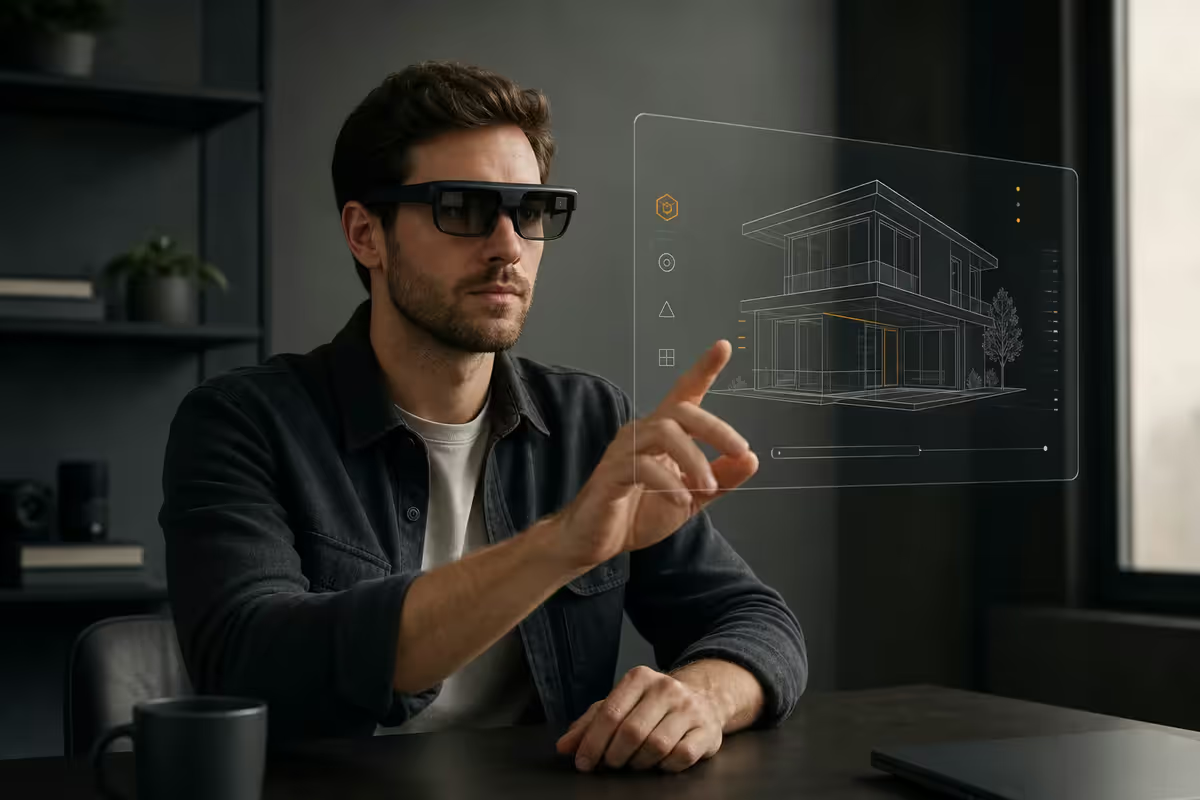
Not Vision Pro 2 — those are MR headsets. Real AR glasses look like normal eyewear, weigh 75g and put a 200-inch virtual screen in your visual field. The use cases are smaller than the hype, the hardware is more useful than the cynicism suggests.
- true AR weight
- 50-85g
- 2026 tech ceiling
- ~50° FoV
- SA import range
- R8.5k-R85k
AR vs MR vs VR — get the terms right
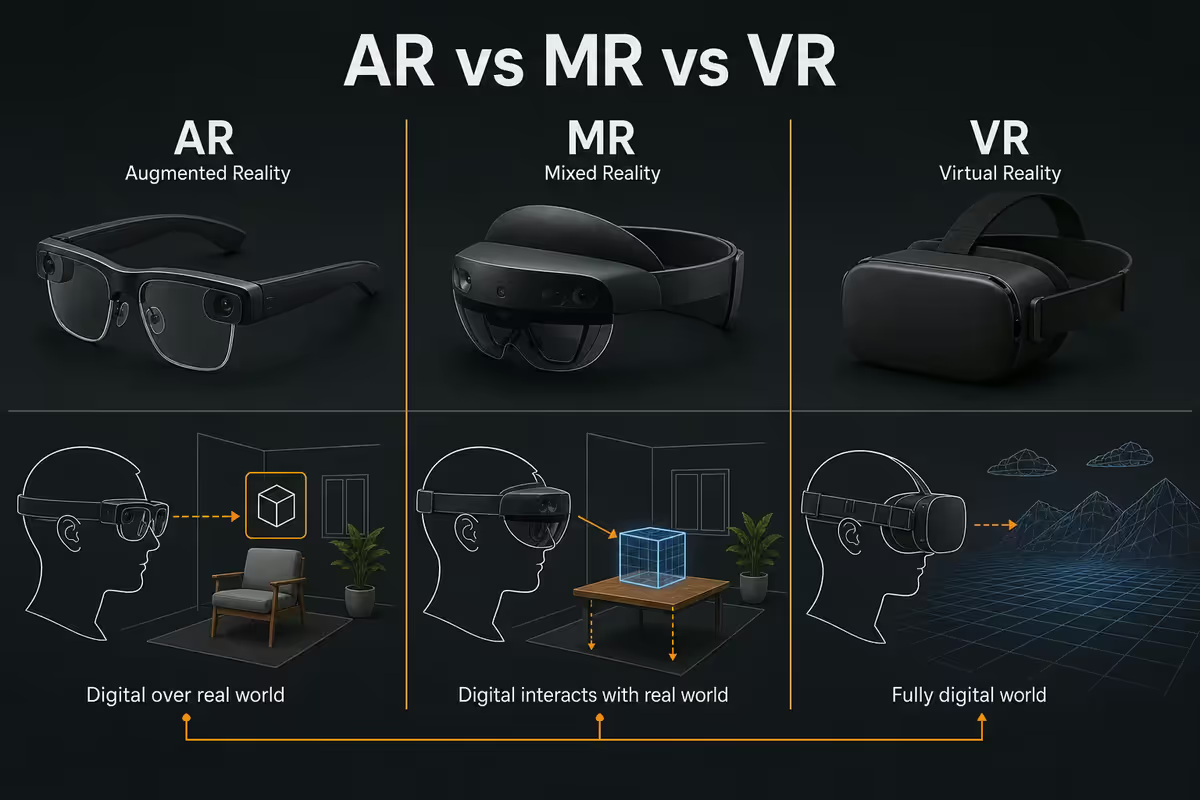
The marketing language is genuinely confused. Even Apple calls Vision Pro "spatial computing" rather than picking a side. Here's the technical distinction that matters.
| Category | What you see | Example products |
|---|---|---|
| VR (Virtual Reality) | Fully digital world replaces reality | Meta Quest 3S, PSVR2, Pico 4 Ultra |
| MR (Mixed Reality) | Real world via cameras (passthrough) + digital overlays | Apple Vision Pro 2, Quest 3 passthrough mode |
| AR (Augmented Reality) | See real world directly through lens, digital overlaid | XReal One, Viture Pro, Even Realities G1, Snap Spectacles 6, Meta Orion (Q3 2026) |
| Smart eyewear | Audio + camera, minimal or no display | Ray-Ban Meta, Bose Frames (discontinued), Solos AirGo |
The big distinction: passthrough vs see-through. Vision Pro 2 shows you the real world through cameras and displays — extraordinary fidelity, sub-12ms latency, but it's not literally see-through. The headset is opaque. True AR glasses (XReal, Viture, Meta Orion) use transparent waveguide or birdbath optics — light from the real world passes through the lens unmodified, with a digital image projected on top.
Why this matters for buyers: opaque MR is a fundamentally indoors-sit-down product. Even with passthrough you don't walk down Long Street wearing Vision Pro 2. Transparent AR can theoretically be worn while walking, cycling, talking to people normally — though the practical reality lags the theory.
How AR glasses work — optics 101
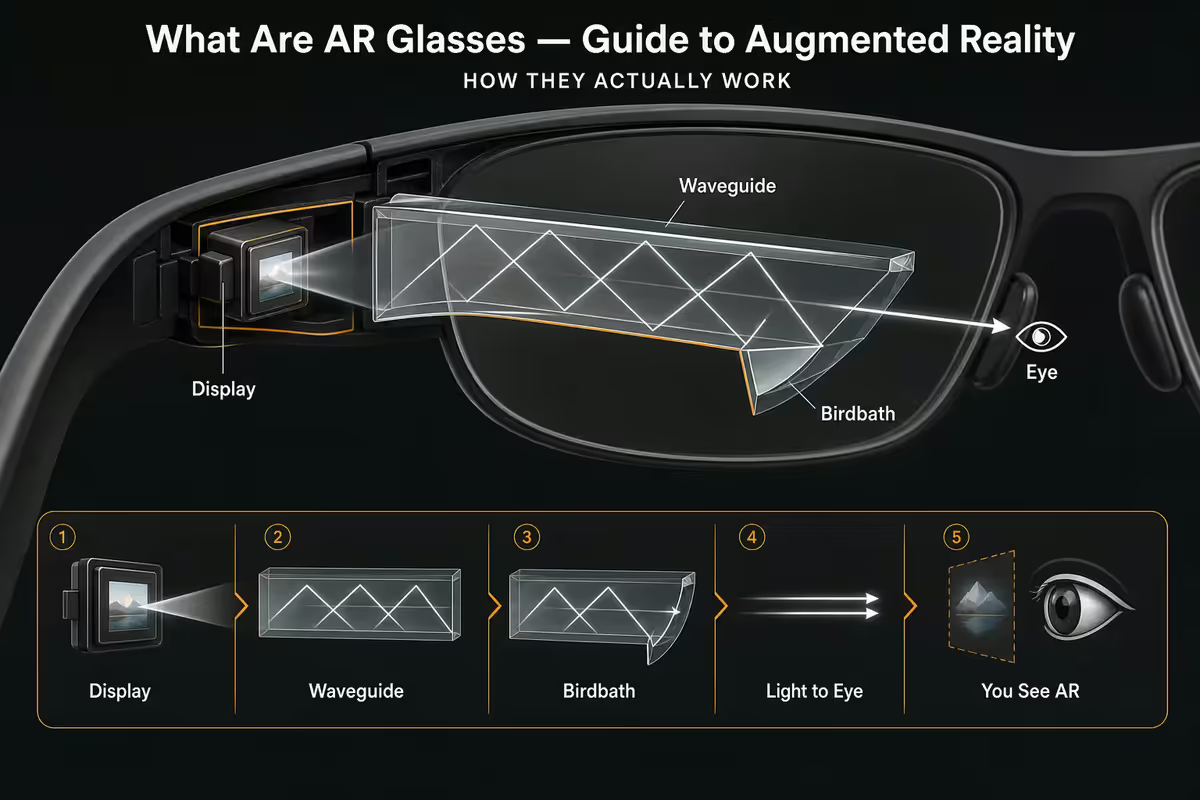
Two main optical approaches dominate 2026's AR market.
Birdbath optics (XReal, Viture)
Two micro-OLED displays inside the temple project an image onto a beam-splitter prism, which reflects light back to a curved mirror, which reflects it again into your eye. The result: a sharp, vibrant 1080p or 4K image equivalent to a large virtual screen 2-3m away. Trade-off: limited field of view (50° typical), darker lens (tinted because they're partially mirrored), tethered to a phone/laptop for processing.
Waveguide optics (Even Realities, Meta Orion, Snap Spectacles 6)
Light from a tiny projector enters the lens edge, bounces through nanoscale gratings inside the glass and emerges out the lens face into your eye. Clear lens (looks like normal eyewear), all-day wearable. Trade-off: lower brightness, more limited image quality (sparser, more "HUD-like" overlays rather than full video). Meta Orion's secret sauce is silicon carbide waveguides that deliver 70° FoV — historically waveguide tops at ~50°.
Tethered vs standalone
Tethered (XReal One, Viture Pro): USB-C cable to phone, laptop or Steam Deck. The host device runs everything; glasses are just a display. Massive battery life (no onboard battery), excellent compatibility, smaller and lighter. Limitation: cable, host required.
Standalone (Snap Spectacles 6, Even Realities G1, eventual Meta Orion): onboard SoC, battery, sensors. Wear them like sunglasses with no cable. Limitation: short battery, lower processing horsepower, heavier.
Apple Vision Pro 2 sits awkwardly — it has an external battery pack (tethered for power) but onboard M2 + R2 chips (standalone for processing). The 2.5-hour battery is the practical ceiling.
What AR glasses are actually for in 2026
Portable big-screen viewing
The single most-loved use case. Plug XReal One or Viture Pro into your phone, Steam Deck or laptop and you get a virtual 130-200 inch screen 2-3m away. Movies on flights, gaming in airports, work display in cafes. The image quality is genuinely impressive — better than a 13-inch laptop screen, comparable to a 65-inch TV at home distance.
Live captions and translation
Even Realities G1 and (soon) Meta Orion overlay live subtitles of spoken conversation into your visual field. Accessibility gold for deaf and hard-of-hearing users. Live translation (Spanish-to-English subtitles of a Madrid conversation) works well at ~90% accuracy in 2026.
Turn-by-turn navigation
Walking directions in your visual field beat looking down at a phone. Even Realities G1 displays a minimalist arrow + distance overlay during walking nav. Limitation: no full map view, no scrolling. Useful for walking the last 200m to a destination, not for trip planning.
Productivity overlays
Notifications, calendar, calls visible without picking up your phone. Implementation varies — Meta Ray-Ban does audio + camera but no visual overlay. Even Realities G1 and the eventual Meta Orion show actual screen-style notifications.
Developer / enterprise AR
Snap Spectacles 6 is a developer-only product ($1,099/year subscription). For builders prototyping AR experiences before consumer hardware arrives. Microsoft HoloLens 3 (industrial) and Magic Leap 2 (medical/enterprise) target field-service and surgical guidance use cases.
What AR glasses are NOT for (yet)
- Replacing your phone. Battery, input precision and processing power aren't there.
- Replacing your monitor full-time. Excellent for portable, OK for fixed desk use.
- Pokemon-Go-everywhere AR object world. No consumer AR glasses in 2026 do full SLAM + persistent world overlay reliably.
- Driving / cycling navigation. Mostly unsafe; legally questionable in SA.
2026 AR glasses picks
XReal One — R8,500-R12,000
Best for: portable big-screen viewing. 1080p per eye micro-OLED, 75g, USB-C tethered to phone/laptop/Steam Deck. The "buy now" pick for travellers, gamers and remote workers. SA imports via Wantitall, AliExpress + Yuppiechef. The XReal Beam Pro (R3,500 add-on) gives you a dedicated Android puck for use without a host device.
Viture Pro — R11,000
Best for: built-in prescription users. 1080p per eye micro-OLED, 78g, built-in diopter adjustment (-5.0 to 0). Includes electrochromic dimming so lenses go fully opaque for cinema mode. Slightly better software ecosystem than XReal. SA imports via Wantitall, Yuppiechef.
Even Realities G1 — R12,500
Best for: all-day daily wear. True waveguide optics, looks like normal eyewear, 50g, prescription-lens compatible at standard optometrists. Display is monochrome green (Heads-Up Display aesthetic) — shows notifications, navigation, AI assistant. Battery: 1-2 days of HUD use, 30-60 min of video. The closest 2026 product to "AR glasses you'd actually wear every day".
Snap Spectacles 6 — Developer only
Best for: AR developers and Lens creators. $1,099/year subscription, not consumer-sold. Standalone (no tether), 226g, 46° FoV per eye, hand tracking, environmental SLAM. The most capable consumer-form-factor AR glasses you can get in 2026 — at a developer-only price point.
Meta Orion — Q3 2026 launch expected
Best for: those willing to wait. Meta's first consumer-targeted AR glasses (not the Ray-Ban Meta, which has no display). Silicon carbide waveguides, ~70° FoV, neural wristband input, standalone. Pricing not yet announced; expect $1,500-$2,500 US RRP / R30,000-R45,000 SA grey import. Watch this space.
Apple Vision Pro 2 — R85,000 SA grey import
Best for: creative pros and MR enthusiasts. Technically Mixed Reality, not AR. Class-leading display, eye tracking, hand tracking, spatial video. 600g+ headset weight + 2-2.5 hour external battery. The only "spatial computing" product worth the spend if you genuinely use it daily for design, video editing or immersive workflows. Don't buy as a novelty.
Weight, comfort and prescription
Comfort is the single biggest variable in whether AR glasses get used or shelved.
| Product | Weight | Comfort window |
|---|---|---|
| Even Realities G1 | 50g | All-day wearable |
| XReal One | 75g | 2-3 hours easy |
| Viture Pro | 78g | 2-3 hours easy |
| Snap Spectacles 6 | 226g | 30-60 min |
| Meta Orion (expected) | 98g | 3-4 hours estimated |
| Apple Vision Pro 2 | 600g+ | 60-90 min |
Anyone claiming "all-day" AR over 100g is exaggerating. The neck strain accumulates. Smartphones are 200g and we hold them at arm's length — wearing them on your face is fundamentally different.
Prescription compatibility matters for the 60%+ of adults who wear glasses. Options:
- Built-in diopters — Viture Pro adjusts -5.0 to 0 (no astigmatism).
- Custom inserts — XReal One, Snap, Vision Pro all support magnetic prescription inserts. R1,800-R5,500.
- Optometrist-fitted — Even Realities G1 is sold as a regular eyeglass frame; your optometrist fits prescription lenses. Best long-term answer.
- Over-glasses fit — only Vision Pro 2 with appropriate sizing accommodates worn-over-glasses fit, and even then uncomfortably.
SA buying reality
No major AR glasses brand has first-party SA retail in 2026. All units arrive via grey import. Practical implications:
- USD pricing + shipping + duty. Expect 20-35% premium over US RRP after landing costs.
- Warranty via international channels. Manufacturer warranty applies but RMA shipping to US/EU is 4-8 weeks.
- No SA tax invoice / VAT input claim on most parallel imports.
- App store geo-locks — some XReal / Viture apps gate features by region.
Safer SA import channels: Wantitall (official US-import service), Yuppiechef (curated tech selection), Takealot international, Amazon Global. Avoid AliExpress for AR glasses — counterfeit XReal and Viture units are increasingly common.
Common AR glasses mistakes
Conflating AR with MR or VR. Vision Pro 2 is genuinely impressive but it's MR — opaque, indoors-only, $3,500. Don't buy expecting "wear them outside, normal eyewear" — that's not what they are.
Buying for the future, not present. "I'll get a use out of it eventually." The 2026 use cases are real but narrow. If you can't name a specific weekly workflow today, wait for Meta Orion or Vision Pro 3.
Underestimating tether dependency. XReal and Viture need a USB-C device with display output. iPhone before 15 Pro doesn't work. Older Android phones don't work. Check compatibility before buying.
Ignoring prescription. Trying to wear AR glasses over your regular glasses is uncomfortable. Budget R1,800-R5,500 extra for proper prescription fitting if you wear glasses daily.
Believing battery marketing. "All-day battery" on AR glasses means notifications-only HUD mode. Active video display lasts 1-2 hours on standalone units. Plan accordingly.
Counterfeit AliExpress units. Fake XReal Air and Viture units are flooding budget marketplaces. Stick to verified channels (Wantitall, official manufacturer stores).
Key takeaways
- AR ≠ MR ≠ VR. Vision Pro is MR (opaque + cameras). True AR is transparent see-through (XReal, Even Realities).
- 2026's killer use case is portable big-screen viewing — XReal One and Viture Pro deliver this today.
- FoV caps at ~50° (waveguide) to 70° (Meta Orion). Not "fills your whole view" yet.
- Weight is comfort. Under 100g for daily wear. Above 100g for sit-down sessions only.
- SA has no first-party AR retail — all units are USD-imported. Expect 20-35% premium and longer RMA.
Frequently asked questions
What's the difference between AR, MR and VR?
VR replaces your view (Quest 3). MR shows real world via cameras + overlays (Vision Pro 2). AR overlays on transparent lenses (XReal, Viture, Even Realities).Can AR glasses replace my monitor?
For portable work, increasingly yes — XReal One delivers a 130-200" virtual screen. For multi-monitor desk setups, not yet (50° FoV limit).How much do AR glasses cost in South Africa?
XReal One R8.5-12k import, Viture Pro R11k, Even Realities G1 R12.5k, Vision Pro 2 R85k grey market. All USD-imported in 2026.What can I actually do with AR glasses?
Portable big-screen viewing, live captions/translation, walking navigation, notification overlays. The "AR everywhere" future is 2-3 years out.Are AR glasses comfortable to wear?
Birdbath (75-85g) comfortable for 2-3 hours. Waveguide (50-60g) all-day wearable. Vision Pro 2 (600g+) uncomfortable after 90 min.Do AR glasses work with prescription lenses?
Yes — XReal/Snap/Vision Pro support inserts (R1.8-5.5k). Viture Pro has built-in diopter. Even Realities G1 takes regular optometrist lenses.How long does the AR glasses battery last?
Tethered glasses (XReal, Viture) draw from phone — 4-8 hours. Vision Pro 2: 2-2.5 hour battery pack. Standalone HUD glasses: 1-2 days notifications, 30-60 min video.Should I buy AR glasses now or wait?
Buy now if you travel frequently or have accessibility needs. Wait if you want a general consumer killer app. Meta Orion Q3 2026 may shift the category.