Smart Watch Buying Guide
How to choose a smart watch.
The right answer changes with your phone, your sport and your relationship with charging cables. There's no universal best — only the watch that fits your week.
- battery range
- 1-30 day
- on flagship tier
- 8 sensors
- SA tier range
- R1.2k-R20k
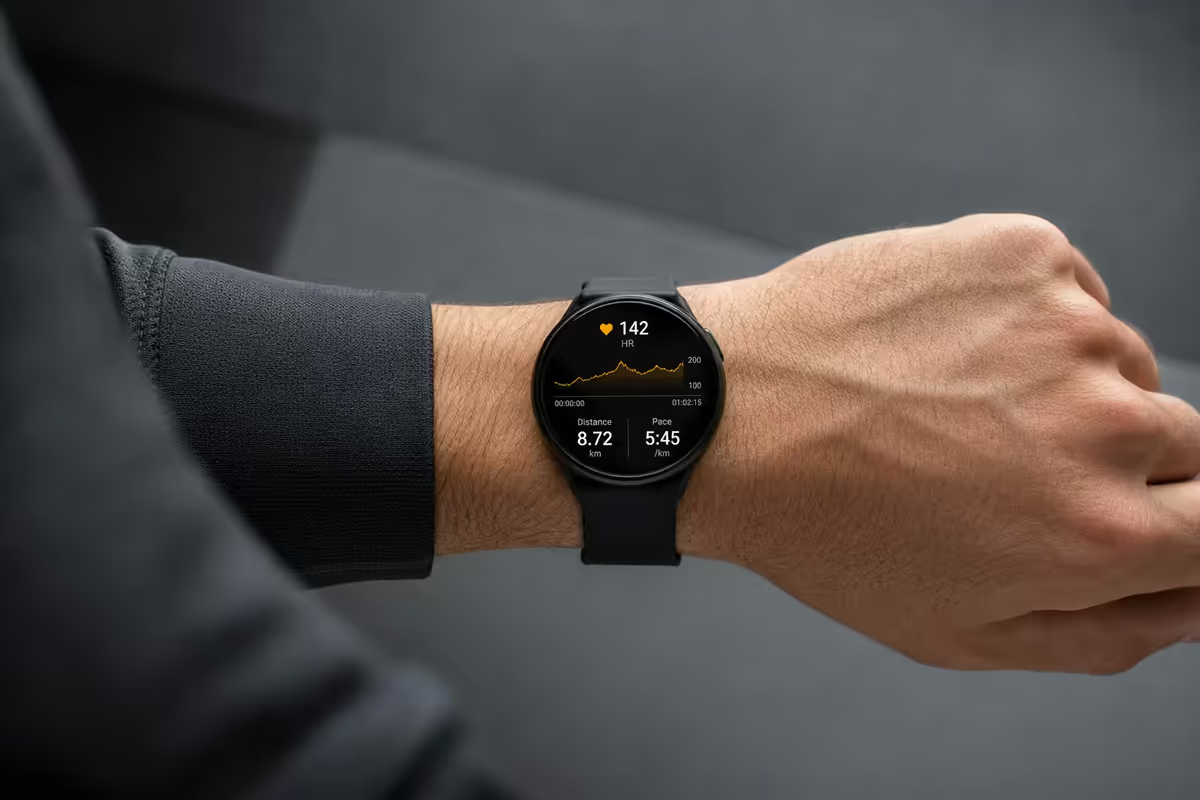
Match your phone first
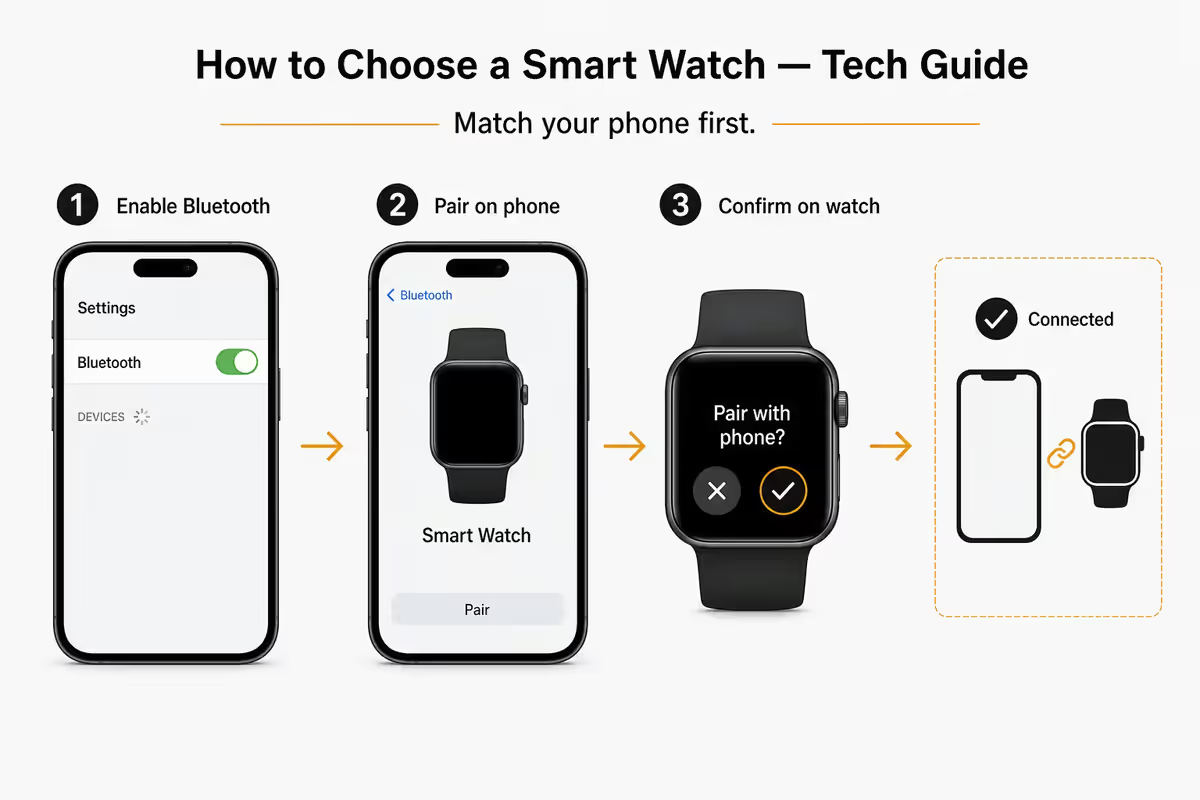
The smart watch decision starts with your phone, not your wrist. Cross-platform watch picks exist (Garmin, Fitbit) but the deepest integrations are locked to one ecosystem.
| Your phone | Best fit watch | Why |
|---|---|---|
| iPhone (any) | Apple Watch Series 11 / Ultra 3 / SE 3 | Deepest iOS integration, reply to messages, Apple Pay, Maps wrist nav |
| Samsung Galaxy | Galaxy Watch 8 / 8 Ultra | Samsung Health, SmartThings, BioActive sensor exclusive features |
| Google Pixel | Pixel Watch 3 | Native Wear OS 6, Pixel-specific Fitbit Premium features |
| Other Android | Pixel Watch 3 / Galaxy Watch 8 (some quirks) | Wear OS 6 works on most Android 11+ |
| Any platform — sport-first | Garmin Fenix 9 / Forerunner 265 | Cross-platform, training-grade metrics, multi-week battery |
| Any platform — recovery-first | WHOOP 5 + app | Screenless, focuses on HRV, sleep, strain |
Apple Watch on Android: not possible. Setup requires an iPhone. There's no workaround.
Galaxy Watch on iPhone: possible but crippled. Basic notifications work; Samsung Health integration, ECG and BioActive features don't. Don't buy a Galaxy Watch for iPhone use.
Garmin and Fitbit work fully on both platforms. Garmin Connect and Fitbit apps are first-class on iOS and Android. WHOOP 5 is platform-agnostic — the watch has no screen, so platform integration matters less.
Sensors that matter
Sensor count on a flagship watch can hit 8-10, but only a handful drive daily value. Here's what each actually does.
Heart rate (every watch has this)
Optical photoplethysmography (PPG) sensors track your pulse via skin reflection. Accuracy varies by brand — Apple, Garmin and Polar are class-leading; Fitbit and Xiaomi are adequate; sub-R1,500 budget watches drift 5-10% off real values. Resting HR and HR variability (HRV) are the trends to watch, not single readings.
SpO2 (blood oxygen)
Useful for sleep apnea detection and altitude training. Smart watches read 2-4% lower than clinical pulse oximeters but are accurate for trend monitoring. Apple disabled SpO2 in US Series 9/10 due to a Masimo lawsuit — fully restored in Series 11 globally.
ECG (electrocardiogram)
Single-lead ECG detects atrial fibrillation (AFib). FDA-cleared on Apple Watch S4+, Samsung Galaxy Watch 4+, Fitbit Sense 2, Withings ScanWatch. Independent studies show 94-98% accuracy vs clinical 12-lead. Save the PDF — your cardiologist can read it.
Skin temperature
Tracks overnight wrist temp variation. Apple, Samsung, Garmin and Fitbit all measure it. Useful for sleep insights, menstrual cycle prediction (Apple Cycle Tracking, Natural Cycles integration) and early illness detection (a 0.5°C overnight bump often appears 24-48 hours before fever).
GPS — single-band vs dual-band
Dual-band GPS (L1 + L5) is dramatically more accurate in cities, dense forests and steep valleys. Apple Watch Series 9+, Garmin Fenix 7+, Coros Apex 2, Polar Grit X2 ship dual-band. Single-band GPS drifts 5-15m in built-up areas. For trail running and city marathons, dual-band is worth the premium.
2026 frontier sensors
- Blood pressure — Samsung Galaxy Watch 8 (cuff calibration required, not available in SA yet officially). Huawei Watch D2 does true inflatable cuff measurement.
- Glucose trends — no watch does true non-invasive glucose yet. Apple integration with Dexcom Stelo (CGM patch) shows trends on the watch face.
- Hydration / sweat sensors — early on Garmin and a few smart bands, not yet reliable.
Battery life tier
This is the single biggest happiness driver after phone-platform match. Are you OK charging every night, or does that idea drive you mad?
| Watch | Real-world battery | Charging routine |
|---|---|---|
| Apple Watch Series 11 | 18-36 hours | Overnight or in the shower |
| Apple Watch Ultra 3 | 36-72 hours | Every second day |
| Galaxy Watch 8 | 30-40 hours | Overnight |
| Galaxy Watch 8 Ultra | 60-72 hours | Every second day |
| Pixel Watch 3 | 24-36 hours | Overnight |
| Garmin Forerunner 265 | 10-13 days | Charge with the laundry |
| Garmin Fenix 9 | 25-30 days | Monthly |
| Coros Vertix 2 | 40-60 days | Twice a quarter |
| WHOOP 5 | 14 days | Slide-on battery pack — never remove |
| Fitbit Charge 7 | 7-10 days | Weekly |
| Xiaomi Smart Band 9 | 14-21 days | Fortnightly |
The mental shift is real. With a Garmin or Fitbit you wear it 24/7 and forget about charging. With an Apple Watch or Galaxy Watch you have a charging routine — usually in the shower, while reading or overnight (which kills sleep tracking continuity).
The shower workaround for Apple Watch: charge for 90 minutes daily during morning routine — coffee, shower, breakfast. Watch hits 100% by the time you leave the house. Sleep tracking stays intact.
Fitness focus
Casual fitness (walks, gym 2-3x weekly)
Apple Watch SE 3 (R6,500), Samsung Galaxy Watch 8 (R8,500), Fitbit Charge 7 (R2,400), Xiaomi Smart Band 9 (R1,200). All track steps, basic workouts, sleep and heart rate adequately. Don't overspend.
Runner / cyclist (5+ hours weekly outdoor)
Garmin Forerunner 265 (R9,500) for runners — dual-band GPS, training load, race time predictions, recovery time. Garmin Edge 1050 for cyclists. Coros Pace 4 (R7,500) for marathon-focused budget pick. Apple Watch Ultra 3 (R18,500) covers most of this for iPhone users who also want general smart watch features.
Trail runner / hiker / multisport
Garmin Fenix 9 (R18,500) — 30-day battery, topo maps, dual-band GPS, ABC (altimeter, barometer, compass), 50+ sport modes. Polar Grit X2 (R12,500) as alternative. Coros Vertix 2 (R16,500) for ultra-runners wanting 60-day battery.
Recovery-focused athlete
WHOOP 5 (R6,500 + R250/month subscription) — no screen, no notifications, 24/7 HRV / sleep / strain coaching. Or Garmin Body Battery + Sleep Score on any Fenix/Forerunner. Or Oura Ring 4 (R8,500) for ring-form-factor recovery tracking.
Swimmer / triathlete
Apple Watch Ultra 3 (R18,500) for pool + open water + general use. Garmin Fenix 9 for serious triathlon + multisport. Both are 10 ATM water-resistant and track laps, stroke type, SWOLF and intervals.
Top picks for 2026
Apple Watch Series 11 — R12,500
Best for: iPhone users wanting the deepest watch experience. S11 chip, restored SpO2 globally, brighter Always-On display, blood pressure trends (no calibration). 41mm and 45mm cases. Trade-off: 18-36 hour battery.
Apple Watch Ultra 3 — R18,500
Best for: iPhone users who hike, dive, run long distances or hate daily charging. Titanium case, 36-72 hour battery, dual-band GPS, satellite SOS, dive computer to 40m, action button. The watch we get asked about most.
Samsung Galaxy Watch 8 — R8,500
Best for: Samsung Galaxy phone users. Rotating bezel returns. BioActive sensor (HR + ECG + bioimpedance for body composition). Wear OS 6 with Samsung's One UI Watch layer. 40mm and 44mm.
Samsung Galaxy Watch 8 Ultra — R14,500
Best for: Galaxy users wanting Apple-Watch-Ultra-equivalent battery and ruggedness. Titanium, 47mm, 60-72 hour battery, dual-band GPS.
Google Pixel Watch 3 — R8,500
Best for: Pixel users and Wear OS purists. Native Fitbit integration (no Samsung Health overlay), cleanest Wear OS 6 implementation. 41mm and 45mm.
Garmin Fenix 9 — R18,500
Best for: trail runners, hikers, triathletes, anyone who hates charging. 30-day battery, topo maps, multi-sport, AMOLED, dual-band GPS. The gold standard for serious endurance athletes. 47mm and 51mm.
Garmin Forerunner 265 — R9,500
Best for: dedicated runners on a Fenix budget. AMOLED, 13-day battery, dual-band GPS, training-grade metrics. Skip the more expensive Forerunner 965 unless you specifically want topo maps.
WHOOP 5 — R6,500 + subscription
Best for: recovery-first athletes. No screen, no notifications. 24/7 HRV, sleep, strain coaching. 14-day battery with slide-on top-up pack. Requires R250/month subscription — a deal-breaker for some, a non-issue for serious training people.
Fitbit Charge 7 — R2,400
Best for: casual fitness, sleep tracking and the entry-tier value play. Smaller display than a full smart watch, 7-10 day battery, ECG and SpO2. Good for parents wanting basic fitness data without R10k spend.
Xiaomi Smart Band 9 — R1,200
Best for: budget-first buyers, kids' first activity tracker. 14-21 day battery, AMOLED, basic notifications. Build quality matches the price.
Straps, bands and aftermarket
Smart watch straps are the cheapest way to refresh a watch year-on-year. Apple, Samsung and Garmin all use standardised band attachments — third-party straps are available from R150 (silicone) to R3,500 (leather, milanese, ocean band copies).
- Apple Watch — proprietary slide-and-lock. Aftermarket selection is enormous (Spigen, Nomad, Catalyst, etsy makers). Avoid R80 noname straps — clasps break in weeks.
- Galaxy Watch / Pixel Watch — standard 20mm or 22mm spring-bar bands. Universal aftermarket support.
- Garmin Fenix 9 — proprietary QuickFit attachment, third-party support is solid. 22mm / 26mm size depending on case.
- WHOOP 5 — proprietary slide bands. WHOOP sells "ProKnit" and bicep bands.
Common smart watch mistakes
Buying for sensors you'll never use. Skin temperature and ECG sound impressive in store; if you don't have AFib in your family and don't track cycles, you won't open the app twice. Don't pay R3,000 premium for a feature you'll forget about.
Wrong watch for the wrong phone. Galaxy Watch on iPhone has half its features disabled. Apple Watch on Android has zero features. Match the watch to your phone OS first.
Underestimating battery anxiety. If you currently never let your phone get below 30%, you'll hate a daily-charge watch. Get a Garmin or WHOOP and stop worrying.
Overestimating battery anxiety. The other direction. People skip Apple Watch because "I don't want to charge it daily" — then never plug it in. Overnight charging is fine if you have a routine.
Skipping the size try-on. 41mm vs 45mm Apple Watch, 40mm vs 44mm Galaxy Watch, 47mm vs 51mm Fenix — wrist size matters more than spec sheet. Try before you buy. Wrists under 6.5 inches go small; wrists over 7.5 inches go large.
Ignoring water resistance. Most watches handle pool swimming (5 ATM / 50m). Open water swimming and diving need 10 ATM (100m) or Apple Watch Ultra / Garmin Descent. Don't dive with a Galaxy Watch 5 LTE.
Key takeaways
- Match the watch to your phone OS first. Apple Watch is iPhone-only; cross-platform options are Garmin and Fitbit.
- Battery life is the second biggest happiness driver. 1-day vs 7-day vs 30-day are fundamentally different routines.
- Apple Watch Series 11 (iPhone), Galaxy Watch 8 (Android), Garmin Fenix 9 (athlete) cover most buyers.
- Dual-band GPS makes a real difference for outdoor tracking — worth the premium for runners and hikers.
- SA warranty matters — buy from authorised SA channels even at an 8-15% premium over parallel imports.
Frequently asked questions
What's the best smart watch in 2026?
Apple Watch Series 11 (iPhone), Galaxy Watch 8 (Android), Garmin Fenix 9 (athlete), WHOOP 5 (recovery). No single "best" — match to phone and use case.Apple Watch vs Garmin — which should I buy?
Apple Watch for daily life + iPhone integration. Garmin for serious training, ultra-running, hiking and 30-day battery. They optimise for different lives.Does an Apple Watch work with Android?
No. iPhone-only since launch. On Android, look at Samsung Galaxy Watch 8, Pixel Watch 3 or Garmin.What sensors matter most in a smart watch?
Heart rate (everywhere), SpO2 (sleep/altitude), ECG (AFib), skin temperature (sleep/cycle), dual-band GPS (outdoor accuracy). Blood pressure and glucose are 2026 frontiers.How long should a smart watch battery last?
Apple/Samsung 1-2 days. Pixel Watch 1-2 days. Garmin Forerunner 7-11 days. Fenix 25-30 days. WHOOP 14 days with slide-on pack. Match to your routine.What smart watch is best for fitness tracking?
Garmin for outdoor multisport. Apple Watch Ultra 3 for swimming + general. WHOOP 5 for recovery focus. Fitbit Charge 7 at the entry tier.Are smart watch ECG and SpO2 readings accurate?
ECG: 94-98% accurate for AFib detection. SpO2: 2-4% lower than clinical pulse oximeters — good for trends, less for absolute values.How much should I spend on a smart watch?
R2-3.5k entry (Xiaomi, Fitbit Charge). R6.5-9.5k mainstream (Apple SE, Galaxy Watch 8). R10.5-15k flagship (Series 11). R16k+ athlete tier (Fenix 9, Ultra 3).