Lifestyle Career Guide
How to become a game developer — in South Africa, the honest path.
Free Lives shipped Broforce from a Cape Town flat. Nyamakop won an IGF award with Semblance. Kwalee opened an SA office. Carry1st publishes globally from Cape Town. The path exists — and it doesn't start with a degree.
- shipping globally
- 3 SA studios
- to start learning
- R0
- to first shipped game
- 9-18 mo
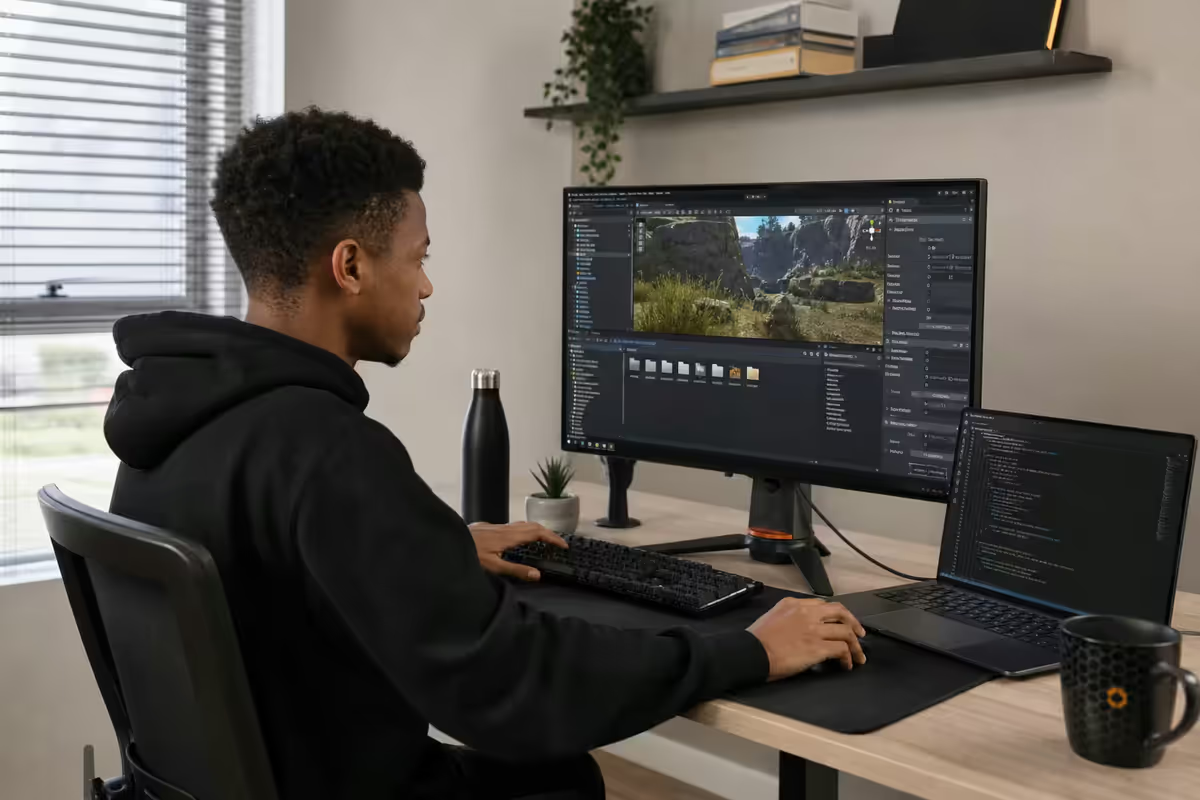
The South African game dev landscape
South Africa's commercial game industry is small but punches dramatically above its weight. The blueprint already exists — every successful SA developer you'd name is a normal person who shipped a small thing first, then a bigger thing, then iterated for years.
Free Lives, founded in Cape Town, is the studio behind Broforce (Devolver, 2015), Gorn (the wildly popular VR sword brawler) and Genital Jousting. They've collaborated with Studio MDHR on Cuphead-adjacent work and shipped Anger Foot in 2024. They started as friends in a shared flat. Nyamakop, based in Johannesburg, made Semblance (2018), the first game from sub-Saharan Africa to release on Nintendo Switch globally and a 2018 IGF Excellence in Design finalist. They followed with Carto-style design work and remain one of the most respected small SA studios.
24 Bit Games, headquartered in Cape Town, runs the largest work-for-hire mobile pipeline in SA, doing co-development on titles you've heard of for studios you've heard of. They quietly employ dozens of SA developers full-time. Kwalee, a UK-headquartered global publisher, opened an SA office in 2022 and actively hires Unity developers, artists, designers and producers locally. Carry1st, also Cape Town-based, is Africa's largest mobile games publisher with backing from a16z and Konvoy, publishing globally and acquiring African studios.
The point: you do not need to leave SA to work in games. You may not need to leave Cape Town. The opportunities are real, the studios are hiring, and the gap between "I want to make games" and "I'm being paid to make games" is mostly portfolio and consistent shipping.
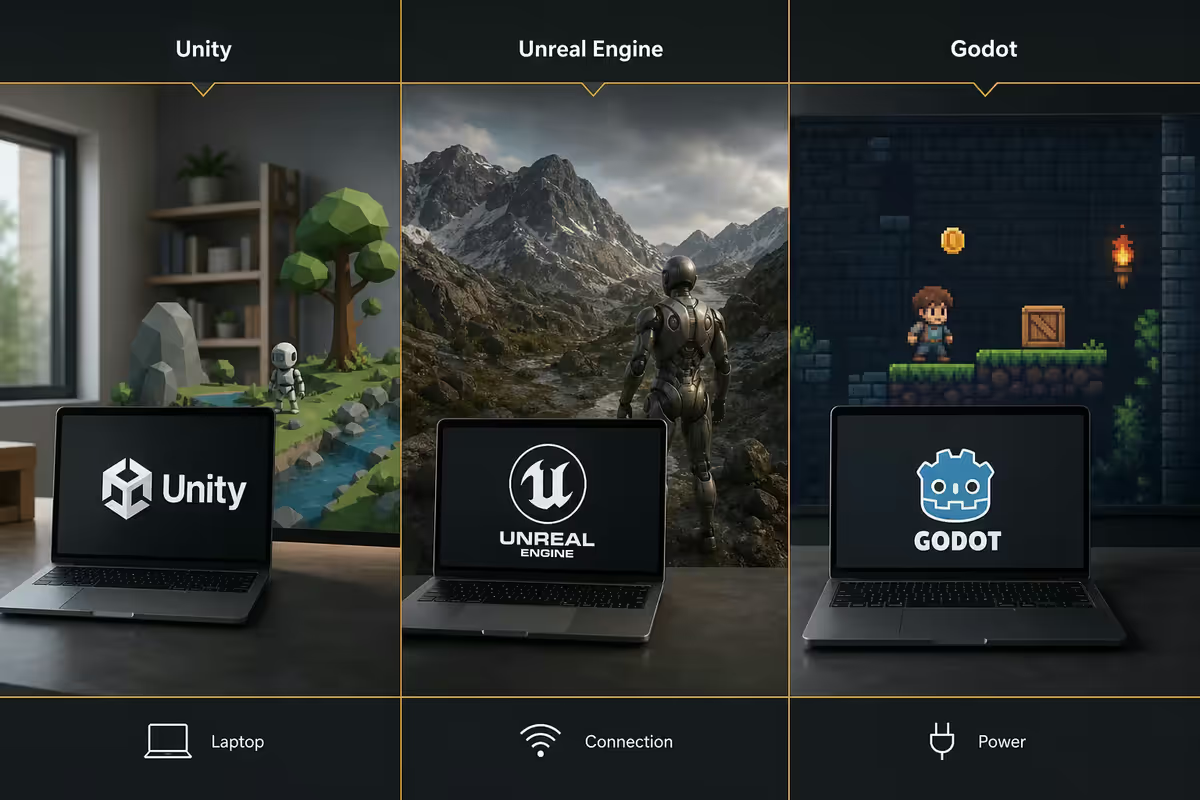
Choosing your first game engine
Picking your first engine is the most over-thought decision in beginner game dev. All three of the major engines below will let you ship a complete game to Steam, mobile or itch.io. The differences matter more for your tenth game than your first.
| Engine | Learning curve | Asset store | Royalty | SA hiring relevance |
|---|---|---|---|---|
| Unity | Friendly — C#, huge tutorials | Massive (paid + free) | Free under USD 200k revenue | Highest — Free Lives, Nyamakop, Kwalee, 24 Bit |
| Unreal Engine 5 | Steep — Blueprints help, C++ deep | Marketplace + Quixel free | 5% above USD 1m | Solid for AAA / 3D roles |
| Godot 4 | Friendly — GDScript like Python | Smaller, mostly free | 0% — fully open source | Growing but smaller market |
Pick Unity if you want the biggest tutorial ecosystem, broad SA hiring market and a path into mobile work. C# is friendly, the asset store accelerates prototypes, and you can ship to PC, mobile, console and web from one codebase. Free Lives and Nyamakop both use Unity in production.
Pick Godot if ideology matters to you — fully open source, no royalties, no corporate licence changes (a Unity policy reversal in 2023 burned a generation of devs). The engine is lean, the editor is fast, and GDScript feels close to Python. The community is smaller but enthusiastic, and titles like Brotato and Cassette Beasts have shipped successfully on Godot.
Pick Unreal if you specifically want to make a visually demanding 3D game, learn industry-standard tools used at AAA studios globally, or work in cinematic / film-VFX-adjacent fields (Unreal is increasingly used for virtual production). The trade-off: it is heavier on hardware, the C++ side has a real learning curve, and the marketplace is biased toward 3D assets.
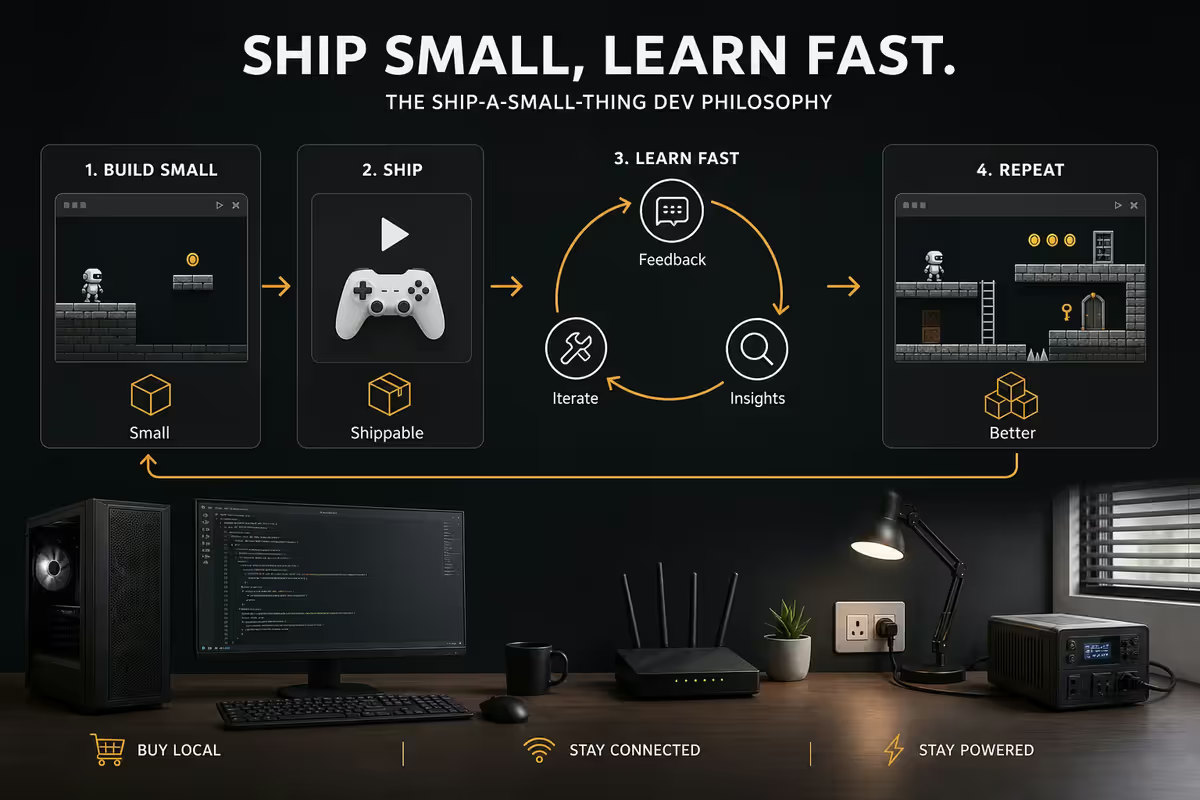
The “ship a small thing” philosophy
Every successful SA game dev will tell you the same thing in slightly different words: your first project is not your dream project. Your first project is the one you complete. Then your second project is slightly more ambitious. By your fifth or sixth, you have the muscle memory to attempt the dream.
Broforce did not start as Broforce. It started as a Ludum Dare game jam entry that the Free Lives team kept iterating on. Semblance started as a Make Games SA jam project. Carto's mechanics were prototyped in days. The pattern is universal — small, finished, shippable, then bigger.
A realistic first-six-months path:
- Month 1: Install Unity (or Godot). Complete the official “Roll-a-Ball” / “2D Beginner” tutorial. Make Pong from scratch without following a tutorial.
- Month 2: A 1-screen platformer with one enemy and a goal. Use placeholder art from Kenney.nl (free). Ship a build to itch.io.
- Month 3-4: A small game with 3-5 levels, a menu screen, a save system, and audio. Doesn’t matter what genre — matters that you finish it.
- Month 5-6: Enter a Ludum Dare or Make Games SA monthly jam. Ship in 48 hours with whatever theme is set.
By month six, you have three or four playable artefacts on itch.io and a clear idea of what you actually enjoy about making games. That portfolio is what gets you into Make Games SA conversations, NAG nominations, and eventually paid roles.
University programmes & self-study routes
A formal degree is genuinely useful for some careers in games and totally unnecessary for others. Here is the honest breakdown.
Computer Science from UCT, Wits or Stellenbosch is the strongest signal if you want to join a studio like Kwalee, Carry1st or do engine programming work. UCT runs a games-themed elective in later years and has graduates working at studios globally. Wits' Game Design Hub (within the Wits School of Arts and digital arts faculty) is a more design-and-art-focused programme with strong portfolio output. Stellenbosch's CS programme is mathematically rigorous — excellent for graphics, AI and engine work.
Open Window Institute in Pretoria and Cape Town runs dedicated game design and animation degrees that produce portfolios specifically aimed at the games and animation industries. It's a strong route if you know you want to be a designer or artist rather than a programmer.
Self-taught via YouTube, Udemy and free Unity Learn / Godot docs remains the most common path among working SA indie devs. Free official tutorials from Unity, Unreal and Godot are world-class. Brackeys, Sebastian Lague, Game Maker's Toolkit and DevDuck are the standard YouTube reference points. Paid resources like Udemy's GameDev.tv courses (often on sale for R250-R400) are excellent comprehensive starting points.
Make Games SA, NAG Awards & the community ladder
The single most useful thing any aspiring SA game developer can do — before any tutorial, before any engine choice — is join the Make Games SA Discord. It's free, the community is active, and almost every working SA game dev is in it.
Make Games SA runs weekly and monthly game jams, organises playtest evenings at rAge and Comic Con Africa, and is the unofficial talent pool that SA studios look at first when hiring junior roles. The community attitude is unusually welcoming for game dev — show up with a half-broken prototype, ask for feedback, and you'll get it.
The NAG (New Age Gaming) Awards recognise the best SA-made games each year across categories like Best Indie, Best Mobile, and Most Innovative. Winning or even being nominated is a real credibility signal — it travels with you into job applications, publisher pitches, and Steam featuring conversations. Submission windows are typically mid-year.
| SA studio tier | Studios | Focus |
|---|---|---|
| Indie / boutique | Free Lives, Nyamakop, Coronation Lava, Whale Rock | Original IP, Steam & console |
| Work-for-hire mid | 24 Bit Games, Sea Monster | Mobile co-dev for global studios |
| Publisher / global | Carry1st (Cape Town), Kwalee SA office | Mobile publishing & live ops |
| Community & education | Make Games SA, Wits Game Design Hub, Open Window | Jams, talent, portfolios |
| Showcase & events | NAG Awards, Comic Con Africa, rAge | Playtest, exposure, awards |
Publishing: Steam, mobile stores & the Rand reality
Once you've made something playable, you have to decide where it lives. The economics differ sharply between Steam, the mobile stores and the curated subscription services.
Steam Direct requires a USD 100 fee per game (about R1,800-R2,000), refundable once you cross USD 1,000 in revenue. You also need a US tax form (W-8BEN) on file so Valve withholds less. Steam's 30% revenue share is industry standard. It is the default destination for indie PC games and the most discoverable storefront for SA-made titles.
Google Play charges a one-off USD 25 developer fee (about R460) and takes 15-30% depending on revenue tier. Apple's App Store requires a USD 99 per year developer membership (about R1,800/yr) plus the same revenue cut. The mobile path is brutally competitive on discoverability but has a lower cost of failure — a bad mobile game costs you R460 and some time; a bad Steam game costs you R1,800 and some self-respect.
Apple Arcade and Xbox Game Pass are curated — you don't apply, you pitch. Apple Arcade pays an upfront-and-bonus model for premium content; Game Pass pays a guaranteed sum for a Day One launch. Both are essentially out of reach for true first-timers, but realistic within 2-3 shipped titles if you're working at indie quality. Carry1st-published titles have appeared on Game Pass, so the African indie path is real.
itch.io is the free, frictionless first home for everything you make. No upfront fee, you set your own revenue share (default 10% to itch.io but adjustable to 0%). Every SA indie dev has an itch.io page. Use it as your portfolio.
The loadshedding reality for solo devs
Working as a game developer in South Africa means engineering around an unreliable grid. Stage 4-6 loadshedding can claim 2-4 productive hours from your day. The studios that survive long-term build resilience into their workflow from day one.
Hardware essentials. A 1,500VA UPS (Mecer, APC or similar, around R2,500) gives a desktop workstation 30-60 minutes of runtime — enough to save cleanly, commit your work and shut down. A laptop with a strong battery for design, code and art tasks during outages. Fibre and LTE backup so your version control sync keeps working when power returns.
Workflow essentials. Version control is non-negotiable — Git via GitHub or GitLab for code, Plastic SCM (Unity DevOps) for large binary projects. Cloud builds via GitHub Actions, Unity Cloud Build or Unreal's Horde let heavy compiles run on remote servers during your outages. Cloud-synced assets via Google Drive, OneDrive or Dropbox mean a lost desktop never costs you a project.
The mental side matters too. Solo game dev is lonely — loadshedding makes it lonelier. Show up to Make Games SA voice chats, attend in-person meetups when they happen in Cape Town or Joburg, and ship something small monthly even if it's broken. The community is the difference between burning out at month nine and shipping at month eighteen.
Key takeaways
- SA has a real games industry — Free Lives, Nyamakop, 24 Bit, Kwalee, Carry1st are all hiring or shipping commercially.
- Unity for the broadest hiring fit; Godot if open source matters; Unreal if you specifically want AAA visuals.
- Ship a small thing. Then a less small thing. Then a real thing. Don't engine-hop, don't dream-project first.
- Join the Make Games SA Discord today. It's free, it's active, and it's where SA studios spot junior talent.
- Engineer around loadshedding — UPS, laptop, cloud builds, version control. Resilience is part of the SA dev craft.
Frequently asked questions
Do I need a university degree to become a game developer in South Africa?
No. Most SA indie studio founders don't have games degrees. A CS degree from UCT, Wits or Stellenbosch helps for studio roles at Kwalee or Carry1st, but a shipped game beats a transcript every time.Which game engine should I learn first in 2026?
Unity for most beginners — biggest SA hiring market, used by Free Lives and Nyamakop, free up to USD 200k revenue. Godot for fully free open source. Unreal for AAA visuals. Pick one and ship a small game before switching.How much does it cost to publish a game on Steam from South Africa?
USD 100 per game (about R1,800-R2,000), refundable once you earn USD 1,000. You also need a US W-8BEN tax form. Google Play is a one-off USD 25; Apple's developer programme is USD 99 per year.Can I make a full-time living as an indie game developer in SA?
Possible but rare on first projects. Free Lives and Nyamakop got there after years of shipping. Most working SA devs combine indie work with contracting, work-for-hire, or roles at Kwalee or Carry1st.What does it cost to set up a dev workstation for game development?
Entry Unity / Godot workstation: R18,000-R25,000 (Ryzen 5, 32 GB RAM, RTX 4060). Unreal-ready: R35,000-R55,000 (Ryzen 7/9, 64 GB RAM, RTX 4070 Ti Super or higher). Add a 27" 1440p monitor and a UPS.How does loadshedding affect game development?
Stage 4-6 costs solo devs 2-4 hours daily. Workarounds: 1500VA UPS, laptop for unbroken design work, cloud builds via GitHub Actions or Unity Cloud Build, and version control so you never lose progress.Is Make Games SA worth joining?
Yes — the single most useful step for new SA devs. Active Discord, weekly jams, NAG Awards and Comic Con Africa playtest tracks, and the talent pool that SA studios actually look at. Free to join.Can I work remotely for international game studios from SA?
Yes — many SA devs do. Kwalee runs a remote-friendly SA office, Carry1st publishes globally from Cape Town, and remote roles at UK/EU/US studios are accessible with a strong portfolio. SAST timezone is ideal for European studios.
Get the Evetech app
Exclusive app-only prices, daily flash sales, and free delivery on orders over R4,000 — download the app and start saving.