Gaming Internet Speed Guide
Best internet speed for gaming.
More Mbps does not equal better gaming. Ping, jitter and routing quality decide the kill. The right tier is the one that downloads your 120 GB Warzone update before bedtime — not the one with the biggest number.
- sweet spot
- 100 Mbps
- ping SA servers
- Below 50 ms
- SA monthly band
- R599-R1.4k
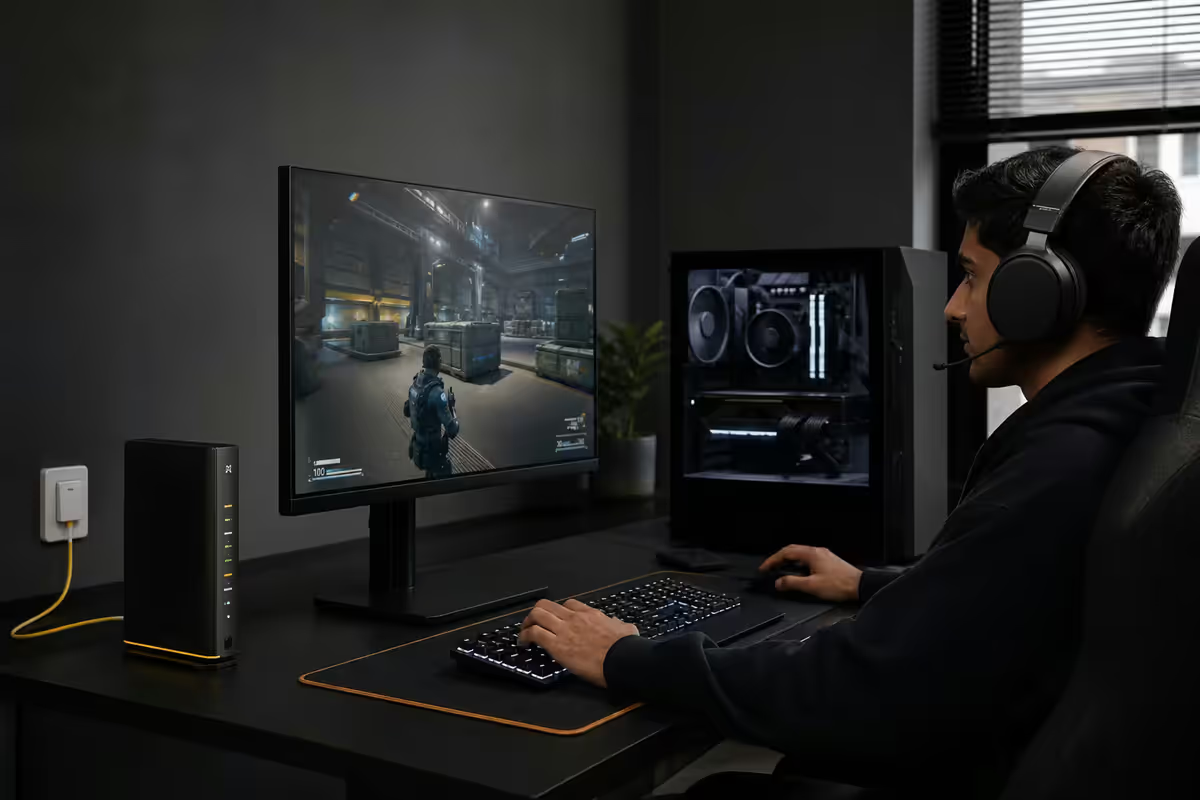
Fibre tiers — what each Mbps actually buys
SA fibre tiers in 2026 land at predictable price points across all major ISPs (Afrihost, Cool Ideas, RSAWeb, Mweb, Webafrica) running on Vumatel, Openserve, Frogfoot or Octotel infrastructure. The differences between providers are routing and support quality, not raw speed.
| Speed | What it enables | Right for |
|---|---|---|
| 25 Mbps | Casual gaming, 1080p streaming, 1-2 users | Tight-budget single user |
| 50 Mbps | Gaming + 4K Netflix, video calls | Couples, basic households |
| 100 Mbps | Sweet spot — gaming, streaming, downloads | Most SA gaming households |
| 200 Mbps | Faster downloads, 2-3 gamers, streamer | Family with multiple gamers |
| 500 Mbps | Heavy multi-user, professional streaming | Streamers, content creators |
| 1 Gbps | Power users, large households, lab | 5+ heavy users / future-proof |
25-50 Mbps — the budget tier
25 Mbps is genuinely enough for one gamer plus 1080p streaming. A modern AAA game update (100 GB) takes about 9 hours; not ideal but workable overnight. 50 Mbps handles two simultaneous users comfortably. Both tiers are fine for in-game performance — ping is identical to faster tiers.
100 Mbps — the sweet spot
For ~R799/month from Afrihost or Cool Ideas, 100 Mbps gives you: one gamer playing online, 4K Netflix on the TV, three phones, video calls, and a 100 GB game download in 2.5 hours. This is the right answer for 70% of SA gaming households.
200-500 Mbps — multi-user comfort
Worth the upgrade when: you have multiple gamers simultaneously, you stream on Twitch/YouTube, you do daily large downloads, or you back up a NAS to the cloud nightly. Most SA fibre packages are symmetric (upload = download), so the bigger upload is real and useful.
1 Gbps — future-proofing or overkill
Most consumer hardware can't sustain 1 Gbps to a single PC anyway (Wi-Fi caps below, single-source servers throttle). 1 Gbps makes sense in heavy households with 5+ users, or for power users running NAS, cloud sync and pro streaming concurrently. Otherwise you're paying for headroom you'll never touch.
Why ping beats throughput for competitive play
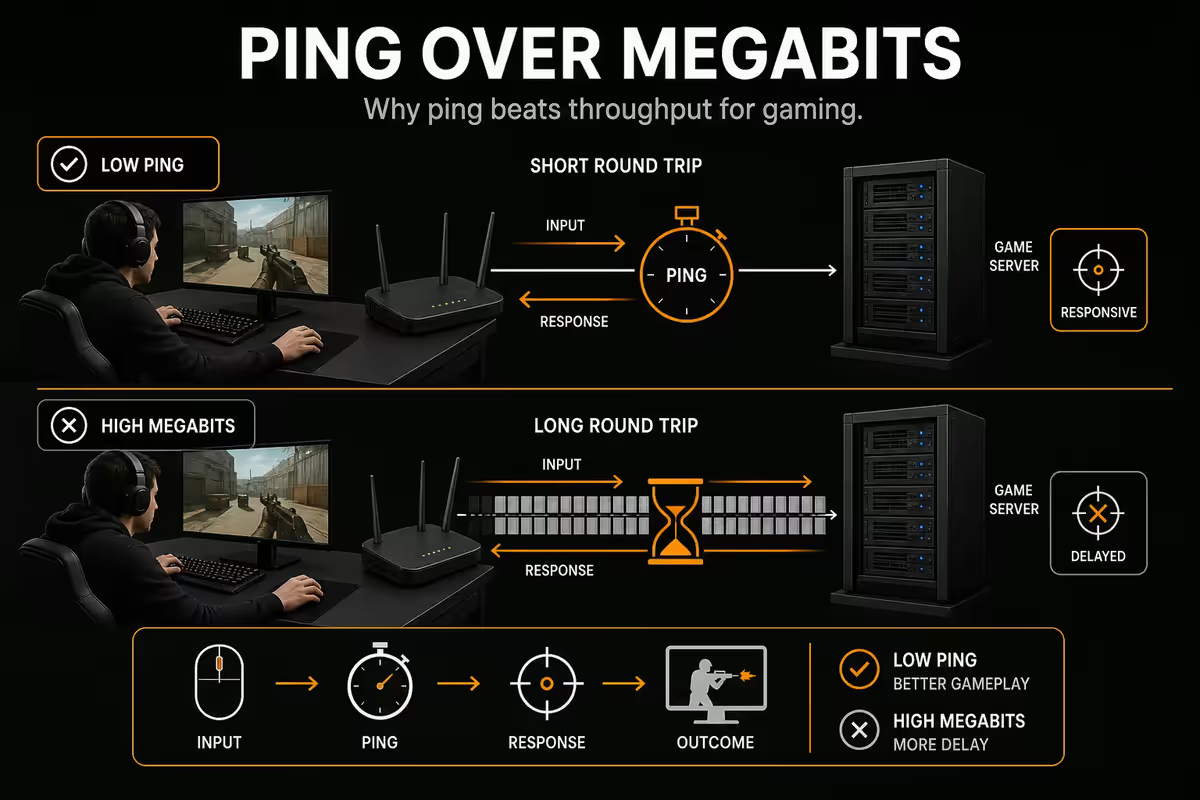
A common misconception: "1 Gbps gives me lower ping than 100 Mbps." It doesn't. Ping (latency) is determined by network distance and routing quality, not bandwidth.
In gaming terms: a 25 Mbps line in Cape Town with great peering to a Joburg game server will have lower ping (and better gameplay) than a 1 Gbps line in the same suburb with worse routing. Bandwidth helps you download the patch faster. Ping decides whether your bullets register.
Ping benchmarks for SA gamers
| Game server location | Excellent | Playable |
|---|---|---|
| SA (Joburg / Cape Town) | < 25 ms | 25-80 ms |
| Europe (Frankfurt / London) | 130-180 ms | 180-250 ms |
| US East | 200-230 ms | 230-300 ms |
| US West | 240-280 ms | 280-350 ms |
| Asia / Singapore | 280-330 ms | 330-400 ms |
| Australia | 320-380 ms | 380-450 ms |
CS2, Valorant, Apex Legends, COD and FIFA all run dedicated SA servers in 2026. Always pick those when available. Watch out for jitter — fluctuating ping (e.g. 20 ms one second, 80 ms the next) is more disruptive than a stable 60 ms.
Upload speed for streamers and creators
SA fibre is mostly symmetric — your 100 Mbps download package gives you 100 Mbps upload. That's huge compared to international markets and changes the math for streamers, video callers and cloud sync users.
Twitch / YouTube streaming bandwidth
| Stream quality | Bitrate | Upload needed |
|---|---|---|
| 720p 30fps | 3-4 Mbps | 10 Mbps line |
| 720p 60fps | 4-5 Mbps | 10 Mbps line |
| 1080p 30fps | 5-6 Mbps | 20 Mbps line |
| 1080p 60fps | 6-8 Mbps | 25 Mbps line |
| 1440p 60fps | 10-15 Mbps | 50 Mbps line |
| 4K 60fps (YouTube) | 25-40 Mbps | 100 Mbps line |
Add 30-40% headroom to whatever your stream needs — your line is shared with everyone else in the house. Backups, video calls, second-screen YouTube, all compete with your stream bandwidth. A streamer at 1080p60 should be on at least 50 Mbps symmetric, ideally 100 Mbps to leave margin.
SA ISP gaming reality
Same fibre infrastructure, different routing. The ISP-level difference matters more for gaming than most people realise.
Afrihost
The most popular gamer choice in SA — strong peering to local game servers (CS2, Valorant, COD, FIFA), competitive pricing, mature uncapped uncontended fibre. The Afrihost gaming community is large enough that ISP-level outages get noticed and addressed quickly.
Cool Ideas
Leads on international routing — Steam, Origin, EU/US servers tend to route better via Cool Ideas than competitors. Reputation for excellent customer service. Slightly higher price than Afrihost but it shows up in routing quality.
RSAWeb
The technical/enthusiast favourite. AS-level transparency, BGP communities, strong peering and excellent IPv6 support. Smaller user base but disproportionately strong opinions in the SA networking community for good reason.
Mweb, Webafrica, Vox
Solid alternatives at similar price points. Better gaming experience than the larger telcos' retail offerings (Telkom, Vodacom fibre) which can have less aggressive peering with game servers.
Fibre + LTE dual WAN — gold tier for serious gamers
Load shedding kills the ONT. A street-side cable cut takes the line down for 6 hours. An ISP-side issue mid-ranked-match drops you out of placement. Dual WAN solves all of it.
Setup: a router that supports dual WAN failover (Mikrotik hAP ax3, Mikrotik RB5009, OPNsense / pfSense box). Fibre is primary; LTE is secondary. When fibre drops, traffic shifts to LTE within 1-2 seconds. Ranked match disconnect avoided.
Cost:
- Dual-WAN router: R2,500-R6,000 (Mikrotik) or DIY (OPNsense, R3,000-R5,000).
- LTE router: R3,500-R5,500 (covered in our LTE router guide).
- LTE data: R299-R599/month (Rain, MTN, Vodacom).
- UPS so both survive load shedding: R1,500-R3,000.
Roughly R8,000-R12,000 once-off plus R299-R599/month for backup. Steep, but justifies itself fast for streamers, competitive players and work-from-home professionals.
We build gaming PCs daily in Centurion, and the ISP question comes up in almost every consultation. The pattern: someone spends R45,000 on a Ryzen 9 + RTX 5080 build, then pairs it with the cheapest ISP they can find. The R200/month they save goes straight into 80 ms of routing delay versus Afrihost or Cool Ideas. The right pairing for a gaming PC of that calibre is a wired Cat6 connection to a 100-200 Mbps Afrihost or Cool Ideas line — total ~R899/month including line rental. The performance return on that spend is real. Don't undercut the connection.
Behind the Build · From our gaming bench
Cloud gaming in SA — GeForce Now, Xbox Cloud
NVIDIA GeForce Now and Xbox Cloud Gaming both work from SA in 2026, but the limit is latency, not bandwidth.
GeForce Now
Free tier (1-hour sessions, basic GPU), Priority (R169/month, 6-hour sessions, RTX), Ultimate (R339/month, 4K 120 fps, RTX 4080-class). NVIDIA routes SA users via European data centres — typically 130-180 ms ping. Acceptable for single-player AAA, painful for competitive shooters.
Xbox Cloud Gaming
Included with Game Pass Ultimate (R169/month). Routes via UK data centre — 160-200 ms typical from SA. Works well for non-competitive games (Forza, Starfield, Fable) but feels off for COD or Rocket League.
Bandwidth need is modest: 25-45 Mbps for 1080p, 50 Mbps for 4K. Stability matters more than peak — packet loss kills cloud gaming worse than slow speed.
SA pricing 2026 — the actual numbers
| Speed | Typical SA price (R/month, incl. line rental) | Best for gamers |
|---|---|---|
| 25 Mbps | R499-R599 | Single user, tight budget |
| 50 Mbps | R599-R699 | Couples, casual gaming |
| 100 Mbps | R699-R899 | Most gaming households (sweet spot) |
| 200 Mbps | R849-R1,099 | Multiple gamers / streamer |
| 500 Mbps | R999-R1,299 | Professional streamer / family |
| 1 Gbps | R1,199-R1,499 | Power users, multi-NAS, lab |
| + LTE failover | +R299-R599/month | Ranked play / load-shedding-proof |
Key takeaways
- 100 Mbps symmetric fibre is the sweet spot for most SA gaming households (~R799/month).
- Ping beats throughput for in-game performance — pick the ISP with best peering to game servers.
- Upload matters for streamers — SA symmetric fibre at 50+ Mbps comfortably handles 1080p60 streams.
- Afrihost, Cool Ideas, RSAWeb are the SA gamer triad — peer well at NAPAfrica, support is strong.
- Fibre + LTE dual WAN with UPS is gold tier — load-shedding-proof and ranked-disconnect-proof.
Frequently asked questions
What internet speed do I actually need for gaming?
Competitive gameplay uses 5-30 Mbps. Most SA gamers should buy 100 Mbps for download speed (game updates) and household sharing, not for in-game performance.Does higher Mbps reduce ping or lag?
No. Ping is determined by network distance and routing quality, not bandwidth. Focus on ISP peering quality over raw Mbps.What is a good ping for gaming in South Africa?
SA servers: below 25 ms excellent, 25-50 ms fine. EU: 130-180 ms typical. US East: 200-250 ms. CS2, Valorant and Apex now have SA servers.How much upload speed do I need for streaming on Twitch?
1080p60: 6-8 Mbps. 720p60: 4-5 Mbps. Add 30-40% headroom. SA fibre is symmetric so a 100 Mbps line handles streaming and downloads simultaneously.Is 100 Mbps fibre enough for a gaming household?
Yes for most. Handles 1-2 gamers, 4K streaming, phones, video calls, downloads. Upgrade to 200-500 only for multiple heavy users.Afrihost vs Cool Ideas vs RSAWeb — which ISP is best for gaming?
All three are excellent. Afrihost has strongest SA game-server peering. Cool Ideas leads on international routing. RSAWeb is the technical favourite.Should I use both fibre and LTE for gaming?
Dual WAN is gold-tier for ranked players and streamers — automatic failover when fibre drops. R299-R599/month for the LTE line.What internet speed do I need for cloud gaming (GeForce Now, Xbox Cloud)?
25-45 Mbps download is enough. Latency to EU/UK datacentres (130-200 ms) is the real limit, not bandwidth.