Projector Buying Guide
How to choose a projector.
A 100-inch image for the price of a 65-inch TV. The catch: lumens, throw ratio and ambient-light handling all have to line up. Get one wrong and the picture disappears.
- ANSI lumens
- 1500-4000
- throw ratio
- 0.25-2.0
- SA tier range
- R5k-R50k
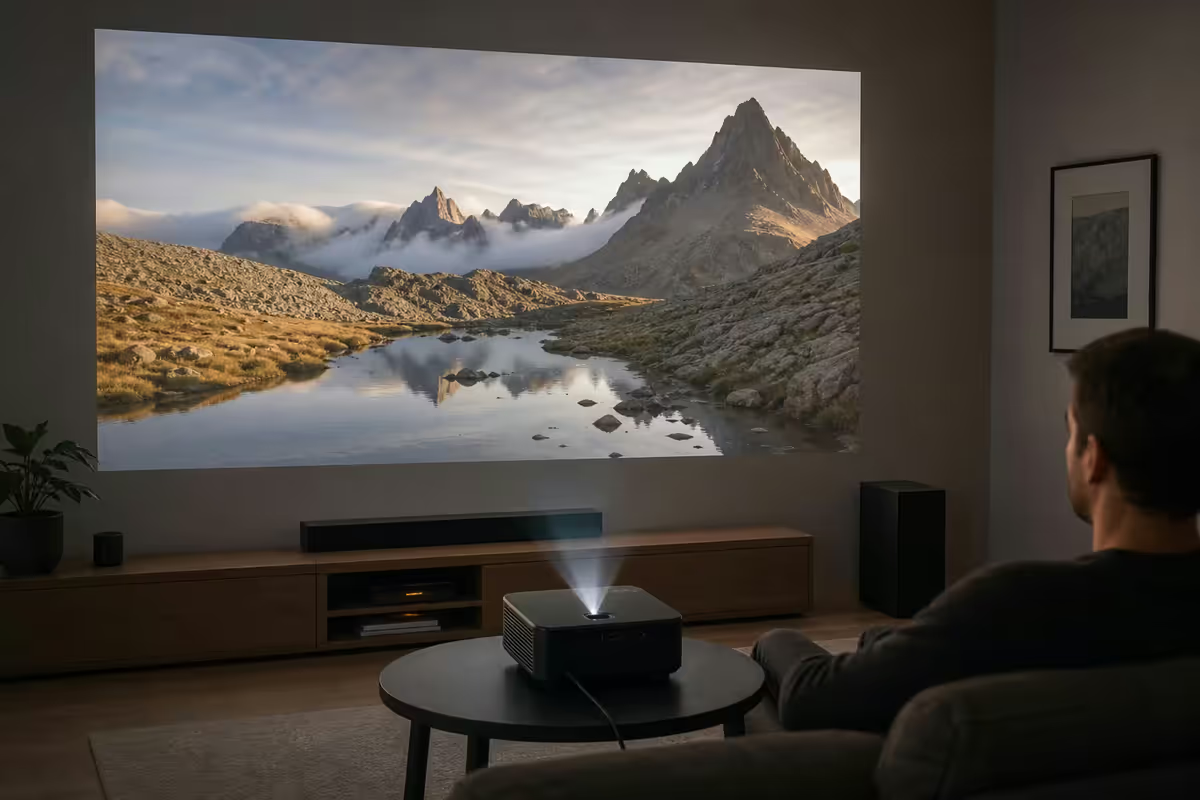
Lumens — match brightness to the room
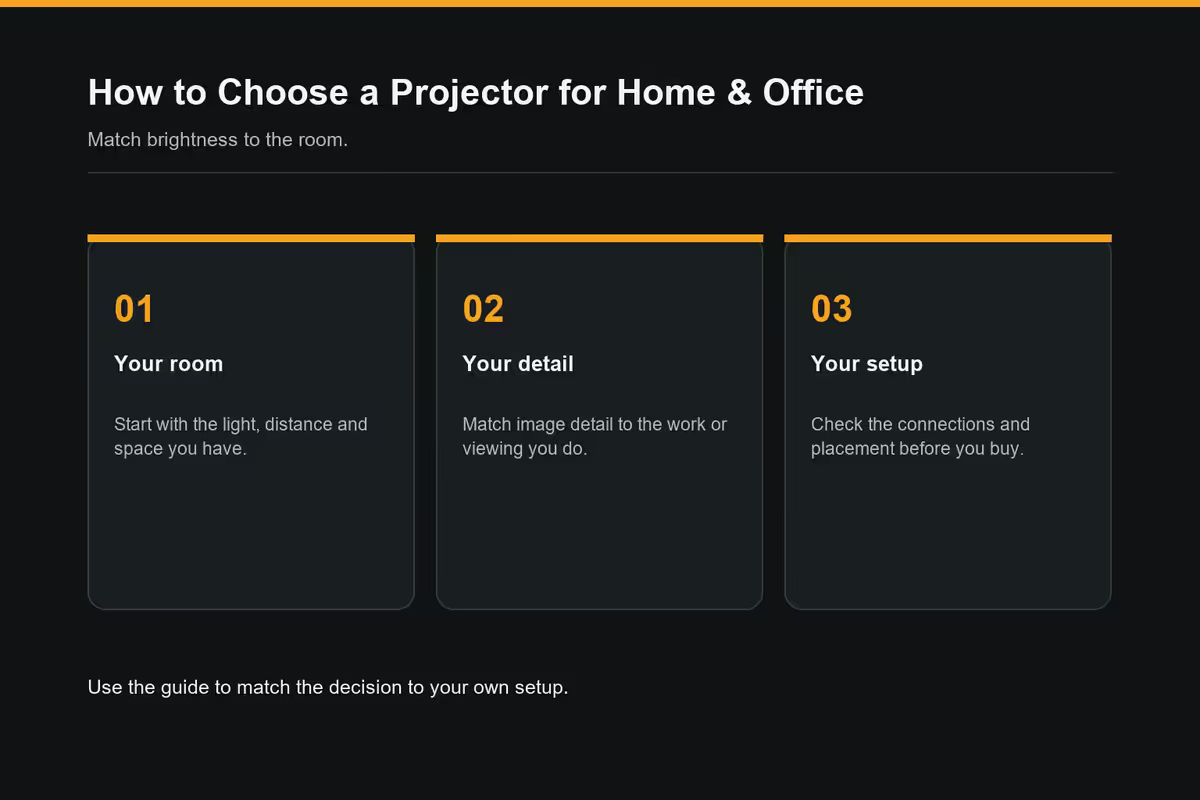
Brightness is the single biggest reason projectors disappoint at home. A 1500-lumen pico picked up at a deal is fine in a blacked-out attic and useless in a Sunday-afternoon Joburg lounge.
There's also marketing lumens vs ANSI lumens. Brand-X "5000 lumen" pico projectors often measure 800-1200 ANSI under standardised testing — a 3-5x inflation. Always look for "ANSI lumens" or "ISO 21118" on the spec sheet. If the number isn't qualified, halve it and proceed cautiously.
| Room conditions | ANSI lumens needed | Example use case |
|---|---|---|
| Fully dark (cinema room) | 1500-2000 | Dedicated home theatre, blackout curtains |
| Controlled light (curtains drawn) | 2500-3500 | Evening movie night in a lounge |
| Ambient daylight (windows visible) | 3500-4500 | Daytime sport viewing, family room |
| Bright office / classroom | 4500+ | Boardroom, training centre, conference |
Going brighter is rarely a mistake. A 3500-lumen projector in a dark room is easily dimmed via eco mode. A 1500-lumen unit in a partially-lit room cannot be made brighter. When in doubt, size up.
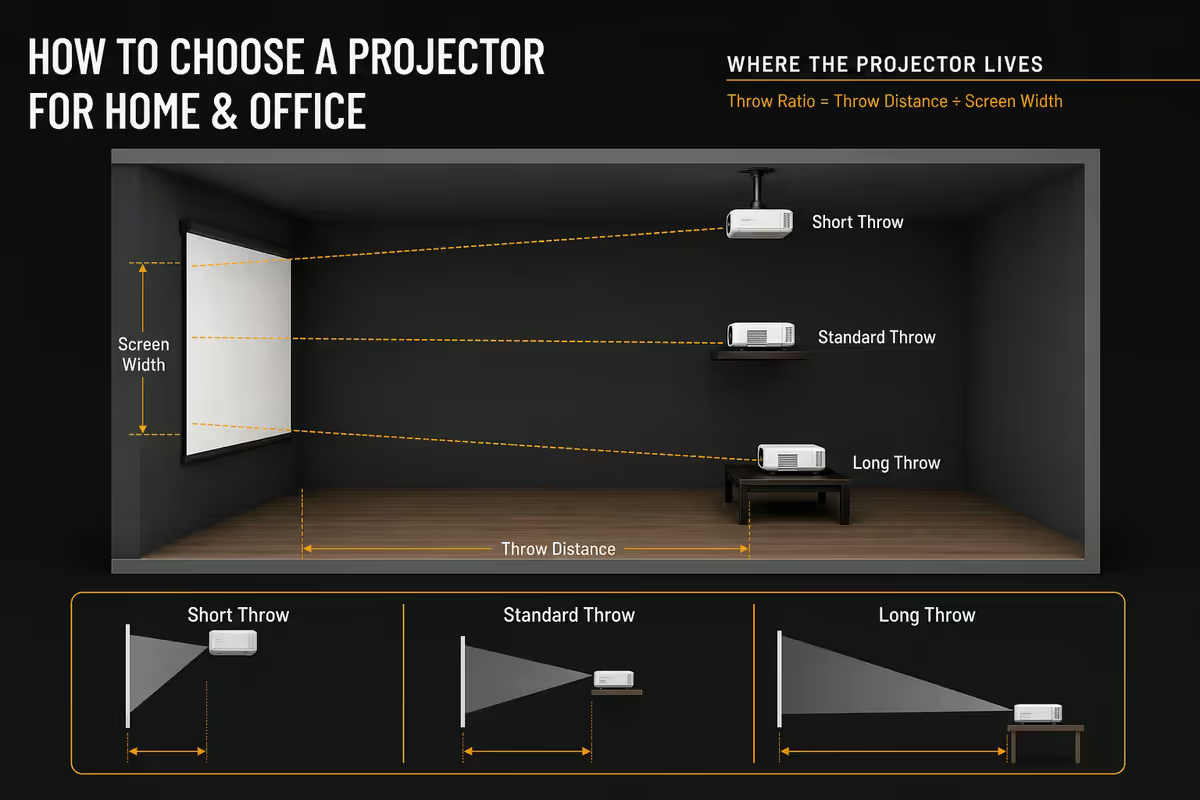
Throw ratio — where the projector physically lives
Throw ratio is the projector's distance from the screen divided by the screen width. A throw ratio of 1.5 means a 100-inch (2.2m wide) screen needs the projector 3.3m back. SA living rooms force this calculation immediately — most don't have 5m to play with.
Standard throw (1.2-2.0)
Ceiling-mount cinema territory. 3-5m of distance for a 100-120 inch image. Best picture quality for the rand because the optical path is optimised. Use when: you have a dedicated cinema room or a long lounge with ceiling-mount cabling.
Short throw (0.6-1.0)
Sits 1.2-2m from the screen. Good compromise for medium living rooms — sits on a coffee table or low TV unit. Use when: the room is 4-5m total and you can't ceiling-mount. BenQ TK700STi is the gaming-favourite short throw.
Ultra-short throw (0.25-0.4)
Sits 30-50cm from the wall — fires upward into a screen mounted above the cabinet. Use when: you want the projector to replace a TV in a regular lounge with no ceiling mount. Xgimi Aura, Hisense L9G, LG CineBeam HU915QE. Expect to pay 2-4x what a comparable standard throw costs.
1080p vs 4K vs native 4K
Resolution choices have changed since 2022. The 4K-pixel-shift category is now mainstream, true native 4K remains premium and 1080p is the budget sweet spot.
| Resolution | Where it fits | SA price band |
|---|---|---|
| 1080p (Full HD) | Budget setups, screens under 90", viewing distance 4m+ | R5,500-R12,000 |
| 4K UHD (XPR pixel-shift) | 100"+ screens, viewing 2.5-5m, most home cinemas | R14,000-R45,000 |
| Native 4K (Sony, JVC) | Enthusiast cinemas, premium home theatre rooms | R80,000+ |
The pixel-shift question. "4K" projectors from BenQ, Optoma and Epson use a 1080p or 2.7K DMD that physically shifts pixels at 240Hz to produce a 4K image on screen. The effect is indistinguishable from true 4K at normal viewing distance. Sony and JVC offer true native 4K but charge R80,000+ for it — for almost every buyer the pixel-shift route delivers the image quality at a third of the cost.
HDR matters more than 4K. A good HDR10 implementation on a 1080p projector often looks better than a flat-SDR 4K image. Look for HDR10, HLG and ideally HDR10+ or Dolby Vision support if you're a movie enthusiast.
Lamp vs LED vs laser
The light source decision drives long-term cost-of-ownership more than spec sheets suggest.
| Light source | Lifespan | Notes |
|---|---|---|
| UHP lamp | 3,000-6,000 hrs | Cheapest entry price. Bulbs R1,500-R4,000 to replace. |
| LED | 20,000-25,000 hrs | Compact units, lower max brightness (~2500 lumens). |
| Laser (DLP) | 20,000-30,000 hrs | Instant on, full brightness, no replacement parts. |
| Hybrid laser-LED | 20,000+ hrs | Xgimi flagship category — laser red/blue + LED green for wide colour gamut. |
Laser is now the right answer above R12,000. 20,000 hours is roughly 27 years of typical 2-hour-a-night use. You'll replace the projector before the laser engine dims. No bulb-swap downtime. Instant-on (lamps need 30-60s to reach full brightness).
Lamp still wins under R10,000. Entry projectors like the BenQ TH585 (R6,500) and Epson EB-FH06 (R8,500) deliver excellent picture quality. Plan for one bulb replacement around year 4-5 (R2,500) and you're still ahead of laser pricing.
Beware "LED" pico projectors. Sub-R3,000 "1080p LED" projectors are typically 480p or 720p native panels upscaling to 1080p input, with 200-500 ANSI lumens. They work for camping movies and that's about it.
Use case picks for SA
Home cinema (dedicated room)
- Epson EH-LS800 UST 4K laser (R45,000) — 4000 lumens, 0.25 throw, brilliant for living-room cinema.
- BenQ X3100i 4K gaming laser (R28,000) — true cinema + sub-16ms input lag at 4K60.
- Sony VPL-XW5000ES native 4K (R85,000) — enthusiast tier, true 4K SXRD panels.
Living-room family use
- Xgimi Horizon Ultra (R32,000) — 2300 ISO lumens, Dolby Vision, integrated Harman Kardon audio, Android TV.
- BenQ TK700STi 4K gaming (R22,000) — short throw, 3000 lumens, 16ms input lag, Android TV dongle.
- Epson EH-TW6250 4K (R18,000) — pixel-shift 4K, 2800 lumens, Android TV, value champion.
Office & boardroom
- Epson EB-FH06 (R8,500) — 3500 lumens, 1080p, set-and-forget reliability.
- BenQ MH560 (R10,500) — 3800 lumens, 1080p, network management.
- Epson EB-2255U WUXGA laser (R32,000) — premium boardroom workhorse.
Gaming & sports
- BenQ TK700STi (R22,000) — sub-16ms 4K60 input lag, the SA gamer pick.
- Optoma UHZ35ST 4K laser short throw (R24,000) — 4ms 1080p240 mode, 16ms 4K60.
- BenQ X3100i (R28,000) — 4K, 4ms 1080p240, designed for gaming-first cinema.
Portable & camping
- Xgimi Halo+ (R14,000) — 900 ISO lumens battery-powered, Harman Kardon audio, Android TV.
- Anker Nebula Capsule 3 Laser (R12,000) — pocket-sized 1080p laser, 2.5-hour battery.
Screens and ALR — the second half of the picture
A R30,000 projector throwing onto a flat white wall delivers worse image quality than a R12,000 projector throwing onto a R5,000 ALR screen. The screen surface controls reflectivity, colour neutrality and ambient-light rejection.
- White matte screens (gain 1.0) — neutral, wide viewing angle, needs a dark room. R1,500-R4,000 for a 100-inch motorised pull-down.
- Grey/contrast screens (gain 0.8) — deeper blacks, modest ambient-light tolerance. R3,000-R6,000.
- ALR (Ambient Light Rejecting) — rejects overhead light, boosts contrast 3-5x. R3,500-R12,000 for 100-inch. Mandatory with UST projectors.
- Black-grid CLR (Ceiling Light Rejecting) — specifically for UST projectors, rejects vertical light. R6,000-R18,000.
Paint-on screens (Paint On Screen Pro, Smart projection paint) are a respectable budget route for dedicated cinema rooms — R2,500 in materials covers a 120-inch wall area and delivers respectable performance if the wall is perfectly flat. Don't bother if you have any wall texture.
Common projector mistakes
Buying on inflated marketing lumens. "12,000 lumen home theatre projector" listings on Takealot under R3,500 measure ~600 ANSI in reality. Stick to ANSI-rated specs from established brands.
Projecting onto a textured wall. Even a hint of orange-peel texture casts micro-shadows that destroy fine detail. Either get a fixed-frame ALR screen or skim-coat and paint the wall with smooth low-sheen.
Skipping the throw calculator. A projector that doesn't physically fit your room is the worst kind of expensive doorstop. Run the calculator before swiping the card.
Ignoring fan noise. A 38dB projector ceiling-mounted 2m from your head is a constant whir. Bedroom or apartment installs need under 28dB units (Epson Home Cinema series, Xgimi Horizon Ultra, BenQ HT2060) or a soffit/recessed mount.
Wireless casting as the only input. Built-in Android TV dongles and Miracast work but are flaky on Showmax and DStv Now apps. Plug in a Chromecast 4K, Apple TV 4K or Fire TV Stick 4K Max for a reliable streaming experience.
No keystone correction in landscape. Vertical keystone is fine; using digital horizontal keystone correction softens the image significantly. Mount the projector centred to the screen left-right.
Key takeaways
- ANSI lumens only — 1500 dark room, 2500-3500 curtained lounge, 3500+ ambient light.
- Throw ratio decides placement — standard for ceiling mount, short for medium rooms, UST for apartments.
- Pixel-shift 4K is indistinguishable from native 4K at normal viewing distances.
- Laser is the right answer above R12k — 20,000+ hours, no bulb replacement.
- Budget 15-20% of projector cost on a proper ALR or matte screen — never a textured wall.
Frequently asked questions
How many lumens do I need for a projector?
1500-2000 ANSI lumens for a dark cinema room. 2500-3500 for curtained lounges. 3500+ for offices and rooms with ambient daylight.What's the difference between throw ratios?
Standard (1.2-2.0) needs 3-5m for 100", best for ceiling mount. Short (0.6-1.0) sits 1.2-2m. UST (0.25-0.4) sits 30-50cm from the wall — apartment-friendly.Is a 4K projector worth it over 1080p?
Yes for 100"+ screens viewed from under 4m. For 60-80" screens or longer distances, 1080p is fine and saves R8-20k.Laser vs LED vs lamp projector — which lasts longest?
Laser 20,000-30,000 hours (no bulb replacement). LED 20,000-25,000 (dimmer). Lamp 3,000-6,000 (bulbs R1,500-R4,000). Laser is now the right choice above R12k.What projector brand should I buy in South Africa?
BenQ for value cinema, Optoma for gaming and bright rooms, Epson for office, Xgimi for compact smart all-in-ones, LG for premium UST.What input lag is good for gaming projectors?
Under 16ms at 1080p120 is excellent. BenQ TK700STi, Optoma UHZ35ST and Xgimi Horizon Pro all hit sub-16ms in dedicated gaming modes.Do I need an ALR screen with a projector?
Mandatory with UST projectors. Strongly recommended for standard throw in rooms with any ambient light. Skip only for dark dedicated cinema rooms.Can a projector replace my TV?
For movies, sport and gaming — yes, and a 100-120" image beats any TV. For bright daylight breakfast viewing, no. Hybrid TV + projector setup works best.
Get the Evetech app
Exclusive app-only prices, daily flash sales, and free delivery on orders over R4,000 — download the app and start saving.