SA Esports Career Guide
How to start a career in SA esports. — Five paths. Real Rand. No fluff.
The SA esports scene in 2026 is bigger, more professional and more financially viable than ever — but the route from passionate gamer to paid professional is nothing like the LCS dream you've watched on stream. Here's what actually works in Mzansi.
- monthly range
- R3k-R60k
- viable in SA
- 5 paths
- SA tournaments / yr
- 200+
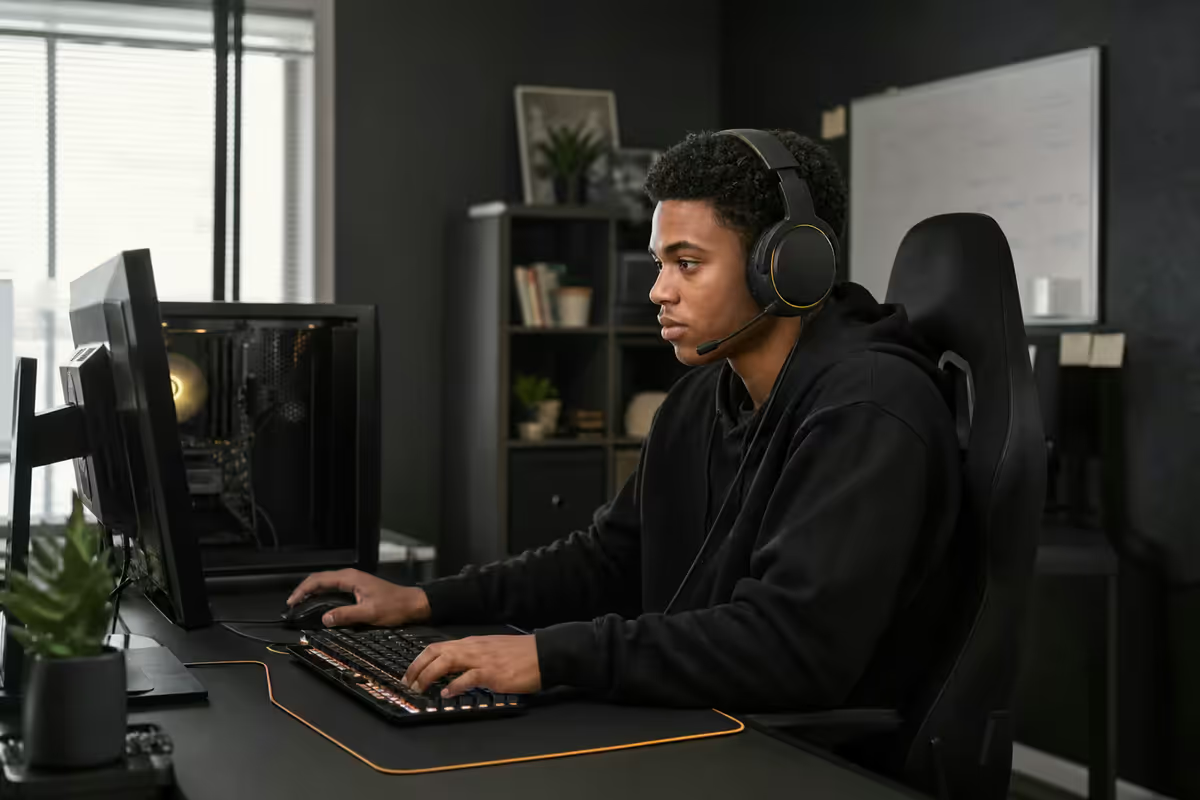
The SA esports landscape in 2026
SA esports has finally stopped being the perpetual “emerging market” — in 2026 it's a working ecosystem with real broadcast standards, recognisable team orgs, prize pools that crack R1 million for marquee events, and a national federation seat at international level. The route from passionate gamer to paid professional still isn't paved, but the paving has started.
The scene is built around four main tournament operators. Mettlestate is the longest-running, with a Major League structure across CS2, VALORANT, Dota 2 and Mobile Legends Bang Bang that runs in three seasons a year. ACGL (African Cyber Gaming League) is the open-circuit workhorse — they run weekly tournaments across roughly 15 titles, and crucially, they're where most new players get their first paid match. VS Gaming runs MTN-backed leagues with strong production values and is heavy on FIFA, CoD Mobile and Tekken. Hisense Esports League launched as a premium broadcast-tier event in 2024 and has rapidly become the prize-pool leader for the year, with significant brand budget behind production.
Above all of these sits Mind Sports SA (MGSA), the federation that selects national teams for international events like IESF Worlds. Recognition from MGSA is what turns a competitive achievement into “Protea esports player” status — relevant if your goal is international representation rather than purely a domestic streaming career.
On the team side, the marquee orgs are Bravado Gaming, Goliath Gaming, ATK Arena, ATC and Energy Esports. These orgs run multiple rosters across titles, pay salaries to top players, and field the SA presence at international qualifiers. Below them sits a healthy tier of semi-pro orgs and Discord-based teams that compete in ACGL and Mettlestate open brackets.
The five viable career paths
“Esports career” doesn’t mean “pro player.” In SA specifically, the non-player paths often have a more reliable income runway because they’re tied to a recurring schedule of events rather than the pressure of weekly competitive performance. Here’s how the five viable paths actually stack up.
Pro player is the path everyone imagines first. You compete on a sponsored or salaried roster, attend bootcamps, and grind ranked alongside scheduled scrims. SA's top CS2, VALORANT, Dota 2 and Mobile Legends rosters pay R10,000-R60,000 monthly base, plus tournament winnings and streaming income on top. The pyramid is brutal: roughly 40-60 players in SA earn a full-time living from competition. It's a young person's path — most pros transition out by their late 20s.
Shoutcaster / commentator has become the most realistic full-time path for people with strong communication skills. You call live matches across Mettlestate, ACGL and Hisense Esports League broadcasts, build a recognisable voice and grow into the desk-host or play-by-play lead role. Casters can earn from a single event up to a yearly retainer with a tournament operator — and unlike pro play, the career has no hard age ceiling.
Content creator / streamer is the most flexible entry — you build an audience on Twitch, Kick, YouTube or TikTok, monetise via subs, sponsorships, brand deals and ad share. The SA streaming ceiling is lower than US/EU (300 concurrent SA viewers is genuinely meaningful here), but the costs are lower too. Hybrid creators who stream and compete have the best portfolio for sponsors.
Analyst / coach roles serve team orgs that need someone watching VODs, prepping opponent strats and managing player performance. Demand exists at every roster from semi-pro upwards. SA analyst rates start around R8,000/mo part-time for an ACGL-level team and can reach R25,000/mo for the top SA rosters. A separate but related role is team manager — handling logistics, player welfare, contracts and brand relationships.
Tournament organiser / broadcast producer is the path most people overlook and the one with the most stable income. You work behind the camera — directing observer cams, running OBS scenes, scheduling brackets, managing prize distribution. The major SA tournament operators all hire production crew, and once you're embedded at one, the work is steady year-round. This is the SA esports path most likely to convert into a proper salaried position at an org.
| Path | SA monthly range | Hours / week | Entry difficulty |
|---|---|---|---|
| Pro player (top tier) | R10k-R60k + winnings | 40-60 (scrims + ranked) | Very hard |
| Shoutcaster | R3k-R15k per event | 15-30 (variable) | Medium |
| Content creator | R5k-R30k part-time | 30-50 (streaming + edit) | Easy entry, hard scale |
| Analyst / coach | R8k-R25k | 15-25 | Medium (need game expertise) |
| Tournament organiser / producer | R8k-R40k | 30-45 (event-clustered) | Easy entry via volunteering |
The honest read: if you want a paid esports career as quickly as possible, the production side is the shortest route. If you want maximum income ceiling, content creation has the highest top end. If you want pure competitive prestige, pro play is the only answer — but accept the odds.
The skill stack you actually need
Every successful SA esports career — whatever the path — sits on the same four-skill stack. The mix shifts depending on which path you pick, but every viable career touches all four.
Deep game knowledge. Not just "I'm good at the game" — actual structural understanding. For a CS2 player that's smoke lineups, util timings, T-side defaults and CT setups for every map in the active pool. For a VALORANT analyst it's agent compositions, ult economy and the meta shifts each patch. For a caster it's hero / agent / weapon names, their abbreviations, and instant recognition of high-level plays as they happen. Without this you can't break in at any tier.
Communication. The ability to talk clearly under pressure is what separates the careers. Casters need it constantly. Pro players need shot-calling and team comms. Content creators need on-camera presence. Coaches need to deliver criticism that actually lands. Even tournament organisers need to brief crew, players and brands without friction. SA-specific: bilingual ability (English plus Afrikaans or isiZulu) opens doors at events targeting broader SA audiences.
Networking. The SA scene is small enough that everyone effectively knows everyone within 18 months. Active presence in community Discord servers (every major tournament op runs one, every team has one), at LAN events when budget allows, and across Twitter/X SA esports threads is the unglamorous backbone of every career. Most jobs in SA esports are filled by DM, not job posting.
Personal brand. Whether you're a pro or producer, having a recognisable handle, consistent stream/social presence and a portfolio of clips matters to sponsors and orgs. You don't need to be famous — you need to be findable. A tidy Twitch profile, a pinned highlight reel, a usable Twitter/X bio with a clip thread and a Discord username that matches across platforms is the minimum.
Real Rand earnings — what to actually expect
Online esports salary guides are written for the LCS / EU / NA market. The Rand reality is different. Here's what current SA professionals across the five paths actually earn, broken into entry, mid and top tier.
| Role | Entry (year 1) | Mid (year 2-3) | Top tier (year 4+) |
|---|---|---|---|
| Pro player (CS2/VAL/DOTA) | R5k-R12k/mo | R15k-R30k/mo | R35k-R60k/mo + winnings |
| Mobile esports pro (MLBB, CoDM) | R0-R5k/mo | R8k-R18k/mo | R20k-R40k/mo + winnings |
| Shoutcaster (per event) | R0-R3k | R3k-R8k | R8k-R15k+ retainer |
| Content creator / streamer | R0-R5k/mo | R8k-R20k/mo | R25k-R80k/mo (rare) |
| Analyst / coach | R3k-R8k/mo | R10k-R18k/mo | R20k-R25k/mo |
| Tournament organiser / producer | R5k-R12k/mo | R15k-R28k/mo | R30k-R40k/mo |
| Team manager | R6k-R12k/mo | R15k-R25k/mo | R28k-R45k/mo |
How prize money actually works. The top-tier SA event prize pool sits at R200,000-R1,500,000 for marquee tournaments, split across a roster of five players minus team org cut (typically 15-25%), minus tax. A first-place finish at a Mettlestate season major lands each player a meaningful share, but second / third drops the per-player split significantly. Realistic players plan to win 4-6 events per year to make tournament earnings a major income line.
The stack-revenue reality. Almost no SA esports professional lives off a single income stream. The typical full-time profile combines two or three of: salary or retainer (R8k-R20k), event fees (R5k-R15k/mo when active), streaming income (R3k-R15k/mo), brand sponsorships (R2k-R10k/mo per deal), content creation (R3k-R10k/mo). The total can stack to a comfortable R25k-R50k/mo income — but the budget planning is much closer to that of a freelance creative than a salaried employee.
The 90-day entry plan
If you're starting from zero — a passionate gamer with no industry contacts — here's a realistic 90-day plan that gets you onto the radar of the SA scene. This is not theoretical: it's the path used by current casters, analysts and content creators who broke in during the 2024-2026 wave.
Days 1-30: foundation
Pick a single primary title. Don't try to be a multi-title player or caster in year one — the scene rewards depth. Choose between CS2, VALORANT, Dota 2, Mobile Legends Bang Bang, CoD Mobile or FIFA based on your existing skill level. Join the official Discord for that game's SA community, plus the Discord for at least one tournament operator (Mettlestate or ACGL). Lurk for a week, then start contributing — answering questions, sharing clips, being useful.
Set up streaming infrastructure — even basic. Twitch account, OBS scenes, an alerts overlay, a recognisable username that you'll use across every platform. Start streaming your ranked grind 3-4 evenings a week. The goal isn't viewer count yet — it's the archive of VODs.
Days 31-60: visibility
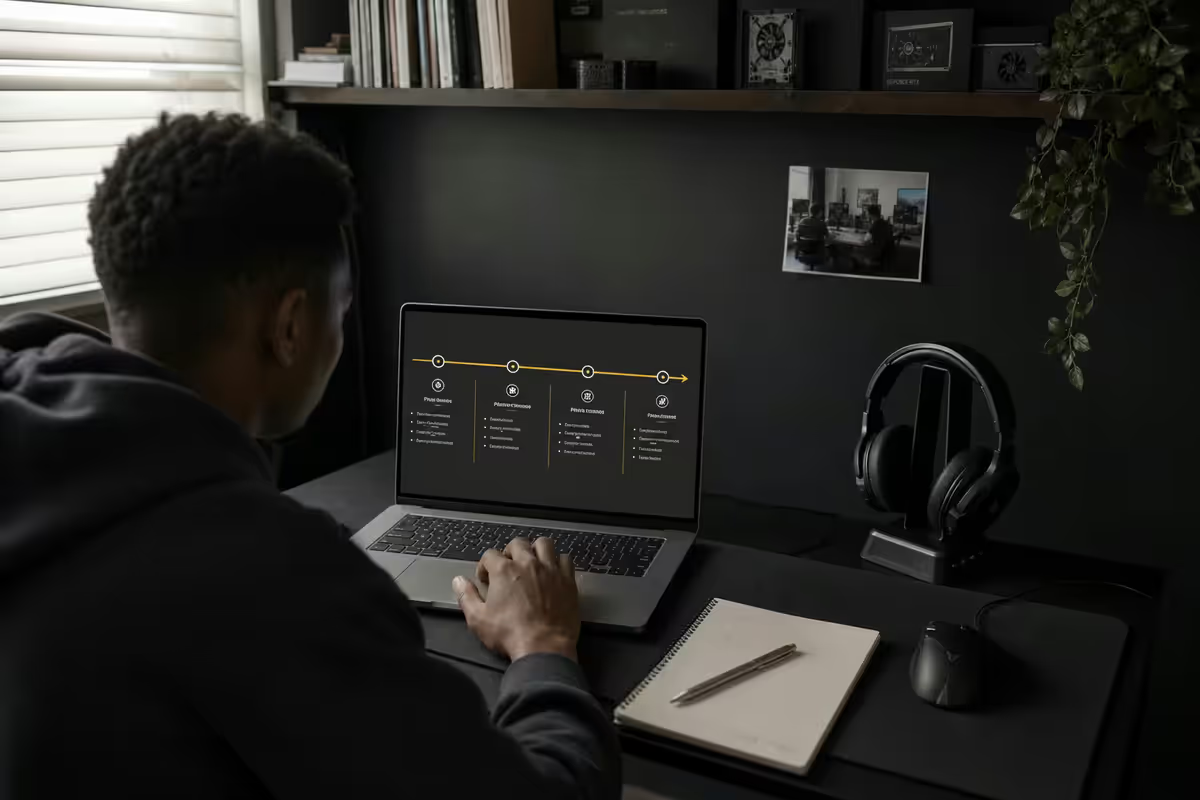
Enter every open ACGL tournament for your title — they run almost weekly. Even if you lose round one, the bracket appearance counts on a portfolio. If you're targeting casting, ask the ACGL Discord whether they need amateur casters for sub-tournaments (they often do, and that's how every top SA caster started). If you're targeting production, volunteer for an event — observer crew, social media support, anything.
Clip your best moments and post them to TikTok and Twitter/X with the right SA esports hashtags. Tag tournament operators, team orgs and other creators. One clip going viral can shortcut six months of grind — it's how several current SA content creators got their first sponsor DM.
Days 61-90: pursuit
Target a top-32 placement at any tournament if you're playing, or a confirmed slot in a low-stakes broadcast if you're casting. Begin direct outreach: DM the team manager of an ACGL-tier org with a portfolio (VODs, clips, social presence), offer to trial. Apply to be a stand-in for any roster running short of a player. Volunteer for the next major LAN — if you can be in person at Comic Con Africa Esports or rAge, the networking happens in 48 hours that would otherwise take six months.
Sponsorships, brands and SA education paths
Sponsorships in SA are tiered — and unlike global esports, they're more accessible at the lower tier than people assume. Knowing the tier you can realistically pitch saves months of wasted outreach.
Tier 1 — endemic gaming brands. ASUS ROG SA, MSI SA, Logitech G, Razer, HyperX, Trust Gaming. These brands sponsor at multiple levels — from product seeding (free peripherals in exchange for content) up to monthly retainers for established players. Product seeding is usually achievable for streamers with 200+ regular SA viewers; cash retainers require 1,000+ concurrent or a strong tournament resume.
Tier 2 — SA retailers. Evetech, Wootware, Rebel Tech, Titan Ice. Local retailers sponsor SA-specific creators and players through a mix of discount codes, build sponsorships and event partnerships. These deals are very achievable at the mid-tier and are typically easier to land than international brand deals because the SA retailer knows the SA audience matters.
Tier 3 — non-endemic brands. Hisense, MTN gaming, Vodacom Red Esports, Telkom, Red Bull, Monster. These are the highest-value sponsorships but they require established profiles — typically a content creator with 5,000+ followers across platforms, or a top-3 tournament team. The non-endemic budget is also where SA esports has grown fastest in 2024-2026.
Formal SA education routes
A formal qualification isn't required to break in, but it shortcuts contacts and gives a portfolio of practical work. Sirius College offers a one-year esports diploma covering performance, broadcast and management — the most directly applied programme in SA. Boston Media House runs esports modules within their content production and digital media qualifications, useful if you want a broader media base. Several SA universities now have formal esports clubs and varsity competitive teams — NWU, UCT, Wits, Stellenbosch and UJ all field rosters in inter-varsity tournaments. The Hisense Esports League also runs a university circuit that's become a useful spotting ground for orgs.
The loadshedding-proof setup (mandatory)
No SA esports guide is honest if it skips loadshedding. A single dropped tournament because of Stage 4 can cost a placement worth R10,000+, a sponsor expectation, and your credibility in the community. The good news: a working loadshedding plan is cheaper than people assume.
Tier 1 — UPS basics (R2,500-R4,500). A line-interactive 2000VA UPS (Mecer or Ellies) keeps your PC, router and one monitor running through a Stage 4-6 outage of up to 2-2.5 hours. This is the minimum for any streamer or competitive player. Pair with a mobile data backup line on Rain 5G, MTN or Vodacom to handle fibre failures during outages.
Tier 2 — Inverter setup (R18,000-R35,000). 5kVA Mecer or Ellies inverter with two 100Ah batteries runs your full setup (PC, 240Hz monitor, lights, modem, peripherals) through 4-6 hour outages. This is what top SA streamers and competing pros run because the cost amortises across a single year of avoided dropped events.
Tier 3 — Solar hybrid (R60,000+). Solar with battery storage is the long-term answer for full-time pros. The capital cost is significant but the operating cost approaches zero, and the system pays for itself in 3-5 years of avoided diesel generator costs and missed opportunities.
| Tournament tier | Examples | Prize pool range | Entry route |
|---|---|---|---|
| Open weekly | ACGL Wednesday Nights, VS Gaming opens | R500-R5,000 | Sign up via tournament op website |
| Monthly seasonal | Mettlestate Major League, ACGL Premiership | R5,000-R50,000 | Qualify through opens or invite |
| Quarterly major | Mettlestate Season Finals, VS Gaming Masters | R50,000-R250,000 | League qualification |
| Annual marquee | Hisense Esports League, Mettlestate Champs | R250,000-R1.5m+ | Top-tier teams only |
| International qualifier | IESF Worlds, VCT Challengers, ESL One | Slot to global | National rep via MGSA |
Key takeaways
- SA esports has five viable career paths — pick the one that fits your strengths, don't default to pro player.
- Production-side roles (tournament organiser, broadcast producer) have the shortest entry runway to paid work; content creation has the highest income ceiling.
- Stack revenue — almost no SA esports professional lives off a single income line. Plan for 2-3 streams: salary, events, streaming, sponsorships, content.
- The 90-day entry plan works: pick one title, stream your grind, enter ACGL opens, network in Discord, volunteer at LANs. Don't quit your day job until you have 6 consecutive months of real income.
- Loadshedding planning is non-negotiable. R2,500 UPS + mobile data backup is the absolute minimum; inverter setup pays for itself in one year of avoided dropped events.
Frequently asked questions
Can you actually earn a living from esports in South Africa?
Yes, but realistic SA income comes from stacking 2-3 revenue streams — salary, events, streaming, sponsorships, content. Full-time SA esports professionals earn R15,000-R60,000 monthly combining these. Pure pro-player salaries are rare outside the top rosters.What are the main esports careers in SA besides pro player?
Shoutcaster, analyst, coach, team manager, content creator, tournament organiser, broadcast producer, community manager. Casting and content creation have the lowest entry barriers. Production roles convert to salaried positions most reliably.How much does a shoutcaster earn in South Africa?
Entry casters earn R3,000-R6,000 per event for amateur tournaments, R8,000-R15,000 per event for top-tier broadcasts. Established casters working 6-10 events monthly can clear R30,000-R50,000, but it takes 2-3 years to reach that level.Which tournaments and orgs matter most in SA esports?
Mettlestate, ACGL (African Cyber Gaming League), VS Gaming and Hisense Esports League are the main tournament operators. MGSA selects national teams. Bravado, Goliath, ATK Arena and ATC are the marquee team orgs.Do I need an expensive PC to start an esports career in SA?
A R18,000-R25,000 competitive build (Ryzen 5 / RTX 5060 class) runs every esports title at 240+ FPS. Streaming kit adds R10,000-R15,000. The bigger ongoing costs are fibre (R800-R1,200/mo) and a UPS for loadshedding (R2,500-R8,000).Are there SA university or college courses for esports?
Sirius College offers a one-year esports diploma. Boston Media House runs esports modules in their media qualifications. NWU, UCT, Wits, Stellenbosch and UJ have varsity esports clubs. Formal qualification isn't required but shortcuts contacts.How do SA esports players get sponsored?
Sponsorships come from gaming brands (ASUS, MSI, Logitech G, Razer), telcos (MTN, Vodacom), retailers (Evetech, Wootware) and non-endemics (Hisense, Red Bull). Tied to visibility — top-3 finishes, 300+ concurrent viewers, or recognised community presence. Typically takes 12-18 months of consistent grinding.How do I handle loadshedding as a streamer or pro player?
Minimum: Mecer 2000VA UPS (R2,500-R4,500) plus mobile data backup line. Step up to a 5kVA inverter with two batteries (R18,000-R35,000) for full-day outage resilience. The investment pays for itself in avoided dropped tournaments.
Get the Evetech app
Exclusive app-only prices, daily flash sales, and free delivery on orders over R4,000 — download the app and start saving.