SA Esports Path
How to get into competitive gaming. — Discord scrim. Online league. LAN.
Going pro looks impossible from the outside and is genuinely difficult — but the SA path from ranked grinder to paid roster is more concrete than most beginners think. Here's the real ladder.
- weekly grind
- 15-25 hrs
- SA prize range
- R500-R1.5M
- active SA scene
- 5+ leagues
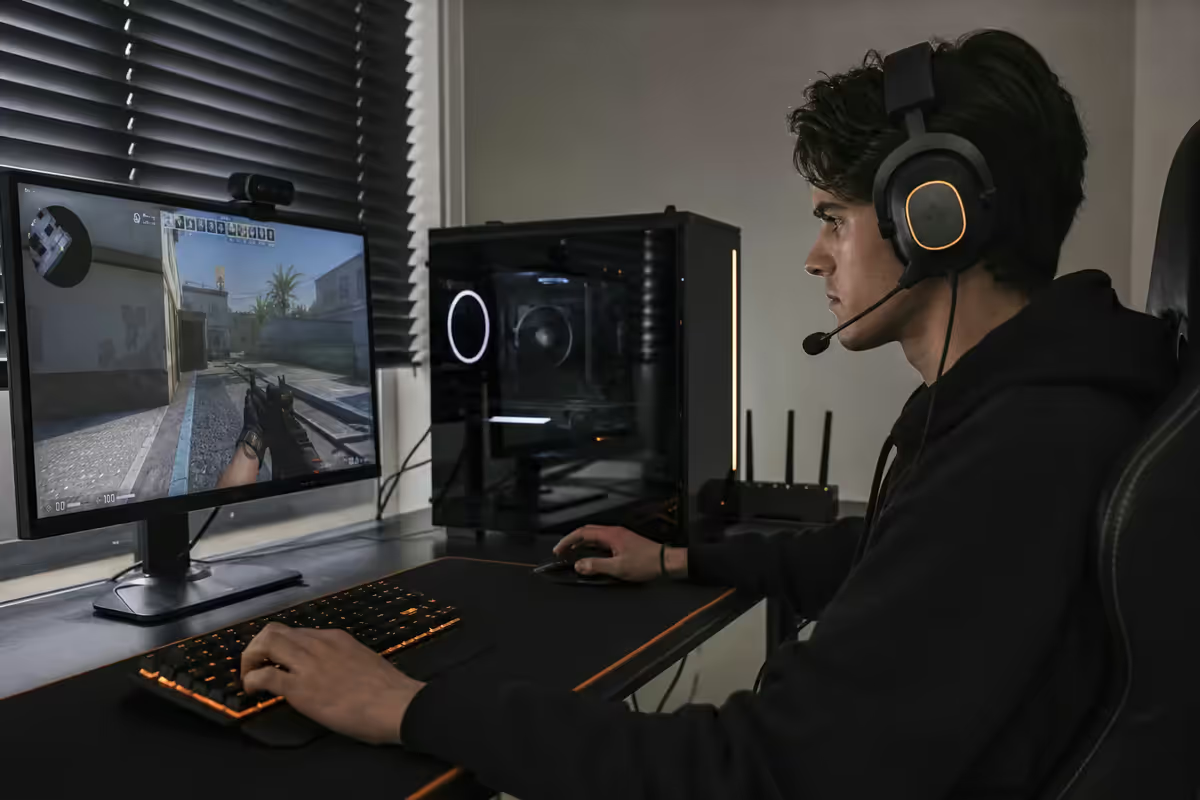
The SA competitive gaming landscape in 2026
South Africa's esports scene has matured rapidly in the last five years. Multiple leagues run simultaneously, the orgs are professionalising, and SA players are increasingly visible on international rosters in CS2, Valorant and Apex Legends.
| League / Org | What it runs | Entry level |
|---|---|---|
| ACGL (African Cyber Gaming League) | Weekly online tournaments, most popular titles | Open to all |
| eGSA | Structured ladders, regional qualifiers | Open, rank-based |
| Mind Sports SA (MSSA) | Official esports federation, national colours | Provincial trials |
| VS Gaming | Annual flagship VS Gaming Festival, large prize pools | Invitational + open qualifiers |
| Mettlestate (MGO) | Major tournaments, Telkom DGL, sponsorship orgs | Open qualifiers |
| COMIC CON Africa Gauntlet | Annual LAN at COMIC CON Africa | Open qualifiers |
| Goliath Gaming / ATK Arena / Bravado | Pro orgs that sign SA players | Tryouts / recruitment |
If you're new, start with ACGL. It's free, weekly, supports every major title, and exposes you to the SA scrim culture without any commitment. From there, structured leagues like eGSA give you a real competitive ladder.
Top SA competitive titles in 2026
Not every game has a scene in SA. Six titles dominate the active competitive calendar — pick one and commit to it for at least six months before considering a switch.
| Title | SA scene strength | What it rewards |
|---|---|---|
| Valorant | Strongest FPS scene; multiple monthly LANs | Tactical aim + comms |
| CS2 | Deep historical roots; loyal veteran base | Pure mechanical aim |
| Dota 2 | Smaller but loyal; international qualifier path | Strategy + macro |
| Apex Legends | Strong, growing; BR format suits SA player base | Movement + positioning |
| EA FC (FIFA) | Massive console scene; FIFAe World Cup qualifier path | 1v1 reflexes + meta |
| Rainbow Six Siege | Niche but stable; small loyal SA team count | Map knowledge + comms |
| Rocket League | Growing 2v2 / 3v3 scene | Mechanics + rotation |
| COD Mobile / MLBB | Mobile-side communities | Reflexes + role play |
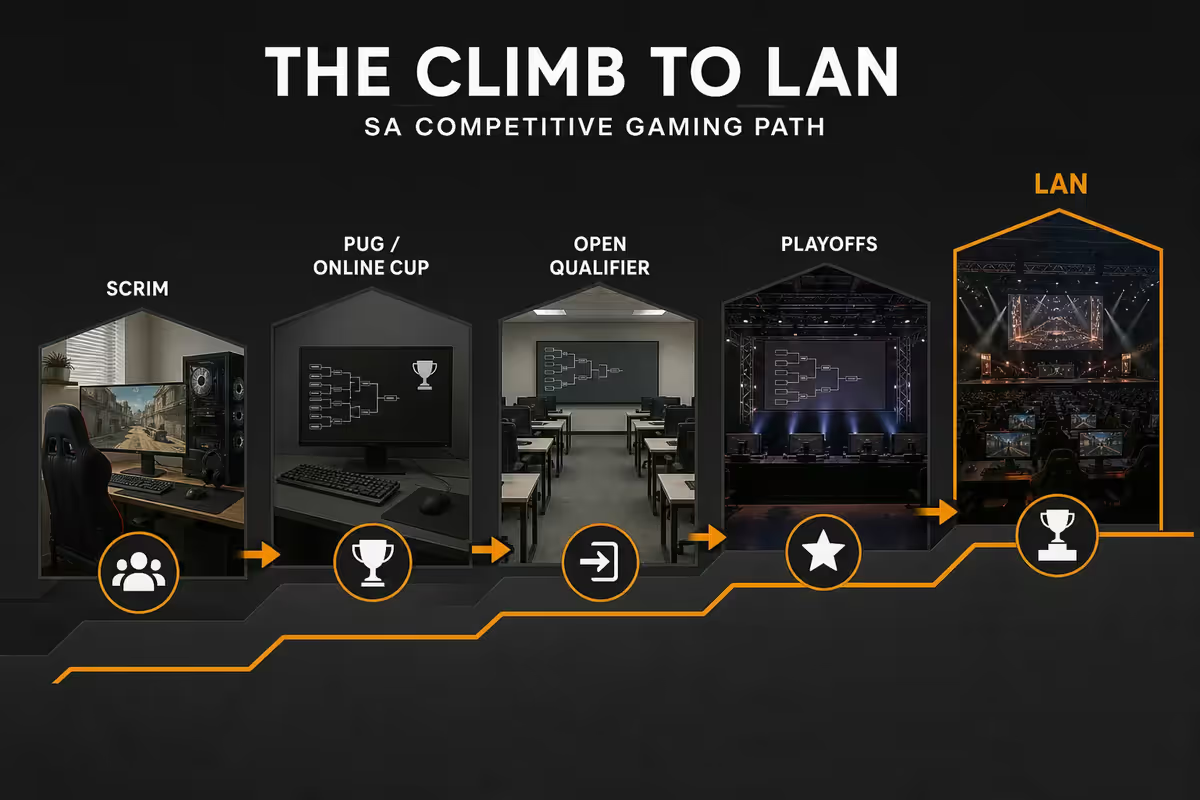
The path: scrim → online league → LAN
Every competitive SA player follows roughly the same ladder. Skipping rungs almost always backfires — the chemistry, IGL (in-game leader) discipline and tournament composure can only develop on the lower rungs.
Rung 1 — Community Discord scrims
Join the title-specific SA Discord (SA Valorant, SA CS, SA Dota, etc.). Look for the "looking for scrim" or "LFS" channels. Pickup teams form daily for unofficial 5v5 matches. Goal: 2-3 weeks of scrims to find a stable team or core.
Rung 2 — ACGL weekly tournaments
Free, open, weekly. Single-elimination or double-elimination brackets. Most teams lose round 1 — that's fine. Goal: register weekly for 6-8 weeks. Track your team's performance and watch the VOD of every loss.
Rung 3 — Structured ladder (eGSA, MSSA)
More serious commitment, regular matches against ranked opposition. The ladder format means consistent practice rather than weekly flame-outs. Goal: top 30% of the ladder by the end of season.
Rung 4 — Major tournament qualifiers
VS Gaming Festival, Telkom DGL, COMIC CON Gauntlet, MGO Major. These are the headline events with real prize pools and open online qualifiers feeding into LAN finals. Goal: clear at least one open qualifier round.
Rung 5 — Org pickup
If your team consistently top-8s major qualifiers, the orgs notice. Goliath Gaming, ATK Arena, Bravado, MGO and smaller emerging orgs scout teams that perform consistently. Signing brings salary, kit, coaching and travel support. Goal: get scouted, not blindly apply.
Peripheral discipline — consistency over flagship
The biggest mistake new competitive players make: upgrading peripherals every two months in search of "edge". The pros aren't winning because of their R3,500 mice. They're winning because they've used the same mouse, same sensitivity, same monitor refresh rate, for two years.
The reliable mid-tier kit that's enough for SA competitive play:
- Mouse: Logitech G203 (R600), Razer DeathAdder V3 (R1,200), Pulsar X2H Mini (R1,800). All three are competition-grade.
- Keyboard: Royal Kludge RK68 (R900) or Logitech G413 (R1,400). Mechanical, no need for flagship.
- Headset: HyperX Cloud II (R1,400) or Logitech G Pro X (R2,500). Comms clarity > marketing.
- Monitor: 144 Hz IPS 1080p or 1440p — Samsung G5, AOC 24G2, Gigabyte M27Q. R3,500-R6,500 band.
- Mousepad: Hayate Otsu, Artisan FX Hien, Logitech G440 — flat, dry, predictable. R400-R900.
The training routine that beats casual play
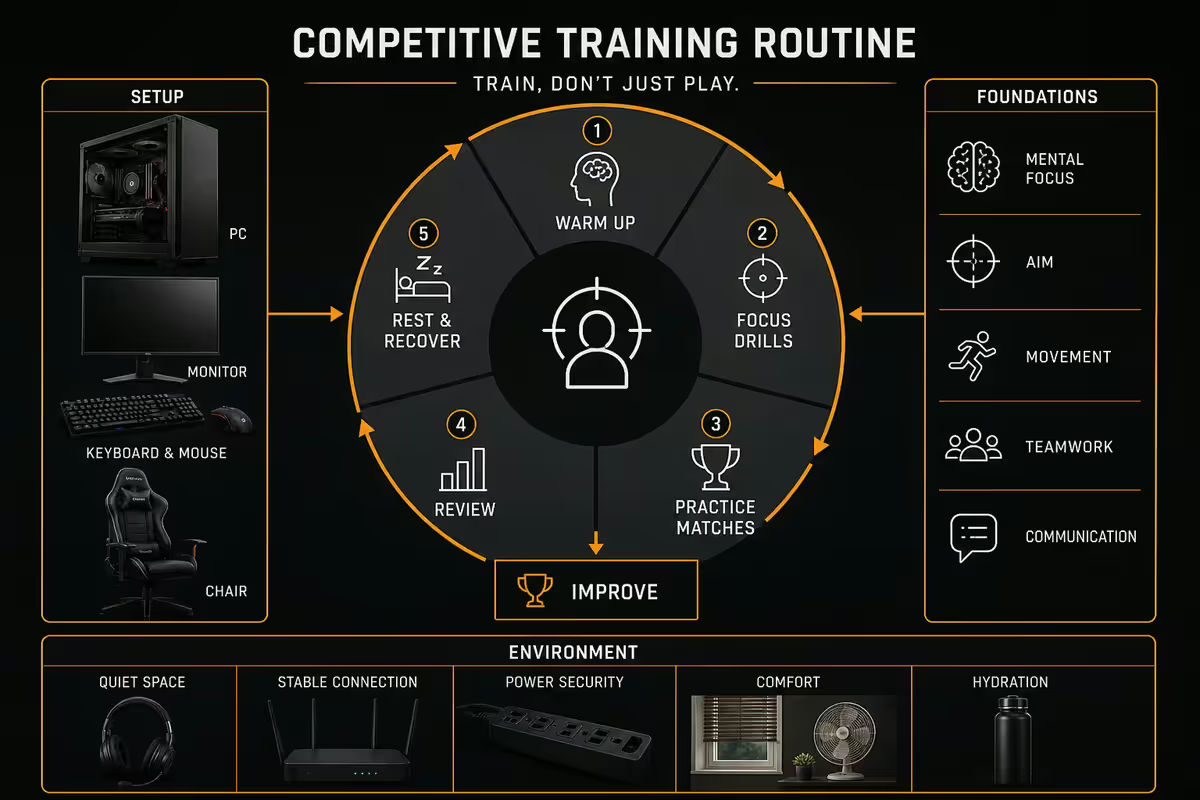
Casual ranked play improves you to mid-tier and then stops. To break into competitive, you need deliberate practice in specific subsystems: aim, game sense, comms discipline, decision-making.
The serious SA competitive player's week
- 30-60 min daily aim training — Aim Lab or Kovaak. Specific routines (tracking, flicking, micro-correction).
- 2-3 hours scrimmage / team practice — at least 3 sessions per week with your roster.
- 1-2 VOD review sessions — analyse last week's losses with the team. Coach if you have one.
- 5-8 hours ranked / queue — maintain rank, work on specific habits, not just tilt grinding.
- 1-2 hours pro VOD study — watch top SA, EU and NA matches in your title with intent.
Total: 15-25 hours per week for semi-serious competitive. Pros put in 40-60 hours per week and get paid for it. Anyone telling you "just play 4 hours a day of ranked" is describing how to get to plat — not how to compete.
How to find a team that lasts
Most SA competitive teams don't form through LinkedIn-style recruiting. They form when 3-5 friends in the same skill bracket decide to commit. Players levelling up together, learning together, becomes the team.
Where to actually look:
- SA title-specific Discords — "Looking for team" channels, post your rank, role and timezone availability.
- ACGL post-tournament chat — players you scrim against repeatedly are pre-qualified.
- Local LAN events — COMIC CON Africa, rAge, university LANs — in-person chemistry forms fast.
- University esports clubs — Wits, UCT, Stellenbosch, UJ, NWU, TUKS, all have active esports societies.
Streaming as a gateway into the scene
Streaming on Twitch or Kick is a slow path, but it's genuinely effective for SA visibility. Orgs scout active SA content creators — even at 500-2,000 followers — because a streamer brings audience to the team's brand from day one.
What works for SA streamers:
- Consistent schedule — 3-5 streams a week, same days/times, for 3+ months minimum.
- SA-focused content — community engagement with SA viewers, not chasing the global algorithm.
- Cross-posting — TikTok / Instagram Reels / YouTube Shorts highlights drive Twitch discovery.
- Tournament play visibility — streaming your ACGL / eGSA matches gives orgs a live look at your performance.
Kick has aggressively recruited SA streamers in 2025-2026 with revenue splits better than Twitch's standard 50/50 (Kick offers 95/5 for partnered streamers). Several SA esports orgs now require streaming time as part of player contracts.
The honest SA prize-pool reality
A blunt summary of what SA esports actually pays:
| Tier | Event type | Total prize pool |
|---|---|---|
| Entry — weekly online | ACGL / eGSA weeklies | R500 - R5,000 |
| Mid — monthly LAN | Mettlestate monthlies, university LANs | R20,000 - R100,000 |
| Major — annual SA championship | Telkom DGL, VS Gaming Festival, COMIC CON Gauntlet | R500,000 - R1,500,000 |
| International invitational | If your team qualifies for EU / NA / global qualifiers | $10,000+ USD |
| SA org salary | Signed roster player (CS, Valorant, Dota 2) | R8,000 - R35,000 / month |
| International org salary | SA player signing EU / NA org | $1,000 - $15,000+ USD / month |
The honest version: SA esports is a difficult career as a sole income. Most SA pros combine roster salary with streaming, coaching and content. The path to real money is qualifying through SA leagues into international qualifiers — and from there, signing with an EU or NA organisation that pays in USD.
Going pro vs staying competitive hobbyist
A useful self-check: do you want to compete because you love the game, or because you want to go pro? Both answers are valid. Just be honest with yourself which one drives you.
Competitive hobbyist path: ACGL weeklies, eGSA ladder, occasional LAN, a stable team for years. Real fun, real friendships, real growth. No income from it.
Going pro path: 40-60 hours / week, ranked + scrim + VOD review, sacrificing weekends, studies or job for tournament travel. Genuine career risk. Long path with no guaranteed return.
The hobbyist path is what 95% of SA competitive players choose, and it's a great path. The pro path is for the genuinely obsessed who would do it whether it paid or not.
Key takeaways
- Pick one title and commit to 1,000+ hours before evaluating a switch.
- Start at ACGL weeklies, climb through eGSA / MSSA ladders, target VS Gaming and DGL majors.
- Reliable mid-tier peripherals beat flagship — consistency over spec.
- Train aim daily, scrim and VOD review weekly — 15-25 hrs/week for semi-serious play.
- Real esports money lives in international orgs paying USD — SA league pays in audience and reputation.
Frequently asked questions
Which competitive games have the strongest scene in South Africa?
Valorant and CS2 dominate the FPS scene with weekly online leagues and multiple LAN events a year. Dota 2 has a smaller but loyal MOBA scene. EA FC (FIFA), Apex Legends, Rainbow Six Siege and Rocket League all have active SA leagues. Mobile-side, COD Mobile and MLBB have community tournaments but smaller prize pools.What SA leagues should a beginner aim to join?
Start at ACGL (African Cyber Gaming League) — open registration, weekly online tournaments across most popular titles. Once you're competitive there, eGSA and Mind Sports SA (MSSA) run more structured ladders. VS Gaming and MGO (Mettlestate Gaming Organisation) host the bigger headline events. The path is: Discord scrim group → ACGL weekly → eGSA/MSSA ladder → invitational LAN.What's the realistic SA competitive gaming prize-pool situation?
Honest answer: most SA league weekly tournaments pay R500-R5,000 to the winning team. Major monthly LANs reach R20,000-R100,000. The biggest annual SA championships (Telkom DGL, COMIC CON Gauntlet, MGO Major) reach R500,000-R1,500,000 total prize pools. Compared to EU/NA scenes this is small, but it's growing — and SA players have increasingly broken into international rosters in CS2, Valorant and Apex.Do I need flagship peripherals to compete?
No. Consistency matters more than flagship spec. A reliable R800 Logitech G203 or R1,200 Razer DeathAdder is genuinely sufficient for SA competitive play through ACGL and eGSA. The pros aren't winning because of R3,500 mice — they're winning because they've used the same mouse for two years. Pick reliable, learn it, don't upgrade for a year.What's a typical training routine for SA comp players?
Most serious SA players do 30-60 minutes daily aim training (Aim Lab or Kovaak), 2-3 hours scrimmage with team, 1-2 VOD review sessions per week analysing last week's matches. Plus regular ranked or queue play. Total: 15-25 hours per week for a semi-serious competitive player. Pros put in 40-60 hours per week.How do I find a team to play with in SA?
Join SA-focused Discord servers (ACGL, Mettlestate, game-specific community Discords like SA Valorant, SA CS, SA Dota). Post in looking-for-team channels with your rank, role and availability. Scrim with random pickup teams to find chemistry. Most serious SA teams formed from existing in-game friend groups that levelled up together — not LinkedIn-style recruiting.Is Twitch or Kick streaming a viable path into SA esports?
Yes, but slowly. Streaming as a SA-focused content creator builds visibility with brands and orgs that scout. Active SA streamers in the 500-2000 follower range have been signed to MGO, Goliath Gaming, ATK Arena and Bravado streams. Kick has grown its SA streamer pool aggressively in 2025-2026 with revenue splits better than Twitch's standard 50/50.Can you go pro in SA esports as a full-time career?
For a small number of players, yes. SA org salaries in CS2, Valorant and Dota 2 typical bands run R8,000-R35,000 per month plus tournament splits, with the top tier earning more through international invitations. It's a fragile career — most players combine it with content creation, coaching or a day job. The international path (signing with an EU or NA org via international qualifiers) is where the real money is.
Get the Evetech app
Exclusive app-only prices, daily flash sales, and free delivery on orders over R4,000 — download the app and start saving.